Conceptual Art I Like (on Srikanth Reddy’s “Voyager”)

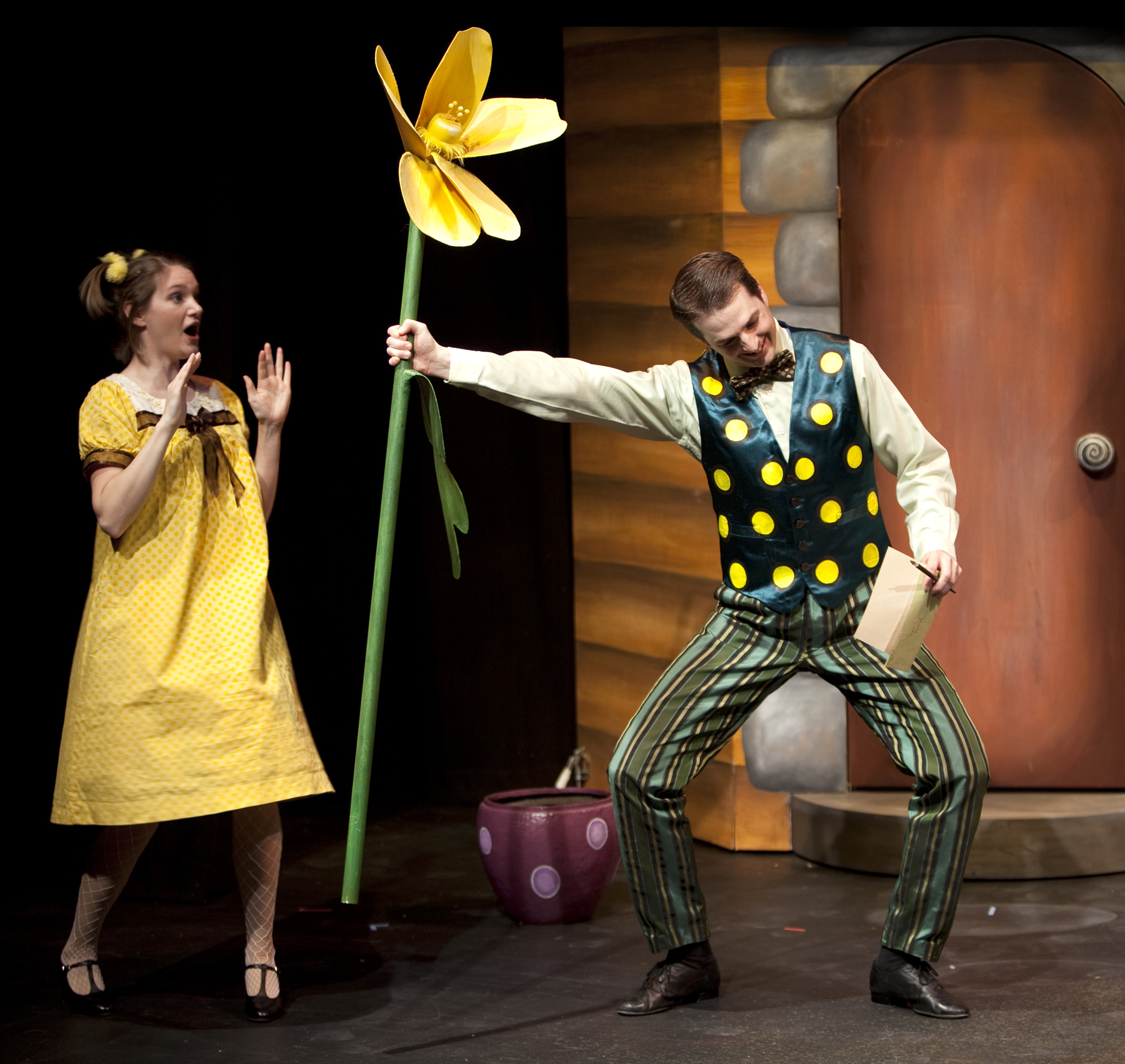
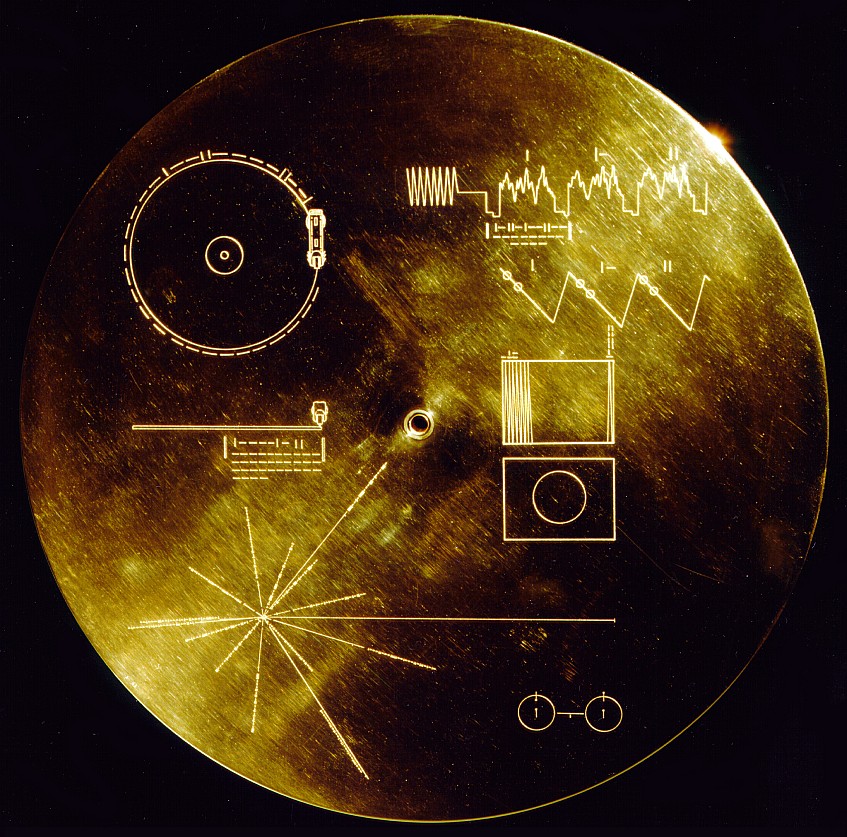
Cover of the Voyager Golden Record, on board the Voyager spacecrafts.

I must admit that before this spring, if you had asked me if I liked conceptual art, my answer would have been an unequivocal no. Signing a urinal, calling it “Fountain” and selling it for lots and lots of money seems to me to smack more of douchebaggery than of genuine creative passion. Oh I know conceptual art is about process, and process can be interesting. I know it’s often meant to be intellectual, not emotive, and the intellectual can be interesting.

But a bunch of scenesters making whatever crap it comes into their heads to make/write, giving it some smart or artsy-sounding title, claiming it’s about “the suffering of the existential spirit in a post-apocalyptic Nietzsche world” or some such B.S. and then labelling it “conceptual” as a way to weasel out and seem clever when someone points out that it’s just a huge piece of crap that took neither talent nor brains to create is NOT the kind of culture I tend to enjoy.

I’m not saying that I need the art I engage with to be accessible. I don’t. But I need to be able to see intention on the part of the creator, a real question or form being tackled. If the artist hasn’t invested time, talent, or brains in a piece of work, as an audience member (or reader), I don’t feel the need to invest even an iota of my time and my brainpower trying to respond to something that was never a sincere question in the first place. To those that smile smugly and say I just don’t “understand” their work, let me say that I can usually tell the difference between something that has energy and genuine engagement invested in it (even if it’s not my taste), and something that’s just a pile of trash thrown together. Let me also suggest that you stop being an asshole and make an actual effort next time.

Luckily for me, I have been exposed to two pieces of conceptual poetry this semester that have really knocked my socks off and shown me that the conceptual can be effortful. The first was Inger Christensen’s alphabet, a complicated alphabet poem that grows according to the Fibonacci sequence. The second is Srikanth Reddy’s Voyager, and if you ever want to read a really intentioned, committed, and effortful piece of conceptual literature with a concept that’ll blow your hair back, this is the book for you.

To summarize the awesomeness:

Unless they’ve studied history or politics, people in my generation may not know much about Kurt Waldheim, former Secretary-General of the UN (1972-1981). I certainly didn’t before this semester. To bring you up to speed, Waldheim was Secretary-General when the Voyager spacecrafts were launched into deep space in 1977. It is his voice which speaks for humanity on the Voyager Golden Record, a copy of which is aboard both spacecrafts.

All of this would be well and good, (you know, the UN Secretary-General representing the planet, etc.) if it weren’t for the slightly unsettling fact that Waldheim has been accused of being a Nazi war criminal and though he apparently “didn’t know” about the routine execution of civilian prisoners close to where he was stationed, and “didn’t know” about the rounding up of Jews to be sent to Auschwitz, it does make one uncomfortable to think of his voice as being representative of the entire human race.

This “disappearance” from memory of major and obvious wrongs has since been called “Waldheim’s disease”, in reference to Kurt Waldheim’s convenient ability to not remember or know anything about the horrible atrocities which surrounded him during his time as an SS officer.

What does Kurt Waldheim and “Waldheim’s Disease” have to do with conceptual art and Srikanth Reddy’s Voyager, you ask? Well, Waldheim wrote an English-language memoir called In the Eye of the Storm and when Reddy sat down to write his political book-poem Voyager in response to “Waldheim’s Disease” he did so not by writing words from his head but by taking a chapter of Waldheim’s memoir and then crossing out most of it, leaving the words that comprise Voyager behind. Reddy did not use any words that were not in this chapter, and did not change the order that the words appeared in the book (he actually did this three times to the same chapter, making the three “Books” that comprise the poem).

This is what blows my hair back: Reddy wrote an entire book in response to a man’s erasure of history by erasing that man’s memoir. Reddy’s concept is his message. Reddy’s voice is within the voice of his subject (it doesn’t get much more “engaged” than that). He doesn’t tell us how erasure and disappearance changes that which is revealed. He shows us. Is your mind blown yet? Mine is.

The best part is that Reddy doesn’t rest on the laurels of his amazing process (which can be viewed at tiny.cc/voyagermethod). The incredibly intelligent and disciplined commitment to his concept aside, Voyager is just a damn good poem. In Book Three, a hell-dwelling Minister keeps a zoo of political leaders, harpoons one, and eats the man’s skin raw, “which he insisted/ was the best way/ to eat a respected/ former Congressman.” Keep in mind that all of these words do exist, in this order, in Waldheim’s memoir, and it is only the erasure of words by Reddy that leaves these lines behind. KA-BLAM.
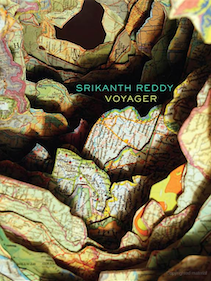
"Voyager", published by the University of California Press

THIS is a concept I can get behind. This is art whose point is its concept (a very clever one, I might add) but because the work was sincerely tackled by the artist, who took the time to truly empathize with his subject (so much so that the poem blurs the lines between the poet as a separate voice commenting on Waldheim and Waldheim as a voice of the poet himself), the book becomes so much more than concept. This book is not even a condemnation of a former Nazi officer. It is a thorough and passionate engagement with a political figure and with what is shown and hidden in history.

Like a lot of conceptual art, Voyager will make you feel small. But you will not feel small in the face of inaccessibility and a sense of douchebaggery. You will feel small in the face of an overwhelming feat of creation and literature. This is the kind of small you want to feel when you experience any art, conceptual or otherwise.

Read it. Engage. Blow your mind.
I’m good at something. Now what?

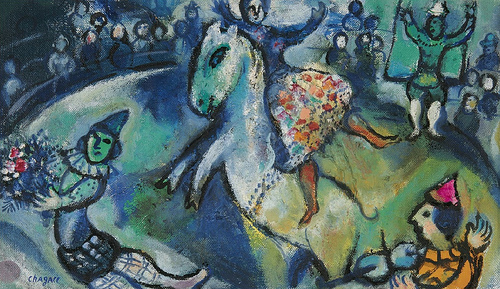
Scene de Cirque by Marc Chagall

When I was in high school, I read an essay in English class about a girl who wanted to grow up and play with Lego. When told that “playing with Lego” wasn’t a career like being a doctor or a teacher or a lawyer, the girl was undaunted. She went to university, eventually completing a master’s degree in architecture (incidentally, her final project model was built with Lego), and somehow or other she landed a job with the Lego company developing the new Lego sets. Now her office is filled with every Lego piece she could ever need (with people on call to provide her with additional pieces if required) and she makes her money playing with Lego all day long. The moral of the story for all of us high school students preparing to go out into the world and seek our fortunes was “Make your vocation your vacation!”

I guess this means that we’re supposed to find that thing we’re really good at doing, our calling, so to speak, and make pursuing it as fun and awesome (and lucrative) as possible. Appealing, but easier said than done.

The fact of the matter is that many people, like me, are decently good at several things but aren’t necessarily geniuses in any one thing. Our vocation is not obvious, and the means to turn whatever our calling is into our livelihood (i.e. into money we can LIVE on) are vaguer still.

It has now been almost three years since I finished my BFA in Theatre Performance, and finally it has begun to become abundantly clear to me why I have not jumped at every performance opportunity (for the most part unpaid) that has come my way since. At first, of course, I said I couldn’t possibly get time off work to audition or rehearse, and then, of course, I couldn’t quit my job because I had over $20 000 in student loans to pay off and then, of course, I moved into Vancouver from Burnaby and rent was simply too high to allow me to give up my job and then, of course, I got hired on a continuing contract WITH BENEFITS (and you’d be a fool to give those up), and then, of course, I was travelling, and then, of course, and then and then and then.

The result of all of these “and thens” is that I am not an actor right now. And you know what? I think I’m not supposed to be, at least not as my vocation. Obviously there are many actors in this city who aren’t acting all the time, but they are trying– they are getting flexible jobs that allow them to fit in rehearsal schedules, they are auditioning, they are continuing to train through workshops and intensives, they are performing in every damn thing they can perform in, and when they aren’t performing, they are itching to fulfill the artist within by getting back onstage, sinking their teeth into a role, and performing the hell out of something.

These people are actors. These people are not me. Firstly, I am either too lazy or too cheap (or maybe both?) to find a more flexible (i.e. less secure and well-paying) job, audition, pay for workshops (which are pricey!), etc. Secondly, and more importantly, when I have gone through static, less artistic periods of my life, it wasn’t performing that I itched for. It was creating.

Although I’ve always loved performing, and when I do perform I will always try my damndest and have lots of fun, I’m not itching to be Blanche DuBois, or Electra, or Lady Macbeth (well, maybe Lady M because WHO WOULDN’T?). I’m not really itching to be any character, or any thing. I’m itching to be the one to call amazing things into being.

Being an actor seemed to be a natural choice for me because I always loved to play pretend. But was it being somebody else that I enjoyed, or was it the creation of these other versions of my childhood self (their world, their powers, their adventures) that I loved? I think somehow I’ve always wanted to be all the characters, I’ve always wanted to make their whole world. I want to manifest what exists in my imagination and try to communicate it through language. I want to tell stories. I want to plant images in people’s heads. And I don’t just want artistic fulfillment, I want intellectual fulfillment. I want to write.

And that is why I do. That’s why I blog. That’s why I loved co-creating Troika! last year with my friends. That’s why I’ve got a bunch of (mostly crappy) unfinished work languishing in notebooks and, more recently, on my computer. That’s why I agreed to adapt a Greek tragedy for some theatrical friends of mine. That’s why I went back to school to study English literature and am currently studying writing poetry. THIS is what I’m not too cheap or too lazy to do. THIS is what I’m itching for.

And you know what? I’m decently good at it. I’m not being vain. I’m just owning up to what is becoming more and more obviously my vocation. Funnily enough, it’s in poetry that it has been suggested that I pursue graduate studies. Apparently, I’m decently good at it. At poetry. Huh.

I know I’m no genius poet. I’m not Inger Christensen, whose alphabet (brilliantly translated by Susanna Nied), a 70+ page poem based on the Fibonacci sequence, is the most elegantly constructed piece of literature I have ever beheld (and all this intense mathematical form without sacrificing contact and image at all!). I’m not Franis Ponge, whose obsession (and faculty with) describing the thingness of things has been intriguing and inspiring to me this semester. But I’m decently good at writing poetry. I feel good about it. Writing poetry is, to me, a delicious act.

I found something I’m good at! Yay!

Now what?

The last time I checked, being a poet was not a…lucrative…career choice, and unlike acting, there is no way to “make it big”. Studying poetry at the graduate level would be incredibly artistically and intellectually fulfilling. It would also financially impoverish me (and let’s not forget I want to continue to study other creative writing forms too! $$$!).

I am at the point in my life where I have realized that I can’t live my “double life” forever: the life of a responsible full-time administrative assistant combined with the life of the unpaid creative. Though I’m delighted that I’ve found a vocation (and delighted that I have a job that allows me to live comfortably for now), there’s no vacation in working at work and then going home and working on my creative pursuits. It’s taking its toll on me, and when I’m older and have kids and a mortgage and backyard chickens or what-not I simply won’t be able to do it all.

I’m also at a point where I realize that to go any further into any kind of career (except within my admin job, I guess), I need to further my education through either graduate studies or professional certification. While on the one hand I am worried that it would be irresponsible to spend money and time on an education that will not advance my career and earning opportunities (like a graduate degree in poetry), I am even more uncomfortable with the idea of spending time and money obtaining certification or a graduate degree in something that will not make me happy, especially when it’s not really the thing I’m really meant to be doing anyways.

So what to do? I’m not sure. At the moment, I’m grateful that I can make my life work for me. I’m grateful that I’m beginning to understand what my goals are. I’m grateful for my job and for all the amazing things that I’m learning in my classes. I’m grateful for my theatre degree–without it I would not have cultivated the work ethic and artistic questioning necessary to be as creative as I want to be. Hopefully I’ll find my way. We can’t all play with the proverbial Lego all our lives, but I’ll build my magical cities for as long as I can. I’m meant to.

Not Just for Kids: A Year With Frog And Toad at Carousel Theatre

Going "cookie for cookies!" - Todd Talbot, Josue Laboucane. Photo credit: Tim Matheson

Every once in a while I am lucky enough to see a production that I find so in every way delightful that even the act of writing or telling other people about it is delightful too. This is how I feel about Carousel Theatre’s A Year With Frog And Toad, playing at the Waterfront Theatre until April 8.

I have been to Carousel productions before (The Wizard of Oz and Aesop’s Fables), and I’ve always been a young-at-heart-believes-in-fairies person who is interested in and enjoys stories for younger audiences, be it through theatre, film, or literature. My past experiences with Carousel have been great.

But A Year With Frog And Toad really takes the cake. The theatrical experience begins, as it seems it always does at a Carousel production, with entering the theatre and seeing an absolutely beautiful set onstage, waiting, like us, for the magic to begin. Set designer Heidi Wilkinson created two picture-perfect homes for Frog and Toad, outside and in, and the effect this set has on everyone, not just the kids in the audience, is palpable.

Todd Talbot, Josue Laboucane. Photo credit: Tim Matheson

What follows is 60 minutes (that’s right, it’s short and sweet!) of pure delight. I am able to look at this show the way I look at a show meant for adult audiences because it is just that tight. The cues are tight, the funny bits (and the show is very funny) are perfectly-timed, and the costumes (designed by Yulia Shtern) are exactly what they ought to be down to the last dapper polka-dot (for Frog) and floppy mitten (for Toad, of course, for sledding!). The show is delivered by a seamless and talented ensemble of five performers who sang, danced, croaked, squeaked and chirped their way right into my affections in the first number and had me hanging on their string right until the finale.

But my heart, of course, goes to the dandy and particular Frog (Todd Talbot) and his slightly more disgruntled, ruffled, but no less loving best friend Toad (Josue Laboucane). To watch Toad try to coax his flowers into growing is to watch one of the sweetest and most genuine theatrical moments I have seen in YA theatre. The friendship of Frog and Toad, complete with swimsuit issues, too many cookies, and plans for rescue, feels sincere and tremendously touching. A Year With Frog and Toad is, quite simply, a year in the life of two best friends, with all the humour and heart that goes with it (I must admit I cried, I tried hard not to, because I was sitting next to a stranger, but I couldn’t help it).

In short, Carousel’s production of A Year With Frog And Toad is not just a show for kids, and it is not just on its technical and theatrical merits that adults will find entertainment and joy. Many artists I know dislike YA theatre in general because they feel it “talks down” to its audience. A Year With Frog and Toad does nothing of the sort. The fun and humour in this production are universal. And so is friendship.

Which is the point, I think. Aside from the tap-dancing forest creatures and the gorgeous set, the real story of A Year With Frog And Toad is one of friendship. Kids will love the show because it is beautiful and magical and fun. Adults will connect with the show for all of these reasons of course, but also because they’ve (sadly) had enough knocks in life to know how important and incredibly special a good friend really is.

Rebecca Talbot, Todd Talbot. Photo credit: Tim Matheson

A Year With Frog and Toad will run until April 8 at the Waterfront Theatre. Tickets can be purchased online on the Carousel Theatre website, or by calling the Carousel box office at 604-685-6217.

Disclosure: My ticket to A Year With Frog And Toad was arranged and provided by Jessie van Rijn, General Manager for Carousel Theatre. I remain the sole author of the content on NiftyNotCool.com.

“Chasing Home”: an interview with co-Director Pedro Chamale

For the past five months, a group of emerging and non-professional Vancouver theatre artists have been working together as part of Screaming Weenie Productions‘ All The World’s A Stage project. The result of this collaboration is Screaming Weenie’s brand-new play, “Chasing Home“, directed by Sean Cummings and Pedro Chamale, playing March 15, 16, and 17 in the Vancouver Playhouse Recital Hall.

From Screaming Weenie:

Home is more than a place you sleep and keep your stuff, it’s often a community, a feeling of belonging, a sense of security. What is home to someone who is an immigrant to Canada, or a refugee from a war-torn country, or someone who has been disowned by their family for simply loving someone of the same gender?

Chasing Home is a creation piece that explores the theme of ‘home’ from the viewpoint of cultural outsiders, immigrants, refugees, and others who have been forced to flee and create a new life for themselves in Vancouver.

To gain more information about the show and the All The World’s A Stage project I decided to ask co-Director Pedro Chamale (who is also the co-artistic director of Rice & Beans Theatre and my good friend) a few questions:

Tell me about the “All The World’s A Stage” project. How did you get involved?

ATWAS is a Screaming Weenie project that is giving non-theatre/emerging artists an opportunity to be mentored by professionls and then given the chance to develop and produce their own show. I was invited by Screaming Weenie to participate as an emerging artist, and upon hearing about the opportunity to gain more experience as a director and to collaborate with new people I jumped on board.

Who are the cast/company members in “Chasing Home”? (Are they students/ professionals/ emerging artists, etc.)

The cast members for Chasing Home are Christopher Casillan, Evelyn Chew, Jeremy Leroux, Damian Rumph, and Sheryl Thompson, who are a wonderful group of professional actors .The crew of our show is a great mix of professionals, emerging artists, recent immigrants–all the way to a first generation Canadian like myself. We are: Sean Cummings and myself (directors), Carolyn Yu (stage manager), Nicole Holas (lighting designer), Esta Mun (props & outreach coordinator), Hanno (set and costume designer), and Stacey Sherlock (technical director).

For how long/how often were the “All the World’s a Stage” participants meeting? Can you describe your training/creative process?

We started meeting back in October. Back then we would meet bi-weekly, and at first we were focusing on the mentorship part of the program. We were partnered with our professional counterparts who were working on Screaming Weenie’s production of Falling In Time. We volunteered with the production’s run and observed a professional show being put up. After Falling In Time closed we then shifted the focus of our meetings to what kind of show we would like to do.

What, in your mind, were the core impulses that led to the creation of “Chasing Home”?

“Chasing Home” came from common themes that occurred during our discussions and meetings and one of the prevailing themes was the idea of what is home. All of the other participants were born in another country, and I was not born here in Vancouver. So a lot of our talks were about what it was like to be in a new city and culture. We each came in and presented things we would like to see in our show and also we told stories of our lives, which in turn inspired the play.

Why might this play be vital to our community? Why now?
I believe that [“Chasing Home”] is vital to our community because most of us are searching for what is home to us. Or if we are not searching, we have at least felt it before. This play is also vital because not only is it a new piece of  Canadian theatre but the show has been made by and is cast with a non-Caucasian majority, which is not always seen on the larger stages in Vancouver, and it is nice to see a show that is a little more representative of the population in our city.
—————————————————————————————————————————————-
Event Details:
Performances: March 15, 16 & 17, 2012, at 8:00pm, with a matinee March 17 (Saturday) at 3:00 pm.

Venue: Recital Hall, Vancouver Playhouse at 601 Cambie Street

Admission: $10* | Tickets available at the door or on-line at:

https://www.brownpapertickets.com/event/231203

*no one turned away for lack of funds

Other Important Notes

While it has (sadly) come to my attention that at a press conference this afternoon, the Vancouver Playhouse announced that it will be closing its doors after the run of “Hunchback of Notre Dame” is complete, I have, as yet, received no information indicating that “Chasing Home” will not be performed as planned in the Recital Hall.

Disclosure: In return for helping spread the word about “Chasing Home” (via any social media means I so chose), I have been offered a ticket to the opening night performance on March 15. I am happy to help create buzz around a project such as ATWAS, and the idea to interview Mr. Chamale was mine. As always, I remain the sole author of my content.