“The Writer at Work” (#fiction)

I have been struggling all week to write a blog post and have been drawing a rather unfortunate blank. As I watched East Vancouver roll past the Skytrain window on my way home from work on Wednesday afternoon, I realized with a great deal of relief that I had already written a cheeky little piece of fiction about this very struggle (to which I’m sure we can all relate…..maybe….ha ha).

And so, for your reading pleasure, I give you, The Writer at Work.

The Writer at Work

Knowing the importance of sleep to an intellectual and productive mind, our friend the writer never rises before the sun. On this day, he opens his eyes at his accustomed hour intending to begin his labours at once, however, he feels the dream that had visited him just prior to his waking is of great artistic significance and therefore, for the sake of his work, he is forced to lie abed nearly three quarters of an hour more in an attempt to recapture it. Alas, the dream has escaped him. No matter. When one is blessed with genius such as his, brilliant visions are forever unfolding in one’s mind, in a never-ending parade of wit, pathos, and profundity. The formidable task of his life is to render these visions in writing so as not to deny the world their splendour.

Speaking of his task, our friend resolves to begin straightaway, though not, of course, before the completion of an elaborate toilet in which hair, face, and hands, especially, are carefully attended to. Our friend the writer has such deep respect for the pages which background his gleaming passages that he cannot abide those bohemian writers, hunching in ateliers, hair uncombed and face unshaved, ink-stained fingers marking the very pages they are trying to seduce! Inexcusable slovenliness, our friend thinks, and now, satisfactorily washed and dressed (albeit still in his red velvet dressing gown, one of those pet comforts which serve to aid his genius), he is ready to begin his work. He rings for Mrs. Pimms (his housekeeper) and requests his usual cup of tea.

Before beginning any actual writing, it is our friend’s wont to wander through the rooms of his elegant home, with his cup of tea in hand and the sash of his dressing gown trailing behind him. The symmetry and comfort of his fine rooms and furnishings pleases our friend immensely, knowing as he does the importance of an appropriate environment to the maintenance of the creative faculties. Indeed, one could not wish for a more suitable birthing place for new literature. So thinks our friend the writer as he opens the French doors of his parlour and steps out onto his veranda. His gardens too are pleasing to the senses, sweet-smelling and well proportioned. Not so much as a leaf or a blade of grass is out of place—the gardener is clearly as meticulous in his work as our friend is in his writing. Perhaps a god may understand how such men feel, lovingly perfecting the fruits of their labours! By now, the sun is shining rapturously overhead; the morning-time has passed.

“Fol de rol,” our friend hums, pattering his fingers on the sides of his dressing gown, “there is no greater inspiration than Mother Nature herself. I shall take my luncheon out of doors, yes, I believe this will be the best course of action, and I will tell Mrs. Pimms so at once. I have an excellent feeling about this day, it will be, I believe, quite productive.”

Our friend is possessed of a firm belief that as he endeavours to work, so must he live. Therefore, he does not rush his repast but savours each separate course, allowing himself ample time for digestion and enjoyment between them. One would not rush ahead to the next chapter before being perfectly satisfied with the first, no indeed! Such a process would be the mark of a sloppy artist and such is our friend’s devotion to his craft that he takes great pains to exercise the same thoroughness and care in all aspects of his daily routine. Consequently, it is nearly three o’clock before our friend’s slippered feet can be heard padding along the carpeted hall towards the door of his study.

And what a study! It is the crown jewel of our friend’s estate, its contents, both furniture and objects, judiciously selected and carefully aligned to allow for the maximum influence of the creative muse and the greatest ease of transference from idea to page. And books! Such a collection of books, both new and antiquarian, both famous and obscure. And such wisdom, such inspiration to be found in their pages! Our friend turns to them now, for who would begin his work without first feeding his mind, allowing it time for proper focus and concentration? He lifts a book from the shelf and begins to read, furrowing his brow as he does so.

“Ah, Aristotle, you old scoundrel!” he cries, throwing down the venerable tome with the knowing smile one reserves for the peculiarities of one’s intimates, “Homer old boy, what have you to say this afternoon?” He flips lovingly through the pages of the masterpiece, but simply cannot bring himself to read more than a few lines at once. “Excellent works to be sure,” as he often remarks to his acquaintances, “but much better in the Greek, ever so much better in the Greek. ‘Tis a pity I have only the translations, mere shadows of the original genius; I can hardly bear to read them.” On one occasion the host of a dinner party did indeed have a very fine old copy of Homer, and in the superior Greek no less, but alas on this particular evening our accomplished friend had forgotten to bring his glasses.

Our friend the writer has a very broad, very beautiful desk of carved mahogany, and he sits at it now, satisfied at last that his mind has achieved its proper alignment of focus. He retrieves a stack of paper from one mahogany drawer and places it carefully on the surface of his desk, smoothing it with his hands and noting its superior creamy texture (our friend does not work on cheap paper). Opening another drawer, our friend retrieves his ink bottles and pens, carefully wiping each with a cloth and then meticulously arranging these tools on his writing surface in the particular way which he finds most agreeable. He picks up a pen and settles deep into his chair, closing his eyes for a moment to invite the visions of his mind to hold sway. At last he is ready to begin.

When he opens his eyes, our friend the writer notices that the sun is beginning to lower into the trees outside his study window in a glory of crimson and blush. It is nearly time for dinner, and our friend never works after he sups, believing that to write by any light but sunlight would cause damage to his eyes. Another day of creation, therefore, is drawing to its inevitable close. “Ah,” he sighs, as one who bears the burden of a monumental talent, “a writer’s work is never done.”
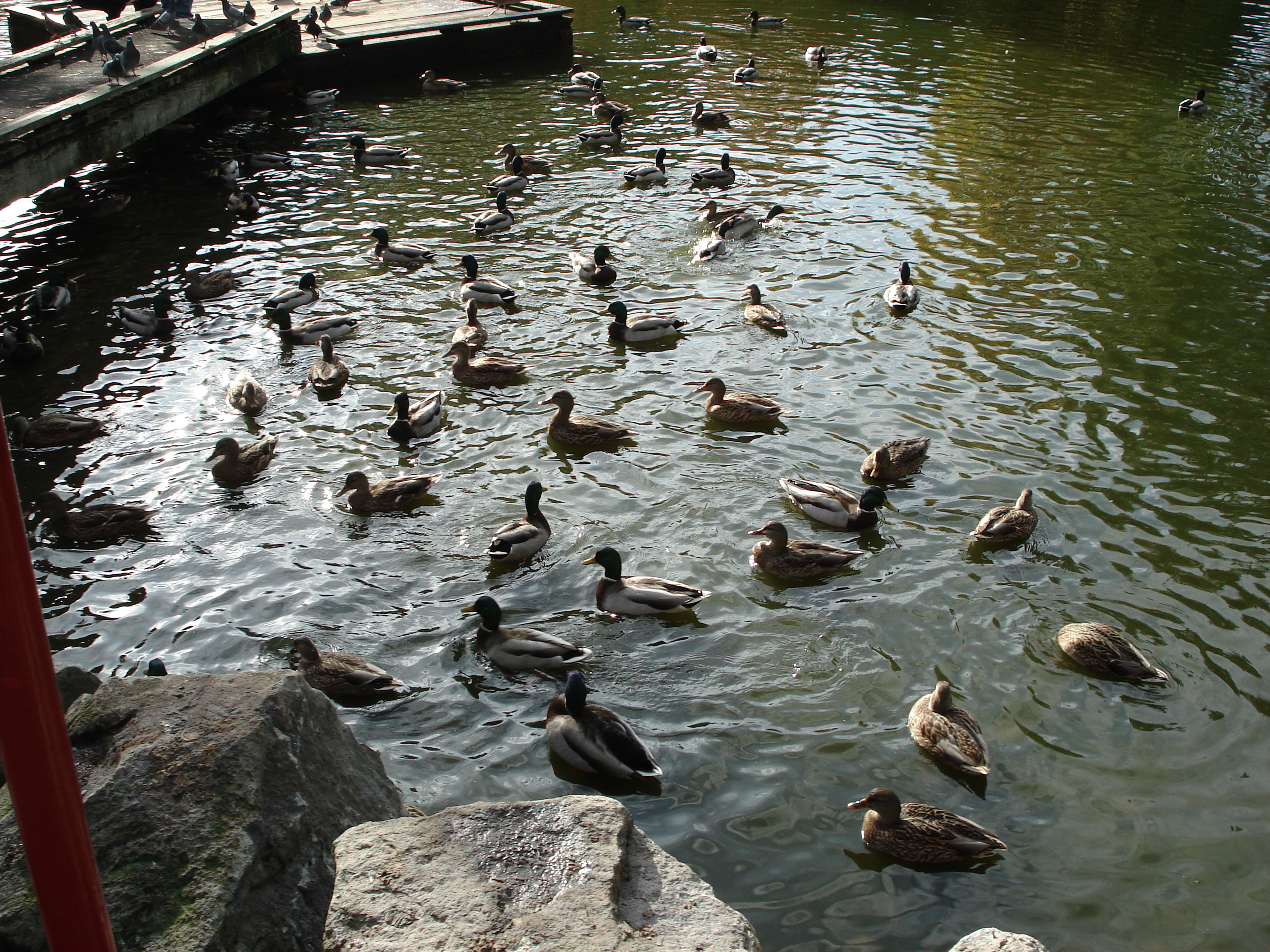
Why a picture of ducks? Why not?
Why a picture of ducks? Why not?

Find Yourself “Through the Gaze of a Navel”, April 23 -27

Emilia Symington Fedy, performer Photo: Tim Matheson

Emilia Symington Fedy, performer.  Photo: Tim Matheson

Have you ever gone in search of yourself only to become lost amidst a sea of self-help literature, West Coast mysticism, wheat grass, and yoga pants? Have you ever wished that you could have a guide in this quest for self, someone who’s tried everything, someone who can help you sift through the affirmations and the crystal healings and maybe, just maybe, answer your most burning, pressing question:

Is this all a bunch of navel gazing?

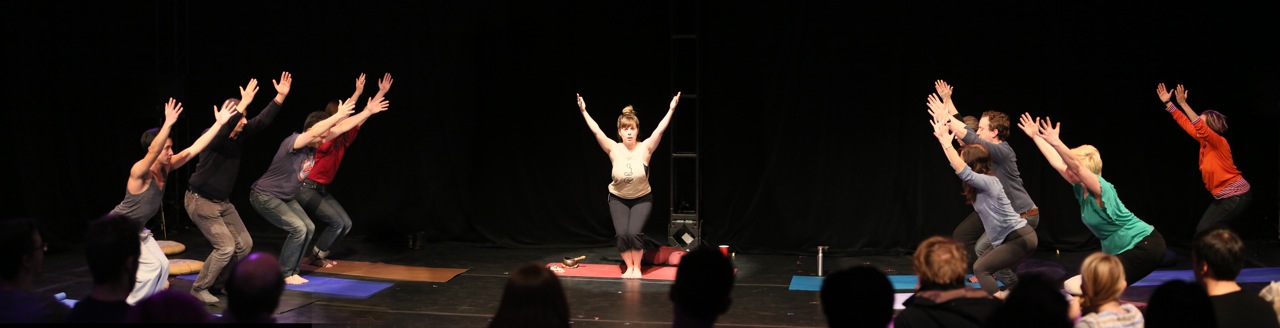
For a limited time this April, storyteller, theatre artist, and self-proclaimed advice expert Emelia Symington Fedy will be sharing her wisdom in The Chop Theatre’s Through the Gaze of a Navel, presented as part of Boca del Lupo’s Micro Performance Series. Part theatre performance, part yoga class, Through the Gaze of a Navel promises to irreverently but unflinchingly explore the fuzzy line between enlightenment and navel gazing, and ask audiences what it is they are really searching for.

Having watched Symington Fedy perform before and having read some of her writing on her website, Trying to Be Good, I was incredibly excited to hear a show like this existed. I was also incredibly excited that Emelia Symington Fedy agreed to answer some of my questions about the show:

You have been described as a “professional seeker”, who “has been obsessed with making [yourself] better since [you] were a kid”. What made you decide that now was the time to share your experiences? 

My co-artistic director Anita Rochon and I were talking one day about how incredible it actually was that I’ve spent so much time and money on “healing” and spiritual pursuits. We realized that I had over the course of 20 years become somewhat of a “professional” at it. Satire is usually a comedic style we like to play with, so considering Vancouver and the overabundance of spiritual practices here, we decided that my personal investment in the material along with living in lotusland made a perfect match and a show began to take shape…

I’m very interested in the shared territory between popular self-help and enlightenment practices and performance. As a theatre student, we did yoga and pilates, we meditated, we had ritualized ways of entering and leaving a performance. What parts of your self-help life have you found performative? What parts of your work as a theatre artist have you found therapeutic?

All of the practices I’ve tried are performative in some way. Searching for an answer is inherently dramatic and the rooms are lit well and the stakes are always high. As well, all of my artistic endeavours have been in some way therapeutic. I make art that I’m personally connected to and means a shit load to me. That’s what makes it good. That doesn’t mean I figure my emotional state out on stage. I’ve figured it out a long time beforehand and now I’m playing around with it; which makes it safe for an audience.

Judging by the almost outrageous amount of self-help literature available on the Internet and on bookstore shelves, and the number of classes, seminars, and gurus advertising paths to wellness, it’s obvious that “self-help” is a lucrative business. Ironically, its success as a business model relies on people not actually finding what they’re looking for. As someone who has explored several different self-help paths, what has been your experience with the “business” side of enlightenment? And why do you think people keep coming back?

I call it “Spiritual Capitalism” and it’s the really disappointing side to a meaningful path. People try to make money of our longing for God and what can I say, it sucks.

There is a part of me that wants to name and shame and blame the folks involved in turning someone’s vulnerable and authentic search into personal gain but then that makes me part of the problem too–so instead we make a play that points satirically at a few of the dark parts in the community. With a light hand we turn the mirror on the audience and laugh together at the struggle of never being satisfied. We are not mean spirited in any way, but I play a character who thinks she knows a lot about yoga and meditation and enlightenment, and really, who can say that they know a lot about that?

In terms of why people keep coming back…we want answers. Why are we here? What is my purpose? Will I get a book deal? And we are willing to pay anything for it.

In grade 8 I studied a pyramid chart called the “Hierarchy of Needs”. At the bottom of the pyramid were needs like food and shelter, and at the very top of the pyramid was a need called “self-actualization”, which could not be sought for until the needs below it were met. With this in mind, do you think the modern journey towards enlightenment is primarily a luxury of wealthier countries, or do you think the quest for inner fulfillment and enlightenment is universal?

You can’t gaze at your navel if you are hungry. Yes, on one hand our ability to focus on “self actualization” is a product of being very lucky and being born in the right country. On the other hand, some people say that humans rising into a higher state of consciousness is our only way to transform and save the earth from extinction. So, like most things, it’s probably not simply good or bad. Folks who have the privilege to study spiritual pursuits are both helping the planet through learning how to raise their awareness and also possibly wasting precious time when they could be digging a well. You know what I mean?

[Yes, I know what you mean, Emelia! Cripes, you’re pithy. And now for a couple of logistical questions…]

I understand Through the Gaze of a Navel will have limited seating. Do you have an additional limit on the number of people who can participate in your yoga class portions of the performance, or are all audience members able to join in?

Everyone is welcome to do yoga. There are seats for folks with mobility issues and anyone who is shy but I have a strong sense that you will be on the mat soon enough when you see that it’s fun and I’m not pointing anyone out. I HATE audience participation when I watch theatre, so I make my shows really friendly and easy to be involved in. The goal is you find yourself saying “I cannot believe I’m doing this, and it’s so. much. fun.” Also, it’s built as a beginner class so everyone can access the poses.

Is there anything the audience members wishing to do the yoga should bring (yoga mats, water bottles, etc.)?

Wear comfy pants.

Having gone swimming with cosmic dolphins and even tried vaginal weightlifting classes, Emelia Symington Fedy is more than qualified to guide you in your search for your centre (whether that centre is spiritual fulfillment or just your own belly button). Remember, spaces are limited so book your ticket early and WEAR COMFY PANTS.

Boca jpg stencilBoca 10 degree


Through the Gaze of a Navel will be performed at various times, April 23 – 27, at The Anderson Street Space (1405 Anderson St., Granville Island). Tickets are $10 and can be purchased online.

Notes: Boca del Lupo contacted me to inquire if I would be interested in writing about this show (and I definitely was). The decision to interview Emelia Symington Fedy, as well as to write this post, was mine. I would like to sincerely thank Emelia Symington Fedy for her time and her thoughtful, eloquent responses.

Dining in the Peanut Gallery

Empty plate with fork and knife.“How do you stay so slim eating steak and potatoes?”

This question came out of nowhere in the lunchroom yesterday at work. To put this remark in context, two coworkers were sitting at one end of the lunchroom table, having a conversation. I was sitting at the other end of the table, eating my aforementioned steak and potatoes (leftovers from dinner the night before) and reading my Maclean’s. Basically, I was minding my own business and really enjoying my meal. Until one of my coworkers decided to interrupt the conversation she was having to remark on the food I had chosen to eat for lunch.

My answer to her was the same answer I usually give in situations like this, “I guess I have a fast metabolism.” And then I added, by way of apology, “I’m sure it won’t last.”

The other coworker said, “You should have seen her at last year’s Staff Appreciation Breakfast.” To which I replied, by way of apology, “Yes, there was REAL WHIPPED CREAM and I just couldn’t help myself. It was amazing.” And that coworker remarked that I “sure can put away food.”

While we’re on the subject of the Staff Appreciation Breakfast, the next Breakfast is coming up next week. I look forward to the Staff Appreciation Breakfast at my workplace every year. It’s a day for the bosses and managers to acknowledge the work done by administrative staff to keep the department running, and it’s a morning of REALLY good food. Hashbrowns. Pancakes. Blueberry compote. Real whipped cream. The works. Sadly, the event has been ruined for me.

I DID eat a lot at last year’s staff appreciation breakfast. I filled my plate and then went back for seconds and thirds. As I said, the food was amazing. What wasn’t amazing, however, were the remarks my (female) coworkers made last year: “You’re going up there again?!”, “Oh wow, look at Lauren!”, “Someone’s got a sweet tooth!”, “Just wait until you’re our age, you won’t be able to eat like that anymore!”

I was humiliated. No one likes to be made self-conscious while they’re eating, especially not a woman. I felt put on the spot, and I felt that my coworkers had decided I was an acceptable target for this kind of shaming because I am thin. No one at that table last year would have dreamed of remarking upon the plates of any of my more curvacious coworkers, and my coworkers at lunch yesterday would never have said what they said to a larger woman, so why did they think it was okay to do it to me?

I had just begun to get over the squirmy uncomfortable embarrassment I’ve felt every time I thought of the Staff Appreciation Breakfast. I was starting to look forward to next week’s event. I thought surely no one but me would remember how much I ate last year (I certainly have no clue what anyone else ate), but yesterday’s lunch was a reminder that I will not escape scrutiny. If I don’t watch what I eat, other people will do it for me. Apparently there’s a sign on my back that says, “Go ahead and comment on how much I’m eating. Don’t worry, I’m thin, so it’s not rude.”

Except of course it is. And it hurts my feelings.

I think I should take this moment to acknowledge that Fat Shaming (i.e. shaming or making fun of people who are overweight as if their bodies are your business) is pervasive, dehumanizing, emotionally damaging, and completely wrong. I cannot believe the emotional abuse and humiliation people think is okay to heap on someone because of their weight.

This is not to say that thin women (or any women really) have a free pass, because obviously they don’t. What I eat has been a subject of scrutiny for my entire life. When I was a kid, it was because I was a picky eater (foods I wouldn’t eat included onions, peppers, mushrooms, cooked peas, cooked carrots, mashed potatoes, zucchini, whipped cream, spinach, avocado, yoghurt with peaches, peanut butter and jam sandwiches, cheese from a lunchbox, and anything else I had determined was icky due to texture, mostly). I cannot blame my parents for wanting me to eat more. It was their job to make sure I ate enough nutrients to be healthy and I know that they worried about me.

That said, they were my parents and they loved me and needed to make sure I didn’t get scurvy or Rickets or something. Everyone else can go suck on an egg.

Like the gymnastics instructor who pulled my little sister and me out of class to show her assistant how skinny our arms were and to have a good laugh about it (this is the same gymnastics instructor who missed presentation day because she was hungover and needless to say she never instructed in my town again). Or the complete stranger from my first week at a new school in grade 10 who, when I declined some gross-looking English potato chips said, “What’s wrong with you? Don’t you eat ANYTHING?” (this person had literally never seen me eat a meal so I don’t know what her problem was). Or the dweeb I dated briefly when I was fifteen who, after he badgered me into disclosing my struggles with disordered eating (that’s a story for another time), responded by saying, “No. You eat a LOT.” and then told me the story of the time he got meningitis which was obviously way more interesting than a bit of wonky dieting and some purging now and again.

Or the boyfriend in third year university who told me I got the flu because I don’t eat enough vegetables (which remarkably I didn’t find very comforting, in addition to it not being true, but at least he apologized later). Or the coworkers who’ve asked me how often I bring cheese and crackers and an apple for lunch (answer: almost every day, for four years, and I like it very much thank you). Or the countless numbers of women who have told me, with a hint of malevolent glee in their voices, that someday my metabolism will slow down and my eating habits (or at the very least, my eating habits as perceived by people who really don’t know a thing about them) will “catch up with me”. Basically, I’m damned if I don’t want to eat a lot (because then people think I’m “dieting”), and I’m damned if I do.

I have tried to tell myself that I should be flattered, that having people remark on my weight or my lunch because I am thinner than them (as opposed to larger) is not an insult, and that maybe they’re just jealous. It is very little comfort.

I don’t want anyone to be jealous of me, I want them to leave me alone and let me eat my damn lunch. I don’t need any warnings that someday my sinful ways will “catch up with me” and I’ll be fat and feel bad about myself; every woman who has ever been a teenaged girl is already afraid. And I shouldn’t have to justify my diet or describe it to ANYONE. But since so many people seem so bloody interested, I am going to say this once, and then never again:

I EAT JUST FINE.

Sure, I indulge at a free bonanza like the Staff Appreciation Breakfast. Why the hell not? Good food is one of the joys of life and, in the absence of allergies or other medical considerations, I see no reason to deny myself. For the most part though, I pay attention to the food groups, try to get in enough fruits and vegetables (though it’s hard), eat my fibre and my protein, never drink Coke or Pepsi or coffee, have primarily switched to organic meat and milk, enjoy cooking and baking, and yes, like most people, I have a sweet tooth that sometimes gets the better of me. I also take the bus to work which means I get a good 40-50 minutes of walking in every weekday, train in aerial silks, take Ukrainian dance classes, and like being active outside (though the city makes it harder). I know my genetics play a huge role in the shape of my body and my ability to maintain muscle, but I don’t eat poorly and when I do I don’t rub it in anyone’s faces.

And even if I ate fast food every damn day and never touched a vegetable, it still wouldn’t be any of your business. I don’t expect other women to apologize for their bodies so stop trying to get me to apologize for mine. I have the same insecurities you have and at times in my past they have cost me my health. I should not need to justify my desire to feed myself to you.

The next time some random person tells me I’m eating a lot maybe I should look at them coolly and say, “Don’t worry, I’m going to throw it all up later” and just keep eating with a weird smile on my face. That’d probably shut them up.

Or maybe (since eating disorders aren’t a joke even though I would find that hilarious) I should just look at them coolly and say, “That isn’t any of your business.” and leave it at that. I’m done apologizing for what I do and don’t eat. I’m done with acting like I should feel flattered by what is obviously negative attention, and I’m done with explanations. I NEVER notice or remark upon what other women are eating (except to occasionally say, “That looks/smells delicious!”). Humiliating me at the table serves only to patronize me (as if I were your child and not your colleague) and it won’t make you feel any better. So please focus your energy on enjoying YOUR lunch and let me do the same.