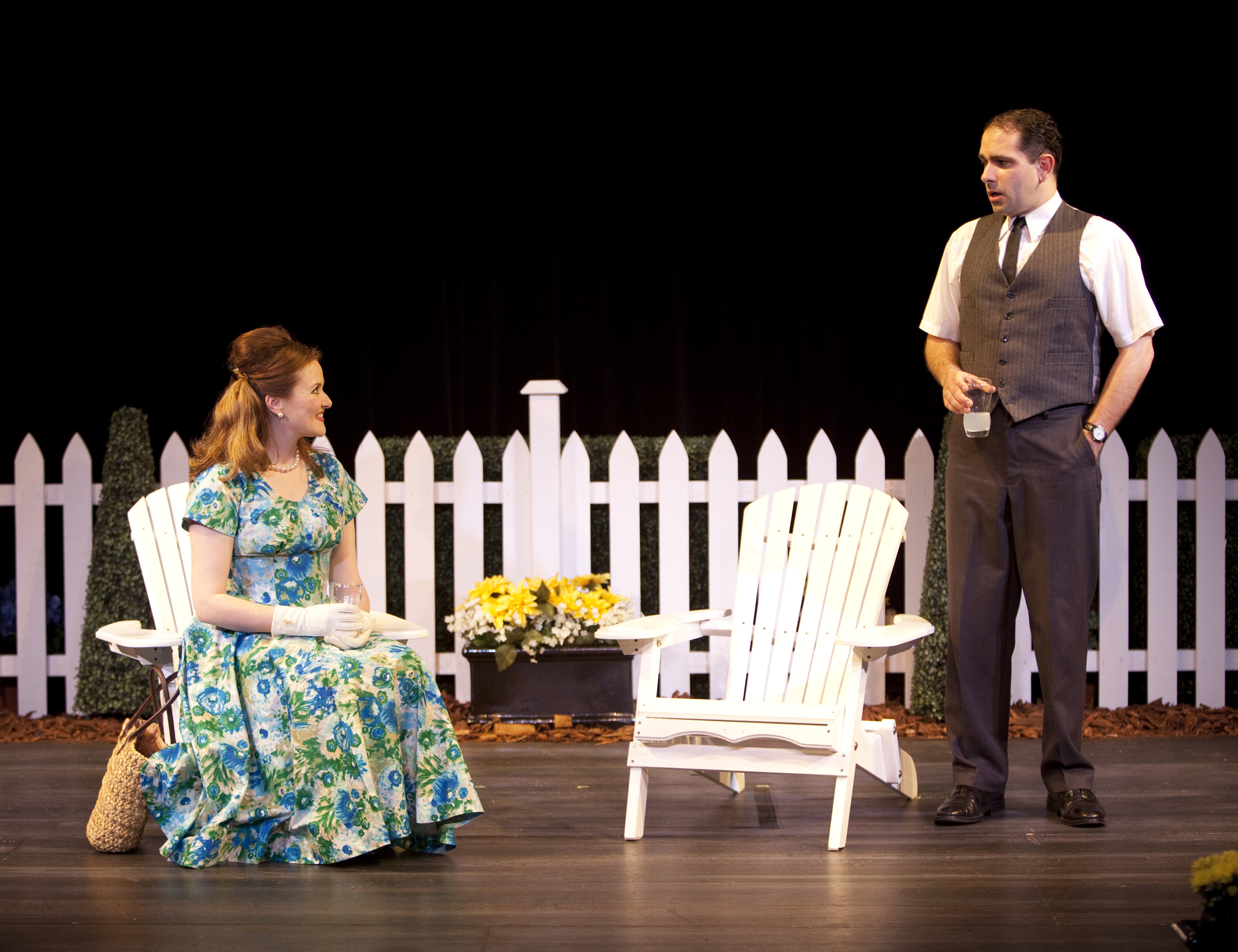
“The Rat Race” (Nifty Fiction)

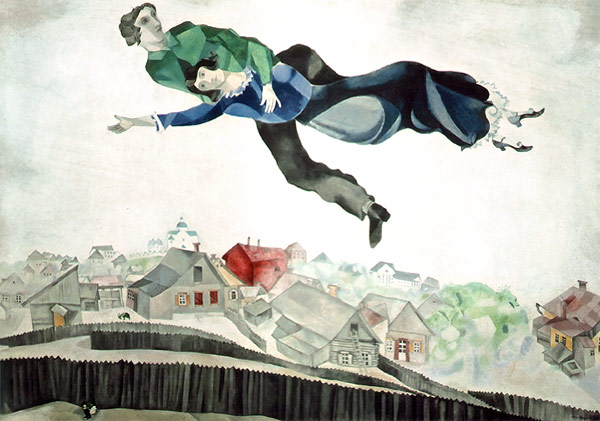
“On the City” – Marc Chagall

[Disclaimer: This is a work of fiction. I am not Delia, and TC is not Nathan. Nathan seems okay, but TC is much cooler. Here goes…]

The Rat Race

Maybe we should hire someone to clean the apartment.

This is an idea Delia has while she stands at the bus stop, the only one in the city where you can gaze out over the gray water to where the gray mountains meet the gray sky, shrouded in even grayer clouds. It’s a good idea, maybe. There are two of them working full time–they can certainly afford it. And the thought of the uncleaned bathroom waiting at home makes Delia feel as though she is failing at life. So maybe they can use their money to pay someone to clean (not everything, just pop over for an hour a week and clean the bathroom and maybe vacuum). It’s a good idea. Maybe.

By the time Delia boards the bus she is angry. There are two of them working full time. They both pitch in as far as household chores and errands are concerned. They shouldn’t have to spend their hard-earned money paying someone to clean. How is it that their dirty bathroom is allowed to make her feel like a failure? How is it that the world expects them not only to work full time to keep themselves alive, but to spend their leisure time cleaning and running piddly errands? Where’s the “leisure” in that?

As the bus launches along Cordova Street Delia leans her temple against the window, convinced that the world’s chief desire is to chew her up, suck the life out of her, and spit her out again.

By the time the bus turns onto her street, Delia has decided that she needs to quit her job. To hell with money–money has no use if she doesn’t feel alive. Besides, she isn’t making that much money anyways, at least not enough to buy a house or support a family. So what’s the point of sitting in an office shunting paper around all day long?

By the time Delia reaches her building she is feeling so reckless she takes the elevator even though she normally just takes the stairs. To hell with saving energy and the planet–the planet owes her for giving her this shitty gray day and a bathroom that despite her best intentions, still remains unclean.

Delia is careful not to slam the door when she enters the apartment but Nathan seems to sense the black dog on her shoulder and his conversation is light and inquisitive while they make dinner and Delia responds even though all she wants to do is lock herself in that goddamned dirty bathroom and have a cry. Once everything is on to simmer she leans forward and presses her forehead against the kitchen counter.

“Is there something I can do?” Nathan says.

“No, you’re perfect,” says Delia, “I just want to quit my job is all.”

“Oh.”

“Work is fine and everything. It’s just wearing me down. I’m supposed to be working so I can enjoy my life, except that I spend the rest of my life running errands or whatever, which is essentially work, except I don’t get paid for it. I work all day so that I can spend my time working. It’s stupid and I don’t want to do it anymore.” Delia says all this with her forehead still pressed to the counter, eyes searching the kitchen tile for her next moody thought.

“I think people work so that they can spend the rest of their time doing things that make them happy,” says Nathan (too optimistically, Delia thinks).

“Except they aren’t!” Delia cries and looks up at him, “We’re all running around doing stupid things just to take care of our homes and look like we’re having a good time but no one actually IS! I was supposed to clean the bathroom today except I spent all goddamn afternoon looking for a goddamn taupe sheet set and then the escalators at the Bay were broken so I got to tromp up and down three flights for no goddamn reason!”

“Did you find a taupe sheet set?”

“No I did not!” Delia sighs and puts her head back on the counter, squeezing her eyes shut. “Until this year I never quite understood the term ‘rat race’ and now I get it. Why do we do this? Is this all there is? I mean, it can’t be. If someone told you now that you would spend the rest of your life working all day so you could spend all of your spare time running around grocery shopping and scrubbing your toilet and taking your car to the mechanic only to retire and find out that the CPP had gone bust and inflation had eaten your savings and you were going to be busy and poor until you died, you’d kill yourself, wouldn’t you? I would. I mean, if that’s all there is.”

Nathan takes a breath.

“Do you want me to clean the bathroom for you?”

“No, it’s my turn. God, I just hate the city sometimes.” Delia looks up at Nathan again, into his bemused helpful face. “Do you think I would be a good farmer?”

“Um… I don’t know. Do you think you would be a good farmer?”

“I don’t know anything about farming.”

“Well then,” says Nathan, “probably not.”

“I just don’t want to live in the city forever.” says Delia.

“I know.” says Nathan, and then he washes the cutting board he’d been using.

In the middle of the night, Delia is woken by the terrifying realization that of course she will never be a farmer, that farming is not an easy life, and she will probably have to work at a desk FOREVER, especially if she has children, and they will bring her no end of errands and headaches.

An hour later, Delia wakes again and remembers that it could be much worse. She is also struck by a sudden comforting thought: the future children can clean the bathroom. Once they’re old enough. They can sweep floors once they can hold a broom, and probably do dishes too. It’s a good idea.

Nathan is warm and comforting beside her as Delia drifts back to sleep, content in her certainty that ten years old is plenty old enough to wield a toilet brush and some Comet. The universe provides.

The Artist-Audience Contract (and Why You Shouldn’t Break It)

When I was in theatre school, we were told to “see everything” we could, and that doing this would help our growth as artists. We were also encouraged to “do everything” (although obviously it was understood this wouldn’t quite be as possible).

It seems that I really took this maxim to heart. In the three years since graduating with my BFA and especially since I’ve begun blogging, I’ve made it a mission to attend shows, support my peers, and, by and large, be a part of the theatre-going community (it helps, of course, that since graduating I have had much more money and time at my disposal). In this time, I have taken in a lot of great theatrical and cultural events (and still missed many good ones, much to my chagrin).

But I’ve also suffered through a lot of stinkers. Yeah, I said it. STINKERS. And I think maybe I’m done. With stinkers.

There comes a time when some of the wisdom imparted to you by your betters is no longer relevant. It is this time when you realize that your betters, in their infinite wisdom, imparted the information to you that you needed at the time, but knew you likely wouldn’t stick with it forever. When I was a student, everything was a learning experience. I hadn’t developed my taste yet, and the more I saw, the more theatrical tools I’d have at my fingertips (and the more theatrical pitfalls I would know to avoid). To my teachers I say thank you for this piece of wisdom, and I know you will understand why it is now time to show this particular piece of wisdom the door.

The reason is this: not all theatre is equal, and not all artists are the same, but one thing that every show worth its salt SHOULD have is a respect for the unspoken artist-audience contract. What I mean by the artist-audience contract is the understanding that the artist(s) presenting the show have worked hard on what the audience is about to see. As an artist, if I expect someone to pay for a ticket, ride the bus, walk through the rain (’cause let’s face it, if you’re seeing a Vancouver show it’s probably raining), hang out awkwardly in a lobby wearing their wet coat and finally sit through my show for however long it is, I need to damn well ensure that I have done everything I could on my end to show respect for this person.

This does not mean making a show accessible to everyone, or to everyone’s tastes. This does not mean avoiding controversial subjects (or conversely, deliberately taking on a provocative theme so the audience can feel hard-core). This does not mean high-tech magic, fancy venues, or avoiding spontaneity (hell, improv performers work very hard at what they do). Having respect for my audience means taking their time as seriously as I expect them to take mine. If we want an audience to respect us enough to sit quietly during our performances and not leave unless they absolutely have to (even if they hate what they’re seeing), we need to respect them. The way to show respect for our audience is to work hard and PREPARE adequately.

For the most part this is a given, and most artists I know would never dream of putting their audience through a poorly-prepared or under-rehearsed production (the exception to this would of course be workshop or developmental showings of work in preparation for a more polished script/production). Sadly, however, there are some stinkers out there. For whatever reason, it seems these stinkers are so confident in the undefinable power of their talent/script/personality/vision that they take their audience for granted. They take a warm audience’s humouring of their lack of preparation for enjoyment of and connection to their “work”. They take their audience’s uncomfortable laughter as a sign that their train wreck of a show is funny. Or something. And they tend to do all this with either a big shit-eating grin on their face or a snooty high-brow attitude that just screams “I’m an artiste and my work is important!”

You know what, stinker? It’s not. And if you fail to prepare adequately for what you are presenting, you hardly have the right to call that theft of my time work. If I have to sit through your ill-prepared piece of crap, I’m the one doing the work here, and maybe you should need to buy a ticket from me to compensate me for my time.

Often the stinkers I encounter are the usual suspects–the so-called “emerging artists” who have big ideas perhaps, and big dreams, but spend all their energy on venue and promotion and forget, it seems, to make a decent show to go with their hot air. These stinkers really get on my nerves because they give REAL emerging artists (i.e. people who work really hard on their craft and on what they present but haven’t built a reputation or funding strategy yet) a bad name. Being “emerging” is not an excuse to do your work badly. It is not an excuse to disrespect your audience and their money and time. The emerging artists I call my friends are able to produce good (albeit underfunded) work on less than a shoestring budget, the whole time working paying jobs on the side. They understand their duty to their audience, and they understand their responsibility to themselves and to the people they work with. If you want recognition and exposure, you have to prove yourself. And proving yourself takes work.

Some of these stinkers don’t realize what they’re doing. They believe very strongly in their vision and can’t (or won’t) understand why it isn’t working for an audience–they’re giving a lot of time and energy but they aren’t using their heads and they’re not working effectively. These stinkers I feel sorry for. The stinkers I really can’t abide are the ones who know they haven’t prepared, who know that what they have to offer is not something they’ve worked hard on and for some reason they Just Don’t Care.

I want to make very clear right now that getting up on a stage and simply “being charming” and flying by the seat of your pants is not admirable. Your lack of preparation does not make what you managed to pull out of your butt any more impressive. It is what we in the theatre world like to call “wanking”. It is disrespectful to your audience and to the other artists you’re working with. Don’t do it.

“Wanking” is not unique to emerging work. There are also stinkers to be found among professional companies. I have sat through professional productions WHERE EVERYONE SHOUTED THE WHOLE TIME. I have sat through productions that had budgets that talented emerging directors would KILL for, and though the costumes were nice and the set was cool, the direction was merely perfunctory. I have sat through productions where every single transition was a black-out (adding, I’m not kidding, an extra 30 min to the show). I have sat through plays that were 40 min too long because of a clear lack of dramaturgy. The fact that I had to pay extra to see it at a “professional” production just made the breaking of the artist-audience contract that much worse.

Art deserves support. It can touch us, teach us, and add so much colour to our lives. Artists work very very hard to make this happen for their audience and I am pleased to support that. But there are some stinkers out there screwing it up for the rest of us, and to them I say this:

I am done.

To hell with what my teachers said. I am an intelligent adult and I know enough about theatre to know when I am being disrespected as an audience member. If you don’t take your work seriously, why the hell should I? Smarten up. Until you do, you will not be seeing me at your shows.

Making Contact with Gifted Students in the VSB

This Friday, I will be attending the end of semester celebration for the Making Contact Mentorship Program, offered as Gifted/Enrichment Education programming through the Vancouver School Board. This is the second year in a row that I have participated in the program as a Creative Writing mentor. The program is always looking for more great mentors, so my purpose in blogging about Making Contact is to hopefully drum up more interest among my brainy and talented readers.

I was originally referred to the program by my friend, playwright and thesbian extraordinaire Emily Pearlman of MiCasa Theatre (Ottawa) who had volunteered with Making Contact as a writing mentor in the past. She is no longer living in the city but she found the program rewarding and thought I would enjoy it. She was right.

The purpose of Making Contact is to connect gifted Vancouver students with mentors who have expertise (or, in my case, skills and a helluva passion) for the same subject. The subjects explored could be almost anything. Making Contact is really only limited by the interests of the students participating and the ability of the program to find suitable mentors (in my limited involvement with the program, I have become aware of a variety of mentorships which included the following subjects: comedy, insects, film making, history, marine biology, comic book art, robotics, and transit planning). At the end of the program, students share the projects they have made with their peers, parents, and mentors at a celebration and in the Vancouver School Board office (projects will be on display there later this month if you’d like to check them out).

A unique characteristic of this particular program is that it is designed to provide enrichment programming to gifted VSB elementary students. Though several mentorship programs determine eligibility based on financial need or family circumstances, participation in Making Contact is determined by the talents and gifts of the students being referred, and their ability to make commitments of time and effort to the program. People have sometimes been surprised that the young writers I have mentored were not in financial or academic need, but to me a child is a child. The gifted children in Making Contact come from a wide range of socioeconomic and cultural backgrounds and are not necessarily in financial need, however, gifted children often experience isolation and frustration stemming from differences between them and their peers, and the inability of school programming to keep pace with their skills and interests. A program such as Making Contact allows these gifted students to benefit not only from focused exploration in their area of interest, but also from having a role model who shares these passions and interests.

I have been very lucky to have met both of the students I have mentored through Making Contact. They are extremely bright, talented, and humorous young women and I feel privileged to have been able to help them express their creativity through writing. I have also been able to strengthen my own writing through sharing my skills–a benefit which several Making Contact mentors across disciplines have discovered and discussed with me.

At the end of the day, participation in this kind of volunteer work just gives me the warm fuzzies. I get to spend an hour or so every week talking about writing and books (yay!) with a promising young person who shares my interest (yay!) and, well, I get to be a human being, making contact with another human being in a structured and mutually beneficial way. And that’s fantastic.

The subjects that interest the students referred to the Making Contact Mentorship Program are in fact so varied that you may not be aware that your skills and knowledge (either through your job or your hobbies) could be of interest and help to a Vancouver elementary student (for example, I had no idea so many K-7 students were interested in chess!). For information regarding which areas of expertise Making Contact is currently seeking mentors for, please visit their Current Needs page.

Everything Is Not Okay In the Communities That Raised Me

I planned this week to write a funny blog post about politics and ghosts.

Instead, before I could get started, my mother broke the news that a young man from St. Walburg, one of the communities I consider “my neck of the woods” (my childhood home in rural Saskatchewan is equidistant from the towns of St. Walburg, where my mother taught, and Turtleford, where I went to school) and his wife and son had lost their lives, allegedly in a more upsetting and shocking way I would ever have thought possible.

For information about this tragedy, I have turned to the Saskatoon Star Pheonix and CBC Saskatchewan, which have given me some facts, I guess, though I resent the splashy way in which these horrible events are being presented, and the audacity of the reporters who would be so callous as to contact family members for comment at a time like this.

When I saw the photos of the family I recognized him right away. When I was in high school I thought he was cute. My mom taught him in grade 3. I competed in the Meadow Lake Music Festival with his sister. There is nothing in my thoughts or memories of this young man or his close-knit family to suggest such a horrible thing was possible.

But the horribly impossible has become horribly possible. I am in shock, I guess, I can hardly believe it (I certainly don’t want to). When I think about what the families of these young people must be going through (which, at the moment, is all the time), I feel sick to my stomach. To say I am experiencing grief would be an insult to the families and friends of this young couple and their son, because their grief is beyond imagining now.

Instead, I am casting around myself, trying to understand something that can’t be understood, that maybe isn’t any of my business to try to understand right now. For the second time in the past year and a half, a young man my age, from my tiny rural area, has lost his life in an inconceivably desperate act (although in these most recent events the deaths of his wife and son have exponentially heaped horror on the tragedy). Both of these young men were good-looking, good-humoured, gentlemanly young men with supportive families and close friends. They also both worked in Fort McMurray, an oil town gaining a reputation for suicide, violence, and desperate acts among its workers. It’s fairly common knowledge that working and living conditions in Fort Mac are extremely dire in terms of mental and emotional health.

This is unacceptable to me. Nothing is worth this loss of health and life and this senseless devastation of families. Not oil, not money, nothing. How many other families in other provinces, Alberta or Newfoundland or Manitoba, etc., see young men go up to Fort Mac, only to have them return mentally and emotionally strained to the point of breaking (or not to return at all, the victim of a suicide or murder)? This is not acceptable to me. It is not acceptable for anyone.

And yet the conditions that help contribute to these tragedies are accepted. The oil life is no picnic no matter where you are (which is why I also know several young men who’ve become addicts or alcoholics while working on the patch) and this has become an accepted part of life in the Prairies. I’m frustrated by this. I’m horrified, I’m angry, and I’m completely heartsick.

I can’t write a funny or clever post today. I’ve been thrust into a world that is harder, meaner, more senseless and more dangerous than the world of the communities I grew up in. And my communities have been thrust into this world too.

Where I’m from, people look out for one another. We are good people. Our parents worked hard all their adult lives to provide a good life for us. We are not unfamiliar with the harshness of cold winters or summer drought. We are not unfamiliar with the cruel indifference of fate as it intersects with farm life (though I must admit that as the child of teachers I was insulated from the worst of this). The communities that raised me know how to accept the good luck with the bad. But this is not a case of luck. I do not accept this. And I am utterly sick at heart.

[I am categorizing this post under “Politics” because ultimately, any push to improve the working conditions in Fort Mac will come down to the will of regulators and lawmakers, as long as there is public support for positive changes.]

Brief Encounters: Strangers, Drugs and the DTES

Living where I do, I pass through Vancouver’s Downtown East Side (DTES) almost every day, either transferring buses on my way to work in the morning or passing through to Gastown on the bus for dinner or a show on the weekend. For anyone not familiar with the DTES, it is a place unlike any other in Vancouver (or Canada). This part of the city sees a high rate of drug addiction, mental illness, and homelessness. It is also alive, buzzing, colourful. In other parts of the city, it is the distressed and marginalized who become invisible to the world. In the DTES, it is me, with my lack of involvement with life and work in this area, who becomes invisible–an observer, and occasionally, a listener.

With the arrival of spring (and the warmer weather), I have had the opportunity to see and interact with more people in my brief journeys through their landscape. Some of these encounters have stuck with me, snapshots tacked on the mirror. I can’t condemn or judge. I have no solutions to offer. I can only tell.

ONE.

It is evening and TC and I are riding the bus. We have a reservation at Jule’s in celebration of my birthday. I’m sitting gingerly, careful not to wrinkle or dirty my dress. I’m playing with my necklace, a birthday gift. A man in his thirties makes his way towards the back of the bus (and us), swaying dangerously as the bus moves. He sits down across from us and makes a funny comment about his difficulty getting to his seat. TC and I laugh. The man begins a conversation with us. I assume he is drunk, but he has a nice smile and nice teeth. We are not at all bothered by him. The man tells TC that his “wife” (i.e. me) “has a good sense of humour.” TC agrees and I cover my left hand with my right so the man will not see that I have no ring and be embarrassed by his mistake.

The man tells us that he is going to Main St. to take drugs. He says he has a wife and three children. His wife does not know that he’s using crack–she doesn’t know he has ever been using drugs. He says, “I know it’s supposed to be bad to lie, but sometimes, you have to. To protect people. I know I’ll have to tell her sometime though.” I think to myself, this man is an addict, the way I would think, this man is a hippie, or this man is a Canucks fan. Just a marker for a stranger.

He tells us he has only been using drugs for two weeks. I’m surprised but I believe him (I imagine that long-term crack use would damage his very nice teeth). He has only been using for two weeks but already it has claimed his Friday evening and probably several days and evenings since. He is angry that he ever took crack in the first place, and blames a friend for getting him into it. But he gets off the bus at Main Street, and tells us he just wants to get back that feeling.

When I tell my co-worker this story, she asks if either TC or I attempted to convince this man not to use drugs that evening. I say no. We didn’t. He wished us a good night and we said thank you. And that’s all that happened.

TWO.

I am returning home from running errands at 2:00 p.m. I switch buses at Main and Hastings. To my left, I am joined by a Young Man who seems more like a boy–he could be my age at most but I’m not sure he’s even 20. He’s wearing a white undershirt and his skin is pocked and scarred. He is otherwise a good-looking young man, with a wiry build that suggests energy and activity, but today he is so tired he cannot lift his head from the hands resting in his lap.

To my right sits a man in a ponytail and clinical scrubs. He seems a little wired and very sociable. He remarks loudly to the fellow beside him that he was on his way home from work but has been called in to return to cover the rest of the day. He is asked what he does. The Man in Scrubs replies that he works at a methadone clinic.

At this the Young Man riding beside me raises his head. He turns and asks (over me) about which methadone clinic he should go to. He has a referral for one, but he’s not sure if it’s the one he should visit. The Man in Scrubs tells him kindly (and cheerfully) that it is best for him to go to the clinic he’s been referred to, that it’s close by, and not to worry, he will be taken care of there. The Young Man looks tired, and sad.

As the bus nears my stop and I leave my seat, I hear the Young Man tell the Man in Scrubs that he has relapsed today. The Man tells him not to beat himself up about it, it has happened, and to just keep going. I get off the bus and I wonder what the Young Man was like before he began a methadone program. I wonder about his energy (did he have more before, or less?). I wonder how old he is.

THREE.

It is 7:30 a.m. and I am waiting at Main and Hastings for the bus that will take me to work. I’m looking up periodically, always afraid that a bird will shit on me (crows constantly congregate on the electrical wires at Main and Hastings, and pigeons live under the awning of the Rickshaw Theatre; seagulls, of course, are everywhere). Two men near me have a small argument, and one of them walks away.

The other approaches me and says hello. He tells me that he wants me to see something and holds out a stub for a federal government cheque. He tells me to look at the amount. The cheque had been for $326.

He says, “I helped ten people buy dope yesterday because I had this [the cheque]. How much of that do you think I have left today?”

I say, I don’t know. I can feel my features making a sad face and I say, Is it gone?

The man holds up a toonie. “This is all I have left,” he says. And then, “I’m not telling you this because I’m asking for money. I just wanted to show somebody because I’m ashamed of myself. I needed someone to see what I did.”

I nod as my bus pulls up. He tells me to have a good day. I think I say, You too. I hope I say it.

———————————————————————————–

These stories are true, to the best of my memory. These stories all happened in the past three weeks. I’m sharing them not because I have anything to say about them, but because they made an impression on me, and because I want to.

I don’t know about drugs or addiction. I haven’t seen it in my immediate life. I hear and read good things about harm reduction and recovery programs available through places like Insite and the Union Gospel Mission in Vancouver. But I don’t know anything. Stories brushed against me, and I just wanted to tell them.

Hive: The New Bees 2 (Get your buzz on May 24-26)

Are you in need of a great night of arts and culture, but can’t decide what to see? Do you wish you could have the opportunity to experience a variety of work from a variety of theatre companies, without having to leave the venue? Do you wish that instead of watching one two-hour show, you could watch ten-minute shows, have a drink at the bar, and then just keep watching more bite-sized pieces of theatre? If so, Hive: The New Bees 2, produced this year by Resounding Scream Theatre, may just be the show for you.

In 2009, Simon Fraser University BFA Theatre graduates Aliya Griffin, Gina Readman, Natalie Schneck, and Caroline Sniatynski organized and produced the original Hive: The New Bees as part of the 2009 Vancouver Fringe Festival. The mission behind the original New Bees was to showcase the work of recent Vancouver-based theatre graduates from SFU, UBC, and Studio 58. This year, Catherine Ballachey and Stephanie Henderson of Resounding Scream Theatre have taken up the mantle to produce Hive: The New Bees 2, showcasing the work of 12 emerging Vancouver theatre companies (many of which had participants in the original Hive: The New Bees).

For those of you who have never been to either Hive: The New Bees or to any of the three Hives produced by Vancouver’s professional companies in past years, you are in for a wild and fun night. You can stay as long as you like. You can see as much or as little as  you want to. If  you want to try to watch every single show, you can! If you want to watch one show again and again and again, you can! If you want to sit by one of the two bars and watch roving performances or our musical and comedic guests, or simply stare into your beer all night long, guess what? YOU CAN!

I’ve been to two of the professional Hives and I performed in Hive: The New Bees in 2009 (shameless plug alert: I am also performing next week, as part of the ad hoc company The Troika Collective). It’s always a fun night and I’ve always been able to walk away with at least one gem of artistic creation that really blew my mind (in addition to the other theatrical work I enjoyed).

The 12 emerging companies (and ad hoc companies) participating next week in Hive: The New Bees 2 are:

After each company is finished performing for the night, New Bees 2 will present after-show entertainment for those who like to party. For more information on the after-show acts, please visit the show’s event page.

Hive: The New Bees 2 runs May 24-26 at 8:00 pm at Chapel Arts (304 Dunlevy  Avenue). After-show events will run from 10:00 pm to midnight each night.

Tickets are available at the door or can be purchased online at Brown Paper Tickets. Tickets are $20 for the whole evening or $10 for the after-party.

Emerging theatre companies often suffer from a lack of exposure as much as a lack of funds. We’re here! We’re theatrical! Come on down and get to know us!

[MORE SHAMELESS PLUGGING: The piece I am performing in is called “Chernobyl: The Opera,” directed by Aliya Griffin, with music for four voices, accordion, and cello composed and arranged by Elliot Vaughan. We’re a talented bunch (if I do say so myself), and plus, you get to hear me sing!]

UPDATE MAY 25th: This just in! Colin Thomas of the Georgia Strait had good things to say about the pieces in New Bees 2 and about the Troika Collective as one of the particulars! Read all about it!

It’s time to impart my 26-year-old wisdom

This past year I was in Lisbon! Wowee!

Birthdays seem to be favourite times for people to reflect on their lives, the year that has passed, and what, if anything, they have learned about themselves and their world. Given that I possess a long memory (so long, it seems, that I also remember things that didn’t happen), and an obsession with things past, I am no exception.

As I turn 26, and enter what I consider to be the last year I can truly refer to myself as being in my “mid-twenties”, I’ve been turning over the events of the past year in my mind. I’ve been examining them and trying to figure out what I did right, what I could have done better, and what had nothing to do with me at all. My 26th year was a good year, as years go. I was very busy, and was challenged to be braver and smarter than I usually think I am, but I was also very engaged, very supported by those around me, and very loved.

If there is one common theme to be found among the many little things I’ve learned in my 26th year, it is this: my own decisions govern a much larger portion of my life than I had originally thought (though obviously life still throws in events, obstacles, and lucky breaks all over the place).

On the one hand, this scares me. To be in the driver seat of my life is a big responsibility (and one, at the age of 26, I really can’t escape). On the other hand, on my birthday at least, it feels incredibly empowering, and exciting. Be gone, stupid things that bother me, it’s my world now!

ANYWAYS, I’m not getting any younger so let’s cut to the chase: now that I am a super wise 26-year-old and am no longer held back by my 25-year-old naivete (ha ha), the gift I will give to the world this year is a list of decisions that, before my 26th year, I never knew were really decisions at all:

1. My own limitations are my decision.

I learned this when I travelled across Portugal and Spain last October. I was very anxious about travelling by myself for a month. I expected to be overwhelmed. I expected that I would be subjecting myself to the cruelty of the universe and my inability to read directions on a map and I’d spend most of the trip having an awful time. But I was fine. Yeah, I got lost. Yeah, I wasted some time and money. Yeah, planning on the fly can get a bit stressful, especially with shoddy internet connections and foreign keyboards. But I saw the things I wanted to see and did the things I wanted to do (with a couple of exceptions). I knew where the boundaries of my comfort zone were, and I decided to step outside of them.

In Barcelona’s Sagrada Familia

I also tried to recognize where having limitations was beneficial, and in those cases, I decided to honour those limitations. For example, because I was travelling alone, I decided that my health was paramount. So I didn’t drink much, and I didn’t stay up too late (Barcelona is a pretty expensive place to just lie around and be hungover in). Sure, I missed out on some of the clubbing, but hey, I’ve spent the past six or so years in highly physical training of one kind or another. I am very aware of the limits of my physical stamina, and I decided to respect them by being good to my body while I was travelling. So did I miss out on things? Did I limit myself? Yes. But my limitations were my decision and the compromises I made were ones I can live with.

2. Falling in love is a decision.

I don’t think I so much fell in love this year as made a decision to step forward into it. There is a moment, in love, when you can decide to leave certain things unsaid, or undone. You can turn back, you can pull away. It might not be this way for everyone, or every time a person is in love, but this time, I decided. I decided to accept the potential for heartbreak. I decided to make space for a new past, one that included a person who had never been in my past before. I decided to make space in my imaginings of my future.

It is a big thing, to take on the potential for hurt, to include someone else in your wishes. I’m glad I didn’t tumble headlong into it, sight unseen, and just stick with it because it was too late to turn back. I’m glad I decided. It was worth the decision.

3. A family is a decision.

There’s a funny old saying that goes, “You can’t choose your relatives”, and biologically speaking, no, you can’t. Your parents will always be your parents, your siblings your siblings, and your children your children. But that’s beside the point.

My parents’ vegetable garden on the Prairie, July 2011

The family I will always want to have is a family that is close and supportive, whose memories of funny moments and happy times outnumber the memories of arguments or strife. I don’t ever want to have a family that dreads seeing each other on the holidays, or dreads telephoning each other, and fortunately for me it is unlikely that I ever will.

That said, it occurred to me this year that just because I will always have my family, that doesn’t mean that they can be taken for granted. The same attention I give to my romantic relationships (because there is the potential there to lose the other person if things don’t work out) can and should be paid to my relationships with my family. This means trying to watch my temper, trying to be helpful, and trying to be understanding of my family’s peccadilloes, (the way they are understanding of mine). My family has always been close to me, and we are funny and awesome. Now that I don’t get to see my family as often as I’d like, I want to make sure they will always remain close to me. Whether or not I put in the work to maintain strong supportive relationships with my family depends on me.

4. Being a nice person is not one decision, it is many many decisions.

I’ve always wanted to be a nice person. I presently want to be a nice person, and I’ll always want to be a nice person. But deciding to “be nice” is only the first decision of many. Being a nice person means making a decision every time I am faced with the opportunity to prioritize my comfort over the comfort of another. Sometimes it means deciding not to be snappy or rude to a stranger just because I’m having a bad day. Sometimes it means giving up something that I want, but don’t actually need as badly as someone else does. Sometimes it means inconveniencing myself a bit for the convenience of someone else.

Does my good side always win out? No, it definitely does not. I’m still a work in progress, and I’m okay with that (no one’s perfect). That said, do I think I am a nice person? Yes, for the most part I do, because instead of resting on my laurels and assuming I’m nice because I’m polite and don’t kick puppies, I recognize that being nice is a continuous process.

It’s not just about how good I feel when I do something nice (and I do feel good), it’s about deciding to make my coveted identity as a “nice person” an effortful and continuous state of being. Or, you know, an effortful and continuous struggle. Because as anyone who knows me well can probably tell you, I’m no saint. But at least I try.

So “Happy Birthday” to me.

I’m probably one of the luckiest ladies alive, considering the often-charmed circumstances in which I spent my 26 years. Now that I’m a little bit older, I hope I am indeed a little bit wiser (otherwise I just wasted a lot of everyone’s time imparting my wisdom) and I hope at this time next year I will be able to look back on continued growth, and more bitchin’ good times. I hope you will too.

Granada, October 2011

[Note: This year I had hoped to repeat my Five for Five Project in the weekend before my birthday, but unfortunately a personal matter took me out of the province. Instead, to express my gratitude for 26 years on this great planet I have donated $26 to the David Suzuki Foundation.]

My “Exquisite Hour” with Relephant Theatre

Nevada Yates Robart and Josue Laboucane. Photo: Tim Matheson

Would you give me your hour?

That depends, you might say, will I enjoy it? Will I be glad I did? What will I get in return for my hour? When this hour is gone, what will happen to the hours that follow?

If the hour you give is the hour you spend watching Stewart Lemoine’s The Exquisite Hour, produced by Relephant Theatre Co-op and presented at the Revue Stage on Granville Island, then I may be so bold as to reply, yes, you will enjoy your hour, yes, you will be glad you gave it to see this play, and as for the hours that follow The Exquisite Hour, that’s for you to decide (but I imagine you will spend some of them dreaming of sunshine and letting a private smile play across your face).

Would you give me your hour?

This is the question the oddly forward Helen Darimont asks shy bachelor Zachary Teale after she intrudes on his evening ritual of a quiet glass of lemonade in his garden. Zachary’s hour is the favour he grants, and it is this hour, played in real time, that the audience is privy to.

On the surface, this dainty two-hander, set in 1962, seems it may be perilously close to saccharine–the colours are bright, the patterns are floral, and there is a “just-so” simplicity to the story that could quite potentially grate against the sensibilities of any confirmed cynic.

But to hell with the cynics, I say, this play is lovely. To fault a story for being sweet is like faulting someone for smiling–if the impulse behind the good cheer is genuine, you’re probably just jealous. To dwell on the sweetness of this play as a flaw is to see the lemonade glass as half empty (and to not even notice that there’s a shot of bourbon inside).

Nevada Yates Robart…doing…something. Photo: Tim Matheson

Bourbon indeed. The saving grace of The Exquisite Hour is that it is not all sunny yellow sweetness. Actors Nevada Yates Robart (Helen) and Josue Laboucane (Zachary) infuse the good-natured humour of Lemoine’s script with a total and hilarious commitment to playfulness. It will likely be the strangest and nicest hour-long conversation you will ever eavesdrop on and I know I wasn’t the only member of the audience to scream with laughter or shake my head as an incredibly awkward but incredibly funny moment unfolded in front of me.

In case you are wondering, The Exquisite Hour is not an avant garde play. It is not high-tech. It will not cover your world in shades of ethical grey or expose the dirty underbelly of society. Plays that do these things are often good plays, and you find yourself leaving the theatre unsettled and challenged. The Exquisite Hour does not do these things, and yet, The Exquisite Hour is a good play, one that will leave you bright-eyed and tickled (take that, cynics!).

The appeal of The Exquisite Hour lies in its balanced combination of sunny nostalgia and refreshing verbal and physical humour. It’s a warm summer evening–spent with your weird but lovely neighbours. The world’s alright, the lemonade’s cool, and it’s that little kick of something just a bit stronger that makes your hour truly, well, exquisite.

Quite happily, I gave my hour to Relephant Theatre and I don’t want it back. If you would like to do yourself the favour of spending your hour at the Revue Stage, The Exquisite Hour will be running until May 12, with both evening and matinee performances. Tickets can be purchased online through VancouverTix.com, or by calling 604-629-8849.

Disclosure: My ticket (and +1) for the opening night of The Exquisite Hour was provided by Relephant Theatre. I remain the sole author of my content.

Sunshine Coast Adventures: Nifty at the Painted Boat

View from our patio at the Painted Boat

Sometimes, a lady just needs a holiday. And not just any old holiday, which often involves headaches and penny pinching and a hotel room overlooking a dumpster and crack deal. Sometimes, a lady just needs to vacation like a rich person.

Enter 604pulse.com, and their recent contest to win a free 2-night stay in a villa at the relaxing, beautiful, and oh-so-luxurious Painted Boat Resort on the Sunshine Coast. On a whim, I entered the contest back in February, never expecting to think about it again. Until I won. Wooohooo! Nifty got a rich-person vacation!

On Friday, the TC and I packed our rental car (obtained super-cheap by booking through hotwire.com and by buying our insurance through ICBC instead of through the rental company, FYI) and headed up the Sunshine Coast. With the sun beaming down and a compilation of 90s alternative hits rocking the stereo, we enjoyed a pretty but winding drive to Madeira Park. We accidentally passed our turn twice but in no time at all we were at our destination.

And what a destination it is. Every villa at the Painted Boat resort has a waterfront view. Because it was off-season, the resort was fairly quiet and I suspect this is the reason we were bumped up from the standard two-bedroom villa I had won to a two-bedroom villa that also had a loft (this place was twice the size of our decently spacious apartment). The master bedroom had a king-sized bed and overlooked the bay. Its en suite bathroom had a huge stone-tiled shower and a massive bathtub. There was a fireplace. A large patio with a barbecue. A beautiful kitchen with granite counter tops. There was even a washer and dryer in one of the closets (which came in handy on our first morning when I spilled milk down my sleeve).

Minions, build me this bathroom!

Minions, build me this bathroom!

Needless to say, I spent my weekend “star-fishing” the massive bed, taking more baths than I needed, and “ballet dancing” all over the beautiful expansive hardwood (which of course becomes “figure skating” when you are wearing socks). Obviously, whenever we were in our villa, TC and I wore the plushy robes provided by the Painted Boat (my assumption is that rich people don’t restrict themselves by wearing actual clothes any more than they have to, I wouldn’t).

Kayaking on the sea!

Kayaking on the sea!

Though on Friday night we kept matters frugal by cooking supper ourselves (excellent steaks barbecued on waterfront patio, courtesy of my TC) and relaxing under the stars in the resort’s hot tub, for our second day we decided to live it rich and take advantage of the resort and its activities. Late afternoon massages at the Spa (I had a salt scrub first) put us in a lovely mood for dinner at the Restaurant at the Painted Boat. It was a luxurious, spendy, delicious day.

My favourite activity was actually the cheapest one–before our fancy massages and dinner, TC and I rented a double kayak from the Painted Boat and spent two sunny hours paddling around the bay and various little inlets near Madeira Park. During these two hours, in addition to the regular seagulls, geese, and crows, we saw the following wildlife:

  • sea stars (purple, orange, and white)
  • a cormorant (we think)
  • a loon
  • a bald eagle
  • a blue heron
  • clams and sand dollars beneath the water
  • a crab being viciously killed and eaten by a crow
  • a SEAL splashing around and having a great old time (he didn’t let us get too close though).

Basically, this place is awesome. I don’t have much more to say, except that my weekend was awesome. Not only is the Painted Boat itself a beautiful and beautifully located resort, its proximity to the rest of the wonders on the Sunshine Coast meant that after checking out on Sunday, TC and I were able to take a very short drive to hike in the Skookumchuck Rapids Provincial Park and make it back to the Langdale ferry before 4:00 pm.

I miss you already.

Yeah…my weekend was awesome. Thank you so much to Robyn at 604Pulse and to Jennifer and Lori at the Painted Boat Resort for providing my TC and me with this amazing opportunity to live rich and relaxed for a glorious weekend on the Sunshine Coast. For all its being a 4 1/2 star resort, the Painted Boat retains a relaxed and outdoorsy atmosphere that was not at all stuffy or classist. My heart cries for the beautiful kitchen and the fabulously huge bathtub, but I am fully content and happy with my new memories of the unceasingly beautiful province of BC.

Disclosure: Not much to disclose, actually. Our stay at the Painted Boat was free because I won a random-draw contest held by 604Pulse.com. I do not believe any of the parties involved knew I was a blogger, and I certainly was not asked to blog about my visit.

“Jason and the Argonauts” at Carousel Theatre (epic theatre for smart teens)

Every once in a while, I have the pleasure of reviewing a show presented by Carousel Theatre. Every once in a while, I also have the pleasure of guest-posting for my friend Raul Pacheco-Vega, of Hummingbird604.com.

Never before have I had the pleasure of doing both AT THE SAME TIME.

Well now I have.

The following is my review for Visible Fictions’ Jason and the Argonauts, being presented by Carousel Theatre until April 29th. To see my review in all its glory, please visit the actual post at Hummingbird604.com.

Heroes. Villains. A quest for destiny. Treachery. Sea monsters…Ken dolls?

Using only the contents of an old trunk and a wooden cart (designed with breathtaking cleverness by Robin Peoples), Scottish actors Tim Settle and Simon Donaldson of Glasgow’s Visible Fictions energetically retell the Greek myth of Jason and his quest for the Golden Fleece with intimacy, humour, and virtuosic performances. With shows at the Waterfront Theatre until April 29, Jason and the Argonauts marks the end of the 2011/2012 season of literary classics presented by Carousel Theatre.

Jason also marks one of Carousel Theatre’s first steps towards offering programming for older youth audiences and though younger children (age 7 and up) will still find much to enjoy, it is adolescents and teenagers (and their parents!) that will appreciate this ingenious retelling of the ancient story the most.

While at first your smarty pants youngster (or you) may be incredulous that the story of “like, 50 guys who are supposed to be on a boat with monsters and stuff, and you know, like, a beautiful princess” can be told effectively by only two actors (both men), the magic of Visible Fiction’s Jason and the Argonauts is not only found in the story itself, but in the way in which Settle and Donaldson are able to convey it using only their abilities as performers and the few props at their disposal (Ken dolls, paper boats, and sticks are used to great effect in this production). The gasps from the Saturday-night audience as the Argo appeared from seemingly nothing did not go unnoticed (or uncommented upon) by the actors. It is this back and forth between performers and audience, and this recognition of our intelligence and interest, which allows us to wholeheartedly root for the characters of “Andy” (Settle) and “Josh” (Donaldson) as they take on the telling of this epic quest for glory and justice.

Incredibly disciplined performers, Settle and Donaldson play the dramatic moments of the story as well as they do the comic ones, with real sorrow, tyranny, and danger all alive on the stage as Settle and Donaldson make switching from one character or scene to another look as easy as breathing. The show is charming, intelligent, and thoroughly entertaining.

Jason and the Argonauts is also a breath of fresh air from a continent whose tradition of theatre is centuries more well-established than our own, and therefore, whose expectations of their what their audiences will be able to engage with seem to be much greater. Precious few theatre companies (especially those who wish to be accessible to younger audiences) would be comfortable staging or presenting such a complicated two-hander, with worries that the constant switching between characters (and the lack of costume changes, etc. to indicate the switch) would make the show “too confusing” for audiences to follow. Visible Fictions trusted their actors to tell the story, and trusted their audience to follow it. Carousel Theatre has placed its trust in us and in its older youth audience as well, and guess what? We can follow Jason’s journey just fine.

In fact, due to Carousel’s practice of holding Q & A periods with the actors after every show (not just on a special “Q & A Night”), watching a more complex show like Jason and the Argonauts can also be incredibly instructive for those pre-teens and teens of yours who are interested in theatre. When I attended on Saturday, a large group of high school drama students were seated in the first two rows. I was impressed by their intelligent questions (see? We don’t need to “dumb down” great theatre!) and by Settler and Donaldson’s thorough replies about their training, rehearsal process, their lives as working actors, and the physical and psychological skills they employ to find and maintain so many different characters in one show.

It is wonderful to see a show that is both accessible and enjoyable AND assumes its audience to be sensitive and intelligent. I am excited that Carousel is pursuing programming for older youth audiences and hope to see more productions of the same caliber in their future seasons.

Jason and the Argonauts will be performed at the Waterfront Theatre until April 29, with school performances during the week and public performances Friday and Saturday evenings at 7:00 pm, with 2:00 pm Saturday matinees. Tickets can be purchased online through Carousel Theatre’s website, or by calling their box office at 604-685-6217.

Disclosure: My ticket to see Jason and the Argonauts was provided by Carousel Theatre. I maintain full control over my writing, and of course, Raul maintains full control over any content posted on Hummingbird604.com.

It was truly a pleasure to review this show, and a pleasure to be able to share it through Hummingbird604.com. I’ve thoroughly enjoyed attending and reviewing Carousel Theatre’s 2011/2012 season. Now that it’s over, I’d like to extend a big thank you to Raul for putting Jessie van Rijn (General Manager for Carousel) in touch with me in the first place, and Jessie for continuing to invite me back and being so lovely to deal with. I’ve had a fantastic season with YA theatre (and I don’t even have kids!).