On Early Modern Lit, the Afterlife, and WHOA.

Whether religious or not, every person is expected to have some kind of belief about the afterlife. Even atheists have a belief about the afterlife (their belief is that there isn’t one). Since dying is an inevitable part of life, and we as humans are conscious beings with the ability to picture what lies beyond our own physical existence (both where we might be, and the physical world, continuing without us), thinking about what may (or may not) come after death is unavoidable. Even for those who practice an established religion, views of the afterlife are not absolute or concrete.

Why am I thinking about such a morbid subject on such a beautiful day you may ask? Blame my Early Modern literature professor. Learning about the Medieval Catholic doctrine of Purgatory fired my imagination, artistically and intellectually. Learning about what this doctrine meant to the average English person during England’s Reformation forced me to think about religion, death, and art in a way I hadn’t before.

In a very VERY quick and dirty nutshell, the Medieval Catholic doctrine of Purgatory breaks down to this: after death, some very wicked sinners go straight to Hell. Some very virtuous people (usually saints) go straight to Heaven. And the rest of us not-too-bad but not-too-great people go to Purgatory, where our souls spend some time in torment before we are purged of the sins of our lives and go to Heaven. (To any Catholic readers I am very sorry if I am getting this offensively wrong, I am not Catholic and am only going by what I’ve learned about specifically Medieval Catholicism.) According to Medieval Catholics, the living could lessen a soul’s time in Purgatory through prayers for the dead. That is, even after your death, the living could provide aid and succor to you while you were in Purgatory. This belief in Purgatory and the power of intercessory prayer helped both to map the Afterlife for Medieval Catholics and also, more importantly, allowed those in mourning to maintain a connection to their departed loved one, and even provide help and comfort to them after their death.

There were problems with this, however. Firstly, Purgatory is not mentioned in the Scriptures. For 1200 years a Latin translation of the Bible, the Vulgate, had been used, and sermons had been conducted in Latin. The average English person did not actually know what the Bible said, and had to rely on their priest for translation and interpretation. The invention of the printing press, the translation of the Bible into English, and the increase of literacy among English people (we’re looking at the 16th century here) meant that for the first time people began to read and interpret the Bible for themselves and began to question those Catholic rites and traditions that are not described explicitly in Scripture.

Secondly, the Catholic Church at the time was gaining a reputation for corruption as many 16th-century Catholic clergymen would perform intercessory rites and prayers only for the souls whose bereaved families could afford to pay for them. Those families who could not pay were further grieved by the belief that their loved ones were suffering untold torments in Purgatory and were not being helped. Pressing this image was a good way to squeeze a couple of pennies out of a poor and guilt-ridden family.

Through many political and religious machinations, messy negotiations, and a lot of bloodshed, England undergoes the Reformation and badda-bing, badda-boom, England becomes an officially Protestant nation (again, a very quick and dirty nutshell, and probably without the badda-bing). No more corrupt priests everybody! Woohoo! But oh, that Purgatory thing? You know, that place where you thought that your dear grandmama was receiving help and prayers from you? Doesn’t exist. She’s dead. If she’s not in Heaven, she’s in Hell. Well, have a nice day.

It’s a little shocking, to say the least. In a relatively short period of time an entire nation had to re-imagine their concept of the afterlife. The effect this had on the literature of the period is profound. Take, for example, the Ghost in Shakespeare’s Hamlet: where does he come from? Within the Catholic religion, ghosts can easily be explained as souls in Purgatory who have not moved on to Heaven. Sounds good. But hold the phone–in Shakespeare’s time, Protestantism was the official religion and therefore Purgatory technically did not exist. So where, exactly, is this Ghost from? If you read or watch the play you’ll find that the Ghost himself is fairly vague on the subject. If the Ghost has nowhere to come from, how is it that it keeps popping up? Where does it disappear to? Does it really exist? How come we can see it? ARE WE ALL LOSING OUR MINDS?

Gripping stuff. Hamlet’s a real page-turner.

Lucifer's Fall - Gustav Dore - based on Paradise Lost

In Milton’s Paradise Lost, the author decided not to be vague and described Heaven, Hell, and the Chaos between in vivid detail. The descriptions in Paradise Lost were so influential that even today, the images many people’s minds conjure of Heaven and Hell are actually based on Milton’s epic poem. One of my favourite YA series, the His Dark Materials trilogy by Phillip Pullman, is inspired by Paradise Lost:

Into this wilde Abyss,
The Womb of nature and perhaps her Grave,
Of neither Sea, nor Shore, nor Air, nor Fire,
But all these in their pregnant causes mixt
Confus’dly, and which thus must ever fight,
Unless th’ Almighty Maker them ordain
His dark materials to create more Worlds,  (Milton 2. 910-916)

Phillip Pullman does not seem to view The Fall in the same way as John Milton (so they say, I’ve so far only read two of the twelve books in Paradise Lost, but I can safely say at any rate Pullman’s work does not agree with Augustine’s doctrine of Original Sin) but that doesn’t change the fact that Early Modern imagining of the afterlife by artists and intellectuals obviously still influences and inspires Western art and culture.

And that’s AWESOME. It’s hella interesting. When I signed up for a course in Early Modern literature I remember thinking that it would be bone dry, and now my brain is just itching from all the creative possibilities these ideas have presented me. I mean, WHOA.

But back to the afterlife. Maybe after all this excited rambling about Shakespeare and Milton and Purgatory you’re wondering what I believe. On Facebook I list my religion as “I would like to meet a luck dragon” but in all seriousness I identify as agnostic. So far in my young life, most death I have experienced has not been in my immediate family, so I like to believe that the afterlife is whatever the family of the departed person believes it is. Believing that the thing that might bring a grieving family comfort is true brings me comfort. As for what I hope happens to me when I die (hopefully as a funny old lady), well…I hope the people I leave behind remember me fondly. And me? Where will I be? I just don’t know.

But isn’t it interesting to think about? I mean, WHOA.

(SIDE NOTE: Did you know that the term “pandemonium” is a term coined by Milton in Paradise Lost? Pandemonium is the name of the palace the fallen angels build in Hell and means “all demons” the way Pantheon means “all gods”. INTERESTING.)
Tired Musings (The Give and Take of Trying to Be an Artist Sometimes)

Those of you who have been reading my blog lately will know that in a week’s time I will be performing in a show called Troika! at the Little Mountain Gallery at Main and 26th. I’m also working my Real Job and taking an Early Modern Literature class at SFU.

This means that right now I am running around with my head cut off and trying to take deep breathes and go to sleep sometimes. I spent every free moment last week painting props for Troika! while listening to The Essential Leonard Cohen and trying not to go insane. It’s probably a little too late for the attempt, but I do feel as though this level of insanity is at least manageable. It also made me want to make lists!

Things I will give up, put off, or forgo to get to be an artist sometimes:

  • Sleep
  • Hanging out with my friends (sorry guys, I’ll see y’all after the second week in August or so)
  • Cleaning my apartment (if you know me well or have ever lived with me you’ll know this hurts me)
  • Wearing clothes that match, or, you know, are clean
  • Reading my Maclean’s magazines (this one really hurts too–I’m so uninformed nowadays)
  • Doing my hair in a style that isn’t “pony tail” or “bobby pinned”
  • Sanity and dignity. M’h. They’re overrated.

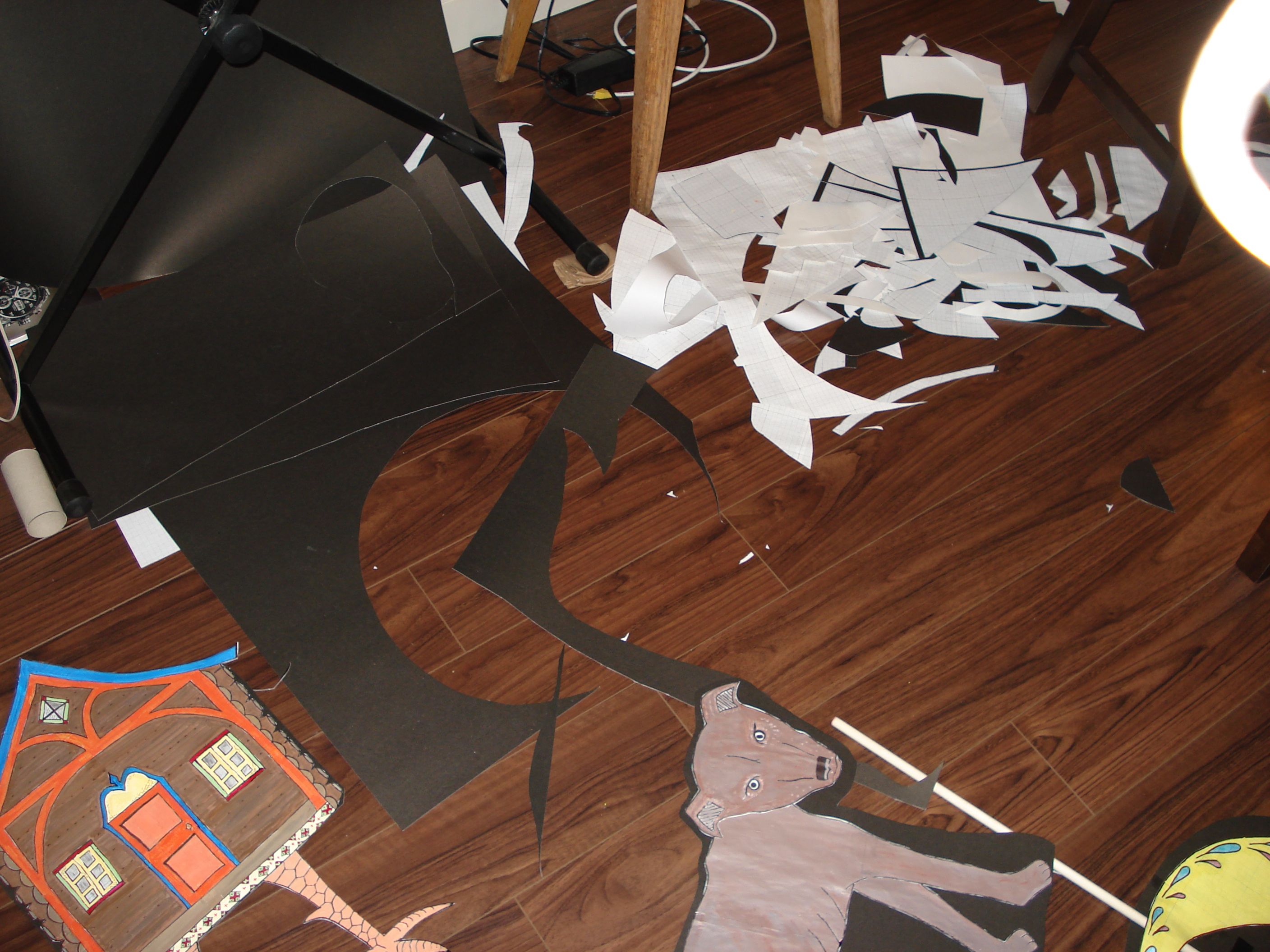
My apartment is not supposed to look like this! (Prop design by Sonja Kresowaty, painted by me)

Things I will NOT give up, put off, or forgo to get to be an artist sometimes:

  • Some degree of financial stability (this means I work a Real Job, but that’s okay, it’s a good one)
  • My family (have you ever heard that “show must go on” hypothetical to gauge how serious about theatre you are, the one that goes “Would you skip your mother’s funeral if it was the same night as opening?” Well I have. And the answer is no. I wouldn’t.)
  • Eating. I once lost 6 lbs. in three weeks while I was directing, because I was too busy to buy groceries or to eat. Which is pretty extreme for me. Lesson learned.
  • My health. Headaches, sore throats, and nausea are pretty normal for me during a show, but illnesses I have come down with while being theatrical include pink eye, shingles, and H1N1 (though luckily quite mild –and this is when I’m trying to take care of my health).
  • Hygiene

At the moment, the two things I’ve noticed giving up the most are sleep and cleaning my apartment. I was already getting a little too busy to give the place the thorough cleaning I would like, and the frantic making of props did not help. It makes me mentally and emotionally irritated to exist in a mess but since it can’t be helped, well, I guess that’s that. I’ll live.

But I just want to sleep. Oh my god, I just want to sleep. I want to put my head on this desk right now and sleep and sleep and sleep. I want to go home, make a cave out of my duvet and pillows, crawl inside, and emerge two days later, feeling refreshed enough to move to the couch, read a magazine, and have a nap. And then when I was feeling more energized, maybe I’d go to my TC’s place and nap in his hammock chair. Quality time. You know how it is. Always some new place to curl up and sleep a little.

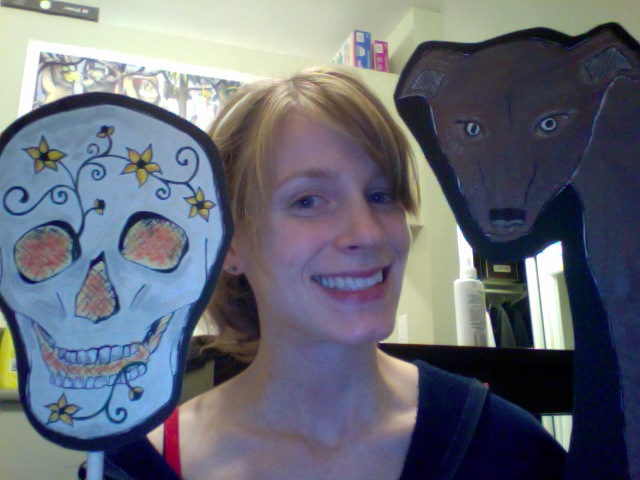
Finally finished at 1:30 am. Say hello to my new friends!

But I can’t. Not just yet. I’ve got another two weeks or so of mayhem. Good mayhem. The kind of mayhem that doesn’t let me sleep or scrub the bathtub but does let me work with my friends. The kind of mayhem that lets me paint props (which was actually really fun) and sing along to Leonard Cohen. The kind of mayhem that means next week I will be performing on a stage with my friends, sharing our stories with old friends, new friends, and strangers alike. That kind of mayhem. The kind of mayhem that says life is bigger and deeper and brighter than the cycle of work-home-eat-watch TV-drink on weekends-work-home-TV, etc. that is so seductive if my mind and my body aren’t active. There’s no mayhem in that cycle, but it’s not relaxing, it’s soul-draining.

So I’ll resist the call of my duvet and scummy bathtub, take rain checks on plans with my friends for a couple more weeks, try to stay focused, take my multi-vitamins, stay cheerful, and do the best work I can. I know my fellow Troika!-ers are feeling just as tired, just as scattered, and just as excited.

If you would like to see Troika! and its double-bill other half, The Troubles (presented by Resounding Scream Theatre), the show will run August 3-7 at the Little Mountain Gallery. Tickets can be purchased in advance at Brown Paper Tickets.

If you have any questions regarding this production, please contact Gina Readman, Production Manager, at troika.thetroubles@gmail.com.

Poster design by Arthur Yee

The Claw Hands: Chilly Memories of Adolescence

For those of you not in Vancouver this summer, let’s just say it’s been disappointing. And by disappointing, I mean it’s been cold. Yesterday was my office BBQ. Last year I got a sunburn. This year I got claw hands.

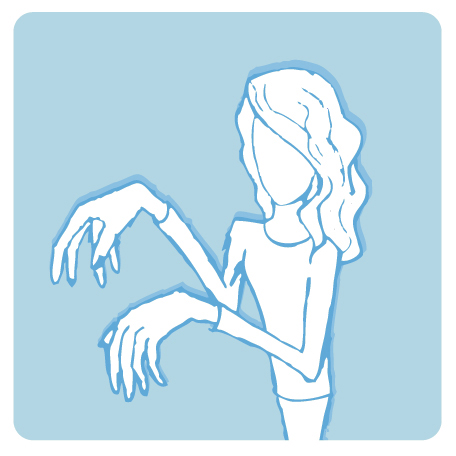
“Claw hands” is the term I use to describe what happens when my hands get so cold and stiff they curl into useless frozen claws. After a freezing cold staff BBQ (can’t blame the organizers, I’m sure they thought mid-July would be a lovely time for an outdoor lunch), they weren’t much good for typing or handwriting or picking up telephones or anything else I do at work.

Poor me.

Illustration of me with claw hands by Sonja Kresowaty

I have very poor circulation and claw hands are a fact of life in cold weather. My first memory of the joys of claw hands comes all the way from autumn 1998: I was 12, Will Smith’s “Gettin’ Jiggy With It” was played at all the junior high dances I was FINALLY old enough to go to, and I was involved in the only sport I was any good at: running.

In Saskatchewan, the cross-country running season begins in September and ends at the very end of October. The first couple of meets are generally quite nice and the rest of the season is pretty chilly. One particular meet that fall was held north of Meadow Lake, a meet most of us didn’t look forward to because it’s really hilly north of Meadow Lake  (let’s just say I’ve never ran on this “meadow” they’re talking about) and it was always cold.

I have an old photo somewhere of me at the starting line for that race and I’m sure I thought I looked pretty good. I was wearing a Buffalo Jeans t-shirt (with an @ symbol instead of the “A” in Buffalo, very edgy) and, the pinnacle of Saskatchewan athletic wear, Husky Athletics sweatpants. Anyone who grew up in Saskatchewan will understand why I could possibly have thought huge green ankle-biting sweatpants made me look cool. They were Husky. HUSKY. And maybe on anyone else, they would have looked just dandy.

The thing you must understand about me in 1998 is that I was a 12-year-old who did not yet weigh 100 lbs. I was long and bony but there was not a hip or a curve to be found. Certainly nothing that could really hold up a baggy pair of sweatpants. I made good use of the drawstring and hoped for the best. Sweatpants or no sweatpants, I’m absolutely certain I was already freezing before the gun went off, it being a typical grey autumn day in Northwest Saskatchewan, but I guess I assumed I would warm up during the 3km race.

And most of me did. A little. But not my hands. After the first 800m or so I knew it had been a big mistake not to include gloves (or better, mittens) in my stylish running ensemble. My hands were freezing. I tried to shake them out. I tried to rub them together. But they were balled into little fists of ice, so cold they HURT, and there was nothing I could do about it.

It doesn’t mean I didn’t try. During the course of the race I came up with two excellent solutions to my problem: one solution was to plunge my hands down my pants. Unfortunately, running with both hands shoved into the front of your pants is hard (try it sometime). The feeling of two cold hands suddenly being planted against my warm thighs was also a rather horrid shock to the system. My actions served to loosen the drawstring in my sweatpants and caused my pants to begin to fall down.

I remember striding past one of the checkpoints, hands completely hidden in my pants, and I have a memory of the image of a school-aged boy, a volunteer, standing at the checkpoint with a look of shock and total confusion on his face. I suppose I should have been embarrassed, I suppose now I must have looked like some sort of adolescent pervert, fiddling away in my pants on a running course, but I was too excruciatingly cold to care.

Once it became clear that the “pants solution” was slowing me down (and was ultimately not that effective) I moved on to solution two: I shoved my hands in my mouth. They took turns obviously, one at a time through the rest of the race. It’s a good idea when you think about it: my mouth was probably the warmest place on my body at the time, and with a little effort I could get at least half a hand inside.

Actually, no, of course it’s not a good idea. Once it was time to switch hands, the hand that had been in my mouth was now wet in addition to being cold. Since my hands were totally frozen stiff at this point (claw hands!) they were quite difficult to manoeuvre and fit into a mouth I was also trying to use for heavy breathing (since I was running a 3km race on hilly terrain and all).

In addition to my cold hands and falling down pants, my hand-in-mouth solution created a third condition for me to contend with. Due to the cold, my heavy breathing, and my constant shoving of my hands in and out of my mouth, my lips chapped and began to bleed.

This is pretty much what I look like running. Illustration by Sonja Kresowaty.

I can only imagine what my dad must have thought as he saw his middle daughter approaching the finish line (finally!); panting, pale and purple-cheeked, pants falling down, blood on her lips and hands, and, of course, the aforesaid hands curled into raptor-like claws, extending rigidly from my bony arms.

I don’t even remember crossing the actual line and having my placing number written on my hand. I don’t even remember if I gave my name to the helpful folks at the officials’ table. I ran straight for my father.

Dad: What HAPPENED?!

Me: (crying and blubbering through my bloody lips) My hands!

Dad: Oh Lauren. Why didn’t you wear gloves? I told you your hands would get cold.

Me: (still blubbering) I didn’t think it would be SO. COLD.

My dad tried to put his gloves on me at first but my hands were too stiff to uncurl and fit inside. He took me to the van and turned on the heat and I spent a heavenly afternoon with my hands on a radiator.

And THAT is the story of claw hands. And THAT is why I don’t care when people laugh at me for wearing gloves in April. If I had had gloves with me at yesterday’s staff BBQ, I would have worn them. Claw hands are not to trifled with. You never know when you’ll end up with falling down pants and bloody lips.

THE END.

Summer Double Bill: “Troika! / The Troubles”, August 3-7

poster by Arthur Yee

It’s a summer theatrical double bill extravaganza! This August, Some of the New Bees are proud to present Troika! as a double bill with Resounding Scream Theatre’s The Troubles at the Little Mountain Gallery off Main.

Before we go any further, SHAMELESS PLUG ALERT: I will be performing in this show. Some of the New Bees is an ad hoc theatre grouping borne of the 2009 Fringe Festival piece, Hive: The New Bees whose members change depending on which new bees are participating in any given performance. This summer, Some of the New Bees will be presenting Troika!:

Weaving together folktales, memoirs, history, and pop culture, Troika tells the story of growing up Ukrainian Canadian in Western Canada. With cast members hailing from the big city of Vancouver, the suburbs of Edmonton, and a small town in Saskatchewan, Troika uses elements of music, movement, and storytelling to take a sometimes poignant and sometimes humourous look at what it means to celebrate culture and heritage two generations removed from the motherland. Troika is created and performed by Aliya Griffin, Lauren Kresowaty, and Natalie Schneck.

Troika! - Photo credit: Sean Griffin

I’m in a play! Fancy schmancy! After almost nine months of being a theatre artist talking the talk in this blog, I am very excited to be walking the walk and treading the boards at Little Mountain with my friends (and fellow SFU Contemporary Arts alumni). This is the first time I have explored my own childhood and family history as a performer onstage. The three of us began this journey almost a year ago and even in the midst of frantic rehearsing and prop making we are eager to share this experience with an audience.

I am also very excited to be part of a double bill production with Resounding Scream Theatre (also friends), and their original one-woman play The Troubles, which will be travelling to the Victoria Fringe Festival (August 25-September 4) and Fringetastic in Nanaimo (September 8-11) after their Vancouver run:

Resounding Scream Theatre presents The Troubles
Written and Performed by: Stephanie Henderson
Directed by: Catherine Ballachey
“What would they call you? Not your name, love, your side?”
Based on personal accounts of the conflict in Northern Ireland, The Troubles is a thought-provoking show that draws upon the voices of five distinct characters to explore questions around community, morality, and loyalty. A boundary-pushing story of love and violence, The Troubles speaks that which has been forgotten.

The Troubles - Photo credit: Everett Jelley, The Jelley Photography, http://www.thejelley.com

Whether you want to enjoy a night of original theatre, support local artists, visit East Vancouver, or just watch me and my friends engage with our cultural roots, I look forward to seeing your shining faces at Troika!/The Troubles.

Troika!/The Troubles runs August 3 – 6 at 8:00 pm. Matinee performances will be held at 2:00 pm on Saturday, August 6 and Sunday, August 7.

The venue for the production is the Little Mountain Gallery, 195 East 26th Avenue (just off Main).

Tickets for Troika!/The Troubles can be purchased online at Brown Paper Tickets (recommended).

If you have any questions regarding the production, or mobility (or other) concerns regarding the venue, please contact Gina Readman, Production Manager, at troika.thetroubles@gmail.com.

Wreck Beach Skinny Dip 2011: Nifty Gets Nude

Wreck Beach: Forgot your swimsuit? That's just fine.

I had never been skinny dipping before. I had always imagined my first skinny dip would be some romantic or scandalous affair out at a mountain chalet, stripping off in the dead of night and slipping unseen into some glacial lake (I guess in my imaginings I was a wealthy and influential woman with access to a chalet), or perhaps a nice dunk in my birthday suit with a few inebriated friends at a lakeside cottage in the dark.

I never imagined I would be skinny dipping for the first time in the glaring light of day with 625 other naked people, but on July 2, that’s exactly what I did: stripping down to my nothings for the 2011 Wreck Beach Skinny Dip. (My TC and a spunky gal pal joined me, meaning I only had to expose my naked self to 623 total strangers.)

The Wreck Beach Skinny Dip is an annual event organized by the Wreck Beach Preservation Society (WBPS). This year, for each skinny dipper in the water, an anonymous donor pledged to donate $2 to the WBPS. As I was leaving the beach, an organizer told me the donor had decided to up their donation to $5 per bather. I was also told that the Notary Public enlisted for the occasion had counted 626 naked bathers this year, meaning we handily beat last year’s record of 489 (and my bum was among ’em!). Considering this and the gorgeous sun we had that day, I would call the WBPS’s bare-naked event a success.

Judging by their website, it seems the mission of the WBPS centres around two main concerns:

  1. Preserving the natural beauty of Wreck Beach and preventing or lessening hazards to its environment.
  2. Preserving the right of visitors at Wreck Beach to enjoy the beach au naturel, and taking action and voicing concerns regarding development in nearby areas or changes in legislation which may make this right unlawful.

No gawking!

I was introduced to Wreck Beach only this spring by my TC, and I must say that since my first visit I have been completely in love, forsaking all other Vancouver beaches, forever and ever. Here’s why (in another numbered list!):

  1. The beach is huge, and beautiful. Bald eagles soar over tree-covered cliffs, and on clear days you can see the mountains of Vancouver Island.
  2. Wreck Beach is quiet. It’s a long hike down from the road, but it’s worth it. Once on the beach, there are no cars or buildings within sight or earshot. The loudest sound you’ll hear is the lovely group of musicians who seem to favour the Police and the Beatles, playing their guitars (and trumpet!) with the kind of gusto you can only really find in people who are doing what they love, TOTALLY NAKED. When I’m lying in the sun at Wreck, I’ve completely left the city behind, and I’ve never been so relaxed.
  3. I get to sunbathe topless. That’s right, I said it. Totally topless. IT’S GREAT. The greatest part is that I can be topless or naked and nobody cares. Unlike Vancouver’s other beaches which seem to be covered in hyper-sexualized teenagers in teeny-weeny gold lamee American Apparel bikinis, at Wreck Beach, no one cares what you’ve got or what your body looks like. The beach is clothing-optional, not courtesy-optional, and gawking at others or making comments is discouraged (read WBPS’s Beach Etiquette to find out how you can be nude, not lewd). I feel less exposed naked at Wreck than I do in a swimsuit at English Bay.

2011 has so far been a year of discovery for me; a year of discovering BC and especially of discovering Vancouver, my adopted home. The relaxed, conscientious, and accepting atmosphere at Wreck Beach is a wonderful representation of the spirit of this city and I sincerely hope it will continue to be so.

And now for a poll! I used to think nude beaches were weird, and now I think they’re great! Your thoughts?

P.S. If you’re wondering how the water was on July 2, it was effing freezing. But so refreshing.

Let’s Talk Unions (A Lefty Perspective)

On June 27, the Canadian Government legislated the members of the Canadian Union of Postal Workers (CUPW) to return to work after a rotating strike followed by a lockout by Canada Post. The terms in the legislation were less than the terms Canada Post had last offered the CUPW, which the union had rejected. Though those whose businesses depend on an efficient postal service will be happy, the fact that the government interfered with negotiations between an employer and its employees, and appeared to simply be punishing the CUPW for striking (when in fact it was the employer (Canada Post) and not the postal workers who were responsible for the total cessation of mail delivery) doesn’t sit well with me.

It is this that caused me to join in a lively discussion/argument about the postal strike. Of course, as soon as anyone starts to talk about any given union, all unions are soon thrown into the mix and the recent actions taken by the Saskatchewan Teachers’ Federation were ripped apart, because “teachers get two months off in the summer.” Being the child of Saskatchewan teachers, and knowing how hard my parents work (good teaching is so much more than just “stand and deliver” repetition of the textbook), I stood my ground for as long as I could (it was mostly a two against one debate and I was the solo party).

The fact is, I don’t have many facts, either about the recent postal strike or about the situation facing the STF. What I do know is that many unionized workers, for example teachers and nurses, care very deeply about those they work for (children and patients, respectively), and that striking is a last resort that weighs heavily on the conscience of the striker.

The argument allowed me a chance to engage with people whose views and experiences are very different from my own. Both of my main “opponents” worked in the oil industry at demanding and dangerous jobs. Both had been seriously injured on the job and both “sucked it up and went back to work”. Too much pride for WCB, apparently. Given the risks involved in their job and their 60-70 hour work weeks, I am not surprised that they expressed a lack of sympathy for workers who appeared to be doing less and asking for more. There was also some hypothesis that if oil workers were unionized and the government was in charge of the industry, we’d all be paying $3/litre for gasoline.

I am familiar with the above positions and though they aren’t my cup of tea they’re nothing I haven’t heard before. While it was actually quite an enjoyable debate with fairly civil “opponents”, I was understandably frustrated and there are a few fallacies within their arguments I would like to address:

  1. That there is some particular virtue to not being part of a union, and to just keeping your head down and doing your job without complaining. – Just because you do not want to demand more from your employer (i.e. you won’t file with the WCB when you’re injured), it does not mean that other people should not have a right to, or that they are weak or wrong to do so. Contrary to being a virtue, the only people you are benefiting by refusing to demand better treatment in your workplace are your employers; you, your loved ones, and your coworkers certainly aren’t any better off for it.
  2. That the position of unions are that their employees deserve good treatment because their employees are “better” than other employees, or work harder. – I have not yet seen this to be true. The position of the STF certainly isn’t that teachers work harder than everyone else, and therefore deserve more. Clearly, teaching isn’t as dangerous or as physically intense as working in the oil industry up in Fort MacMurray. The STF isn’t pretending it is. The point of a union is that employees should be treated well by their employer. This means all employees (regardless of whether they are unionized) deserve job security, vacation, and pensions. The fact that some employees are unionized allows them to demand this better treatment. A demand for better treatment by a union is not a snub to other workers.
  3. That unionizing means putting your business or industry under government control. – While many unionized workers are employed in the public sector, unionized employees and government employees are not one and the same. An example would be auto workers unions, strong labour unions whose members are employed by large corporations like Ford or General Motors, not the government. To the idea brought up of $3/litre gas resulting from unionizing and government control of the oil industry, firstly, unionizing of oil workers would not necessarily result in government control of the industry, and secondly, Tony Clement has recently told media that the Government will be working to lower the lately inflated gas prices (even without ownership of any oil companies). I highly doubt that oil companies currently have any interest at all in keeping prices (and profits) low.

Being a teachers’ daughter, and current member of a CUPE local myself, I do realize that my point of view comes from a very specific place. I do understand that not everyone feels they are in a position to make demands to their employer, especially if doing so could lose them their job (a job they may desperately need to support themselves and their families). What I am saying is that this is a shitty state of affairs. No one should be afraid to speak up about mistreatment in the workplace. Keeping employees in fear and living on a meager salary that does not allow them the freedom to better their position or enjoy their life amounts to servitude, not employment.

Despite this, I do not believe every worker should be part of a union, or that every business needs to be unionized. A business owner or employer who takes good care of their employees, providing decent salaries and benefits, and incentives for their employees to invest in their own retirement, should not need to unionize their employees to ensure this happens. I have seen small businesses that treat their employees like family, giving them flexibility, security, and a level of personal attention not often seen in larger businesses. Sadly, these employers are few and far between, and there are many corporations and industries more interested in their bottom line than in the well-being of the people whose work allows them to maintain a profit (i.e., their employees).

I also cannot say that I have supported every union strike I’ve ever read about in the media. The optics of some of the unions’ demands compared to the realities facing many Canadian families (and my own unemployed status) during the recession, for example, were not very beneficial to the profile of unions in Canada. This does not mean I do not support unions as an employment structure or their right to demand what they believe is fair for their members.

For many, myself included, discussions surrounding labour unions tend to be emotional, rather than intellectual. Those within them defend them fiercely, those who are not unionized disparage them. The difference, as it often is in politics, stems from different ideas of what people see as fair. I have no answers, and so far in my career have not been faced with many tough decisions. I’m just full of piss and vinegar and I do love to sink my teeth into a good argument every once in a while.

If anyone has some cold hard facts for me, from either side of this debate, I’d love to hear from you. In the meantime, I guess I’ll just try to be pleased that I’ll be getting mail again (yay!), despite the actions that brought it about.

Jessies 2011: Nifty Reports for Hummingbird604.com

The Jessie Richardson Theatre Awards are held each year to recognize and honour outstanding contributions to theatre in Vancouver. This year, I was there, attending as media and covering the event for my friend Raul Pacheco-Vega and his blog, Hummingbird604.com.

For my coverage of the 2011 Jessies, please visit Hummingbird604.

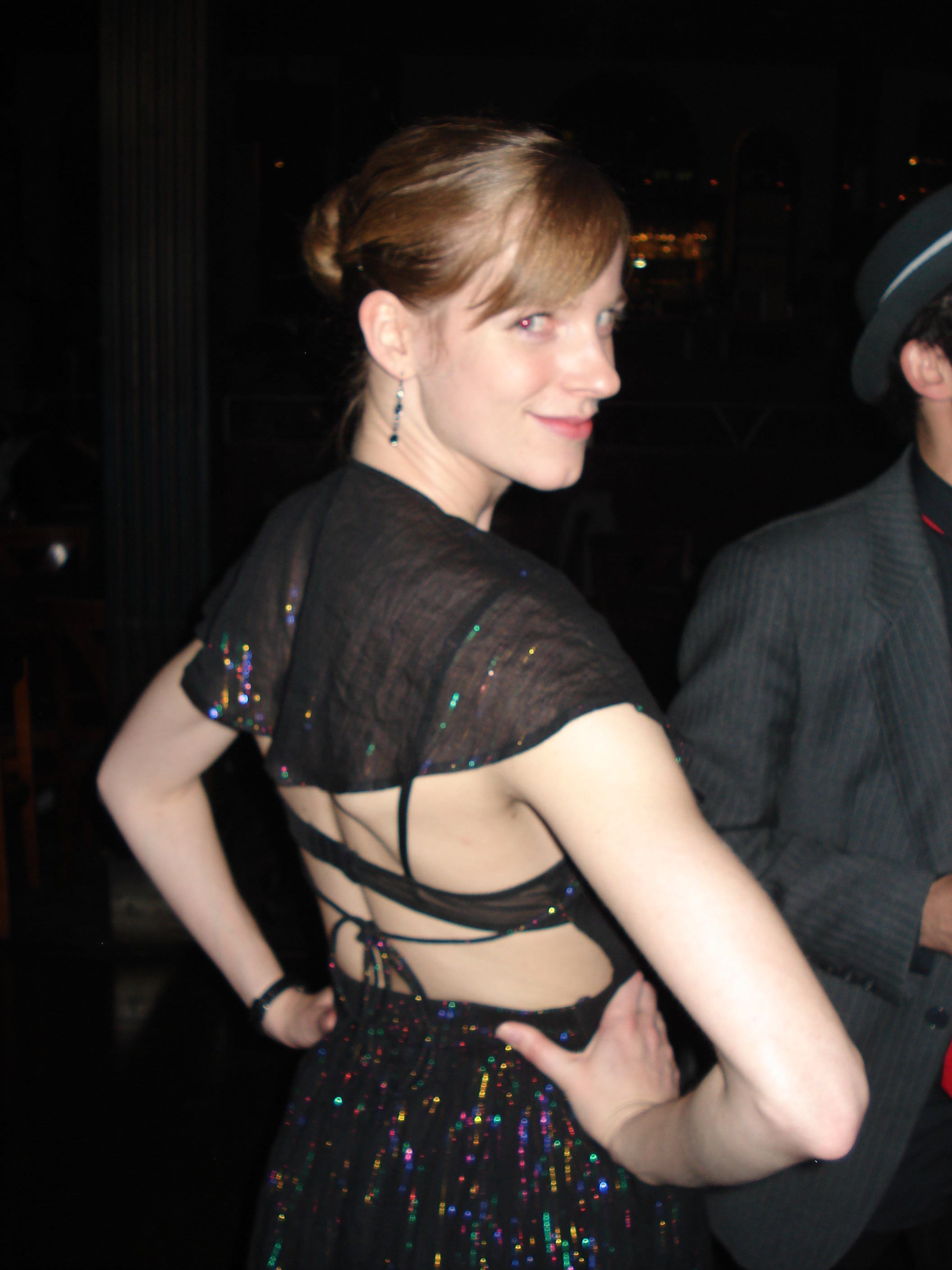
I bought this dress for $5 from a naked hippie on Wreck Beach!

Because I tried to keep my post a little more professional (keeping in mind that I am a guest on Raul’s site), I’ll use my space on NiftyNotCool to express just how totally jazzed I was. I was totally jazzed. I did my hair. I put on dangle-y earrings. And heels. And a sparkly dress that I think is just a bit cheeky. Red lipstick. Hooray.

I had a great night. I was inspired and educated (there is still so much theatre I need to see, and so many companies whose work I want to be more familiar with) and just plain ol’ JAZZED to be there.

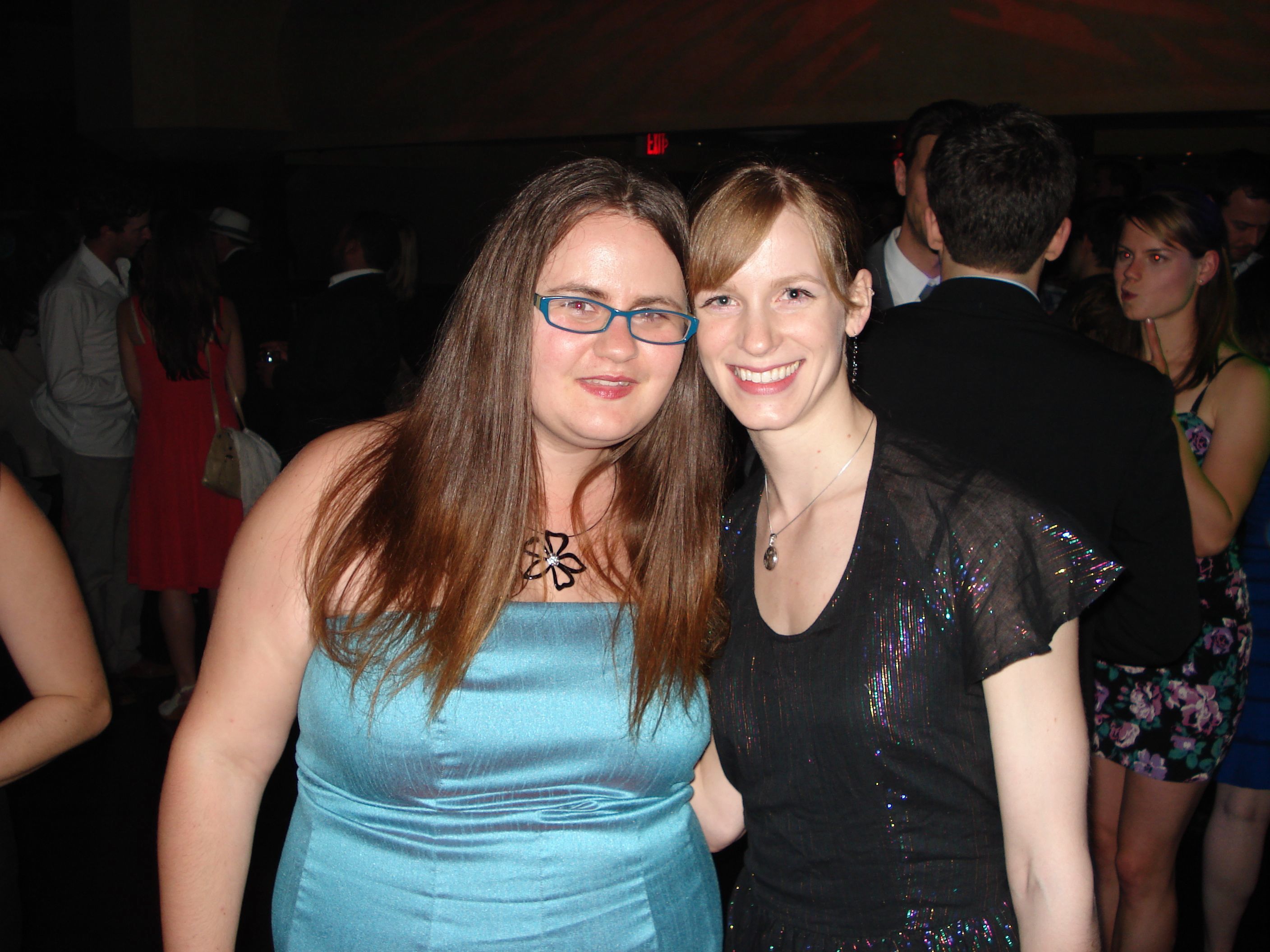
The lovely Lois Dawson and me. LOVE that blue!

I also got to boogie down with Lois Dawson and the Pacific Theatre crew, whose season I was able to enjoy mostly through Lois’ generosity. Everyone was fabulous. Theatre people are the best dancers.

Furthermore, theatre people clean up well. Since I spend most of my theatrical time in rehearsals in sweat pants, or onstage in some crazy get-up, I sometimes forget what a fine-looking bunch theatre people really are. Damn. We are a fine-looking bunch. Don’t believe me? Come to the Jessies next year and cut a rug with us.

Want more information about what happened at the 29th Annual Jessie Awards? Read all about it at Hummingbird604.com.

Of course I must give a huge THANK YOU to Raul at Hummingbird604 for sending me to the ceremony on his behalf. Being able to cover the 2011 Jessies was a lovely end to a great season of Vancouver theatre.

Procrastination Makes It Happen

Stop your distracting dancing, Devil! I'm trying to write a paper!

I’m supposed to be writing a paper. For my Early Modern Literature course. The due date for this paper was made plain as day on the syllabus I received in May. More detailed instructions were given to us two weeks ago, complete with helpful paper topic ideas.

I have no paper. I have no paper topic. I am feeling a little screwed. The worst part about this situation is that, like a hangover, I know it’s all my fault.

Actually, no. It’s not. Maybe it’s this blog’s fault because I simply couldn’t concentrate on anything paper-related until I fulfilled my self-inflicted, Internet-based responsibilities. And of course I couldn’t blog until I thought of something to blog about. My inability to find anything to blog about is, of course, the fault of the Vancouver Canucks, who, let’s be serious, have pretty much overwhelmed the hearts and minds of Vancouverites and I’m not sure any of us can be asked to think or do anything until the Playoffs are over.

Obviously, the fact that the Canucks have to go to Game 7 tonight instead of finishing with a Stanley Cup win last Friday like I wanted them to is the fault of the Boston Bruins. To sum up, my paperless situation is the direct result of a “house-that-Jack-built” series of events, and the blame rests entirely with the Boston Bruins. There was simply nothing I could do.

Unfortunately, life’s not fair. And even though the fact that I haven’t started my paper yet is ALL BOSTON’S FAULT, I’m pretty sure the writing of this paper is going to fall to me. Boo.

It’s been a long time since I’ve had to write a university paper, and I’m not sure I remember how to. I’m also not at all sure I am an expert in Early Modern Literature. Perhaps, like Marlowe’s Doctor Faustus, I can exchange my soul for knowledge. Maybe I can move to the country described in Thomas More’s Utopia and live a very communist (albeit very monastic and Catholic) life free from concerns of personal academic glory.

Hey Marlowe! I bet you know a LOT about Early Modern Lit. If you weren't dead you'd write a great paper about it, I'm sure.

Hey, did you know that Christopher Marlowe (who wrote Doctor Faustus) was killed at the age of 29 by a knife wound to the eye sustained in a tavern fight? And that maybe he was an Elizabethan spy? And that other people in the tavern that day were maybe spies too? Suspicious. And exciting.

But I digress (a lot). Ahem. Paper-writing. First thing’s first: are there dirty dishes in my sink? Because if there are, I’m going to have to take care of them right away. I can’t be expected to work in a messy environment. Once taken care of, and now that I’m in the kitchen, I’m feeling a little hungry. Having been exposed to continuous cries from bleeding heart liberals who say lunch programs in schools help kids think better, I am certain my paper writing will go a lot more smoothly if I have a snack. Making and eating a snack obviously dirties more dishes which need to be washed and set in the drying rack. And now, I sit down at my computer. As I settle into my chair I am presented with the niggling feeling that I need to go to the bathroom.

Throw in paper-writing music, impromptu dance parties (caused no doubt by the music), and visits to Twitter to complain about aforementioned paper, and you can see I’m well on my way to unravelling the mysteries of Early Modern Literature in a concise, convincing, and intelligent manner.

Salt Spring 3: Nifty Takes Flight

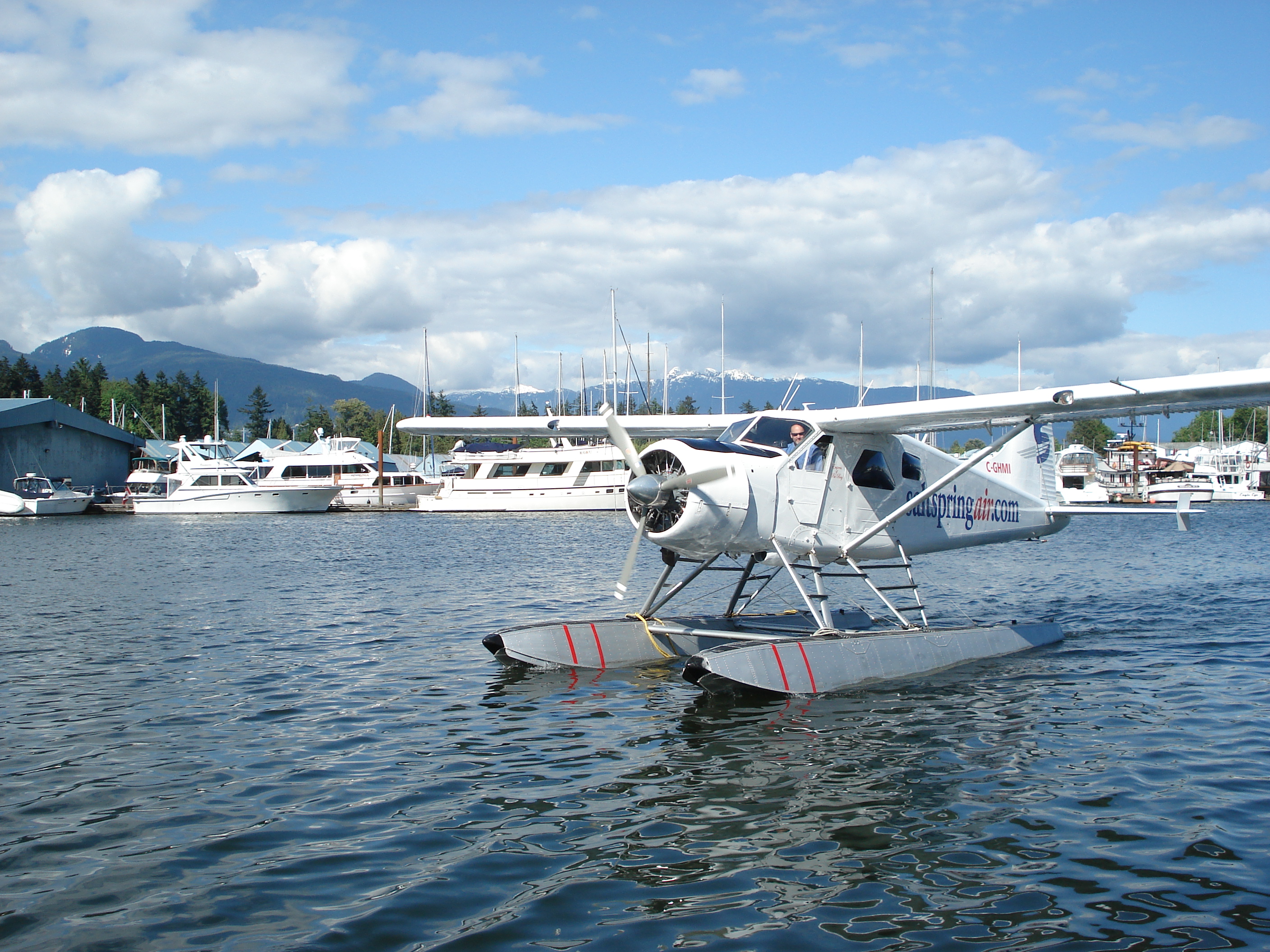
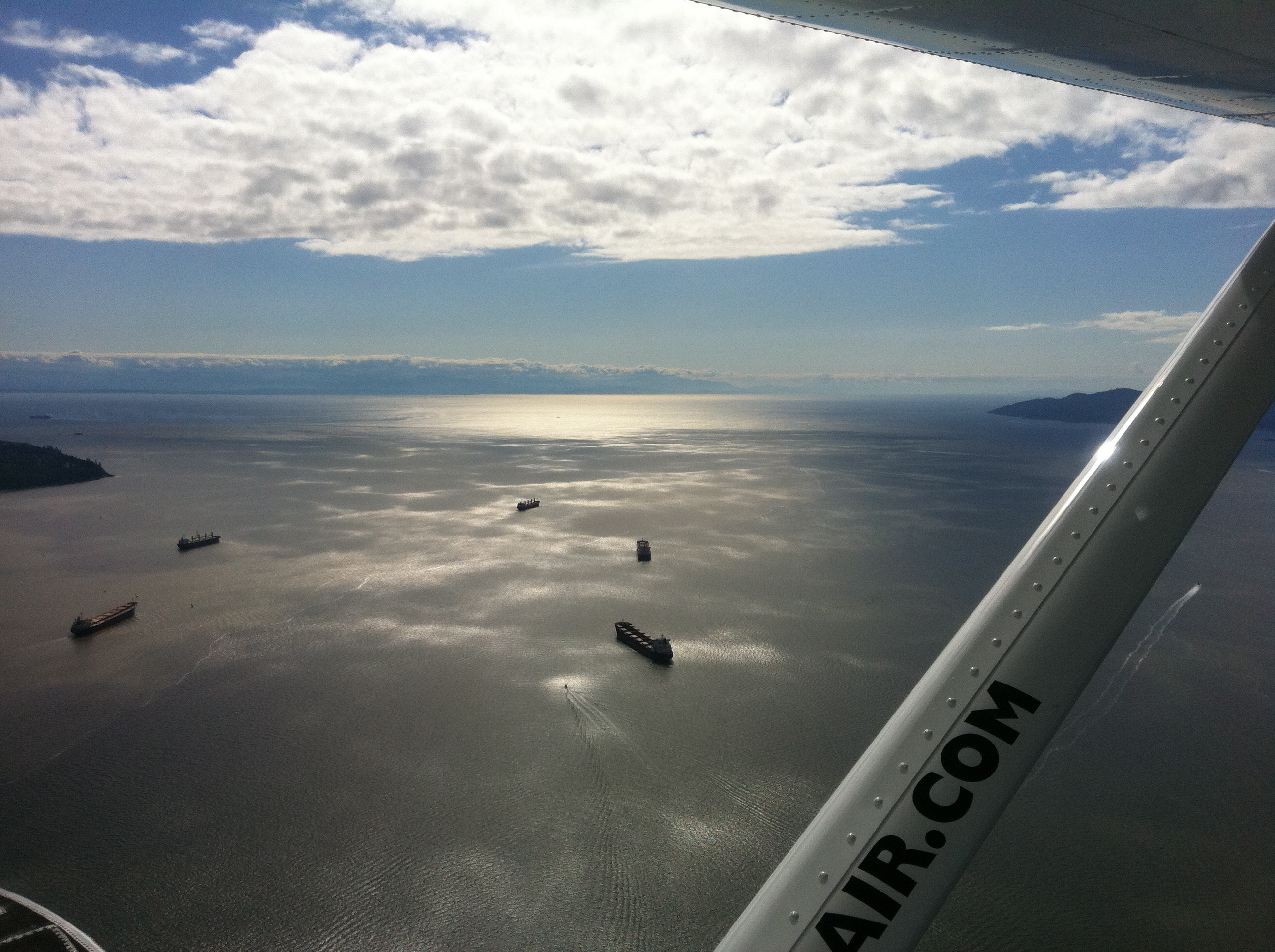
The first weekend in June dawned bright and beautiful and my TC and I took off (quite literally) for another dream-like weekend on Salt Spring Island. Instead of sailing on the slow pokey ferry, we enjoyed a gorgeous 25-minute flight with Salt Spring Air.

I’m not gonna lie: what masquerades as a blog post this week will actually be my attempts to make everyone jealous of my awesome life by sharing photographs of my splendid adventure.

Salt Spring Air - cutest planes in the west

Burrard Inlet - Look at all my boats!

Aerial view of the Lions Gate Bridge

Pacific Ocean - more boats!

YVR - Ever seen a plane taking off from above? I have!

Gulf Islands ho! (Nearing our destination....)

Helloooooooooooo Salt Spring!

Upon our arrival (and a very smooth touchdown) in Ganges, we promptly dined with my TC’s family at a quaint little restaurant just off the marina called “Cafe Auntie Pesto’s” (250-537-4181). Punny name notwithstanding, Auntie Pesto’s is actually a very fine (and slightly pricier) establishment. The service was excellent (our server was attentive and prompt without being annoying) and my Muscovy duck confit (with asparagus, spinach, and Gorgonzola ravioli) was excellent too. Magnifique.

Our first morning on Salt Spring was a scorcher (compared to the very cold spring we’ve had on the West Coast this year) so we made good use of sun screen before visiting the Saturday Market. I avoided buying myself anything (I tell myself I don’t need anything!), but I did have the pleasure of sitting on the grass in the sun eating a fabulous Ukrainian smokey (and the yam fries belonging to my TC’s four-year-old cousin). For dessert, I decided to consume a daunting creation called a “Dough Boy” which is essentially dough fried in hot hot oil and covered in sugar and cinnamon. My arteries cried but my taste buds were delighted.

Dough Boy: A heart attacky snack

Not surprisingly, I reserved much of the rest of the afternoon for napping and sitting.

Time flies when one is having fun, and alas, alack, our Sunday morning came too soon. Luckily, we didn’t take wing again until 5 o’clock so my TC and I were able to take in some capital-N Nature courtesy of the neighbourhood walking trails. TC took all the photos of the nature excursion. I just used my eyeballs.

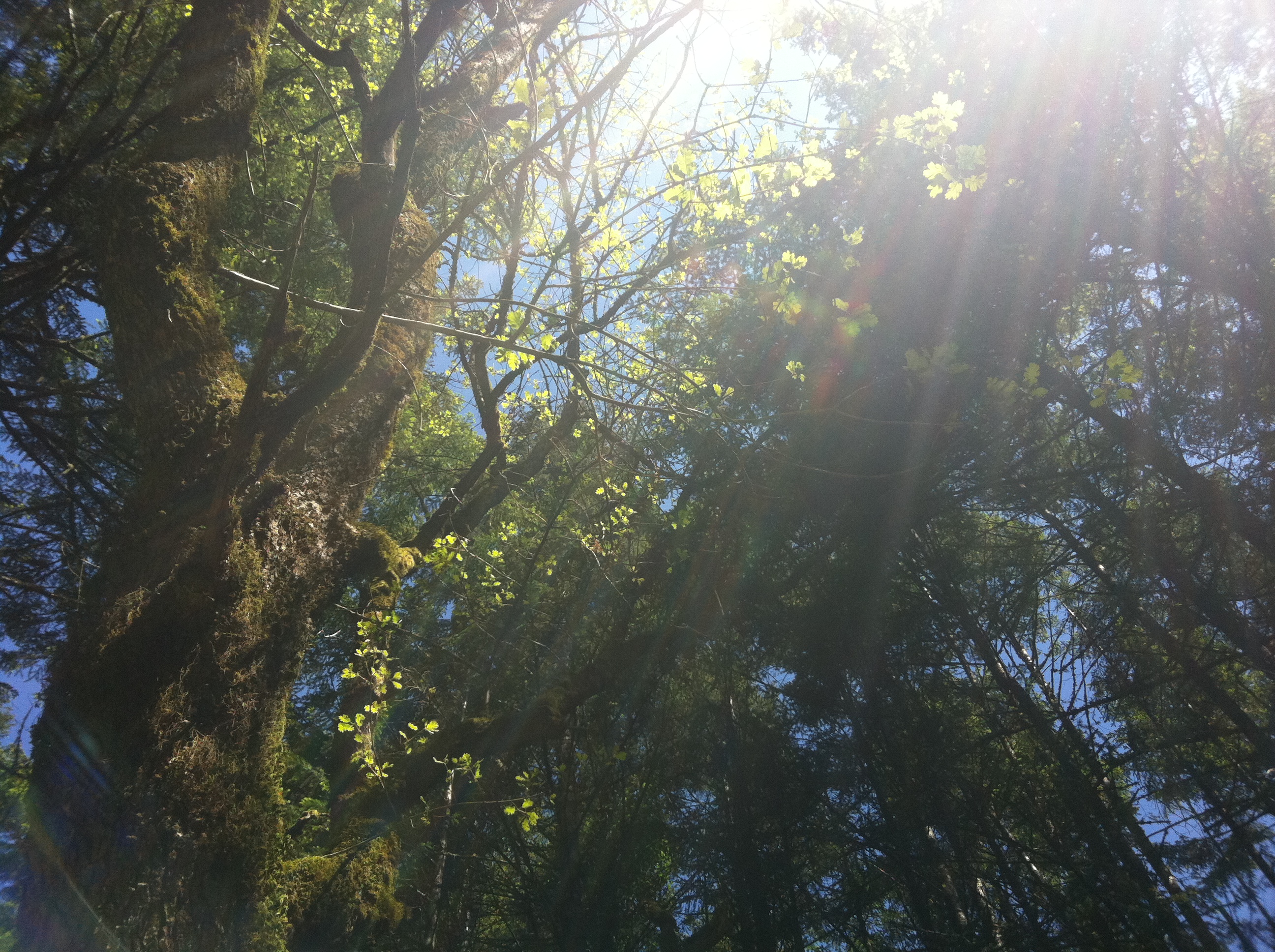
Salt Spring sunshine breaking through the canopy

The trees are so big and I am so small!

We wandered off the trail and frolicked in the woods. I pretended I was a dinosaur, naturally.

TC thought it would be a good idea for me to climb this tree. And it was. Until I tried to get down.

I would like to tell you more about my latest adventure in the Gulf Islands, but I don’t believe I can be more eloquent than these images can be. If a picture is truly worth a thousand words, let’s just say you’ve just finished reading a 12 000-word post about my weekend.

And that makes you a good friend.

Internet Fatigue (and the burden of Insta-Love)

The Internet is a powerful, benevolent sorceress, providing me with seemingly countless ways to connect, share, be informed/educated, debate, communicate, and take action. The Internet is also a time-sucking witch, providing me with seemingly endless ways to procrastinate and act like a crazy person. When I signed up with Facebook in 2007, I never expected “Facebook creeping” to become not only a verb all its own, but an acceptable way to pass the time when bored at work, home, or on your smartphone (I feel like prior to Facebook’s inception, going through someone’s photo albums without being explicitly granted permission would be, well, creepy).

In so many ways, of course, the Internet has made my life faster and easier. Internet banking. Google maps. Buying tickets online. E-mail. But it has also added tasks to my daily routine: checking my e-mail (all three accounts, though I actually have four active, not counting the one I check at work), checking Facebook for anything amusing, checking Twitter for mentions, checking my WordPress stats to see if people actually read my blog or whether I’m just shouting into the darkness.

Checking. Always checking. It’s not an action with a clear purpose, like “Buy groceries and then you’ll have food” or “Pay your utility bill and you’ll continue to enjoy electricity.” It’s just….checking. To see. If there’s something I should pay attention to. Mostly, for the little hit of insta-love I feel every time someone mentions me on Twitter or likes something I’ve said/done/posted on Facebook. Somehow not quite ever satisfied that I’m liked enough to last me the next twenty minutes.

Facebook and Twitter give us an easy and tangible way to measure whether or not we (and our thoughts/actions) have the approval of our friends and acquaintances, and to share our enjoyment and approval of our friends with them. But the flip side of this instant love is instant failure. When we post something on Twitter that we think is especially funny/clever/important, and no one responds, we feel a loss. When we post on someone’s Facebook wall and they don’t reply, we feel bad. Instead of the little hits of insta-love I’ve come to savour, I feel the anxious prickles of insta-failure.

I assume I am not the only one who feels this, or has noticed the coping mechanism many of us seem to use. We distance ourselves from our online personas to the point that we become a brand of ourselves. Our successes and failures online aren’t the successes and failures of us personally, but only of the version of ourselves we’ve chosen to share. I myself consider my Twitter account to be an extension of some entity called “NiftyNotCool” which is a part of me, but usually not enough of me to make me feel personally vulnerable. Even under this persona, of course I prefer to receive insta-love.

Before you diagnose me as someone with poor self-esteem who depends on the approval of the Internet to feel good about herself, let me assure you that I’m not. I think I have the average healthy amounts of confidence and humility that make me, hopefully, not a total chore to be around. But there’s no denying that having people respond to you in a positive manner feels good, and being ignored does not. While the Internet provides us with so many more ways to respond and be responded to, it also provides us with more ways to be ignored. Though the emotional toll this insta-love/insta-failure takes on me is minor, its constant presence in my life is wearing me out.

Which is why I’ve been taking a partial break from my Facebook and Twitter identities. With so many things I want to learn and do and share, it feels good to shut out the noise and take some time to appreciate the aspects of my life that aren’t online. Brunch with friends. Reading in the sun. A nice walk through an East Van neighbourhood in full bloom.

Which is not to say that I haven’t gained enormously from reaching out online. My world has become so much larger since I embarked on this “nifty not cool” adventure last fall. I’ve met amazingly talented, warm, and generous people. I got to blog the PuSh Fest, see some great performances with people I met on Twitter, and eat possibly the best beer-butt BBQ chicken I have ever had (courtesy of Candice at Baked In Vancouver). Every time somebody tells me they have read or enjoyed a post of mine, I feel so flattered and grateful and tickled pink that I know my enthusiasm cements my “not-cool” status forever.

Internet fatigue or no Internet fatigue, as long as we have electricity, our online lives are here to stay. As much as I complain, I am happy to know every single one of the great people I’ve met in the past six months, and to them, I say this: you guys are awesome. The conversations we’re having are great. But the idea of another night with my laptop makes me want to throw it in the Inlet. The sun is starting to shine on Vancouver, and I’d rather hang out with y’all on a patio. Whaddaya say?