“Why Doesn’t He Like Me?”:Teen Angst at the Cottage Bistro

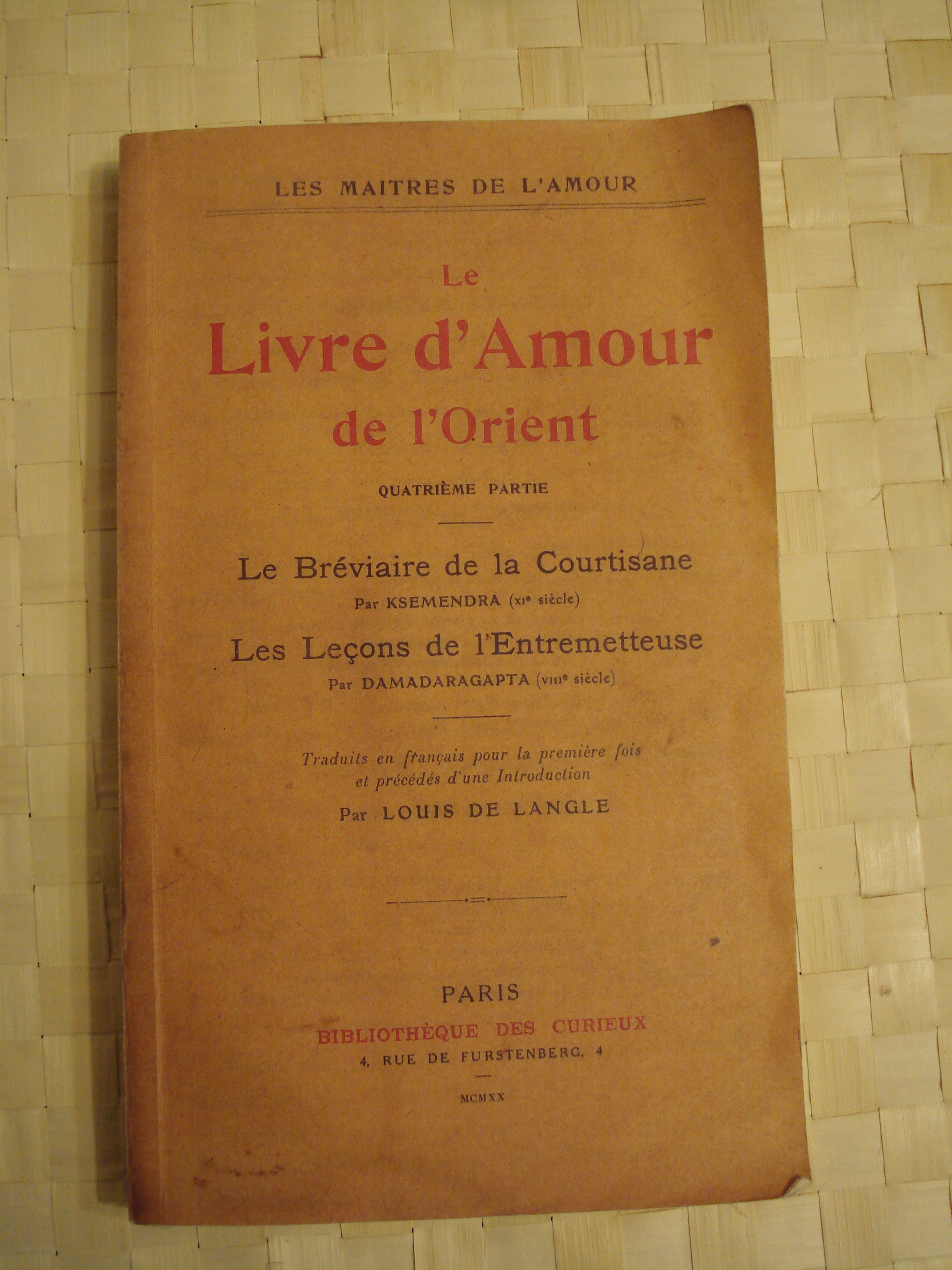
I think I thought this journal was SO artsy. My "Livre d'Amour de l'Orient" certainly wasn't that exotic.

Last night I had the privilege of reading an excerpt from my Grade 11 journal at Sara Bynoe‘s Teen Angst Comedy Night. Sara has been hosting Teen Angst readings (essentially verbatim readings of angst-filled diaries, fiction, and poetry written in the teen years) since 2000.

I saw the Facebook page for this event a month or two ago and thought it would be a laugh to sign up to read some stuff. Unfortunately, my adolescent diaries remain at home in Saskatchewan, so I had to pull only from my last two years of high school, which, while a little less hilarious, still had plenty of drama. The entries I shared revolved around a non-boyfriend “boyfriend” I dated for three weeks at the end of Grade 11. I concluded my reading with a loose-leaf poem I found tucked between the pages of my journal, about the aforementioned non-boyfriend “boyfriend”. It was titled “Letter from the Unloved” and finished with the line, “WHY DON’T YOU CALL ME ‘BABE’ ANYMORE?!”. I think it summed up my feelings about this particular fellow nicely. Needless to say, this young man has not called me “babe” for quite a number of years now.

I was surprised by two things during this evening: firstly, even though I was embarrassed at my naivety, and my listeners found a lot of humour in what  was very serious business for me at the time, I felt oddly supported, as if all the people listening agreed that this non-boyfriend did me wrong, and definitely should have continued to call me “babe” if he knew anything about good manners. The sympathetic warmth of the listeners at Teen Angst reached back in time and made my 17-year-old feel just a little bit better and a little less alone.

Secondly, although I knew this evening would be funny, I wasn’t quite prepared for how much fun I would have. I laughed so hard I cried. Words cannot describe how hilarious and outrageous the writings of teenagers are. I unfortunately do not remember the list of the readers so I cannot credit them properly but a few choice phrases I will remember forever include:

“Nosferatu, I got you”

“Hitler was a moustachist”

(From a teen girl’s attempt at beat poetry)

“I hate ___’s purse. It’s way too small. It looks like a stoner purse.”

(From a young man who really liked the book “The Outsiders” and also several young women, but maybe not their purses)

“Go to bed.”  “NO!”

(A 12-year-old girl describes how her planned rebellion will go down)

Sara Bynoe MC’ed the evening and shared her touching poetic tribute to Kurt Cobain after his death, and her 14-year-old self’s thoughts about writing poetry in general, which she writes that she enjoyed doing despite the “screams of adolescents”. Our evening also included a game involving Sara reading angsty song lyrics as if they were teen poetry and the rest of us having to guess what the song was/who wrote it for a prize of a toffee.

I couldn’t contain my excitement when Sara read, “I’m never alone/I’m alone all the time”. I shouted out “GLYCERINE! It’s GLYCERINE!” and the toffee was mine. Oh yes, Gavin Rossdale, you melt my heart, you and your lonesomeness and dirty hair. Thank you Big Shiny 90s Volume 2 compilation CD. You have made me cool! Finally!

Making good segues was never a talent I exhibited in my teenaged journals and I don’t feel the need to do it now. In conclusion, Teen Angst was great and Sara is great too. If the event comes back to town I’ll definitely try to do it again. I laughed my face off and almost peed my pants. A good time was had by all.

(But why doesn’t he like me? Sigh……………I guess we’ll never know.)

On Early Modern Lit, the Afterlife, and WHOA.

Whether religious or not, every person is expected to have some kind of belief about the afterlife. Even atheists have a belief about the afterlife (their belief is that there isn’t one). Since dying is an inevitable part of life, and we as humans are conscious beings with the ability to picture what lies beyond our own physical existence (both where we might be, and the physical world, continuing without us), thinking about what may (or may not) come after death is unavoidable. Even for those who practice an established religion, views of the afterlife are not absolute or concrete.

Why am I thinking about such a morbid subject on such a beautiful day you may ask? Blame my Early Modern literature professor. Learning about the Medieval Catholic doctrine of Purgatory fired my imagination, artistically and intellectually. Learning about what this doctrine meant to the average English person during England’s Reformation forced me to think about religion, death, and art in a way I hadn’t before.

In a very VERY quick and dirty nutshell, the Medieval Catholic doctrine of Purgatory breaks down to this: after death, some very wicked sinners go straight to Hell. Some very virtuous people (usually saints) go straight to Heaven. And the rest of us not-too-bad but not-too-great people go to Purgatory, where our souls spend some time in torment before we are purged of the sins of our lives and go to Heaven. (To any Catholic readers I am very sorry if I am getting this offensively wrong, I am not Catholic and am only going by what I’ve learned about specifically Medieval Catholicism.) According to Medieval Catholics, the living could lessen a soul’s time in Purgatory through prayers for the dead. That is, even after your death, the living could provide aid and succor to you while you were in Purgatory. This belief in Purgatory and the power of intercessory prayer helped both to map the Afterlife for Medieval Catholics and also, more importantly, allowed those in mourning to maintain a connection to their departed loved one, and even provide help and comfort to them after their death.

There were problems with this, however. Firstly, Purgatory is not mentioned in the Scriptures. For 1200 years a Latin translation of the Bible, the Vulgate, had been used, and sermons had been conducted in Latin. The average English person did not actually know what the Bible said, and had to rely on their priest for translation and interpretation. The invention of the printing press, the translation of the Bible into English, and the increase of literacy among English people (we’re looking at the 16th century here) meant that for the first time people began to read and interpret the Bible for themselves and began to question those Catholic rites and traditions that are not described explicitly in Scripture.

Secondly, the Catholic Church at the time was gaining a reputation for corruption as many 16th-century Catholic clergymen would perform intercessory rites and prayers only for the souls whose bereaved families could afford to pay for them. Those families who could not pay were further grieved by the belief that their loved ones were suffering untold torments in Purgatory and were not being helped. Pressing this image was a good way to squeeze a couple of pennies out of a poor and guilt-ridden family.

Through many political and religious machinations, messy negotiations, and a lot of bloodshed, England undergoes the Reformation and badda-bing, badda-boom, England becomes an officially Protestant nation (again, a very quick and dirty nutshell, and probably without the badda-bing). No more corrupt priests everybody! Woohoo! But oh, that Purgatory thing? You know, that place where you thought that your dear grandmama was receiving help and prayers from you? Doesn’t exist. She’s dead. If she’s not in Heaven, she’s in Hell. Well, have a nice day.

It’s a little shocking, to say the least. In a relatively short period of time an entire nation had to re-imagine their concept of the afterlife. The effect this had on the literature of the period is profound. Take, for example, the Ghost in Shakespeare’s Hamlet: where does he come from? Within the Catholic religion, ghosts can easily be explained as souls in Purgatory who have not moved on to Heaven. Sounds good. But hold the phone–in Shakespeare’s time, Protestantism was the official religion and therefore Purgatory technically did not exist. So where, exactly, is this Ghost from? If you read or watch the play you’ll find that the Ghost himself is fairly vague on the subject. If the Ghost has nowhere to come from, how is it that it keeps popping up? Where does it disappear to? Does it really exist? How come we can see it? ARE WE ALL LOSING OUR MINDS?

Gripping stuff. Hamlet’s a real page-turner.

Lucifer's Fall - Gustav Dore - based on Paradise Lost

In Milton’s Paradise Lost, the author decided not to be vague and described Heaven, Hell, and the Chaos between in vivid detail. The descriptions in Paradise Lost were so influential that even today, the images many people’s minds conjure of Heaven and Hell are actually based on Milton’s epic poem. One of my favourite YA series, the His Dark Materials trilogy by Phillip Pullman, is inspired by Paradise Lost:

Into this wilde Abyss,
The Womb of nature and perhaps her Grave,
Of neither Sea, nor Shore, nor Air, nor Fire,
But all these in their pregnant causes mixt
Confus’dly, and which thus must ever fight,
Unless th’ Almighty Maker them ordain
His dark materials to create more Worlds,  (Milton 2. 910-916)

Phillip Pullman does not seem to view The Fall in the same way as John Milton (so they say, I’ve so far only read two of the twelve books in Paradise Lost, but I can safely say at any rate Pullman’s work does not agree with Augustine’s doctrine of Original Sin) but that doesn’t change the fact that Early Modern imagining of the afterlife by artists and intellectuals obviously still influences and inspires Western art and culture.

And that’s AWESOME. It’s hella interesting. When I signed up for a course in Early Modern literature I remember thinking that it would be bone dry, and now my brain is just itching from all the creative possibilities these ideas have presented me. I mean, WHOA.

But back to the afterlife. Maybe after all this excited rambling about Shakespeare and Milton and Purgatory you’re wondering what I believe. On Facebook I list my religion as “I would like to meet a luck dragon” but in all seriousness I identify as agnostic. So far in my young life, most death I have experienced has not been in my immediate family, so I like to believe that the afterlife is whatever the family of the departed person believes it is. Believing that the thing that might bring a grieving family comfort is true brings me comfort. As for what I hope happens to me when I die (hopefully as a funny old lady), well…I hope the people I leave behind remember me fondly. And me? Where will I be? I just don’t know.

But isn’t it interesting to think about? I mean, WHOA.

(SIDE NOTE: Did you know that the term “pandemonium” is a term coined by Milton in Paradise Lost? Pandemonium is the name of the palace the fallen angels build in Hell and means “all demons” the way Pantheon means “all gods”. INTERESTING.)

YA or the Highway: A tribute to Young Adult Fiction

Anyone perusing my bookshelf may wonder for a moment if perhaps I am twelve years old, instead of twice that. I couldn’t blame them. Excluding the Maraget Atwoods and Barbara Gowdys I’ve tucked into the corners, my bookcase is a proudly displayed and well-loved collection of young adult fiction (YA).

I used to try to justify my reluctance to move on to more adult fare to my parents. Now I don’t bother. Though I receive one or two great Canadian works of literature a year (my latest, Cool Water by Dianne Warren, was excellent) I think by now my mom and dad understand that my literary growth pretty much stopped in adolescence (by choice and not by intellect).

I do not shy away from the real world or from being informed about adult issues (I read my Macleans cover to cover every week!). But the reading I undertake in my leisure time should be just that: leisure. I don’t want to be depressed or feel guilty about something horrible happening somewhere. I’d rather read about people with magical powers.

I think my feelings regarding “adult” literature (by “adult” I mean adults read it, I don’t mean erotica) were shaped early on by the books my mother would order from the Northwest Regional Library in Saskatchewan. They were all very good books. By good I mean they were thematically interesting and deftly crafted works of literature. However, I began to notice a pattern in the books I was reading. Eventually, whenever my mom recommended a book to me I would start by asking my now-standard question:

“Are there any suicides or pedophiles in this one?”

And my mom would say, “Well….sort of.” This led me to believe that literature written for adults is a never ending parade of misery and misplaced sexual feeling. This is a broad generalization, sure, but if you take a look at most lauded Canadian literature you’ll see I’m not too far off the mark.

Back to YA: not only does it provide me with a more pleasurable reading experience, it is often plain old better than many adult books I’ve read. Why? Because issues surrounding sexuality and violence, that are sometimes carelessly and artlessly written into adult fiction, require a more delicate hand in fiction for younger readers. This subtle allusion to the darkness that lurks beneath those last years of innocence is more profound to me than in-your-face sex and violence (the adult fiction I prefer is also of the more subtle variety).

And then, of course, there’s the magic. In my regular life, I have had to accept that no amount of feathers attached to my clothing will make me fly, and that the ghost I thought I saw in grade 3 was likely the product of spooky stories, darkness, and the company of my hyperactive friends (the mob mentality strikes again). I’ve lost all my baby teeth and the Easter Bunny stopped visiting. I accept the laws of physics and the legal and societal rules we all live by. I have a content and productive life.

Would I rather be a wizard? YES.

Good YA fantasy writers are my heroes. In order to create the worlds that make their books so enjoyable, they must understand them intimately. This involves a commitment to being an adult mentally living in a fantasy land. How awesome is that? Very. Any adult who can keep the spark of childlike wonder and imagination not only alive but robust is my kind of adult. Their books feed my need for a little bit of whimsy while I wait for my letter from Hogwarts to arrive.

So what ARE these YA books I love so much? I’ve compiled a list of my favourites from my collection:

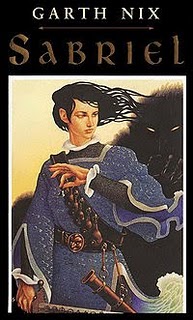
  • The Abhorsen Trilogy (Sabriel, Lirael, and Abhorsen) by Garth Nix         [Necromancers, the stages of death, Charter Magic, a talking cat]
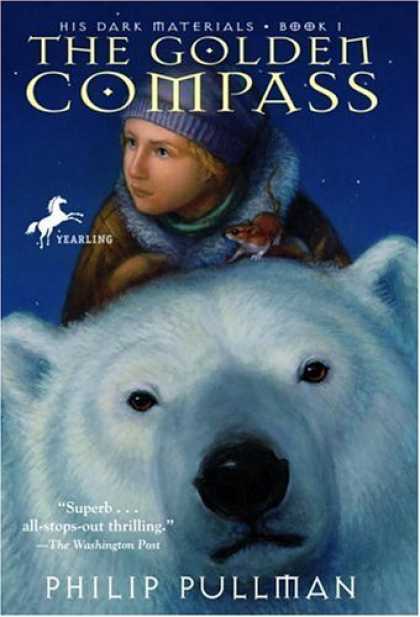
  • The His Dark Materials Trilogy (The Golden Compass, The Subtle Knife, and The Amber Spyglass) by Phillip Pullman         [Science, religion, parallel worlds, daemons, loss of innocence–Don’t see the film]
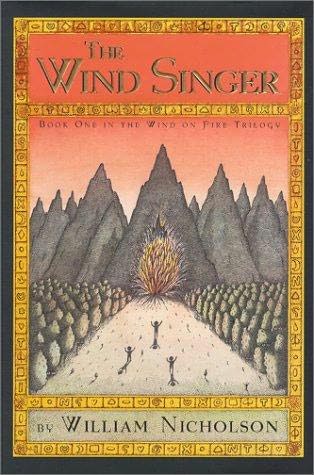
  • The Wind On Fire Trilogy (The Windsinger, Slaves of the Mastery, and Firesong) by William Nicholson         [Politics, i.e. how different political systems attempt to ensure fairness and happiness, magic, family, sacrifice]
  • The Emily Books (Emily of New Moon, Emily Climbs, and Emily’s Quest) by L.M. Montgomery         [Must-reads for any little girls who want to write, way less saccharine do-gooding than Anne of Green Gables]
  • The Blue Castle by L. M. Montgomery        [An ignored and repressed underdog gets hers against her stupid family. Woot!]
  • Painted Devil by Michael Bedard         [Scariest book I read in childhood. Puppets, spine-tingling descriptions of everything from a doll’s tea party to wallpaper, a neat history of the Punch & Judy tradition]

If anyone has read any of the above books, or has any tips for other great YA you think I’d enjoy, I’d love to hear from you in the comments section. In the meantime, I’ve got a brand-new hardcover copy of The Selected Works of T. S. Spivet by Reif Larsen waiting for me. Oh. My. Stars. This is going to be epic.

Happy reading!