The Bloggerversary Edition: Nifty is 4!

I’ve been on the fence about whether or not to acknowledge my “bloggerversary” this year. I knew I was going to roll out a new look (hope you like it!) but I wasn’t sure whether to proclaim the milestone from the roof tops (“Oh my god! I’ve been writing this blog for FOUR WHOLE YEARS!”) or whether to just let the day pass by (“M’h. No big deal. Let’s write about something else.”).

Of course, I already did let the day pass by. The four-year anniversary of my very first post was actually on November 29. But I was on Salt Spring Island last weekend having a wonderful time and drinking martinis…so…yeah. And besides, is four years of (over)sharing on the Internet really such a thing to celebrate? Is it an accomplishment? Can I look at it and say, yeah, I get to feel like a real blogger now?

In many ways, no. It’s weird, but although I set out to be a blogger four years ago and began by following a lot of bloggers on Twitter and going to blogger meetups, etc., the more I’ve blogged the more I’ve pulled away from the idea of “being a blogger”. This is partially explained by personal growth–as I have become a more confident blogger I have also become a more busy person with more going on in my life, and I simply don’t have time to be an active part of an online community. But it’s also a question of how I identify myself. Would I call myself a blogger? Trick question. I don’t not call myself a blogger, but generally speaking I consider myself a writer. And having a blog can be an amazing gift for a writer–it holds me accountable to writing at specific intervals and has allowed me to share my writing with an audience (and sometimes to be a part of one as well–I have absolutely loved loved LOVED watching and reviewing theatre for NiftyNotCool).

As a blogger/writer/what-have-you, I’ve had some uncomfortable moments too: For every solid piece of writing there’s a mediocre one just taking up space. Being on the Internet gives people access to me, in ways that I don’t always foresee. Posting my opinions means sometimes people will disagree with me, occasionally very unpleasantly. And after blogging about sensitive issues, some of the responses I’ve received have forced me to re-examine my position, even my motives for writing. Does the fact that I am good at saying something about something mean that I should? Do I have a responsibility to post about certain issues because I am an okay writer who has a blog? Do I also occasionally have a responsibility NOT to write about certain issues, because I am not the best person to address them? Should I occasionally leave some silence in cyberspace for someone who isn’t white/cis/hetero/middle class (not that I take up much room, but still)? Why am I talking? Am I trying to help? Enlighten? Learn? Or am I just talking to hear/read myself think?

While monitoring the site stats for NiftyNotCool, I’ve had the thrill of watching a post go viral (my post on the recent teacher’s strike in BC has been viewed almost 50 000 times, most of them occurring within the first two days of its existence), and I’ve also bruised my ego realizing that the majority of my site traffic still comes from people googling the phrase “nifty nudes” [which is depressing, because obviously those people aren’t really interested in what I have to say and are visiting my blog posts about Wreck Beach by accident while looking for porn, but also intriguing: who knew so many people were on the hunt for specifically “nifty” nudes?]. At the end of the day, what do my stats really mean? Very little, most likely. WordPress hosts my site for free (I just pay for my domain name) so I don’t make anything off the little ads that sometimes run at the bottom of posts, no matter how many people view them. I’m not getting book deals or job offers. No one hands me a medal for having 20 000 views in a day or harangues me for only having two.

So what the heck have I been doing for four years? Shouting into the darkness? Well, sometimes. But other times, more and more as my blog and I grow older, I manage to say something that lands. And every once in a while somebody tells me that I have expressed something that they were feeling. And then I do think there’s a place for NiftyNotCool here in cyberspace, and there is a reason that I talk–not just to hear/read myself think but also so that every once in a little while somebody else can hear themselves too. And as a writer that’s just….wonderful.

IMGP6411

Photo: Bill Kresowaty


Reveries of a Solitary Blogger

Since September, I have been enrolled in a graduate-level class in Liberal Studies (like Humanities, but even more broad). During this time, I have had the opportunity to read, and grapple with, and sometimes hate, a variety of canonical writers and texts, from Sophocles to Henrik Ibsen, from Euripides to Margaret Atwood, from Plato to Thomas Mann, from Freud to Henry James, from Genesis to Lucretius, and on and on and on. When it comes to by-gone thinkers (especially European males), my library is fairly well-stocked for a single semester of reading.

As a broad (albeit Western-heavy) foundation for further study, the ideas I’ve encountered this semester have been a lot to take in. Before we had an entire planet’s worth of knowledge (and also, let’s face it, baseless opinion) at our fingertips, people used to sit around reading books and THINKING about things, and proposing ideas for the way the world worked based on nothing more than observation and deduction. Long before microscopes, Lucretius (ancient Roman, author of massive didactic poem The Nature of Things) knew that matter was made of atoms, which could neither be created nor destroyed. He also thought that while you slept your “soul atoms” left your body and floated around in the ether until you woke up, but hey, he made some pretty interesting hypotheses based on what he could observe at the time, and some of them (like his ideas about genetics) were pretty on the money.

What’s significant to me is not whether these philosophers, psychoanalysts, poets, and/or scholars were right or wrong, but simply that they took the time to think deeply about the world and to try to answer big questions: what is the universe? What makes a human being? What is a person’s obligation to the State, and vice versa? If we’re becoming more “civilized”, why are people so unhappy? What is the nature of love? Of beauty? Of “truth”? Despite the almost total exclusion of women and working class men from the intellectual sphere at the times when most of these thinkers were writing, encountering these works, I almost long for the European “salons” of the late 18th-century, where educated people would meet to talk and argue about the big ideas, and a time when intellectual conviction about the way the world is and ought to be was enough to spark a revolution.

Reveries-RousseauWhich brings me to the subject of my penultimate class for this semester, and also (technically) of this post: the autobiographical Reveries of a Solitary Walker by 18th-century Swiss writer and composer Jean-Jacques Rousseau. Rousseau lived a rather sad and tumultuous life, eventually cut out of his Parisian intellectual community for being too religious and prevented from further publishing or public speaking by the French government for not being religious enough (he believed he did not need the Church to have a relationship with god), plagued by chronic health issues throughout his life and by his own paranoia and melancholy in his later years. These troubles, combined with deep convictions resulting from intense self-reflections, forced Rousseau to adopt a quiet life of contemplation and comparative solitude (though not quite as solitary as Rousseau would have you believe–it’s true that he was denounced in the circles where he wanted to be welcome, but he did have many visitors and a great deal of correspondence with fans and well-wishers, in addition to a very supportive wife).

ANYWAYS, Rousseau, in his now quiet and isolated life, sought to find comfort and satisfaction in himself, taking long walks in the countryside during which he would think many thoughts. The ten “walks” which comprise his Reveries are a collection of some of these thoughts. Though I must confess that I have neither completed all of Reveries of a Solitary Walker yet nor totally gotten on board with the way the Rousseau depicted in this text is (his pious brand of self-pity is a bit much, even though I know he had his reasons), there’s something I really really like about the fact that this book exists. Because Rousseau makes THINKING important. Not so you can win an argument, or look clever, or sell a bunch of books. But just so that you can know yourself, and your own moral compass, and how you want to be in the world. As Rousseau “walks” (or rather writes, though the reader is meant, I think, to assume that each section topic is something the author pondered as he rambled around the countryside), he discusses human conundrums like how he came to his unpopular religious beliefs (through “…the basic principles adopted by my reason, confirmed by my heart, and bearing the seal of my conscience uninfluenced by passion” he says in the Third Walk), whether or not it’s alright to tell lies if they don’t advantage you or hurt anyone else, and the uncomfortable moral state people find themselves in when good deeds done freely become obligations done resentfully.

I guess I like Rousseau because although I don’t go on too many long excursions, commuting via public transit has provided ample time for walking and thinking and I often do find myself parsing out moral conundrums like the implications of giving a donation to an organization like the United Way from the comfort of my own home but refusing spare change to a person on the street, or of owning a car even though I know how much damage the extraction, transport, and burning of fossil fuels is doing (or at least, I know that I don’t even know how bad it really is). And sometimes I just find myself thinking about anything, because I have a 20-minute walk from the station to my apartment, and nothing better to do with the time. Today, for example, I thought about how I would hypothetically describe what “seeing” is to a person who was born completely blind and has never experienced it themselves (I settled on saying “Sight is a way of knowing where objects are, and how big they are, and what shape they are, and whether they are moving, without having to touch them or hear them,” but I’m not totally done with that one yet).

What Rousseau does for me is bring home a little epiphany I’d had earlier in this course which is that philosophy doesn’t have to be some lofty process that requires a great deal of book-learning or a knowledge of Greek. It’s just a process of trying to reason out what’s going on within and outside of you, and I realized that when I was a kid, I USED TO PHILOSOPHIZE ALL THE TIME. I grew up in an agnostic household with a father who occasionally turned car rides into mini lectures about whatever (one where he tried to explain to five-year-old me why god wouldn’t be a boy OR a girl comes to mind) and whose answers to my questions about religion were non-dogmatic enough to leave me to make up my own mind about the spiritual realm (except for knowing that god, if god exists, is NOT a boy OR a girl). This meant that I had the freedom to float around in the bathtub while my impatient family members knocked on the door, wondering if I was maybe the only REAL person in the universe (because I couldn’t hear anyone else’s thoughts), or if the fact that I have now existed means that I am infinite (because now there will always be The Time Before Lauren and The Time After Lauren, regardless of how long my physical life is), or whether the weird gyprock spackles on the ceiling were actually a skeleton hoard coming down from the sky on horseback with spears and arrows (probably not but it looked that way from where I was) or whether I was really here at all or whether the whole entire universe is inside a single atom.

My commute notwithstanding, I’ve realized I don’t have as much time to just think about stuff anymore, and though in many ways it’s because I’m now more responsible, and I’m doing and learning lots of cool stuff instead of just being idle, I miss it.

“Broken Sex Doll” is a Fun and Funny Ride

It is the year 2136. Humans are routinely implanted with sensory hardware that allows them to record and share their own experiences for download. These downloaded experiences are called “feelies”. A culture of vicarious (and often debaucherous) distraction is celebrated. Those who can record the most downloaded experiences are stars, their wealth and fame contributing to their wild popularity.

Sound sort of familiar? It should. The Virtual Stage’s Broken Sex Doll kicks our own voyeuristic pleasures and obsessions with distraction into overdrive. What would we do if we didn’t need even our tiny screens to see, hear, smell, and taste the lives of others? What lows would we sink to if all moral impediments to indulging our needs for distraction were removed?

Benjamin Elliott and Chelse Rose Tucker, singing the word "balls". Photo: Bettina Strauss

Benjamin Elliott and Chelse Rose Tucker, probably singing the word “balls”. Photo: Bettina Strauss

When watching a musical love story full of sex, robots, and, well, sex robots, it’s best to just go with it. Broken Sex Doll can feel a bit silly or exaggerated at times, but so is our tabloid culture. Like your favourite childhood sci-fi flick, the design concept has a fantastic 80s feel, the villains are wonderfully villainous and the heroes are heartwarmingly loveable. As a bonus, it’s pretty damn funny too–Experience the frustrations of running the set-up program on your brand new sex-bot! Find out why a wave of feelie-downloading females suddenly want penises! Get totally icked out by a mother-son soft shoe routine!

Supported by a tight ensemble cast, the Virtual Stage’s leads form a powerhouse theatrical quartet, each bringing their own unique talents to the York stage. From the affable Everyman quality of Benjamin Elliott, reprising his Jessie-nominated role as Daryl (his virtuosic physical work complemented by a charming emotional depth), to the sexy physical prowess of former Cirque du Soleil performer Neezar as The King; and from Greg Armstrong-Morris’ frankly frightening diva-esque machinations as The King’s Mom, to the sweet clear-as-bell singing voice of Chelsea Rose Tucker as the mysterious Ginger, the cast of Broken Sex Doll pull off a surprisingly multifaceted and nuanced performance, combining lighthearted gyrating with deeper questions on the nature of the human experience.

Considering recent innovations like tablet computing and Google Glass, director and playwright Andy Thompson’s script feels remarkably prescient. You can certainly attend Broken Sex Doll for the laughs alone, but you may find yourself considering the premise in a more intellectual way. Broken Sex Doll has enough dramatic meat to have been a more serious play. The fact that Thompson and composer Anton Lipovetsky joined forces to make a musical comedy instead is just the audience’s good luck.

Broken Sex Doll runs at the York Theatre (639 Commercial Dr.) until November 22. Tickets can be purchased online through The Cultch’s website. Minors are not permitted in the theatre during evening performances, and all performances, including matinees, will contain mature content and language.

Disclosure: I attended Thursday night’s performance of Broken Sex Doll courtesy of The Cultch.

“Evil Dead: The Musical” is Bloody Outrageous

Five young college students park their car on a lonely road and venture deep into the woods to spend their vacation in an abandoned cabin. The boys are expecting a weekend of hanky-panky and the nerdy little sister has plans to read and bake. Their car is an unreliable piece of junk, they’re technically breaking into the cabin since they didn’t actually rent it, and they didn’t tell anyone where they were going. Surely nothing can possibly go wrong, except everything you might expect from an abandoned cabin in the middle of the woods (accessible only by a single, easily destroyed, footbridge) a creepy cellar full of creepy voices, and an ancient book written in blood.

So begins the camp and gore-fest that is Down Stage Right ProductionsEvil Dead: The Musical, a blood-squirting, chain-sawing song-and-dance extravaganza that has its tongue firmly in cheek and its demon-possessed sister locked in the basement.

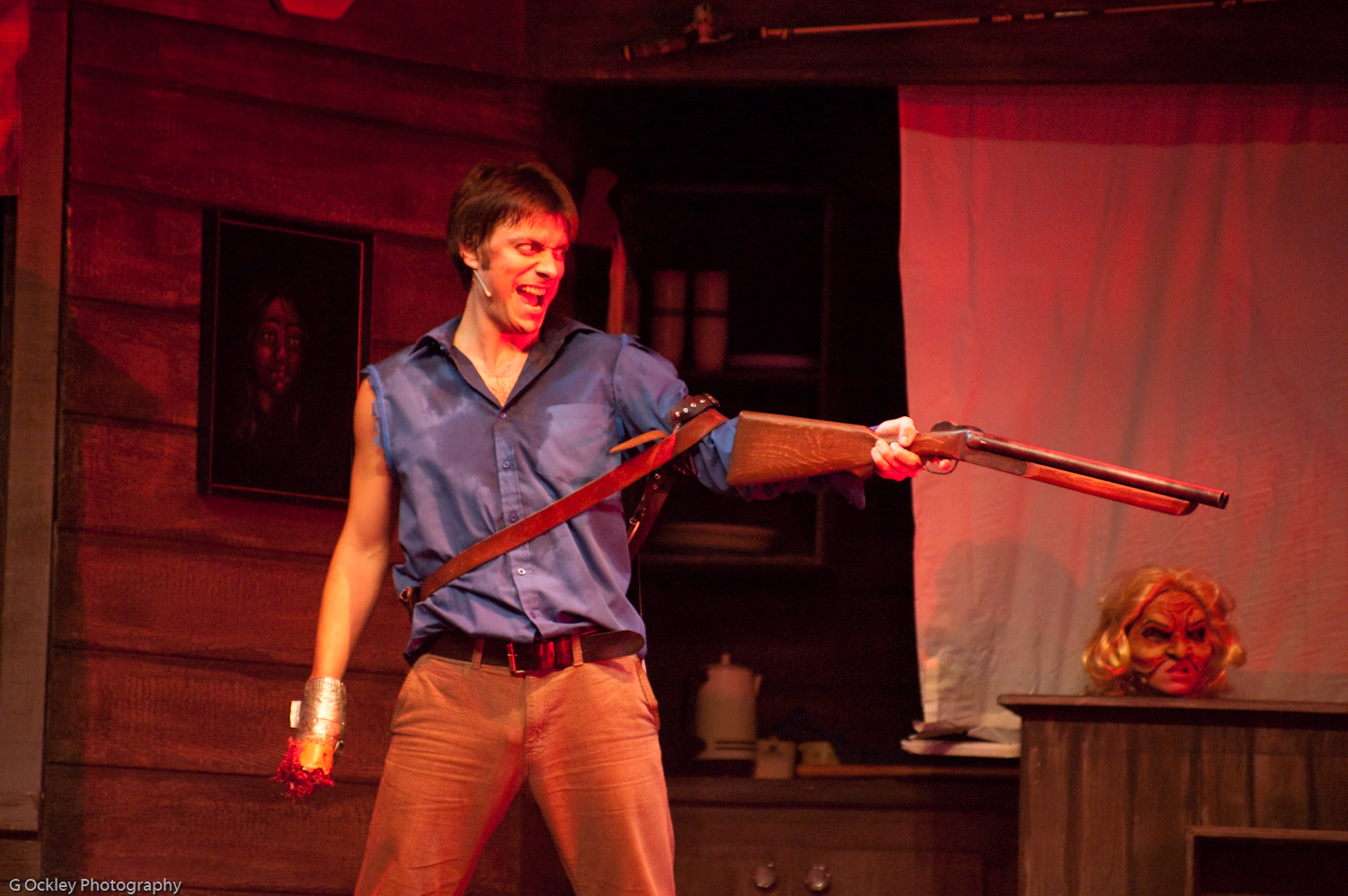
Scott Walters and Meghan Anderssen('s head). Photo: Graham Ockley

Scott Walters and Meghan Anderssen(‘s head). Photo: Graham Ockley

For an exaggerated and ridiculous show like Evil Dead to be cheeky and entertaining rather than silly and embarrassing, two things need to happen. First, the cast needs to be strong enough to carry their audience through outrageous plot points and musical numbers like “What the F*ck Was That?” and “”All the Men in My Life Keep Getting Killed by Candarian Demons”. Second, everyone involved needs to completely understand what kind of show they’re in. Performers who aren’t talented or don’t try because it’s supposed to be “funny” rely on the jokes in the script without actually doing the work required to transmit those jokes to the audience. Alternatively, an actor (or director) taking themselves too seriously would deflate every scene and pull the audience down with them. Luckily, this production of Evil Dead has none of those problems. Every cast member is an excellent singer with impeccable comedic timing, and every cast member knows how to work with an audience to ensure we’re the ones having the most fun (not that the performers aren’t having fun as well).

Simply put, Evil Dead: The Musical is ridiculously fun. What began as a cult classic film series has moved onto the stage and gained a devoted fan-base (some of whom are willing to attend the show in costume and pay extra to sit in the “splatter zone”). The play involves several nudges and winks to the audience, and the audience itself is evolving some traditions that make watching the show similar in feel to cult productions like Rocky Horror Picture Show, however, unlike Rocky Horror, you don’t need to be in on the traditions to get the joke. Since Evil Dead pays homage to horror movie tropes familiar to anyone who spent their youth watching teen slasher flicks, and actually has a plot that makes (some) sense, I believe Evil Dead to be more enjoyable and less alienating to the average unfamiliar-with-the-show audience member. Young love, bad puns, dancing demons, shotguns–in a show that consistently makes fun of itself, what’s not to like?

Evil Dead: The Musical plays at the Norman Rothstein Theatre until November 1. Tickets can be purchased online through DSR Production’s website.

Disclosure: I attended Friday night’s performance of Evil Dead: The Musical courtesy of DSR Productions.


Fighting Chance presents “Carrie the musical”

Carrie the musical presented by Fighting Chance Productions at the Jericho Arts Centre, now until October 25.

Carrie PosterPNG

Poster: Elie Berkowitz

As the tragic consequences of high school bullying continue to dominate headlines in both Canada and the U.S., the story of Carrie, the protagonist of Stephen King’s 1974 novel of the same name, seems all too current. Abused at home by her fanatically religious mother, the peculiar Carrie White finds no compassion at school, only ridicule. This could be the story of many tortured young girls across the continent, with one exception: most teenagers can’t unleash one of pop culture’s most infamous prom scenes with their minds.

When it comes to musicals, especially those adapted from well-known films or books, it would be insulting to the audience to pretend they don’t know what will happen, and to rest on the strength of the plot alone. The challenge of any theatre company producing a show like Carrie the musical is to force us to see the story with fresh eyes, while still paying homage to the original. Though I haven’t read Carrie or seen the 1976 film adaptation, the images conjured up by Stephen King and film director Brian De Palma have become so iconic that I was familiar with the major plot points before I even walked into the Jericho on Friday. Audience members entering the playing space were immediately greeted by a floor-to-ceiling white set, blank except for the word “Carrie” scrawled over and over in black crayon, a nod, I felt, to the influence this name now has on our cultural imagination.

On the whole, Fighting Chance has mounted a success (this is also the first Canadian regional production of Carrie the musical). The production is sympathetic not only to the lonely Carrie but also to her classmates at school, who may take part in her bullying but are, in some ways, subject to many of the same pressures Carrie feels and are trying to protect themselves. There are even shreds of pity to be had for villainous Teen Bitch Chris Hargensen (architect of the pig’s blood plot) and oppressive, morbidly religious Margaret White. The chorus of Chamberlain High students is strong and the teenaged characters manage to evoke feelings of excitement and nostalgia for the last days of high school, even as we know the “night [they’ll] never forget” will end in carnage.

By far the most powerful scenes in this production are those between Ranae Miller (Carrie White) and Sabrina Prada (Margaret White). Miller and White are incredibly strong performers and their duets reveal much about the warped complexities of their relationship, rife with abuse, fear, and yes, a terrible amount of love. It is in these mother-daughter scenes that much of the show’s later horror is established and maintained–their first duet, “And Eve Was Weak”, in which Mrs. White physically punishes Carrie for getting her period, is especially chilling. Carrie’s innocent desire to blossom into womanhood and her mother’s need for absolute moral control balance each scene on a knife’s edge and these roles could not have been better cast.

On the technical side, I appreciated Fighting Chance’s use of a live band (it just makes a show so much more cohesive and immediate) and director/set designer Ryan Mooney’s use of colour in the production. The white floor and walls, coupled with costuming details like Carrie’s mother’s bleached white night gown, provide a blank canvas energetically imbued with the blood we know is coming. And Carrie just wouldn’t be Carrie without the blood.

Performances of Carrie the musical will run at the Jericho Arts Centre until October 25. Tickets can be purchased online through Tickets Tonight.

Disclosure: My tickets to see Friday’s performance were provided by Fighting Chance Productions.

I Don’t Like van Gogh’s Sunflowers (and other cultural confessions)

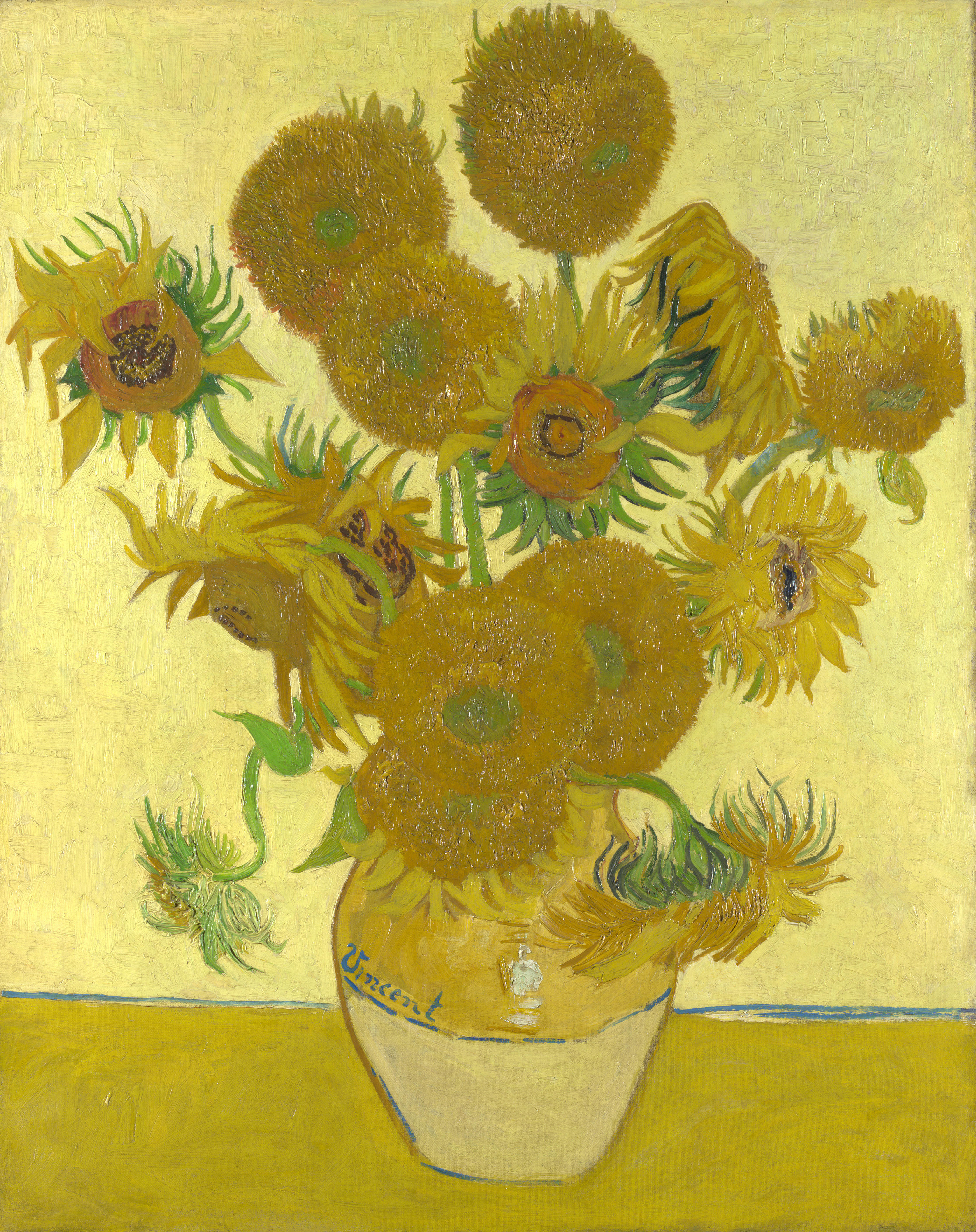
Vincent_Willem_van_Gogh_127I don’t like Vincent van Gogh’s Sunflowers. I don’t. I think they look puffy and pregnant and mildewy and sick–and all kinds of wrong, like furry alien appendages poking out of vases that couldn’t possibly be large enough to hold them upright. The paintings are a rotten-artichoke coloured assault on my eyeballs and I just don’t like them. So there.

I like to think I’m about as cultured as any other middle-class North American with a university education, who grew up with creative and left-leaning parents and an abundance of white privilege. As a child, I didn’t have “fine art” all over the walls and we weren’t at the philharmonic or the opera every week Vincent_Willem_van_Gogh_128but my young life did include some rare and exciting trips to the ballet, theatre, museums, galleries, etc. and the rest of the time I had access to a huge amount of recorded music (both in my parents’ collections and on CBC Radio), prints and posters, good films, music lessons, SO many books of course, and assistance in pursuing post-secondary study. All this is to say that I had more than enough opportunity to become familiar with and learn to appreciate the Western Canon of art and culture as well as important contemporary artistic, literary, and cultural figures and objects.

But sometimes, I just DON’T. Appreciate them, I mean. And sometimes, instead, I appreciate absolute total crap. I’m a traitor to my learned middle-class compatriots, perhaps, but that’s just how I feel about some things. For example:

DANTE’S INFERNO

I understand that Dante’s ideas of the punishments of hell really infiltrated the Western imagination (a lot of what people imagine hell to be like actually comes from Dante, not the Bible) but otherwise, come on! Most of Inferno rattles off the names of political and artistic figures that Dante was familiar with (often personally) and which he had the audacity, or the pettiness, to place in his fictional hell (some of the people he mentions weren’t even dead yet when he wrote about their divine punishments). There are some interesting things going on in this text but for the most part, I feel like there are more enjoyable books to be read.

Mona_LisaLEONARDO DA VINCI

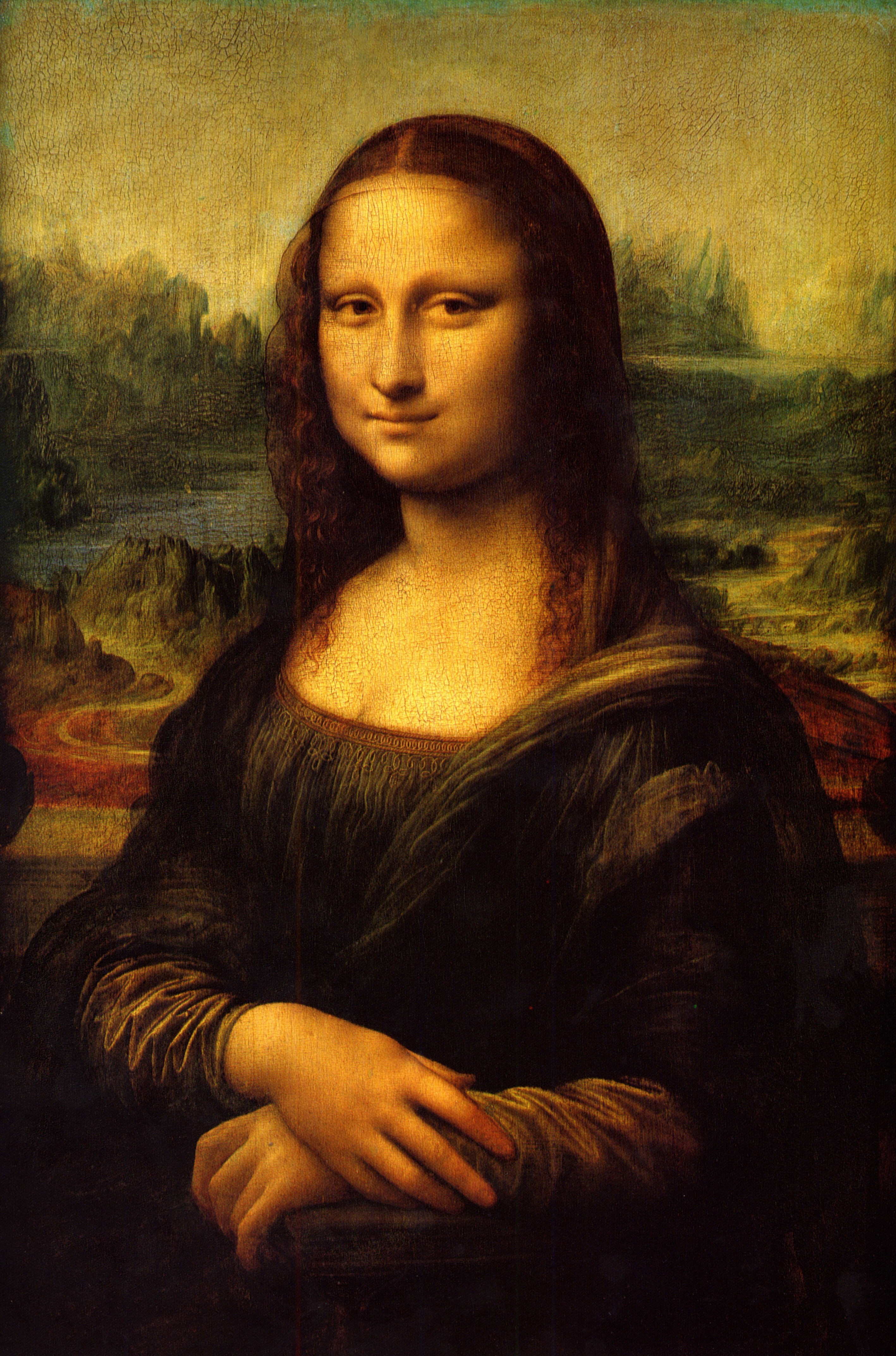
A genius, certainly, but not always my cup of tea (with the notable exception of Lady with an Ermine and MAYBE The Last Supper). His depictions of the Christ child are creepy monstrosities, and most of his women look like clean-shaven men with dresses and no eyelashes. And the Mona Lisa? I’m pretty sure she’s smiling so mysteriously because she’s actually just Leonardo da Vinci in a wig. Given da Vinci’s incredible talent there’s really no excuse for not getting women right (and he could, as his drawing of a female head, “La Scapigliata” shows, so I’m not sure why he didn’t).

MICHELANGELO’S CREATION OF ADAM

La-Creazione-dellUomo-di-Michelangelo-Cappella-SistinaDon’t get me wrong–Michelangelo was another genius of the Italian Renaissance. His statue of David is absolutely breathtaking. But the famous “Bearded Man in the Sky touches finger of Naked Man Lounging on a Hillside”? No. Adam’s head looks tiny compared to his body. Nitpicking aside, I’m just not moved by the sight of all these corpulently-muscled naked males lounging around in pretentiously-affected poses. In a frozen scene, as in performance, the sight of what could be an energetic line broken by languor, weakness, or a simple inability to follow through and complete the image is absolutely maddening. God is reaching down and TOUCHING you, Adam! The least you can do is look excited about it and carry that through-line of energy into your hand and out that index finger that is touching GOD. Instead, Michelangelo’s Adam listlessly proffers his hand like a past-her-prime Elizabeth Taylor getting a manicure. Eugh. Could you look any less thrilled to be here, Adam? Is there something more important that you were doing before you were CALLED INTO BEING?

THOMAS MORE’S UTOPIA

Um…it’s not a nice place. Just read the book. It’s not a place most of us would ever want to live in and I’m not sure what More’s point was when he conceived it. Some things, like food and medicine for all, sound great. Other things, like a life sentence of enforced celibacy for having premarital sex, seem arbitrary and cruel and add little to the Utopian concept except to reveal More’s Catholic bias (a bias he seems to really try to set aside in other parts of the text but which certainly comes out here).

GERTRUDE STEIN

I know many people far more intelligent than me have confirmed her brilliance, so I’ll have to take their word for it, but I spent two semesters studying Stein’s work (and performing it) and I just couldn’t get there. Most of it (the exception being the Autobiography of Alice B. Toklas which is totally conceited and self-praising but still very good) just seems like nonsensical garbage to me. And whenever an academic or a poet or another smart kind of person tells me that they see something in the texts, that Stein had some kind of goal or purpose in her work, I think they’re lying. If she had wanted us to know what she was talking about her readers wouldn’t have had to hypothesize about it for a hundred years. The fact that no one has ever actually been able to tell me that they actually KNOW what any of her work was about (even in a general sense) is enough for me. Gertrude, you lived a very interesting life and your support of the artists around you was incredibly important but good god, woman. Did you have to write Four Saints in Three Acts? Did you? Because I had to READ it, and I can never have those hours of my life back.

J. D. SALINGER’S THE CATCHER IN THE RYE

I’ve already written a little bit about why I found both Catcher in the Rye and The Great Gatsby a bit irritating, but really, this book just made me sad and impatient. Get it together, rich boy! If I have to read Salinger, I’d rather read Franny and Zooey even though in many ways it is equally frustrating.

THE GRADUATE

What is there to like about this film? Were you all on drugs? See point above about being sad and impatient while watching directionless rich boys failing to get their poop in a pile.

LED ZEPPELIN

It’s not that I don’t like Led Zeppelin, I’m sure I actually do. But if you played me their most famous song, one I’ve probably definitely heard so many times, and said, “Whose song is this?” I wouldn’t be able to tell you. I’m sorry. I’d have no goddamn clue.

MAYA ANGELOU

This makes me feel like a monster because it’s MAYA ANGELOU for goodness sakes–a courageous, inspiring woman of colour whose incredible career in literature and the arts expressed the realities of an incredible, and not always easy, life. But whenever I read her poems (or her line of greeting cards), my response was always kind of, “M’h”. Which says more about me than about Angelou I think. What kind of cynical bum doesn’t like to be inspired? Me, apparently.

MARGARET ATWOOD’S PENELOPIAD

People apparently liked this book SO MUCH they turned it into a play (which I haven’t seen, because I was iffy on the book). I just felt like I could sense Atwood on every page, winking at the reader (or perhaps herself) and saying, “Tee hee. How clever I am!”. I don’t know. Maybe I should give this one another go.

THE ACADEMY AWARD-WINNING FILM THE ARTIST

I wanted to like this film. I really really did. Jean Dujardin is a charming actor and the film was full of old-school whimsy but like most of the feature-length films from the actual silent movie era, it was just too damn long. It wasn’t a very complicated story. It didn’t need to take quite that long to tell it. All the good will I had when I began the film evaporated pretty quickly watching the confused and despairing Dujardin emoting for the umpteenth time.

I know I’m not as talented as any of these artists or writers or musicians or filmmakers and that nothing I will ever make will be as important as even the least of their works. I know it’s easy to be a critic, and I know I shouldn’t indulge in trashing things I have not taken enough time to truly know anything about. But sometimes, I get tired of trying to be educated, and it is an immense pleasure to get some of the bitterness out of my system.

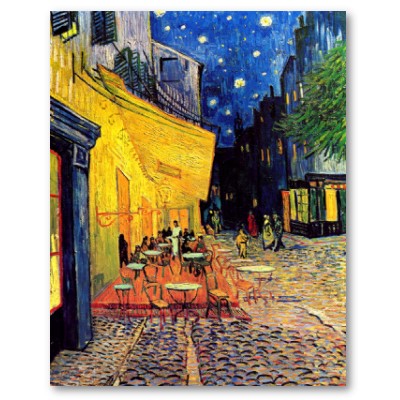
And it’s not that I automatically reject great work either. I love Vivaldi and Beethoven and Tchaikovsky ballets and Debussy’s “Clair de Lune”. I love Greek tragedies and Shakespeare (sometimes) and Alice Munro and the Beatles and Leonard Cohen and the paintings of Botticelli and also Marc Chagall. And I do try to learn to love, or at least like, the more difficult works for what they can teach me, and how they can inspire me. All is not lost for my liberal arts education. As for poor maligned van Gogh, while his sunflowers are gloomy to me, his Cafe Terrace on the Place du Forum most certainly is not. Has painted light ever looked so warm?

tumblr_lqu45inr9I1qgy9v6o1_400

Butt Kapinski – collectively-created Film Noir at its finest, and most vulgar

I was recently complaining to a theatrical friend of mine that of all the arts events and shows that have claimed to be immersive and interactive with their audiences, very few that I have seen truly were. That is, until I met Butt Kapinski, private eye and film noir enthusiast (performed by creator Deanna Fleysher in the Cultch’s VanCity Culture Lab). Butt Kapinski wants to make a film noir, and Butt Kapinski wants us to help him.

Deanna Fleysher as the unflappable Butt Kapinski

Deanna Fleysher as the unflappable Butt Kapinski

Obtaining and enlisting our good humour from the get-go, Fleysher’s creation, the lisping but likeable private investigator Butt Kapinski, manages to charm, cajole, and occasionally chastise his audience into creating an entire 60-minute film noir world, with its grisly murders, seedy locales, dangerous characters, and atmospheric music. As befits an old-school private “dick”, Fleysher is dressed in slacks, with suspenders and a tie, and a long trench coat with her very own streetlamp/desk lamp rising out of the back of her collar to dangle over her head. I raised my eyebrows a little when Butt Kapinski first emerged from the shadows and I saw this odd contraption, but I soon realized that this lamp is genius, immediately creating mood and bringing our focus to whichever hapless audience members are needed for the next scene. Over the course of the evening, I played spurting blood, a filthy john, and Hobo John (who was a different kind of filthy John, I guess).

[Note: Much as I love being part of the action, I did not ask to be Hobo John. I was sitting in my seat enjoying the show when Fleysher shone her light on my section, telling us that Butt Kapinski was down by the railroad tracks, where all the hobos hang out (us). “And there,” she said, climbing into to risers to stand over me, “we find the dirtiest, the most pathetic, the saddest old hobo of them all: Hobo John. What train are you waiting for, Hobo John?” I couldn’t answer because I was laughing so hard. “Yeah, well that train’s never gonna come,” Fleysher/Kapinski said, “So cry, Hobo John. Cry your filthy tears.” (at this point my face was in my hands and I was shaking), “You didn’t always used to be this way, Hobo John,” she said, and I shook my head no. “You used to be someone, didn’t ya? You used to be something special. What did you used to be, Hobo John?” and I was so nervous under that lamp I said the first thing that popped into my head, which for some reason was, “A ballerina!”. “A ballerina,” Fleysher/Kapinski sneered contemptuously, “that’s quite a change, from a ballerina to a big gross man.” and with that my time was done, and Fleysher’s light swung to a new victim/performer/audience member, and a new part of the story.]

Fleysher is a master at getting the audience on her side, and into her world. The ushers warned us as we walked in that there were no “safe seats”, and because of that’s true, I think no one was really put upon or singled out more than anyone else. However, this show is definitely not for everyone. If you do not want to play along with whatever strange, awkward, or potentially totally vulgar thing Fleysher/Kapinski is doing, this is not the show for you. Though Fleysher is an incredible improviser and can work with anything the audience members throw at her, Butt Kapinski himself really doesn’t put up with anyone being too cool or too shy or too offended to participate, so if you REALLY don’t like this sort of thing you might be better off giving this one a pass.

But if you did give it a pass, that would really be too bad. It’s been a long time since I have had so much fun at the theatre. Fleysher truly includes her audience in her work and this show genuinely cannot function without them. The Culture Lab is an intimate space and Fleysher has a unique gift for stealthily dissolving the divides of silence and civility that usually separate audience members from performers, and from each other. She is a artist who has clearly studied audiences. She knows how we react, she knows what makes us uncomfortable, and she knows how far she can go (or rather, how to get us in the palm of her hand early on so that she can go as far as she likes). The intensity and adaptability of Fleysher’s focus in the face of an ever-changing crowd of unique individuals is nothing short of miraculous (in an obscene, hilarious kind of way).

If I have one criticism of the show, it’s that I didn’t need the ending to be what it was. TC (who was with me) didn’t seem to mind it, so it might just be one of those intangible things where I see a particular part of a great show and think to myself, “Huh. Was that bit necessary?” and simply choose to write that bit off as Not For Me. Maybe it was how raunchy Fleysher got by the end; I’m not sure.

And my god, Butt Kapinski IS filthy. But small criticisms aside, it is so funny and so FUN and so unique in its ability to absorb its audience into the world it’s creating that I consider it a rare gem amongst my theatrical experiences.

Butt Kapinski runs until October 11 in the VanCity Culture Lab at the Cultch. Tickets can be purchased online from the the Cultch Vancouver.

Disclosure: TC and I were able to see the opening night performance of this show by invitation of the publicist for Butt Kapinski.

The Diamonds and the Jar

jelly-jar1Once upon a time there was a jar with clear sides and a lid. The jar was mostly full of air but at the bottom of the jar there was a tiny heap of earth sitting in a shallow pool of water. Living on the tiny heap of earth were tiny plants. When they were warmed by the light which shone through the glass the water in their leaves rose into the air and up under the lid of the jar. At night the jar was cool and the water fell as rain. As the tiny plants died they left their nutrients in the tiny heap of earth so that other tiny plants could grow. In this way, the jar, though small, was perfect.

Living amongst the tiny plants on the tiny heap of earth were tiny tiny people. They were so small that for them, the tiny heap of earth was a world and the tiny plants were a forest that stretched as far as they could see. They ate the fruits that grew on the tiny plants and lived in their boughs, and breathed in the air that the plants breathed out. When the tiny people died their bodies left nutrients in the tiny heap of earth so that other plants could grow, and other tiny people benefit. In this way, the people, though small, were perfect. This is not to say that there was no toil, or grief, but that there was balance.

It was quite by accident that someone found the diamonds. Most of them were buried deep within the heap of earth but some had made their way to the surface over time and lay glittering in the light, scattered here and there, small as berries. The tiny people who found these diamonds had never seen anything like them before but since everything else the earth gave up was good, like the plants, they believed the diamonds were good too. As they would with a new fruit, they touched one of the diamonds to see if it would sting their skin. It did not. They smelled the diamond, to see if it was rotting or acrid. It was not. They licked the black diamond, to see if their throats closed or their bellies revolted at the taste. They did not. One of the tiny people, the bravest or perhaps the most curious, put the diamond in their mouth, and swallowed it.

It was in this way that the people who lived in the jar discovered the wonders of the diamonds. When you had eaten one of these diamonds, you were stronger, and faster. Distances that would have taken days to walk were a very small matter for a person who had eaten a diamond. “Miraculous!” the people said, “the diamonds are gifts of energy from the earth!” And they were.

Life became easier for the people in the jar. The extra energy they received from the ground meant they could spend less time on toil, and more time in leisure. They could think about, and create, things that were beautiful, not only things that were necessary. They could visit family who had married into other tribes or moved into other villages because the trip was now a matter of hours, rather than a matter of days. Children who had grown up after the discovery of the diamonds did not know a world without them–they imagined this world would be a hard, inefficient, and ignorant place.

Of course, like anything that comes from the ground and is eaten, a single diamond could provide energy for an hour or two, no more. And when the miracle of the diamond had passed, a hunger for another would begin.

Not that the people needed to eat diamonds all the time. “Of course not,” they would say to each other, “that would be silly.” They ate the diamonds only to hasten their various labours, and when they needed to travel. Diamonds were not needed during times of leisure, only times of work. And yet there were those who occasionally ate them for fun, because they loved the speed of their movements, loved the freedom and strength and grace these diamonds seemed to give them. And of course, people often ate diamonds to travel even short trips, because it was faster that way, and would save time.

In fact, it seemed that once people began to save time by eating diamonds, they realized how precious time truly was. Their predecessors had plodded through life, taking for granted that another minute would follow this one, another day would follow that. “How backwards,” the people thought now, “how erroneous, to waste time as our grandparents did! Let us always give time its due, and value efficiency in ourselves and others.”

Efficiency meant diamonds were required, but that was alright, because they were so small, and scattered in so many low places on the heap of earth (now that the people knew what to look for), and there were so many of them. But even the sands in the desert are not innumerable if you begin removing them grain by grain. Eventually there were only a few places where diamonds could be found and the people, unable to imagine a life without their gifts, began to fight over them, and to panic.

Fortunately, or so it seemed, the most clever and enterprising of the tiny people realized that like the plants that grew from roots buried deep beneath the earth, the diamonds on the surface were just fragments of the treasure to be found by digging. And so the people dug. They cut down their tiny trees and built tiny machines to harvest the tiny piece of earth on which they lived. Many of the plants were cleared away to make room for holes, and left to rot in piles. Leisure was unheard of now–diamonds must be mined, diamonds to improve the lives of the people! What did they care that the pace and scale of the work required the consumption of even more diamonds? Efficiency demanded fast work, fast work required energy, and energy required diamonds. It made perfect sense, and yet–

There were some people in the jar, strange people, but maybe wise people, whose eyes could see farther than others’, and whose memories were longer. “We used to have more trees,” they said, “we used to have better air. Can’t you tell?” But the people busy digging ignored them. “Plants grow,” they said, “and air is all around us. There is no shortage.”

But the wise people were not so sure. Once they began looking they could not stop, and the more their eyes saw the more their eyes filled with tears. It wasn’t only that the trees and plants were being depleted–made into machinery or cleared away. There was something about the diamonds themselves, something that happened when the people ate them. The air they exhaled was different from other air, harsher, heavier. People were used to coughing after eating a diamond, and called the condition “diamond lung”, but considered it only an annoyance. The wise people were not so sure. The air in villages where many people lived became thicker, heavy with their crystalline exhalations, and the weakest of the people were often ill, and sent to spend time in the forest. Somehow the plants helped.

The wise people saw this, and were worried. Eating the diamonds dirtied the air, and plants cleaned it. But people were killing the plants to mine more diamonds, and eating what they mined so that they could continue mining diamonds. “You must stop,” said the wise people, “you must let go of the gift of the diamonds.”

But it was hard to let go. People wanted to see their loved ones in distant places. People wanted to work quickly, to have time for more beautiful, pleasurable, and elevated things. They knew, of course, that the diamonds were not like the plants–they did not grow and they were running out. And yet this only increased the people’s  hunger; finding diamonds beneath the earth became imperative. “If there aren’t many left,” the people reasoned, “then it is better that we have all of them so that we can be sure we will have all we need.”

The wise people shook their heads. “Stop,” they said, “the air is being poisoned! If we stop now, we may still have a chance. The plants could grow back, the air could clear.” And a few of the braver, wiser people said, “We live in a jar, with a very tight lid. When the clean air is gone, there will be no more.”

The people were incredulous. “A JAR?!” they cried, “I have never heard anything more ridiculous! The earth is huge! The sky is immense! How can any sensible person believe that we live in a jar? We are powerful! We are important! We master the earth, we don’t live in a jar.” The ones who had suggested this were called heretics, lunatics, dangers to the good of the people. They were shunned and went into the forests by themselves, as far away as one diamond could take them, then built simple little houses, and never ate diamonds again. “A jar!” sneered the people, watching the wise ones leave, “Unbelievable!”

Nevertheless, it was true. The people were so tiny that only those gifted few could see the glass that encased their whole world. They did not know that their sky was a lid shut tight. They ate the diamonds, and dug for them, and ate them, and dug for them, all the while poisoning the air and destroying the plants that could have cleared it. They did not stop. They did not stop for a long time. They did not stop until their children woke up blind, their eyes unable to see through the crystalline fog that surrounded them. They did not stop until breathing was so difficult that the even sleep was laborious. They did not stop until the air was so thick that light could not filter through, and the remaining plants shed their leaves, and dropped their fruits, and died.

It was then that the people discovered that you cannot eat efficiency, and time cannot be saved. The faster you chase it, the more it runs out, like air in a jar whose lid is closed tight. They renounced the diamonds, cursed them, cast them in a pit and buried them, but it was too late. The small amount of time they had left was just enough to eat the last of the fruits, and to breathe the last of the air. No one, not even the ones who had been wise, could save themselves, because their world was a jar whose lid was closed tight, and there was no other.

(Good gracious, people, can’t we please try to save our jar? We still have time, but not much.)

(Metaphorical) Masks, Monsters, and Music: Take Your Pick at the Fringe

The Vancouver Fringe Festival is upon us again and this year I have been fortunate not to see my usual one show (or none), but to have seen three! Which is pretty big for me. Each show offered something completely different and depending on what you are looking for I am certain at least one of the following three is worth getting up off your couch for. (Remember, art is something that makes our community special, and the intimate, innovative art that you find at the Fringe can’t exist without your patronage.)

And so, in the order in which I saw them, I would like to tell you about the three Fringe shows I saw this year:

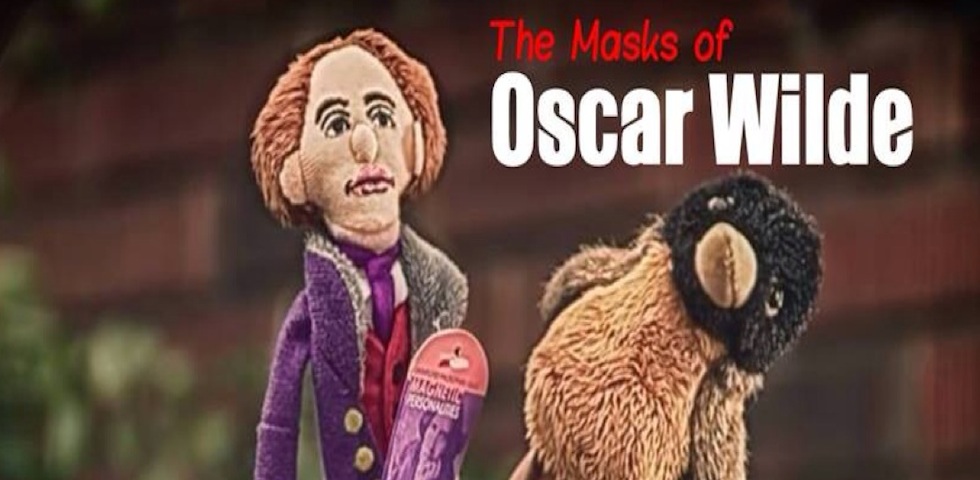
Show #1: The Masks of Oscar Wilde, by Shaul Ezer with C.E. Gatchalian

Company: MatchMaker Productions in association with the frank theatre company, Vancouver

In this experiment with what the playwright calls a “lecture-in-play”, two performers (characters A and B, played by Sean Harris Oliver and Tamara McCarthy respectively) tell the story of the celebrated career and devastating fall from grace of the renowned Irish playwright, Oscar Wilde. While Harris Oliver and McCarthy each have several parts to play, the “masks” in the title are metaphorical, referring to the different facets of this extraordinary man, including those parts of himself he stove to keep hidden. (Though Oscar Wilde was married with two children, he sought the company of young men, fell in love with the young Lord Alfred Douglas, and was subsequently convicted of homosexuality and sentenced to two years hard labour. After having once been the toast of the London theatre scene, he died destitute in France at age 46.)

MoOW puppet bannerI quite enjoy lectures about interesting things and so I am predisposed to enjoying a play like this. That said, more captivating than the lecture pieces absolutely are the tellings of Wilde’s children’s story “The Happy Prince”, and the actors’ merciless performance of a scene from one of Wilde’s three infamous trials.

As I left the theatre, an audience member behind me said, “Well that was a good little play”, and while he was right, I can’t help wishing it could have been a great little play. I believe that audiences can get on board with a form like a “lecture-in-play”, especially about a subject whose work and life almost speaks for itself. Granted, I was there on opening night when nerves and expectations run high, but I did feel there were moments in the performance, and in the text itself, that felt a little forced or pitched, as if the artists involved did not quite trust that their subject and his work were enough to enthrall us, without little embellishments like hamming up a scene from the already-hilarious The Importance of Being Earnest, or throwing in contemporary references now and again. Based on the reactions of the audience members seated around me, we were entertained, and the energy of the show could, I feel, be contained just a bit to leave the audience some space to meet the artists half way as they learn about this brilliant and tragic figure.

One thing I thought was new and different about this production was the presence of an ASL interpreter, and the ways in which the actors acknowledged her imbedded presence on the stage. If you are hearing impaired or would like to visit the theatre with a companion who has a hearing impairment and uses sign language, you may wish to inquire with the companies to see which nights this interpretation will be available.

You may like this show if: you like to learn, you are interested in Oscar Wilde or Victorian attitudes towards homosexuality, you want to see a relentless Victorian-era lawyer corner and skewer his witness, or you want to see enacted the sad and beautiful story of love and sacrifice that is “The Happy Prince” (it really is very sweet).

You may not like this show if: you have difficulty keeping up with a lot of text/information coming at you very quickly, or if you are looking for something a little more active.

Tickets for the remaining performances of The Masks of Oscar Wilde can be purchased online here.

Disclosure: I was invited by one of my friends to review this show courtesy of the frank theatre company. The content is my reviews is my own.

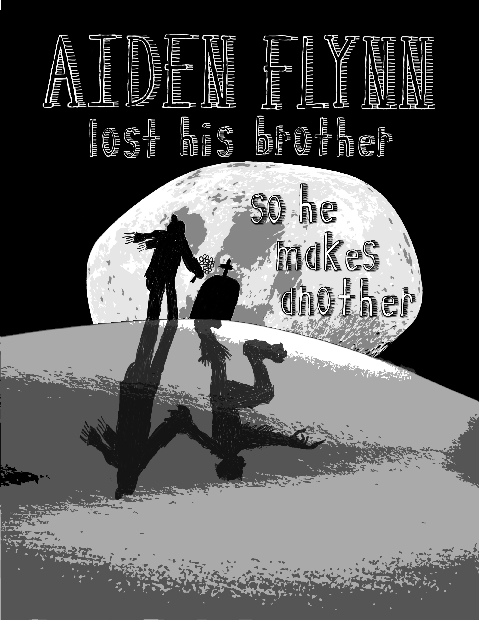
Show #2: Aiden Flynn Lost His Brother So He Makes Another, created by Morgan Murray and Nathan Howe, score by Derek Desroches and Nathan Howe

Company: Theatre Howl, Saskatoon, Saskatchewan

10087746When lonely Prairie boy Aiden Flynn’s little brother is stillborn, he decides to make a new playmate for himself. His creation is a kind of Frankenstein’s Monster, loving, loyal, and surprisingly cute while at the same time disturbing and grotesque. This sparse but beautiful story is told entirely without speech.

The bleak colourlessness of the set and of the shadow puppet scenes immediately places the audience somewhere recognizable (if you’ve ever been on the Prairies when the sky is grey), somewhere that looks like home but feels empty. The loneliness of the young Aiden is palpable, and his ingenuity admirable. We understand his good intentions, but from the first breath his “little brother” takes we are sad, because we know that what Aiden has done is monstrous, and we start to recognize, perhaps, the selfishness involved in creating a being that cannot be included in your family or community. Given this conflict, the conclusion is as beautiful as it possibly could have been.

You may like this show if: You like physical theatre, innovative storytelling, simple stories, or are interested in the slightly creepy.

You may not like this show if: You really prefer spoken text, or dialogue, and are not the kind of person who is comfortable watching silence.

Tickets for the remaining performances of Aiden Flynn Lost His Brother So He Makes Another can be purchased online here.

Disclosure: Nothing this time, I chose this show based on its description on the Fringe website and just really liked it.

Show #3: The Chariot Cities by Harrison Mooney, music by Bryan Binnema

Company: The Chariot Collective (ad-hoc group of artists, based in Vancouver)

Screen Shot 2014-07-27 at 7.44.04 PMAfter folk-musician Wendy Brownlee meets the irreverent but charismatic musician Jack Stackhouse backstage at a late-night talk show, she is warned by the host not to marry him. She falls in love anyways and the family the couple create with their two children (who grow up to be musicians in their own right) is a family deeply scarred by Jack’s infidelity, drug use, and selfishness, and by their mother’s baffling and painful capacity to forgive him. Told over a period of 22 years, The Chariot Cities is a story of the ties that bind families together–not only ties of love and blood but also ties of hurts and resentments and of course, of music.

The story itself is painful enough in its ways, but it is through the songs that we get a sense of how keenly these hurts are felt, and how impossible they are to escape. Bryan Binnema’s music is excellent throughout but the piece that really stands out for me is the one belonging to the family’s daughter, Beata. Performed by actress Shantini Klaasen (vocals and piano), the song “You Let Me Down” is a suffering young woman’s heartbreaking cry for her father, exquisitely performed (I also felt the lyrics in this piece were the most sophisticated of the play).

I do wish this play was a little longer, a little more fleshed out to bring to the surface more vividly some of the undercurrents of messed-up relationships that run throughout the show, but one can always hope for a remount. Besides, there is something to be said for not sharing everything, and perhaps the play is better for it.

You may like this show if: You like music, and are interested in the dynamics of musical families such as the Wainwrights.

You may not like this show if: You don’t like folk music, or the interspersion of song and scene onstage. This is also not a play for children.

Tickets for the remaining performances of The Chariot Cities can be purchased online here.

Disclosure: A friend of mine is involved in the show and I was able to see this performance through her comp. I was not asked for a review.

I hope I have encouraged you to attend at least one performance at the Fringe Festival this year. There is really so much more that I didn’t see so haven’t mentioned but it is worth exploring. Remember that you will need to buy a $5 Fringe Membership in addition to the tickets for the shows you are seeing (you only need to buy the membership once and then you present it with your tickets when you attend each show). Happy Fringing!

In Dublin and Well-Fed

On Saturday, my TC were wed by the sea on Salt Spring Island. Though our wedding day was perfect, it was sandwiched between days of preparation and recovery, and two full nights during which I did not sleep. In my infinite wisdom, I had long ago decided that I wanted us to leave on our honeymoon directly after our wedding. This is why, not five days after getting hitched, I am sitting in the Fleet Street Hotel in Dublin, preparing for our second night in Ireland’s capital city but also for our onward journey to Killarney tomorrow. So far, married life is a bit of a whirlwind for this happy couple.

What drew us to Ireland for our honeymoon? For the both of us, the country’s reputation for beauty, charm, and friendliness. Additionally for me, my love of folklore and the fairy stories of my youth. For TC, his love of whiskey (or whisky, but here in Ireland it’s always with an “e”).

_DSC0216.JPGThough jet lag and exhaustion have prevented us from venturing out far (or late), Dublin is an incredibly walkable city with most attractions crowded south of the River Liffey (with a few places, like the Old Jameson Distillery, situated on the north side of river). Upon our arrival in Dublin around noon yesterday we made napping our immediate priority, however, we were still able to sneak in a walk through the Grafton shopping district and down to St. Stephen’s Green (my favourite part was the ducks) before dinner.

This morning we made sure to tick off something on TC’s Ireland wish list by taking a tour of the Old Jameson Distillery on Bow Street (we booked our tour online which is good because by the time we arrived it was sold out). No distilling actually occurs on Bow Street anymore (the new massive Jameson Distillery now operates in Cork), but with our amusing guide and some scaled-down models of distilling equipment, I was still able to learn a lot about how whiskey is made (TC already knew everything but since he was picked for the special comparison tasting at the end and got a certificate with his name on it I think for him it was just about fun). Did you know that the smoky taste you get in a Scotch whisky is from using peat to malt the barley (versus Jameson whiskey which used odourless coal and now uses natural gas)? I didn’t (well, I knew peat was involved though I wasn’t sure how), and now I do. The tour itself is pretty quick for what you pay (14€ for an adult ticket, cheaper online), but you do get a drink of Jameson Original at the end (either straight, or, if you prefer, with gingerale and lime), and the building itself is kinda cool.

Our next stop was at the campy museum, Dublinia, just across the street from Dublin’s Christchurch Cathedral. At this point in our trip, this is the attraction I probably could have done without. Though our Lonely Planet: Ireland had mentioned that the museum was decent, “at least for kids”, I sort of ignored the “for kids” caveat and dragged the jet lagged TC through three floors of kitschy interactive displays about Vikings, medieval Dublin, and archaeology (where the kids can try on hard hats and boots!). Though I like to think we’re young at heart, my new husband and I did not have the energy for posing in pretend bearskins and writing our names in runes (I tried and got frustrated). The medieval level with its re-creations of Dublin’s quayside, markets, and merchant home life was actually pretty impressive, but I think the museum maybe overdid it a little with their mannequin displays (like the cart of dead plague victims or the man sitting on a latrine seat, accompanied by an audio feed featuring his groans of satisfaction on the crapper). If you ever travel to Dublin with kids they’ll probably get a kick out of Dublinia, but otherwise I’d give it a miss.

Not being much of a city person (or a James Joyce fan), I can’t say I’m blown away by Dublin but I think it’s fair to say that both TC and I like it and are enjoying ourselves, exhaustion aside. Our hotel is within walking distance of everything I want to see, the shopping (if I were here to shop, which I’m not) appears to be excellent, the streets seem safe and the buildings quaint, and our dinners have been superb. Taking Lonely Planet‘s advice and steering clear of the Temple Bar area with its faux-Irish tourist traps, we have ended up eating at French restaurants on Exchequer Street both nights and have not been disappointed.

Last night we took advantage of the “pre-theatre” 2-course menu at Fallon & Byrne (a fancy restaurant above an only slightly less fancy grocery store). Despite being part of a deal, our evening was not cheap, though it hardly matters when the food, cocktails, and service were so excellent (despite our being obviously underdressed, wearing what we’d been wearing on the plane). On something special like the first night of our honeymoon, I don’t really mind spending a lot of money if the food is worth it, and it was: chicken terrine with mango chutney, fresh bread and butter, roast chicken with red onion relish and shrimp butter, mango sorbet with pieces of mango, pineapple, and meringue, topped with whipped cream–it’s fair to say we waddled back to our hotel last night.

This evening we decided to try more French fare at the Green Hen. Slightly cheaper than Fallon & Byrne (though with a tighter interior and busier atmosphere), the food on their “early bird” menu (I guess a reward to tourists and locals who feel like eating early) is just as good. We should have made a reservation, but we didn’t, and were lucky enough to be seated at the bar. We started with cocktails and smoked salmon with capers before moving on to vegetable risotto (for me) and duck confit with blackberries and melt-in-your-mouth butter, I mean potatoes, for TC (I think the duck was better but my risotto sure wasn’t bad). TC declined dessert but I went for the passion fruit cheesecake with shortbread ice cream and it was even better than I hoped it would be. I would never say that TC and I are foodies but we do appreciate good food, and this food was very good.

So good, in fact, that for the sake of our wallets it’s probably for the best that we are moving on to Killarney tomorrow, where we will be staying in a hostel and partaking in natural, i.e. free, attractions instead of fancy French restaurants. Not that there’s anything wrong with French restaurants in Ireland. Evidently not.

_DSC0291-0.JPG