Lisbon and Evora: Old Cities, Old Streets, Old Bones

“I’m in Lisbon. I’m in Lisbon. I’m in Lisbon.”

This is what I had to keep telling myself after the man at the information desk at the Lisboa-Santa Apolon train station refused to grab me a map or help me once I arrived because he wasn’t the tourismo, and the tourismo was closed.

This is what I had to keep telling myself after I (clever me) figured out how to get from the train station to the Bairro Alto neighbourhood (where my hostel was) on the metro ALL BY MYSELF but, because I was looking at a flat little depiction in my Lonely Planet, did not realize my 20-minute hike from the metro to the hostel with my 40 lbs. of backpack would be almost exclusively uphill, or up stairs, in weather that was much MUCH hotter than it was when I left Guarda.

This is what I told myself when I checked into the hostel and realized all the other beds in my mixed dorm room were occupied by men and something got stuck in the door lock mechanism and I almost locked myself in the dormitory.

But hey, I was in Lisbon. And after a rocky start to the relationship, I eased into both the city and hostel life (lots of interesting people, drinks on the patio, a full moon for my last night). My only regret is that I did not stay longer.

On Sunday morning I set out on foot for the Alfama, Lisbon’s old Moorish district. My companion for the day was Ori, an Israeli life-coach who was also staying at my hostel and who, like me, was travelling for a month through Spain and Portugal (though he did Spain first). We got lost several times and wandered up and down through the twisting labyrinth of the district but the entire experience was enriched by our conversation. We discussed religion, politics, and world affairs, among other things, and I was particularly interested in hearing the Israeli side of the story regarding Israel’s boarding of the Gaza-bound flotilla last year. It was also interesting to be called upon to describe the Canadian viewpoint of these same events and others regarding that area of the world (as if there’s only one viewpoint, but I did my best).

Castelo de Sao Jorge, Lisbon

As tourists, Ori was most interested in the “points of view” (referred to as miradouros) from the high points of the city (it’s a very hilly city, so there are many), and I was interested particularly in the Castelo de Sao Jorge. It seemed a bit much to cough up the 7€ admission for the castelo (why oh WHY did I leave my student card at home?!), but once inside I did not regret it. The castelo is actually HUGE, and its outer walls contain not only the fortress itself, but also a museum, a garden, and restaurants. I was not all that interested in the museum (I saw enough old bronze swords and Iron Age loom weights in Guarda’s museum) but the sheer amount of battlements and towers open to the public (almost all of them) was enough to keep me entertained for a full hour, climbing up every staircase I saw, passing through every archway, and peering through every arrowslit. As I explained to Ori: ‘Nothing captures the imagination quite like a castle.’

Se, Evora

Yesterday’s day trip to Evora was also, well, plain old fun. I visited the medeival Se, of course (I’ve seen the Se in every Portuguese city I’ve visted so far) and the old Roman temple standing beside it. I peaked in at the Roman ruins contained within the Evora town hall, ate lunch in the square out front, walked along the Aqueduto da Agua de Prata (Aqueduct of Silver Water), and spent the siesta strolling through the Jardim Publico (public garden) and eating a pastel de nata (a sweet custard tart that Portugal is famous for). Not a terrible way to spend an afternoon.
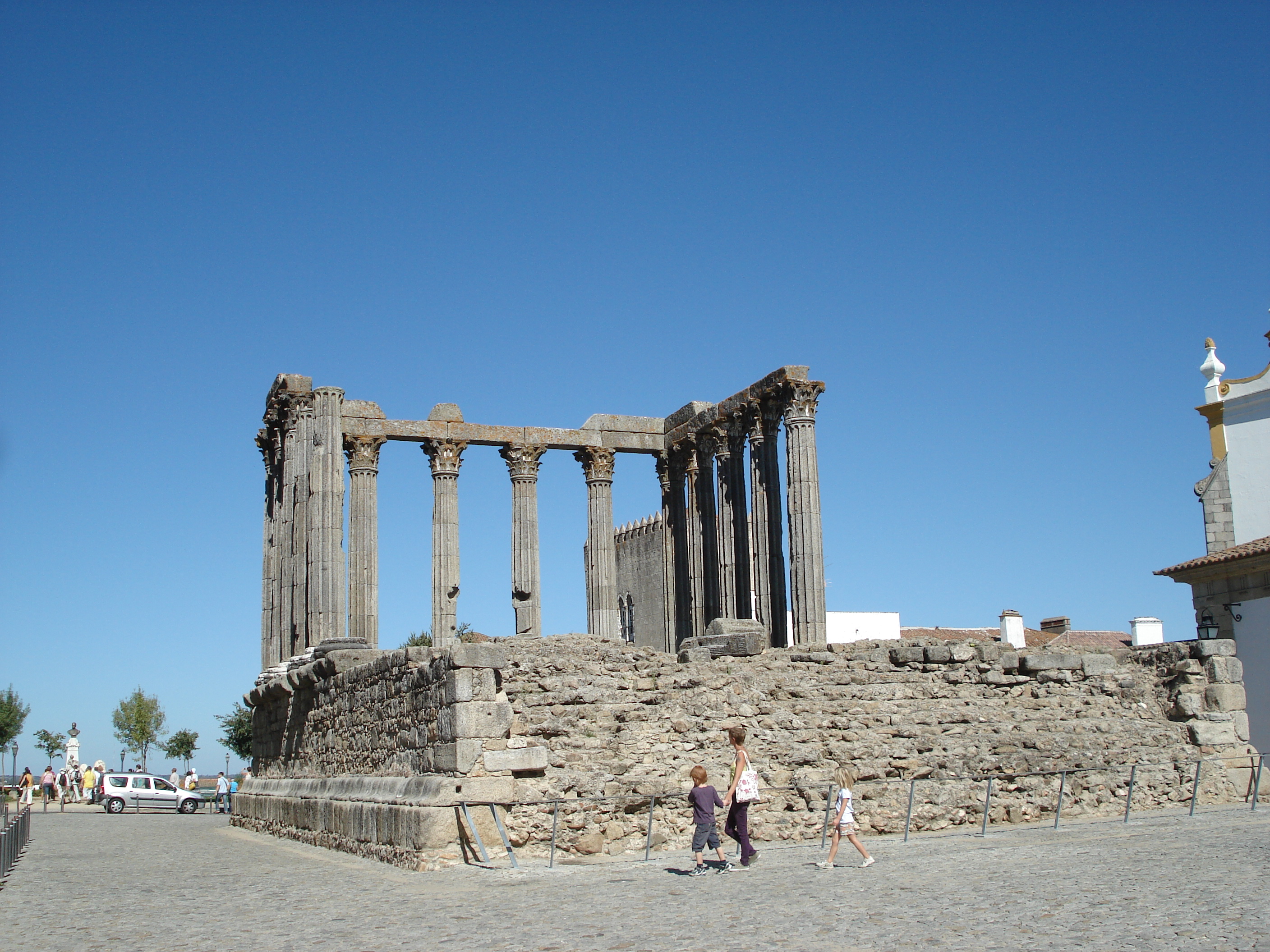
Roman Temple, Evora

Something that was rather amusing about the university town of Evora is that I happened to visit just as the October semester was beginning and I got to see groups of freshmen undergoing a bit of hazing and public humiliation at the hands of their older peers. My favourites included the young man dressed as Miss Piggy forced to order at the cafe, and the group dressed as Crusaders and Turks, singing what seemed to be ABBA’s hit “Thank You for the Music” in Portuguese.

After siesta was over I visited the Igreja de Sao Francisco, but to be honest I was more creeped out by this church than uplifted spiritually. There comes a point when the more gold and statues you stuff into a place the less the incredible balance and heightened sense of tranquility created by the architecture can have its desired effect. I think the Igreja de Sao Francisco reached that point, and then some. But it’s still quite a sight, and I’m not surprised the Lonely Planet listed this church as Evora’s most well-known.

Bone Chapel, Evora

If I thought I was creeped out by the Igreja that was nothing compared to how I felt visiting the Capela dos Ossos (Chapel of Bones) adjacent. That’s right, a chapel whose walls and ceiling were made completely of the bones of and skulls of long-gone Evora residents. Even though I felt really weird about it I paid the extra so that I could take photographs. The only way I can morally justify taking photos of people’s bones is the purpose of the chapel itself, emphasised by the inscription above the chapel door: “We whose bones are here, wait for yours”. This was a place built to remind us of the impermance of our lives, and the futility of our vain pursuits. The image is meant to be taken with you.

Even so, old bones. It’s just……creepy.

I’d hate to leave you with a startling mental image of your own mortality so instead I will leave you with a mental image of what I saw as I rode the train back into Lisbon: a full moon rising over red tile roofs, the Rio Tejo sparkling beneath, and a sense of heat and magic and colour breathing from the entire city. De nada.

I HEART LISBOA
 

Port in Porto and (Mis)adventures in Manteigas

Ola!

Your favourite nifty traveller (that’s me, of course) arrived in Porto, Portugal, Tuesday evening and through the help of the internet, a map, and the kindness of strangers, managed to navigate the metro and the bus to reach the Porto Youth Hostel at around 9:00 pm. I scrounged up a towel (they don’t usually supply them to the dorms but I had my ways), called my TC to confirm that I had arrived safely from London, and fell into a deep sleep.

In case you are wondering about the Portal Youth Hostel (part of a Portuguese group of hostels called Pousada Juventude), it was clean and bright, the staff was helpful, and it had beds and showers. Otherwise it was pretty spartan. For the traveller on a budget it is a good place to stay, however, you need to bus 4km to get to the centre of Porto.

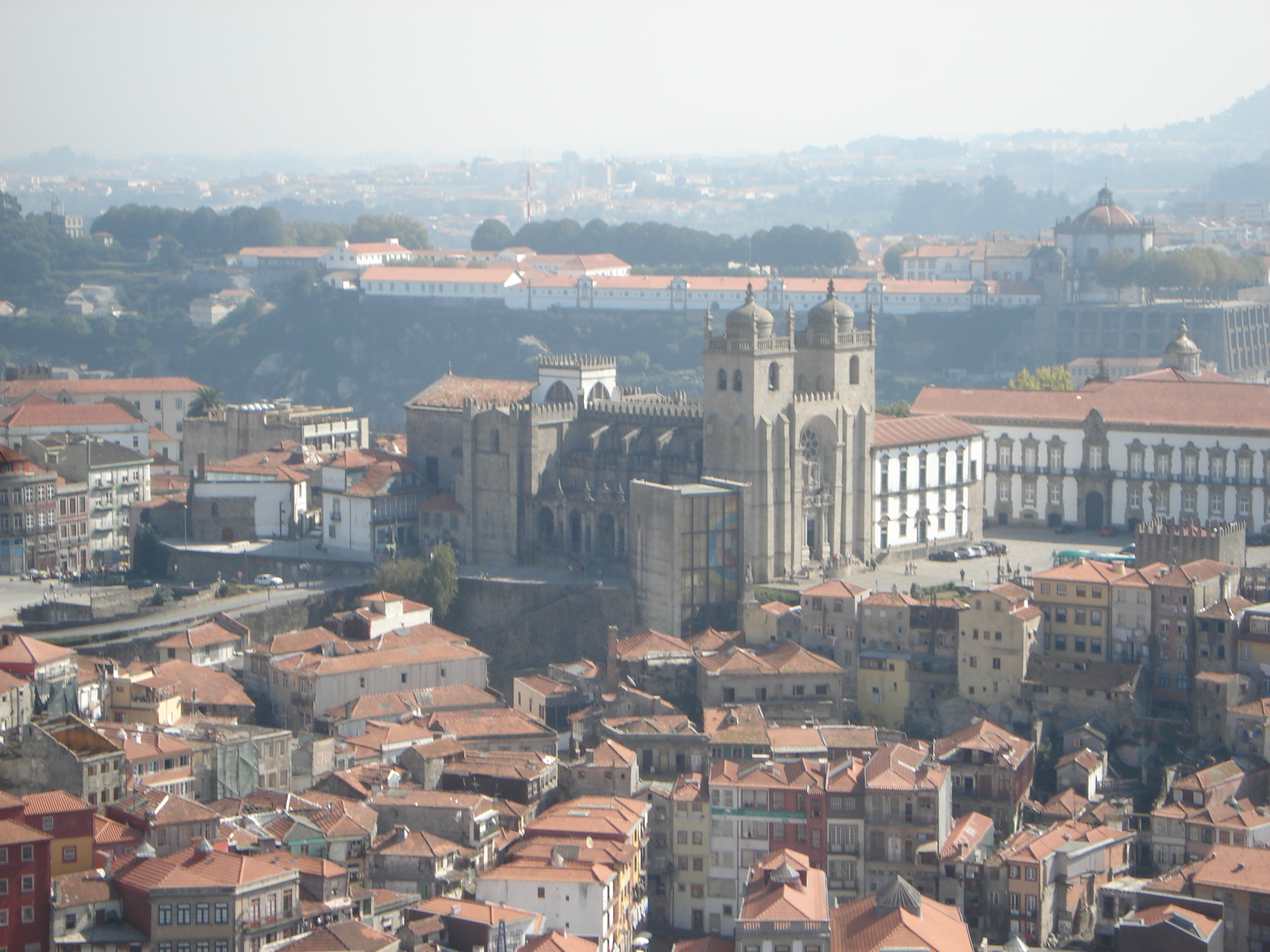
Porto Se, from the Torre dos Clerigos

Porto itself is a beautiful city. I unfortunately arrived in the centre during siesta (12:00 to approx. 2:00/2:30 pm daily) and on a national holiday, so several attractions I did not get to see because they were closed. I was able to go inside the large Se (cathedral) which dominates the Porto skyline, and to climb the Torre dos Clerigos, the large tower which allows a view of the city and also of the Se. I purchased a Porto card from the very helpful tourismo beside the Se, which provided me with free admission and discounts at main attractions, as well as free public transport in the 24 hours from validation of the card, but as many attractions were closed and I only needed to take the bus twice, I think I would have been better off to save my 8,50 euros and pay admission for the few attractions I visited.

Porto, from across the Rio Douro

Wasting my money aside, I am very glad I decided to continue my adventures from London in Porto. It is a beautiful place simply to walk around (I organized my journey so that I could take the bus to the top of the Ribeira district and walk down, towards the Rio Douro, and avoid too many uphill climbs). The Ribeira district, with its narrow cobblestone streets and tiled buildings snuggled closely together, is the reason I decided to visit Porto, and I was not disappointed. As per my Lonely Planet: Portugal‘s suggestion, I finished my little walking tour in the evening by walking across the Ponte de Dom Luis I to the other side of the Douro. There I found one of several waterfront restaurants where I could sit on a patio as the sun set and enjoy a nice glass of port.

Well, I wish I could say I enjoyed a nice glass of port. As it turns out, I do not like port. It is too sweet and too syrupy for me. But when in Porto…

Thursday morning  my 40 lbs. of bag and I boarded a bus to Guarda. I had intentions of visiting the Parque Naturel da Serra da Estrela, and Guarda is one of the small cities that borders the park. I had no problems with the bus, or with checking into the Residencia Filipe (recommended by my Lonely Planet and also by me…nice private room and bathroom, with breakfast, for less than I am paying for my Lisbon hostel). The minute I got into my room I washed my socks and underpants and hung them on a makeshift line stretching from the wardrobe to the bedpost. Clean laundry! Heaven.

That, however, is where my luck ended. The women in the Guarda tourismo were incredibly helpful, but there was nothing they could do to fix the following:

To hike in the Serra da Estrela, you must go to the town of Manteigas. Buses to Manteigas leave Guarda in the afternoon, but only go from Manteigas to Guarda in the morning. It is therefore impossible to take a day trip by bus. It was suggested that I go to Manteigas that afternoon and return the next day, but as my underpants were hanging wet on the line in the Residencia Filipe, I thought it would be a bit gauche to check out at that point. I could travel to Manteigas the next day (Friday) but as buses do not run from Manteigas on the weekend I’d be stuck until Monday.

In the end I decided to extend my stay in Guarda, bus to Manteigas Friday, make the most of an afternoon there, and swallow a 36 euro taxi fare to head back to Guarda after a lovely day of hiking (I needed to be in Guarda to catch the train on Saturday). What a great plan!

No. The bus to Manteigas was lovely, though I found myself fearing for life and limb as we navigated hairpin turns and narrow mountain roads, with a rock face on one side and steep cliffs on the other. Once in Manteigas it turned out to be–SIESTA! The tourismo was closed! My Lonely Plantet gave me no map! The town did not have signage to mark their hiking trails! I ate my lunch in the sun and waited for the tourismo to open. When it did, I almost cried when I realized the women in the office spoke no English. There were English maps, but although they listed the forty kinds of flora you might meet on your journey, the maps themselves were badly pixelated and did not tell you how to get to the start of the route (besides a land location: 40 degrees west, 700 m altitude, etc.). It also appeared as though you could not reach the start of these trails from town, you had to reach them by car. I suppose I could have taken a taxi to one of them, but at that point it was too late to start a 5km hike far from town when I wanted to return that afternoon.

It is then that I went outside and DID cry. To have gone all that way, and spent all that money and effort to see the Serra da Estrela and not be able to was very disappointing. I walked up and down the road a bit for an hour or so and did get a nice view of Manteigas and the valley below, and I suppose a small Portuguese mountain town is not a terrible place to spend an afternoon. But I had envisioned myself clambering over the granite boulders I had seen on the mountainside, buffeted by mountain winds and scorched by the heat of the sun in a cloudless Portuguese sky. Instead I was scorched on the sun on a small Portuguese mountain highway. Close, but no mountaintop for me.

Guarda, near the Se

My misadventures were caused by a lack of planning on my part and a lack of adequate information on the part of the Parque’s publicity department and tourismos and although it seemed silly to spend two nights in Guarda to see a park I didn’t see, I do not regret visiting the town at all. It was incredibly relaxing, and although I wasted a lot of time on misadventures, the centre was just small enough that there was plenty of time to see every single attraction Guarda had (the museum, the beautiful medieval Se, the judiaria, the towers, and the old town gate). I believe if I have a chance to return to Portugal in the winter, I would love to bring a car and skis, more money, and my TC and really see the Parque properly.

A note about the judiaria: during the time of the Spanish Inquisition, north eastern Portugal was one of the last holdouts against the Inquisitor zeal and many Jewish families fled to mountain towns like Guarda from Spain and southern Portugal. In the end, unfortunately, the Inquisition reached them even there, but the historic Jewish quarters remain. The small dilapidated buildings and narrow winding streets were one of my favourite finds in my explorations of Guarda.

Part of travelling is, of course, moving on, and as Saturday morning dawned bright and beautiful, I boarded a train for Lisbon, watched the landscape become flatter, the earth become pink (yes pink!) and then orange, felt the weather become warmer again, and readied myself for the adventures of NiftyNotCool to continue…

In case you’re wondering about me and the granite boulders, I saw some large ones beneath the Torre de Menagem in Guarda. I could have taken the stairs up to the tower like any old sucker, but not this gal. I climbed those boulders like a champion, and reached my mountaintop after all. 🙂

England: Punting, Picasso, and Mystery

Christchurch College, Oxford

After landing in London Gatwick on Saturday morning and dropping my bag off at my sister’s place, I was whisked away to Oxford on a double decker bus (and yes, I got to ride on the top!). London was experiencing the warmest beginning of October in probably ever, and with temperatures at 28ºC I couldn’t think of a nicer way to spend my first day in England than double-deckering it to Oxford and punting on the Thames.

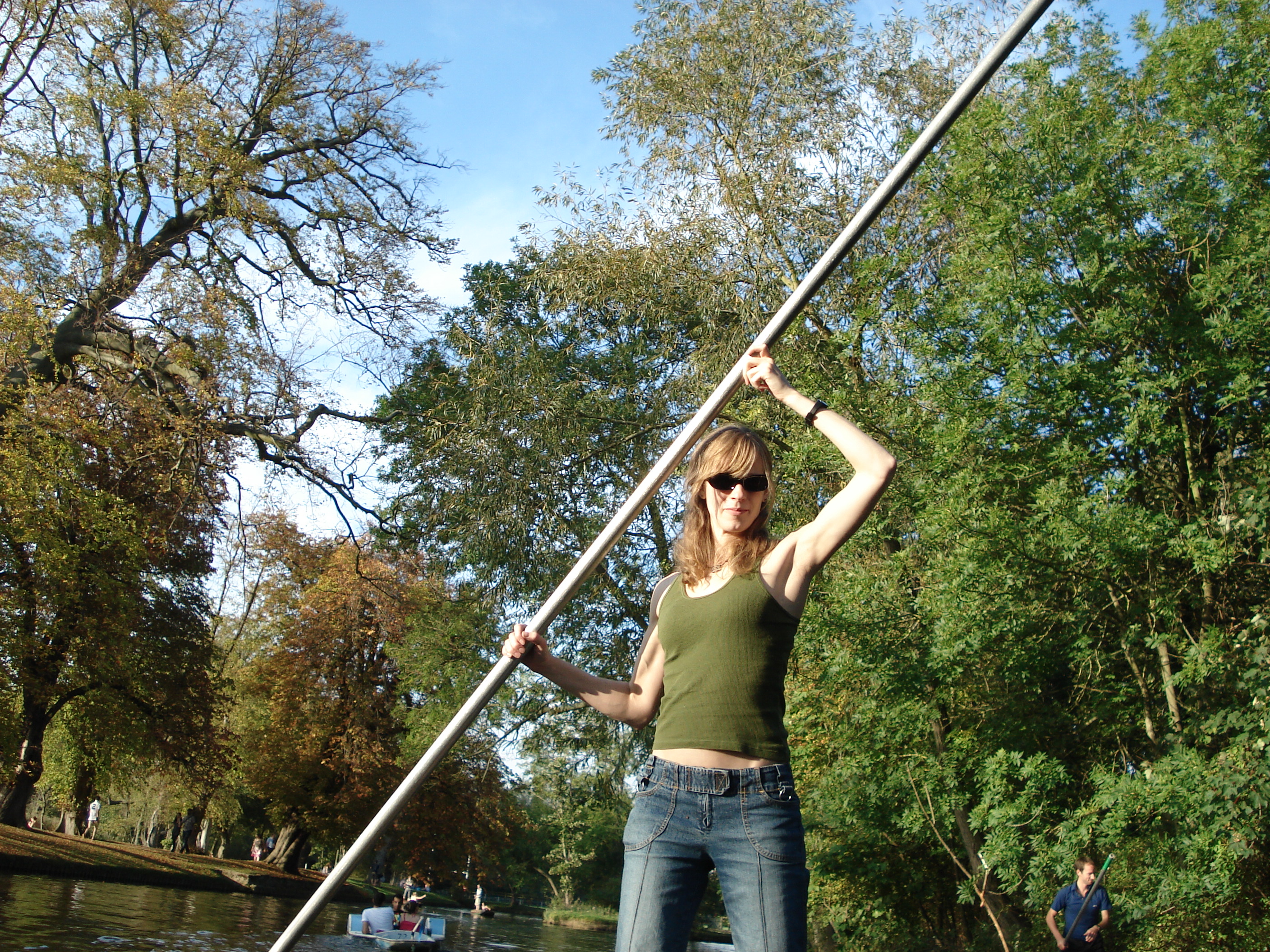
Punt-boat Captain Lauren, at your service

For those who don’t know, ‘punting’ is the time-honoured tradition of sitting in a low, long, flat-bottomed boat and relaxing while someone who isn’t you pushes the craft along the river by pushing a long pole against the riverbed. ‘Punting’ can also be the time-honoured tradition of pushing a long pole against the riverbed while locomoting some lazy-bones passengers around the Thames in a flat-bottomed boat. For a jet-lagged traveller such as myself, it was a wonderful way to spend an afternoon (did I mention was also eating a cornish pasty and feeding the ducks?).

For the record, I did try actually punting, but it didn’t work out so well for me. I’d like to say I spent most of the time careening from one riverbank to the other, but in actual fact, I spent my entire poling experience careening into the same riverbank again and again. Sigh.

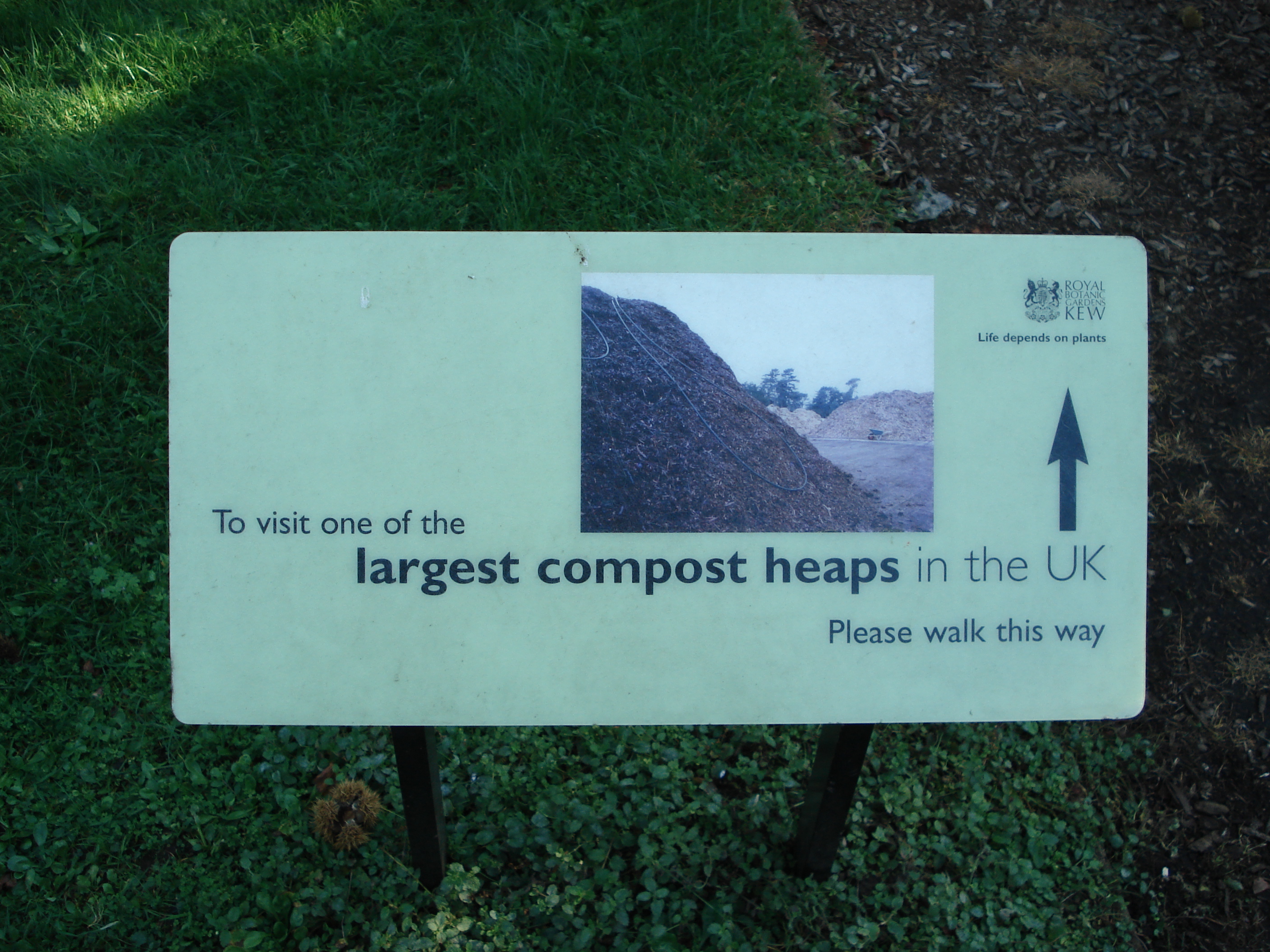
Compost-lovers, it’s your lucky day

Sunday was another hot day which my sister and I spent in Kew Gardens. Their star attraction right now seems to be some ‘aerial walkway’ that puts you ‘right in the canopy’, but to be honest, the tree-top adventure at the Capilano Suspension Bridge in North Vancouver really puts this one in its place and I wasn’t too impressed with it. What I was impressed with was almost half a square mile of garden space with pleasant walks, benches in the shade, water features, and the massive old-fashioned glass houses that house their tropical and temperate plant collections. Spending Sunday afternoon strolling the grounds in Kew Gardens felt like a very English thing to do and was very pleasant indeed.

Required tourist shot of Big Ben over the river

On Monday I decided to take some time to be a real tourist and take in London’s South Bank. I took a snap at the outside of Shakespeare’s Globe but at £12.50 admission I decided to head back to the Tate Modern where I could get in for free or by donation (encouraged). With eating and other attractions feeling so expensive in London, the fact that their galleries and museums are, for the most part, free or by donation is really helpful to the cash-strapped traveller. I popped £3 in the donation box at the Tate Modern because that’s what I had on me and wandered around the place for two hours. I don’t usually read the title cards/info beside the artwork but I did notice that I was looking at some Picassos, Matisses, and Jackson Pollocks. Just sitting there. On the wall. Y’know, there’s a Picasso. Oh look, there’s another. No biggie. It was pretty cool.

I also visited the Covent Garden marketplace and got my Punch & Judy fix at Benjamin Pollock’s Toy Shop. The shop is worth a look for their paper diaramas and reproductions of old stages, even if you’re not into buying anything.

That evening, my sister and I went to St. Martin´s Theatre and took in the Agatha Christie play, ‘The Mousetrap’. ‘The Mousetrap’ has been running in London for over 50 years and is, I believe, the longest-running play of all time. I would tell you more about the show but the audience is sworn to secrecy at the end of the play so that future audiences will enjoy the mystery for themselves. The play itself was rather delightful but it does leave me with artistic questions about the pros and cons of a show that runs for so long, in the same way. It does not seem as though there is much emphasis on reimagining or rediscovering the play or the characters. And how can there be? Even when the show moved to a different theatre, or had its entire set replaced, it did not miss a single performance. In a way, ‘The Mousetrap’ is more like a moving museum piece than a play. It’s funny, and enjoyable, and I do love a good-old-fashioned murder mystery. But it is a play that speaks to the world and the genre in which it was written, and not to me on a personal level. I’m not sure that I needed it to, though. I love tradition, and I love the idea of physically keeping a tradition alive on the stage.

As delightful as London was, unfortunately it was time to move on and yesterday I flew out to Porto, Portugal. Stories from Portugal to come.

Adventure stats:

Number of necessary items forgotten in Vancouver: 3

Number of above replaced: 1

Number of items lost on trip: 1

Up, up, and away! Nifty’s European Adventure

40 lbs of adventure in $300 worth of backpack!

I’m no stranger to European travel. I’ve lived in Latvia, Poland, and England (in addition to Canada) and travelled through many other countries besides. But never by myself. I’ve always had a family member with me (a parent, sibling, or cousin) and most of the planning was done by them.

I’m also no stranger to adventures, though most of them are in BC, the city, my neighbourhood, or in my own head.

Now it’s time to take the plunge and have my own big adventure in a faraway place. Ladies and gentleman, for the month of October, NiftyNotCool will be coming to you from Portugal and Spain. And I will be ALL BY MYSELF.

(Ironically, my Travelling Companion, TC, will be unable to accompany me on this journey. Such is the life of a freelancer.)

My mom and I were talking on the phone the other day about my preparations for my upcoming big adventure. My mom said, “Are you getting excited or are you just scared?” I said, “I’m scared.” And I am.

I’ve bought all sorts of gear for the trip (expensive travel backpack, Lonely Planets, etc.), likely a few things I don’t need, and I think somehow I feel comforted by having done this. As in, look at me. I’m ready for this. Look at my Money Belt. Look at my Not-too-heavy Jacket That Will Keep Out The Wind. Look at my Quick Drying Underpants For Easy On The Go Laundering. I’m capital “P” Prepared. I even remembered to get my tetanus booster.

But in actual fact I am capital “P” Petrified. When I see myself in my Keep Out The Wind Jacket and my Walking Sandals and my Hat With A Brim I see an impostor. “Hey there Girl With a Hat,” I think, “what makes YOU think you’re ready for this? Who are YOU to presume you can be an adventurer and go on a caper all by yourself?”

Portugal will be lovely. Spain will be beautiful. I will meet people in hostels, drink port (that’s the plan, anyways), immerse myself in Moorish architecture and natural wonders, take trains, and look at art. I will visit places whose names whisper like a sand-worn dream: Porto, Faro, Seville, Granada. I will probably get mixed up somewhere along the line, or lost, freak out, and wonder why I possibly thought I could do this.

And that’s why I’m going. Less than 24 hours now. I’m ready. I’m prepared. I can do this. Even if I have to stroke my expensive backpack and Quick Drying Underpants for assurance.