“My Imp” (a little bit of fiction, lost and found)

My head hurts today and my body is tired. The idea of casting around in the present for something that grabs my attention and stirs my blood enough that I want to write about it is exhausting right now. I am tired of examining my present, I am tired of organizing, I am tired of planning for my future endeavors (near and far). And so I am rebelling. I am reaching back. I’ve been opening cupboards and uncovering boxes. I am taking the lids off and exploring the contents. I am re-breaking the heart of a younger me and realizing that though I may think that I was very foolish once and am much wiser now, I am likely not as wise as I think I am, and likely was not actually so foolish then. A hurt is a hurt whether it is your first or second or your hundredth. A loss is a loss even if you eventually gain.

And so to honour the younger woman who does not know me now but whose struggles became part of my story, I am posting a short story I wrote on some loose leaf in 2007, sitting on the soft black couches in the lobby of the old SFU theatre. (For those of you who think I am just being lazy, I thought I was too, until it took me longer to type up this story and do some light editing than it sometimes takes me to write a whole new post.)
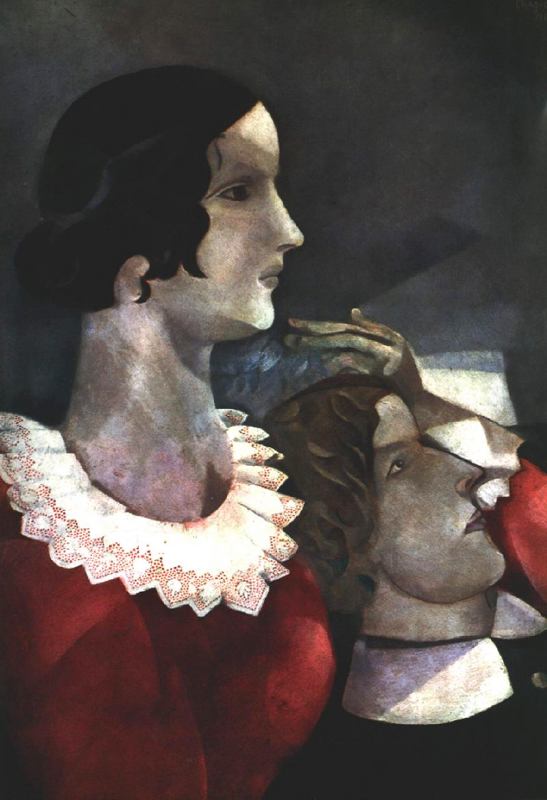
Grey Lovers - Marc Chagall

My Imp

Curious really, how it happened, and how when it happened it somehow seemed natural and no cause for alarm at all. The cause, of course, was that when it happened I was falling in love.

It began at a bus stop. Or rather, it first awoke at a bus stop. It had been a very warm April day, and we’d spent a good part of it swinging in your landlord’s hammock drinking beer and listening to world music. So warm, in fact, that you’d chosen to wear shorts and I was wearing a t-shirt though I suspect we were both regretting that decision now that the evening was getting late and the wind blowing from the quay was as cold as the sea.

At that particular time, though, we didn’t care about the dark or the chilly ocean breezes, and the idea that this might not be forever had not crossed my mind. We were wrapped together in your coat, my hair, our sinews and bones and our air-tight good feelings. New lovers are always invincible.

We were talking and teasing each other and laughing, most likely about something silly and more than likely a little bit dirty. We heard a soft giggle. A third voice, giggling. You looked to the right and I looked to the left but there was no one to be seen. We heard the giggle again and discovered its source: it was coming from my body, more specifically, from just below my left breast.

“What is that?” you asked, and your eyes grew big and round with surprise and wonder. I had never heard it before, but suddenly in that moment I knew with certainty exactly what it was.

“It’s my imp,” I told you, and your surprise became delight. “I have a little imp that lives inside me. It’s been sleeping and you woke it up. I think it’s a little mischievous.”

“I understand what it is,” you said, and you kissed my forehead, “and I love that you have one.”

Bliss reigned. The soft coos, gurgles, and giggles of my infant imp continued as we travelled to the quay. They continued as we took the Sea Bus downtown. I heard a thrilling hiccup when you talked about what we might do in a couple of years. The imp liked you very much and so did I.

In the happy days and weeks that followed, my imp became more and more of a presence in our lives. You took to saying hello to it as well as me whenever you saw me and always had one ear eagerly listening for any new sounds it might make. Eventually, the laughter and gurgles became jabberings we assumed must be a language of its own. I imagined I was able to understand what my imp was saying, or at the very least grasp a general gist. When you and I were alone together I would sometimes translate the gibberish for you. My imp had a strange and (so you thought) wonderful sense of humour.

One lazy morning, just as I was about to borrow your shower, I made a beautiful and exciting discovery. I shouted at you to come see, and you were in the cramped bathroom with me as quick as a thought.

“Look, look!” I said and pointed at my naked torso. Beneath my left breast, between my ribs, a small white shape was appearing and disappearing. It was the imprint of the tiniest clawed hand, pressing against the inside of my skin. I looked into your face and you sweetly kissed my cheek and hugged me so hard I thought I would burst.

You were so good. You were the most wonderful creature I had ever touched. You were fluid silky muscle moving through and around my limbs. A collection of smooth lines and imperfections and skin and eyes and blood. You were indescribable. We spent the afternoon lying on the floor, you with your head resting on my chest, listening to my imp. My fingers idly traced paths through your hair.

The soft contented hums of my imp began to grow in volume and pitch and suddenly exploded in one simple and joyful declaration. You were just dozing off and you woke, turned your head to lift your sleepy eyes to mine, and asked what the imp had said.

“I don’t know,” I said, but that was the first lie I ever told you. Because I knew, beyond even imagining, what it meant. My imp loved you and so did I.

Things continued in this lovely way until I began a new job and became very busy. You and I couldn’t see each other as often anymore and that made me very unhappy. It is not surprising then, that very busy and very unhappy, my imp and I became very sick.

You did your best to nurse us back to health. You cooked us supper and held us and whispered soothing and beautiful things to us as our fever raged through the night. You made us sick tea of garlic and ginger and watched cartoons with us. It wasn’t long before you, brave and kindhearted creature that you were, managed to make my body all better. But my imp did not recover.

Its ceaseless coughing began to fray our spirits when were were together, both of us busy and tired and trying to ignore this sickness in our relationship that was beyond our control. You never said anything, but I knew the constant whimpers and coughs of my once delightful imp were wearing you out. And I was becoming sorry and ashamed. But we continued to smile at each other in the hopes that even with a very sick imp between us you and I would be immune and be fine.

One weekend can change everything. When I was out with you we ran into one of your friends, a friend I liked but who enjoyed getting under my skin. There was friendly chitchat and dirty joking but I was feeling a little off balance and not at home. We heard the sound of vicious crying coming from beneath my ribs.

“What the hell is that?” asked your friend.

“It’s–it’s my imp,” I said. “It’s crying. It doesn’t understand the joke and it’s tired.”

Your friend looked confused and you looked away, embarrassed of me. I felt in that moment that my imp had caused me to fail a test, that you would worry that my imp and I were too frail to accept you as you really were, vices and off-colour humour and all.

Confusion and doubt crept in. My imp continued to cry. We continued to try to ignore it and we tried the next morning in your bed, as you attempted to relax your body next to mine, tired from a grey night. I held you so close. I wanted to tell you that I loved you but I knew I shouldn’t. My imp grew frustrated with me and with you and the things we were not saying. You shrieked in pain and lept away from my body like a cat, arching and twisting your back in the air. You bled from a scratch in your side.

Your eyes were staring fixedly at a point on my left ribcage. Beneath my breast, between my ribs, in the same place we’d first seen the hand print on that dreamlike morning forever ago, there was a small hole, bleeding in a slow trickle down my left side. My guilty imp had now retreated far into my body, and I thought I could feel it shaking. My imp was afraid, and so was I.

“Now at least we’ll have matching scars,” I said and I smiled feebly. You did not smile back. We got Band-Aids and put them on our wounds and neither of us talked about them anymore.

From that morning on my imp remained silent, simply trembling inside me. It was silent as you and I suffered through watching films that weren’t very good. It was silent as I felt you leaving my bed to have a cigarette in the middle of the night. It was silent as we made awkward conversation during my birthday dinner, a dinner we both resented for different reasons.

My imp and I knew that things were not well between you and I but we hoped. We hoped and hoped until the night you came to my apartment and told me that this wasn’t it, this wouldn’t work.

My imp sank its nails into the inside of me and we both began to wail that we loved you. I wanted to be rational, I didn’t want to make things harder for you, but my imp was clawing savagely at my insides; it hurt so much that I couldn’t breathe and I couldn’t think. I cried and begged and tried to keep you, even though I knew I couldn’t. As you made your last apology and turned to go my hands were held tight to my chest and side, trying to keep my imp from bursting through me and sinking its teeth into you, hurting us both even more in its attempt to prevent your going.

When the door to my apartment closed with a loud and final click, I sank to the floor in my porch and screamed, blood all over my hands and my side. My imp had ceased its struggles and was crying with me. We cried, the pair of us, the loverless and the friendless, until we could quiet down and try to go to get some sleep.

My imp tossed and turned inside me all night as I tossed and turned inside my bed. In the few moments I slept, I dreamed I was in a hospital for sad girls, resting on a pile of blue felt and being called “baby lamb” by matronly nurses. But for most of the night my imp and I lay awake, eyes wide open in shock, feeling very alone in the world.

The next evening you and I met to have a talk. My imp, utterly worn out, was thankfully sleeping and I was able to keep my wits about me. You looked small and sad as we spoke and I knew that you had never wanted to cause me or my imp any pain. But you felt that you could not be what you felt I wanted. And it was obvious that you and I had misunderstood each other terribly, but now it was too late. You knew now how strongly my imp and I felt, and you could not match that. For you to be a lover to me and a guardian to my imp was far too much to ask of you. Both of us were in danger of tears (you and I) but both of us bit our lips and looked away– still so alike in the unimportant ways that could not suffice to keep us together.

We waited at the bus stop for your ride home, this time no longer invincible, only able to use our own arms to wrap ourselves in. As your bus pulled up to the stop, I felt the nudge of my imp once more. I looked into your face and you sweetly kissed my cheek and hugged me so hard I thought I would burst.

And then you were gone.

“…And we’ll change the world.” (My tribute to my hero)

My friends, love is better than anger. Hope is better than fear. Optimism is better than despair. So let us be loving, hopeful and optimistic. And we’ll change the world.

All my very best,

Jack Layton

My plan last night was to write this week’s post about an episode of violence I witnessed in the Downtown East Side, and how witnessing this violence, and observing my reactions to it, changed me. I also wanted to write about a telephone call I received in April, informing me of the senseless death of a childhood friend (I say senseless not because I don’t know exactly what happened, but because I don’t know why) and how this has changed me. I am 25. I have seen violence. I have known a death. And I will never be the same. I wanted to write about that, about how growing up is about these milestones, these little deaths of innocence.

But this morning, my TC broke the news to me that Jack Layton had died. I am glad he told me because otherwise I wouldn’t have known until being told by coworkers or by Twitter. I appreciate that he knew me enough to know that hearing this news would wound me. “Faithful are the wounds of a friend”, and this is a wound that was better received from a friend. Just as I can remember exactly where I was when I heard that Dr. Suess (one of my childhood heroes) had died, I will remember exactly where I was as my TC broke the news of the death of the hero of my young adulthood.

I have been an NDP supporter since I was old enough to think about Canadian politics (about 10 or so). This is not out of line with my upbringing, and even as an adult what I have experienced, read, heard, and learned about the world has not changed my views. Is Jack Layton my hero simply because he was the leader of my favourite political party?

No.

Former NDP leader Alexa McDonough was not my hero. I’m sure she’s a great lady, who cared passionately about the same issues I do, but she was not my hero. When Jack Layton became the leader of the NDP he was not my hero. I thought he looked smarmy and I did not like his mustache (now, of course, I am very fond of the “Trustache” and I wish so badly that I could see that glorious mustache again).

Jack Layton was not a hero I chose to follow blindly. I believed in his party (or rather I believed in their values) but I did not yet believe in the NDP’s ability to effect real change in Canada. Over the years, as the numbers of orange seats in Parliament grew, Jack Layton began to earn my respect. And then he earned my trust. Yes, he represented the party that represented my values. But he also represented the idealistic and civil vision of Parliament I had had when I was younger. For example, I remember once when Jack Layton did allow a few members of the NDP to vote against the rest of the party in a matter that concerned their constituents. Some may call this weak, I would call it an understanding of how the practice of electing a Member of Parliament to represent your constituency is supposed to work. By allowing flexibility within the party, he demonstrated to Canadian voters that their vote did matter, their choice of a particular MP did matter, and that Parliament as an institution is meant to serve constituents, not party lines. I respected him for this.

During the last election, the NDP managed to side-step the Conservative mud-slinging and the go-to Liberal defense-mode. Jack Layton was able to keep his eye on the prize and stay focused on his hopes for the country. Without warning, one day his talk of “When I am Prime Minister” no longer sounded like the pipe-dream of some aging hippie with a 70s mustache, it sounded like an exciting possibility. When few Canadians believed, Jack Layton did. And then I did too. I felt that my vote had mattered. I felt that I was part of something. For the first time, even though frightened of the Conservative majority, I felt that we were heading to something better, that Harper’s majority was the dark before the light, and that one day Canada really would be the country I thought it was when I was a child. In interviews and public events, Jack Layton seemed to demonstrate a genuine warmth and amiability, qualities that eluded Stephen Harper and Michael Ignatieff. I trusted that he meant what he said, and I was not afraid of what he would or would not do for my country.

When I heard that Jack Layton was sick again, my first thought, instead of a concern for his health, was “No, he can’t be. We NEED him.” And this means I had not learned enough. It’s not enough to believe in Jack Layton. Jack unfortunately could not be with us forever. It’s not enough to put your faith and trust in one person and hope they’ll take care of everything. They can’t. Though I do wish with all my heart that Jack Layton was still here, and healthy, I don’t know that I would say at this point that “we need him.” We need us. What Canada needs is for people who think “we need Jack Layton” to realize that what they need is themselves. We need to demand the same level of dedication, passion, and accountability that Jack Layton demonstrated from all of our politicians. We need to demand this by voting, by joining parties, by examining ourselves and deciding what we believe in. We need to stop sitting back and thinking that one amazing man with a mustache and a dream is the answer to our problems. Though Jack Layton was a true leader, and though he was the person in whom I had placed my hopes, what I need now that he is gone is not Jack Layton. What I need, what we need, is to emulate what we admired about Jack Layton, to demand this of ourselves and others.

I’m afraid to post this because this means I will have to be less lazy. This means I will have to move from thinking and speaking (and blogging) to doing. This means maybe I will have to examine myself and my values, and take stock of what I’m willing to sacrifice (time? money? energy?) to help protect and champion these values.

And so here I am. I am 25 years old and I am changed. I realize now that I had a hero only after I discovered he was gone. I realize now that I wasn’t doing enough. I recognize that the world I live in, the world I affect with my actions every day, is the same world that includes violence in Vancouver’s Downtown East Side and the same world that includes the far-too-early death of a childhood friend. This is the world that includes the death of my heroes and the loss of my innocence. This is the same world Jack Layton was fighting for.

Is it too much to hope that if the world was better, I might not have seen what I saw, or lost my friend as soon as I did? Maybe. Maybe it’s ridiculous and idealistic. But then, I once thought that voting NDP was a little ridiculous and idealistic (even though I would do it every time). My hero proved me wrong. I would love to prove him right.

Mourners leave messages for Jack Layton in Nathan Phillips Square, Toronto. Photo: Sonja Kresowaty

Adventures in BC: Sunshine Coast

I LOVE BC!

I get very disappointed sometimes when I am around people who were born in BC and have become, somehow, immune to its charms and beauty. ARE YOU PEOPLE ALL CRAZY??? Look at the mountains! Look at those giant boulders and pieces of tree lying willy nilly all over the place! Look at those ferns! And for the love of all that is good and holy, TAKE A LOOK AT THAT MOTHER-LOVIN’ OCEAN!

Since graduating from my BFA in 2009 and getting a job (i.e. since having money) I have been slowly but surely exploring this beautiful province (as much as I can without regular access to a car, at any rate). Last weekend my parents (who were visiting from Saskatchewan) and I made a trip up to Sechelt on the Sunshine Coast to visit some family friends for the night.

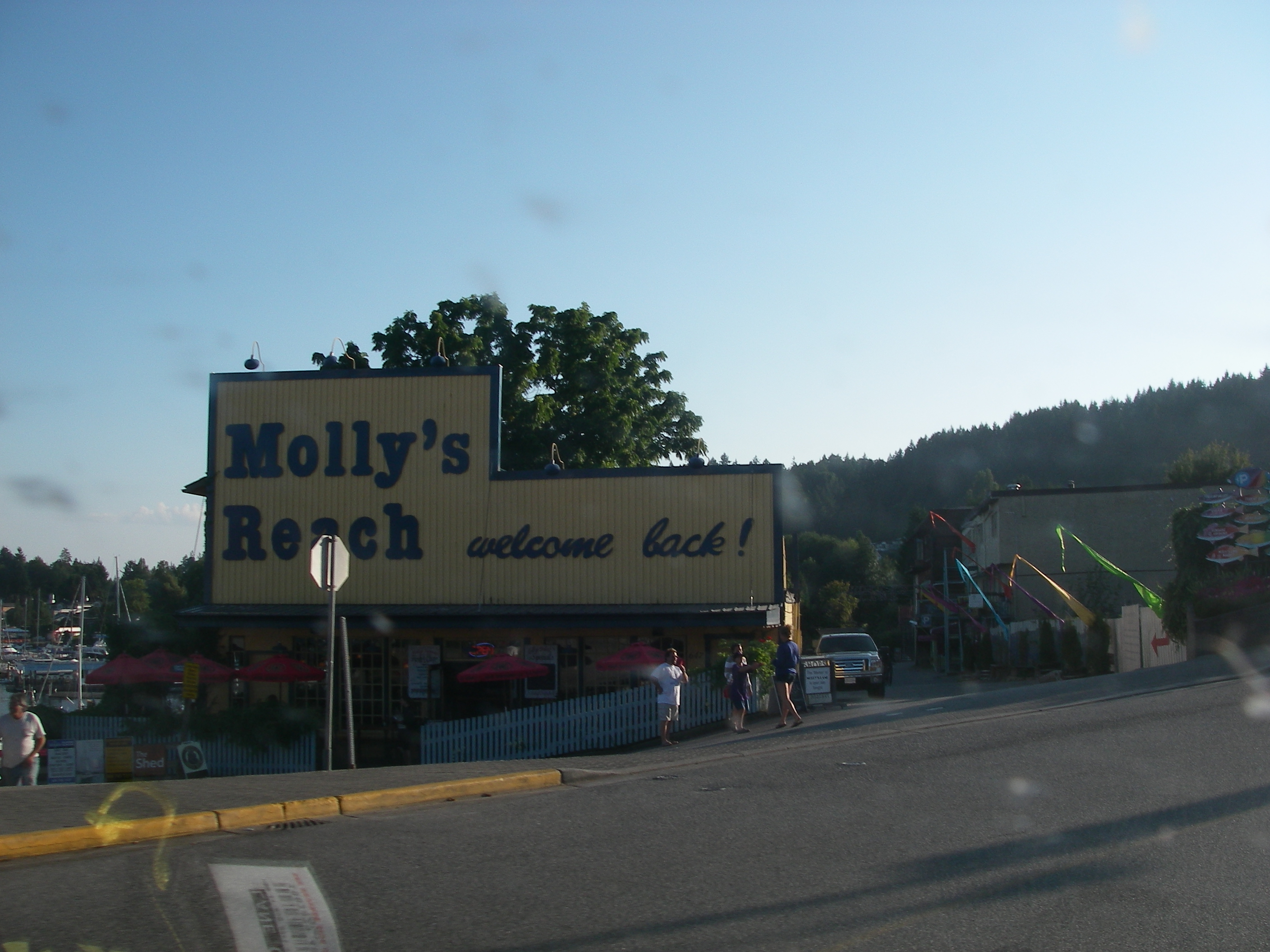
Molly's Reach is very important for Beachcomber fans. Photo: Daina Zilans

Though the Sunshine Coast is technically part of the BC mainland, the best way to get there from Vancouver is to take the Langdale ferry from Horseshoe Bay. The ferry terminal is actually relatively easy to get to from downtown if you hop on the 257 Horseshoe Bay Express bus (get the schedule on the Translink BC website). The ferry from Horseshoe Bay to Langdale only takes 40 min and it’s a beautiful trip past Bowen Island and through the other little islands dotting the coast.

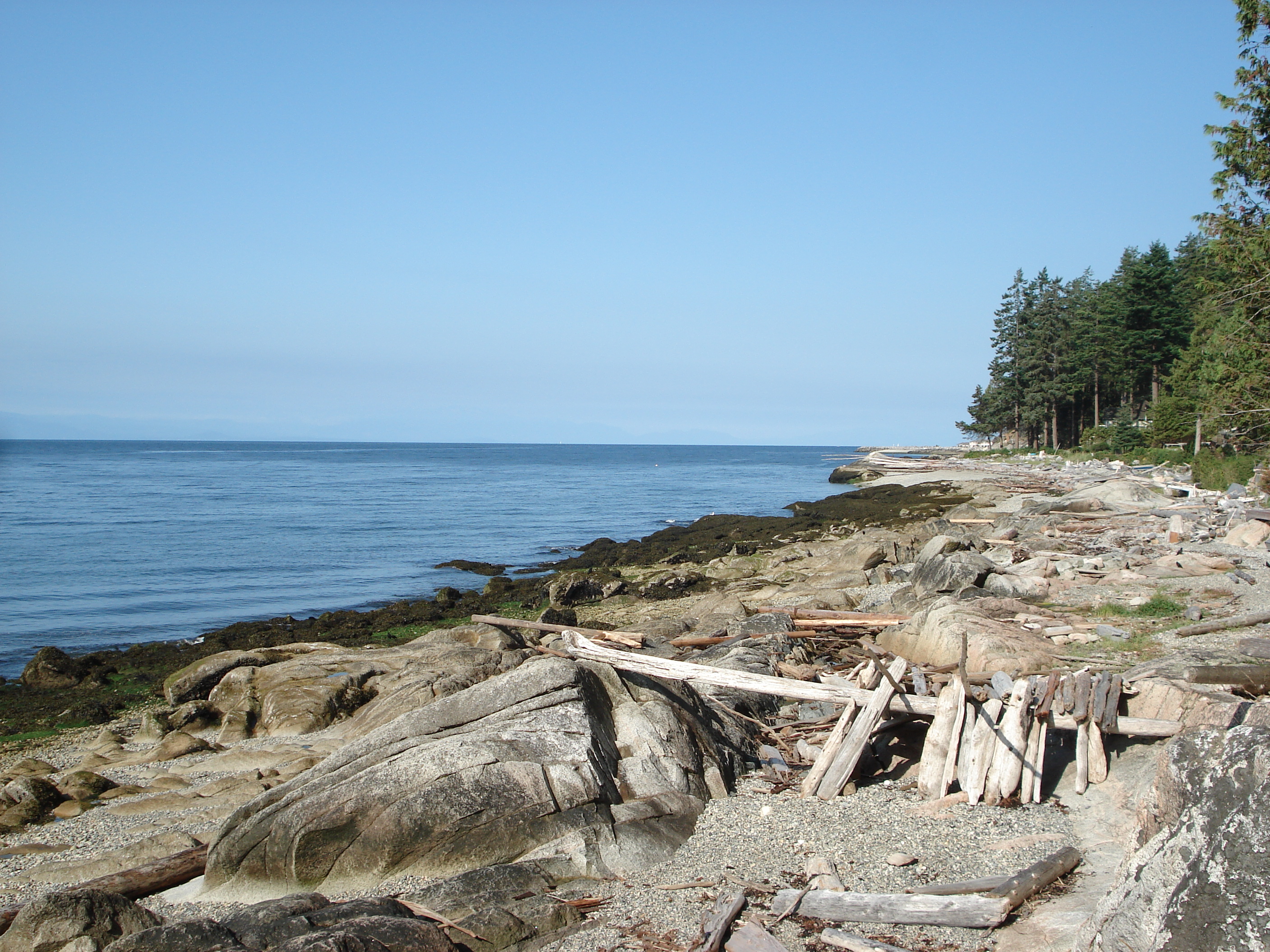
The old TV show “Beachcombers” (Wikipedia that show!) was filmed in Gibsons on the Sunshine Coast and though I don’t recall ever watching the show I did spend most of my visit combing the beach for pretty rocks and soaking up the gorgeous scenery.

But enough of my stupid words. Let’s look at some pictures!

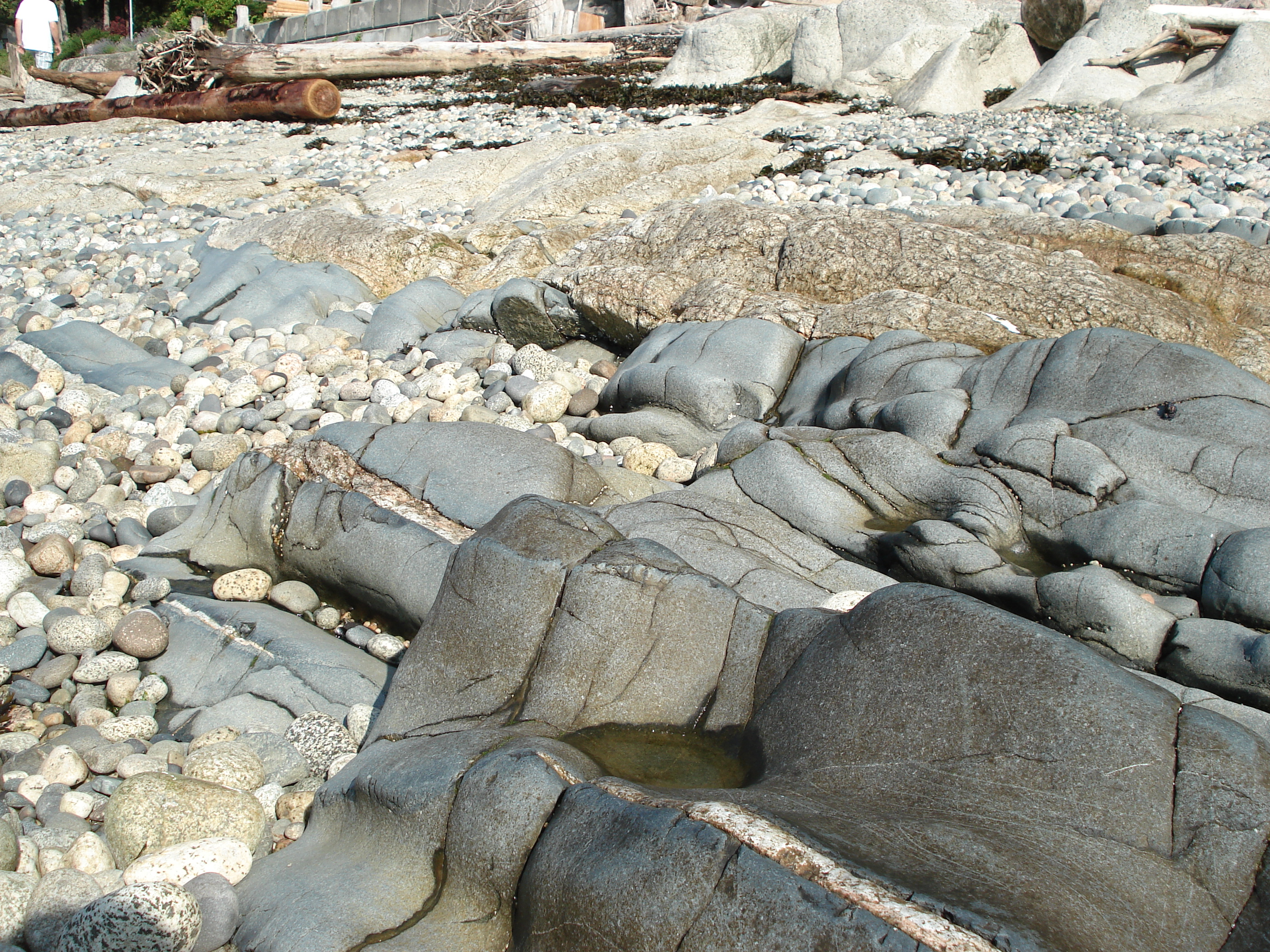
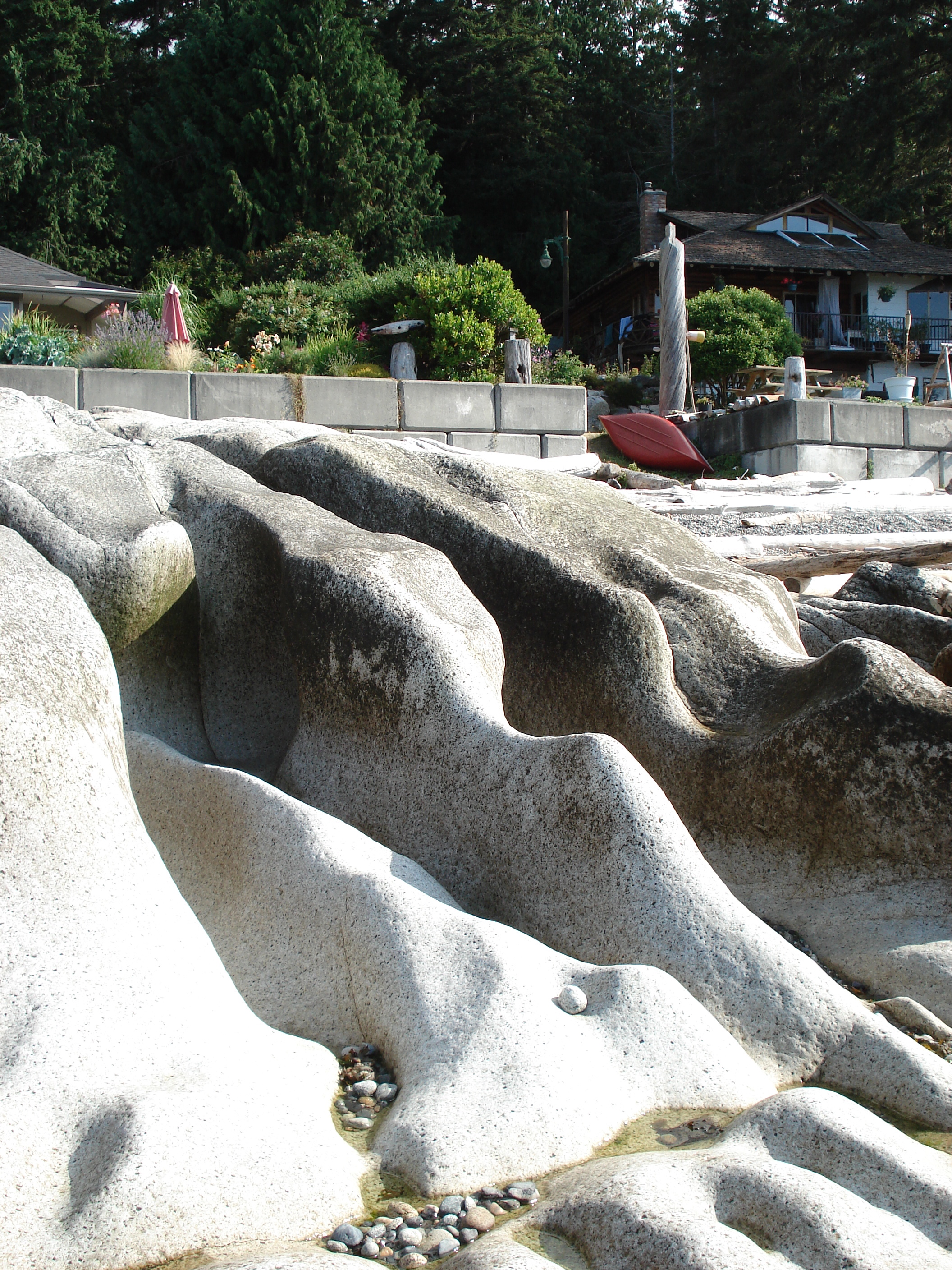
The coast we visited appears to be made up mostly of granite (the lighter rock above) with streaks of basalt (the grey rock). Or so our gracious host told me. The rest of the shoreline is covered in the smaller rounded rocks you see in the photos. When the waves crash against the shore, the pebbles scour out the bigger rocks and create the interesting smooth coastline I spent all morning clambering over.

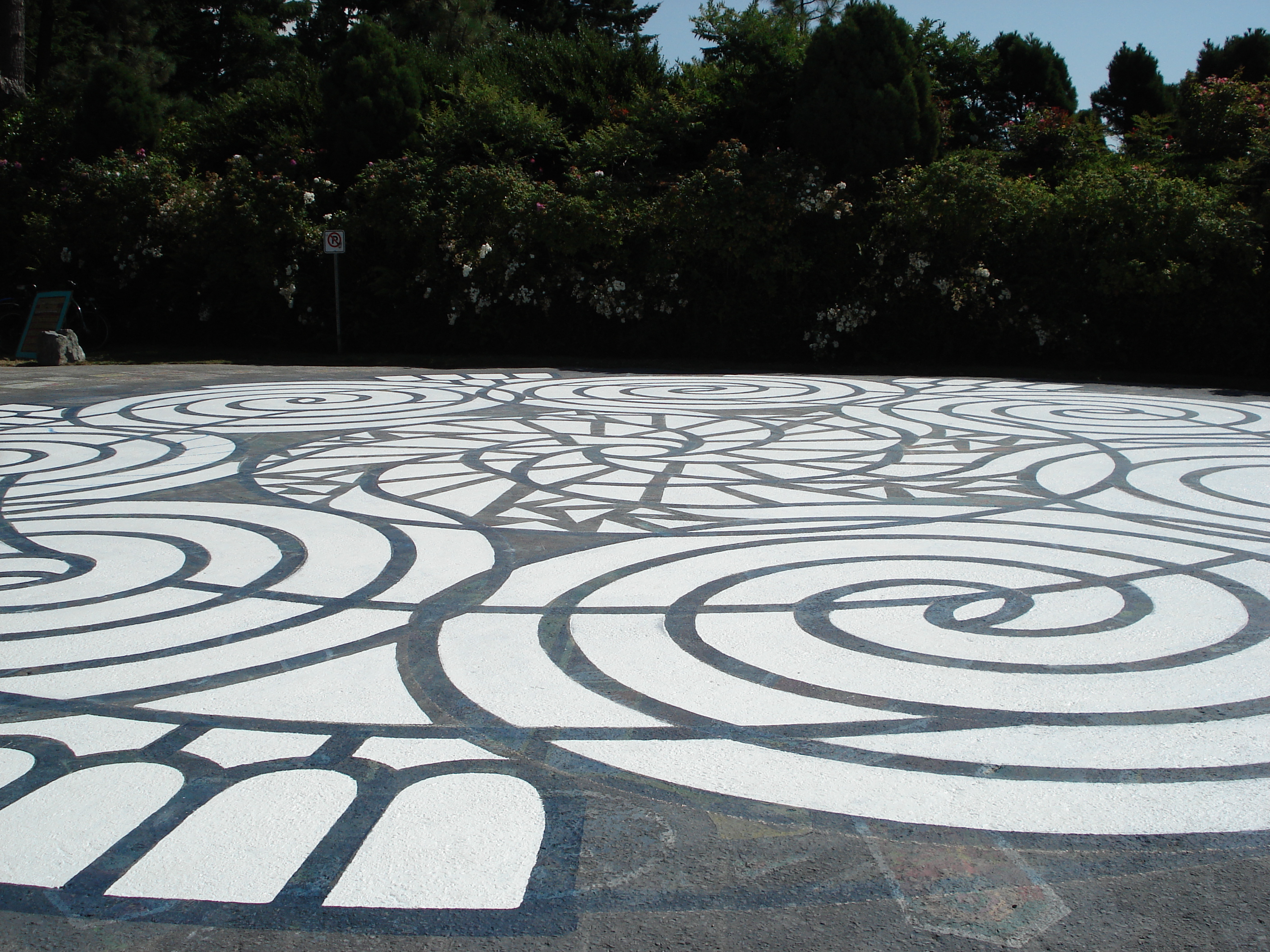
In the afternoon we went to Roberts Creek to see their shore and also the site of the community mandala. Apparently, every year an artist designs the shape of the mandala and it is painted in white. Then visitors and members of the community get to come on down and help paint the mandala that will remain in Roberts Creek all year.

I thought it was a nifty idea and a wonderful way to build community or, if you’re a visitor, a respectful way to leave your mark in an area you’ve enjoyed.

A quiet corner in the Gumboot

After visiting the mandala site we ate at the Gumboot Restaurant in Roberts Creek. My Thai salad was good (with a great peanut sauce), not excellent, but I appreciated their commitment to sourcing their ingredients locally (mostly from their very own garden!) and I also liked their homey atmosphere and colourful art. They actually had tables set up in the garden outside (not just on the patio, in the actual grass) which was another nice touch.

After lunch we went back to the shore near my hosts’ house for a little bit of swimming. I enjoyed baking on the rocks on the beach and taking dips in the (fairly cold) sea. I will mention that due to the pebbly nature of the shore, those nerdy water shoes you used to have when you were a kid are HIGHLY RECOMMENDED and definitely protected my poor little feet from rock-induced harm.

Putting on my water shoes. Photo: Daina Zilans

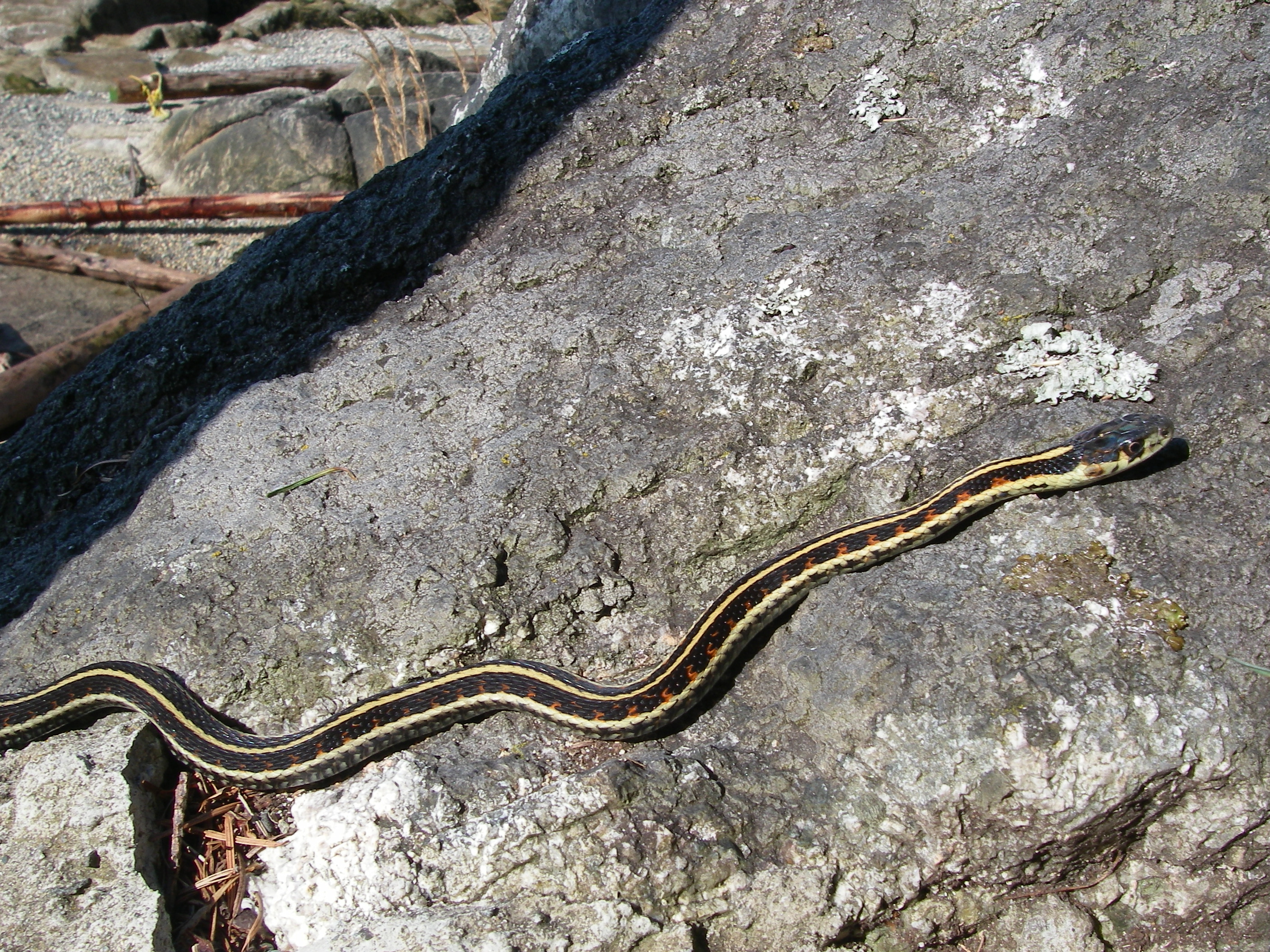
This garter snake likes the beach too, don't you little buddy? Photo: Daina Zilans

I can’t think of any good way to segue into a conclusion to this post so I’ll just say thank you to our hosts: thank you for the excellent BBQ shrimp and the homemade whiskey and for showing us the sites in this beautiful bit of BC that you call home. I hope you don’t mind but I have a feeling I’ll be wanting to take advantage of your hospitality again sometime in the future.

If you have any tips or suggestions about parts of BC I should visit please leave a comment. I’m no millionaire so tips about affordable places to stay are always appreciated. 🙂

And Now the Case for Being Happy

Photo credit: Daina Zilans

Back in January, I was emerging from a sad place and a big change that left me 10 lbs. too skinny (I’m now back to my normal size and my pants aren’t falling off anymore, woohoo!), emotionally exhausted, and suffering from insomnia for the first time in my life. As a pep talk for myself (and any other people that may hopefully have found this helpful) I wrote a post called Got the Blues Real Good: The Case for Being Sad (Sometimes). The circumstances I was in were beyond my control and I wanted to find a place of optimism and strength while still acknowledging that I felt like shit.

My winter and spring were a clumsy journey up a bumpy road. It brought me to my knees sometimes. I had a lot of things to sort out, mostly things I was afraid of, and even though I felt like crap I managed to plant some seeds that seem to be bearing fruit for me on an ongoing basis. Volunteering as a mentor, writing this blog (which I love), meeting new people, going on little adventures, re-enrolling in university courses, and co-creating, rehearsing, and finally performing “Troika!” with my friends have all kept me busy, interested, and ultimately, with little room for being a grumpypants. And in October I’m going to Spain. For a month. ALL BY MYSELF!

Through most of this time, even though I was no longer sad, the positive emotions I was beginning to feel weren’t necessarily happiness. I was proud of myself. I had a sense of accomplishment. I was having fun. And more than anything, I was feeling grateful for the amazing people and opportunities I had to support me and my climb out of the pit.

But gratitude is not happiness. It is a recognition of good fortune. And while it’s important to appreciate your blessings, gratitude’s not good enough. To spend your life being merely grateful that things aren’t worse is not joyous living.

Paradoxically, it is when our victories are nearly complete that our fears loom large again. When I was at rock bottom, I had nowhere to go but up. It was easy to be fearless when I felt I had little to lose. But that is not the case anymore. I like where I am. I like the life I’ve built for myself. I like the people in it. Can I, dare I, actually just rip that old comfortable bandage off that old comfortable wound and admit to myself that I’m absolutely and completely happy?

In recent weeks I’ve felt myself relaxing my tense grip on my heart and my mind, trying to trust that my world will continue to turn even if I don’t worry about it all the time. But despite my stance in The Case for Being Sad, every time I did, I found myself saying (to myself and others), “I can’t. I can’t go back there. I can’t go through that again. I can’t.” I’ve felt the sunlight on my skin, I’ve burst into bloom, and now suddenly I have something to lose. And that’s scary.

Every time I find my mind thinking “I can’t” I try to be gentle but firm with it. Of course I can. I just don’t want to. And that’s fine. No one has to want to feel shitty. But we can’t live only on what we’re not afraid of losing. I remember seeing a marquee outside of a church once that said, “To love something is to realize it might be lost.” That was four years ago, I had a broken heart at the time, and I thought it was very important. I told myself that I would remember that marquee. And I did. Since I know myself enough to know that I can’t live without love (for people, for places, for the things I do), I know I have to live with loss. So I will. I will surround myself with those which might be lost, because they’re the best things in my universe.

And happiness? What of that? What of the protective grip I kept around myself, clinging to that old comfortable wound, refusing to let go, so that nothing new could hurt me? Well, it’s a little funny, but one day, not so very long ago, I was walking through a parking lot, my mind busy licking the latest salt added to the old comfy hurt. And then, I just…. let it go. A parking lot is perhaps not the most inspiring place but that’s where it happened. I let it go. It was as if the final stone was removed allowing the dam to burst and the river to run free. Or as if I took off my shoe and dumped out that last piece of grit. I’ve got a ways to go maybe, but I can walk a heck of a lot taller now.

And I’m happy. I didn’t get here by myself. There are a few incredible people (and I hope you know who you are) who have been my knights in shining armor in my darker days, and I am more thankful than I can say. But ultimately, for me at least, my victory was a choice. My choice. It started with the little choices and changes I made to reshape my life and my world, and then, finally, with the terrifying but simple choice not to worry, to let go, let it be, take a breath, rip off that old bandage, expose the vulnerable new skin, and be happy.

"The Dance" - my 2011 wall calendar is all Marc Chagall. And 2011 has been full of colour and Good Things.

On Early Modern Lit, the Afterlife, and WHOA.

Whether religious or not, every person is expected to have some kind of belief about the afterlife. Even atheists have a belief about the afterlife (their belief is that there isn’t one). Since dying is an inevitable part of life, and we as humans are conscious beings with the ability to picture what lies beyond our own physical existence (both where we might be, and the physical world, continuing without us), thinking about what may (or may not) come after death is unavoidable. Even for those who practice an established religion, views of the afterlife are not absolute or concrete.

Why am I thinking about such a morbid subject on such a beautiful day you may ask? Blame my Early Modern literature professor. Learning about the Medieval Catholic doctrine of Purgatory fired my imagination, artistically and intellectually. Learning about what this doctrine meant to the average English person during England’s Reformation forced me to think about religion, death, and art in a way I hadn’t before.

In a very VERY quick and dirty nutshell, the Medieval Catholic doctrine of Purgatory breaks down to this: after death, some very wicked sinners go straight to Hell. Some very virtuous people (usually saints) go straight to Heaven. And the rest of us not-too-bad but not-too-great people go to Purgatory, where our souls spend some time in torment before we are purged of the sins of our lives and go to Heaven. (To any Catholic readers I am very sorry if I am getting this offensively wrong, I am not Catholic and am only going by what I’ve learned about specifically Medieval Catholicism.) According to Medieval Catholics, the living could lessen a soul’s time in Purgatory through prayers for the dead. That is, even after your death, the living could provide aid and succor to you while you were in Purgatory. This belief in Purgatory and the power of intercessory prayer helped both to map the Afterlife for Medieval Catholics and also, more importantly, allowed those in mourning to maintain a connection to their departed loved one, and even provide help and comfort to them after their death.

There were problems with this, however. Firstly, Purgatory is not mentioned in the Scriptures. For 1200 years a Latin translation of the Bible, the Vulgate, had been used, and sermons had been conducted in Latin. The average English person did not actually know what the Bible said, and had to rely on their priest for translation and interpretation. The invention of the printing press, the translation of the Bible into English, and the increase of literacy among English people (we’re looking at the 16th century here) meant that for the first time people began to read and interpret the Bible for themselves and began to question those Catholic rites and traditions that are not described explicitly in Scripture.

Secondly, the Catholic Church at the time was gaining a reputation for corruption as many 16th-century Catholic clergymen would perform intercessory rites and prayers only for the souls whose bereaved families could afford to pay for them. Those families who could not pay were further grieved by the belief that their loved ones were suffering untold torments in Purgatory and were not being helped. Pressing this image was a good way to squeeze a couple of pennies out of a poor and guilt-ridden family.

Through many political and religious machinations, messy negotiations, and a lot of bloodshed, England undergoes the Reformation and badda-bing, badda-boom, England becomes an officially Protestant nation (again, a very quick and dirty nutshell, and probably without the badda-bing). No more corrupt priests everybody! Woohoo! But oh, that Purgatory thing? You know, that place where you thought that your dear grandmama was receiving help and prayers from you? Doesn’t exist. She’s dead. If she’s not in Heaven, she’s in Hell. Well, have a nice day.

It’s a little shocking, to say the least. In a relatively short period of time an entire nation had to re-imagine their concept of the afterlife. The effect this had on the literature of the period is profound. Take, for example, the Ghost in Shakespeare’s Hamlet: where does he come from? Within the Catholic religion, ghosts can easily be explained as souls in Purgatory who have not moved on to Heaven. Sounds good. But hold the phone–in Shakespeare’s time, Protestantism was the official religion and therefore Purgatory technically did not exist. So where, exactly, is this Ghost from? If you read or watch the play you’ll find that the Ghost himself is fairly vague on the subject. If the Ghost has nowhere to come from, how is it that it keeps popping up? Where does it disappear to? Does it really exist? How come we can see it? ARE WE ALL LOSING OUR MINDS?

Gripping stuff. Hamlet’s a real page-turner.

Lucifer's Fall - Gustav Dore - based on Paradise Lost

In Milton’s Paradise Lost, the author decided not to be vague and described Heaven, Hell, and the Chaos between in vivid detail. The descriptions in Paradise Lost were so influential that even today, the images many people’s minds conjure of Heaven and Hell are actually based on Milton’s epic poem. One of my favourite YA series, the His Dark Materials trilogy by Phillip Pullman, is inspired by Paradise Lost:

Into this wilde Abyss,
The Womb of nature and perhaps her Grave,
Of neither Sea, nor Shore, nor Air, nor Fire,
But all these in their pregnant causes mixt
Confus’dly, and which thus must ever fight,
Unless th’ Almighty Maker them ordain
His dark materials to create more Worlds,  (Milton 2. 910-916)

Phillip Pullman does not seem to view The Fall in the same way as John Milton (so they say, I’ve so far only read two of the twelve books in Paradise Lost, but I can safely say at any rate Pullman’s work does not agree with Augustine’s doctrine of Original Sin) but that doesn’t change the fact that Early Modern imagining of the afterlife by artists and intellectuals obviously still influences and inspires Western art and culture.

And that’s AWESOME. It’s hella interesting. When I signed up for a course in Early Modern literature I remember thinking that it would be bone dry, and now my brain is just itching from all the creative possibilities these ideas have presented me. I mean, WHOA.

But back to the afterlife. Maybe after all this excited rambling about Shakespeare and Milton and Purgatory you’re wondering what I believe. On Facebook I list my religion as “I would like to meet a luck dragon” but in all seriousness I identify as agnostic. So far in my young life, most death I have experienced has not been in my immediate family, so I like to believe that the afterlife is whatever the family of the departed person believes it is. Believing that the thing that might bring a grieving family comfort is true brings me comfort. As for what I hope happens to me when I die (hopefully as a funny old lady), well…I hope the people I leave behind remember me fondly. And me? Where will I be? I just don’t know.

But isn’t it interesting to think about? I mean, WHOA.

(SIDE NOTE: Did you know that the term “pandemonium” is a term coined by Milton in Paradise Lost? Pandemonium is the name of the palace the fallen angels build in Hell and means “all demons” the way Pantheon means “all gods”. INTERESTING.)