In Defense of Fairy Tales

I can’t pinpoint exactly when I knew I loved fairy and folk tales, so I assume they’ve been part of my being ever since I can remember. In my house, my sisters and I were told stories. We were read to. We had a big bad-ass dress up box. We had a few cherished old Disney movies, and books with beautiful and provocative illustrations (like Edward Gorey’s uniquely creepy illustrations of Rumpelstiltskin, or Nancy Ekholm Burkert’s spellbinding visions of Snow White, painstakingly translated by Randall Jarrell).

Rumpelstiltskin, retold by Edith H. Tarcov, pictures by Edward Gorey

We were little kids with a lot of space to play, a lot of time, and a lot of imagination. Fairy tales were a natural part of our games–and are still a natural part of my creative impulses.

But somewhere along the line fairy tales have gotten a bad rap. Perhaps it’s little girls’ (and occasionally little boys’) obsession with princesses that has us all worked up. Despite my moderately feminist upbringing, I must confess I liked storybook princesses too (the dresses! the castles! the dresses!). I even went so far as to make a storybook of my own out of cardboard, entitled “Princess Amanda and the Unicorn”. [Princess Amanda was the youngest and most beautiful of seven king’s daughters. Apparently she meets a unicorn, but to the best of my recollection the better part of the book is spent naming ducklings near the castle pond, and the story has no conflict. Delightful.]

Childish fancy aside, I’m sure most of us have (inwardly or outwardly) groaned and rolled our eyes at the women we meet who, despite their adult years, happily call themselves “Daddy’s Little Princess” etc. and who use this label as an excuse to be covetous, shallow, and selfish. Bridezillas on reality shows like “Say Yes to the Dress”, “Wedding SOS”, and “Four Weddings” constantly emphasize two main goals: to look “like a princess”, and to have “a fairy tale wedding”. If this over the top display of vanity and consumption bothers you I don’t blame you. But don’t blame the fairy tales.

Fairy tales have also long been harangued by feminist critics for promoting idealized and patriarchal interpretations of romance, interpretations that reward beauty and passivity in women (a la Cinderella) and punish intelligence (a la the evil queen in Snow White whose character, while pathologically jealous, still serves as a rare depiction of an educated woman). The outdated and unrealistic ideas of “waiting for The One”, “love at first sight”, and being on an unhappy path in life until a “special someone” steps in form the basic plots of most romantic comedies today. The answer, according to most of these films, is finding romance. Never mind your career accomplishments, your intelligence, your bonds with family, friends, and colleagues: you’re nothing until you find a man. Your life means nothing without a “fairy tale” ending (except, of course, for most of us, our lives don’t end at marriage but must be defined ultimately by what comes beyond it). If you find these messages sexist, nauseating, and unrealistic, I don’t blame you. These are valid criticisms. But don’t blame the fairy tales.
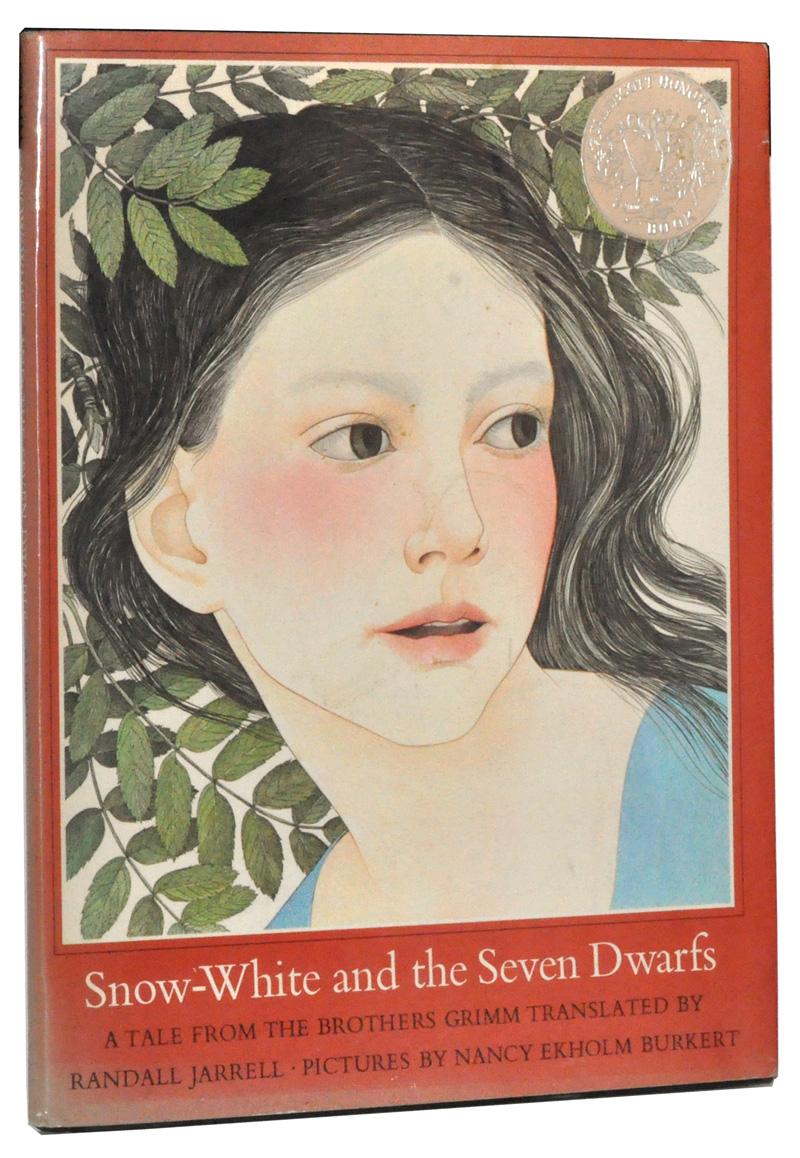
I've got this one on my shelf. It never stops blowing my mind.

I’ve got this one on my shelf. It never stops blowing my mind.

First of all, it’s important to acknowledge that for most North Americans, the versions of fairy tales we know best are the ones depicted in Disney films. Disney’s versions are so ingrained in most of our minds many of us can’t even tell what is part of the story and what is Disney invention. University of Winnipeg professors Perry Nodelman and Mavis Reimer believe that contemporary critics of fairy tales “need to consider the possibility that the archaic sexist or ageist values they express may be those of the…1930s and 1940s–and the 1990s and 2000s–as much as, or rather than, those of an ancient oral tradition or even those imposed on the tales by writers such as [Charles] Perrault and the Grimms.” (The Pleasures of Children’s Literature, 312). If you’re going to take issue with a fairy tale, you should at least know where it came from. (Which is easier said than done, since the “authenticity” of fairy and folk tales is hard to prove considering their origins in an oral tradition–the middle-class Grimms were far removed from the German peasants whose tales they claimed to be collecting–but for argument’s sake let’s go with “earliest recording” as closer to “original” than Disney.)

An old tale like Snow White, for example, has been unfairly criticized for depicting a passive and gullible woman, waiting around (and then SLEEPING, for heaven’s sake), doing and achieving nothing, happy to let men (i.e. the dwarves) take care of her in exchange for a little housekeeping, and when they fail to protect her, happy for a prince to come along and wake her with a kiss. Such is Walt Disney’s telling, but the version “recorded” by the Brothers Grimm is somewhat different on a few key points:

  1. Snow White is a seven year old child when she escapes to the dwarves’ cottage, not even old enough to be considered a “young” woman. Can you really blame a seven year old for sticking with those who can offer her shelter and protection, and for being naive enough to be tricked by a clever queen in disguise? Heck, I’ve known seven year olds who can’t tie their own shoes. At least Snow White can do a little housework.
  2. Snow White is not woken by a kiss. Her rescue from her step mother’s poison, in fact, has little to do with romance. After eating the apple and “falling down as if dead”, the dwarves can’t revive her. The child is so beautiful, even in death, that they do not want to bury her so they lay her to rest in a glass coffin. A prince comes along, sees Snow White, and cannot part with her. The dwarves take pity on him and let him take the coffin. As they’re carrying it off, one of the prince’s servants trips on a bush and bumps the coffin. The bump dislodges the piece of poisoned apple that was still stuck in Snow White’s throat. She coughs it up, instantly revives, and when the prince asks if she wants to marry him, she says (more or less), “Yeah, sure.” Considering she’s a child who’s had four attempts on her life at this point (the huntsman, the bodice laces, the poisoned comb, and the apple), it’s probably fairly prudent of her to marry a guy with the resources to keep her safe and comfortable.
  3. The violence against the heroine of this story does not go unpunished. Unless we accept the Disney version of events in which the evil queen (disguised as a peddler woman) falls off a cliff, most of us don’t really know or care about what happens to her. Which is weird. She tried to KILL a little girl! More than once! Don’t we want some justice? The Grimms sure do. When Snow White marries the prince the evil queen is invited to the wedding. Dressed up in her party clothes, the queen asks the mirror her famous question. The mirror answers that the new bride is the fairest one of all. The queen is sick with jealousy but can’t overcome her curiosity–she HAS to see who this bride is. When she gets to the wedding she recognizes Snow White, but before she can be too pissed off about it they put her in a pair of red-hot iron shoes and she has to “dance” until she dies. The end.

If I was going to have a problem with the story’s depiction of women I’d probably take bigger issue with the representation of an educated woman with a can-do attitude as vain and homicidal than with the depiction of a young child as fearful and naive. I’d also be a bit squeamish about a seven year old getting married but in the olden days small royal children got married off to other royal people all the time. So……I’ll chalk that up to the medieval world this tale seems to be set in.

Fairy tales are really all in the version you read/hear, and all in how you think about them. Even silly little Cinderella, with her dreams no bigger than a ballroom, should be able to find sympathy in this liberated age. Having been abused, humiliated, and forced into servitude by her family, is it any wonder she won’t let herself wish for anything more than one night of fun (or three, depending on the version)? For privileged folks like us, one night at a party seems like nothing, a silly thing to ask for. But for a young woman in Cinderella’s situation, the idea of even one night away from the prison of her home must have seemed an impossible dream. “But she doesn’t DO anything” you might say, “she just cries and waits around for someone else to save her.” Well, yes. Sometimes, people in abusive situations can’t find a way out of them, and they might need outside help. Magic old ladies and pumpkin carriages aside, this idea is not so unrealistic unfortunately. Though marrying the prince may not seem like the perfect solution to Cinderella’s problems (as she exchanges one set of bonds for another), becoming a princess to raise her status and power above that of her abusive family’s is a pretty shrewd maneuver I think. Well done, Cindy.

Do fairy tales hold an honest mirror to society or provide us with good principles to live by? Of course not (at least not directly). But they’re not supposed to. They present a removed world (somewhere “Once Upon a Time”) where lines between good and bad, rich and poor, hero and villain are clearly drawn. Simple yes, but the tales aren’t simple because they’re low. They’re simple so people telling and retelling the stories can remember them. No matter which version you encounter, each popular fairy tale contains certain elements that remain the same–a red cloak–a magic mirror–a room full of straw–a poisoned apple–a giant beanstalk–a lost slipper–an angry fairy–a secret name–a deep dark forest. There is something utterly captivating about these elements, something familiar but bewitching, that gives fairy tale stories their longevity. Dress them up however you like, criticize them, comb them for Marxist/Capitalist/feminist/Freudian theory, adapt to stage and screen and back to fireside–these tales endure.

And there is no reason to blame them. If you don’t like the versions of fairy tales you know, tell your own. Tell them and retell them and tell them again. Though eventually recorded into “definitive” versions by scholars and court scribes, at their most authentic, these stories have always belonged to everyone. The elements are all there; you just need to tell the tales. If you don’t, you have no one to blame for their “messages” but yourself.
On “The Pleasures of Children’s Literature” (Perry Nodelman & Mavis Reimer)

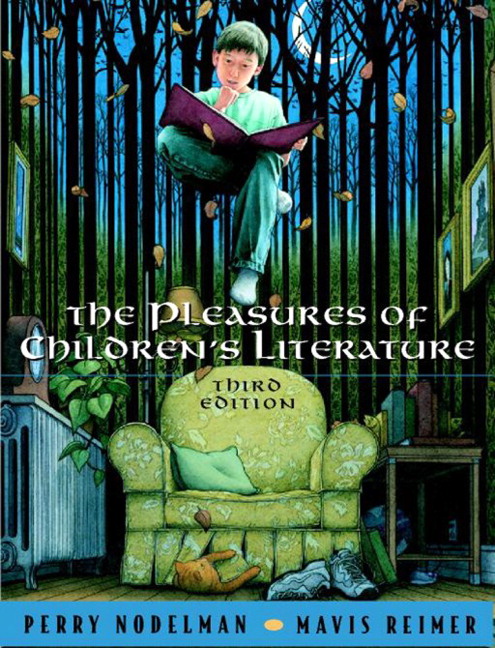
This post is not the first in which I discuss my interest in children’s literature (like my love of YA fiction), and it will likely not be the last. My inspiration today is my current preoccupation: studying for my final exam in a Children’s Literature course (an Education course this time, cross-listed with English). 0801332486The textbook shaping and informing this course is a lovely little volume called (you guessed it) The Pleasures of Children’s Literature by University of Winnipeg children’s lit scholars Perry Nodelman and Mavis Reimer.

As a textbook, Pleasures is fairly rigorous and methodical. Its voice is also just casual enough that it makes for enjoyable (and informative) reading. As far as required texts go, I’ve been subjected to much drier. That’s not to say the text is perfect–the authors supply a lot of theories about engaging children with literature, and plenty of their own (albeit educated) opinion and bias, but leave practical application of these theories more or less up to the reader. They also unforgivably dismiss one of my favourite trilogies, Philip Pullman’s His Dark Materials, as little more than a variation on the simple “home-away-home” theme (which completely misses the point of the novels and is also just plain wrong wrong WRONG!). These criticisms aside, my journey with this text has been a good one, and, considering the ways in which literature for children is inextricably linked to education, I’m happy to report it’s taught me things too.

Thing Number One: What we consider necessary components of children’s literature are based on commonly-held assumptions about children that may not be true and are often contradictory. [This idea is very fully explained by Nodelman and Reimer in chapter 5 of the text but I was so interested in this I summarized it below.]

Ask anyone–a parent, a teacher, a young bookworm like me–what makes for appropriate literature for kids, and you’ll get similar kinds of answers which usually include the following: It should be simple. It should be colourful. There should be lots of action. It shouldn’t be too scary. It should end happily. It must not have too much violence or contain anything sexual. It must not demonstrate or describe behaviours or beliefs we do not want children to copy. It must have characters children will relate to–boys want to read about boys, girls want to read about girls, etc. of a similar age to themselves, with cultures and values like their own.

These assumptions about what makes a good book for children leads us to question what we are assuming about children themselves. Based on the assumptions above, we are really assuming that children have short attention spans and lack the ability for sophisticated thought (hence the need for simplicity, colour, and constant action). We assume that children are naturally innocent (hence books can’t be “too scary”, can’t acknowledge violence or sexuality, and must end happily). We also, paradoxically, assume that children are naturally bad and will immediately copy any wicked behaviour they are exposed to in literature without proper guidance (hence the need for censorship). Another paradox is that we assume children are self-centered (which is why they only like to read about characters like themselves), but, as described above, they are somehow also very easily influenced by whatever they read.

As far as children’s lack of sophistication goes, it turns out that much of what we believe to be “obvious” about children’s mental development (and by extension, what they are capable of reading) actually stems from the research of the Swiss psychologist Jean Piaget. It’s worth noting that the methods used in the experiments Piaget conducted to “prove” his theories of mental development in children would likely not pass muster in the field of psychology today and serious objections have been raised regarding both his methods and his logic. It is Nodelman and Reimer’s position that because we still (perhaps falsely) believe that children’s understanding is limited, we limit the literature and learning materials they are exposed to, and therefore create their limitations ourselves.

As Nodelman and Reimer contend, our assumptions about children’s literature (and therefore, our assumptions about childhood) may have less to do with what children are actually like and more with what adults need them to be. Which leads me to…

Thing Number Two: Some of our most beloved and enduring children’s books, the ones we believe to most truly capture the essence of childhood, are really only capturing what we, as adults, want to feel that childhood is or was.

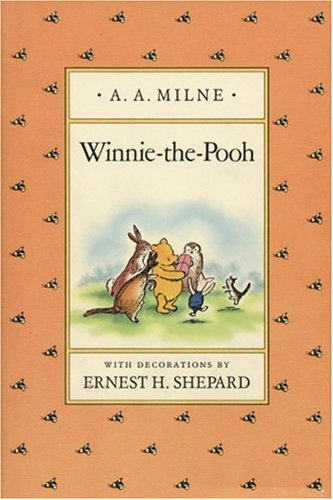
The two most obvious examples of this that come to mind (out of the many many books the authors of Pleasures discuss in their text) are A. A. Milne’s Winnie the Pooh books and J.M. Barrie’s Peter Pan and Wendy (usually known nowadays as just Peter Pan). Both of these stories revolve around the innocent and fantastical adventures of childhood, and both end with the title character being left behind by a dear friend who must “grow up” (oh god, I’m getting teary just thinking about it).

Though many many children do love the stories of Pooh and Peter (for me, it was the flying), I agree with Nodelman and Reimer that the real audience of both of these stories, i.e. the audience that can best understand and appreciate them, is an adult one. Pooh8It is because we no longer possess the ignorance and innocence of Pooh and his friends that we can find humour in their sayings and doings (our relative experience also allows us to better appreciate the eternally pessimistic Eeyore, a character I found boring as a child). It is also because we are no longer young ourselves that we find an island like the Neverland (where you never never grow old) so beguiling.

As humourous and enchanting as the adventures of Winnie the Pooh and Peter Pan are, their real heart and soul are captured in their final scenes depicting the inevitable and permanent separation of Pooh from his beloved friend Christopher Robin, and Peter Pan from Wendy Darling, the girl who loves him. Christopher Robin must go to school (after which he says, “they don’t let you” have the escapades he had with Pooh before), and Wendy realizes that if she avoids growing up, she must also miss out on experiencing important and necessary parts of life (like family). For children who are living childhood, the idea of losing it likely has a far less profound effect on them as it does on us. As a small child, I actually thought very little of the “sadness” of growing up. I wanted to be bigger so I could do the things my older sister was doing. It wasn’t until after puberty (and there was no turning back) that these books were truly relevant to me. (Please don’t get me wrong–these are beautiful books, beautifully written and beautifully sad, but perhaps not as much “for” children as “about” a childhood, real or imagined, that we as adults have lost.)

If you think about it, is childhood really as golden and idyllic as A. A. Milne and J. M. Barrie describe it as being? Not really. For the lucky children (like me), it’s very fun and magical but it’s also very messy and confusing and scary and uncomfortable. For unlucky children (which, on a global scale, is most children), there is abuse and/or neglect and/or illness and/or war and/or poverty. Not exactly a romp in the Hundred Acre Wood or a flit off to the Neverland. And although adults know these things, in Western culture we still like to see representations of childhood that are eternally bright and heart-breakingly carefree. They provide entertainment to children, yes, but more importantly, they provide comfort and nostalgia to adults.

Thing Number Three: The creation and availability of children’s literature is driven by adults, in service of adult concerns, and not by children.

This should be obvious, since adults are the ones writing, publishing, selling, selecting, and buying books for children, but we sometimes seem to forget this. The books you can find in the children’s section of a bookstore are the winners of a very profit-driven lottery, and the odds are becoming more difficult each year. In a nutshell, publishers are printing less titles, but expect to make just as much money (or more) from less. This means the titles publishers do print must (regardless of literary merit) be blockbuster money-makers, like the Harry Potter or Twilight series; they are much less likely to take a chance on a more obscure but perhaps better book that may become a classic over time. Depressing. Because teachers and librarians (the primary buyers of kids’ books apart from parents) are increasingly worried about the threat of censorship (often by parents who haven’t even read the entirety of the book they are trying to ban), they are increasingly unlikely to buy books that may be censored, and publishers are increasingly unlikely to print them. Also depressing. Ho hum.

Thing Number Four: Many of the most widely used strategies for teaching literature to children aren’t creating what Nodelman and Reimer call “ardent readers”, primarily because these strategies ask children to do things that ardent readers don’t do.

This point is really hit home with me, especially since I consider my own “ardent readership” an important factor in the course of my education and life. If I had not already lived in a house of books and been introduced to the activity of reading by my parents and older sister, I would likely have been utterly turned off reading by the stupidity and uselessness of the “activities” my English classes forced upon me.

According to Pleasures (and my own experience), ardent readers get caught up in the book they’re reading. They engage with the suspense, they rush to the end to find out what happens. They do not stop every time they find a word they don’t know to look it up in the dictionary. They do not ask themselves absolutely vapid comprehension questions that have more to do with unimportant details than with the point of the book itself. They do not waste time making posters of scenes from the book (unless they like to draw, or if it’s a tie-in with art class, but I will never forgive those well intentioned teachers who gave me marks off in ENGLISH class for the quality of my COLOURING). Ardent readers talk about the books they’ve read. They argue about them, they defend their position. They think about what the book means to them, not blindly accept what their teacher says it means so they can parrot it back in a test. And they acknowledge, if they see them, the innuendos, ironies, and possibilities for “reading against a text”, even if that interpretation isn’t a sanctioned part of the school curriculum. I always got the feeling that my teachers expected their students to dislike reading, so they tried to assign activities loosely based around a text but that required as little true reading as possible. Nodelman and Reimer also note that many (too many) teachers who “cover” poetry in their classrooms neither understand nor enjoy poetry themselves. You can’t really blame kids for not understanding/enjoying it either…sigh….(all I can hope is that today’s teachers of English or Language Arts are reading Nodelman and Reimer too…).

Anyways, while occasionally bleak, I liked this textbook.

With teachers for parents (and my desire to someday be a parent myself), I’ve always been interested in the field of education. Being a lover of English literature and possessing a certain whimsical streak, I’ve always been interested in the field of children’s literature. The Pleasures of Children’s Literature was a great introductory read. The greed of the children’s culture industry and the various failings of our education systems notwithstanding, my love of the genre is intact and my old favourites (whether actually read in childhood or acquired after the fact) are still friends to me.

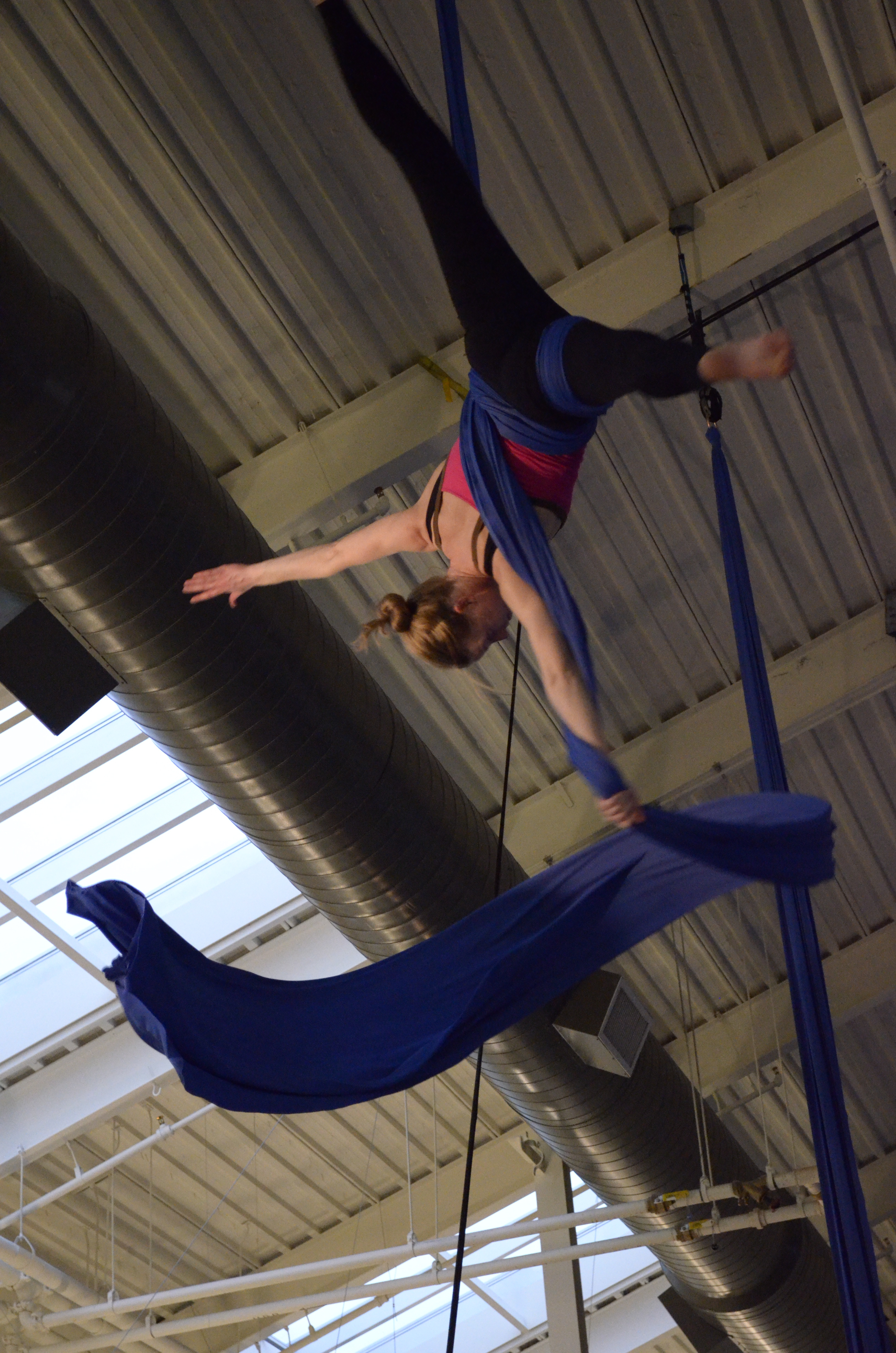
Aerial Enthusiasm at the Vancouver Circus School

NiftySilk03

That’s me! Whoooo!

If you’ve ever read my twitter bio or the bio for this blog, you may have noticed that I bill myself, among other things, as an “aerial silks enthusiast.” What, you may ask, are aerial silks? And how exactly does one become an enthusiast of them?

Aerial silk refers to a circus act in which performers delight and amaze you on apparatus called “aerial silks”. Aerial silks (also known as tissu) are two (or generally just one looped in half) long bolts of fabric suspended from the ceiling. According to this helpful Wikipedia blurb, performers of aerial silks “use the fabric to wrap, suspend, fall, swing, and spiral their bodies into and out of various positions.” Pretty much, except that for many skills (like tumbling), the end position may not matter as much as the transition (i.e. the exciting acrobatic tumble) that precedes it. Even if you didn’t know what they were doing, you’ve probably seen aerial silks performers whizzing about in Cirque du Soleil or perhaps beatnik-ing it up in the park, rigging their silks to a tree. Remember that thing, where there was this fabric hanging, and someone climbed it, and did some awesome tricks, and it was really cool?

Yeah, that was aerial silks. Oh yeah, and I do that. THAT’S why I call myself an aerial silks enthusiast.

Now when I say “I do that”, I mean simply that I’ve been training on the aerial silks for five and a half years with the Vancouver Circus School, first at their North Vancouver location, and now at their sweet digs in the New Westminster Quay River Market. I’m certainly no pro and I very much doubt a life in the circus is in my future, but it’s the most fun “exercise” I’ve ever found, it’s great for my posture, and I’ve learned to do a lot of things I think are pretty neat.

NiftySilk04

It’s pretty neat, isn’t it?

When I tell people about my extracurricular physical activity of choice, they usually want to know two things:

  1. Am I secured or harnessed in any way when I’m training on the silks?
  2. Have I ever fallen?
NiftySilk02

Look Ma! No harness!

The answer to Question #1 is NO, aerial silks performers are not secured or harnessed by anything. In order to perform on the silks, you need to be strong enough to climb them, and you need to know what you’re doing and how to wrap yourself (that’s really all you’re doing–climbing, wrapping, and either holding a position or tumbling/dropping out of one). If you haven’t wrapped yourself properly, you’re going to find that suddenly you’re not wrapped at all.

To answer Question #2, YES, I have fallen. Once. Halfway through my first year. It was my own damn fault (I was far too tired for the skill I was trying to attempt and my hands just let go) and I fell on my ass. I silk-burned my fingers fairly badly (yep, silks burn) and my confidence took a pretty big hit. Generally speaking, if you listen to your instructors, you will not get hurt on the aerial silks. But aerial arts are dangerous (see my answer to Question #1), so you do have to pay attention to your instructors, make sure you have enough energy and know-how for the skill you’re attempting, and, if there’s ever any doubt that you’ve wrapped properly or that you have enough energy, you’ve gotta climb back down and try again later.

My favourite thing about studying aerial silks with the Vancouver Circus School specifically is their focus on individual progress (while never sacrificing technique). I didn’t climb 20 ft to the ceiling on my first day and try to wrap myself while hanging upside down. Every student starts small with skills that can be done close to the ground (but still look pretty cool) and are a lot safer. As I became stronger and improved my technique, my instructors moved me onto more difficult skills. At this point, I’ve at least attempted everything my instructors have taught me, but now that I’ve got the basics down I’m able to pursue the skills that interest me the most and as well as create routines of my own (though I must confess I’m a little more lax on that). I also love getting a chance to watch other performers, either on the silks or on another piece of equipment (trampoline, aerial hoop, trapeze, etc.)NiftySilk01. Right now I take classes at the same time as VCS’s pre-professional “Ringmasters” group, and it’s inspiring to watch these young circus artists train. They’re light years ahead of me and it’s like getting a free little circus show every week.

Training on the aerial silks can be frustrating and exhausting–it’s hard work, it gives me silk burns and bruises, and sometimes my progress is excruciatingly slow. But no matter how crappy I might feel before I walk in, I always leave class feeling amazing. When I take breaks from training I dream about the silks. I know this is a practice that does me good, body and mind. And it’s helped my physical self be something I never thought I’d be–strong and graceful. Now I know what those long gangly arms were for–all the better to climb those silks, do something wicked, and go “ta-da” at the end. Besides, my arms aren’t gangly anymore–I’ve got pipes baby, and I know how to use them. With enthusiasm. In the air.

[P.S. Thank you TC for coming to class and taking pictures of me! You’re great!]

Kicking the Oil Habit: So crazy it just might work

Yesterday at a staff lunch, my office mates (who are, on average, a few years older than my parents) were reminiscing about the days when smoking was widespread and legal in public spaces:

Remember when everyone could smoke on the plane? Your eyes would just water by the end of the flight! Nowadays the gas masks would probably come down if the air quality got that bad.

Remember when you could smoke in the grocery store? You’d just push your cart along and smoke your cigarette and have to brush bits of ash off the produce sometimes.

Remember when you could smoke in the office? I must have accidentally burnt a hundred forms when I could smoke at my desk.

And just think, [said my boss] how far we’ve come!

No_smoking_symbol.svgIt’s true. We have come far. Once smoking (and second hand smoke) became a public health concern, Canadians began to push back against public smoking, and public access to cigarettes. And it wasn’t easy at first. People said it was their right to smoke. People said tobacco companies were too powerful–the government would never have the guts to pass laws restricting smoking or access to cigarettes. Convenience stores said putting their cigarettes under lock and key (rather than on display) was an inconvenience to them. Diners, restaurants, clubs and bars all said they’d lose business if their patrons weren’t allowed to smoke. Sure, smoking is bad for you, but thinking you can get rid of smoking? That’s just crazy.

But the science was there. It was obvious that cigarette smoke was killing people–both smokers and non. Sure, smokers have a right to slowly kill themselves if they want to, but soon the public agreed that they didn’t have the right to kill others with second hand smoke, and they didn’t have the right to easy visible access to cigarettes in places where children might see them. Eventually, the government listened, and smoking bans were put in place on transportation, in most buildings, and on the street by doorways and air vents. Stores that sold cigarettes had to keep them covered, and the archetypal “smokey bar” became a thing of the past (by the by, bars and clubs are still packed on a Saturday night, so clearly banning smoking hasn’t hurt business all that much).

And you know what? It’s been great. By the time I became an adult smoking cigarettes was not considered cool among people my age–it was something you had to excuse yourself to go do by yourself (like going to the bathroom or adjusting your underwear). I could come home from a night on the town without the smell of cigarettes in my hair. Though many people do still smoke cigarettes (it’s a proven addiction, after all), it seems almost nostalgic now, like an episode of Mad Men or some Salinger novel. When we look back on those earlier, smokier days we go, “What were we thinking? Smoking was killing us! It was expensive! It was dirty! It stunk! How could we keep doing something so obviously bad for us?”

Before we feel too smug, may I remind you that extracting and burning fossil fuel is killing the environment (and therefore us, since we are part of the environment). It’s expensive. It’s dirty. It stinks. And more and more Canadians want a change.

But the same old arguments persist: it’s people’s right to use drive their gas guzzlers if they want to. Companies will lose business. Finding alternatives to fossil fuels is a lot of work. Oil companies are too powerful–even if all Canadians agreed that oil extraction and use is killing our planet, the government would never be gutsy enough to pass environmental regulations (to which I say, how about we elect a government with a bit more respect for science and a lot more cajones?).

In this “information age”, there is really very little excuse for the willful ignorance that fuels these arguments. Once upon a time, people were dying of diseases caused by shitting in the same water they drank. We look at those people now and see the obviousness of their error. So why are we shitting in the water we drink, on the food we eat, and in the air we breathe by continuing our narrow minded reliance on fossil fuels (and only fossil fuels) for our energy? For no reason but sheer pigheadedness, and it’s not doing us any good.

It is NOT anyone’s right to destroy the planet that belongs to everyone. Unless your job is driving in the desert being shot at, you do NOT need a Hummer.

The economy is changing–the green-tech sector is employing more and more people as tar sands companies mechanize and “trim the fat” HR-wise. Demand is changing too–with more and more young people living in cities, driving a car is becoming less necessary and less desirable.

As for the power of the oil companies and the inability/unwillingness of governments to regulate their operations–well, someday we’ll be looking back at Stephen Harper the same way we look at the stupid king/nobleman/chieftain who let his people keep crapping in their drinking water. With contempt and disbelief. How could anyone be so short-sighted? How could anyone ignore the mounting evidence? How could a government systematically and deliberately put an entire country’s citizens, wildlife, and environment in harm’s way for the sake of ONE sector of the economy? Jack Layton could power his entire home on green energy (I saw it on the CBC, it was cool). All the dirty oil in Canada couldn’t warm old Harper’s heart.

Once upon a time, trying to curtail public smoking would have been political suicide. But medical science won out. People realized they had a lot to lose if nothing was done, and with their continued pressure governments eventually realized it too.

The ongoing decimation of our environment bothers me, and I realize that oil companies will always be a part of our economy (and hey, I like electricity and transportation as much as the next person). But there are better ways to power our homes and vehicles, there are new sectors out there to “fuel” our economy, and there is so so much to lose if we don’t make a change. Canadians made the right choice when it comes to smoking. I hope by the time my children are grown we will have made the right choice about fossil fuels.

ArbutusStarfish

Nothing like our beautiful oil-spill free BC coast!