Fair is fair: why straight cis people don’t need a “Pride” event

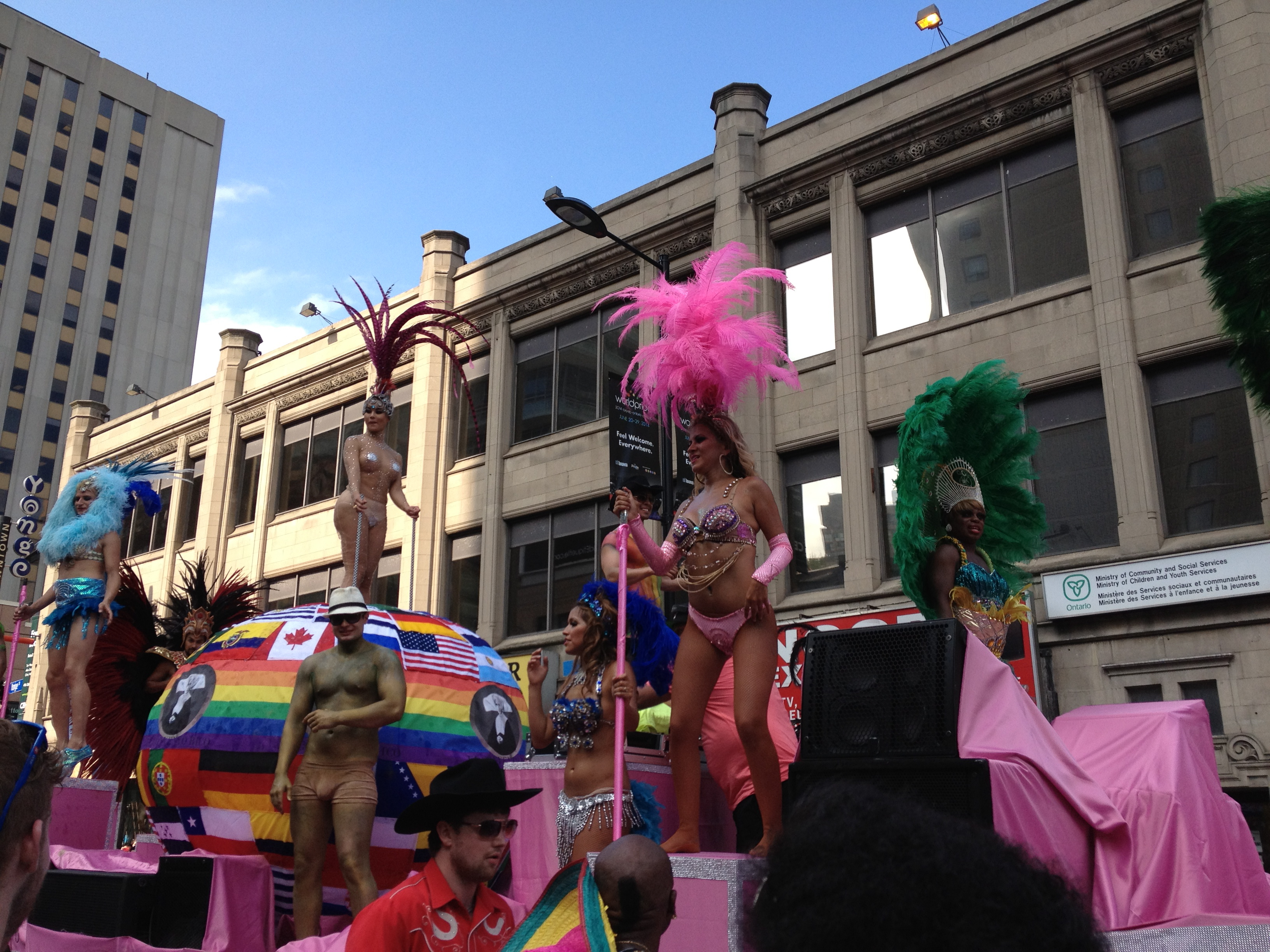
World Pride 2014, Toronto

World Pride 2014, Toronto

Last weekend I came across this troublesome little gem on social media, relating to fake posters for a “Straight White Guy Festival” which were plastered around an Ohio town (during the lead up to the community’s Gay Pride events). “Everyone welcome,” the fake flyers read, “Come help us celebrate our enjoyment of being straight white and male.” The author of the post, Sean Brown,  seems to think the stunt was not only funny but a legitimate shot at “leftists” whose only interests lie in protecting minority groups:

While it may be true that straight white men don’t face the same struggles as gay people do, the fact that they’re not allowed to celebrate their own sexuality in the same manner out of fear of offending someone is reprehensible. Everyone has the right to be proud of who they are, regardless of the color of their skin or who they choose to have sex with. It’s apparent whoever created this flyer did so to point out the hypocrisy in this debate.

True equality is not achieved by stifling others in order to uplift a minority group. It’s done by treating everybody exactly the same way, even if it means some people may get offended.

I hope Mr. Brown won’t mind being offended if a leftist who is interested in protecting the rights of minority groups calls his bullshit bullshit.

It’s bullshit. And this is why:

Straight, cis-gendered people like me get to celebrate and be proud of their sexuality everyday. We can marry whoever we want to and no one can say boo. We can arrange to adopt or foster a child without the extended birth family (who aren’t interested in caring for the child anyways) pulling out at the last minute because they don’t want the baby to be cared for by a gay couple. Western media constantly celebrates heterosexuality by using overtly heterosexual imagery to promote products and a “desirable” lifestyle (anyone seen a beer commercial in the last 20 years?). At home, at school, at work, our lives have been easier in every way imaginable because we were not born queer, or bi, or trans*. I’m sure if you asked an LGTB person, they’d probably take the lifetime of acceptance straight cis people currently enjoy over a pride party once a year. We don’t need a party celebrating our good fortune. Every single day we aren’t discriminated against is our party.

Funnily enough, I’m not shocked that the post’s author could acknowledge this privilege and still think that “treating everyone exactly the same way” vis-à-vis pride events for privileged people is a legitimate position. I remember once thinking the same way about a variety of issues surrounding equality (granted, I was in high school at the time, but still, it’s all part of the learning process). Why couldn’t someone formally celebrate being white/straight/middle-class, etc., I wondered. Fair is fair after all.

Here’s the thing (which I won’t have to tell you if you are interested and active in issues of racial, sexual, economic, or gender equality): fair is only fair if everyone starts from the same place and has had the same advantages.

Let’s say 10 people are running a 100 m race. 9 of these people are “straight white (cis) males”. The 10th runner is gay, a person of colour, and/or not a cis-male. All of the runners are required to start at the start line at the sound of the gun, and run 100 m to the finish line. Fair is fair, right?

Except perhaps the 10th runner was not able to attend track practice in the months before the race because the locker room atmosphere (which included their 9 competitors) was not a safe space to be. Perhaps the 10th runner did not receive adequate training during their formative years because they were overlooked by coaches throughout their life–overlooked for reasons that had nothing to do with their running ability. Perhaps for weeks prior to the race, the 10th runner was subjected to nightly death threats, and a daily barrage of “news” items and opinion pieces constantly questioning whether Runner 10 should have the right to run the race at all, or whether they even belong in polite society.

The other 9 runners, meanwhile, have been supported throughout their training by each other, by their coaches, and by society at large and are on equal footing with one another. As the competitors take their marks, one of the 9 runners gives the 10th runner a shove, completely breaking their focus as the race is about to begin. The race officials pretend not to notice because, you know, that 10th runner, always being sensitive about something, can’t ever take a joke, right?

The gun goes off. All 10 runners sprint towards the finish. Perhaps the 10th runner has managed to train on their own with the support of a close group of friends and allies and they manage to put in a decent showing. Perhaps the 10th runner has been mostly on their own and the stress of the conditions under which they’ve had to compete have taken their toll. Either way, can we really say the race was fair? Of course not.

And given that the race was not fair, can we really say that it’s tasteful for the 9 “straight white male” runners to celebrate the superiority of their circumstances? Of course not. (And don’t even get me started on the qualifiers “white” and “male” in terms of the privilege being fêted in this prank–they just add further insult to, well, insult. And injury.)

But if the 10th runner wants to party with their friends? Absolutely. They deserve as much, don’t you think?

So Sean Brown finds straight white guys “not being able to celebrate their sexuality…for fear of offending someone” to be “reprehensible”. What I find reprehensible is celebrating privilege achieved at the expense of another human being’s rights and dignity. And I don’t find my position hypocritical in the least.

Besides, are Pride events really that exclusionary? Unless you’re there to be hurtful or spread homophobia, the answer is usually no. If you’ve ever been to a Pride you’ll probably notice that people of all sexualities, genders, races, and economic backgrounds are in on the party. Even straight white guys.
How Pinterest is Crushing My Wedding (and Self-Esteem)

They used to say every girl dreams of a fairytale wedding. I’m not sure about that but I do currently feel the weight of the expectation that every girl must CREATE a fairytale wedding, whether she ever dreamed about it or not. As one of my colleagues warned me about wedding planning, “Once you get on that roller coaster you can’t get off.” And I am definitely riding a roller coaster made of paper lanterns and jumbo popsicle sticks, hastily stuck together with my newly-acquired glue gun.

Maybe I was once one of those girls. Maybe I once wanted a poofy dress and a string quartet and an aisle lined with rose petals (maybe I still do want a poofy dress, a string quartet, and an aisle lined with rose petals but perhaps I am too practical and too poor). Who doesn’t want to imagine a major event without also having to imagine the financial, familial, and time restrictions that will influence the big day? But who can afford that dream when it comes to their own life? Practically nobody.

Which is why, Once Upon A Time, if you were not rich enough to hire a wedding decorator or rent out a spendy venue, you rolled out some plastic runners, threw up some balloons and streamers in your “wedding colours”, and called it a day. I certainly went to a lot of weddings like that in my youth, and I had a great time. NOW, however, Martha Stewart, Pinterest, and craft stores everywhere have conspired to convince less-wealthy women that they CAN have their fairytale wedding after all, and furthermore that it is EASY and CHEAP, so long as they are prepared to MAKE EVERY DAMN THING THEMSELVES.

After visiting at least seven separate stores (Michael’s, dollar stores, Costco, shops in Chinatown, etc.) and spending so many dollars on paper lanterns, LED tea lights, and various wedding-related bric-a-brac, I’m beginning to seriously question how “easy and cheap” DIY wedding decor really is. Looking at the “DIY” page of my wedding Pinterest (yes, I had one) makes me want to cry. Apparently I compiled it in a simpler, more innocent time. A time when I thought perhaps I would learn to make macarons (an incredibly complicated piece of baking I’ve never attempted once, never mind enough times to feed a bunch of people). A time when I thought I was going to cut literally thousands of leaves out of coloured felt and thread them into festive garlands, or make my own lanterns out of mason jars and good intentions.

Sigh. I had no idea how incredibly bad at planning I am until I had to plan a wedding. And I had no idea how much my crafting skills fell short of what is considered a “simple, pretty wedding” nowadays until I tried to make even the most straight-forward of Pinterest-inspired dreams a reality.

One of the pieces of advice I’ve been getting since I got engaged is to make my wedding “my own”, as if my fiancé, the dozens of people attending, and the family and friends whose time and resources are being generously donated help throw one lavish party, have nothing to do with it. This wedding is far from being “my own”. The photos I’ve pinned on Pinterest are not my own, the crafting ideas are not my own, and the images I carry in my head of what I wish my wedding could look like are not my own. They’re part of some kind of wedding stencil that floats around in the ether, waiting to lay itself on top of all new couples’ best-laid plans and show them how far off the mark they are.

Um...nailed it?

Um…nailed it?

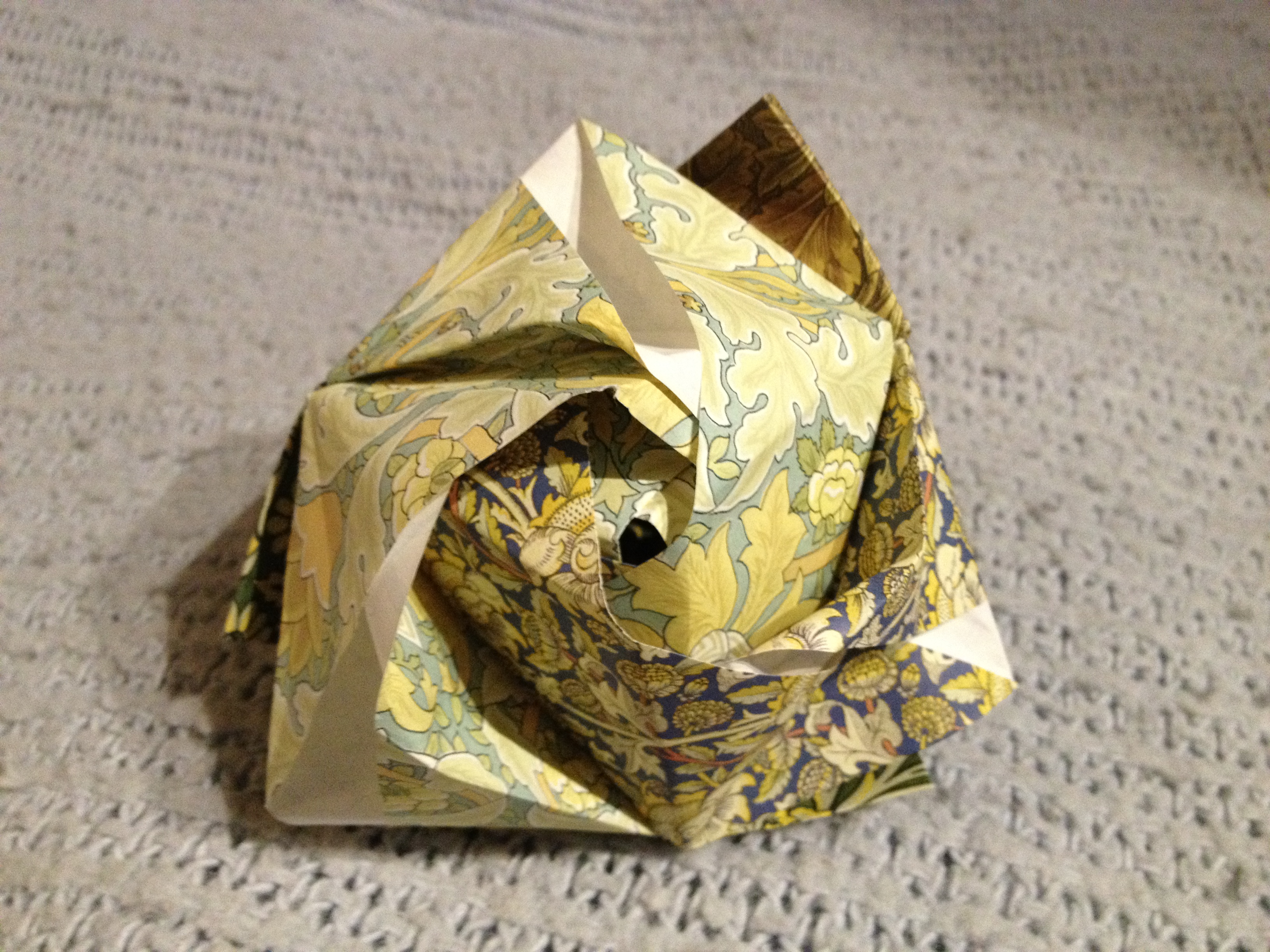
It’s all well and good to try to create your dream wedding if you’re crafty, and patient, and don’t live in a studio apartment where every available flat surface is now covered in boxes and bags. It’s less good when you waste two hours and six sheets of origami paper trying to learn how to make a magic cube rose only to end up with a fist-sized mass of crumpled sadness. Ho hum. I don’t think I was made for this.

I’m not sure where these high expectations for weddings come from (I know our guests are not snobby people and would not judge us based on my origami skills), but I do know they exist. Case in point: yesterday, I went to the dentist for a check up and cleaning. One of the hygienists told me that I have the lightest shade of “natural” teeth (based on the scale they have in the office). Which is great! And then she proceeded to explain how to use a fancy home-whitening kit (normally $100) which my dentist gave me for free as a wedding gift, so that I could really whiten up before my wedding.

And you know what? I appreciate it and I’m going give it a try. If you flip through wedding magazines, you will notice that while more brides nowadays may opt for ivory or off-white gowns, nothing but the whitest of whites will do for their smile. It’s weird to me that a dental office can simultaneously acknowledge the lightness of your smile and offer you free home-whitening, but it’s as if we all understand that weddings are somehow special, extraordinary events, and normal levels of nice-looking just don’t cut it. Subconsciously, we’re all trying to recreate a Pinterest/wedding magazine-worthy wedding, and it’s pretty damn stressful.

And yet I find I’m getting excited in spite of my anxieties. We’re lucky to have lots of help from family and friends, and the closer I get to the wedding the more I remember what it’s all for. It’s hard to make a wedding “my own”, because it’s not just for me, or even for us. It’s to share with people we care about, and part of that sharing is wanting to show off for them.

Or maybe that’s kind of bullshit. I’ve spent an entire blog post blaming Pinterest and whinging about how some evil conspiracy has created unrealistic wedding expectations, but deep down I know that I want things to be pretty because I like pretty things. And I really like folding paper.

Pretty pretty!

Pretty pretty!

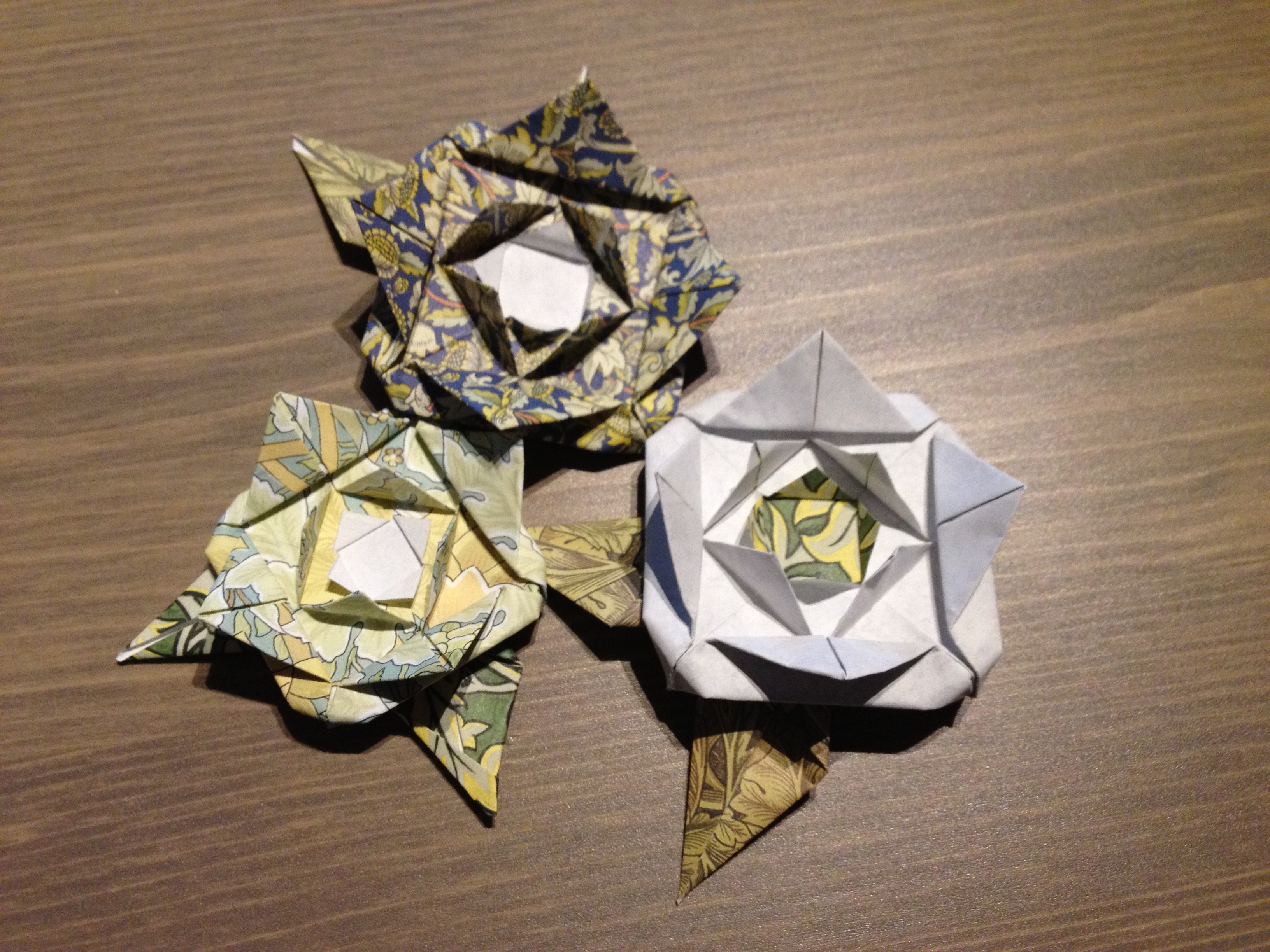
[Note: for my origami needs, I have been turning to the amazing website, origami-instructions.com. I made the roses above with the instructions for Origami Rose with Leaf.]

How to meet women without being a creep

Um...no thank you.

Um…I like that you’re a reader, but no thank you.

Hi there (heterosexual) fellas!

I don’t usually dispense dating advice, but I can only imagine that the dating world is a minefield for you right now. With the #YesAllWomen hashtag taking off and so much push-back against rape culture and the sexual entitlement implied by terms like “friend zone“, you’ve probably been made to feel like an asshole for, or at least have been prompted to question, the ways in which you’ve commonly interacted with women in the past. It may seem like your go-to conversation starters are annoying, insulting, and perhaps even scaring, some of the women you’d like to get to know better.

This sucks. It sucks for those women because they very likely ARE annoyed, insulted, or possibly even frightened by your overtures. And it sucks for you because, to give you the benefit of the doubt by assuming you are not a rapist, you’re making yourself look like a creep, which was probably not your goal.

Though it’s true that a lot of the single male behaviours I’ve observed in my young life are certifiably creepy, it’s hard to lay the blame with you. The same patriarchal, macho culture that has been hurting women all these years has also been hurting you, by telling you that your worth as a man is directly related to the number of women you can sleep with, by telling you that your emotions and vulnerabilities are shameful, and by denying you the right to appreciate all of the different relationships you have with women in your life, even if these relationships are not sexual. The culture that raised women to think they must be thin and have large breasts to be attractive also raised men to think they need to be tall and muscly. For both men and women, these expectations are unrealistic, as is the expectation that you’re supposed to be attracting lots of women, all the time. That the culture that raised you makes you feel like you’re missing out on some amazing elite party whenever you’re not having sex is unfair and totally false. And it’s understandably frustrating for you.

But that frustration is scary for women (if you want to know why, simply look at some of the extreme violence catalyzed by frustrated and misguided feelings of sexual entitlement, like the Isla Vista murders, for example). If you want to talk to a woman without being a creep you need to understand that while you might feel embarrassed or rejected if your interaction with her does not go well, she has very real reason to fear that she might be assaulted or even killed. If you’re talking to a woman who’s never met you, she’s not just assessing whether or not she wants to have sex, date, or continue talking to you. She’s also assessing whether or not you might be a threat to her physical safety, either now or down the road. Not behaving like an entitled creep goes a long way if you’re trying to establish even just that physical trust.

That said, there’s nothing wrong with going out for a night on the town and trying to “get lucky”.  People of all ages and genders are indeed looking for romance, and as long as you’re courteous and respectful about it, no one can fault you for approaching people you’re attracted to. Both love and sexual intimacy are wonderful things and it’s completely valid to want to find willing partners to share either or both of these adventures with you.

In terms of actually finding these partners (either for just tonight or for years to come), I unfortunately can’t help you. I don’t know any superficial “trick” for attracting women (unless that trick is hygiene, in which case, yes, hygiene is a great start). In terms of keeping your approach courteous and respectful, however, I do have some tips I’d like to share with you:

  1. Remember that no one owes anyone else sex, ever. You don’t owe anyone sex, and neither does she. Even if you’ve bought her a drink. Even if you’ve talked all night. Even if she flirts with you, or makes out with you. Even if she goes home with you–if, at any time, the woman you are talking to makes it clear that she does NOT want to have sex with you, that is the end of the discussion. Thank her for the conversation, call her a cab, or put her up on the couch. Then do something else (if you’re still interested in being around each other even if sex isn’t going to happen) or just walk away. No insults. No calling her a bitch or a slut or a tease. And absolutely NO trying to persuade her to change her mind once she has said no. It might not be the outcome you wanted, but a true gentleman seeks freely given and enthusiastic consent, and NEVER makes someone feel guilty for not wanting to provide it. This foundational principle is absolutely essential if you want to be respectful and polite in your interactions with women. Without fully understanding this the rest of my suggestions will be empty gestures, just tricks to make women think you’re a “nice guy”.
  2. Try to make sure you’re not interrupting something. A person who’s been interrupted by a stranger is likely in no mood to give that stranger much of a chance, romantic or otherwise. I’ve been interrupted by men I didn’t know while I was mid-conversation with my friends, and the other day a man on the bus got the woman sitting in front of me to take out her ear buds and listen to him just so he could tell her she had a “beautiful profile” and “nice features”. Not impressive. I’m sure you don’t like it when people interrupt you, and most women don’t either. Even if you’re interrupting or intruding to give us what you think is a compliment, what we really take away from the interaction is that you don’t believe that whatever we were doing (talking to friends, listening to music, or even just enjoying a quiet moment with our thoughts) is as important as your right to approach us as a stranger and say whatever it is that is on your mind. So how to know if you’re interrupting something? Well, if the woman you’d like to speak to is talking to someone else, listening to music on headphones, reading a book, or writing something, this is a pretty good indication that she’s busy. Why not try making eye contact with her before you approach her? If she avoids contact she is probably not interested, however, if she reciprocates she might be open to a conversation. When in doubt, simply ask, “Am I interrupting you?”. If she says yes, apologize and move on.
  3. Ask her to dance. Almost every girl I know has been the victim of some random stranger grinding them in a club without so much as a hello. Ew. Grabbing and frotteurizing someone on the dance floor is invasive and incredibly creepy. Asking someone to dance is not only respectful, it is charming and old-school and provides a gateway not just to dancing but also to introductions and conversation. Which I assume you would at some point want if you were truly interested in meeting someone.
  4. Talk about something besides her appearance, at least to start with. One of my friends recently mentioned to me that she doesn’t actually feel flattered when strange men begin conversations by complimenting her on her appearance. Though obviously a compliment is preferable to an insult, the implication is that physical appearance is the A+, gold standard by which women prefer to be measured. It actually sucks to be measured by your physical appearance, and beginning your interaction with a woman by talking about her appearance just plays into her insecurities. Instead of talking about physical appearance, which people have very little control over, why not talk about her/your job, her/your studies, how her/your night is going so far, etc.? Your continued interest is signal enough that you find the woman you’re talking to attractive. You don’t need to put her on the spot about it (besides, I’ve always much preferred to receive those kinds of compliments from those who’ve also seen me without make up, not just people seeing me dolled up in a club).
  5. On that note, never never NEVER “neg” a woman. Of all the creepy tactics endorsed by creepy players, negging is one of the most sinister and insidious. Insulting an attractive girl so that she’ll feel insecure and sleep with you in order to “regain” your favour and her lost confidence is dishonest, misogynistic, and cruel. If you think it’s okay to say mean things to another human being to trick them into having sex with you, you don’t deserve to be with anybody. Period.
  6. Honesty is the best policy. Lying to get someone to sleep with you is a totally creep move. If you think you need to lie to impress women, maybe you need to do a little more work on liking yourself (or being the kind of person you can like) before you go searching for a partner. Looking for a fun night but not looking for a girlfriend? Just say so before anyone goes home with anyone else and before any feelings get hurt. Believe it or not, women do enjoy sex and not all of us are looking for a “til death do us part” scenario. Being up front about who you are and what your intentions are just saves you from awkward and uncomfortable misunderstandings down the line. Remember, in small cities like Vancouver, it’s not uncommon to see the same single people in the same clubs/bars on any given weekend. Wouldn’t you rather be remembered as a cool fling instead of some lying creep?
  7. Don’t take it personally. Unless you’ve specifically done something to upset the person you’re talking to, there’s no reason to take a lack of interest on a woman’s part as a judgement of your worth. She might not be looking for a male partner right now (either because she’s already seeing someone, isn’t into men, or maybe just wants to be single). She might be out for a night with her friends and doesn’t want to add a strange person to the mix. She might be very shy. Or she might just not be into you, and that’s okay. Think about the women you see everyday that you’re not into–should they take it personally? Of course not. No one’s attracted to everyone and it’s nobody’s fault.
  8. Women are people, which means they’re not all the same. My suggestions come from my own experience, and while I think they are worthwhile as broad strokes, every person is different and will react differently to different approaches.  As with any social interaction, intuition and social acuity are good traits to have. When in doubt, remember that politeness and courtesy are almost always appreciated (even if the lady in question is not interested in pursuing a relationship), and that name-calling and aggressive behaviour are almost always creepy (unless you’re with a lady who’s specifically in to that sort of thing, but that’s a whole other scenario….).

In addition to the above suggestions, I recommend being open to the idea that women might approach you (and remember, if they do, you are entitled to the exact same courtesies that are expected of you). In  my current (and most of my past) relationships, I took some of the initiative when it came to meeting and finding out more about the guys I was interested in and I think it worked out well for the both of us. Society still seems to think that men are always supposed to pursue women but women are capable of breaking the ice too. Relax. Enjoy your night out for what it is. Maybe a woman will approach you. Maybe she won’t. Maybe you’ll want to approach someone and maybe it’ll work out. Maybe it won’t. Either way, remember that your frustrations, disappointments and moments of confusion are shared by most single people, both men and women. There’s no great sex party going on without you–just a few people having sex and a bunch of people pretending.

[Note: My list of suggestions is by no means exhaustive so female readers, if you have anything to add or if you disagree with any of my points, feel free to comment below. Gentlemen, I recognize that creepiness can be a two-way street. Is there anything women have done that creeped you out? Let me know!]


Exquisitely Crafted: Eleanor Catton’s “The Luminaries”

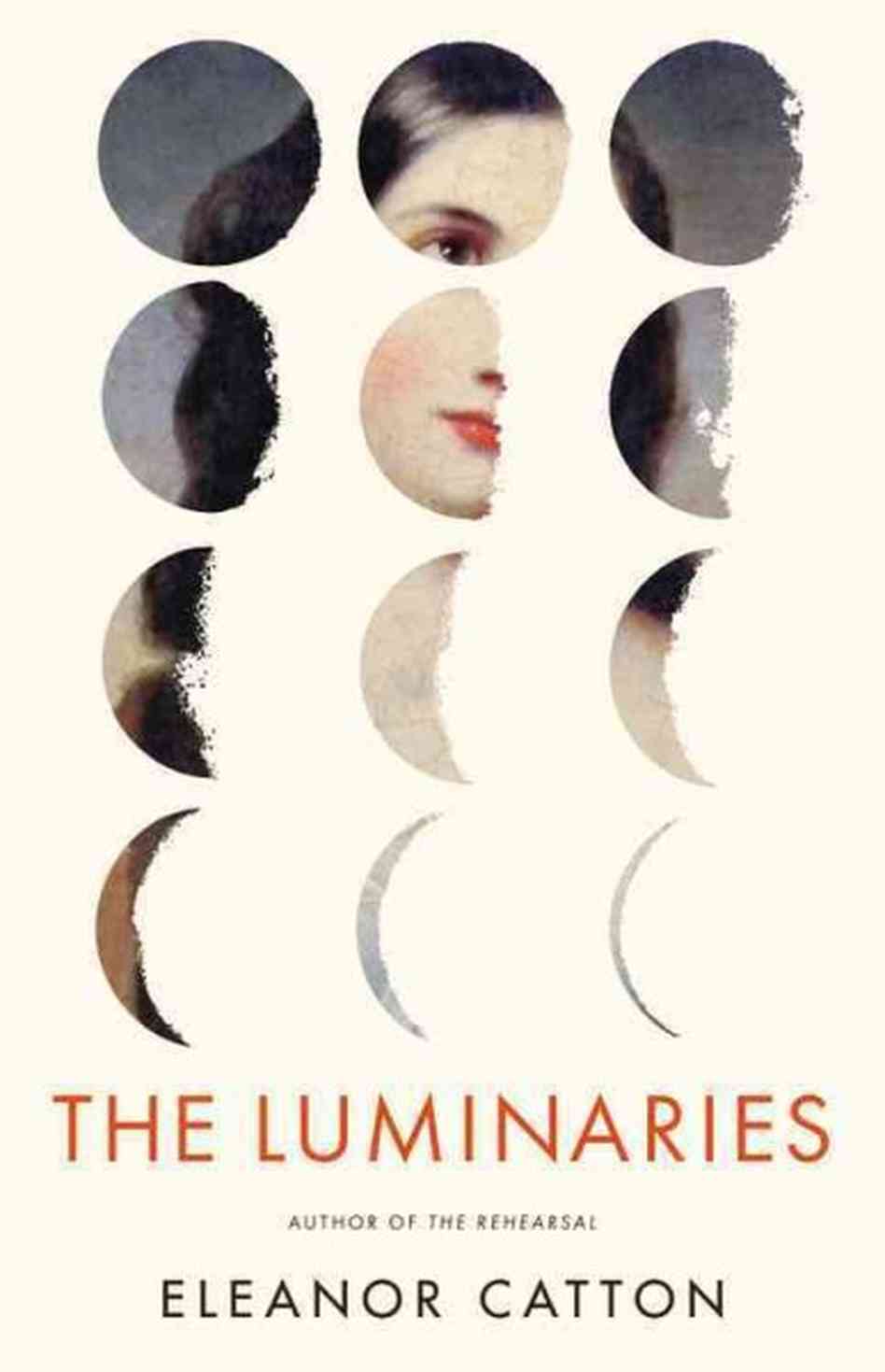
9780316074315_custom-ab2793381053c909c69a0e7d56cac302350a9795-s6-c30To begin Eleanor Catton’s elegant, 832-page novel, recipient of both the 2013 Man Booker Prize and the Governor General’s Award for Fiction, is a daunting task. The Luminaries contains 20 important characters (helpfully charted in the opening pages), follows an astrological structure and is, as mentioned above, an intimidating 832 pages long. To settle into the opening chapter (“In which a stranger arrives in Hokitika; a secret council is disturbed; Walter Moody conceals his most recent memory; and Thomas Balfour begins to tell a story.“) is not a matter of allowing yourself to be swept away (because how can you be with a book this physically heavy?), but of making a conscious decision to begin a long journey in the rain.

This, I think, is Catton’s intention. Her opening scene, set in 1866 Hokitika, New Zealand, finds young Walter Moody rattled from his overseas journey, bogged down by fatigue and rain. Upon entering the smoking room of the Crown Hotel, he comes upon twelve men silently occupying themselves in the kind of “studied isolation” that betrays the secret council in which they were deeply engaged just moments earlier. Both Moody and the reader must decide if the glimmers of intrigue that Catton has left visible are worth the trek into the murky unknown.

The answer for this reader is yes. Though never an easy read, the weight of The Luminaries is one which begins to gain momentum the moment we know something another character does not (which happens repeatedly throughout). Catton is a master of both concealment and revelation, parceling out each in just the right amounts so that our confusion never quite overtakes our dawning understanding, and vice versa. Her style is one which assumes and speaks to the reader, and ultimately rewards them in the incredibly satisfying final chapters.

Despite the mathematical and thematic sophistication of the book’s structure and Catton’s gorgeous, though occasionally high-falutin’, prose (the men in the Crown Hotel “might have been twelve strangers on a railway car, each bound for a separate quarter of a city that possessed fog and tides enough to divide them” their “bodily silence…deadened here not by the slur and clunk of the coaches, but by the fat clatter of the rain”), The Luminaries is, at its heart, a mystery story. Like any good mystery, the beauty of the language and the elegance of the chapter headings and divisions are secondary to the characters’ (and the reader’s) quest to seek out what is hidden and to unravel what seems at first to be hopelessly twisted. The prose and the structure, significant as they are, are the vehicles in which we travel–the mystery is the terrain.

Luckily, The Luminaries‘ mysterious landscape is one the author has mapped well and one she is adept at revealing. Unlike the patronizing explanations of Sherlock Holmes, Catton’s facilitation of our understanding is as emotional as it is rational, as lyrical as it is illuminating, and as wistful as it is fulfilling.

Having quite enjoyed The Luminaries, the only reason I wish the book were not so long is so that I would be more likely to undertake the repeated readings that would allow me to tease out Catton’s carefully crafted design a little more and derive even more pleasure from her skill. Even returning to the book casually (i.e. for leafing through) for the purposes of this review revealed details I hadn’t noticed before: delicious section names like “Tar”, “Tin”, and “The Widow and the Weeds”, and the way that the title of Part I, “A Sphere with a Sphere”, comes full circle (and becomes more poetic) for the book’s final section title, Part XII, “The Old Moon in the Young Moon’s Arms”.

There is so much to notice in this novel and so much to take pleasure in that I hope The Luminaries’ size will not dissuade you. Eleanor Catton clearly laboured long and now has a triumph to show for it.

When Airlines Have a Heart

Just a short post from me this time as the family medical situation that brought me to Toronto last week became, as of Sunday night, a situation which now requires my staying in Ontario to attend my grandfather’s funeral.

There’s not much I can or want to publicly say about this situation, but I did want to say an internet thank you to Air Canada, for being surprisingly human for a large (and oft-maligned) airline.

After spending a week with my family, I was scheduled to fly home on Tuesday on my mom’s Aeroplan points. On Monday morning I found out that my grandfather had passed away during the night and, obviously, if I wanted to attend the funeral (which I did), I would not be able to fly on Tuesday as planned.

With less than 24 hours to go before I was meant to be boarding a plane, Aeroplan cancelled my flight and reimbursed my mom’s Aeroplan points. We were advised to call Air Canada when rebooking my flight home to talk about a possible compassionate discount–as it turns out, if you are suddenly changing or making travel plans so that you can attend the funeral of an immediate family member, Air Canada may be able to offer you a bereavement fare (obviously, when I called I was asked to provide specific details about the funeral so that Air Canada could verify the legitimacy of my request).

The hardest part about the process was actually just waiting on hold with Air Canada to talk to someone (30 minutes!) but once I was put through to an agent I found her to be very helpful. I had already picked the flight I was hoping to be on so once she confirmed that she could get me a bereavement fare on that flight the rest was pretty fast. She didn’t offer any platitudes, which is not what I wanted anyways, but she was courteous and efficient, and double-checked the details at each step before she made any promises. When I hung up the phone I was booked on a flight home for a price that was $100 less than the fare posted online.

$100 may not seem like a huge amount, however, unexpected events often come with unexpected expenses. For an airline not to take as much advantage of a situation as they could (since people travelling for funerals usually don’t have the flexibility that would allow them to arrange their schedules to facilitate cheaper flying), and to actually offer a fare to make things a little easier on their customers’ wallets, feels like an incredibly human thing to do. Air Canada is probably not the only airline to offer compassionate rates, but they really helped me out this time and I certainly appreciate it.

AirCanadaSled

(Yes, it’s a Christmas picture but it’s the only one I have that says “Air Canada” and also “giving”.)