The other night I visited an old friend I hadn’t seen in a little while (no particular reason for this gap in our social calls, just busy summers for the both of us), and after doing that thing where you say “Whelp, time to go” but then you stand and talk in the porch for fifteen more minutes, I stepped out of her house into a warm August evening. I reached the main drag just as my 7 Nanaimo Station bus zipped past the stop on the other side of the street, but the weather was fine and I realized that all was not lost: sure, I could wait half an hour for the bus to come again, or I could take the other bus, the 7 Dunbar, and reach home via a circuitous route that would take me through my old neighbourhood.
I chose the latter, and as I watched the familiar landmarks glide past my window, my little bus trip became a journey (internally at least), and that journey became a story, and that story became about Vancouver, and when I got home I wrote some of it down, and as I did that I discovered the story was more important to me than I had expected, and then it became apparent that I could not write this particular story about Vancouver this week. Probably not next week either. Because I realized that the story I want to write about Vancouver is one that deserves more attention than my mind can give it right now. It deserves more crafting and more subtlety than what I can do in the week between blog posts. At the moment, it exists in my mind purely as potential, with images and lovely turns of phrase gravitating towards it. Careless handling will collapse the whole enterprise, and I don’t want to do that with this one.
So this is not that story. This is a story about the story. Pointless? you ask. No, I answer, because although this is not the story, this is also a story that is important to me. A story about the way that inspiration sometimes finds you. A story about how we leave our mark in every place we go, and how those pieces of ourselves that we sloughed off (thinking we’d grown, thinking we were “past that”) still loiter in the streets of our old haunts, waiting for a circumstance of municipal transit to carry us back.
It’s a story about realizing the value of something, even if it’s just personal value, and being aware enough to understand that it deserves more than the usual effort, that it requires being patient. It’s a story about how, in a culture in which so much is shared (especially by personal bloggers such as myself), sometimes it is important to keep some things close, if even for a little while, and consider them carefully before shoving them into the world.
It’s a story about how exciting it can feel to have a story you’re itching to write, and how precious and perfect that electric moment before creation can be.
I was pleased today to read that Star Trek actor George Takei has endorsed a petition to relocate the 2014 Winter Games to Vancouver, while lauded British actor Stephen Fry has written a heartfelt open letter to British Prime Minister David Cameron and the International Olympic Committee, urging them to boycott/ban the 2014 Winter Olympics in Sochi. I know there are much more intelligent, much more celebrated, and much more influential voices than mine already speaking out about this, but I feel an obligation, as a human being with the political and financial freedom to express herself, to use the small platform this blog has given me to add my voice now and say, unequivocally, that Canada must not participate in the 2014 Sochi Olympics as long as Russia’s horrific violations against its LGBT citizens (and LGBT tourists, or anyone who supports equal rights for non-heterosexual people) continue in law and in practice.
As Fry so eloquently pointed out, the IOC had a choice in 1936–and they chose to move ahead with the Berlin Olympics, even as Adolf Hitler stripped Jewish citizens of their rights, refused to protect them from violence and humiliation, and declared Jewish people to be a threat to decency and to the country. When the world turned up to compete in 1936, it was, in effect, saying that it did not care what Germany did to its Jews. By allowing Adolf Hitler and his government the honour of hosting the Olympic Games (and it should be an honour), the world was giving Nazi Germany its tacit approval to do whatever it liked to its Jewish citizens–after all, the Games are “about sports”, not politics, right?
Wrong. Before the IOC grants a city (and a country) the privilege of hosting the Olympic Games, the bidding process is a highly political one (involving campaigning, lobbyists, etc.), and the advantages won by the host country (prestige, global publicity, tourism, economic stimulus associated with venue construction) are political advantages, benefiting whichever world leader is lucky enough to preside over them. It is unconscionable for a body like the IOC, whose charter states that “Any form of discrimination with regard to a country or a person on grounds of race, religion, politics, gender, or otherwise is incompatible with belonging to the Olympic Movement”, to grant these political advantages to Vladimir Putin and his United Russia party.
And it is unconscionable for Canada to participate in an Olympic Games that grants these political advantages to Vladimir Putin and his United Russia party. Putin already has enough help from corruption, intimidation and political chicanery–he doesn’t need our endorsement. As Canadian athletes act as representatives for our country when they compete, I am making this plea to them:
Canadian Olympians–please, PLEASE do not represent me in Sochi. Do not let it be our hand patting Putin on the back.
When gay Russians can be brutally assaulted and tortured on video, with no steps taken by authorities to bring the attackers to justice, there is something wrong. When that videotape can be shared on the internet, and it is the victim that must fear for their job (because they’ve now been outed as gay), there is something wrong. How much more obvious does this need to be? When comparisons between Putin’s Russia and Hitler’s Germany are not hyperbole but are, in fact, completely apt, this is a big red flag telling you that something is wrong.
I can no longer ignore the brutality already occurring and say that things aren’t really that bad. I can no longer believe that participating in the Sochi Olympics (even by watching them on TV) wouldn’t be the equivalent of lending my support to the 1936 Berlin Games. I cannot excuse this by saying “Well, we went to China and weren’t they just as bad?” (two, or rather three, human rights wrongs don’t make a right). I cannot pretend that “sport” occurs in some airy-fairy magical world that exists outside of politics and apart from the suffering these politics are inflicting on innocent people.
So here’s my voice–if we value human rights, not just human dignity but the right of a human being to simply exist in their country without fear they will be beaten to death while their government does nothing to protect them, we must boycott the Sochi Olympics. If the world made the wrong choice in Berlin in 1936, we have the chance to try to atone for it now. Unlike our predecessors, we no longer have the excuse of not knowing what horrors are possible when a minority group is stripped of their rights and made a scapegoat for their country’s ills. We all studied this infamous period of European history in school. We know what will happen if we are complicit, if we give these atrocities our seal of approval. History has taught us that “appeasement” of hate-mongering power-crazed dictators doesn’t work–we will not stave off political conflict, we will only appear to lack conviction.
If Canada is truly the great nation we say it is, we must stand behind our convictions. We must stand behind our principles of equality and safety for all, regardless of sexual orientation. We must hold the International Olympic Committee to the principles set out in its charter, and in keeping with that we must boycott the 2014 Olympic Games in Sochi Russia. I honestly can’t see any other way.
I realized this week that come September, I will have been involved in higher education for nine years. As in, I have been going to a university nearly every weekday for nine years, sometimes to study, sometimes to work. Nine years of higher education is enough to put most people well into a PhD, but all I have to show for it is one BFA degree (achieved four years ago), a whole lot of books, and an amazingly generous student bus pass. My job is pretty good, as desk jobs go, but the job I have has nothing to do with the bachelors degree I completed in 2009, or the one I’m haphazardly declared in now.
And you know what? I’m okay with that. I have long known what many unfortunate undergrads and their parents are still not not grasping: a university education ≠ a job. And we need to be okay with this.
Over the course of my nine years immersed in post-secondary education, I have encountered many angry students and parents who feel cheated because their (or their child’s) university degree is not yielding the immediate economic benefits they had hoped for (I’m not sure why everyone is so surprised; a university, after all, is not a vocational college). Despite this, many students and parents erroneously believe future success and happiness depends solely on university performance, placing absurd amounts of pressure on themselves and/or their children for high grades, a pressure that borders on hysteria even at the high school level (i.e. “You have to get an A in English 12 because if you don’t get an A you won’t get into a good university and if you don’t get into a good university you won’t get a good job and if you don’t get a good job you’ll end up homeless and a prostitute and addicted to crack cocaine!”, etc.) To cite a personal example of this kind of pressure in action, in first year, a student I lived with in residence who flunked out of his second semester had to be put on suicide watch because he was so afraid of his parents’ disappointment and anger–it’s obvious to me this young man wasn’t ready for university and was only there to please his parents, so why had he been pushed into it in the first place?
The harmful effects of this misguided emphasis on university performance include, but are not limited to: an explosion in incidences of student cheating and plagiarism (they’d rather cheat to get the grade than learn anything from the course they’re paying for), students pursuing degrees they hate because their parents insist (usually incorrectly) that this particular degree will lead to job success, parents of high school children paying independent “credit mills” to boost grades in core subjects and improve university applications (which of course leads to incredible anxiety down the road when the student can’t be successful in university courses because they weren’t academically prepared for them in the first place), students “negotiating” their grades with their professors (as in “I know I don’t understand any of the required concepts but I worked really hard!“), and countless lecture halls and tutorial rooms stuffed with students who aren’t interested and couldn’t care less and whose contribution to the learning environment is the bare minimum required to obtain their “participation grade”. I keep encountering university students who are miserable being here, and their shitty attitude is making learning miserable for poor souls like me who actually consider three-hour seminars with an expert in their field a privilege.
When I went back to school a few summers ago to study writing and English literature, it was with the understanding that I would be older (and dare I say more mature?) than many of my classmates, and I expected to encounter the issues listed above at the 100 and 200-level. When you’re in your first couple of years of university, you’re still feeling your way through academia, taking your breadth requirements, figuring out what your strengths and interests are, etc., so I can’t hold it against you if you’re not on your A-game in Introduction to Early Modern Literature. What I had not expected was to be participating in seminars or online discussions for upper division courses where nearly a third of the students were admitting they hadn’t actually read the book we were studying (with one student bragging he hadn’t read a single book we’d been assigned all term), or reading online discussion posts for a 400-level course written at a high school level of literacy and comprehension and an even lower level of interest.
You know what? If you’re going to be routinely hungover or stoned in lecture, and you aren’t going to do the readings, and you aren’t going to attempt to think and communicate at a university level, and you aren’t interested in the material, and you don’t like scholarship, and you consider every class you take to be just another hoop you have to jump through on your way to a job that doesn’t suck, you shouldn’t be in university.
Let’s be honest: university is not for everyone. This isn’t an elitist statement–this has nothing to do with intellect or class. This is simply an acknowledgement that not everyone has the temperament or the drive or the interest to make good use of a university education. So there’s no need for people to be pushed or pressured into getting one, okay?
I have very intelligent peers who did not go to university–some of them took apprenticeships or completed vocational training, and some went right into the workplace. Virtually all of them now have jobs that allow them to live enjoyable lives. Unburdened by the bitterness and gargantuan student debt that usually follow the completion of a “useless” university degree, these peers of mine have been free to move ahead with their lives: advancing their careers, buying their first homes, and starting families. I also have very intelligent peers who went back to complete vocational training after completing a university degree. They are less debt-free and less far ahead, but hey, at least one of their qualifications got them a job. :S
This is not to say that people shouldn’t give university a try. My (nearly nine) years in university education broadened my horizons, honed my writing and critical thinking skills, and fostered rewarding friendships. Universities are places of ideas and possibilities (though nothing kills this potential faster than an emphasis on results), and some people love academia so much they stick around for masters and doctoral degrees (though some people stick around because they, again mistakenly, think it will get them a job…sigh). If you aren’t sure what you want to do with yourself in life I absolutely recommend signing up for a variety of university courses and seeing if something sticks. Just don’t expect what you learn in university to be a direct link to the job market, and be prepared to have lost out on some money if you don’t like it.
There are a few careers for which it is absolutely vital to have a university degree (teaching, law, scientific research, and medicine for example), but for the rest of us, university studies are just that–study. Study for the sake of learning. Scholarship is a wonderful thing and I feel I’ve benefited immensely from it, but spending that kind of money and time just to rub shoulders with great thinkers and new ideas isn’t everybody’s cup of tea. And that’s just fine.
So if you hate what you’re studying–switch majors or take a break to figure out what you really want. If your kid doesn’t appear to be university-bound, let them be (if they really want a university education they can always go back to school when they’re ready). Stop cheating and half-assing your way through your courses (ever wonder if you’re the reason bachelors degrees don’t mean anything nowadays?) and free up your seat for someone who really wants to learn. There’s a whole wide world just waiting for you to encounter it, and university is only a part of it. Before you sign up for a university education, make sure it’s a part you’re actually interested in.
Wreck Beach is, according to official signage, a “clothing optional” beach. What “clothing optional” really means, however, is a subject for heated debate amongst frequenters of the beach, however they choose to clothe themselves.
Semantically, “clothing optional” means that while clothes are an option on the beach, they are not mandatory. Though many people use the phrase “clothing optional beach” synonymously with “nude beach”, the two are not the same thing. Therein lies the problem.
While most people who frequent Wreck Beach embrace the tacit nudity of the locale, an increasing number of visitors (called “textiles” by the regulars) are emphatically putting the “clothing” back in clothing optional. In a perfect world, this wouldn’t matter at all, with nudes and textiles coexisting side by side in perfect harmony. Unfortunately, it does matter, and it’s harshing my mellow.
As the debate rages both on the Wreck Beach Facebook forum and on the beach itself, there are a few factors to keep in mind that make coming to any kind of conclusion rather difficult:
Wreck Beach is the only beach of its kind in Vancouver. Those who wish to clothe themselves while at the beach can do so at any number of beautiful lower mainland beaches. Those who embrace the nudist/naturist lifestyle have only Wreck Beach, and they are beginning to feel crowded out.
That said, Wreck Beach is a public beach. At most public beaches in the city, at least a swim suit is required. For city council and the Parks Board, allowing nude bathing at Wreck is likely considered to be a concession to its vocal supporters (specifically the Wreck Beach Preservation Society). I have a feeling councillors and board members would balk at the idea of making nudity mandatory on public property–the designation “clothing optional” is a means of meeting nude beach supporters half way.
Not everyone is comfortable being naked at the beach, and being forced to strip down on their first visit may ensure they never will be. I know it took me some time before I was used to the “naturist” atmosphere at Wreck, and I imagine for those with more modesty, more time would be needed. It’s important to keep in mind that there are many people who are not even comfortable being seen in a bathing suit, let alone naked, who may be drawn to Wreck because of its attitude of body acceptance. These people are the most likely to benefit from Wreck Beach, and the most likely to need some time and some understanding from others before they are ready to strip down.
That said, not everyone who is naked at the beach is comfortable being seen by clothed people. I would feel pretty silly being naked in public if I were the only one. I do not feel uncomfortable at Wreck Beach because I am NOT the only one. The fact that everyone is naked means that nobody cares–there’s nothing special to see so nothing is sexualized. When you are naked yourself, you behave towards other naked people the way you want them to behave towards you–like a normal person, not a gawking creep. Unfortunately, adding textiles to the mix throws this social contract off-kilter. Because they are not revealing their own bodies, clothed bathers on Wreck Beach are in a position to objectify the bodies of the naked people around them. Most worryingly, many of these clothed beach users have begun pulling boats up to shore (which is illegal given the buoys clearly marking the swimming area), clothed jet-skiers have been trying to pick up topless (female) swimmers in the water, and some textiles have even been taking photographs of nude bathers without their permission. The best way for a textile not to get lumped in with this pervy faction in their ranks is to strip down and embrace the “natural” dress code.
In a lot of ways, arguing about something as superficial as clothing is silly. The concerns of the nude beachers could easily be dismissed in this way, however, I think there is a deeper cultural issue affecting the beach nowadays. The demographic of the beach is changing–during my first summer there, I luxuriated in the quiet of the beach; I could hear nothing but waves, eagles, and the occasional live group of (naked) musicians, playing fun and friendly summer tunes. There was no glass, no garbage, and hardly anyone was clothed. In the past couple of years, new groups of clothed bathers have frequented the beach, and have brought with them boats and engine noise, loud crappy pop music blasting from iPod docks, and glass (super dangerous on a beach my friends!). I am all for new groups of people learning to enjoy the beach, in fact I encourage it, but it is important to me that they learn to appreciate its atmosphere. Wreck Beach is a beach unlike any other, and I want to keep it that way. I think the more militant nude beachers do too, and for them, it’s easiest to identify those who don’t “get” the beach by their clothing. Thing is, if you’re on Wreck Beach, maybe you shouldn’t have any.
Warning: this is going to be a very selfish post, but I hope in the best possible way.
The clip above is from the 1999 film South Park: Bigger, Longer & Uncut. A character named Big Gay Al is emceeing a USO show before the United States goes to war with Canada over the foul language and toilet humour favoured by fictional Canadian stars “Terrance & Phillip”. Obviously, the entire film is pretty tongue in cheek (it’s actually one of my favourite “musical movies” because the music is AWESOME and hilarious), and this number is especially selfish, but I’ve found the lyrics running through my head these last few days.
I have been realizing that most people on the internet, myself included, need to chill the eff out right now. It’s not that bad things aren’t happening–they are–but not to most of us, and not things that can possibly be helped by having anyone mindlessly freak out about it on the internet. The sad fact of the matter is that madly retweeting, Facebooking, or posting rabid comments on news stories that piss you off generally does very little to help the situation. You may think that at the very least you are relieving your frustration, and showing your peers how much you care about Situation X (which I know feels good at the time), but the cumulative effect of all of this activity does little more than turn your social media activity into a major bummer.
Take a look at your Facebook timeline or your tweets. Taken all together, does your social media profile make you look like you’re angry all the damn time? Mine sure does. And that worries me. Because I’m not actually angry all the time, at least I don’t want to be, and these are not the vibes I want to be putting out into the world. It’s time for me to chill the eff out.
Obviously, there are times when linking and tweeting can be a useful political or social activity. Examples of this include:
Signing, then linking to, an online petition about something you care about. I know I have signed many an online petition, especially when they relate to Canadian or BC politics. Online petitions are a great way to show politicians and corporations what is important to you, and posting a link on Twitter or Facebook enables your friends to sign too. Petitions are especially useful when you are a resident of the province/country involved in the issue, or a target market for a particular company–sadly, I highly doubt the Florida justice system gives a good god damn about what someone in Vancouver thinks about their handling of the Trayvon Martin case, any more than the Texas legislature cares what a bunch of liberals up in Canada think about their anti-abortion laws. This is not to say you shouldn’t show your support, but unless you’re in the demographic that can vote for the particular politicians involved, or can buy the product you’re boycotting, those in power probably care very little.
Sharing breaking news, or news the mainstream media is not covering. Like many people, I was absolutely appalled by the lack of coverage of Texas senator Wendy Davis’ incredible (though ultimately unsuccessful) filibuster of anti-abortion legislation. Without social media, I never would have known what was happening.
Encouraging others to attend a protest/vigil/event and linking to event information.
Linking to donation or support information in the wake of a tragedy or natural disaster. It’s natural to want to help when something horrible happens, and we all appreciate being given a short cut to the donor page or to the information we need (for example, here’s a link to the donation page for the Canadian Red Cross Disaster Relief).
I’m sure you’d agree that the activities listed above are beneficial activities. Instead of being angry, concrete gestures like these allow me to be involved and promote further action and awareness. But not all politically-motivated social media activities are useful–most of them aren’t–and my constant and continuous participation in some of these activities does little more than keep me in a a perpetual state of anger, reactivity, and helplessness.
So I need to chill the eff out. And so do a lot of you. Lately, I’ve been doing the incredibly stupid thing of reading internet comments (mostly the ones which appear in my own online networks) and I gotta say, I’m seeing a lot of “issue creepage” going on. What I mean is that a lot of people, with issues and causes they care deeply about, are letting these issues creep in and colour every single thing they react to on the internet. A discussion on the Wreck Beach Facebook group about the age old question “to nude or not to nude” became somehow racially charged. A news story about young boys rescuing a missing girl was framed by the “reporter” in the terms of “isn’t it nice to see news stories like this for a change instead of ones about politicians rushing to defend abortion” (I’m paraphrasing). And whenever anything goes wrong in the U.S., whether unemployment is high, education is failing students, or a corporation stomps all over the little guy, hundreds (if not thousands) of commenters jump on the chance to sarcastically thank Obama (we do it too and it’s not very useful–I don’t like Stephen Harper one iota but it’s just not humanly possible for EVERYTHING to be his fault; he simply hasn’t been alive long enough to have created some of these systemic issues). While I recognize the inherent interconnectedness of our politics, economy, environment, and culture, indiscriminate issue creepage tends to muddy the waters and obscure the situation at hand. Not everyone who loves animals needs to be vegan. Not everyone who cares about the environment needs to be anti-capitalist (though there are a lot of convincing arguments to this effect). Not every issue is about EVERY issue, and sometimes your issue is not sensitive to the reality of what is happening.
As for the ongoing parade of bad news on my Twitter and Facebook newsfeeds (a good percentage of it put there by me)–does it really need to be posted, shared, and commented on every time? I’m beginning to think that maybe it doesn’t. I’m beginning to think that the constant anger and anxiety I am nurturing despite my many and various blessings is not a grateful or healthy way to live. I’m beginning to think that I need to give it a rest and chill the eff out.
Obviously, there are times when we need to fight the good fight, which is why I think we need to choose our battles and take a critical look at the various types of “action”, online and off, that we’re engaged in. General anger accomplishes nothing positive, though it does annoy people and may even scare people away who otherwise may have lent their support. It’s exhausting. When something comes along that I really need to act on, I don’t want to be too broken and bitter to deal with it. If I can’t find some balance I can’t be all that useful, and if I’m going to find balance I’m going to need to chill out once in a while.
Besides, and I know I’m being selfish here, but nothing really bad is happening to most of us (and by “us” I mean the people most likely to read this blog). As Big Gay Al says,
Bombs are flying, people are dying
Children are crying, politicians are lying too
Cancer is killing, Texaco’s spilling
The whole world’s gone to hell but how are you?
I’m…well, I’m actually super, if I think about it. I’m super. Thanks for asking. I hope you feel you’re super too.
Sorry Anne fans, but if Anne Shirley is the boisterous poster child for all that is sunny and sentimental about L. M. Montgomery’s Prince Edward Island, Emily Starr is the quiet and dignified young ambassador for its darker, lonelier, and sadder beauty. Both girls are orphans, both do, eventually, find their “rainbow gold” (critics often argue Anne achieves this only by lowering her expectations), but only one girl truly visits the “depths of despair” in her young womanhood, and for all her melodramatic theatrics, that girl is not Anne Shirley.
[Note – For the purposes of this post I am comparing the three Emily books (Emily of New Moon, Emily Climbs, and Emily’s Quest) with only the first three Anne novels (Anne of Green Gables, Anne of Avonlea, and Anne of the Island). There are two reasons for this. Firstly, I couldn’t bring myself to read past the third Anne book. Secondly, by cutting the Anne books off after the third, we are finishing with both heroines at a similar age and marital status, since their girlhood and young adulthood is what I’m interested in anyways.]
I suppose I can start with the obvious: the writing in the Emily trilogy is, quite simply, better. This isn’t Anne’s fault. After Anne of Green Gables was first published, L. M. Montgomery had 15 years to become a better writer before Emily of New Moon came into existence. One would assume that a writer would become better after 15 years, and Montgomery did–she managed to retain the charming characters and setting that made Anne of Green Gables so beloved, but with Emily the plot as a whole was stronger, the stakes higher, and the narrator’s sense of humour and pathos considerably sharper. Emily Starr inhabits her world, and is constrained by its constraints; she doesn’t simply overrule them the way Anne does.
Obviously, the perceived strengths of each character and their journey depend upon what you, the reader, feel is more important in a story. Despite its relative safety and domesticity, the story of Anne Shirley reads like a fairytale–somehow, despite an early childhood of abuse and neglect, a little girl is able to be infallibly romantic and optimistic, charm every single person she ever meets, win top honours in every academic trial she encounters, and eventually realizes that the man she spent years declining really is the man she wants after all (boring Gilbert from Avonlea was her dashing prince all along! Quelle surpise!). Interestingly enough, despite Emily Starr’s possession of her Grandmother Shipley’s “second sight” (used incredibly sparingly as a plot device), her life and world are simply more human–once an orphan, Emily is misunderstood and treated unfairly by the adults in her life, and teased and resented by her peers. The love she gains (and is able to give in return) is hard-won on both sides, the outcome of conflict and compromise and not simply “charm”. Essentially, if you want the endearing dew-bright fairytale, Anne Shirley is the heroine for you. But if you want a character that’s a little more human (whose failures and disappointments make her triumphs that much sweeter), Emily Starr will deliver.
Still not convinced? If you’re a dyed-in-the-wool devotee of “that Anne-girl” you probably never will be, but just for fun, consider the following:
Anne and Emily share a similar character flaw (pride), but Anne’s is literally only skin deep. If you’ve read Anne of Green Gables (or watched the CBC mini series) you will remember the time Anne broke a slate on Gilbert’s head (and refused to forgive him for years) because he called her “Carrots”, or the time she dyed her hair green, or her nose purple (later book). One could say Anne is beset by pride, which can make for an interesting character flaw, but in actuality she merely suffers from pride’s annoying little cousin–vanity. BORING. Emily, though not at all vain, is acutely proud–proud of her late father (who is despised by her new guardians in her extended family), proud of her extended family (despite their sometimes unjust treatment of her), proud of her friends (despite their occasionally spotty reputation), proud of her composure (even to her detriment), and proud of being a writer. These various kinds of pride clash with the desires of her community, her family, her peers, and her heart in ways that are important to Emily’s growth as a character, a woman, and a writer, but they are also integral to the plot. The consequences of Anne’s vanity are as superficial as the flaw itself–hair grows back, forgiveness is granted, love restored. The consequences of Emily’s pride are lasting, and she must learn to live with them.
Anne Shirley writes, but Emily Starr is a writer. Sure, Anne scribbles down a few hilariously flowery romances (remember “Averill’s Atonement”?), and eventually pops out a little book about Avonlea, but she is hardly ambitious and seems mostly to write for amusement. Conversely, the first book in the Emily trilogy ends with a realization of her commitment to her craft (described as a “jealous goddess”) despite the pains it will and does give her. As you watch Emily grow as a person you also watch her grow as an artist–the rejection letters sting, the first acceptance is a thrill, and nothing will ever fill the hole in her that writing occupies. Though obviously Emily the Writer is specifically relevant to me, I wouldn’t require Anne to share that goal if she at least wanted something. But she doesn’t really. I suppose I could rephrase my point in a more general way:
Emily has a goal, but Anne does not. It’s true. Anne enjoys scholarship and getting her BA (through hard study rather than intellectual maturation it seems), but has apparently little plans to do anything with it. How convenient for her that she happens to find herself in love with Gilbert Blythe around the same time she finds herself with nothing to do! And it’s not even the feminist in me that grates against this journey–if Anne had always wanted a simple married life then achieving the means to it would be a great end to the third book, but the thing is, she never did. The reader really wants Anne and Gilbert to end up together, but for the most part, Anne herself does not. Having the heroine achieve something she never really wanted because it turns out she has nothing better to do is not my idea of a great story. (For all you naysayers who point out that maybe Anne’s goal was to be loved and have a home, I would say that’s valid, but she achieves that goal in the first book, and the next two novels are just saintly sentimental Anne Shirley spinning her wheels and staving off Gilbert’s puppy-eyed advances.)
Anne’s love of Gilbert is simply tacked on to the end of the third novel, while Emily’s feelings for Teddy are a force that significantly shapes her journey. Regarding Anne’s engagement to Gilbert, see above. It’s all just comfort and friendishness, with not a single spark or thrill about it. Though critics often smear Teddy Kent as a “Gilbert Blythe” type, he is no such thing. Teddy Kent is a talented visual artist with emotions and ambitions of his own. His life does not belong to Emily, and he does more with it than dote on her (his creepy mother, the “morbidly jealous” Mrs. Kent, also serves to make Teddy a more risky and thrilling proposition than safe dopey Gilbert Blythe). Apart from Teddy’s superior qualities, his relationship with Emily seems to grow organically and artfully throughout the trilogy, encountering disappointments and misunderstandings along the way. Unlike Anne and Gilbert, Emily and Teddy are NOT a foregone conclusion and the tension this creates is AWESOME. Of Miss Lavender and Mr. Irving (finally wed after a long separation in Anne of Avonlea), Gilbert once says to Anne, “wouldn’t it have been more beautiful still, Anne, if there had been NO separation or misunderstanding . . . if they had come hand in hand all the way through life, with no memories behind them but those which belonged to each other?” No, Gilbert, no it would not, at least not in a book. BORING.
Bad things happen to Emily. Nothing really bad of course, or it wouldn’t be an L. M. Montgomery novel, but actual bad things do happen to Emily and she is forced to bear the weight of them. It’s suggested in Anne of Green Gables that Anne’s life before Avonlea is a very unhappy one, but it seems to affect her not at all. She’s sad of course when Matthew dies and Marilla’s eyes fail and when she declines Gilbert for the first time, but it falls from her like water from a duck’s back, and through unrealistically fortunate circumstances (including the death of minor characters we’re not attached to), Anne is able to have everything she wants anyways. Not so with Emily. When it comes to Emily Starr, Montgomery has allowed her heroine to be hurt and afraid in ways Anne never was (see Emily Climbs for a truly macabre episode in which 13-year-old Emily is locked in an empty church with Mad Mr. Morrison, who believes she is his dead wife). When Emily breaks an engagement, she loses a cherished friend forever. When her teacher dies, she loses her best mentor and critic. After high school she remains on New Moon farm while her best friends pursue their careers in the wider world, growing professionally and growing apart from her. And even in the glow of the triumph of her first published novel, she still feels the sting of the loss of her forever unborn actual first book. Montgomery has given Emily permission to be depressed when life hurts, a permission she never granted Anne. Case in point:
The broken ankle. When Anne breaks her ankle falling off a ridgepole in Anne of Green Gables, her seven weeks on the sofa are described as merely “tedious”. “It isn’t very pleasant to be laid up;” says Anne, “but there is a bright side to it, Marilla. You find out how many friends you have. Why, even Superintendent Bell came to see me, and he’s really a very fine man.” Then she prattles away for a couple pages about “kindred spirits”. Sigh. Anne Shirley, sometimes I want to slap you right in your silly face. When Emily trips over a sewing basket and falls down the stairs, piercing her foot on the sewing scissors and nearly succumbing to a dangerous infection, her convalescence as depicted in Emily’s Quest is not quite so cheery:
…in the long nights when everything was blotted out by pain she could not face it. Even when there was no pain her nights were often sleepless and very terrible when the wind wailed drearily about the old New Moon eaves or chased flying phantoms of snow over the hills. When she slept she dreamed, and in her dreams she was for ever climbing stairs and could never get to the top of them, lured upward by an odd little whistle[…]that ever retreated as she climbed. It was better to lie awake than have that terrible, recurrent dream. Oh, those bitter nights!
Emily’s world is clearly darker than Anne’s, and for those who don’t like the darkness, I can see why spunky Anne would be a better literary companion. But doesn’t a little darkness make for a better story? Doesn’t a little pain make a character more human? Don’t ambitious goals and formidable obstacles make the reading experience more worthwhile (especially when, true to L. M. Montgomery fashion, everything works out fine in the end)?
I think so. Though Anne Shirley will always have a nostalgic little place in my heart, it is to the world of Emily Starr that I return again and again for comfort and inspiration.
A cursory glance at my blog posts over the last few months may lead one to believe that I don’t like Canada anymore. Maybe it was this post, or maybe it was that one. The truth is, I’ve been so busy being angry at the federal government for their various scandals, shortcomings, and transgressions that I kind of forgot the reason that I care so much about what happens to this country in the first place.
The reason is because Canada is awesome. I know there are problems, and I know there is so much work to be done to build a country that is fair, safe, productive, environmentally sound, and culturally rich. With the multiple shortcomings of federal, provincial, municipal, and corporate leadership in this country, it’s sometimes hard for me to look past the bullshit and be optimistic about the land I call home. Basically, I couldn’t see the forest for the few a-holes who’d dumped their stinky garbage bags in it. That doesn’t mean the forest isn’t lovely.
Case in point: my Canada Day long weekend. TC and I spent two days on Salt Spring Island with good family and good friends. We walked along the rocky seashore. We saw eagles and blood orange sunsets. I met Raffi in the Saturday market, and he gave me a sticker (for those of you not familiar with the musician who brought us “Baby Beluga”, he was pretty much a rock star to me when I was six). We went kayaking and sat in deck chairs drinking summer-y beer. In line for the ferry home, a stranger overhead us whining about the arduous transit journey from the Tsawassen terminal into Vancouver, and offered us a ride (which we accepted–thank you Derek!). Back in Vancouver, I tried pho for the first time and read Can Lit on Wreck Beach. In the evening, we sat in a beautiful park and watched the light fade behind the mountains until the Canada Day fireworks started. Drunk people serenaded us with their renditions of our national anthem, and I couldn’t have been more proud.
I know my posts about Canadian issues can be a bit depressing, a bit pessimistic even. But I am happy that I live in Canada and am a Canadian. I am happy that I can travel the country freely and safely. I am happy that my fellow citizens still do favours for total strangers. I am happy that our famous folk aren’t too big-headed to give their fans stickers (thanks Raffi!). I am happy that I am totally free to bitch about my government all day long, whenever I want, without having to worry for my job or security. I am happy to have had access to education and healthcare. I couldn’t be more happy to be surrounded by gob-smacking natural beauty almost everywhere I go.
I suppose what I am trying to say with my quick and dirty belated Canada Day post is that despite my whinging, despite my worries, despite my indignation at this, that, and the other, I am happy to be making a life in Canada with my TC. This place is a good place. And I’ve got my fingers crossed for a beautiful summer.
Last Thursday my fiction professor David Chariandy decided to take us on an impromptu field trip to the Rhizome Cafe to hear Vancouver-to-Halifax transplant Rachel Lebowitz read from Cottonopolis, her new book of prose and poetry, with a special a guest reading by Vancouver writer Wayde Compton (we missed the first part of his reading but his work was pretty intriguing).
I must confess that I generally don’t like readings, or at least, don’t like the idea of readings. I worry that if I don’t like the work I’ll be depressed and wonder how on earth this person managed to be published, or if I love the work, I’ll be depressed and wonder how on earth I will ever have anything of worth to contribute. Lebowitz and Compton put my feelings in the latter camp of course; however, the evening as a whole was surprisingly encouraging and I think it has to do with actually meeting published writers, instead of just being scared (or jealous) of them.
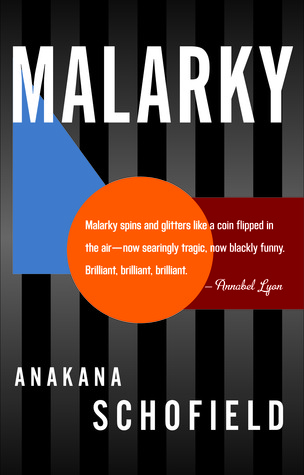
Prof. Chariandy (whose 2007 debut novel Soucouyant was shortlisted for the Governor General’s Award) is never one to miss a learning opportunity and shortly after the reading he was able to commandeer the time and attention of not only Rachel Lebowitz but Ireland-to-Vancouver transplant and author Anakana Schofield as well (Schofield was recently the recipient of the Amazon.ca First Novel award for her book Malarky). Both Lebowitz and Schofield seem to take time very seriously in their respective processes, i.e. both writers worked for years on their respective books. Upon learning that we were an undergraduate writing class, Schofield joked that she and Lebowitz would give us their top ten tips for taking ten years to publish one book, but between the two of them they actually came up with a great list.
So here, in no specific order and paraphrased/remembered only to the best of my abilities, I give you Rachel Lebowitz and Anakana Schofield’s “Top Ten Tips for Taking Ten Years to Publish One Book”:
Read, and read widely. If YOU aren’t reading, how can you expect your work to be read by others?
Don’t publish work that isn’t good, even if it’s “publishable”.
Take time to NOT write. There’s no reason for the constant pressure for writerly output if you’re just spinning your wheels–time spent on your family, your interests, yourself will find its way into your work. To be a good writer you have to actually LIVE life.
Choose your “influences” carefully. Your influences should be artists (from various disciplines) that you believe to be the best of the best. Your influences should inspire you to be better. Your influences should be truly excellent at their craft, rather than writers that write at the level you’re already operating at (i.e. your influences should not be your peers, necessarily, unless your peers are jaw-droppingly good).
Don’t condescend to your reader. Writing to the lowest common denominator because you think it will increase your chances of being published does not a good writer make (see point about not publishing work that isn’t good). Assume a readership that is as intelligent as the work you are trying to create.
If you find yourself consistently writing around the same locale or idea, that’s fine, so long as you continue to challenge yourself in your writing. As long as you need to write about a certain thing, write about it. Once it’s out of your system, you can write about the next thing that haunts you. To put it another way, there’s no need to write about something outside your scope of knowledge, interest, and experience just for the sake of it. The fact that a subject is “new” for you doesn’t necessarily make it more worthy, unless you have genuine passion and interest around it.
Find those first six tips helpful but need more advice on how to stretch out the writing process to ten full years? Schofield rounded out our top ten with some time-spending techniques:
Lose parts of your manuscript all over your apartment.
Get a guinea pig.
Don’t kill your teenager (presumably keeping both guinea pigs and teenagers alive is more effortful and time consuming than killing them off).
Stay off the cheese (I’m not sure if this one is meant to speed you up or slow you down actually. Either/or I guess, depending on how much you like cheese).
Of course my list is no replacement for meeting these warm and talented writers in the flesh but I found their conversation with us so darn nice and useful that I just had to record it for posterity. I apologize profusely if I’ve misrepresented either Lebowitz or Schofield–I did my best to get the gist of a pretty fast-paced conversation, but obviously some things were lost in translation.
I was able to purchase Cottonopolis from Rachel Lebowitz that night (and get it signed too, woot!) and will hopefully be able to get my hands on a copy of Malarky soon. I’m certainly intrigued and appreciative and looking forward to some good reading.
[For more about Rachel Lebowitz’s process, you may want to check out Lebowitz’s 2010 interview with Desk Space. For more of Anakana Schofield’s informative and hilarious musings, visit her website at anakanaschofield.com. Particularly the “About” page and her blog.]
I don’t mean to alarm you. But I do mean to tell you as gently as possible that the dystopia of the sci-fi future exists, right here and right now. Maybe you didn’t realize it because it’s not what we pictured; the world isn’t a post-nuclear wasteland (yet), an android didn’t steal my desk job (yet), and I haven’t had a computer chip permanently implanted in my brain (though I concede that my iPhone is a close second). Maybe our current dystopia slipped under the radar because sadly, it’s nothing we haven’t seen before.
For some reason when most of us think of dystopian worlds we think of another planet, another place, another time in the future where basic human actions, thoughts, and feelings are mechanized, profitized, monitored, and controlled by some kind of central and far-reaching system or dictator whose only real goal is power for power’s sake. They usually go by a creepy ambiguous name like Big Brother, “Father”, the Norsefire Party, the Alliance, the Harper Government, etc. (obviously that last one is me being cheeky).
What a lot of us tend to forget is that the the creators of well-known dystopian visions weren’t just pulling these terrifying ideas out of thin air. The writing was on the wall then (just look at the dystopian surveillance, censorship, and human rights atrocities taking place under Hitler and Stalin in the same decade that George Orwell published Nineteen Eighty-Four) and the writing is on the wall now.
Don’t believe me? Read the news. I’ve compiled just a few contemporary examples of common “dystopian” tropes so you can see what I mean:
Surveillance (i.e. “Big Brother is watching”, as seen in Nineteen Eighty Four) – Remember CCTV in Britain? Remember the 2006 statistic that there is one camera in Britain for every 14 citizens? Remember how creepy that sounded, that citizens were (and still are) being watched at every moment, ostensibly for their own safety? Or how about PRISM, in the United States? Or the (thankfully) scrapped Bill C-30 in Canada?
Systematic execution of citizens by the government – How about US drone strikes, which have killed foreign terrorist suspects overseas, plus four US citizens, all without trial? Mechanized, systematic, faceless and indifferent, yep, sounds dystopian to me.
Division of citizens into “Us” and “Them” – The last time I checked, I wasn’t a “radical” person, but according to my government, since I oppose the proposed Northern Gateway pipeline, have signed petitions saying so, and have donated to organizations like the David Suzuki Foundation, I may just be a “radical” trying to “hijack our regulatory system”. Obviously you can’t take my radical word for it. But then again, maybe you can’t be trusted either. According to Safety Minister Vic Toews, if you were concerned last spring about the idea of your internet provider handing information to police without a warrant, remember, “you can either stand with us or with the child pornographers” (emphasis added). Bill C-30 was killed but the divisive attitude remains alive and well.
Moral purity as dictated by law – Thankfully, Canadian human rights policy in the last few decades has tended towards righting wrongs and extending full rights of inclusion and citizenship to people and groups previously denied them. But all over the world people are being fined, imprisoned, tortured, or killed for such “crimes” as being gay, committing blasphemy, having sex out of wedlock (including being raped), etc. Want examples? Unfortunately, there are lots. You can’t have a social media account without tripping over them.
I suppose my point is that “dystopia” is not necessarily a fictional convention. Given the amount of money and power that governments and corporations have and how easy it is to stamp out or misdirect dissent and political awareness, rest assured that if some movie or book or graphic novel has imagined it, it is possible. Maybe not as dramatic as it is in the cinema, maybe not so obvious (at least not at first). But if we aren’t living in a dystopian society yet we’ve definitely got all the ingredients cooking for a dystopian future (likely spurred by environmental catastrophe). Pretty bleak, huh?
I truly didn’t mean to alarm you, I just wanted to write about dystopia. But isn’t it nice to know where you stand?
[On the bright side, if dystopian pop culture is to be believed, there will almost always be people to fight the good fight. They just might not have a space ship or amazing martial arts skills. And that’s okay.]
People with whom I’ve discussed certain works of English literature have probably heard me say that “I’m just not all that into ‘angry young man’ fiction.” I will often follow up by complaining that there seems to be no similarly canonized literature about angry young women.
While my latter point is true, and remains problematic to me, I realize that labelling F. Scott Fitzgerald’s The Great Gatsby or J.D. Salinger’s The Catcher in the Rye “angry young man” fiction is a bit of a misnomer. The characters aren’t angry, per se, but they are hopelessly lost. And they make terrible decisions, the consequences of which are often more damaging to other people than they are to the decision maker. (Then again, maybe the angry young men aren’t the ones in the books themselves, maybe they’re the ones reading them. But I digress.)
Of course, both The Great Gatsby and The Catcher in the Rye are great books. They really are. You should read both of them at least once in your life, and yet…and yet…
There’s a certain cultural thing these books have become part of, erroneously I think, and I just don’t get it. There seems to be a group of young Salinger/Fitzgerald fans (in the age group of my peers, generally) who laud these books as Bibles for the truths they tell about the irresponsible, self-inflicted misery of privileged living (which a lot of angsty Millennials from middle class backgrounds relate to), and yet, paradoxically, seem to use these same novels to excuse their own flakiness and lack of roots or connections to the world and people around them. If you recognize that what makes The Great Gatsby and The Catcher in the Rye so good is also what makes them so sad, I can’t see that you would consider Jay Gatzby, Holden Caulfield, or even Nick Carraway to be role models for living. Unless of course, you actually wanted to be sad. In which case, you’d be well on your way if you emulate these miserable heroes.
But are we really so lucky, really so privileged, that we must purposefully seek out unhappiness and instability in order to feel alive? Have I missed out on a great piece of my generation’s growth by experiencing only the unavoidable misery and instability that came my way naturally? If so, I don’t get it.
Maybe I’m just stuffy as hell. I recently went to see Baz Luhrmann’s film adaptation of The Great Gatsby (Leonardo DiCaprio and Carey Mulligan were great, Tobey Maguire, as usual, was not). Before the previews the cinema was playing advertisements, most of them aimed at millenials like myself (because we buy SO MUCH STUFF), and one of them was Mini Cooper’s NOT NORMAL commercial. Basically, says the coaxing manifesto of the voiceover, normal is safe, but “normal can never be amazing”. Grey sterile images of office cubicles and dry toast with marmalade make way for beautiful twenty-somethings hula hooping in the dark, making art, and kissing in elevators, all to loud rousing music and the smooth British voiceover man as he champions the “not normal”. And somehow, these beautiful people (who are WAY too cool to have anything “normal” like a job) can afford to drive Mini Coopers.
I have no problem with crazy hula hooping club parties, making out in elevators, or even Mini Coopers, but the message here (“Who would ever want to be normal?”), like the message of most advertisements, is way off. Even sexy Mini-driving DJs eat toast sometimes. Even people who “seize the day” by getting it on in a crowded elevator have jobs, most of those jobs are “normal”. Mini Coopers don’t pay for themselves, and NO ONE gets paid just to be an awesome thrill-seeking hipster. Survival necessitates at least some bending to the normal demands of life (food, shelter, transport). Sure, “normal”, by definition, can never be exceptionally stupendously mind-blowing, but it also won’t be war-torn, diseased-wracked, starving, homeless, or abused. I guess what I’m saying is that I’m okay with normal, and because of this, I am not invited to Mini Cooper’s party, the wild binge-drink/heart-break/art-make that is their version of “not normal”. And I guess that’s too bad.
I always wanted to go to a really amazing party. I really wanted to be part of that “let your hair down” crazy time, I wanted the romance of waking up in my car in a strange place, of stolen kisses and superficial heartache brought on by guitar-strumming boy wonders, summers that last forever, mud in my hair, and the Zombie’s “Time of the Season”. But when I was old enough to go to parties, I was disappointed. I felt like a fool and a phoney, self-consciously swigging whatever beer I could get someone to buy for me (regardless of its taste or temperature), talking too loudly, laughing too loudly, making “fun” this big show we all had a part in. It didn’t look like what I’d imagined, there was a lot of eyeliner and hooded sweatshirts and stupid fights. It didn’t sound like what I’d imagined, most of the music in the mid-2000s was really shitty. It was nothing to make a celebrated subculture out of, and I felt cheated.
I still feel cheated. I wasn’t at Woodstock, I was never part of the Pepsi Generation. I never lived in a house where all our glasses were mason jars and the weed belonged to everyone. I’ve never done anything really debaucherous. I’ve never really REALLY been out of money (because rather than being “not normal” and spending the last of my line of credit on turntables and a Mini Cooper I got a temp job in admin instead). I’ve never felt responsible for nothing. I’ve never sought out misery or insecurity or instability for the sake of it–I’ve always run back to solid ground when I could find it.
I never said, “eff this” and wandered the big wide world aimless and nursing my whiskey soaked blues. I never kept company with careless people (if I could help it). I never hated my family or their values, I never broke a heart if I could help it. I chafed against the system, but I never really rejected it. I loved the long loose dresses, but I never was a bohemian. I’ve never even cried on a fire escape.
And I never held up a battered paperback of Catcher in the Rye that I carried everywhere and said, “This book, man. This BOOK. It’s like the story of my WHOLE LIFE,” and set my eye on a future that was always moving away from, and never coming back to.









 niftynotcool