Quito for Quitters

Quito rooftops

Hola! It’s been two days since the TC and I returned from Ecuador/the Galapagos Islands and we seem to have brought with us the nastiest colds that could ever befall a body. Fantastic.

We also brought home lots of dirty laundry, lots of photos, and lots of mind-blowing experiences. Our trip was so removed from the everyday lives we lead in Vancouver that it will take me awhile to process and write about it all. So I’ve decided to break it down. This post will be devoted to the approximately five days (two and a half before the Galapagos and two and a half days after) that TC and I spent in mainland Ecuador, i.e. in Quito, Ecuador’s capital.

The city of Quito is nestled high in the Andes, at an elevation of 2800 metres above sea level. Given its high altitude, travellers to Quito often experience altitude sickness for at least the first couple of days that they are in the city. Since there was really no way of knowing beforehand whether the altitude might affect us (or how badly), my TC and I arranged to stay in the Old Town and pretty much take it easy. This turned out to be a good plan, as our colds combined with a lack of oxygen left us fatigued and lightheaded through both our stays in the city (neither of which were long enough to allow us to acclimatize).

For this reason, I can’t give a full report on the charming colonial city of Quito, much as I would have liked to. We didn’t see enough of it. We were too damn dizzy so we gave up on our more ambitious plans (even climbing a cathedral tower or visiting a museum were ambitious plans for people in our condition). What I can provide, however, is “Quito for Quitters”.

Even for quitters like us (who spent more time lying in bed at the hotel than we would have liked), the city has its share of sights and atmosphere. Wandering the streets of colonial Old Town was really my only goal for our time in Quito, and it is a goal that delivers; winding lanes full of women selling mandarin oranges and lottery tickets are crisscrossed by one-way streets packed with taxis and buses, and it seems there’s an old church on every corner.

Keep in mind that churches in Old Town aren’t just any old churches–Quito’s Catholic iglesias are about as ornate as they come. Since I got a bit “cathedral-ed out” travelling through Portugal and Spain last autumn we only visited three of the seven major churches packed into the area (all within walking distance of one another):

  1. The Monastery of San Francisco looms over the Plaza San Francisco and (according to my Lonely Planet) is Ecuador’s oldest church. The interior is a little faded but still dazzlingly opulent, in that shiny but gloomy Catholic sort of way. It was interesting to see the way in which the decorative wood in the ceilings resembled the star-patterned wood ceilings of the Moorish Nasrid Palace of Spain’s Alhambra.
  2. Just down the street and a little north from the Plaza San Francisco is the Jesuit church La Compania de Jesus. Our driver from the airport had pointed it out on the way to our first hotel. He said the entire interior of the church is covered in gold. It is. You really have to see it to believe it. The interior of that church is absolutely covered in gold.

    Basilica

  3. The Gothic Basilica del Voto Nacional is relatively new (construction began in 1926). I felt it lacked some of the soul-tapping je ne sais quoi that spaces like churches acquire over the centuries, but it was an otherwise imposing and impressive building. One really nifty detail was the use of lizards and tortoises, instead of gargoyles, on the church’s exterior. We apparently could have had a very interesting (and slightly white-knuckled) climb up the bell tower, but unfortunately TC and I were wiped from our uphill trek just to see the Basilica itself; it was all we could do not to fall asleep in the pews so we gave the steep staircases and ladders a pass.

Though we spent most of our time in the winding streets of Old Town (when not resting back in our room), TC and I did reach for even loftier heights by riding the TeleferiQo up the side of the Volcan Pichincha (a dormant volcano). This required us to take a taxi up to the western edge of the city. After ripping us off, our driver dumped us at the gates of what appeared to be an empty, volcano-themed amusement park, complete with creepy happy Spanish music screeching from a metal box mounted on a lamp post and echoing around the vacant lot we stood in.

At first, we thought there’d been a mistake. Quito’s TeleferiQo had been a multi-million dollar project. Why were we standing outside an empty amusement park, in a weed-covered plaza, flanked by abandoned buildings and rusty signage? The Lonely Planet had advised us to arrive early to beat the long lines for the cable cars, especially on weekends. It was about 10:00 a.m. on a Saturday, but there wasn’t a soul in sight. Our cab was long gone, and that creepy music just kept playing.
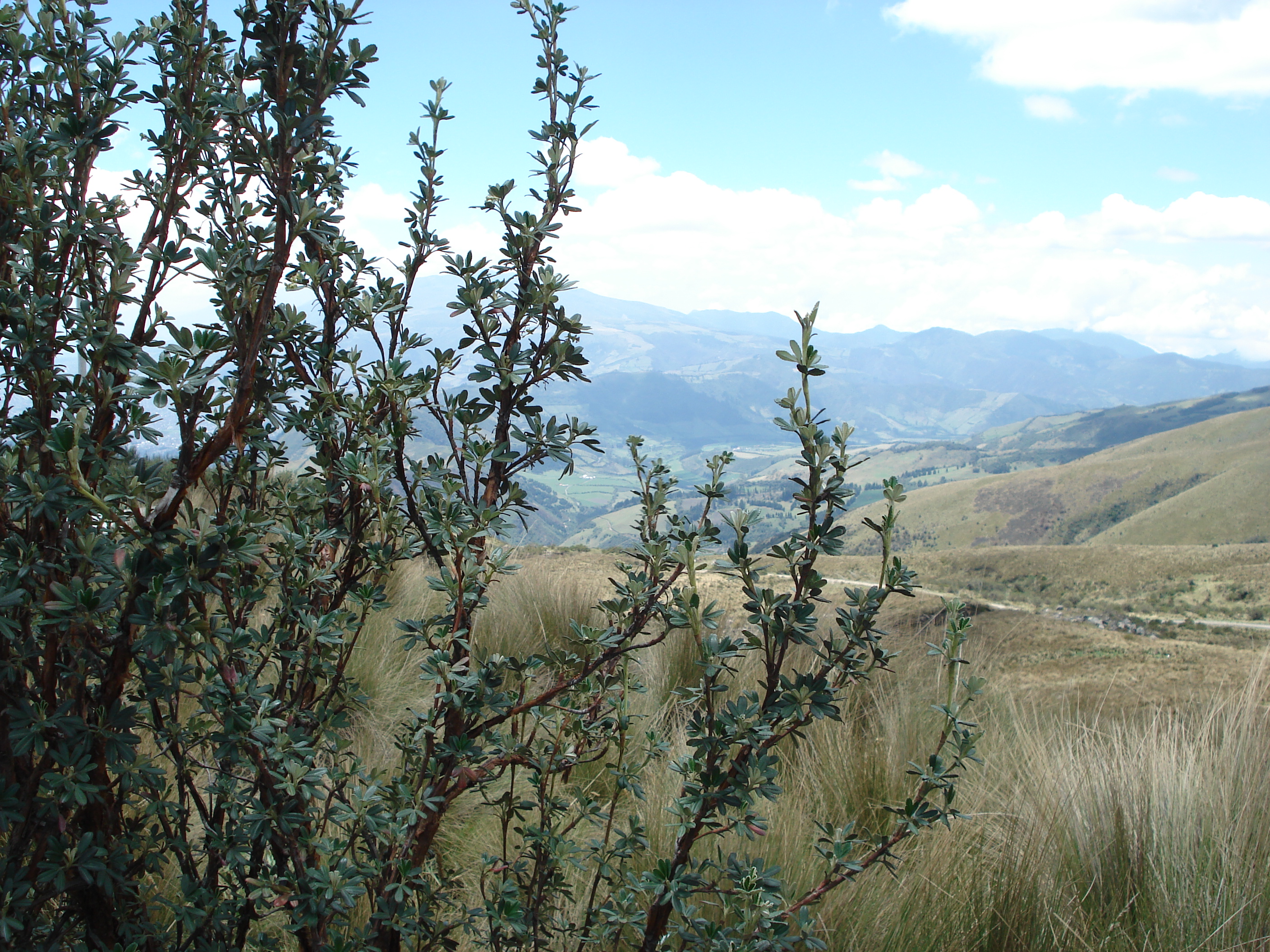
When on a mountainside, you can go up, you can go down, or you can go sideways. We did not want to go sideways into “Volcano Park”, so we decided to climb a staircase on the edge of the plaza, and once at the top (thoroughly winded I might add), we were able to see the TeleferiQo and the large ticket office adjacent. Foreigners pay double fare compared to Ecuadorians, but they are also fast-tracked in an express line it seems. Since there was still hardly anyone around, within 5-10 minutes we were in a cable car and heading another kilometre or so skyward (to an elevation of 4100 metres).

The view was incredible. I wasn’t so interested in seeing Quito from above (besides noting that it is very big, over 40 km long apparently and only 6 km wide in some places, depending on how it can squeeze in between the mountains), but I was enraptured by the green valleys and mountains to the west. I had one of those moments where I thought to myself Wow, I am in South America. And I would squeeze my TC’s hand and say Wow, we are in South America. It was an amazing feeling.

We were exhausted. And light headed a lot of the time. And altitude sick. And plain old sick sick. But damn it, we were in an old colonial city, nestled in the Andes, in South America. And that’s pretty amazing.
Things That Spook Me

Happy Halloween!

(If you don’t have 3D glasses, hit play, then the “3D” button at the bottom to turn off 3D!)

In celebration of this ghoulish occasion, today’s post is devoted to the things that spook me. You know those things that are just really really freaky? The kind of ideas that pop into your head and immediately give you shivers down your spine? I do. Creatively, these scary archetypes are a gold mine for anyone trying to tell a spooky story on a dark night.

There is no better day than Halloween to list some of these deliciously spooky ideas. I didn’t come up with them, of course, they’ve always been there…just waiting…being spooky….and hungry for your fear………..

  • What if you looked at an inanimate life-like object, then looked away, but when you looked back it had moved? (Think the Weeping Angels from Doctor Who, or a taxidermied owl.)
  • What if you were looking in the mirror, and you saw something in your reflection behind you, but when you turned around nothing was there?
  • On that note, what if you were looking in the mirror, and you saw your own reflection doing something you weren’t doing?
  • What if you saw a friend/family member from behind, and called their name, but when they turned around they had no face?
  • What if you took a shortcut through the cemetery on a dark night, and a hand grabbed your ankle?
  • What if you were leaning over a dead body (at a wake, at your job at the morgue, after hand to hand combat with the forces of evil) and suddenly it reached out and grabbed you by the throat?
  • Similarly, what if a dead body opened its eyes?
  • What if Edward Scissorhands had turned evil without warning?
  • What if a ventriloquist dummy said something you didn’t make it say?
  • Creepy children. ‘Nuff said.
  • What if you were in an abandoned house that no one had been in for years and years, and up in the attic, a music box was playing?
  • What if you were in an abandoned house that no one had been in for years and years, and up in the attic, a rocking chair was rocking by itself…back and forth…back and forth…back and forth?

Have a safe and happy Halloween everybody. Sleep tight.

Galapagos Bound!

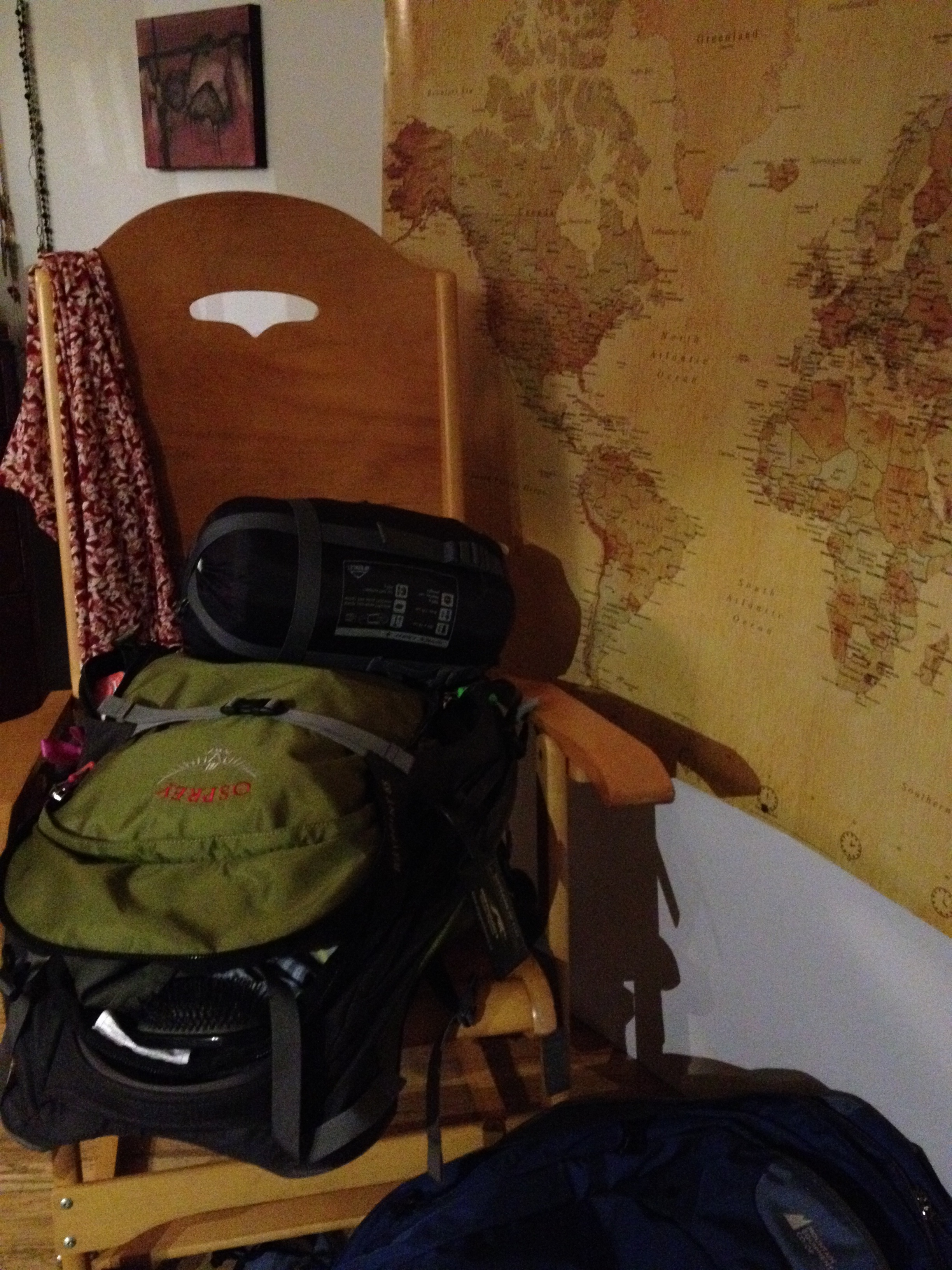
Oh backpack. How I’ve missed you.

Well, I’m at it again. Packing for an adventure, that is. This time, I’m taking the TC with me and we are flying to South America to spend two weeks in Ecuador. This will be our first trip to the Southern Hemisphere, my first time travelling on a US airline, and South America will be the first continent I visit that I hadn’t already lived in (I lived in Europe as a child before ever going there to just travel). It’s funny that after over a year and a half of using the term TC (Travel Companion), my TC and I are finally going to be doing some major travelling worthy of the title.

Our official reason for choosing Ecuador as our destination this year is that we want to see the Galapagos Islands (TORTOISES!) and even the untimely death of Lonesome George (George was only 100 years old, and the last giant tortoise in his subspecies, the Pinta) has not shaken our resolve (I would have loved to meet Lonesome George, but the other giant tortoises will hopefully cheer me up). So to the Galapagos we shall go, to spend a week living on a boat visiting various islands in the archipelago and having our minds blown by an amazing array of flora and fauna that can be found nowhere else in the world.

Bookending our week in the Galapagos will be 3-night stays in Quito, Ecuador’s capital city. Since Quito sits at an elevation of 2800 m, travellers flying in from sea-level (like us) can often find themselves suffering from altitude sickness. For this reason, TC and I decided to stay in hotels in Quito’s Old Town (to put ourselves close to most of the things we want to see), and to really just take it easy as far as our plans for Quito are concerned. Depending on how the altitude affects us, a flight of stairs might cause me to require a lie-down, so we don’t really have much choice but to gauge how we’re feeling when we get there and plan around that.

When I set out on my European Adventure last year, I was pretty anxious about the whole caper. This year, though of course I am visited by the usual worries of “what-if-we-miss-our-flights” and “what-if-we-lose-our-passports”, I’m feeling much better. I’m travelling for two weeks, not four. I’m not going alone this time. We’ve done most of our major planning (transportation, accommodation, etc.) already so we won’t be trying to plan and book things on the fly. As far as Ecuador-specific anxieties go, we’ll need to be vigilant about robbery (as travellers often do), and about trying not to get sick (let’s just say we’ve packed a big bottle of Imodium and are crossing our fingers like crazy). I don’t mind worrying a little bit, worrying sometimes keeps us smart. We’ll use our heads, I guess, and hope to be lucky.

Worries aside, we’ve been so busy lately we’ve hardly had time to get excited. But we are. Deep down behind our tired frazzled faces. We take off early tomorrow morning. In the words of Doctor Who, “allons-y!“. It’s time for things to get awesome.

P.S. No need to worry about Bunny. Our neighbour will be stopping in while we’re away to feed him and make sure he isn’t chewing the wall. But Bunny will, of course, be chewing the wall.

“Libation Bearers (The Flame)” or “I Wrote A Play!”

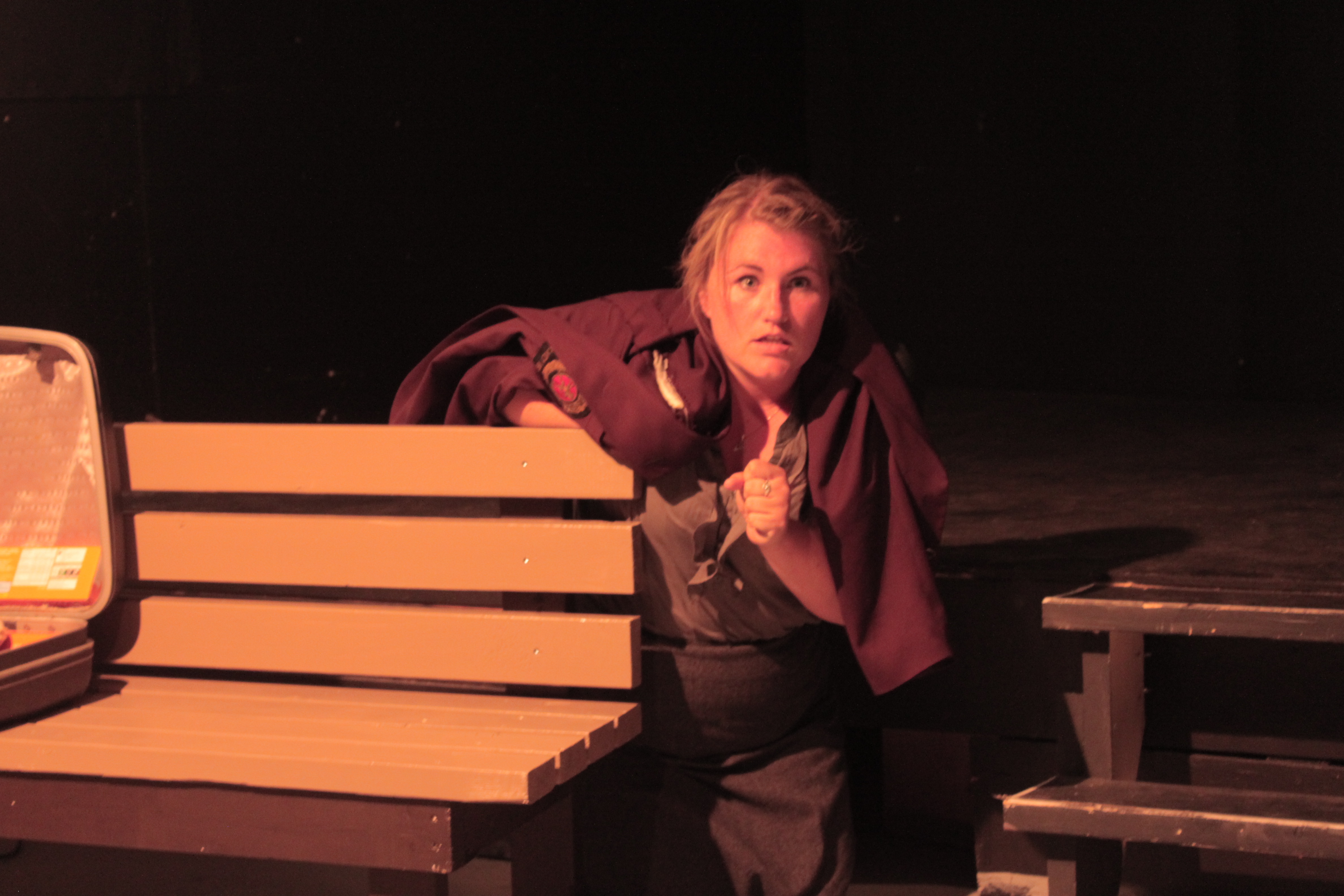
This is not the first play I’ve written, and I hope it won’t be the last, but regardless, I’m pretty excited about this. I, NiftyNotCool, have written a play (cue trumpets and confetti)!

This play is an adaptation of the Greek tragedy The Libation Bearers (also known as Electra if you read the Sophocles version), called Libation Bearers (The Flame). It is the second installment in the three-play Oresteia series produced by my friends in Rice & Beans Theatre, and will be directed by Pedro Chamale.

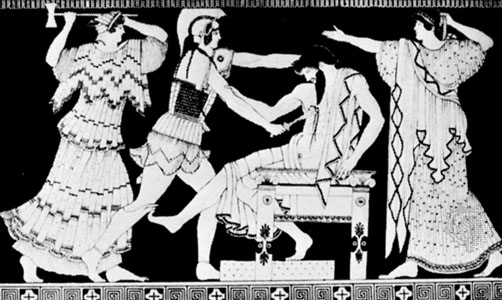
Electra and her brother Orestes kill Aegisthus, murderer of their father

Obviously, since the tragedy dates back to ancient Greece, the plot itself is not exactly a nail-biter. The gist of the story is pretty simple and well-known: In the ancient city-state of Argos, Queen Clytemnestra and her lover Aegisthus murder her husband (Agamemnon). The Libation Bearers itself takes place years later, as Clytemnestra’s children (Electra and Orestes) plot to avenge their father’s death. That’s it that’s all.

But not really. If that was all no one would bother adapting the play for contemporary productions (and there are countless adaptations of the Oresteia, for countless contemporary productions). Most of us know the what of the story (i.e., what happens, which we should all know now, because I just told you), but what seems to change from adaptation to adaptation, and even from ancient Greek version to ancient Greek version, are the how and the why of it all. That’s what was interesting to me when writing Libation Bearers (The Flame) and that is hopefully what will be interesting for the actors to explore and interesting for the audience to watch.

Betrayals happen. Murders happen. Revenge is plotted. Today’s headlines are relatively similar (which is probably why these old stories live on). The reason we read past those headlines into the macabre news report below is because we want to know why this thing happened, and how such a thing could be possible. Sometimes, I think we want to see what separates us, law-abiding non-murderers, from those who commit horrible crimes. What are the steps that would have taken us to that place? What would we have done, in the same situation?

Also contained within the question of how in an adaptation of an ancient work is simply the matter of how this story is going to be told. How does my script handle the events of the play? How does the rhythm of the language guide us through? How do the characters, as I’ve interpreted them, find their way towards their actions? Once the play is written, how does the direction affect the story? How do the actors interpret their roles, and blend their sensibilities and skills which the words they’ll be speaking?

If the cast/crew list for this show is any indication, the how will be very exciting. My conversations with director Pedro Chamale about his vision for the show leave me confident that he is going to take my words and make them truly work (the only way they really can work, which is in performance). I respect the technical and stage management team. As for the actors, I’ve seen them all perform and studied with most of them. They are exciting performers. I’m excited.

I’m very excited. I hope you will see the show.

Libation Bearers (The Flame) will run for four nights only, November 21 to 24, at 8 pm in the PAL Theatre, 581 Cardero Street (Coal Harbour).

Tickets are $15/$10 and are available online through Brown Paper Tickets: http://theflame.brownpapertickets.com/

What would have separated me from Amanda Todd? Very little, actually

On October 10, in Port Coquitlam, a fifteen-year-old girl named Amanda Todd took her own life after years of horrific online and in-person bullying. She documented her personal hell in a YouTube video. I have chosen to post this video because according to the Vancouver Sun, Amanda’s mother, Carol Todd, believes that Amanda would have wanted the video to be used as an anti-bullying tool.

[Note: Please make your decision about whether or not to watch this video carefully. If you choose to watch it, you will be watching a young girl in incredible pain. Also, I urge you not to read the comments. For some reason posts like Amanda’s are a common target for trolls.]

After watching Amanda’s video last night, I lay awake and thought about my own junior high and high school years. I wondered what separated me from her, what had spared me from committing her desperate actions when I was a teenager.

The answer? Very little. Luck mostly. Like a large number of people my age, in high school I was no stranger to isolation. I was no stranger to self harm. I was no stranger to suicidal thoughts (that never went anywhere, thank goodness). I was pretty cavalier with myself and my self worth. And only because I was having difficulty coping with the regular teen stuff: boys, my body, academic and athletic pressures at school.

Luckily for me, I was never bullied. No one laid a hand on me, physically or virtually. If I had been, I don’t know what would have happened to me.  If I, as a teenager already stretched towards my limits, had experienced the cruel and (quite frankly) ridiculous, uncalled for HELL that Amanda Todd was put through, I can’t say with confidence that I’d still be here. Even without bullying, being a teenager is damn tough. Add this kind of torture, and I think many of us would have been in pretty serious danger.

Luckily for me, the technologies (Facebook, live chat, and cell phones) that made Amanda Todd so vulnerable to attack and exploitation either did not exist, or were not widespread enough where I grew up to provide the opportunities for harassment and torment Todd’s bullies indulged in.

Luckily for me, I spent most of my teen years in a very small town. I’m sure that bullying did exist, but in a town this small it would have been virtually impossible for any bully to hide behind the cover of anonymity. Being from such a small, tight-knit school and community (where everybody knows everybody’s business) can have its drawbacks, but at least your friends in kindergarten are generally your friends for life, and even though I was lonely sometimes, I was never alone.

Luckily for me, I had sisters who always kept an eye out for me and always made sure I was okay. I had an army of two on my side no matter what I did or what happened to me.

Luckily for me, the lack of technology and my physical isolation out on the Prairie meant I did not have the opportunity to make the so-called “mistakes” Amanda Todd mentions in her video as bringing on the abuse. With the kind of self-esteem teenaged girls generally have, I don’t really think many young girls (myself included) would have acted very differently in Amanda’s shoes. Who can truthfully say that all of their decisions between the ages of twelve and fifteen were good ones? Thanks to the internet, childhood decisions can hound people for the rest of their lives.

So I’m lucky. So incredibly effing lucky I feel sick about it. I feel sick that it took this poor child’s death (yes, she was just a child when all this happened to her) to show me this. What separated me from Amanda Todd or teens like her? Very little. Incredible good luck.

And now I have to ask myself, what separated me from the bullies that mercilessly and relentlessly abused Amanda Todd? I’d like to say a lot. I’d like to say there is a big difference between me and them. I think I was a good person, generally. I don’t think I ever bullied anybody. But I was a smartass with a big mouth. I did gossip. I did tell mean jokes sometimes. So I would like to say to anyone I may have hurt in high school: I’m sorry. I’m sorry I made you feel shitty. That was wrong. I have no excuse but my own insecurity and ignorance. I hope I will raise my kids to be stronger than I was and teach them that making someone else feel awful is never okay.

I hope I will raise my kids to understand how to protect themselves on the internet. And I hope I will raise my kids to understand that there are human beings on the other side of every nasty internet message or post they may wish to fire off. That using the internet to bully rather than your fists doesn’t make your hands any cleaner.

I hope I never forget what it was like to be a teenager. I know very few of us will forget Amanda Todd.

If you are a young person who is experiencing suicidal thoughts, or you know a young person who may be in crisis or thinking of suicide, please know that help is available. Here in BC, you can contact Youth In B.C. via anonymous chat on their website at youthinbc.com or by telephone at 1-866-661-3311 (604-872-3311 in the Lower Mainland). Help is available 24/7. You don’t have to face this alone.

A Night of Poetry with Rachel Blau DuPlessis

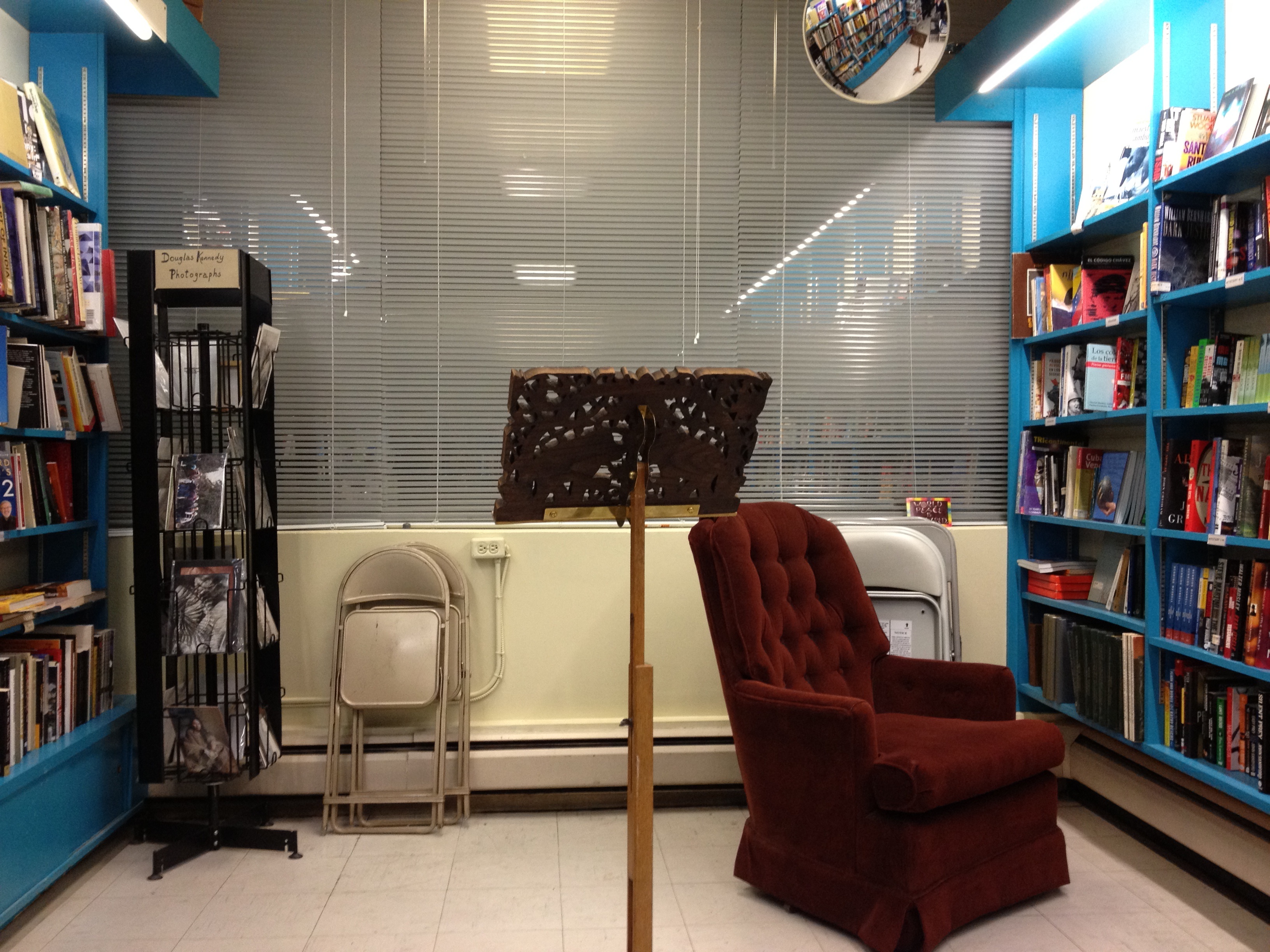
Co-Op Books. This is where the magic happens.

In my continued efforts to challenge my brain and improve my writing, I am once again taking a Creative Writing: Poetry course at Simon Fraser University (this one is the 400-level version of the 300-level class I took this spring). Rachel Blau DuPlessis (“poet and essayist, and feminist critic and scholar”) is currently in town so class was cancelled and we were STRONGLY encouraged to attend one of her Vancouver readings.

Last night about six or seven of us gathered at the People’s Co-Op Bookstore (1391 Commercial Drive) to hear DuPlessis read from her latest (and as of yet unpublished) work. It was obvious who the students were, as we sat eagerly in front while a formidable crowd of poets, poetry lovers, and scholars gathered behind us. We really were in for a special treat as DuPlessis read selections from her latest Draft poems (including what she called her “final” draft), and she told us afterwards that this was the first reading at which she had read these poems.

[Notes about the Drafts. There are over a hundred of them. This particular project has been in process for over twenty years.]

Listening to DuPlessis read made me realize that I connect with (good) contemporary poetry read aloud the way I connect with (good) contemporary dance. There is an arc there, carefully crafted, but it is emotional, intellectual, and/or intuitive rather than narrative or linear. Because one thing does not lead to another in a linear sense (and because, in a reading, I cannot see the page the poet is reading from), what I perceive or catch hold of are fragments, and I cannot for the life of me remember exactly what I saw or heard.

I’m used to this when watching dance. I’ve long known contemporary dance puts me into a mental state in which I am perceiving what is on the stage but also thinking and feeling a million different things which, I assume, are informed by what I see. Every once in a while I will be shaken from my reverie by an image or movement that particularly strikes me. Some could say what I’m experiencing is the act of “not paying attention”, but what I really think I am experiencing is something more transcendental.

This is what listening to DuPlessis read is like. I do not remember what any of the lines of poetry were, and I am not well-read enough to have caught the quotations or allusions within the poems, but goddamn, that woman can read. I was pretty lukewarm on the idea of attending a poetry reading because the last one I went to featured a poet who was so incredibly precious and flowery with the way in which she read the poems aloud I could not hear the poetry for the reading. DuPlessis is not flowery. She reads with conviction, and the climaxes and denouements of her “arguments” (because in a way I did get the sense there was an argument, a thesis here) reminded me of a political speech in the best possible sense–a speech that makes the people want to fight for something (but instead of lowest common denominator platitudes about God blessing America, we have poetry).

After her reading, DuPlessis took questions, and was kind enough to truly fully answer questions about her process, about her reading (she does not rehearse or prepare for the act of reading allowed, which was my question, but she does revise her poetry so many times that the arc and movement is built in), and about poetry as an art form in general. Poetry is different from other writing (fiction, etc.), DuPlessis says, because of the concern for the line, and the different ways in which syntax and structure must be taken into account (if I’m totally botching my paraphrasing here, I’m so sorry, I’m going by rather awestruck memory).

I cannot remember what happened while listening to DuPlessis read, but I do know I had moments of surprise, that something struck me as funny once or twice, that I was startled when she finished, and that I thought a million strange thoughts while DuPlessis read, none of which I can remember either. Very much like any evening I would spend with good contemporary dance. I just hadn’t expected the two to be so similar.

[I should mention that although the People’s Co-Op Bookstore was the venue for the evening, DuPlessis was actually hosted last night by the Kootenay School of Writing. The book store is also worth checking out–lots of interesting looking books, none of the crap “memoirs” of young reality stars written by ghost writers that you’d find in a Chapters nowadays.]

The Joy of “Bopping”

When I was a kid, I had a habit of rocking my head (and often upper torso) back and forth. I did this constantly, primarily when seated (in the car, for example, or later, on the school bus). My parents called it “bopping”, and throughout my childhood the perceptions around it changed from viewing it as a funny idiosyncrasy to viewing it as a bad habit.

In some ways, bopping really was a bad habit, especially since I had difficulty determining what was an appropriate venue for it. Otherwise positive Grade 1 report cards would be sent home with comments about my singing and “bopping” in class. I understand that in a classroom setting, my inability to sit still (and silently) at my desk was distracting, and probably made me a target for friendly teasing (though nothing serious or scarring).

My bopping was a very obvious, very continuous kind of fidgeting. Everyone in the neighbourhood knew I was a bopper. One of my parents’ friends even told us kids a story in which I saved the day with my bopping. I can see how it would become less cute as I grew older, like thumb sucking or baby talking. I also understand why parents of a “bopper” might be worried by it. A six-year-old rocking back and forth like a Chechen orphan with PTSD is just kind of weird, I guess, and no one wants their kid to be made fun of.

[Note: Now that I’m an adult, I’ve a sneaking suspicion bopping was one of those bad habits my folks really did love me for, the way you might love your dad for his lame jokes or your grandma for the outlandish things she says.]

I’ve heard a few theories that rocking motions (and singing aloud, something I often did while bopping) can release feel-good chemicals like serotonin and endorphins and that children who “self-stimulate” by rocking may be suffering from serotonin imbalances. Cursory internet research has not provided any proof one way or another, and I don’t know if my childhood bopping was in response to any kind of chemical need. I do know that human beings are obviously soothed by rocking motions, hence rocking cradles, rocking chairs, hammocks, etc.

I think what no one really understood about bopping, and what I couldn’t articulate at the time, was that I wasn’t just rocking for the hell of it. I also don’t think bopping was a symptom of any sinister deficiency. The fact is, whether I was singing aloud or not, I was always bopping to the beat of music. Sometimes the music was on the radio, and then it made a little more sense to everyone else to see me boppin’ along. Often, though, the music was just a tune stuck in my head, but my drive to move with it was just as strong.

So that’s it. There was simply music with me always. I wasn’t “self-stimulating” or displaying a tic. I was dancing (inelegantly and repetitively). That’s it. Dancing. No need to worry about me, parents and teachers. In fact, if you don’t have so much music in your head you just have to bop along, it’s you I pity. Don’t try to shut down my one-girl party just ’cause you aren’t throwing your own inside.

Still, bopping has a time and a place (and an appropriate age) I guess, and eventually I did grow out of it. Sort of.

But you know what? The music never left. The rhythm never stopped. Catch me at a bus stop and you’ll see my right knee bobbing like crazy. Sometimes at work or on the bus I’ll wonder where a tapping sound is coming from and realize it’s my own foot. TC says that on a car ride I still do it a bit, to which I reply, well, yeah, ’cause there’s music on in the car! In addition, I often get pretty carsick, and as mentioned above, we all know a little bit of rocking soothes the soul. Really, I think my obsession with rhythm is just further proof TC and I are made for each other–I mean, he’s a drummer for goodness sakes!

Maybe you don’t buy the theory that I’m just dancing in an isolated part of my body. Maybe you think I do have a tic, or slight serotonin imbalance. Maybe I am “self-stimulating” when I fidget. To which I would reply, so what? Who cares? A grown woman taps her foot on the bus, maybe bops her head along to music sometimes? Completely harmless and none of your goddamn business. If I was using bopping (in my head, knee, or toe) to reach a state of chemical equilibrium, would that really be such a bad thing in light of the alternatives (i.e. drugs)?

I think not.

So bop on, my flower children and soul parents, bop on.

Why I am Pro-Choice (a response to Motion 312)

Today I feel the need to state, unequivocally, that I am pro-choice.

For the past few months I have been watching US institutions’ “War on Women” unfold with a mix of horror, disbelief, anger, and smugness. Horror that people like Todd Akin, who are in positions of power (power that allows them to shape public policy), are so ill-informed and so ill-willed towards women that they can make a comment stating that pregnancy cannot occur if a rape is “legitimate”. Disbelief that a Congressional panel on reproductive rights that did not include a single female panelist could possibly be convened or considered credible in a supposedly first world country. Anger that this is considered an acceptable topic for negotiation in the first place–a person’s rights over their own body do not suddenly become fluid or something which must be negotiated with the government just because that person happens to be a woman. Finally, smugness because I thought that at least I am safe from this idiocy up here in Canada.

Silly girl. Of course I’m not safe. Enter Conservative MP Stephen Woodworth and Motion 312 to show me why. In a nutshell, Mr. Woodworth would like to reopen the abortion debate, under the guise of convening a House of Commons committee to “study” Subsection 223(1) of the Criminal Code of Canada, which states that a fetus achieves personhood (and therefore human rights) only upon exiting its mother’s body.

The language used in Woodworth’s M-312 is incredibly problematic. Specifically, I am concerned with the third question Woodworth would like his proposed committee to examine: “what are the legal impact and consequences of Subsection 223(1) on the fundamental human rights of a child before the moment of complete birth?”

The problem with this language is that it is misleading. Woodworth claims he wants merely to “study” Subsection 223(1) and ask questions of it, but by framing his question by referring to a fetus as a “child” with “fundamental human rights”, he is not asking a question. He is making the claim that a fetus is a child with human rights.

Whether you agree with this claim or not, to present a motion under the guise of “examining” or “questioning” a legal definition when it is actually an attempt to impose your own personal moral views onto this legal definition is underhanded. Mr. Woodworth, if you want to try to keep women from having abortions because you believe unborn fetuses should possess rights as persons under the law, just say so, right in your motion. Don’t pretend to ask a question while simultaneously stating what you believe to be the answer.

[Side note: Joyce Arthur, Executive Director of the Abortion Rights Coalition of Canada, wrote an excellent series of counter-arguments against M-312. These counter-arguments include a more in-depth analysis of Woodworth’s misleading use of language, and his misinterpretation of the Section of the Criminal Code he wishes to examine. I recommend reading them.]

According to CBC News, both Prime Minister Harper and Conservative whip Gordon O’Connor have denounced M-312 as an attempt to reopen the abortion debate and do not believe it should proceed. It is predicted this motion will not get far. So why am I upset?

I am upset because even with Canada’s long tradition of (technically) secular politics, even though women have been recognized as persons under the law since 1929, even though women make up half the population, an elected official in the Canadian Government still feels that it is appropriate for him to use his position of power to impose his own personal morality on Canadian women through legal channels. I am upset because as much as Harper said he does not want to reopen the abortion debate, the fact that this motion has been made in the first place (and Harper doesn’t let just any old motion from his party see the light of day, he doesn’t work that way) effectively reopens the abortion debate. I am upset because M-312 has found itself some public support (in the usual, predominantly religious, places) and I am worried that even if this particular motion isn’t able to proceed, the Conservatives will decide there is enough leverage to officially reopen the abortion debate in the future.

M-312 as a Parliamentary motion is simply NOT appropriate. Not because Stephen Woodworth is not entitled to his moral beliefs (he is). Not because these are not questions  women will be examining with their doctors and within their own consciences (they likely do). This motion is inappropriate because Stephen Woodworth does not have the right to use the power of law to inflict his moral beliefs on women’s medical decisions or their bodies.

Some people think that being pro-choice means believing that everyone should be having abortions all the time, or that being pro-choice means being anti-children. That’s simply not the case. I love children and I will love to have children of my own someday. Being pro-children can exist harmoniously with being pro-choice. I respect the gravity of what having children means enough that I understand why a woman who becomes pregnant might choose not to do so.

I know there are situations that feel like grey areas. Woodworth claims that declaring life to begin at complete birth is an arbitrary line. But it’s the most concrete line we’ve got. Any legal definition of life that was drawn at any point before complete birth would be much more arbitrary (zygote? fetus?) and would be much more likely to infringe on the rights of women to use contraceptives, for example, or to engage in any activity which may endanger their physical body (examples of this can be found in the US–in the state of Indiana a woman was charged for feticide after a failed suicide attempt, even though attempted suicide is not a crime in Indiana). Besides, late-term abortions, which at this time Woodworth seems most anxious to prevent with M-312, are incredibly rare in Canada and most doctors would perform them only in the case of extreme danger to the life of the mother. A woman going through these tragic circumstances should not have to be fighting a legal battle as well.

I am pro-choice because I believe that abortion should not be criminalized. I am pro-choice because I believe that a person’s body belongs to them alone. I am pro-choice because I believe any government intervention in the medical and moral choices of a pregnant woman is inherently discriminatory; it strips a woman of her personhood and violates her human rights. I am pro-choice because I know that women are capable of making informed medical decisions for themselves. I am pro-choice because I can’t possibly know or imagine the various scenarios (emotional, medical, financial, or otherwise) which may cause a woman to choose an abortion, and I do not know what I would choose if I were in her place. I am pro-choice because I trust a woman to make the right decision for her.

And I am pro-choice because I trust myself. I trust my moral compass. I trust that I will never take reproductive decisions lightly, whatever decisions I might have to make. I trust my intelligence and my capability to be sole sovereign over my body.

I do not trust MP Stephen Woodworth with any power to make decisions about my body, or any person’s body, and I do not believe he, or any politician or lobby group, has the right to do so.

The Story of my “TC” (and Salt Spring Island)

I’ve been using the moniker “my TC” or just “TC” to refer to my, well, TC, for so long that I sometimes forget what it originally meant or why I chose those initials in the first place.

Taking a trip down memory lane (and into my archives), “TC” actually stands for “travel companion”, a label I originally made up so I could mention TC when he brought me to visit Salt Spring for the very first time (March 2011). Even though we hadn’t gone abroad or anything, I needed to invent a label because at the time, TC was not my boyfriend, technically. It was all about convenience.

Back then, I hadn’t quite expected two things:

  1. That I would shorten it to “TC” and continue using the term a year and a half later.
  2. That a year and a half later, my TC and I would still be making little travels ’round the province/country together, and living together, and being in love.

You see, I wanted to be practical. I needed a label–I found one. I liked TC and enjoyed his company. And I respected him. So sure, let’s go to Salt Spring, I could really use a weekend away. My heart was feeling grey and pinched in the grey and pinchy city. Away, away!

And then–ocean. Space. Looming rocks and weather-beaten piers. And then–a small yellow-painted cafe. Tea. TC’s fun Australian aunt and two little cousins lifting big shy eyes to look at this new lady (me!). And then–a house with a fireplace and full of books. The girls’ shyness falling away and sudden overwhelming energy taking its place. Sock puppet shows and board games. Scotch for the adults. Bed for the girls. Reading Goodnight Moon to TC’s (then) four-year-old cousin and nearly crying over it. Telling TC that I was glad he brought me here because now I knew the hard choices I’d made in my life thus far were the right ones.

The second time we went to Salt Spring, I needed it badly then too. I’d heard only two weeks before that one of my childhood friends was gone–suddenly, tragically, irreversibly. I snuck away to look at the view and have a cry. TC found me and sat quietly with me until I was done and I had to go inside to change because there was tree sap on my pants.

During our third visit to Salt Spring, TC and I acknowledged that we were officially “in a relationship” with one another, not that we hadn’t been unofficially for months anyways.

By the our fourth visit to Salt Spring, TC and I were officially “in love”, not that we hadn’t been for months anyways. I watched a blood red sun rise over the Gulf Islands. TC was sleeping so I shared the moment only with a little brown rabbit who was hopping by. I was terrified by the idea that because my TC loved me, it was possible for me to hurt him. Could I continue under the threat of this possibility? The thought stopped my heart.

By our fifth visit to Salt Spring, I had moved in with TC and his rabbit, who has an actual name, but whom I prefer to call Bunny. I had returned from my month travelling in Europe by myself, and I knew that TC was a choice I wanted to make. Everywhere I went, I had carried him with me, and at the end of that month we were carried back to each other.

We visited Salt Spring for the sixth time in April. Spring was busy this year–sometimes I would have only 15 min at home after work to change or grab a bite before rushing off to class or a rehearsal. During these times my TC would have a grilled cheese sandwich waiting for me so I wouldn’t starve. I never slept enough. I was irritable most of the time. Emotionally I was very fulfilled but mentally and physically I was exhausted and feeling grey and pinched in the grey and pinchy city.

And then–ocean again. Playing “C is for Cookie” on the ukulele with the girls. And then–a silence so present and soothing I slept for ten hours. Waking up and drinking tea in the sun on the back deck. So much fresh air I begin wondering how I could ever breathe anything else.

August. Our seventh Salt Spring visit. This one a little more hectic than usual, much of it spent helping TC’s parents move into their new summer house on the island. The sunny window seat in the dining room is dubbed “Lauren’s Spot” because I spend as much time as possible there, napping or telling stories to one of TC’s cousins. I’m struck with the realization that I have been accepted into TC’s family–they like me and care about me. Suddenly, in addition to my beloved own, I have a whole other family who wants the best for me. It’s such a gift and such a responsibility.

Labour Day weekend. Visit number eight. Through the window of a little Salt Spring Air float plane, my TC and I wave to his parents and (visiting) grandparents who are waiting on the dock and step out of the plane into a flurry of hugs.

This time, I’m not visiting the island merely to be rescued by its beauty and tranquility. Sure, we’re a little sleepy from our early flight but our eyes are bright and our hearts are smiling. This time, no euphemisms or nifty monikers are required.

I know just what to call my TC. On his own, he’s a lot of great and interesting things. To me, he is my partner in everything, my confidante, my support, and my best friend. But to use a quick term, I’ll just call him my fiance.

[P.S. Of course, I’ll still use TC. It’s worked out so well so far.]

Fringe 2012: Resounding Scream Theatre presents “The Troubles”

Photo credit: Panos Argryopoulos

On Tuesday I visited Resounding Scream Theatre‘s final pre-Fringe dress rehearsal to watch and review their upcoming Vancouver Fringe offering, The Troubles. Avid followers of mine may recall that The Troubles was part of last summer’s double bill, combining Troika!, the show I co-created, and The Troubles into one night of hot Vancouver theatre. Since its 2011 runs, The Troubles has been revised and reworked to create the one-woman show on offer at the Vancouver International Fringe Festival this year. The Troubles is written and performed by Stephanie Henderson, based on the experiences of her father and his family in Northern Ireland, and directed by Catherine Ballachey.

The issues at the heart of the play surround what was referred to by the British as “the Troubles”, a period of violent religious-political conflict in Northern Ireland which spanned the 1960s through to the 1990s. As one of the characters quips, Northern Ireland is not “all ponies and roses.” The violence which overwhelmed the region is both real and recent. The Troubles is concerned not with specific religious or political issues, or with which side was right or wrong or caused more hurt or had more justification for their part in the violence, but with the everyday people–from mothers to schoolboys to blue collar workers to “footie” fans–forced to try to continue their “normal” lives during a time when violence and conflict has become the new normal. I was particularly struck by Henderson’s depictions of the effect the conflict had on children, whose play fights and mock battles became all too real with bricks and bottles, stones and beatings, forced to take on their parents’ issues.

Photo credit: Panos Argryopoulos

One of Henderson’s strengths as a performer has always been her ability to interact with her audience while in character. Five different “people” appear onstage through the text and performance of The Troubles, and each character speaks to us (readily or reluctantly, as the case may be) in their own unique way. Henderson has understood and embodied her five characters so thoroughly that regardless of an audience member’s response to her questions and remarks, she will have a quip or a cuss word at the ready–always in character, and always (Northern) Irish.

As an audience member, you will need to work a bit to keep up with Henderson’s North Irish lilt and the speed with which many of her characters speak. Overall though, the frank and good-humoured nature of her portrayals and the weight of her subject matter were enough to pull me in and keep me through the whole of the performance.

Photo credit: Everette Jelley

The Troubles will run September 7 – 16 at Studio 1398 (Playwright’s Theatre Centre) on Granville Island. For more information and specific show dates, please visit Resounding Scream’s Upcoming Projects web page. Tickets to The Troubles may be purchased online through the website of the Vancouver International Fringe Festival, or with cash at the door.

Disclaimer: Stephanie Henderson and Catherine Ballachey of Resounding Scream Theatre are personal friends of mine, as well as theatrical colleagues. However, I agreed to review The Troubles in my capacity as a blogger first and foremost, with the understanding that this disclaimer would be necessary. I do not feel as though my experiences of the show, reviewed here, were compromised by our personal friendship.