The Troika Collective Presents “Chernobyl: the Opera”

Poster design by Arthur Yee

Poster design by Arthur Yee

From May 14 – 19, the intimate Carousel Studio Space on Granville Island will play host to stories of the Chernobyl nuclear disaster. The Troika Collective‘s Chernobyl: the Opera, conceived and directed by Aliya Griffin and composed by Elliot Vaughan for accordion, cello, and seven voices, weaves physical precision and haunting melodies together with verbatim text taken from interviews with survivors of the disaster. The results are at once poignant and strangely beautiful.

If you’re wondering if you’ve heard of Chernobyl: the Opera before, it’s probably because you have. A shorter iteration of this piece was performed in last year’s Hive: the New Bees 2 to critical praise. The Georgia Straight’s Colin Thomas was impressed by composer Elliot Vaughan’s “sophisticated score” and called the piece’s execution “terrifically precise” (Georgia Straight theatre reviews, May 25, 2012). Following the success of New Bees 2, Griffin and Vaughan have added both to the cast and the music, filling out the sparseness of the New Bees version while maintaining its specificity and non-sentimental quality (I watched a short preview of Chernobyl: the Opera at a Troika Collective fundraiser two weeks ago and was very impressed with the changes I saw).

Troika Collective_BWChernobyl: the Opera will run from May 14 – May 19 in the Carousel Theatre Studio on Granville Island. Tickets for the May 15-19 performances are available online through Brown Paper Tickets.

The May 14 performance will be a pay-what-you-can preview, with all proceeds benefiting the Veronika Children Leukemia Foundation. Following the May 14 performance, Grigori Khaskin, Research Associate in the Biology Department at SFU and a former Chernobyl Liquidator, will be giving a talk.

All in all, Chernobyl: the Opera is an exciting new work from an exciting emerging theatre company. It is not to be missed.

Disclosure: I was a performer in the New Bees iteration of Chernobyl: the Opera. Though I am no longer involved in the project (and not because I was kicked out or anything scandalous, just boring time issues), many members of the Troika Collective are my friends. Friends or not, Chernobyl: the Opera is a damn good show by a company that has earned my respect and support.

In Defense of Fairy Tales

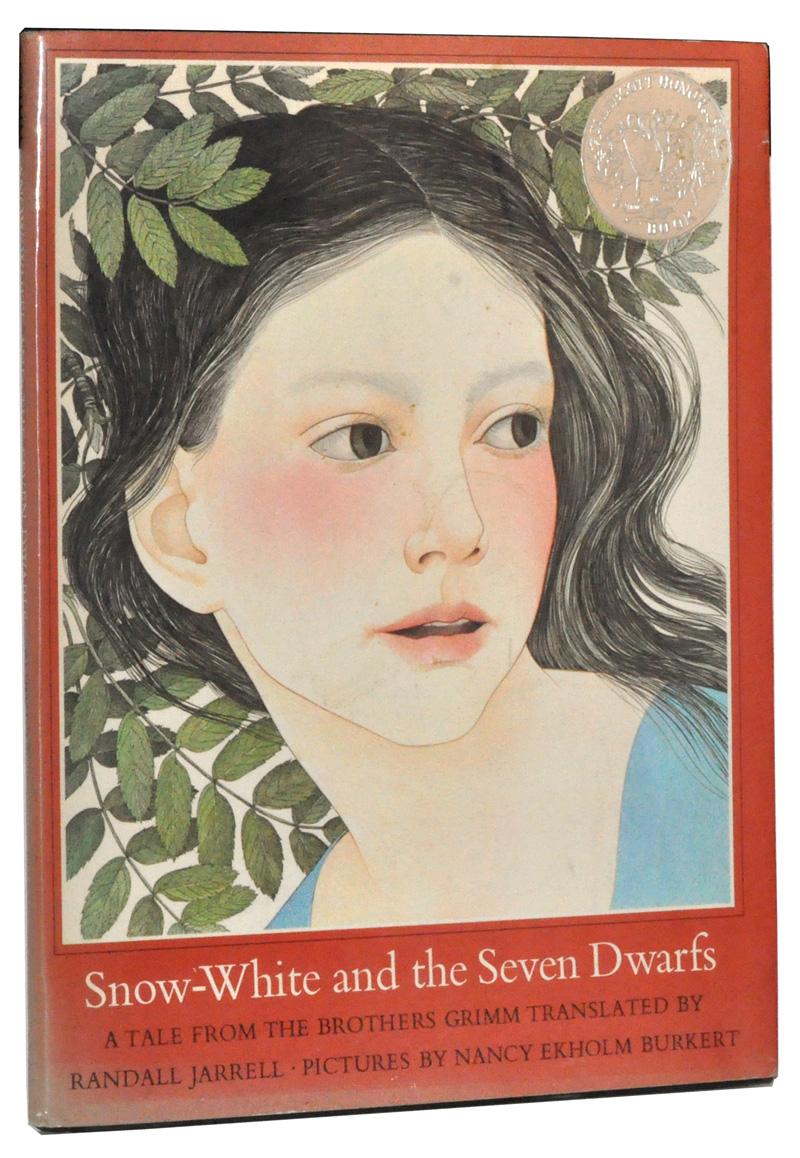
I can’t pinpoint exactly when I knew I loved fairy and folk tales, so I assume they’ve been part of my being ever since I can remember. In my house, my sisters and I were told stories. We were read to. We had a big bad-ass dress up box. We had a few cherished old Disney movies, and books with beautiful and provocative illustrations (like Edward Gorey’s uniquely creepy illustrations of Rumpelstiltskin, or Nancy Ekholm Burkert’s spellbinding visions of Snow White, painstakingly translated by Randall Jarrell).

Rumpelstiltskin, retold by Edith H. Tarcov, pictures by Edward Gorey

We were little kids with a lot of space to play, a lot of time, and a lot of imagination. Fairy tales were a natural part of our games–and are still a natural part of my creative impulses.

But somewhere along the line fairy tales have gotten a bad rap. Perhaps it’s little girls’ (and occasionally little boys’) obsession with princesses that has us all worked up. Despite my moderately feminist upbringing, I must confess I liked storybook princesses too (the dresses! the castles! the dresses!). I even went so far as to make a storybook of my own out of cardboard, entitled “Princess Amanda and the Unicorn”. [Princess Amanda was the youngest and most beautiful of seven king’s daughters. Apparently she meets a unicorn, but to the best of my recollection the better part of the book is spent naming ducklings near the castle pond, and the story has no conflict. Delightful.]

Childish fancy aside, I’m sure most of us have (inwardly or outwardly) groaned and rolled our eyes at the women we meet who, despite their adult years, happily call themselves “Daddy’s Little Princess” etc. and who use this label as an excuse to be covetous, shallow, and selfish. Bridezillas on reality shows like “Say Yes to the Dress”, “Wedding SOS”, and “Four Weddings” constantly emphasize two main goals: to look “like a princess”, and to have “a fairy tale wedding”. If this over the top display of vanity and consumption bothers you I don’t blame you. But don’t blame the fairy tales.

Fairy tales have also long been harangued by feminist critics for promoting idealized and patriarchal interpretations of romance, interpretations that reward beauty and passivity in women (a la Cinderella) and punish intelligence (a la the evil queen in Snow White whose character, while pathologically jealous, still serves as a rare depiction of an educated woman). The outdated and unrealistic ideas of “waiting for The One”, “love at first sight”, and being on an unhappy path in life until a “special someone” steps in form the basic plots of most romantic comedies today. The answer, according to most of these films, is finding romance. Never mind your career accomplishments, your intelligence, your bonds with family, friends, and colleagues: you’re nothing until you find a man. Your life means nothing without a “fairy tale” ending (except, of course, for most of us, our lives don’t end at marriage but must be defined ultimately by what comes beyond it). If you find these messages sexist, nauseating, and unrealistic, I don’t blame you. These are valid criticisms. But don’t blame the fairy tales.

I've got this one on my shelf. It never stops blowing my mind.

I’ve got this one on my shelf. It never stops blowing my mind.

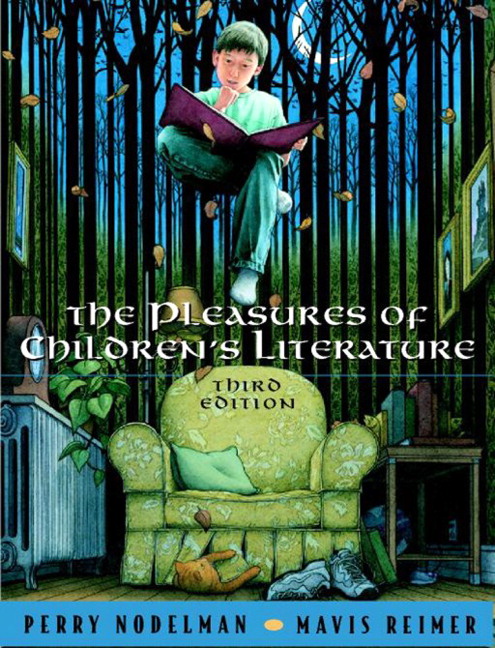
First of all, it’s important to acknowledge that for most North Americans, the versions of fairy tales we know best are the ones depicted in Disney films. Disney’s versions are so ingrained in most of our minds many of us can’t even tell what is part of the story and what is Disney invention. University of Winnipeg professors Perry Nodelman and Mavis Reimer believe that contemporary critics of fairy tales “need to consider the possibility that the archaic sexist or ageist values they express may be those of the…1930s and 1940s–and the 1990s and 2000s–as much as, or rather than, those of an ancient oral tradition or even those imposed on the tales by writers such as [Charles] Perrault and the Grimms.” (The Pleasures of Children’s Literature, 312). If you’re going to take issue with a fairy tale, you should at least know where it came from. (Which is easier said than done, since the “authenticity” of fairy and folk tales is hard to prove considering their origins in an oral tradition–the middle-class Grimms were far removed from the German peasants whose tales they claimed to be collecting–but for argument’s sake let’s go with “earliest recording” as closer to “original” than Disney.)

An old tale like Snow White, for example, has been unfairly criticized for depicting a passive and gullible woman, waiting around (and then SLEEPING, for heaven’s sake), doing and achieving nothing, happy to let men (i.e. the dwarves) take care of her in exchange for a little housekeeping, and when they fail to protect her, happy for a prince to come along and wake her with a kiss. Such is Walt Disney’s telling, but the version “recorded” by the Brothers Grimm is somewhat different on a few key points:

  1. Snow White is a seven year old child when she escapes to the dwarves’ cottage, not even old enough to be considered a “young” woman. Can you really blame a seven year old for sticking with those who can offer her shelter and protection, and for being naive enough to be tricked by a clever queen in disguise? Heck, I’ve known seven year olds who can’t tie their own shoes. At least Snow White can do a little housework.
  2. Snow White is not woken by a kiss. Her rescue from her step mother’s poison, in fact, has little to do with romance. After eating the apple and “falling down as if dead”, the dwarves can’t revive her. The child is so beautiful, even in death, that they do not want to bury her so they lay her to rest in a glass coffin. A prince comes along, sees Snow White, and cannot part with her. The dwarves take pity on him and let him take the coffin. As they’re carrying it off, one of the prince’s servants trips on a bush and bumps the coffin. The bump dislodges the piece of poisoned apple that was still stuck in Snow White’s throat. She coughs it up, instantly revives, and when the prince asks if she wants to marry him, she says (more or less), “Yeah, sure.” Considering she’s a child who’s had four attempts on her life at this point (the huntsman, the bodice laces, the poisoned comb, and the apple), it’s probably fairly prudent of her to marry a guy with the resources to keep her safe and comfortable.
  3. The violence against the heroine of this story does not go unpunished. Unless we accept the Disney version of events in which the evil queen (disguised as a peddler woman) falls off a cliff, most of us don’t really know or care about what happens to her. Which is weird. She tried to KILL a little girl! More than once! Don’t we want some justice? The Grimms sure do. When Snow White marries the prince the evil queen is invited to the wedding. Dressed up in her party clothes, the queen asks the mirror her famous question. The mirror answers that the new bride is the fairest one of all. The queen is sick with jealousy but can’t overcome her curiosity–she HAS to see who this bride is. When she gets to the wedding she recognizes Snow White, but before she can be too pissed off about it they put her in a pair of red-hot iron shoes and she has to “dance” until she dies. The end.

If I was going to have a problem with the story’s depiction of women I’d probably take bigger issue with the representation of an educated woman with a can-do attitude as vain and homicidal than with the depiction of a young child as fearful and naive. I’d also be a bit squeamish about a seven year old getting married but in the olden days small royal children got married off to other royal people all the time. So……I’ll chalk that up to the medieval world this tale seems to be set in.

Fairy tales are really all in the version you read/hear, and all in how you think about them. Even silly little Cinderella, with her dreams no bigger than a ballroom, should be able to find sympathy in this liberated age. Having been abused, humiliated, and forced into servitude by her family, is it any wonder she won’t let herself wish for anything more than one night of fun (or three, depending on the version)? For privileged folks like us, one night at a party seems like nothing, a silly thing to ask for. But for a young woman in Cinderella’s situation, the idea of even one night away from the prison of her home must have seemed an impossible dream. “But she doesn’t DO anything” you might say, “she just cries and waits around for someone else to save her.” Well, yes. Sometimes, people in abusive situations can’t find a way out of them, and they might need outside help. Magic old ladies and pumpkin carriages aside, this idea is not so unrealistic unfortunately. Though marrying the prince may not seem like the perfect solution to Cinderella’s problems (as she exchanges one set of bonds for another), becoming a princess to raise her status and power above that of her abusive family’s is a pretty shrewd maneuver I think. Well done, Cindy.

Do fairy tales hold an honest mirror to society or provide us with good principles to live by? Of course not (at least not directly). But they’re not supposed to. They present a removed world (somewhere “Once Upon a Time”) where lines between good and bad, rich and poor, hero and villain are clearly drawn. Simple yes, but the tales aren’t simple because they’re low. They’re simple so people telling and retelling the stories can remember them. No matter which version you encounter, each popular fairy tale contains certain elements that remain the same–a red cloak–a magic mirror–a room full of straw–a poisoned apple–a giant beanstalk–a lost slipper–an angry fairy–a secret name–a deep dark forest. There is something utterly captivating about these elements, something familiar but bewitching, that gives fairy tale stories their longevity. Dress them up however you like, criticize them, comb them for Marxist/Capitalist/feminist/Freudian theory, adapt to stage and screen and back to fireside–these tales endure.

And there is no reason to blame them. If you don’t like the versions of fairy tales you know, tell your own. Tell them and retell them and tell them again. Though eventually recorded into “definitive” versions by scholars and court scribes, at their most authentic, these stories have always belonged to everyone. The elements are all there; you just need to tell the tales. If you don’t, you have no one to blame for their “messages” but yourself.

On “The Pleasures of Children’s Literature” (Perry Nodelman & Mavis Reimer)

This post is not the first in which I discuss my interest in children’s literature (like my love of YA fiction), and it will likely not be the last. My inspiration today is my current preoccupation: studying for my final exam in a Children’s Literature course (an Education course this time, cross-listed with English). 0801332486The textbook shaping and informing this course is a lovely little volume called (you guessed it) The Pleasures of Children’s Literature by University of Winnipeg children’s lit scholars Perry Nodelman and Mavis Reimer.
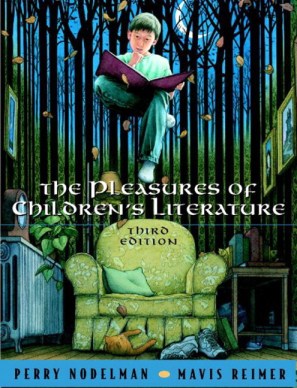
As a textbook, Pleasures is fairly rigorous and methodical. Its voice is also just casual enough that it makes for enjoyable (and informative) reading. As far as required texts go, I’ve been subjected to much drier. That’s not to say the text is perfect–the authors supply a lot of theories about engaging children with literature, and plenty of their own (albeit educated) opinion and bias, but leave practical application of these theories more or less up to the reader. They also unforgivably dismiss one of my favourite trilogies, Philip Pullman’s His Dark Materials, as little more than a variation on the simple “home-away-home” theme (which completely misses the point of the novels and is also just plain wrong wrong WRONG!). These criticisms aside, my journey with this text has been a good one, and, considering the ways in which literature for children is inextricably linked to education, I’m happy to report it’s taught me things too.

Thing Number One: What we consider necessary components of children’s literature are based on commonly-held assumptions about children that may not be true and are often contradictory. [This idea is very fully explained by Nodelman and Reimer in chapter 5 of the text but I was so interested in this I summarized it below.]

Ask anyone–a parent, a teacher, a young bookworm like me–what makes for appropriate literature for kids, and you’ll get similar kinds of answers which usually include the following: It should be simple. It should be colourful. There should be lots of action. It shouldn’t be too scary. It should end happily. It must not have too much violence or contain anything sexual. It must not demonstrate or describe behaviours or beliefs we do not want children to copy. It must have characters children will relate to–boys want to read about boys, girls want to read about girls, etc. of a similar age to themselves, with cultures and values like their own.

These assumptions about what makes a good book for children leads us to question what we are assuming about children themselves. Based on the assumptions above, we are really assuming that children have short attention spans and lack the ability for sophisticated thought (hence the need for simplicity, colour, and constant action). We assume that children are naturally innocent (hence books can’t be “too scary”, can’t acknowledge violence or sexuality, and must end happily). We also, paradoxically, assume that children are naturally bad and will immediately copy any wicked behaviour they are exposed to in literature without proper guidance (hence the need for censorship). Another paradox is that we assume children are self-centered (which is why they only like to read about characters like themselves), but, as described above, they are somehow also very easily influenced by whatever they read.

As far as children’s lack of sophistication goes, it turns out that much of what we believe to be “obvious” about children’s mental development (and by extension, what they are capable of reading) actually stems from the research of the Swiss psychologist Jean Piaget. It’s worth noting that the methods used in the experiments Piaget conducted to “prove” his theories of mental development in children would likely not pass muster in the field of psychology today and serious objections have been raised regarding both his methods and his logic. It is Nodelman and Reimer’s position that because we still (perhaps falsely) believe that children’s understanding is limited, we limit the literature and learning materials they are exposed to, and therefore create their limitations ourselves.

As Nodelman and Reimer contend, our assumptions about children’s literature (and therefore, our assumptions about childhood) may have less to do with what children are actually like and more with what adults need them to be. Which leads me to…

Thing Number Two: Some of our most beloved and enduring children’s books, the ones we believe to most truly capture the essence of childhood, are really only capturing what we, as adults, want to feel that childhood is or was.

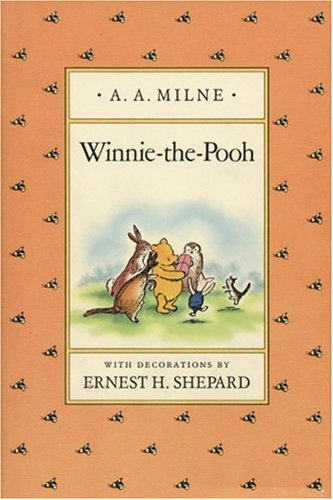
The two most obvious examples of this that come to mind (out of the many many books the authors of Pleasures discuss in their text) are A. A. Milne’s Winnie the Pooh books and J.M. Barrie’s Peter Pan and Wendy (usually known nowadays as just Peter Pan). Both of these stories revolve around the innocent and fantastical adventures of childhood, and both end with the title character being left behind by a dear friend who must “grow up” (oh god, I’m getting teary just thinking about it).

Though many many children do love the stories of Pooh and Peter (for me, it was the flying), I agree with Nodelman and Reimer that the real audience of both of these stories, i.e. the audience that can best understand and appreciate them, is an adult one. Pooh8It is because we no longer possess the ignorance and innocence of Pooh and his friends that we can find humour in their sayings and doings (our relative experience also allows us to better appreciate the eternally pessimistic Eeyore, a character I found boring as a child). It is also because we are no longer young ourselves that we find an island like the Neverland (where you never never grow old) so beguiling.
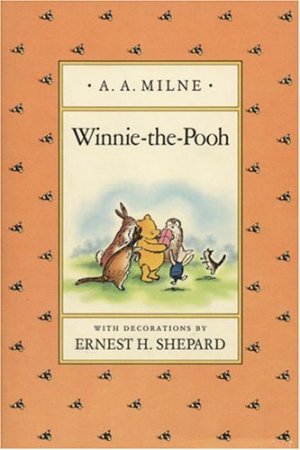
As humourous and enchanting as the adventures of Winnie the Pooh and Peter Pan are, their real heart and soul are captured in their final scenes depicting the inevitable and permanent separation of Pooh from his beloved friend Christopher Robin, and Peter Pan from Wendy Darling, the girl who loves him. Christopher Robin must go to school (after which he says, “they don’t let you” have the escapades he had with Pooh before), and Wendy realizes that if she avoids growing up, she must also miss out on experiencing important and necessary parts of life (like family). For children who are living childhood, the idea of losing it likely has a far less profound effect on them as it does on us. As a small child, I actually thought very little of the “sadness” of growing up. I wanted to be bigger so I could do the things my older sister was doing. It wasn’t until after puberty (and there was no turning back) that these books were truly relevant to me. (Please don’t get me wrong–these are beautiful books, beautifully written and beautifully sad, but perhaps not as much “for” children as “about” a childhood, real or imagined, that we as adults have lost.)

If you think about it, is childhood really as golden and idyllic as A. A. Milne and J. M. Barrie describe it as being? Not really. For the lucky children (like me), it’s very fun and magical but it’s also very messy and confusing and scary and uncomfortable. For unlucky children (which, on a global scale, is most children), there is abuse and/or neglect and/or illness and/or war and/or poverty. Not exactly a romp in the Hundred Acre Wood or a flit off to the Neverland. And although adults know these things, in Western culture we still like to see representations of childhood that are eternally bright and heart-breakingly carefree. They provide entertainment to children, yes, but more importantly, they provide comfort and nostalgia to adults.

Thing Number Three: The creation and availability of children’s literature is driven by adults, in service of adult concerns, and not by children.

This should be obvious, since adults are the ones writing, publishing, selling, selecting, and buying books for children, but we sometimes seem to forget this. The books you can find in the children’s section of a bookstore are the winners of a very profit-driven lottery, and the odds are becoming more difficult each year. In a nutshell, publishers are printing less titles, but expect to make just as much money (or more) from less. This means the titles publishers do print must (regardless of literary merit) be blockbuster money-makers, like the Harry Potter or Twilight series; they are much less likely to take a chance on a more obscure but perhaps better book that may become a classic over time. Depressing. Because teachers and librarians (the primary buyers of kids’ books apart from parents) are increasingly worried about the threat of censorship (often by parents who haven’t even read the entirety of the book they are trying to ban), they are increasingly unlikely to buy books that may be censored, and publishers are increasingly unlikely to print them. Also depressing. Ho hum.

Thing Number Four: Many of the most widely used strategies for teaching literature to children aren’t creating what Nodelman and Reimer call “ardent readers”, primarily because these strategies ask children to do things that ardent readers don’t do.

This point is really hit home with me, especially since I consider my own “ardent readership” an important factor in the course of my education and life. If I had not already lived in a house of books and been introduced to the activity of reading by my parents and older sister, I would likely have been utterly turned off reading by the stupidity and uselessness of the “activities” my English classes forced upon me.

According to Pleasures (and my own experience), ardent readers get caught up in the book they’re reading. They engage with the suspense, they rush to the end to find out what happens. They do not stop every time they find a word they don’t know to look it up in the dictionary. They do not ask themselves absolutely vapid comprehension questions that have more to do with unimportant details than with the point of the book itself. They do not waste time making posters of scenes from the book (unless they like to draw, or if it’s a tie-in with art class, but I will never forgive those well intentioned teachers who gave me marks off in ENGLISH class for the quality of my COLOURING). Ardent readers talk about the books they’ve read. They argue about them, they defend their position. They think about what the book means to them, not blindly accept what their teacher says it means so they can parrot it back in a test. And they acknowledge, if they see them, the innuendos, ironies, and possibilities for “reading against a text”, even if that interpretation isn’t a sanctioned part of the school curriculum. I always got the feeling that my teachers expected their students to dislike reading, so they tried to assign activities loosely based around a text but that required as little true reading as possible. Nodelman and Reimer also note that many (too many) teachers who “cover” poetry in their classrooms neither understand nor enjoy poetry themselves. You can’t really blame kids for not understanding/enjoying it either…sigh….(all I can hope is that today’s teachers of English or Language Arts are reading Nodelman and Reimer too…).

Anyways, while occasionally bleak, I liked this textbook.

With teachers for parents (and my desire to someday be a parent myself), I’ve always been interested in the field of education. Being a lover of English literature and possessing a certain whimsical streak, I’ve always been interested in the field of children’s literature. The Pleasures of Children’s Literature was a great introductory read. The greed of the children’s culture industry and the various failings of our education systems notwithstanding, my love of the genre is intact and my old favourites (whether actually read in childhood or acquired after the fact) are still friends to me.

Aerial Enthusiasm at the Vancouver Circus School

NiftySilk03

That’s me! Whoooo!

If you’ve ever read my twitter bio or the bio for this blog, you may have noticed that I bill myself, among other things, as an “aerial silks enthusiast.” What, you may ask, are aerial silks? And how exactly does one become an enthusiast of them?

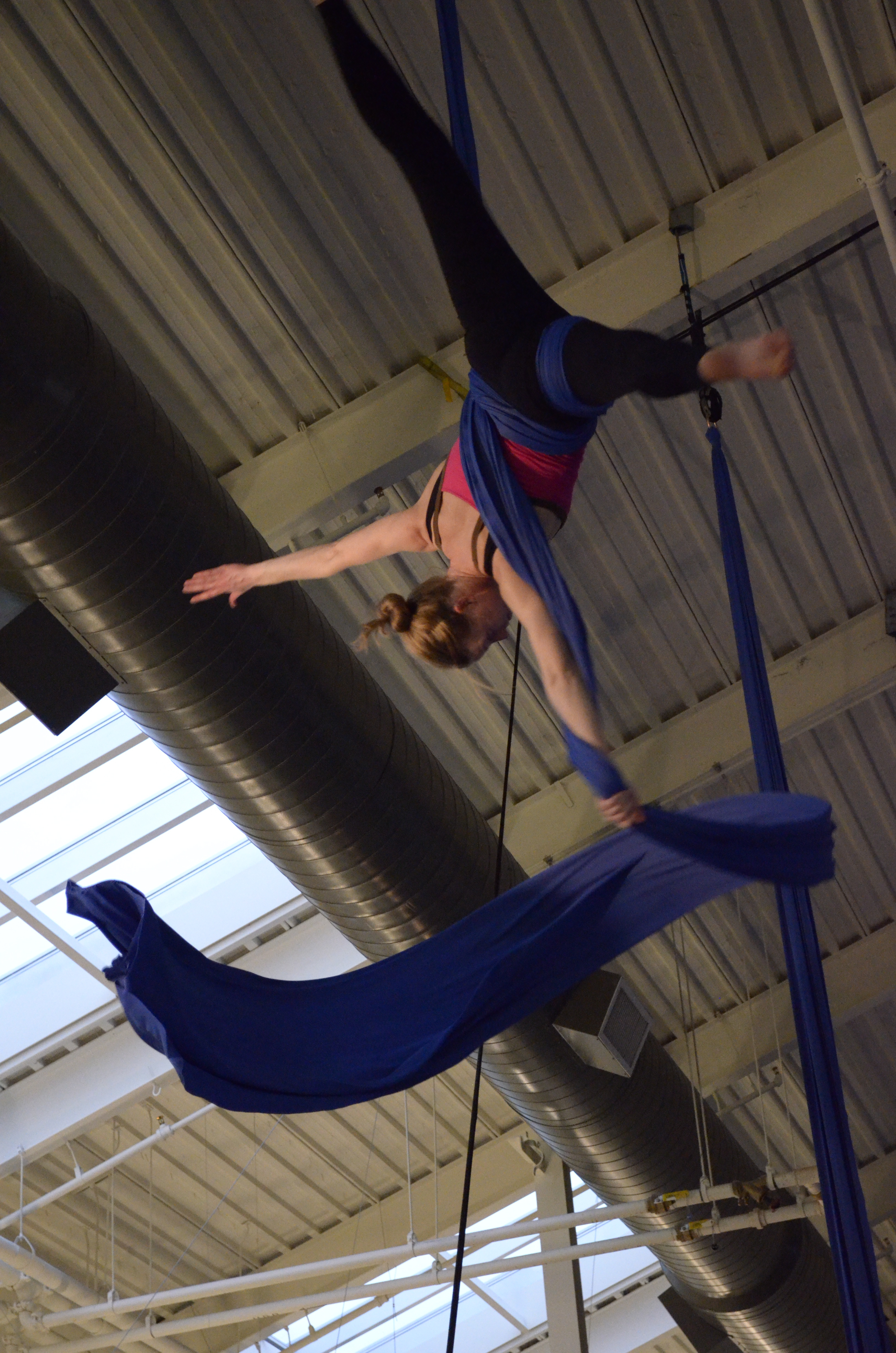
Aerial silk refers to a circus act in which performers delight and amaze you on apparatus called “aerial silks”. Aerial silks (also known as tissu) are two (or generally just one looped in half) long bolts of fabric suspended from the ceiling. According to this helpful Wikipedia blurb, performers of aerial silks “use the fabric to wrap, suspend, fall, swing, and spiral their bodies into and out of various positions.” Pretty much, except that for many skills (like tumbling), the end position may not matter as much as the transition (i.e. the exciting acrobatic tumble) that precedes it. Even if you didn’t know what they were doing, you’ve probably seen aerial silks performers whizzing about in Cirque du Soleil or perhaps beatnik-ing it up in the park, rigging their silks to a tree. Remember that thing, where there was this fabric hanging, and someone climbed it, and did some awesome tricks, and it was really cool?

Yeah, that was aerial silks. Oh yeah, and I do that. THAT’S why I call myself an aerial silks enthusiast.

Now when I say “I do that”, I mean simply that I’ve been training on the aerial silks for five and a half years with the Vancouver Circus School, first at their North Vancouver location, and now at their sweet digs in the New Westminster Quay River Market. I’m certainly no pro and I very much doubt a life in the circus is in my future, but it’s the most fun “exercise” I’ve ever found, it’s great for my posture, and I’ve learned to do a lot of things I think are pretty neat.

NiftySilk04

It’s pretty neat, isn’t it?

When I tell people about my extracurricular physical activity of choice, they usually want to know two things:

  1. Am I secured or harnessed in any way when I’m training on the silks?
  2. Have I ever fallen?
NiftySilk02

Look Ma! No harness!

The answer to Question #1 is NO, aerial silks performers are not secured or harnessed by anything. In order to perform on the silks, you need to be strong enough to climb them, and you need to know what you’re doing and how to wrap yourself (that’s really all you’re doing–climbing, wrapping, and either holding a position or tumbling/dropping out of one). If you haven’t wrapped yourself properly, you’re going to find that suddenly you’re not wrapped at all.

To answer Question #2, YES, I have fallen. Once. Halfway through my first year. It was my own damn fault (I was far too tired for the skill I was trying to attempt and my hands just let go) and I fell on my ass. I silk-burned my fingers fairly badly (yep, silks burn) and my confidence took a pretty big hit. Generally speaking, if you listen to your instructors, you will not get hurt on the aerial silks. But aerial arts are dangerous (see my answer to Question #1), so you do have to pay attention to your instructors, make sure you have enough energy and know-how for the skill you’re attempting, and, if there’s ever any doubt that you’ve wrapped properly or that you have enough energy, you’ve gotta climb back down and try again later.

My favourite thing about studying aerial silks with the Vancouver Circus School specifically is their focus on individual progress (while never sacrificing technique). I didn’t climb 20 ft to the ceiling on my first day and try to wrap myself while hanging upside down. Every student starts small with skills that can be done close to the ground (but still look pretty cool) and are a lot safer. As I became stronger and improved my technique, my instructors moved me onto more difficult skills. At this point, I’ve at least attempted everything my instructors have taught me, but now that I’ve got the basics down I’m able to pursue the skills that interest me the most and as well as create routines of my own (though I must confess I’m a little more lax on that). I also love getting a chance to watch other performers, either on the silks or on another piece of equipment (trampoline, aerial hoop, trapeze, etc.)NiftySilk01. Right now I take classes at the same time as VCS’s pre-professional “Ringmasters” group, and it’s inspiring to watch these young circus artists train. They’re light years ahead of me and it’s like getting a free little circus show every week.

Training on the aerial silks can be frustrating and exhausting–it’s hard work, it gives me silk burns and bruises, and sometimes my progress is excruciatingly slow. But no matter how crappy I might feel before I walk in, I always leave class feeling amazing. When I take breaks from training I dream about the silks. I know this is a practice that does me good, body and mind. And it’s helped my physical self be something I never thought I’d be–strong and graceful. Now I know what those long gangly arms were for–all the better to climb those silks, do something wicked, and go “ta-da” at the end. Besides, my arms aren’t gangly anymore–I’ve got pipes baby, and I know how to use them. With enthusiasm. In the air.

[P.S. Thank you TC for coming to class and taking pictures of me! You’re great!]

Beyond “Raising Awareness”: Theatre for Living presents “maladjusted”

From now until March 24, a much-needed conversation will be taking place at the Firehall Arts Centre. maladjusted, created, workshopped and presented by Theatre for Living (formerly Headlines Theatre), explores the challenges facing our mental healthcare system through a “forum theatre” event.

Micheala Hiltergerke and Pierre Leichner. Photo credit: David Cooper

Micheala Hiltergerke and Pierre Leichner. Photo credit: David Cooper

In the wake of recent tragedies, much lip service has been paid to “removing the stigma” of mental illness and ensuring that people suffering from mental illness or emotional distress are able to access the help they need. Unfortunately, with many of us, our involvement stops there. What we don’t realize, and what maladjusted exposes so well, is that getting people into the mental healthcare system is not enough–what do we do with them once they’re there? Is our current system, increasingly mechanized in the name of “efficiency”, sufficient to ensure our most vulnerable citizens receive care that is compassionate, sensitive to their needs, and actually healthy for them?

The answer, according to the many generous patients and mental health caregivers that comprised the show’s workshop participants, is a resounding no. The failure of an overburdened and increasingly impersonal system to properly diagnose and treat people with mental health issues is contributing to the escalation of already urgent situations. The first half hour of maladjusted is a play (in the traditional sense) that provides logical examples of the ways in which these shortcomings play out for patients, families, and caregivers in a system like ours.

But this would be nothing new. We are used to theatre that exposes. We are used to theatre that points a finger and says, “This. This is a problem.” And we are all used to theatre, films, art, and events that “raise awareness”. Theatre for Living takes this process further, beyond the pointing of the finger and the raising of the awareness. They say, “This. This is a problem. Now what would YOU do about it?” And most importantly, they let us answer.

It’s hard for me to describe just how the forum theatre format allowed me to participate in a discussion about mental health and human-centred care (you’ll have to experience it for yourself), except to say that my own understanding of the issues was heightened, my ability to empathize was increased, and I felt that my role in the evening was empowered. Instead of passive audience members, we became actors in our own right (some on the stage, and some within the human transactions and interactions we’ll be having in our own lives).

Central to the empowerment provided by this important conversation is the creation of a Community Action Report. As different issues are addressed during the forum portion of the evening, the audience is asked to suggest specific policy changes that could help patients, caregivers, and families better navigate the mental health system in a way that works for them, rather than for efficiency or budget figures. Each night, the show’s Community Scribe takes down the ideas put forth. According to the company,

“Theatre for Living has written agreements from various mental health organizations including The Mental Health Commission of Canada and The Canadian Alliance on Mental Illness and Mental Health to use the  maladjusted project and the resulting Community Action Report to inform their policy development.”

By attending the show as an audience member, you contribute to this necessary conversation. I left the Firehall that night feeling, somehow, that I had done a good and necessary thing. I didn’t feel powerless against the huge issue I’d been presented, though I had a better appreciation of the challenges and the stakes.

maladjusted runs at the Firehall Arts Centre, Tuesday to Sunday at 8pm, from now until March 24. Tickets can be purchased online through the project webpage.

Disclosure: My ticket to maladjusted was provided by Theatre for Living. The content of my review remains my own.

Project Limelight Presents “There’s No Place Like Oz”

When I was growing up in rural Saskatchewan (and partially in Europe), the opportunity to participate in theatre was one of the greatest gifts my parents and schools could have given me. Theatre gave me a way to keep playing dress-up long after my peers no longer thought it was cool. The stage was a place where I could be confident, unselfconscious, and (blissfully) anything, or anybody, I wanted to be. Being involved in productions kept me focused, gave me something to look forward to, and brought me those weird, it-all-happened-in-the-dark, we-bonded-in-cue-to-cue type friendships that only other theatre artists can understand. In my darkest hours, the responsibility of maintaining myself as a performer (body, voice, health) kept me from making some bad choices as I tried to deal with the academic and emotional hurdles life brought me.

d58e5a79e1deb00e6b78f5f9f952197dWhen I learned about the Strathcona-based Project Limelight Society, a free theatre program for East Vancouver youth, I couldn’t think of a more positive way to engage children and young people with the arts, their community, and with their own talents. According to their website, the Project Limelight Society was founded by former film industry professionals (and sisters) Maureen Webb and Donalda Weaver, as a way to support and give back to the community they were raised in. Designed for youth aged 8-15, each four-month session teaches and develops performance skills as participants prepare for a full-length production. Enthusiasm and commitment from participants seems to be the name of the game, with no previous experience required. And of course, it’s offered at no cost to the participants.

Hold on, you say, what about that full-length production you mentioned? Oh yes! The young performers of Project Limelight will be treading the boards later this month at the Djavad Mowafaghian Cinema (SFU Woodward’s) in their upcoming production, There’s No Place Like Oz, loosely based on the children’s classics by L. Frank Baum.

Project Limelight Society presents THERE’S NO PLACE LIKE OZ, featuring 18 young performers, ages 8 – 12, who have worked together to create a show for their friends, family and community. THERE’S NO PLACE LIKE OZ, in the tradition of Pantomime, combines audience interaction, music, comedy and dance, and is suitable for audiences from the very young to the young at heart.

At Project Limelight, we want to unleash the imagination, awaken curiosity and give young people the opportunity to experience the magic of applause. Our program offers youth living in Vancouver’s Eastside, a safe place to build an artistic community.

[Read the full show description on Project Limelight’s website.]

There’s No Place Like Oz will be running for ONE DAY ONLY (two performances) so make sure you know the details:

Sunday, February 24, at 2:00 pm and again at 6:00 pm

Djavad Mowafaghian Cinema in SFU Woodward’s (Goldcorp Centre for the Arts)

Tickets are $15/$10 and can be purchased online through the Project Limelight website.

If you would like to support the work of the Project Limelight Society but will not be able to attend the show, donations to the program can be made through their website.

Happy Valentine’s Day everybody (once again, it seems, East Vancouver has stolen my heart…)!

xoxo

Anne of Green Gables, NOW BLONDER AND BUSTIER!

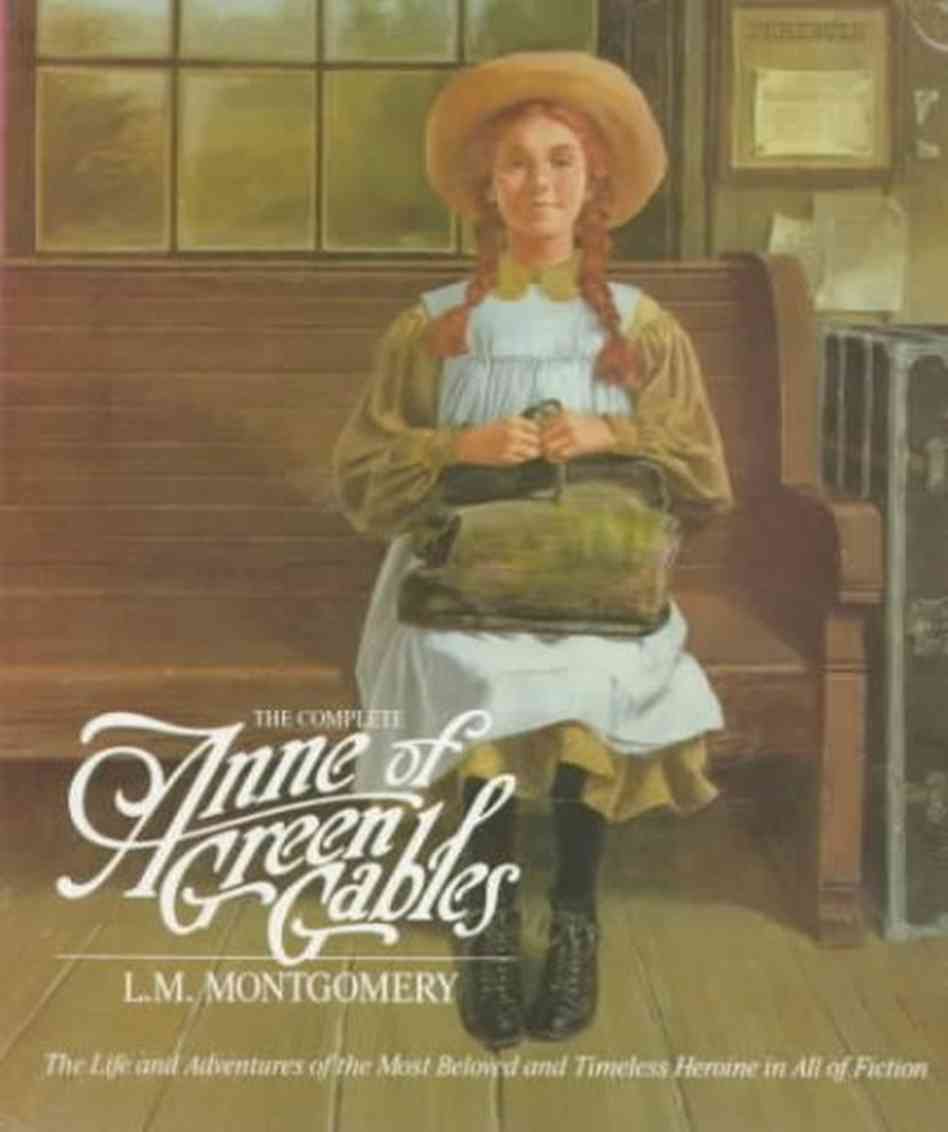
Even if they haven’t actually read the classic book by L.M. Montgomery, people who are at all familiar with western literature or culture will know that THIS is Anne of Green Gables:

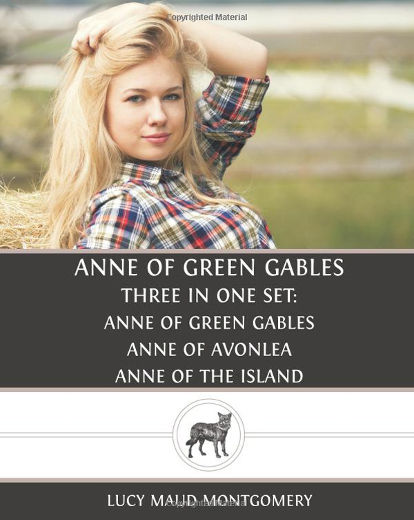
9780553609417_custom-ca4455d0c15d99fc51ea2900942fec2d9c13388c-s6-c10And that this monstrosity, on sale on Amazon.com since November 2012, is most definitely NOT:

1297373144312_ORIGINAL

[If the sexy photo moves you to indulge in some turn of the century Canadian kid’s lit, look no further than right here on Amazon.com!]

I mean, what the hell is going on here? There are two very, VERY big problems with this:

PROBLEM ONE: Anne of Green Gables is a redhead (though amazingly no one at the bookselling giant Amazon.com seems to know it).

Everybody knows that Anne Shirley has red hair. This fact is repeated over and over and OVER in the book. Anne’s redheadedness, and the way she reacts to peoples’ comments about it, is an integral part of who she is. Anne’s red hair is the reason she snaps at Rachel Lynde. It is the reason she cracks a slate over Gilbert Blythe’s head. And it’s the reason she accidentally dyes her hair green (in an attempt to turn it “a beautiful raven black.”). Though in later books Anne’s hair colour does deepen, it becomes auburn, which is really just a fancy way of saying dark brownish red.

Anne was not, is not, and never will be, a blonde.

PROBLEM TWO: Anne of Green Gables is an eleven year old girl.

Anne Shirley is a skinny, poorly dressed, redheaded little orphan girl with big eyes and incredible innocence. She’s also intelligent, studious, and extraordinarily sensitive. She has no interest in the boys in her life except as friends or academic rivals.

She’s certainly no buxom, bedroom-eyed sex kitten leaning on a hay bale.

That any publisher or purveyor of CHILDREN’S LITERATURE would be comfortable with the sexual objectification of the eleven year old heroine of a classic children’s novel is absolutely shocking. It’s like draping Wendy Darling over Skull Rock in a bikini, or letting Alice stomp all over Wonderland in fishnets and stilettos. There are times when adding sex appeal is not the way to sell a product. When the product in question is eleven years old (even fictionally), you know it’s one of those times to keep your sexy thoughts to yourself.

I don’t really have a problem with the young woman in the photo on a personal level. She’s probably just some model who ended up in a collection of stock photos of “girls on farms”. She likely had no idea that her contemporary sexy blonde farm girl photo would grace the cover of a much-loved children’s classic (first published in 1908) about an eleven-year-old girl with red hair who lives on Prince Edward Island.

I do, however, have a big problem with Amazon.com, and their publishing company “CreateSpace Independent Publishing Platform“. I find it amusing that in Amazon’s free preview of the first few pages of the book, the words “Copyrighted Material” appear emblazoned all over the place. As if either Amazon or CreateSpace can claim any ownership of L.M. Montgomery’s actual words. It looks more like they just took a public domain manuscript, didn’t read a word of it, and slapped a foxy cover on it in an attempt to make a quick buck. Which seems to be exactly what has happened here.

It is obvious that Amazon.com, despite being a bookseller and controlling a publishing company, has no knowledge of or love for literature. If they did, they would have read the book they published, realized right away that Anne is very vitally a redhead and a child, and put a redheaded child on the cover (if they needed a photo at all). I had always assumed that in order to be a purveyor of books, a company would actually, you know, know/care about books. Apparently not.

Though I am among the many who feel in their bones that a great crime against literature, childhood, and authorial intent has been committed, in all probability what CreateSpace and Amazon.com have done is okey-dokey in the eyes of the law.  The book Anne of Green Gables and its sequels have been in the public domain for a long time. If a publisher wants to slap a sexy blonde on the cover of it, they probably can. And if Amazon.com wants to peddle that smut, it’s within their rights to do so.

That doesn’t mean they should. Some things are just sacred, and childhood classics are one of those things. I suppose if representing Anne Shirley as a sexy blonde woman is fine, it’s probably equally fine, in terms of legality, to display her in a Nazi SS uniform, driving an SUV and punching a kitten. I’m sure there are those who would find this hilarious or titillating, but they can find that kind of crap on 4chan or on late night television if they so choose.

They don’t need to find it on the cover of L.M. Montgomery’s beautiful childhood classic. And they don’t need to find a voluptuous blonde there either.

PuSh 2013: Opening Gala (Crossing the Line)

unnamedOne of the things that I’ve always admired about the PuSh International Performing Arts Festival is that, well, they push the arts. They push culture. And Vancouver’s arts community is the better for it. Nowhere is that so obvious than during the PuSh Opening Galas, fun events that incorporate music and interactive performances with libations and dancing. The PuSh 2013 Opening Gala was held this year on Monday night at Club Five Sixty on Seymour.

At this year’s Gala (more than at any other PuSh Gala I think) I actually paid attention to the opening speeches (did it have anything to do with the fact that one of my favourite musicians, Dan Mangan, was an MC? Possibly). From Dan Mangan himself, and Vancouver’s Mayor Gregor Robertson, and PuSh Executive Director Norman Armour, the message rang loud and clear: the arts are important and we should protect them, fight for them, and (dare I say?) fund them. With the closure of the Waldorf in East Vancouver on our minds (not to mention other high-profile closures in the past year, including the Vancouver Playhouse Theatre Company), it seems to be a dark time to celebrate “crossing the line”, as the PuSh Festival is asking us to do over the next two weeks.

So why do they do it? Why spend a tremendous amount of time, effort, and money on a two-week international performing arts festival? Because we need it. Because festivals like PuSh represent a coming together of the very best of the performing arts community, and a commitment to refuse complacency, refuse mere satisfaction with where the Vancouver performing arts scene is today, and to push to the envelope (there’s that word again), and audiences, into new territory, artistically and geographically (with productions from as far away as Taiwan, Argentina, and Belgium). Only by seeing what we’ve never seen can our arts community strengthen and become what we’ve never yet been–safely sustained, more than hand to mouth, more than dependent on the capricious whims of provincial and federal funding.

More than just a seat-warmer for an eventual condo development to move in.

One of the PuSh Gala’s interactive performances this year, Open Book (inspired by Human Library, a production brought to PuSh 2013 by Denmark’s Stop the Violence), is an excellent example of performing art’s capacity to “cross the line”, and to bring its audience with it. In the eerie Club Five Sixty basement, my TC and I had the opportunity to check out a “human book” for a 10-minute conversation. I checked out Patti, a psychic, who explained to me what being psychic means to her life (it makes it calmer, she says) and who believes that all people have the capacity to tap into their intuitive and psychic abilities. TC had a conversation with Bruce, a legally blind painter who uses acrylics to create highly textured works and who paints the irregularities of his limited vision onto his pieces. A performance like Open Book is not traditionally what one would consider theatre–and yet it is live, it is an experience, it is not designed to be therapeutic or necessarily educational but simply to push us, through the power of a simple conversation with a stranger, into a new place (in this case, another person’s, a real person’s, experience).

Of course the Gala got me excited about What To See. What to see, what to see? Every year I have to make tough choices and every year I miss something amazing, simply because most of the festival is amazing and I can’t see even half of it. Every event at the festival (and Club PuSh) seems intriguing, new, virtuosic. Two pieces in particular are calling to me–Ride the Cyclone (Atomic Vaudeville, Victoria BC) and The Strange Undoing of Prudencia Hart (National Theatre of Scotland, Glasgow). TC’s top pick: Reich + Rite with pianist Vicky Chow (Music on Main, Vancouver). But there’s so much more, always so much more, and so many ways to cross the line.

To see what the PuSh Festival has to offer this year, and decide how you want to cross the line, visit the PuSh website at www.pushfestival.ca. For more about specific PuSh events (plus the event calendar and program guide), visit the Festival Events page.

Disclosure: My TC and I received comps to the PuSh Gala this year, as I have every year I’ve gone, because I have blogged and tweeted, and continue to blog and tweet, about the Festival.

Relephant’s “Ordinary Days” Packs an Extraordinary Punch

Warren (Stephen Greenfield) and Deb (Jennie Neumann). Photo: Jessie van Rijn

Warren (Stephen Greenfield) and Deb (Jennie Neumann). Photo: Jessie van Rijn

If you have a case of the Januaries (Christmas is over, winter’s still here, it’s dark, it’s cold, it’s wet, you’re back at work and your New Year’s resolutions are already broken), Relephant Theatre‘s production of Adam Gwon’s Ordinary Days may be just what you need. A tight and funny chamber musical about life in the Big Apple, Ordinary Days celebrates the very, well, ordinariness that can make city life such a drag sometimes.

A good show starts with a good script, and the folks at Relephant Theatre have picked something special. Gwon’s touching and humourous vignettes could describe life in any North American city, and this is where the script’s strength lies. There is very little in the play that I couldn’t relate to–the search for calm in a busy metropolis, apartment life (and trying to find space for all your junk), being late and stuck in traffic–and I was surprised by the way this relatability managed to tease tears from my eyes again and again (by this I mean I was actually crying a little bit through most of the play. About nothing more extraordinary than ordinary life). I was also laughing a lot–a sung e-mail from a harried grad student (Jennie Neumann) to her thesis supervisor was a particular highlight.

A play so focused on celebrating the mundane needs to work very hard to avoid cliche. Gwon does an terrific job of this right up until the end, where unfortunately an emotionally manipulative plot twist sticks out like a sore thumb. The play already had me by the heartstrings and I really hadn’t needed the extra pull. I felt alienated instead of drawn in, and removed from the ordinariness that had made the script so compelling in the first place. This is, however, a minor and personal quibble in a play that is overall so incredibly enjoyable.

Based on the two Relephant productions I’ve seen (The Exquisite Hour was a delight last spring) and my conversations with co-producer Jessie van Rijn, Relephant Theatre is a company that never bites off more than it can chew. Its productions are thematically whimsical, technically tight (even on a shoestring budget), and lovingly performed. You won’t be pushed into the obscene or completely obscure (if that’s your thing), but you will enjoy your night at the theatre.

What more could you ask for from an ordinary day?

Ordinary Days runs in the Large Studio at Carousel Theatre (1411 Cartwright Street, Granville Island) until January 19. Tickets are available at the door (cash only) or online through Brown Paper Tickets.

Logistical tip: For this production, the Carousel Studio is set up with chairs and stools. The stools provide a more unique view, but if you require back support you should stick the chairs in the risers.

Disclosure: I was asked to review Relephant Theatre’s production of Ordinary Days and provided comps by the company. I also have a friendly professional relationship with Jessie van Rijn through her past work at the Carousel Theatre Company. At no point was I asked for a positive review.

Truth Be Told Theatre presents THE LIFE GAME VANCOUVER

lifegame(newtag)Given its spontaneous nature, improvisational theatre and comedy often go hand-in-hand. The goal of many improvisational performances is to make people laugh, and the goal is usually achieved. The Life Game, created by improv guru Keith Johnstone and presented by Vancouver’s Truth Be Told Theatre until December 16, works a little differently.

In most improvisational theatre (read: comedy) I have experienced, the focus of the show is on the performers and how well they handle the unexpected. In The Life Game, the focus of each show is a guest (a different one each time) who volunteers to describe moments of their life to the audience and to the cast, ringing a bell if the performers are re-creating the moments accurately, blowing a horn if the re-creation seems off. Guests are reminded that they are not responsible for making the show interesting, and the show works best if the guest is not concerned with this.

The performance I attended last Friday was a bit unusual, in that instead of interviewing an invited guest, the company interviewed guests from the audience. The first guest, Lisa, described her childhood and her dynamics within her family. Using stock props and set pieces, the performers set up her bedroom as it had been in childhood. It was, to put it simply, really really cool to watch performers take on Lisa’s descriptions of her life, and to watch Lisa physically step into her re-created childhood bedroom. From the day Lisa told her little sister she was adopted (a cruel lie to tell a younger sibling), to an imagined show-down between Belle (Lisa’s favourite Disney princess) and the evil queen from Snow White (Lisa’s bogeyman), Lisa’s life was the focus of the performance and it was funny and engaging.

After the intermission, I was asked to be the evening’s second guest and I accepted. It was a very interesting experience. Watching my heart break as my friend Carmen told me the boy I was infatuated with started dating someone else a week after he kissed me under the starlight broke my poor little heart all over again, but also made me laugh. When my “interviewer” turned to my current partner, TC was pointed out and he was invited to join me on the stage as we helped the cast re-create the moment of our engagement. Funnily enough, the actors we had chosen to play us were engaged in real life, and like us, had used an heirloom ring (nifty!).

Ultimately, the point of the show is that ordinary lives are beautiful, interesting, and extraordinary. Each show interviews a different person, and different life experiences are created for the audience. It’s a simple and elegant idea, and the talented cast and crew of Truth Be Told delivers. This is an innovative show you should definitely see once, but should probably see more than once, since every night is brand-new.

The Life Game Vancouver runs until December 12 – 16 at 8:00 pm, at Studio 1398, Granville Island. Tickets are available online or at the door (cash only).

Disclosure: I was invited to attend The Life Game Vancouver and provided comps. I was not asked for a positive review and my views remain my own.