“Jason and the Argonauts” at Carousel Theatre (epic theatre for smart teens)

Every once in a while, I have the pleasure of reviewing a show presented by Carousel Theatre. Every once in a while, I also have the pleasure of guest-posting for my friend Raul Pacheco-Vega, of Hummingbird604.com.

Never before have I had the pleasure of doing both AT THE SAME TIME.

Well now I have.

The following is my review for Visible Fictions’ Jason and the Argonauts, being presented by Carousel Theatre until April 29th. To see my review in all its glory, please visit the actual post at Hummingbird604.com.

Heroes. Villains. A quest for destiny. Treachery. Sea monsters…Ken dolls?

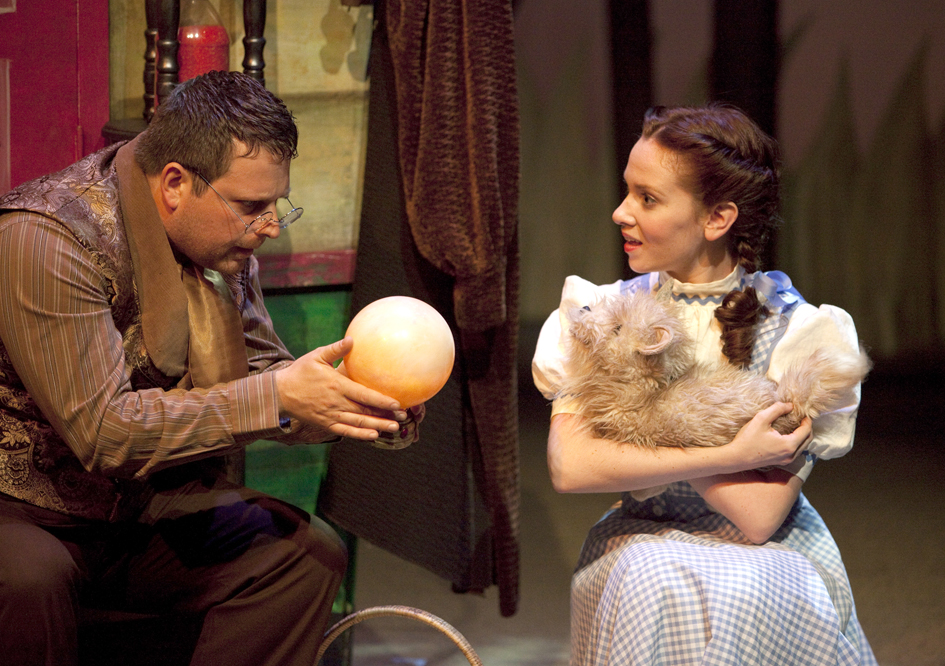
Using only the contents of an old trunk and a wooden cart (designed with breathtaking cleverness by Robin Peoples), Scottish actors Tim Settle and Simon Donaldson of Glasgow’s Visible Fictions energetically retell the Greek myth of Jason and his quest for the Golden Fleece with intimacy, humour, and virtuosic performances. With shows at the Waterfront Theatre until April 29, Jason and the Argonauts marks the end of the 2011/2012 season of literary classics presented by Carousel Theatre.

Jason also marks one of Carousel Theatre’s first steps towards offering programming for older youth audiences and though younger children (age 7 and up) will still find much to enjoy, it is adolescents and teenagers (and their parents!) that will appreciate this ingenious retelling of the ancient story the most.

While at first your smarty pants youngster (or you) may be incredulous that the story of “like, 50 guys who are supposed to be on a boat with monsters and stuff, and you know, like, a beautiful princess” can be told effectively by only two actors (both men), the magic of Visible Fiction’s Jason and the Argonauts is not only found in the story itself, but in the way in which Settle and Donaldson are able to convey it using only their abilities as performers and the few props at their disposal (Ken dolls, paper boats, and sticks are used to great effect in this production). The gasps from the Saturday-night audience as the Argo appeared from seemingly nothing did not go unnoticed (or uncommented upon) by the actors. It is this back and forth between performers and audience, and this recognition of our intelligence and interest, which allows us to wholeheartedly root for the characters of “Andy” (Settle) and “Josh” (Donaldson) as they take on the telling of this epic quest for glory and justice.

Incredibly disciplined performers, Settle and Donaldson play the dramatic moments of the story as well as they do the comic ones, with real sorrow, tyranny, and danger all alive on the stage as Settle and Donaldson make switching from one character or scene to another look as easy as breathing. The show is charming, intelligent, and thoroughly entertaining.

Jason and the Argonauts is also a breath of fresh air from a continent whose tradition of theatre is centuries more well-established than our own, and therefore, whose expectations of their what their audiences will be able to engage with seem to be much greater. Precious few theatre companies (especially those who wish to be accessible to younger audiences) would be comfortable staging or presenting such a complicated two-hander, with worries that the constant switching between characters (and the lack of costume changes, etc. to indicate the switch) would make the show “too confusing” for audiences to follow. Visible Fictions trusted their actors to tell the story, and trusted their audience to follow it. Carousel Theatre has placed its trust in us and in its older youth audience as well, and guess what? We can follow Jason’s journey just fine.

In fact, due to Carousel’s practice of holding Q & A periods with the actors after every show (not just on a special “Q & A Night”), watching a more complex show like Jason and the Argonauts can also be incredibly instructive for those pre-teens and teens of yours who are interested in theatre. When I attended on Saturday, a large group of high school drama students were seated in the first two rows. I was impressed by their intelligent questions (see? We don’t need to “dumb down” great theatre!) and by Settler and Donaldson’s thorough replies about their training, rehearsal process, their lives as working actors, and the physical and psychological skills they employ to find and maintain so many different characters in one show.

It is wonderful to see a show that is both accessible and enjoyable AND assumes its audience to be sensitive and intelligent. I am excited that Carousel is pursuing programming for older youth audiences and hope to see more productions of the same caliber in their future seasons.

Jason and the Argonauts will be performed at the Waterfront Theatre until April 29, with school performances during the week and public performances Friday and Saturday evenings at 7:00 pm, with 2:00 pm Saturday matinees. Tickets can be purchased online through Carousel Theatre’s website, or by calling their box office at 604-685-6217.

Disclosure: My ticket to see Jason and the Argonauts was provided by Carousel Theatre. I maintain full control over my writing, and of course, Raul maintains full control over any content posted on Hummingbird604.com.

It was truly a pleasure to review this show, and a pleasure to be able to share it through Hummingbird604.com. I’ve thoroughly enjoyed attending and reviewing Carousel Theatre’s 2011/2012 season. Now that it’s over, I’d like to extend a big thank you to Raul for putting Jessie van Rijn (General Manager for Carousel) in touch with me in the first place, and Jessie for continuing to invite me back and being so lovely to deal with. I’ve had a fantastic season with YA theatre (and I don’t even have kids!).
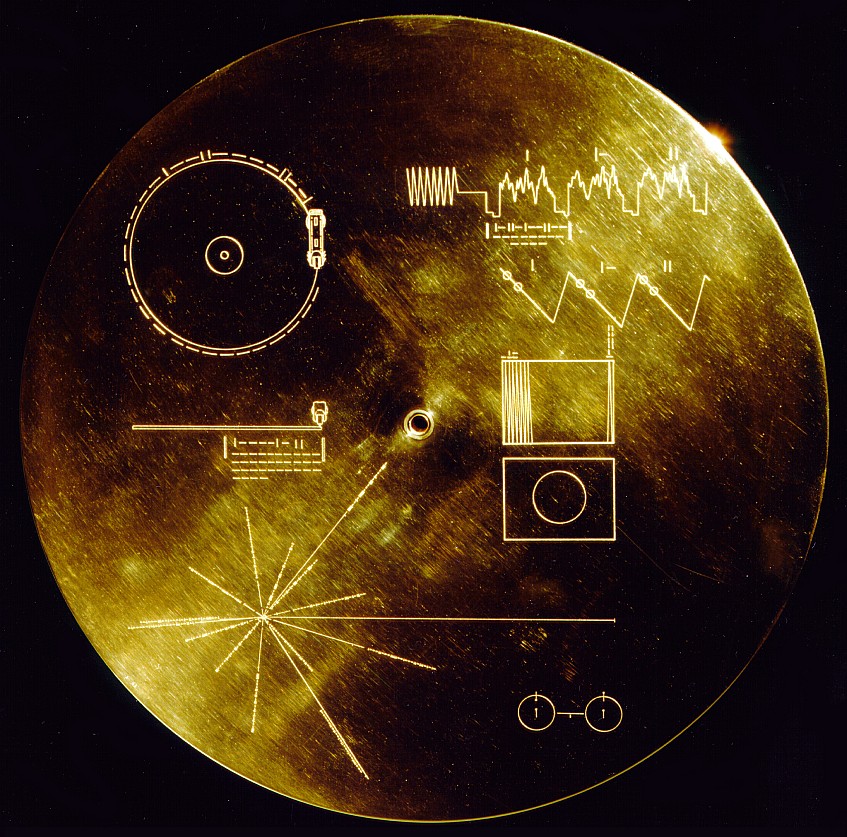

Conceptual Art I Like (on Srikanth Reddy’s “Voyager”)

Cover of the Voyager Golden Record, on board the Voyager spacecrafts.

I must admit that before this spring, if you had asked me if I liked conceptual art, my answer would have been an unequivocal no. Signing a urinal, calling it “Fountain” and selling it for lots and lots of money seems to me to smack more of douchebaggery than of genuine creative passion. Oh I know conceptual art is about process, and process can be interesting. I know it’s often meant to be intellectual, not emotive, and the intellectual can be interesting.

But a bunch of scenesters making whatever crap it comes into their heads to make/write, giving it some smart or artsy-sounding title, claiming it’s about “the suffering of the existential spirit in a post-apocalyptic Nietzsche world” or some such B.S. and then labelling it “conceptual” as a way to weasel out and seem clever when someone points out that it’s just a huge piece of crap that took neither talent nor brains to create is NOT the kind of culture I tend to enjoy.

I’m not saying that I need the art I engage with to be accessible. I don’t. But I need to be able to see intention on the part of the creator, a real question or form being tackled. If the artist hasn’t invested time, talent, or brains in a piece of work, as an audience member (or reader), I don’t feel the need to invest even an iota of my time and my brainpower trying to respond to something that was never a sincere question in the first place. To those that smile smugly and say I just don’t “understand” their work, let me say that I can usually tell the difference between something that has energy and genuine engagement invested in it (even if it’s not my taste), and something that’s just a pile of trash thrown together. Let me also suggest that you stop being an asshole and make an actual effort next time.

Luckily for me, I have been exposed to two pieces of conceptual poetry this semester that have really knocked my socks off and shown me that the conceptual can be effortful. The first was Inger Christensen’s alphabet, a complicated alphabet poem that grows according to the Fibonacci sequence. The second is Srikanth Reddy’s Voyager, and if you ever want to read a really intentioned, committed, and effortful piece of conceptual literature with a concept that’ll blow your hair back, this is the book for you.

To summarize the awesomeness:

Unless they’ve studied history or politics, people in my generation may not know much about Kurt Waldheim, former Secretary-General of the UN (1972-1981). I certainly didn’t before this semester. To bring you up to speed, Waldheim was Secretary-General when the Voyager spacecrafts were launched into deep space in 1977. It is his voice which speaks for humanity on the Voyager Golden Record, a copy of which is aboard both spacecrafts.

All of this would be well and good, (you know, the UN Secretary-General representing the planet, etc.) if it weren’t for the slightly unsettling fact that Waldheim has been accused of being a Nazi war criminal and though he apparently “didn’t know” about the routine execution of civilian prisoners close to where he was stationed, and “didn’t know” about the rounding up of Jews to be sent to Auschwitz, it does make one uncomfortable to think of his voice as being representative of the entire human race.

This “disappearance” from memory of major and obvious wrongs has since been called “Waldheim’s disease”, in reference to Kurt Waldheim’s convenient ability to not remember or know anything about the horrible atrocities which surrounded him during his time as an SS officer.

What does Kurt Waldheim and “Waldheim’s Disease” have to do with conceptual art and Srikanth Reddy’s Voyager, you ask? Well, Waldheim wrote an English-language memoir called In the Eye of the Storm and when Reddy sat down to write his political book-poem Voyager in response to “Waldheim’s Disease” he did so not by writing words from his head but by taking a chapter of Waldheim’s memoir and then crossing out most of it, leaving the words that comprise Voyager behind. Reddy did not use any words that were not in this chapter, and did not change the order that the words appeared in the book (he actually did this three times to the same chapter, making the three “Books” that comprise the poem).

This is what blows my hair back: Reddy wrote an entire book in response to a man’s erasure of history by erasing that man’s memoir. Reddy’s concept is his message. Reddy’s voice is within the voice of his subject (it doesn’t get much more “engaged” than that). He doesn’t tell us how erasure and disappearance changes that which is revealed. He shows us. Is your mind blown yet? Mine is.

The best part is that Reddy doesn’t rest on the laurels of his amazing process (which can be viewed at tiny.cc/voyagermethod). The incredibly intelligent and disciplined commitment to his concept aside, Voyager is just a damn good poem. In Book Three, a hell-dwelling Minister keeps a zoo of political leaders, harpoons one, and eats the man’s skin raw, “which he insisted/ was the best way/ to eat a respected/ former Congressman.” Keep in mind that all of these words do exist, in this order, in Waldheim’s memoir, and it is only the erasure of words by Reddy that leaves these lines behind. KA-BLAM.

"Voyager", published by the University of California Press

THIS is a concept I can get behind. This is art whose point is its concept (a very clever one, I might add) but because the work was sincerely tackled by the artist, who took the time to truly empathize with his subject (so much so that the poem blurs the lines between the poet as a separate voice commenting on Waldheim and Waldheim as a voice of the poet himself), the book becomes so much more than concept. This book is not even a condemnation of a former Nazi officer. It is a thorough and passionate engagement with a political figure and with what is shown and hidden in history.

Like a lot of conceptual art, Voyager will make you feel small. But you will not feel small in the face of inaccessibility and a sense of douchebaggery. You will feel small in the face of an overwhelming feat of creation and literature. This is the kind of small you want to feel when you experience any art, conceptual or otherwise.

Read it. Engage. Blow your mind.

I’m good at something. Now what?

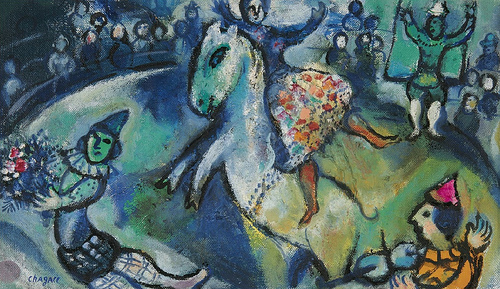
Scene de Cirque by Marc Chagall

When I was in high school, I read an essay in English class about a girl who wanted to grow up and play with Lego. When told that “playing with Lego” wasn’t a career like being a doctor or a teacher or a lawyer, the girl was undaunted. She went to university, eventually completing a master’s degree in architecture (incidentally, her final project model was built with Lego), and somehow or other she landed a job with the Lego company developing the new Lego sets. Now her office is filled with every Lego piece she could ever need (with people on call to provide her with additional pieces if required) and she makes her money playing with Lego all day long. The moral of the story for all of us high school students preparing to go out into the world and seek our fortunes was “Make your vocation your vacation!”

I guess this means that we’re supposed to find that thing we’re really good at doing, our calling, so to speak, and make pursuing it as fun and awesome (and lucrative) as possible. Appealing, but easier said than done.

The fact of the matter is that many people, like me, are decently good at several things but aren’t necessarily geniuses in any one thing. Our vocation is not obvious, and the means to turn whatever our calling is into our livelihood (i.e. into money we can LIVE on) are vaguer still.

It has now been almost three years since I finished my BFA in Theatre Performance, and finally it has begun to become abundantly clear to me why I have not jumped at every performance opportunity (for the most part unpaid) that has come my way since. At first, of course, I said I couldn’t possibly get time off work to audition or rehearse, and then, of course, I couldn’t quit my job because I had over $20 000 in student loans to pay off and then, of course, I moved into Vancouver from Burnaby and rent was simply too high to allow me to give up my job and then, of course, I got hired on a continuing contract WITH BENEFITS (and you’d be a fool to give those up), and then, of course, I was travelling, and then, of course, and then and then and then.

The result of all of these “and thens” is that I am not an actor right now. And you know what? I think I’m not supposed to be, at least not as my vocation. Obviously there are many actors in this city who aren’t acting all the time, but they are trying– they are getting flexible jobs that allow them to fit in rehearsal schedules, they are auditioning, they are continuing to train through workshops and intensives, they are performing in every damn thing they can perform in, and when they aren’t performing, they are itching to fulfill the artist within by getting back onstage, sinking their teeth into a role, and performing the hell out of something.

These people are actors. These people are not me. Firstly, I am either too lazy or too cheap (or maybe both?) to find a more flexible (i.e. less secure and well-paying) job, audition, pay for workshops (which are pricey!), etc. Secondly, and more importantly, when I have gone through static, less artistic periods of my life, it wasn’t performing that I itched for. It was creating.

Although I’ve always loved performing, and when I do perform I will always try my damndest and have lots of fun, I’m not itching to be Blanche DuBois, or Electra, or Lady Macbeth (well, maybe Lady M because WHO WOULDN’T?). I’m not really itching to be any character, or any thing. I’m itching to be the one to call amazing things into being.

Being an actor seemed to be a natural choice for me because I always loved to play pretend. But was it being somebody else that I enjoyed, or was it the creation of these other versions of my childhood self (their world, their powers, their adventures) that I loved? I think somehow I’ve always wanted to be all the characters, I’ve always wanted to make their whole world. I want to manifest what exists in my imagination and try to communicate it through language. I want to tell stories. I want to plant images in people’s heads. And I don’t just want artistic fulfillment, I want intellectual fulfillment. I want to write.

And that is why I do. That’s why I blog. That’s why I loved co-creating Troika! last year with my friends. That’s why I’ve got a bunch of (mostly crappy) unfinished work languishing in notebooks and, more recently, on my computer. That’s why I agreed to adapt a Greek tragedy for some theatrical friends of mine. That’s why I went back to school to study English literature and am currently studying writing poetry. THIS is what I’m not too cheap or too lazy to do. THIS is what I’m itching for.

And you know what? I’m decently good at it. I’m not being vain. I’m just owning up to what is becoming more and more obviously my vocation. Funnily enough, it’s in poetry that it has been suggested that I pursue graduate studies. Apparently, I’m decently good at it. At poetry. Huh.

I know I’m no genius poet. I’m not Inger Christensen, whose alphabet (brilliantly translated by Susanna Nied), a 70+ page poem based on the Fibonacci sequence, is the most elegantly constructed piece of literature I have ever beheld (and all this intense mathematical form without sacrificing contact and image at all!). I’m not Franis Ponge, whose obsession (and faculty with) describing the thingness of things has been intriguing and inspiring to me this semester. But I’m decently good at writing poetry. I feel good about it. Writing poetry is, to me, a delicious act.

I found something I’m good at! Yay!

Now what?

The last time I checked, being a poet was not a…lucrative…career choice, and unlike acting, there is no way to “make it big”. Studying poetry at the graduate level would be incredibly artistically and intellectually fulfilling. It would also financially impoverish me (and let’s not forget I want to continue to study other creative writing forms too! $$$!).

I am at the point in my life where I have realized that I can’t live my “double life” forever: the life of a responsible full-time administrative assistant combined with the life of the unpaid creative. Though I’m delighted that I’ve found a vocation (and delighted that I have a job that allows me to live comfortably for now), there’s no vacation in working at work and then going home and working on my creative pursuits. It’s taking its toll on me, and when I’m older and have kids and a mortgage and backyard chickens or what-not I simply won’t be able to do it all.

I’m also at a point where I realize that to go any further into any kind of career (except within my admin job, I guess), I need to further my education through either graduate studies or professional certification. While on the one hand I am worried that it would be irresponsible to spend money and time on an education that will not advance my career and earning opportunities (like a graduate degree in poetry), I am even more uncomfortable with the idea of spending time and money obtaining certification or a graduate degree in something that will not make me happy, especially when it’s not really the thing I’m really meant to be doing anyways.

So what to do? I’m not sure. At the moment, I’m grateful that I can make my life work for me. I’m grateful that I’m beginning to understand what my goals are. I’m grateful for my job and for all the amazing things that I’m learning in my classes. I’m grateful for my theatre degree–without it I would not have cultivated the work ethic and artistic questioning necessary to be as creative as I want to be. Hopefully I’ll find my way. We can’t all play with the proverbial Lego all our lives, but I’ll build my magical cities for as long as I can. I’m meant to.

Not Just for Kids: A Year With Frog And Toad at Carousel Theatre

Going "cookie for cookies!" - Todd Talbot, Josue Laboucane. Photo credit: Tim Matheson

Every once in a while I am lucky enough to see a production that I find so in every way delightful that even the act of writing or telling other people about it is delightful too. This is how I feel about Carousel Theatre’s A Year With Frog And Toad, playing at the Waterfront Theatre until April 8.

I have been to Carousel productions before (The Wizard of Oz and Aesop’s Fables), and I’ve always been a young-at-heart-believes-in-fairies person who is interested in and enjoys stories for younger audiences, be it through theatre, film, or literature. My past experiences with Carousel have been great.

But A Year With Frog And Toad really takes the cake. The theatrical experience begins, as it seems it always does at a Carousel production, with entering the theatre and seeing an absolutely beautiful set onstage, waiting, like us, for the magic to begin. Set designer Heidi Wilkinson created two picture-perfect homes for Frog and Toad, outside and in, and the effect this set has on everyone, not just the kids in the audience, is palpable.

Todd Talbot, Josue Laboucane. Photo credit: Tim Matheson

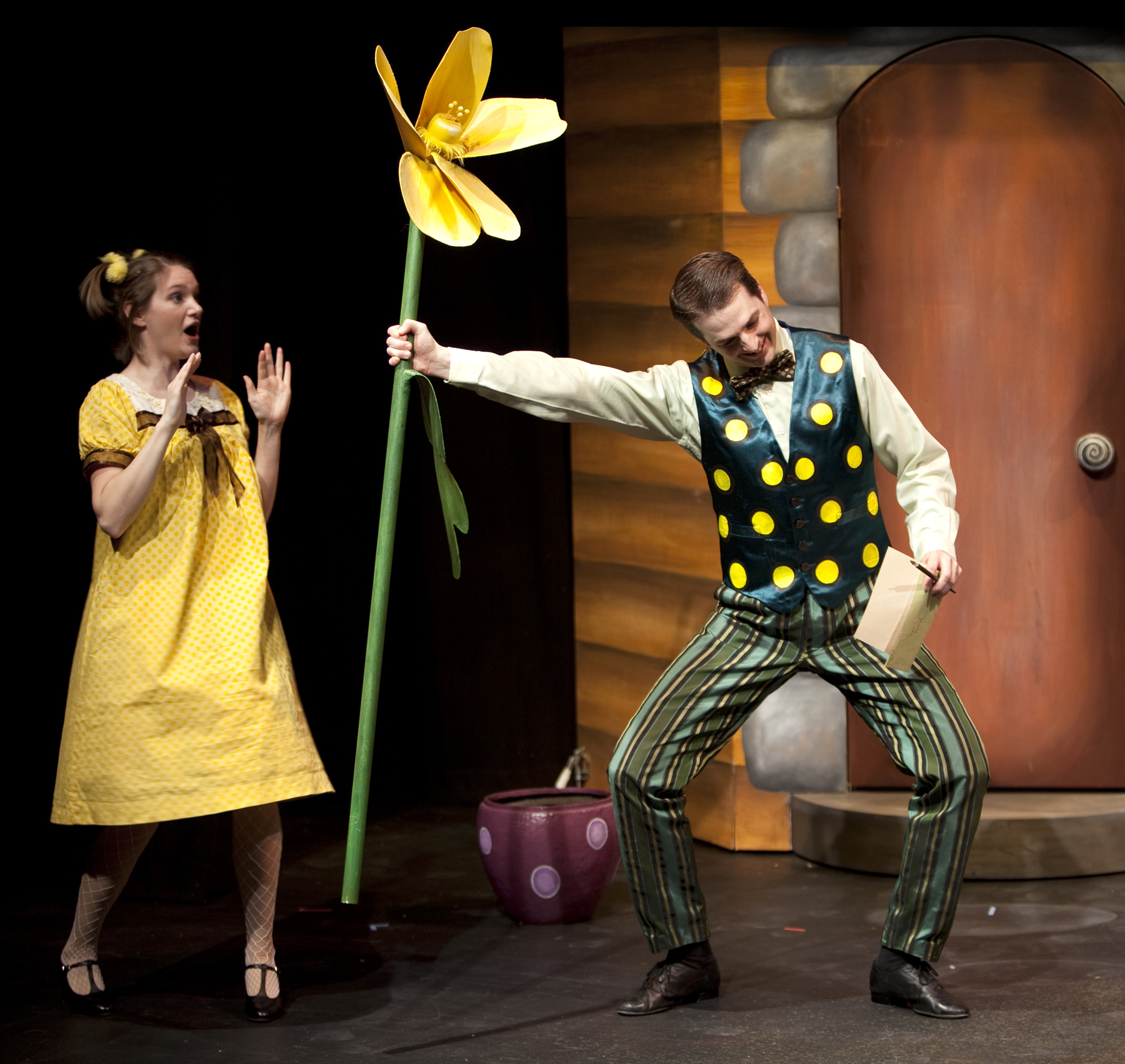
What follows is 60 minutes (that’s right, it’s short and sweet!) of pure delight. I am able to look at this show the way I look at a show meant for adult audiences because it is just that tight. The cues are tight, the funny bits (and the show is very funny) are perfectly-timed, and the costumes (designed by Yulia Shtern) are exactly what they ought to be down to the last dapper polka-dot (for Frog) and floppy mitten (for Toad, of course, for sledding!). The show is delivered by a seamless and talented ensemble of five performers who sang, danced, croaked, squeaked and chirped their way right into my affections in the first number and had me hanging on their string right until the finale.

But my heart, of course, goes to the dandy and particular Frog (Todd Talbot) and his slightly more disgruntled, ruffled, but no less loving best friend Toad (Josue Laboucane). To watch Toad try to coax his flowers into growing is to watch one of the sweetest and most genuine theatrical moments I have seen in YA theatre. The friendship of Frog and Toad, complete with swimsuit issues, too many cookies, and plans for rescue, feels sincere and tremendously touching. A Year With Frog and Toad is, quite simply, a year in the life of two best friends, with all the humour and heart that goes with it (I must admit I cried, I tried hard not to, because I was sitting next to a stranger, but I couldn’t help it).

In short, Carousel’s production of A Year With Frog And Toad is not just a show for kids, and it is not just on its technical and theatrical merits that adults will find entertainment and joy. Many artists I know dislike YA theatre in general because they feel it “talks down” to its audience. A Year With Frog and Toad does nothing of the sort. The fun and humour in this production are universal. And so is friendship.

Which is the point, I think. Aside from the tap-dancing forest creatures and the gorgeous set, the real story of A Year With Frog And Toad is one of friendship. Kids will love the show because it is beautiful and magical and fun. Adults will connect with the show for all of these reasons of course, but also because they’ve (sadly) had enough knocks in life to know how important and incredibly special a good friend really is.

Rebecca Talbot, Todd Talbot. Photo credit: Tim Matheson

A Year With Frog and Toad will run until April 8 at the Waterfront Theatre. Tickets can be purchased online on the Carousel Theatre website, or by calling the Carousel box office at 604-685-6217.

Disclosure: My ticket to A Year With Frog And Toad was arranged and provided by Jessie van Rijn, General Manager for Carousel Theatre. I remain the sole author of the content on NiftyNotCool.com.

“Chasing Home”: an interview with co-Director Pedro Chamale

For the past five months, a group of emerging and non-professional Vancouver theatre artists have been working together as part of Screaming Weenie Productions‘ All The World’s A Stage project. The result of this collaboration is Screaming Weenie’s brand-new play, “Chasing Home“, directed by Sean Cummings and Pedro Chamale, playing March 15, 16, and 17 in the Vancouver Playhouse Recital Hall.

From Screaming Weenie:

Home is more than a place you sleep and keep your stuff, it’s often a community, a feeling of belonging, a sense of security. What is home to someone who is an immigrant to Canada, or a refugee from a war-torn country, or someone who has been disowned by their family for simply loving someone of the same gender?

Chasing Home is a creation piece that explores the theme of ‘home’ from the viewpoint of cultural outsiders, immigrants, refugees, and others who have been forced to flee and create a new life for themselves in Vancouver.

To gain more information about the show and the All The World’s A Stage project I decided to ask co-Director Pedro Chamale (who is also the co-artistic director of Rice & Beans Theatre and my good friend) a few questions:

Tell me about the “All The World’s A Stage” project. How did you get involved?

ATWAS is a Screaming Weenie project that is giving non-theatre/emerging artists an opportunity to be mentored by professionls and then given the chance to develop and produce their own show. I was invited by Screaming Weenie to participate as an emerging artist, and upon hearing about the opportunity to gain more experience as a director and to collaborate with new people I jumped on board.

Who are the cast/company members in “Chasing Home”? (Are they students/ professionals/ emerging artists, etc.)

The cast members for Chasing Home are Christopher Casillan, Evelyn Chew, Jeremy Leroux, Damian Rumph, and Sheryl Thompson, who are a wonderful group of professional actors .The crew of our show is a great mix of professionals, emerging artists, recent immigrants–all the way to a first generation Canadian like myself. We are: Sean Cummings and myself (directors), Carolyn Yu (stage manager), Nicole Holas (lighting designer), Esta Mun (props & outreach coordinator), Hanno (set and costume designer), and Stacey Sherlock (technical director).

For how long/how often were the “All the World’s a Stage” participants meeting? Can you describe your training/creative process?

We started meeting back in October. Back then we would meet bi-weekly, and at first we were focusing on the mentorship part of the program. We were partnered with our professional counterparts who were working on Screaming Weenie’s production of Falling In Time. We volunteered with the production’s run and observed a professional show being put up. After Falling In Time closed we then shifted the focus of our meetings to what kind of show we would like to do.

What, in your mind, were the core impulses that led to the creation of “Chasing Home”?

“Chasing Home” came from common themes that occurred during our discussions and meetings and one of the prevailing themes was the idea of what is home. All of the other participants were born in another country, and I was not born here in Vancouver. So a lot of our talks were about what it was like to be in a new city and culture. We each came in and presented things we would like to see in our show and also we told stories of our lives, which in turn inspired the play.

Why might this play be vital to our community? Why now?
I believe that [“Chasing Home”] is vital to our community because most of us are searching for what is home to us. Or if we are not searching, we have at least felt it before. This play is also vital because not only is it a new piece of  Canadian theatre but the show has been made by and is cast with a non-Caucasian majority, which is not always seen on the larger stages in Vancouver, and it is nice to see a show that is a little more representative of the population in our city.
—————————————————————————————————————————————-
Event Details:
Performances: March 15, 16 & 17, 2012, at 8:00pm, with a matinee March 17 (Saturday) at 3:00 pm.

Venue: Recital Hall, Vancouver Playhouse at 601 Cambie Street

Admission: $10* | Tickets available at the door or on-line at:

https://www.brownpapertickets.com/event/231203

*no one turned away for lack of funds

Other Important Notes

While it has (sadly) come to my attention that at a press conference this afternoon, the Vancouver Playhouse announced that it will be closing its doors after the run of “Hunchback of Notre Dame” is complete, I have, as yet, received no information indicating that “Chasing Home” will not be performed as planned in the Recital Hall.

Disclosure: In return for helping spread the word about “Chasing Home” (via any social media means I so chose), I have been offered a ticket to the opening night performance on March 15. I am happy to help create buzz around a project such as ATWAS, and the idea to interview Mr. Chamale was mine. As always, I remain the sole author of my content.

Aesop’s Fables at Carousel Theatre

Mishelle Cutler and Kayvon Kelly, photo by Tim Matheson

By now, anyone who has passed through a Canadian elementary school is familiar with Aesop and his fables. We know by now that slow and steady wins the race (Tortoise and the Hare) that warmth is stronger than force (The Sun and the North Wind) and that sometimes even those who seem weaker than you can prove helpful in a sticky situation (The Lion and the Mouse). What we don’t know, or may have forgotten, is the magic and opportunity for learning that comes with seeing children engage with these tried and true morals for the first time.

It was this spark of brand new engagement that I was able to experience on Saturday, when I attended Carousel Theatre for Young People’s opening of their production of Aesop’s Fables, scripted by Mike Kenny. Joining me at the Waterfront Theatre once again was a friend and former mentor of mine, and her five-year-old daughter, my Little Guest (LG).

Those of you who have read my post inspired by watching Carousel Theatre’s The Wizard of Oz may remember that my LG got a little scared being close to the stage and did need to spend a short time in the lobby while the Witch was onstage. Jessie van Rijn, General Manager of Carousel Theatre, certainly did remember as she confirmed with us at the box office that our tickets this time were farther back and also right on the aisle, for the possibility of a quick exit. I’m grateful to Jessie for providing us with these seats but also delighted to report that LG remained happily in the house through the entire performance and has given her approval for seeing more theatre in the future.

Carousel’s production of Aesop’s Fables is certainly for kids. The humour, music, and “audience participation” moments are directed towards them. Judging by the reactions of the children in the audience, these moments were received with great enthusiasm by the young (and young at heart) who were happy to puff up their cheeks, fluff up their feathers, make silly sounds, and helpfully point out where sneaky animals like wolves and mice may be hiding. I should also point out that the house was almost consistently filled with laughter, which is always a good sign that kids are enjoying themselves.

Melissa Oei, photo by Tim Matheson

Though many of the moments in the production are not geared towards the adult members of the audience, there is much for us to appreciate: great music (much of it played live by members of the cast), strong (and often funny) physical performances by cast members, and (my personal favourite), an absolutely enchanting set designed by Drew Facey. Facey’s set is simple, but somehow elaborate at the same time, and when coupled with Darren Boquist’s elegant but not intrusive lighting, Aesop’s Fables is full of visual whimsy.

After the show, the actors returned to the stage to take questions from the children in the audience. Every question was answered, whether it be a question about how an effect works, where the sound comes from, who made what, how long the actors rehearsed, or even a request to explain the fables themselves. I think this chance to have questions answered is a vital part of the show, removing it from a magical, untouchable “onstage” world and introducing children to the ways in which stories are told, problems are solved, and things are made.

So far, when writing about my experiences with Carousel Theatre, it has been helpful to refer to my large unwieldy copy of the Anthology of Children’s Literature (Ed. Edna Johnson, Evelyn R. Sickels, Frances Clarke Sayers, 1959) which I picked up at the SFU United Way book sale a couple of years ago. About fables, the Anthology has this to say:

…while children shun moralizing they are drawn to morality. The drama of the fable, the animal characters, and the quick flash of its single illustration of a truth–these hold the attention of children. Fables are like small, bright pebbles picked up from the shore, stored in the pocket as reminders of past experience, and held in the mind when needed.

I remember my own introduction to fables very clearly. We had a small picture book of them at home, and although I can’t remember every fable that was in the book, I remember the colours in the illustrations, the image of a thirsty crow drinking the water he earned through his cleverness, and the voice of my dad explaining the stories to us and what the morals meant. Fables are as familiar to us as fairy tales, and oftentimes, a lot more useful. The experience of being introduced to them for the first time can be a very rich memory later on.

————————————————————————————

Mike Stack, Mishelle Cuttler, Melissa Oei, and Kayvon Kelly, photo by Tim Matheson

Aesop’s Fables runs at the Waterfront Theatre until February 26. For the times of public performances, please see Carousel’s Public Calendar on their website. Tickets can be purchased online on Carousel’s Box Office page or by calling 604-685-6217.

Carousel’s season this year is based on literary classics, so if you’re interested, I believe the next production is A Year With Frog and Toad.

My ticket, as well as the tickets of my guests, were provided for me by Carousel Theatre. I was not asked to write a review for this performance, and I remain solely responsible for my content, regarding this production or any other.

PuSh 2012: Taylor Mac at Club PuSh

Waiting for Taylor Mac to take the stage at Club PuSh

If you were a very lucky person last Friday or Saturday, you may have had the benefit of spending 90 minutes breathing the same air as performance artist Taylor Mac, as he rocked my world with his latest show, Comparison Is Violence or The Ziggy Stardust Meets Tiny Tim Songbook as part of Club PuSh at Performance Works on Granville Island. Often identifiable as a performer by the glitter on his face and the ukulele he plays, Mac has been described by the press many times throughout his career as a “Ziggy Stardust meets Tiny Tim” performer. Annoyed both by the comparisons, and by the obvious lack of originality within the press, Mac decided to battle Comparison (as an action) with a show devoted entirely to the singing of Tiny Tim and Ziggy Stardust songs.

[Side note: I had always imagined Tiny Tim to be some adorable, soft little man. I had no idea he was so creepy-looking. Yikes.]

I fell in love with Taylor Mac three years ago when I watched his Palace of the End on YouTube. The performance was interesting, and provocative. Mac used the tools he uses best, glitter and a ukulele, to tell a complex story and I was very drawn to and inspired by that. Unfortunately, I was unable to attend Club PuSh in 2009, the last time he was performing in the city. That is why the minute I saw that Taylor Mac would be returning to Club PuSh for the 2012 PuSh Festival, I rushed to buy tickets to Comparison Is Violence.

I suppose many would describe Mac as a drag artist–he’s certainly sparkly enough, and the Ariel-like mane of his red wig certainly isn’t all that manly. Despite his clear stilettos and red lipstick, however, Mac didn’t actually try to appear to be a woman (no stuffing a bra or referring to himself as a “she”–come to think of it, I’m not sure Mac referred to himself as belonging to any gender). To me, the performer Taylor Mac is simply a creature–a sparkly, gorgeous, who-knows-WHAT’S-going-on-with-that-human creature. He has a powerful singing voice, a slight Southern drawl, and a sense of humour that is by turns incredibly diva-esque in its selfishness or incredibly generous in its intent. Mac owns his stage, and by default, his audience.

For a show that, on the surface, seems to consist primarily of a “gender-bender” covering Ziggy and Tiny Tim songs and saying FABULOUS funny things between-times, I found Comparison Is Violence to have a lot of depth. Mac himself stated that there was what he was saying he was doing in the show, and then there what he was actually doing, and that these things were actually different (although even this sentiment he buried in a discussion about why we shouldn’t get too drunk during the show). This might seem to be an overly-confident, or perhaps pretentious, claim to make about one’s own show, but I found it to be true, at least for me. Yes, I found Taylor Mac to be outrageous and hilarious (his referring to his Christian mother as a “fundy cray-cray” for telling him that “Jesus wouldn’t have a feminine walk” almost made me wet my proverbial pants) but beneath the spontaneity and the almost overwhelming energy zooming from Mac on all sides there was a sense of stillness and quietude, belonging to a person who really does seem to feel the violence inherent in the act of comparison, and really does want us to think before we box in someone by labeling them with someone else’s name. Why is it that we can’t describe something without comparing it to something else? Why do we always have to compare people to pop culture, to our past lovers, to politicians? Whatever happened to comparing ourselves to nature, experiences, and ideas (if compare we must)?

Taylor Mac also shared with us the fact that he finds reviews of shows to just be saying “Buy This” or “Don’t Buy This”. He said a critique is more useful–addressing where this art form is coming from, and where it might be going. Unfortunately, I have never seen a performer like Taylor Mac, so I don’t know where he came from, and I am not sure where it’s all going. But I can rest on review and say, yes, if you get a chance, buy into Taylor Mac, Buy This Buy This Buy This. Even if you don’t like it you’ll have an experience you’ve never quite had before. Which I think is the point? Yes. Probably. Buy This!

——————————————————————————-

And now a note about the PuSh Festival itself, the festival that brought the electrifying Taylor Mac into my world. Last Thursday, I attended the reception for PuSh sponsors and members of the board at Subeez Cafe. I was one of a handful of bloggers invited partially as a thank you for spreading the word about PuSh in the past, and also I think as encouragement to continue doing so if I so choose. And I do choose to.

As Max Wyman, Board President of the PuSh Festival, put it that night, every year the performances on offer as part of the PuSh will “provoke, sometimes enrage…always engage.” As if to prove this point I also received a complimentary ticket to attend last Thursday’s opening night of El pasado es un animal grotesco (The Past is a Grotesque Animal) which played on a revolving stage in SFU Woodward’s Fei and Milton Wong Theatre. The play was entirely in Spanish with English surtitles, unflinchingly narrative, and quietly, terribly sad. Had it not been for the PuSh Festival I highly doubt I would have had much chance to see work by an Argentinian theatre company and this story, though universal in its themes, would never have reached me.

And here is the part where I talk about money (which is no one’s favourite part but which is necessary). An international performing arts festival of this size and scope requires a lot of support and costs a lot of money. Though of course the point of the festival is that people come to PuSh and take in some amazing events, PuSh cannot support itself through ticket sales. As both the provincial and federal governments have made significant cuts to arts funding in recent years, festivals like the PuSh have been forced to rely more and more heavily on private and corporate sponsorship and donations.

I love PuSh. I want it to exist. I know many of you who have been to PuSh events agree. If you are a Vancouverite who wants to continue to experience the spellbinding intrigue of the PuSh Festival each year, or an incredibly altruistic non-Vancouverite who wants to help Vancouverites enjoy the PuSh each year, and you have a bit of money to spare, or work in a company/corporation that may benefit from supporting the PuSh Festival, please consider visiting the festival’s donation page and giving them “a PuSh” (their pun, not mine).

Sadly, the PuSh Festival has finished for another year. Until next time, this is NiftyNotCool, reminding you to keep mid-January to mid-February open on your calendar for 2013, and to remember to PuSh it good.

2012 PuSh Festival Opening Gala

January 17, 2012 was just as exciting as January 17, 2011, in that I was invited back to the PuSh International Performing Arts Festival Opening Gala, which was held this year in the swanky-as-hell Waldorf Hotel on Hastings Street in East Vancouver. The PuSh Gala is one of the few events that I have been invited to as “media” and with my trusty Georgette von iPhone and a swipe of red lipstick I was ready to paint the town and tweet my heart out. Attending an event as “social media media”  is much much easier, it just so happens, when you are carrying a smartphone in your little purse instead of a laptop in a big ol’ satchel (as I learned last year before I had Georgette). It makes dancing easier too. For those committed bloggers who did bring their laptops, however, reserved tables in the “Hideaway” room were available for them to do their thing and, pretty much, be awesome.

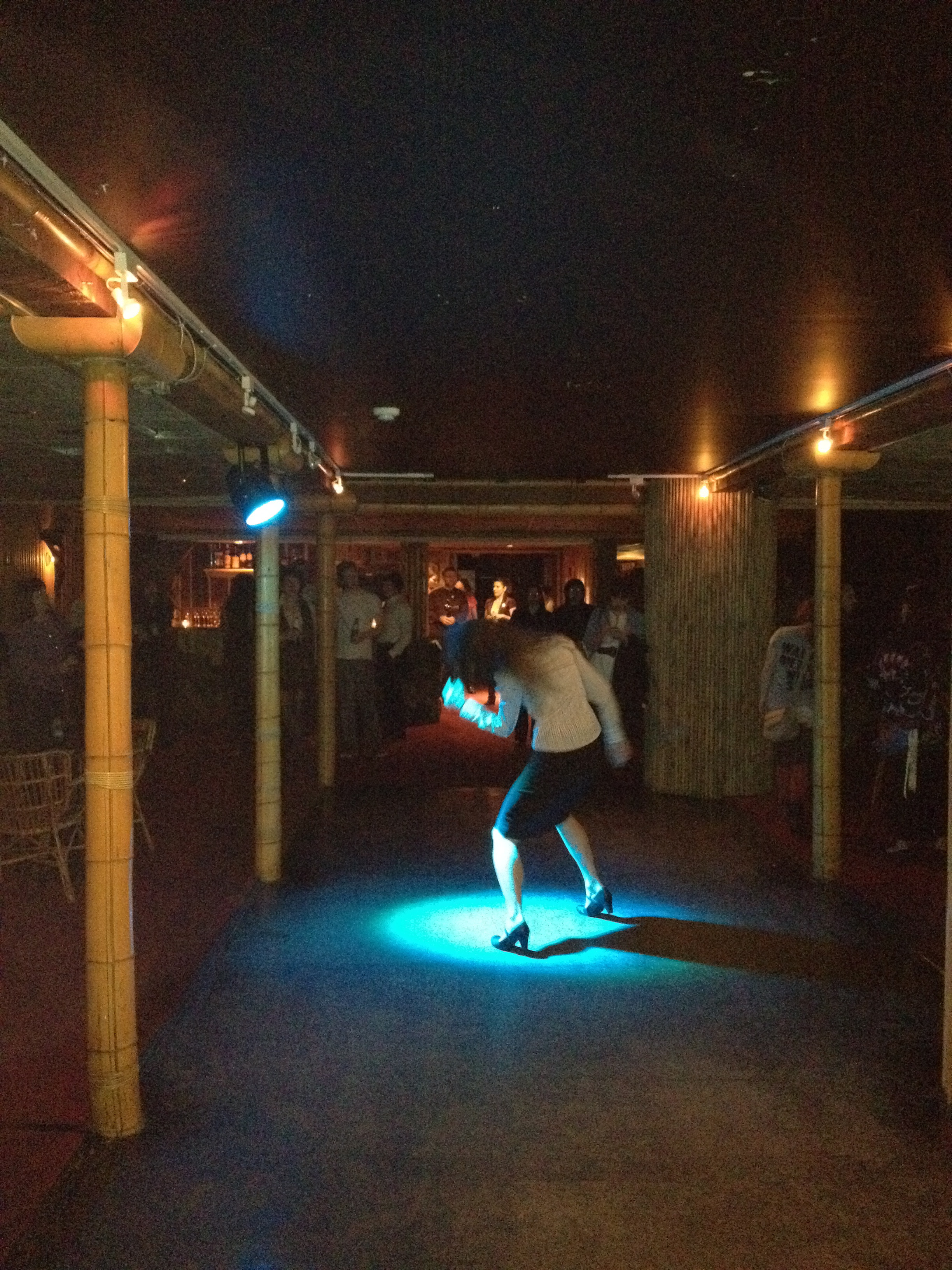
Nita Bowerman dances in the Hideaway

For those of you who don’t know, 2012 marks the 8th annual PuSh International Performing Arts Festival in Vancouver. My very first PuSh experience was seeing the Electric Company Theatre‘s Studies in Motion: The Hauntings of Eadweard Muybridge in 2006 and I have tried, as much as possible, to see at least one PuSh show a year since then. There have always been new pieces and new experiences on offer from all around the world and this year is no exception. No matter what you choose to see it will be innovative, interesting, and deftly executed. I think my favourite PuSh show so far is Welshman Hugh HughesFloating, which I fell in love with and blogged about last year. This year, I am very excited to see Taylor Mac‘s Comparison is Violence at Club PuSh (February 3 and 4, 2012).

I like Nudity, and TC likes The Internet. What a pair.

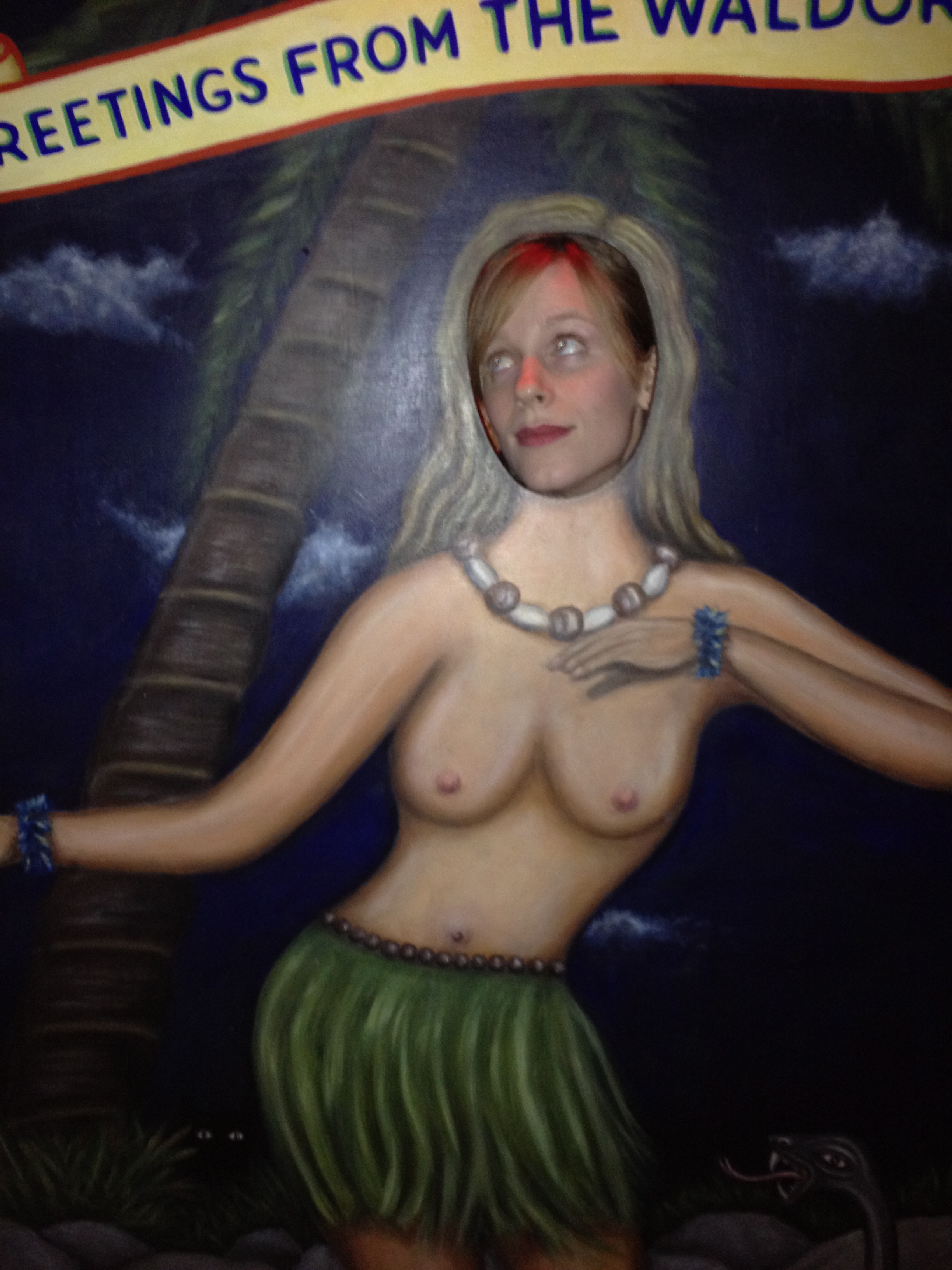
But enough about all the fun I will be having watching the shockingly beautiful Taylor Mac. With the trusty Georgette in my hand and my TC on my arm (and a glass of wine in my other hand) I set out to the have the gala-est gala I possibly could. And we have a lovely night. We made buttons at the Vancouver is Awesome button making station in the Hideaway, took some silly pics as the Waldorf hula dancer, took more silly pics in the PixStar photobooth in the Tiki Lounge upstairs, ate some of the amazing food that was on offer–for FREE (I had duck on toasted baguette, and beef and chicken kebabs), shouted along as Vancouver’s only accordion rock band, Fang, played their hit Hipsters Playing Sports (“Hold on to my cardigan/ So I can play some badminton”), and slowed it down to dance to the incredibly-amazing-and-I-can’t-believe-I-hadn’t-heard-of-them-before Vancouver band, e.s.l.in the Cabaret (yeah, um, the Waldorf is really big).

e.s.l. at the PuSh 2012 Opening Gala

Besides the fun fun times to be had, PuSh Galas are also a great place to network, or, if you’re too shy, to observe Vancouver’s cultural VIPs off the stage and drinking or eating kebabs like the rest of us schlubs (though to be frank, I don’t know any theatre artist who would turn down free food). I even caught sight of my favourite Vancouver musician Dan Mangan, though since I’d already fabricated an excuse to meet him at a theatre event before Christmas I decided not to bother him this time (though he doubt he would have minded–he is the nicest man in the world). I was a little disappointed that Mayor Gregor was unable to attend this year because seeing him in the flesh is like seeing the Batman of Vancouver but my night was altogether too pleasant for me to mind overmuch.

If you haven’t gathered yet, I had a great time, and tweeted like crazy (PuSh volunteers even took a photo of TC and me tweeting!). The Waldorf is really a fantastic venue and PuSh makes a huge effort to make their Gala fun and interesting every year. Many thanks to the awesome Tara Travis, Outreach Coordinator for PuSh, for inviting me and for showing us all such a great time.

The 2012 PuSh International Performing Arts Festival runs from now to February 4, 2012. With so many different shows and events (from the Main Shows to Club PuSh to the Aboriginal Performance Series), it would be embarrassing for any arts-loving, lower mainland dweller to miss out on seeing a PuSh show. So many venues are participating, you’d almost have to making a point of NOT attending any PuSh shows to avoid seeing one. So do yourself a favour, give in, and see some amazing performing art already. Information about events, venues, artists, and buying tickets can all be found on the PuSh website.

Happy PuShing!

Children and the Arts: The conversation begins

Damon Calderwood and Robyn Wallis, Photo credit: Tim Matheson

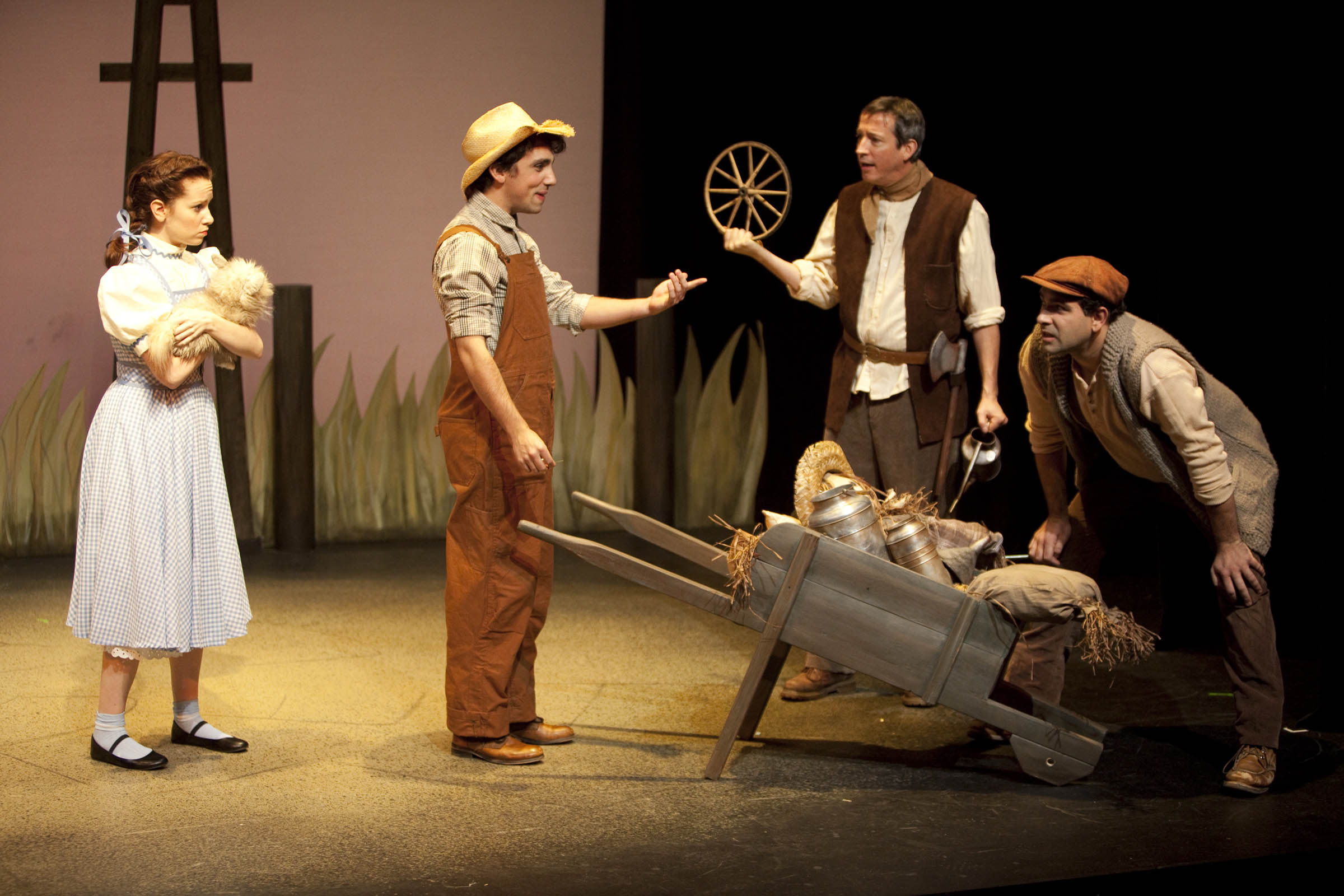
Last Saturday I was invited by Jessie van Rijn, General Manager for Carousel Theatre for Young People, to a Bloggers’ Night at Carousel Theatre’s holiday production of The Wizard of Oz at Waterfront Theatre. While the bloggers in attendance were invited to tweet and live blog before and after the performance and during the intermission, Jessie was careful to stress both in her invitation and at the event itself that Carousel did not require or expect us to do so.

What Jessie did want to do by inviting bloggers to a Carousel production was to start a conversation about the role of the arts (and in Carousel’s case, specifically theatre) in the development of children and young people. Even without Jessie’s kind invitation to watch the stage version of my childhood favourite film (the MGM classic starring Judy Garland), I am more than happy to do so.

I know without a doubt the invaluable effect images, films, books, theatre, music, and dance had on my imaginative life and on my creativity growing up. From having the ending of Romeo & Juliet explained to me by my mother (after which I wondered why the heck anyone would bother writing a story that ended like that) to realizing after a conversation with my dad that I’d perhaps sided with the wrong character (apparently, the Phantom of the Opera was not a very nice man), the art I was exposed to led me to question what I saw, to hunger for explanation, and to create my own possibilities and versions of events when the explanation didn’t suit me (a creative act and one that the most lauded adult innovators perform constantly). I know that the cultural activities I was exposed to as a child and as a teenager shaped my own ambitions regarding becoming an artist and a writer.

Whether or not a child grows up to become an artist themselves, any activity that inspires and nurtures creativity (such as a trip to the theatre or the ballet) will be beneficial to them and to the world they will inherit. Celebrated 21st-century figures such as Steve Jobs were not only technically skilled–they were also incredibly creative. Terms like “innovative” and “thinking outside the box” get thrown around a lot nowadays as desirable traits for the work world of today, but what everyone really means is creativity, the ability to break from an established pattern and make something new, even if it’s simply something old viewed in a new way.

Creativity is not only useful in the workplace–it is also necessary for developing life and coping skills. Far from the stereotype of the miserable suicidal artist, reinforced by the high profile suicides of artists such as Virginia Woolf and Vincent van Gogh, a faculty for creativity is NOT a precursor to misery and suicidal ideation as creative people are better able to envision alternative solutions to the unhappy circumstances they face, and to find an outlet for the emotional and mental distress they may be feeling. The more choices you can envision for yourself, the less likely you are to find yourself powerless and trapped by your circumstances.

If you are still wondering why it is important to nurture children’s imaginations, my favourite answer is simply because children have them. Kids have a rich image life and as they begin to learn about the world they are exposed to new fears and wonders. I can think of no better example of this than the experiences of the five-year-old guest I brought with me to The Wizard of Oz (along with her mother, a friend of mine). Today I’ll call her LG (for Little Guest). LG is an outgoing and sassy little girl, who wanted to be the one to buy her Mentos from the lobby concession BY HERSELF and who chatted freely before the show even though she hasn’t seen me since she was three.

Meghan Anderssen, Photo credit: Tim Matheson

When we sat down in our second row seats (thanks Jessie!) and we saw how close to the stage we were, LG became a little apprehensive about her proximity to the Wicked Witch, and then she became downright terrified and asked to go home. My friend (her mom) had a chat with LG in the lobby about what she was afraid of and Jessie at Carousel not only helped by describing what would happen in the show to LG (explaining that in this production the Witch is more funny than scary) but was also able to re-seat us near the back of the theatre where we could still see and hear everything perfectly well (there’s not a bad seat in the Waterfront) and where LG could have a few rows of audience between her and any onstage witchiness.

After the show, the children in the audience were invited to climb onto the stage with Jessie and take a look at the sets and props used, meet the cast members, and ask questions about how the play worked. I think understanding how the images and characters that scared her are created helped smooth over LG’s initial fears and in the car afterwords she announced proudly that though she was “a little scared at first” she was glad she went and that she liked Glinda and that Jessie explained to her how the magical snow was able to defeat the Witch’s poisonous poppies.

The point I am trying to make with this heart warming little story, besides the fact that Jessie van Rijn and Carousel Theatre are good with kids, is that whether we encourage it or not children will imagine. No one told LG to think about the Wicked Witch, or to imagine that the Witch could possibly harm her, but LG was frightened anyways. What nurturing creativity does is provide children with weapons to combat their imagined fears (in LG’s case, Glinda and some magical snow did the trick).

The bright side of children’s ability to imagine that horrors lurk in the closet or under their bed is their ability to imagine that the world around them, while dark and strange sometimes, is also full of wonder and light. My little sister’s imagination once plagued her with night terrors, but her imagination was also able to convince her that the dream catcher my parents hung above her bed would stop them, and so it did. The same mind that believes in the Bogeyman and ghosts is also able to believe in Santa Claus and fairies. Children will imagine whether we tell them to or not–why would we not want to provide their imaginations with images and experiences that make them feel happy, inspired, and powerful?

I once came across a quote from Lewis Mumford (American historian, philosopher, cultural critic, and father) which I have loved ever since for eloquently framing my feelings on this issue of encouraging (or discouraging) imagination in children:

In repressing this life of fantasy and subordinating it to our own practical interests, we perhaps…gave the demonic a free hand without conjuring up any angelic powers to fight on the other side. We did not get rid of the dragon: we only banished St. George

                -Lewis Mumford, Green Memories

So there you have it folks. Give your kids something lasting this Christmas, something that will encourage their creativity, stimulate their imaginations, and arm them against their fears. Give them a St. George, or a Glinda the Good Witch, or even just a fun evening at the theatre or with a great book.

For me, this is what has lasted. This is what I remember and treasure after my old toys have been boxed up or garage-saled or forgotten. My parents gave me as much imagination and creativity as they could and it’s those gifts I am continually thankful for.

Robyn Wallis, Darren Burkett, Mike Stack, and Josue Laboucane, Photo credit: Tim Matheson

Full disclosure: I do not have children of my own. But I was a child once, and I have a good memory. I also have teacher parents, teacher neighbours, little cousins, TC’s cousins, friends with kids, babysitting experience, and an obsession with YA fiction.

My ticket to The Wizard of Oz, as well as the tickets of LG and her mother, were provided by Carousel Theatre for their Bloggers’ Night event. I was not asked to review or promote the show.

Carousel Theatre’s current season is based on literary classics. For more information about its productions and what Carousel does,  please visit their website.

Remembrance, Action, and Inaction: Thoughts inspired by “Re:Union” at Pacific Theatre

Last Friday (which was Remembrance Day in Canada) I had the privilege of waking up in a warm apartment, grabbing a bowl of Cheerios, and cozying up under a blanket on the couch as I settled in to watch the Ottawa Remembrance Day ceremonies on CBC. I say I had the privilege to eat Cheerios like a slob in front of the TV dressed in my PJs because it is days like Friday that remind me that each and every part of my working-to-middle class Canadian life, even the less glamorous parts, are things I am privileged to have.

I am also privileged to live in Vancouver, a city where the theatre community, though comparatively small and green, is still able to produce and share art that plays a role in reminding me not only of the privileges, but also the responsibilities, of living the relatively charmed life I lead. Sean Devine’s “Re:Union”, a co-production presented by Pacific Theatre and Horseshoes and Hand Grenades, which I also had the privilege of watching last Friday, was an excellent example of art’s ability to aid in the process of remembrance.

Many people (myself included) often view remembrance at this time of year as a passive act, a time for tucking a poppy into our lapel, turning on the CBC, and turning our thoughts momentarily to a time when sacrifices and hardship were daily widespread Canadian experiences. We sometimes forget to remember that Canada is currently a country at war, or to remember that we have a place in the history we are constantly creating.

“Re:Union” is inspired by the little-known story of Norman Morrison, an American Quaker who could no longer think passively on the sufferings of others. Feeling he had been called upon by a higher power to act, on November 2, 1965, Norman Morrison drove to the Pentagon with his baby daughter Emily. Norman doused his body in kerosene and set himself alight, a horrifying protest against the horrors of the war in Vietnam. Norman Morrison burned to death that night under the office window of Robert McNamara, Secretary of Defense. Devine’s play presents these facts but also takes us 36 years into the future, as Norman’s now-adult daughter Emily confronts McNamara, blames him for his inaction in failing to stop the atrocities of Vietnam, and asks him to bear witness as she plans to protest the policies of the post-9/11 Bush Administration.

The play was beautifully understated. I was given no black, no white, no rousing call to arms. I was given complexity. I was given honest, challenging, and contained performances. I was given questions: Is there a higher power than our own ethics? Is merely trying to reduce and control civilian casualties in our military actions enough? Is inaction an act of compliance with oppressive forces? What about extreme action that costs dearly but ultimately yields no results?

In “Re:Union”, it is Emily I most identify with. I am not a martyr. I am not a high-powered bureaucrat or politician. I am a person who cares about her world and is chafing constantly against her own inability to act. When I am called to remember I remember with my whole heart but in the end, usually, any action I take is perfunctory at best, enough to tide me over until the next news story, the next conversation, the next play, the next November 11.

In Devine’s play, Norman Morrison’s act of protest is prefaced by stillness, rooted in the Quaker belief that if one remains still, one will receive the Divine. Emily Morrison’s ultimate inaction is prefaced by movement: by research, video diaries she makes of herself, confrontation with the ornery McNamara, and the act of remembrance. Neither of these individuals stopped any wars. But they were Davids without a sling, against a Goliath with tanks. To have that expectation of them is to simplify a world we know to be more complex: a world of actions having chain reactions, the consequences of which are not always immediately visible. A world where “all or nothing” competes with “every little bit helps” and those of us who care are constantly stuck in an almost paralyzing negotiation between the two.

Beneath the action that cost too much and the inaction that seemed to cost far more, Re:Union tells the story of a father and a daughter, a legacy of love and remembrance and a responsibility to the world that can be as big as one’s responsibility to their Maker, or as small as their responsibility to the truth about themselves and their own personal history of action and inaction.

If you would like more information about Pacific Theatre’s 2011/2012 season, please visit their website: www.pacifictheatre.org.

Information about Horsehoes and Hand Grenade’s latest projects can be found at: www.horseshoesandhandgrenades.ca.