Election 2015: A time for (cautious) optimism

liberal

Gosh, it looks like the 90s, doesn’t it?

The longest election campaign in Canada’s recent history is finally over, and the results were decisive. So now what?

Now, I did not vote Liberal in Monday’s federal election (I have never voted for any party but the NDP in fact), but I must say that I woke up on Tuesday morning immensely relieved. Stephen Harper is no longer our prime minister.

I’m going to type that one more time with feeling: STEPHEN HARPER IS NO LONGER OUR PRIME MINISTER.

Yes, yes, I appreciate that Harper served the country as its leader for ten years, and that not ALL of his policies were bad, and that many people obviously felt they benefited during his time in office, but the man simply sickened me, and his government was poisoning the country with its dirty and divisive tactics, its dishonesty, its mockery of Parliamentary democracy, its willful sacrifice of evidence-based policies for ideological ones (like its attack on the research-supported and incredibly effective harm-reduction facility InSite), its willingness to kowtow to wealthy oil companies at the expense of our environment, its indifference to veterans, its racism and xenophobia, its intrusion on our liberties, and its sheer LAZINESS and AUDACITY in openly courting only the 30-odd percent of the vote needed to keep itself in power. Canada has lost much of what has made it a traditionally great nation, and some of it (the many decades-long research archives destroyed by the Conservative government, for example) can never be retrieved.

Some of course will sputter, “But…but…the ECONOMY!”, to which I reply, no economy is worth our souls, and ten years of Harper was destroying ours. Besides, the economy, in its current condition, seemed to be succeeding only in making the rich richer and the rest of us poorer so please excuse me if I don’t shed a tear because you can’t afford that new mink coat. Many have also tied their economic protests to the importance of the oil industry, so I’ll also say this: the Canadian oil industry has not been touched by anyone but Harper for the past ten years, and has been shedding jobs for months. Tar sands oil is incredibly expensive to extract, and if oil prices fall as low as they have been and companies can’t make a profit doing it, they’ll stop. Resource extraction tends to be volatile like that. Harper literally gave the Canadian oil industry everything they asked for, and they’re still pulling the plug on projects that, I know, employ a LOT of Canadians. And why? Because oil companies aren’t charities–they don’t give a crap about your jobs or families. If they aren’t making money they won’t keep employing people. That’s just business. I’m sure most of the people currently working in the oil industry are highly skilled hardworking people–they will be in demand in whatever industries eventually move in to take oil’s place (or, of course, oil prices could very well rebound though that doesn’t help the environment much). Things are going to be tough for a lot of people for a while, but no one is doomed.

There are more important things than money.

The Harper government was actively making my country a more ugly, unfriendly place, and I am glad to see it go. I was excited on Monday night, even though I was sad to see awesome NDP incumbents like Peter Stoffer, Megan Leslie, and Paul Dewar lose their seats. I am excited for a new kind of Canada, whatever that will be. I could not have lived with more of the same. This election had my heart in a vice, and now I can finally breathe again.

Alright– so Justin Trudeau is the new Prime Minister of Canada. I can’t say I never thought it would happen some day, though I am surprised to see it happen so soon. Sure, his lineage has helped him–who else can say they have been familiar with the job of Prime Minister since their birth?–and I think his status as a Canadian political “celebrity” certainly clinched him the Liberal leadership, but he also ran a smart campaign and surrounded himself with smart people, to whom he apparently actually listens. I know I’ve called Trudeau stupid before (actually, I think my exact words were, “He’s a dummy”), but I guess perhaps I’m the dummy this time and Justin Trudeau was being stupid like a fox. Being a good-looking white male and the son of a famous politician gets a person pretty far–but it doesn’t necessarily get them a majority government.

Obviously fear had a huge part to play. Though Trudeau did not tend to play the politics of fear, Harper’s increasingly disturbing tactics pretty much did that for him–the urgency of removing this man from the highest office in the land by whatever means necessary weighed heavily in progressive voters’ minds. Many people proclaimed themselves “ABC” voters (“Anyone But Conservatives”) and strategic voting initiatives like Leadnow’s “Vote Together” campaign promoted voting for whichever candidate could beat the Conservative in a given riding, regardless of who the candidate was or what party they represented. A lot of people saw these tactics as cynical, and they were. They were also pretty effective–Stephen Harper’s government is out, very out. Unfortunately, this kind of “ABC” voting also meant that more progressive parties like the Greens and the NDP lost many votes they otherwise may have had.

As I watched the CBC’s election coverage on Monday, I was surprised that no one on the expert panel mentioned Trudeau’s promise to reform our first-past-the-post electoral system as contributing to his win. Many voters wanted to vote with their hearts, but determined to “hold their noses” just this once so that they’d never have to again. Next time, they reasoned, we won’t have this stupid system that gives parliamentary majorities to parties with only 39% of the popular vote, and our votes for Green or NDP (or the Pirate Party or the Marxist-Leninist Party or whoever) won’t be “wasted”.  Electoral reform was a promise made to voters, a promise that resonated, and a promise that will hopefully be kept.

That said, I’m not exactly going to bet the farm on it. For one thing, people are often loathe to change or do away with systems that are advantageous for them the way first-past-the-post was advantageous for Trudeau on Monday. Secondly, even if the new Liberal government keeps its promise and this federal election truly was the last of its kind in Canada, Trudeau did NOT necessarily promise a new system based on proportional representation. He may prefer (and I believe does prefer) a kind of ranked balloting system, in which voters rank candidates in order of preference. If there is no clear winner based on first-choice preference, officials begin to count second choices. This system may still be rather “first-past-the-post-ish”, and it’s certainly one that would disproportionately benefit the Liberals (who, if they aren’t a voter’s first choice, will likely be the second choice listed for many liberal Tories and conservative NDPers and Greens).

Cynicism aside, I couldn’t help feeling optimistic as Trudeau took the stage for his victory speech. Canadians may have voted out of fear, but they still voted for change. They didn’t vote for xenophobia. They didn’t vote for isolationism. Trudeau, it’s true, will cut a very good-looking figure on the international stage, and if he can keep his promises without plunging the country into debt I will be proud to call him my Prime Minister. But I’m much more proud of my fellow Canadians, because although they didn’t all make my favourite choice, they made a choice for a better country than what we had become. And better is always something to be proud of.

Election 2015: Get Out and Vote (and don’t let anyone stop you)

Can-vote-stub

The upcoming federal election (October 19) is probably the most important one of my voting life thus far. Although at the outset this election was framed as being “about the economy”, the choice facing Canadians is more about moral values than dollars and cents. What kind of Canada do we want? What kind of legacy do we wish to leave for our children and grandchildren? Do we want to be a leader in the serious problems facing the world (climate change, the refugee crisis), or do we wish to be on the wrong side of history, dragging our feet until the total of human death and suffering has reached a point we can no longer ignore? Do we embrace our multicultural society or not? Do we reconcile the wrongs that have been, and continue to be, perpetuated against Canada’s First Nations or do we shrug and say “it’s not high on our list of priorities right now”? Do we protect our human rights and extend them to all Canadians, or do we rescind them from those we deem undesirable for reasons of their religion, ethnic background, or political activism? Do we explore ways to strengthen our democracy or do we continue to weaken it?

[It’s probably obvious where my political preferences lie based on the fact that this is my blog, but if you want to ignore climate change, let refugees continue to die on the open seas, let the systemic causes of murdered and missing Indigenous women go uninvestigated, spy on your neighbours (while forfeiting your own freedoms), live in constant and unsubstantiated fear of people who look different from you or worship a different god, or, y’know, if you enjoy letting the government destroy decades worth of research your tax dollars paid for and you LIKE the fact that they have been found guilty of cheating in all four of the past federal elections, by all means, please vote for Stephen Harper’s Conservatives; if not, you’ll probably want to vote for someone else.]

vote_canIt’s no secret that our democracy is a flawed one–no democracy is perfect, and a multi-party, first-past-the-post system like ours often results in unique (to the rest of the world) but not uncommon (to us) situations whereby a political party that does NOT have the majority of the popular vote in Canada ends up with the majority of the seats in Parliament and ends up forming the government. That’s what happened last time, and it could well happen again.

At this time, our best and only weapon against the shortcomings of our democracy is to participate in the system as it currently is and VOTE. Vote for the party that best represents the Canada you want to see (or vote strategically if you believe there is a strong case for that in your riding), and vote for a party committed to electoral reform, that is, to finding alternative electoral systems that can better represent the will of Canadians (both the NDP and Liberal parties of Canada have pledged to implement electoral reform if they form the new government).

Unfortunately, recent cuts to Election Canada’s budget, coupled with new voter identification restrictions imposed by the ironically-named “Fair” Elections Act, have resulted in incorrect voter cards being sent the hundreds of Canadians, long line-ups at advanced polls, widespread confusion on the part of Elections Canada employees as to what constitutes the proper ID, and even “pre-marked” ballots being handed to voters (the result of a “printing error”, according to Elections Canada). While it is more important than ever to vote (and you should), I can empathize with voter frustration when faced with confusion, misinformation, and long waits at the ballot box.

But still, vote. Please vote [even if you want to vote Conservative; I mean, I’d really rather Conservative voters just stay home and do some crochet or whatever but democracy means we all get our vote so I could never sanction saying “don’t vote” to anyone]. And while you’re making your plan to vote, keep in mind some key points:

  1. Election day is October 19, 2015. It is now too late to vote in advanced polls to to make arrangements to vote by mail. You must vote at YOUR polling station (voters in federal elections are not permitted to vote at any other polling station). To find your polling station or to confirm the hours your polling station is open, please visit the Elections Canada website at elections.ca. (It takes a little clicking around to find everything you need but it’s not hard.)
  2. If you are scheduled to work on election day, your employer must ensure you have three consecutive hours to cast your vote while polls are open, even if this means giving you some time off. For example, here in Vancouver my polling station is open from 7:00 a.m. to 7:00 p.m. A voter who works a 9 – 5 job, for example, must be given three hours at the beginning or end of their workday in which to vote. This means either the voter can start work late, at 10:00 a.m., or finish work early, at 4:00 p.m., in order to have three consecutive hours to vote before the polls close. In this case, the choice of which time to give you (morning or evening) is up to your employer, however, they CANNOT refuse to give you three consecutive voting hours; that would be illegal.
  3. In order to vote, you MUST be able to provide appropriate ID as per the new rules (voter cards are not ID). While the new identification rules are rather strict, there are many acceptable forms of identification, and a comprehensive list of acceptable voter ID can be found on the Elections Canada site. If you have any further questions about ID, you can probably find an answer on the ID FAQ page.
  4. Once you’re in your polling booth, pencil in hand, check your ballot carefully to make sure there are no marks on it–“dirty ballots” have been reported in some ridings, and a dirty ballot could invalidate your vote.

A major concern so far is that many Elections Officers at advanced polling stations have been (hopefully unintentionally) misinforming voters as to what constitutes proper ID and possibly turning away voters who may, in fact, have had correct identification. Laura Track of the B.C. Civil Liberties Association volunteered as an observer at one of the advanced polls over the weekend, and has compiled a very good list of concerns and reminders titled “Election Shenanigans“.  Here’s a gloss of some of her very important points:

  • You do NOT need photo ID to vote. If you do have a piece of government-issued photo ID that has your current address on it, that’s great, but if you don’t, two pieces of ID from the aforementioned Elections Canada list as acceptable. Do NOT let anyone turn you away from the polls because you do not have photo ID–whoever you are speaking to is incorrect and you should demand to speak to another Elections Officer or to their supervisor. Even if you don’t have any ID with your current address on it, there are ways around this so get informed!
  • Despite its confusing name, your Voter Identification Card (the one you may have received in the mail) is NOT a required, or accepted, piece of ID. Not only does it not count as an acceptable piece of identification for the purposes of voting, you are not required to have this card or to bring it with you. Your VIC can speed up the voting process, but you cannot be turned away for not having it. Again, if an Elections Officer attempts to turn you away for not bringing your VIC, they are incorrect and you should demand to speak to someone else.
  • If you are not already registered to vote, or you’re not sure, checking or registering is a fairly simple process on Elections Canada’s Online Voter Registration Service. That said, you do NOT need to be pre-registered in order to vote in this election. If you have appropriate ID but are not registered in your riding, do NOT let anyone turn you away–Elections Officers can and must allow you to register to vote at your polling station.

Get informed, be prepared, and VOTE. Broken as our system is, hopeless as it may seem, your voice does count and you CAN make a difference in your country and the world.

P.S. If you do not get the result you were hoping for, and you might not, be brave. Voting is just one of the tools at your disposal in a vibrant democracy–we can change the system for the better, from the inside and out.


As a Proud Canadian, I Welcome Refugees

Last week I came across an internet meme that said the following:

By accepting millions of “refugees” from war torn countries into our countries all we are doing is inviting their wars in along with them. Changing their location doesn’t change their ideology.

This is, sadly, just one example of many ignorant, xenophobic memes that are being shared as the pressure on western nations to lend refugees fleeing war-torn Syria and Iraq a helping hand increases. Living in a world with the internet means having to expect this crap–the internet is, after all, everyone’s soapbox.

What I didn’t expect was to see an image of this text posted on the Facebook page of an old acquaintance of mine, a person I recall as being intelligent, polite, and certainly not one to turn their nose up at anyone just because of where they’re from or what they look like. It was a strange kind of punch in the gut–I know that politically I’ve never been aligned with a lot of the friends of my youth, but I thought surely, on this fundamentally human issue, Canadians, with their proud national heritage of providing aid and peacekeeping in times of trouble, would be more or less in agreement. I guess not.

First things first, the meme itself. There are a LOT of problems in this tiny snippet of text, including:

  • The word “refugees” being placed in quotation marks, as if there is some more legitimate kind of refugee than the kind that is fleeing almost certain death at the hands of either ISIS or their own government (particularly in the case of Syria, where the use of chemical weapons by the Syrian government on its own people has been documented and confirmed).
  • The idea that refugees fleeing a war will bring their wars with them is absolutely ridiculous, and this should be obvious to any thinking person. For starters, how does being a victim of war and slaughter make this “their” war? And when has a refugee to Canada EVER brought “their” war with them? Did Jewish immigrants fleeing the Nazis bring the Third Reich to Canada? Did the English children sent to Canadian homes to ride out WWII bring the Blitz? Did my Latvian grandparents bring the Soviet army with them? No, no, and no. Refugees are FLEEING their oppressors, not packing them in a suitcase. They want to live far away from what is threatening them. That’s the point.
  • What is “their” ideology anyways? How can such a vague little sucker punch possibly presume to know the ideology of whatever group of people it is referring to as “refugees”? It wants people to fill in the blanks; it’s a wink and nod–i.e. “I’m not racist/ religiously intolerant/ paranoid, but you know what their ideology is like.” It’s not explicit (presumably so no one can dismiss it as Islamophobic), but I bet both the creator of this meme and the people sharing it are thinking of Islam. And if so, what on earth do either the creator or the person posting truly know of Islam? Sure, a lot of atrocities have been committed in its name, but the same can be said of Christianity, which has not only contemporary atrocities but also 2000 years of bloodshed and oppression to its credit. Do we presume Christianity is a naturally violent ideology in light of this huge body of evidence? No, not usually, so there is NOTHING which gives us license to do it to Islam, especially when its roots are shared with Christianity and it promotes many of the same positive qualities, including humility, peace, and, ironically, hospitality.

Normally, when I see a post like this on Facebook I disconnect. I unfollow, or unfriend, or just ignore it and try not to let it get me down. But sadly, these views aren’t uncommon and they aren’t just words. They’re harmful deep-rooted sentiments shared by more Canadians than I’d like to admit. Public sentiment shapes policy, and policy puts obstacles in the way of those Canadians who DO want to help refugees, and HAVE found a way to sponsor one or more people (this is especially true if the Conservatives continue on as Canada’s government after the October election, which is not unlikely, but even the numbers quoted by the NDP and Liberals, while higher than the numbers offered by Harper, are far less than the number of refugees we could accommodate, and will likely stay low if these kinds of sentiments persist). Besides, the person I know who posted it on Facebook isn’t someone who can be written off as a run-of-the-mill racist troll. There were obviously reasons this person felt the way they did, reasons that had a little more substance than “I don’t like people are who aren’t white and English-speaking.” (which is NOT a sentiment I would ever attribute to them and I’m not doing that now). So I decided to engage, because human lives are too important to ignore just because I don’t want to rock the boat by getting into a heated Facebook argument with an old pal.

I’m glad I did, because when you hash it out with someone instead of just reading something they shared on social media and thinking, “Whoa, that’s crazy”, you usually find yourself being presented with a more nuanced argument than the one found in a tabloid-esque meme. So I stuck it out (and to their credit, so did my acquaintance) and it seems  their actual position was a little more like this: ISIS has claimed they will sneak operatives into the West disguised as refugees [I haven’t heard of this anywhere else so I don’t know if this threat is credible but I understand why the idea would be worrisome], people seem to pushing for a lowering of screening standards to speed up refugee application processing times, obviously the lives of refugees are valuable too but it’s natural to care more about those close to you (i.e. Canadians) and want to protect them.

This kind of position is something we can work with. For example, if the idea of relaxing screening of refugee claimants is a big concern, that’s a reasonable thing to take into account in refugee policy. If we want to expedite applications for refugee status, there are safe ways to do that, according to former general and chief of defense staff Rick Hiller, who says, “Doing it quickly doesn’t mean you have to take short cuts.” As with anyone who comes into Canada, whether they’re fleeing a murderous caliphate or just driving from Seattle to watch their lame Seattle Sounders get their asses handed to them by the awesome Vancouver Whitecaps (except last time, when we lost), security, caution, and appropriate documentation is important.

As for the position that it’s natural to care more about people here in Canada than people in another country, I can certainly sympathize with that. I read about other people in other places dying all the time, and although it weighs on my heart, it is nowhere near the devastation I would feel if something happened to someone in my family or to one of my friends. Emotionally, I completely 100% understand.

But rationally, and as a Canadian who has benefited from, and indeed, owes her entire existence to immigration (I don’t think my parents would have met had my mom not been able to immigrate to Canada with my grandparents!), I can’t support policy that says that the potential for risk to even one Canadian life outweighs the very real deaths of thousands of refugees fleeing the Middle East (according to the UN Refugee Agency, 2,500 refugees have died attempting to cross the Mediterranean in this summer alone).

We are Canadians, which means that most of us are the children of immigrants ourselves (speaking of children, according to the UN, more than half of Syrian refugees are under the age of 18). We are proud of our various heritages, and we should be. We are proud and happy to live in a beautiful and safe country, and we should be. But we are not superior beings. My life does not mean more just because I was lucky enough to be born here and not somewhere else. Our merit as human beings has NOTHING to do with where we were born and everything to do with our actions. And right now, our close-minded, tight-fisted, fear-mongering rhetoric is showing that maybe WE’RE the ones with the ideology problem. Since when are Canadians deaf and blind to the plight of their fellow human beings?

wrd-facebook-unhcrlogo

——————-

Note: If you are interested in helping refugees but can’t afford to sponsor an individual or family to come to Canada, there are many agencies providing refugees desperately needed aid and require donations to continue their work. Here are a few:

[In case you’re wondering, I’ve donated to the UNHCR, but donations to any of the above agencies will help if there’s one a little closer to your heart.]

Theatre Terrific’s “BEING Animal” is a profoundly human experience

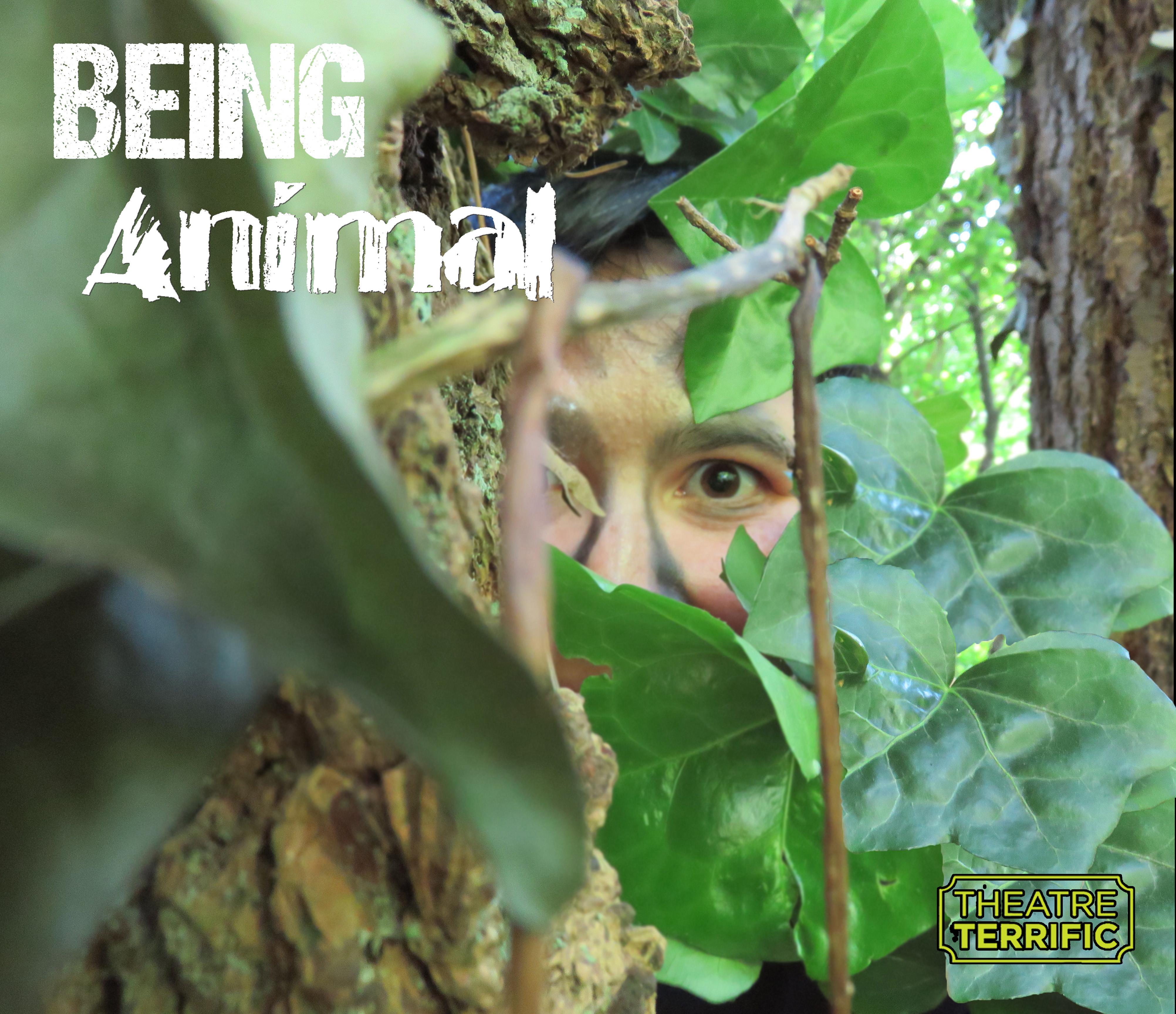
Theatre Terrific’s BEING Animal is currently running at the Vancouver Fringe. The final three performances are this Friday (6:00 p.m.), Saturday (2:00 p.m.) and Sunday (2:00 p.m.).

beinganimal_fringeimage

“Humans are tuned for relationship. The eyes, the skin, the tongue, ears and nostril–all are gates where our body receives the nourishment of otherness.”

David Abrams

Inspired by the work of author David Abrams and created by Theatre Terrific’s ensemble (under the directorship of Susanna Uchatius and James Coomber), BEING Animal uses music, mask work, puppetry, and physical stage choreography to explore and help forge our connections to our natural world, and each other.

Theatre Terrific’s inclusive casting and creation practices provide professional theatre opportunities for performers with drive and talent, regardless of physical or cognitive (dis)ability; their resulting productions dissolve prejudices about ability and art, while reaffirming the inherent dignity of the human spirit. But BEING Animal is so much more than a great mandate. It’s a beautiful and immersive theatrical experience. The audience sits along the boardwalk behind Performance Works, the stage is a grove of trees, and the backdrop is a peekaboo view of the sea and the city. The matinee performance I attended was quite windy, but that only added to the other-worldliness of the show, allowing me to feel both a part of the city and outside of it at the same time, both immersed in nature and participating in the distinctly urban experience that is an afternoon at the theatre. With its sparse use of text and reliance on stage picture, physical choreography, and musical cues to move the show forward, watching Being ANIMAL is akin to watching contemporary dance–lulled by James Coomber’s ethereal score, I simply allowed the event to unfold before my eyes, startled from my reverie now and then as a new image or moment settled into recognition.

One of my favourite aspects of this show is its use of masks–I’ve always loved mask work and I find that masks both remove barriers to an audience’s relation with a character, but also accentuate what is particular or idiosyncratic about a performer’s body, turning what some may see as a performance liabilities into unique physical gifts. In masks, individuality is erased, but humanity is accentuated.

As much as BEING Animal uses ideas of “the natural world” thematically, at its core it is startlingly human. It’s not about having an open mind, but about having an open heart–recognizing our shared frailty, our longing for communion (whether with nature or with each other), and our strength.

Photo: Chantele Fry

Photo: Chantele Fry

[I don’t want to give too much of the show away but during one specific section both my companion and I were moved to tears–not because the play was sad but simply because the moment we were watching was so beautiful. That’s something I don’t get to say a lot.]

BEING Animal plays at the Vancouver Fringe, in the Sculpture Grove behind Performance Works, from Friday to Sunday (see Fringe website or top of post for performance times). Tickets are $14 (must be accompanied by $5 Fringe membership or valid pass) and can be purchased online at VancouverFringe.com.

Disclosure: I attended last Sunday’s performance of BEING Animal courtesy of Theatre Terrific.

The Troika Collective presents “Olya the Child”

Olya the Child presented by the Troika Collective as a site-specific production in the Emily Carr Parkade as part of the 2015 Vancouver International Fringe Festival, now until September 20.

Poster design: Sonja Kresowaty

Poster design and illustration: Sonja Kresowaty

Shameless plug alert: obviously my promotion of this play is a little biased as I wrote the script and my friends are in the company. But you should see it!

From the press release (which I also wrote):

The company that created and performed Chernobyl: The Opera for sold-out audiences and brought Torsten Buchsteiner’s Nordost to Vancouver for its North American premiere presents Olya the Child, an original play that explores the meaning of family through the eyes of a Russian orphan.

Performed as a site-specific work in the Emily Carr parkade on Granville Island, Olya the Child draws parallels between tales of feral children (children raised without human contact) and the unique challenges of international adoption. Ten-year-old Russian orphan Olya Kadnikova (Jessica Hood) has been taught all her life to wish for a family, and for a home outside her state orphanage. She is surprised to be adopted by Canadian housewife Deborah Johnson (Jalen Saip), who hopes that a daughter will bring love into her failing marriage. When adjusting to their new relationship proves more difficult than expected, both child and adoptive parent must examine their illusions, motives, and emotional capacities to decide if the beauty of their old dreams can overcome the challenges of their current realities.

Featuring collaborative physical storytelling by an ensemble cast, by turns both whimsical and bleak, Olya the Child takes its audience from the concrete jungle of a state orphanage in Moscow, through the efficient metropolis of the Frankfurt Airport, to the sometimes claustrophobic comfort of suburban Vancouver as it questions the nature of love, family, and the fairy tales we tell about them.

I think I knew my life as a performer was never going to materialize the first time I saw a script I wrote onstage. Don’t get me wrong–performing was intoxicating, and every so often my heart longs for the feeling of being onstage, for the camaraderie of waiting in the wings, mouthing the words of the scenes as my fellow actors performed them, listening for the audience response. In the intensity of that kind of focus and stillness, one show could feel like a whole week of living. But when I saw this event from the other side, when I sat in the house and listened to the actors instead of the audience, speaking words I wrote, reacting to the situations I created, interpreting a story of my imagining, I knew there was no help for me. I didn’t want to be this character or that one every night for a couple of weeks–I wanted to be every character, and their circumstances, and their language, and their rhythms, and their world, always. So I pulled myself away from performing, gently but painfully, and I kept writing.

Luckily for me, when I was studying performance in my bachelors degree I managed to establish relationships with wonderful theatre artists that I am still happy to have as collaborators and friends and who, for whatever reason, are willing to stage my plays. Friends like Aliya Griffin, founder and Artistic Director of the Troika Collective and director of Olya the Child. It was Aliya who said to me one night over drinks, “I want to stage a play about feral children, but also about Eastern European orphans. Do you think you’d be interested in writing it?” and I said yeah. We discussed the issues with one another, watched the same documentary (as well as conducting our own research), and knew the piece would be staged in a parkade, but apart from that I had complete freedom to create the story as the cast of characters grew and shrank depending on the draft I was working on, and the amount of Russian I would require the cast to speak shrank considerably from the first draft to the current one (I don’t speak Russian myself, and it’s not an easy language).

Knowing that everything you write needs to be performed in a real physical space is a major restriction for a playwright, but I’m very familiar with Aliya’s work as a director and I know what she is capable of when she has the right cast, that is, a cast that is willing to play and explore and help create physically what the lines I wrote can only say verbally. I don’t usually get too involved in rehearsals for the pieces I write, but I had the opportunity to participate in the auditions this time and to catch a sneak peek at some of the orphanage and airport scenes in rehearsal and I am very excited, and very grateful.  I think it takes a certain leap of faith to write a script, and assume that other artists (directors, actors, even graphic designers) are going to be interested in putting as much of their energy and their talent into as you did, and it is the most humbling and gratifying experience to watch it happen.

Though I’m listed as the playwright on this piece, I don’t feel that I wrote it alone; Aliya was reading drafts and providing feedback every step of the way. One of the interesting things about writing plays as opposed to other kinds of creative texts is that the collaborative process (which occurs in almost all creative writing no matter who is listed as the actual author) becomes visible onstage–the words may be mine but the work of art is collective. And if I do say so myself, I think my collaborators and I have examined a complicated and sometimes thorny subject with gentleness and care, opening a conversation rather than closing a door, and I hope, of course, that you will come and see it.

Olya the Child runs at the Emily Carr parkade on Granville Island September 10 – 20. Tickets are $14 (plus a $5 Fringe membership) and can be purchased online through the Vancouver Fringe website (ignore the note that says “Coarse Language”; the play is, in fact, family friendly).

P.S. Check it out! Olya the Child was recently featured in local paper The Source: Forum for Diversity [“Complicating the FairyTale: Play casts a spotlight on international adoption” by Simon Yee]

Back to School (the magic and the whimsy)

At the risk of sounding very, very odd indeed, I must confess there is a cupboard at my office that is my “favourite” because of the way it smells. It is a wooden cupboard that contains office supplies–pens, pencils, markers, paper–in neatly organized piles and packages. Now, I consider almost any neatly organized cupboard to be a thing of beauty, but the reason I love this particular cupboard so much is because it smells like Back to School.

Does “Back to School” have a smell? Yes, it most certainly does. It smells like pine wood, pink erasers, and writing utensils that have not yet been used. It can also smell like fresh Hilroy notebooks, the clean plastic interior of a new pencil box, or that cool autumnal snap that floats in strands on the lingering summer air. Oh yes, Back to School has a smell, and it is one of my favourites.

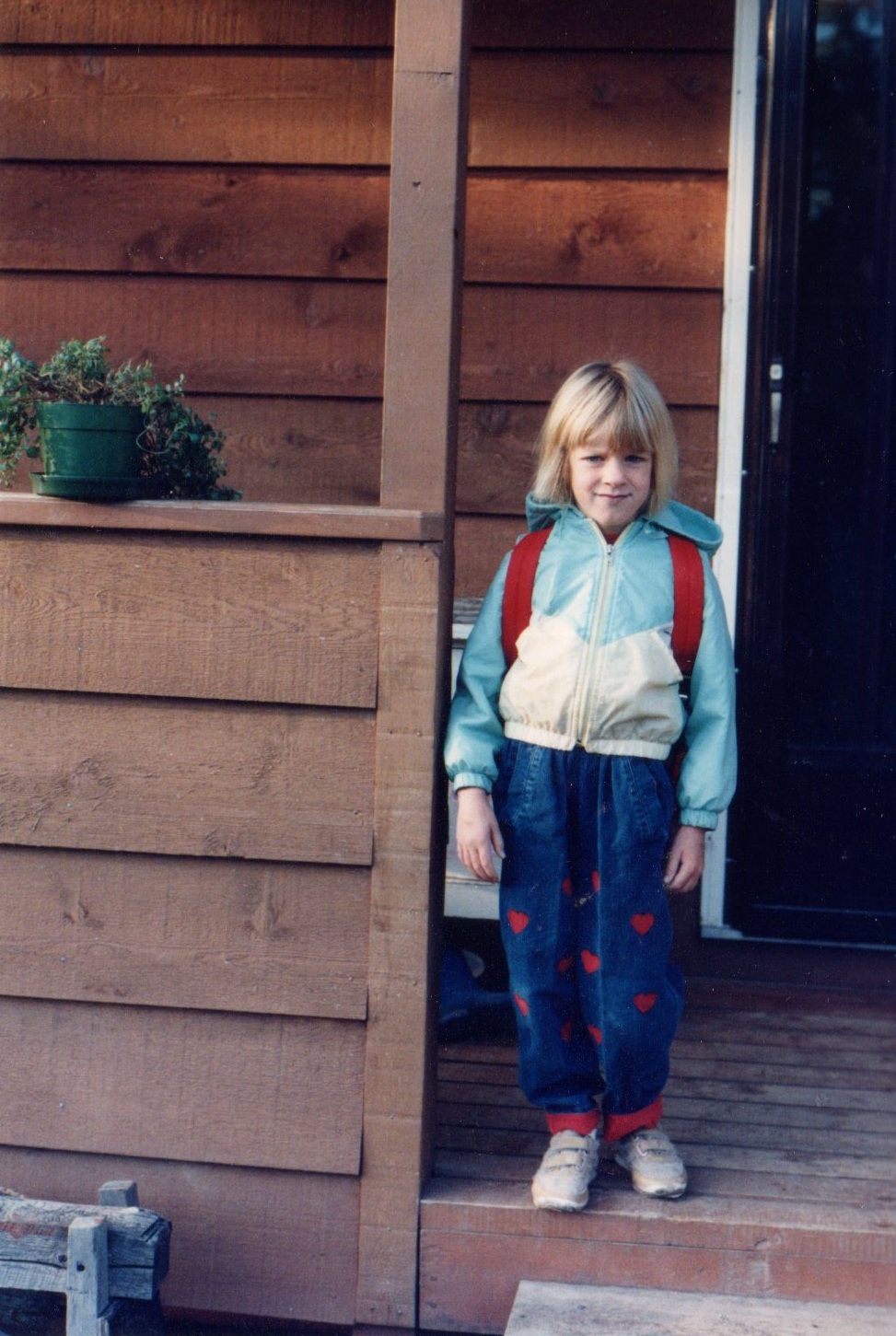
My birthday is in the spring, and the year I finally turned five years old I was appalled to learn I would still be going to preschool until the end of June. For ages (it seems to me) I had asked my parents, “When will I go to kindergarten? When do I get to go to kindergarten?” and they had told me, “When you’re five.” Well, I was five now so what the heck was my dad doing dropping me off at the Good Shepherd Anglican Church for another day of preschool in the basement with the babies? Apparently, my parents had not told me the whole truth. Yes, I was going to go to kindergarten when I was five but not until the fall. What a rip.

Not pictured: yellow Sesame Street lunchbox

That’s me! (not pictured: yellow Sesame Street lunchbox)

When the magic day finally arrived and I posed for a photo on the front steps with my new red backpack, only two things could dampen my enthusiasm: the first was that my mother, in the wisdom she had gained through her experience teaching small children, had chosen to dress me in nice new jeans instead of a dress or a skirt which I thought would have been more appropriate for such an important occasion but maybe not so easy to play in. The other was that my new lunchbox (an object I had craved, that to me conferred the same kind of authority and gravitas as a leather briefcase) was YELLOW and had SESAME STREET on it instead of being pink and having the Muppet Babies, like my older sister’s lunchbox. [For some reason, I was so sore about this that when a grade 12 boy on my bus kindly said to me later in the year, “Hey, Sesame Street, cool!” I thought he was making fun of me so I huffed, “Go away!” while burying myself in the corner of the bus seat.] Minor setbacks aside, my first school bus ride (three of us sharing a seat!) was everything I could have hoped for.

In kindergarten, we learned how to tie our shoes (not me though, my dad had to show me a cheat because that one-eared rabbit was having a lot of trouble finding his second ear in that loopy hole; I still cheat to this day) and what sounds the letters make and not to push people or scream indoors and all sorts of important things like that, but the first new thing I remember learning in kindergarten was that there were years. Everyday our teacher, Mrs. Hamilton, would say something like “the date today is September _ _ , nineteen-ninety-one.” And I would think, “I KNOW it’s September, you fool, I’ve been waiting for this since May, but what the heck is this nineteen-ninety-one business?”

Years. YEARS. This September will be my 24th since that first month in kindergarten, and once again I am going back to school (this time for the second year of my masters degree). In elementary school (and let’s face it, even junior high and high school) I could not contain my excitement. When the back-to-school flyers came in the mail I would spread them out and practically weep over the beautiful coloured pens and binders advertised in the pages. Every year meant at least one “back to school” outfit. Every year meant maybe THIS year I’d be top of the honour roll (never happened due to lack of Math and Phys Ed skills), maybe THIS year I’d be popular, or finally grow boobs, or have a boyfriend, or whatever. The night before my first day of grade seven (which is the first year of high school in Saskatchewan) I couldn’t sleep–I had too much adrenaline coursing through my veins, and too many soaring expectations (I did not have another sleepless night like this again until the night before my wedding last year). Every school year brought the promise of learning things and doing things and seeing my friends and having fun.

And every school year brought some disappointment. Now that I’m an adult, I’m not entirely sure why I found so many of my classes to be so tedious (at this stage in my life I’d jump at the chance to spend each and every day receiving a free education with no worries about paying for food or housing), or why I cared about the opinions of people who weren’t my friends, or why I would have wanted a scrawny, khaki-wearing, squeaky-voiced junior high boyfriend had the opportunity for having one presented itself to me. But did care about those things, SO BADLY, and so of course, being the strange, sensitive, hyperactive young grasshopper I was, whose wild expectations far exceeded the realities of both her location and her talents, I would find myself disappointed. I wanted to return to school each year a superstar, and instead, I’d return as just another normal kid.

BUT. Every summer brought the promise of change, and every summer would bring the quiet excited whispers on the cooling breeze: This year will be different. This year will be different. I couldn’t help myself. I loved to dream.

And you know what? Each year was different, of course, though not in the ways I usually expected, and each year was also the same. There were fun days and boring days and hard days and easy days and days where I would write angrily in my journal that nobody liked me and my skin was disgusting and days I could have leaped up a mountainside I was so happy. My friendships were so strong then and my dreams were too–untethered, touchable, breathable. They felt like when you close your eyes in the morning and the sunlight warms your lids. They smelled like frost and iron stair railings. They buzzed like empty hallways buzz, when all the other kids have gone home and you’re waiting for drama practice to start or for your teacher-dad to finish whatever he’s doing so you can get a ride home with him instead of taking the bus, and you feel alone but also courageous and full of promise.

Education (not just the act of learning but the physical institutions and accoutrements that accompany it) has been one of the most influential forces in my life. Although I’m a little wistful that my long, quiet summer is almost over, I’m not very surprised that I decided to keep going to school, or to find myself back here once again, quietly humming, This year, this year.

Fighting Chance presents “Jesus Christ Superstar”

Jesus Christ Superstar presented by Fighting Chance Productions in association with Renegade Arts Company at the Waterfront Theatre (Granville Island), now until August 22.

Photography by Tegan Verheul.

Photography: Tegan Verheul.

Whenever a popular show, especially a smash hit, is resurrected, directors, producers, and critical viewers like myself must ask themselves, “Why this play? Why now?” When the show in question is over 40 years old, enjoys worldwide popularity as both a theatre production and a film, and is presenting one of the most pivotal moments in the Christian faith to an increasingly secular audience, this question becomes even more pertinent. Why Jesus Christ Superstar, I wondered, why now? My first exposure to Andrew Lloyd Webber and Tim Rice’s gospel-based rock opera was during a North American revival in the 90s–my parents went off to the city to see the show and came home with the soundtrack, singing “Hosanna” in the living room and generally failing to impress seven-year-old me. Having been unable to shake my own original impression of Superstar as a fuddy old relic, and being aware that the show has, over the last four decades of popularity on stage and screen, amassed a following with deeply entrenched ideas of what it should look and sound like, I was intrigued by a relatively young company’s decision to mount such a well-known production, and one so potentially burdened with expectation.

Fortunately, Fighting Chance’s Jesus Christ Superstar does not feel dated at all, nor does it make any attempt to reproduce the iconic performances of Ted Neeley and Carl Anderson (who played Jesus and Judas in the film version of the show and in the 90s Broadway revival). Rather than set the story of Jesus and Judas in 4 B.C. Jerusalem, directors Ryan Mooney and Anna Kuman have placed it in a world and time very much like our own, in a distinctly urban setting (represented by metal scaffolding) where social media, smartphones, and selfies not only exist, but help play into the “rise and fall” celebrity culture in which Jesus and Judas find themselves entangled.

I must confess I was skeptical at first when I saw the screens mounted on the scaffolding, and read about the directorial vision to include 21st-century technological trappings in the show, but it works. The presence of media in this production presents a direct challenge to Judas’ assertion (in the song “Superstar”) that “If you’d come today you could have reached the whole nation/ Israel in four B.C. had no mass communication,”  the assumption being that an increased ability to spread his message and have his motives understood could have saved Jesus from crucifixion. Fighting Chance’s staging of Jesus Christ Superstar isn’t so sure (and neither am I)–when we look at the way celebrities of today are worshiped one day and vilified the next, stripped of their privacy, legacy and livelihood by the social media mob, do we really think a Christ-like figure would have any chance of escaping our scrutiny, caprices, and, eventually, our wrath when they fail to meet our extraordinary expectations? The result of this directorial choice gives Fighting Chance’s Superstar an authenticity that a more faithful visual reproduction would not have had and allows it to reach for what the original Jesus Christ Superstar was always meant to be–a refreshing vision of an old story, and an examination of the ways celebrity can destroy our best intentions.

And the music! It’s just SO GOOD! As a lyricist, Tim Rice’s achievement is not to be understated but Andrew Lloyd Webber is a bloody genius. In true (rock) opera form, Jesus Christ Superstar has no spoken text, but it hardly matters when the music is so electrifying  and expressive–the subtle shifts into minor harmonies in otherwise joyful pieces like “Hosanna” foreshadow the fickleness of the mob and the enormity of the burden they are placing on one man. And indeed, the Jesus of Jesus Christ Superstar, whatever connection he may have to his unseen god, is never more than a good man, and Judas, whatever the outcome of his decisions may have been, is never less. As our troubled world waits for the next revolution, we would do well to remind ourselves how often we destroy those who would be our saviours, and how easily they, or we, can be corrupted.

As for the performances themselves, they leave little to be desired from a vocal perspective. A colour-and-gender-blind casting process for Fighting Chance’s Jesus Christ Superstar gives us Hal Wesley Rogers (an actor of colour with an incredible falsetto) in the title role, and actresses Sara Mayer and Lisa Ricketts as Peter the Apostle and the High Priest Caiaphas respectively. Lovers of the film version may take issue with Caiaphas’ low notes (heard in the film in Bob Bingham’s surreal bass) being bumped up a couple of octaves for Rickett’s menacing and sometimes shrill soprano portrayal, but for me it worked. Vocally, I thought the entire ensemble was strong (together with Rogers, Ray Boulay as Judas and Vanessa Merenda as Mary Magdalene made for a dynamic and engaging trio), but I did want to give props to three cast members with smaller roles that I thought delivered outstanding performances not only vocally but also dramatically in bringing their pieces of the story to life: Sean Anthony, required to fight his better nature in order to uphold Caesar’s law as Pontius Pilate, Riley Qualtieri as the bombastic apostle Simon, and Myles McCarthy as the deliciously sinister and slithering High Priest Annas.

As much as I enjoyed the production, I did not leave the show without regrets. The first is that the live band was not visible onstage but instead played the show from the wings. I know the scaffolding of the set took up a lot of space and that staging a singing and dancing extravaganza like Jesus Christ Superstar in a smaller theatre requires tough decisions and sacrifices, but if the show is ever remounted, I would love to see the band incorporated into the visible stage area. Live music in theatre really adds something special to a performance and I hate to see it hidden. My second complaint is an issue I have experienced in a couple of other Fighting Chance shows–audibility. Off the top of the show, the sound levels seemed a little out of whack, especially in Judas’ more instrumental numbers (with the band often drowning out Judas’ words), and there were some microphone issues in both acts. It’s frustrating as an audience member to see a performer singing the hell out of something, and be able to hear how great their voice is, but be unable to make out what they’re saying. The plot of Jesus Christ Superstar isn’t exactly unfamiliar, but it would have been nice to have had a more full appreciation of Rice’s take on this ancient story. I sincerely hope that for future endeavors Fighting Chance will be able to obtain whatever resources they need to overcome these sound issues (more tech time? better mics?) because these kinds of barriers to audience enjoyment or comprehension undercut the otherwise incredible work being done on the stage.

Apart from those issues, I enjoyed myself immensely. The music has been in my head ever since the performance and it seems that despite my childhood first impressions of the musical, Fighting Chance’s Jesus Christ Superstar has definitely made a convert out of me.

Jesus Christ Superstar runs until August 22 at the Waterfront Theatre on Granville Island. Tickets can be purchased online through Tickets Tonight.

Disclosure: I attended the opening night performance of Jesus Christ Superstar courtesy of Fighting Chance Productions.

Federal election 2015: Fight their money

The bell has rung, the gates have opened, the flag has waved, and they’re off! Four federal political parties running neck and neck towards the grand prize, a four-year mandate to govern this country we call home (well, three running neck and neck and one trailing behind in a really heartbreaking underdog story, and technically the Bloc also running but more for the sake of biting the other parties’ ankles and stirring shit up). It’s time for Canada’s longest (and most expensive) election campaign in over a century. Time for our parties’ leaders to dust off their folksy sweaters, firm up their “meeting the average voter” handshakes, and let the attack ads and photo ops fly. Feel the excitement! Feel the thrill!

I’ve never made a secret of my disdain for Prime Minister Stephen Harper and his Conservative government, and I simply could not suppress a cynical snort when I read our incumbent PM’s rationale for calling an election campaign so far ahead of the fixed October 19 election date:

I feel very strongly…that those campaigns need to be conducted under the rules of the law. That the money come from the parties themselves, not from government resources, parliamentary resources or taxpayer resources.

Harper was ostensibly talking about the opposition parties, however, given that his is really the only party with access to government resources for partisan advertising (which the Conservatives have continually made use of for years under the guise of keeping Canadians “informed” about government activities, like their boondoggling Economic Action Plan), he is certainly well aware that HIS party was the problem. It’s also pretty brazen to invoke the rule of law, given that members of the Conservative party have been found guilty of breaching election spending rules in 2006 and 2008, as well as committing straight-up electoral fraud in the 2011 federal election (voter suppression via the now-infamous “robocalls”). Almost everything the Conservatives have told us about what is happening in our country in the last few years and about their own actions and intentions is so blatantly and purposefully false that I’d be tempted to call it some sick kind of joke, except I’m pretty sure Stephen Harper is not in possession of a sense of humour, just as I’m sure the many Canadians whose lives are negatively affected by the Conservative’s various ill-supported policies are not feeling too hilarious right now either.

As for the claim that parties should be spending their own money on their election campaigns, that much is true, and Harper knows his party can easily outspend any of their rivals (it’s not too hard to raise donations when your supporters are typically well-to-do corporate elites; it’s a little harder when your party is trying to appeal to the working poor and struggling middle class families). Far from ensuring a fair fight, Harper’s early election call ensures he can control as many angles of the game as possible, and ensures that his party’s particular strength (garnering donations, if not actual popular support) will be a key factor in the campaign (as it stands right now, none of the opposition parties can afford to run an election campaign for this long; Harper can). Former head of Elections Canada, Jean-Pierre Kingsley, was quick to call out Harper for “gaming the system” and for saddling the Canadian taxpayer with additional costs (a 37-day election period, the usual minimum, costs Elections Canada approximately $375 million to administer; the election campaign we are now in will last 11 weeks).

Increasing the campaign length isn’t the only trick Harper has up his sleeve. Bill C-23, the shockingly-named “Fair Elections Act”, has made it harder for thousands of Canadians to vote, and has prohibited Elections Canada from encouraging voting. Again, not a joke. The federal body responsible for administering elections in Canada is no longer allowed to encourage Canadians to vote. They can tell you where the polling stations are, they can tell you how to register as a voter in your riding, but actually saying, “Hey Canadians, please consider exercising the democratic freedom many people worldwide continue to die for and cast your ballot for your preferred candidate at the next election”? Not allowed.

harper-not-careSo what can you do, if you don’t want the Harper Conservatives to win the next election? They have the money, they’ve controlled the message for years, and they’ve had the power to change Canadian election laws in their favour, so what can you possibly do?

For starters, you can fight their money with your money. Though the Conservatives have a bigger war chest than the other federal parties, all parties are bound by campaign spending limits. The Tories could have all the money in the world but after a certain point, they can’t do much with it during the election. This means that anything you can do to help the opposition party of your choice close the funding gap not only helps that party get their message out, but also weakens the comparative power Harper’s sizable piggy bank gives him. And every little bit, even $5 if you have it, helps. [Another nice thing about donations to political parties is that they qualify for a pretty generous tax credit–up to 75%–so a donation of $100 would usually only end up costing you $25 after you file your taxes.] You can donate to the NDP here, to the Green Party here, and to the Liberal Party here (and in case you’re wondering, yes, I listed these links in the order in which I personally like the parties).

If donating to a particular party isn’t your thing, but you do want to support a cherished political cause in its fight against the current regime, that is certainly an option. For example, if you don’t want oil tankers navigating coastal waters in BC and just want to make sure that whoever wins the election isn’t in favour of more of them, you might want to support the activities of the Dogwood Initiative. If your main concern is the Harper government’s erosion of Canadian democracy, you could consider a donation to Leadnow. The Internet has allowed concerned Canadians from coast to coast to come together in unprecedented ways. A Google search should help you find the activist community deserving of your dollars. [Note: sadly, these activist organizations usually do not qualify as registered charities for the purposes of tax credits, but you’ll probably get some good karma.]

Can’t stomach the thought of another four years of the Harper Conservatives but can’t afford to make any political donations? That’s okay too. You can fight their money with your time. Both political parties and non-party political activist groups like Leadnow rely on dedicated armies of volunteers to get the message out. Donations can buy a lot of advertising, and a lot of annoying phone calls from strangers, but there really is no replacement for people power, especially the power of local people to stand up for their own communities (remember last April when Enbridge had an unlimited budget to spend on promoting a “yes” vote in a Kitimat plebiscite on the proposed Northern Gateway pipeline, and the “no” side still won with 58%? People power!). No riding should ever be considered “safe” of course, but your time might be best-spent in areas that usually vote Conservative or where the current non-Conservative incumbent is not popular. If you live in a non-Conservative stronghold and you are able to travel, consider volunteering for the party at large, or for a riding association where you still have some roots or connection to the community where you’ll be canvassing (your old home town, for example).

If you have neither time nor money, fight their money with your voice. The Internet makes this ridiculously easy to do. If you have a blog, blog about the issues. If you’re on Facebook, or Twitter, or Instagram, or Tumblr, or whatever you crazy kids are into these days, share articles, share memes, share information, share your opinions. Challenge political comments you don’t agree with, politely and with facts. Read up on the issues. Get into discussions at parties. Your opinion matters. YOU are a “regular Canadian”. YOU are jointly responsible for what happens to this country, and YOU are jointly in charge.

And then of course, most importantly, fight their money with your vote, and convince others to do the same. Unlike Elections Canada, we’re allowed to encourage our fellow Canadians to exercise their democratic freedom and civic responsibility, and none of our money, time, or voices will make a difference unless Canadians register with Elections Canada and show up at the ballot box to demand change. Not sure if you’re registered to vote? You can easily check right now on the Elections Canada website.

Humanity, Recognition, and Interiority

Illustration from NatalieDee.com

Illustration from NatalieDee.com

A couple of weeks ago my husband and I were in the car together and I asked him who he “talks” to–you know, who he’s traditionally turned to when he was upset, or his heart was broken, or things in general just weren’t going well. My husband and I have a very communicative relationship and we talk all the time (on our first date I was impressed by his excellent conversation), but he certainly doesn’t psychologically “dump” on me the way I sometimes do on him, and the way my sisters and childhood best friend and I have long “talked out” our disappointments, problems, and fears.

To my surprise and discomfort, he said he doesn’t, or at least not with any regularity.

My first impulse upon hearing this was sadness; I felt that my fun and social and considerate husband was somehow missing something important in his life. But TC says he doesn’t always need to “talk out” the way I do. His friendships aren’t built using all of the same blocks as mine (verbal sharing of Costco-sized amounts of psychological/emotional weight is not the only way to maintain strong bonds, as it turns out), and his emotional needs are, quite simply, different from mine.

So now my feeling is weirdness and discomfort. Intellectually, I accept that different humans are different. But it’s weird. Weird because for me talking (and, by extension, writing) is almost a medical necessity–I’m fairly convinced that if I didn’t share whatever is on my mind at some point, even good happy very exciting things, they would fester and eventually choke me. Discomfort because apparently it’s not the same for TC, and I don’t know how to process that. How can a need that is so significant and vital to me be almost non-existent in another person, especially a person that I usually feel so emotionally in tune with?

It’s especially discomfiting because despite my attempts to curb my natural self-interest, I sometimes have a hard time remembering that other people have inner lives, and that their inner lives are just as deep and rich and important as mine. For me, talking (or writing) is a huge part of the expression of my inner life–it’s how I remind the world, and myself, that I’m here. But some people don’t feel the need to prove the existence of their inner lives, or instead find other ways to express them. And I am so wrapped up in my own perception (one that sees through the lens of my inner life) that I fear I am sometimes in danger of assuming that an absence of expression (in a language I readily understand) equals an absence of interiority.

Recognizing the interiority of others is incredibly important. Not only does it make us better partners, family members, and friends, this recognition is vital to the way we treat each other as human beings. Many an injustice has been perpetrated against specific “other” groups of people by using the excuse, “They just don’t feel the way we do.” For examples of this excuse in action, we could look to former U.S. Army Chief of Staff Gen. William Westmoreland’s statement that “The Oriental doesn’t put the same high price on life as does a Westerner” in the Vietnam war documentary Hearts and Minds, or Voltaire’s many and virulent assertions that the Jewish people, due to some inherent racial shortcoming, do not possess the capacity for generosity, decency, or hospitality (as you can imagine, Voltaire’s opinions on this subject gained a lot of traction with infamous anti-Semites like Adolf Hitler and continue to be quoted with glee in extremist fanatic corners of the Internet). When we present others as lacking interiority, we present them as “sham” people–hollow pretenders who deserve our hatred and prejudice–rather than as people whose experiences and pain are as legitimate as ours.

Humane treatment of others requires us not only to recognize the interiority of others as legitimate, but also to assume interiority even when it is not, or cannot, be expressed. Failing to do this has, historically, had serious implications for our treatment of non-verbal and/or non-communicative people, including the mentally ill, people with cognitive or other medical disabilities that prevent traditional communication, and infants. Did you know that as late as the mid-1980s (in the U.S. at least, but likely in Canada too), doctors erroneously believed that infants could not feel pain, and serious surgeries were routinely performed on babies without anesthesia? Apparently, their cries, grimaces, and physical attempts to push away painful stimuli were considered merely “reflexes” and though infants were given a muscle relaxant to prevent these “reflexes” from getting in the surgeons’ way, they were awake and aware for every excruciating moment of their medical procedures. If someone did this to an adult, it would be the very definition of torture, but because babies cannot verbally communicate their pain they way we do, it was assumed they couldn’t feel the way we do either.

It should be common sense to us that any human being, when cut with a scalpel for example, would feel pain. Our reason should tell us that this is the case regardless of the age, gender, race, religion, class or culture of the person involved. The problem, however, is that despite the earth being peopled for tens of thousands of years with folks whose biology, physiology, and psychology have remained relatively constant, the definition of who qualified as “human” has, until very recently, only included adult white males. Children were not human beings. Women were not human beings. People of colour were not human beings. Because these marginalized people were not considered “human”, it was assumed they did not have the same rich interior life as a white man (Freud, for example, despite the fact that most of his patients were women, did not actually believe women possessed complex psychology and so his theories were actually written exclusively for/about men). This lack of perceived interior life was then used to defend the inhumane and demeaning treatment women, children, and people of colour received (though of course a white woman or child would have been and usually still is a lot better off than a person of colour). It’s worth considering whether or not the fact that these “non-human” people weren’t usually ALLOWED to express themselves has anything to do with the perception that they had nothing to express, and the ways in which prejudice (and the mistreatment it engenders) is self-perpetuating.

The fact that the Western world eventually (and begrudgingly) extended the title of humanity to the poor, women, children, people of colour, and people with disabilities isn’t too much to pat ourselves on the back about. Recognition of our shared humanity was not given out of beneficence–it was wrested from the hands of the status quo by marginalized people (or, in the case of those who could not speak for themselves, by their passionate advocates) after long, difficult, exhausting, often violent, sometimes deadly struggles. And serious injustices continue in the present day, although slightly less overtly. At the same time, some formally very marginalized groups have gone on to oppress others in turn (white feminists, for instance, have frequently been accused of throwing women of colour under the bus to further the aims of a feminism they find more palatable). We aren’t done yet–we still fail at recognizing others’ humanity in so many ways.

I’d like to believe that most of us aren’t monsters. But many of us find it difficult to see the world through another person’s eyes. Most of us, for example, probably grew up believing that gender binaries were pretty simple and set. Boys were boys and girls were girls and though boys could be “girly” and girls could be “tomboys”, everyone seemed to agree on who was who and what was what, just as we agree the sun rises in the east and sets in the west. But we were wrong. Gender is NOT that simple, and not that set. We know this because it turns out that for people who are transgender, our assumptions didn’t add up. We know this because trans* people have TOLD us this is so, and TOLD us who they are. And yet, for some reason, many of us believe the reality of others is something we can have an opinion on, or that we need to agree with in order for it to exist. As if trans* people do not have a legitimate enough inner life to KNOW who they are, and to KNOW whether or not the gender they were assigned at birth (based on their physical characteristics) was correct. As if trans* people do not feel as threatened and humiliated as a cis-gender person would feel if they were forced by society into using the wrong gender’s bathroom. As if the countless indignities experienced (and recounted) by trans* people don’t exist, simply because we’ve never experienced them ourselves.

These attitudes are just plain silly. I’ve never had cancer (and hopefully never will), but that doesn’t mean cancer doesn’t exist, or that cancer patients are either lying or simply “confused” about their condition or the pain they’re in. We shouldn’t need to experience something first hand to accept that it is real, and to extend support wherever support is requested. Unfortunately, our inability to acknowledge and respect the interiority of others isn’t just silly. It’s dangerous, and it causes pain and suffering. Trans* women are raped and murdered at alarming rates. Gay teens kill themselves at alarming rates. African American men are shot and killed by police at alarming rates. Women are sexually assaulted at alarming rates (and then repeatedly asked if they are sure an assault is what really happened, if they are sure they didn’t want to have sex with their rapist). Even children, for whom we often claim we would sacrifice anything, are commonly treated by adults as if they are possessions, not persons; empty vessels for their parents’ or governments’ ideology, rather than thinking beings in their own right.

At the end of the day, it comes down to respect, whether it’s respect for the inner experience of your friend or loved one, or respect for the inner experience of a stranger, even a stranger whose culture, experience, orientation, and existence in the world is completely different from yours. Respect for those who have told us who they are and what they need, and also respect for those who haven’t, either because they lack the ability or because they simply don’t want to. An interior life can be just that–interior. Hidden. The red cells flowing through the artery, under the skin. No one owes us proof that they bleed and hurt just as we do, and the world would be a much better place if we could offer our respect without demanding to see the scars.

[Note–the debate about whether or not the recognition of an interior life can/should reasonably be extended to animals is taken up in J.M. Coetzee’s The Lives of Animals, and though the book itself reaches no particular conclusions it is a great addition to the discussion.]

The forests are burning (your children are burning)

Photo: Brayden McCluskey

Photo: Brayden McCluskey

Sometimes I wonder why people still have children. I wonder when the sky fills with smoke and the air tastes like ash, when the heat comes in and sits, indifferent to the presence of the sea, indifferent to the ceiling fan, indifferent to everything that should shoo it out again. I wonder when I start to describe the blue sky as “relentless”–another day without rain. Another day without rain.

I wonder when I hear how many of these wildfires were started by discarded cigarettes, one person’s slow careless suicide ripping like a whip-crack across the tinder-dry grass and into a forest of–firewood, now–hot coals, now–charcoal, now–ash, now.

And still the heat envelopes me in bathwater arms, hot dishwater arms, drowns me in dry air, and still the sky, behind the smoke, relentless. Blue.

I wonder at our gleeful march towards death, our species hell-bent on fashioning this hell-scape on earth. And I know, we did this. We’re doing this. I wonder why I should have children. I wonder, if I did, what they would grow to see–their childhood home, consumed by the flames? Their spiral-shelled shorelines slick with the entrails of tankers, slick with the oil that should have stayed in the ground? And, if they live to be old, the sunny backyard where their parents were married, submerged in the rising sea? The ice caps are melting. The ocean’s expanding. We’re doing this.

Do you, you avaricious elders, deserve my children, deserve their flesh (my flesh) and their hope (your hope) and their bright new shiny spotless souls? When I was a child you told me that I was the future. You–teachers, government–told me that what you were doing was for me, for my own good, for me and my children and my children’s children. But I am grown up now and no one has saved the planet for me. And when I say, I want to save it, please help me try, you say I am naive, you say we all need jobs, you say “dollars and cents”, that we need to pull the oil out of the ground because it is worth too much, we need to ship the oil and sell the oil and burn the oil, you say money is more important than life.

Your children can’t eat money. We can’t draw money cool-sweet from the ground and drink it. Money can’t buy us rain or stop the hot beating of the blue sky, relentless.

Come now, you rich people, weep and howl for the miseries that are coming upon you. Your riches have rotted and your garments are moth-eaten. Your gold and silver have corroded, and their corrosion will be evidence against you and will eat your flesh like fire. [James 5: 1-4]

Show me, wasteful citizens of a wasted planet, that you deserve my children. Convince me that you will not throw them into the flames as you have done with yours. Promise me you will not tell them that their hunger, their thirst, their choking for a clean gasp of air is naivete. Show me that you need them as more than just a bandage made of hope, as more than just a witness to our final ashy breaths.