Happy Birthday, Blog! : One Whole Year of NiftyNotCool

This the where the magic happens (yep, my mousepad is a paper bag).

It was this day last year (November 29, 2010) that I posted “NiftyNotCool: A Whine and Cheese Introduction“, my first-ever blog post. That makes today the first “bloggerversary” of NiftyNotCool. During this year I have been committed to posting at least once per week and I have kept to this goal (a small feat for some but a big feat for me). I had decided, at the time, that I would keep this up for a year and if I didn’t like it I would stop. Today also marks the one-year anniversary of my first-ever tweet on Twitter, again, with the condition that if I hated it (and I thought I might) I would stop (HA!).

The idea of marking my time as a blogger with a bloggerversary is one that I stole from my friend Raul Pacheco-Vega, of Hummingbird604.com. He celebrated his five year bloggerversary this past spring and it was a pretty big milestone for a major Vancouver blogger who has, for the entire five years, been blogging entirely for free.

As my own small bloggerversary approached it occurred to me that the thought of quitting NiftyNotCool hasn’t crossed my mind at all lately. I’ve put in a year’s worth of learning and writing, attending the YVR Blogger Meetups and talking to new people. I’ve learned that blogging (good blogging) is more than just banging out a post every once in a while and expecting fame and recognition to come pouring in. It’s about hard work, and not being obsessed with watching my site stats. It’s about making decisions like whether or not to sacrifice good SEO for titles and introductions that satisfy me as a writer but won’t necessarily bring Google searchers to my blog (most of the time I say to hell with SEO and just write the way that makes me happy).

Over the year, I’ve written a few things I’m quite proud of (and some I’d be content to sweep under a rug), and a few things that unexpectedly struck a chord with unexpected people. Every once in a while someone has told me that something I posted interested them, or made them laugh, or was helpful to them. When someone does that, it’s pretty much the most gratifying feeling I could hope for as a blogger.

And I’m having fun! Blogging and tweeting has allowed me to engage with new people, and brought some fun opportunities my way. If you blog for perks and recognition you’ll quit soon. If you blog because you like to write and you want to share, you’ll enjoy yourself and the perks that do happen to come along will be just that…perks. I’ve stuck with this for a year and I gotta admit that writing some posts has been like pulling teeth. But overall it’s been an interesting experience, a good challenge and a lot of fun and I don’t feel like stopping anytime soon.

But I do think it’s time to step up my game. I’ve been blogging and tweeting and going to tweet ups and similar events for one year and it is about time I stopped being such a Luddite and started making this easier on myself. It’s time for a smartphone.

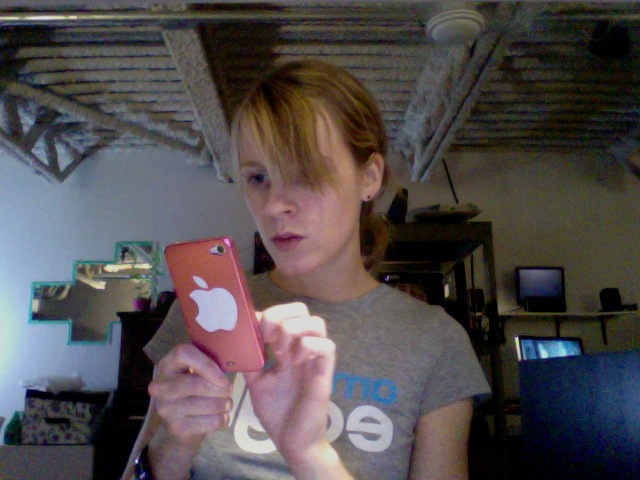
Ladies and gentlemen, may I present to you Georgette von iPhone (“von iPhone” is of course her married name, sadly, Count von iPhone passed away from technological dropsy some time ago). This brand new piece of techno-social gadgetry is my one-year bloggerversary present to myself.

Technological! Ooooh!

Georgette is an iPhone 4S and I am happy as a clam with my bright shiny toy. I’ve stuck with this for a year and proven to myself that I would make good use of a smartphone. Now I can blog and tweet all over town! And find myself on Google maps when I get lost tweeting all over town! And record voice memos like a Private I. Watch out world!

With all sincerity though, happy bloggerversary, nifty blog of mine. It’s been a slice so far. Welcome to the family, Georgette. I love you already. And to all of you who have read my blog over the past year or given me any pointers or brought cool opportunities or ideas my way, thank you. You’ve all made it so much fun and I’m nowhere close to finished yet. Cheers!

P.S. The stage-managing, truffle-baking, theatre-blogging entity that is my friend Lois Dawson is celebrating her THREE YEAR bloggerversary very soon at www.loisbackstage.com. Happy bloggerversary, Lois!

Moving out, moving in, moving on

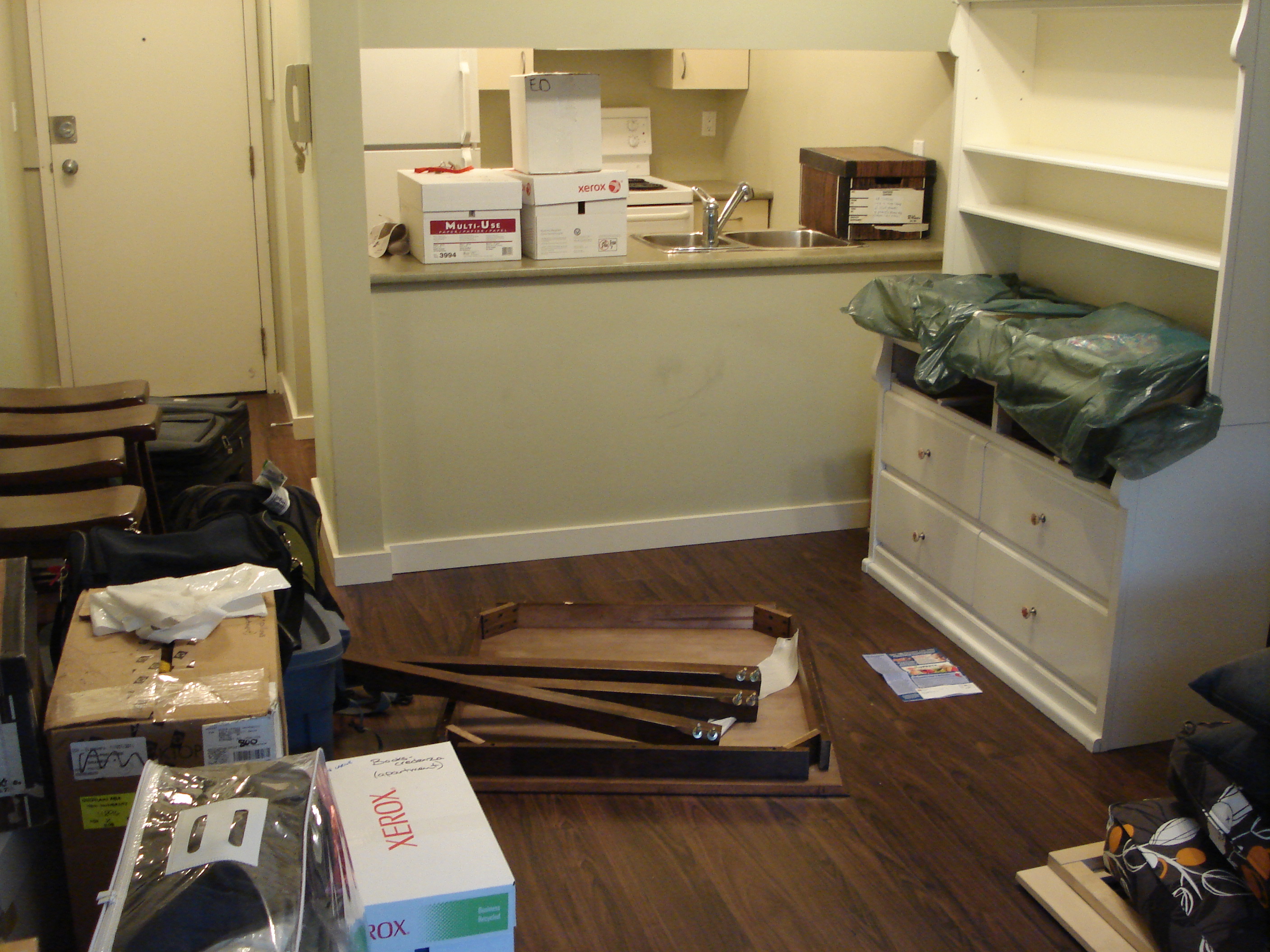
On November 21, 2010, I moved into a sweet little nifty apartment in East Vancouver’s Hastings Sunrise area. I made the move for emotional and financial reasons and my snug little place welcomed me in a cozy embrace of mirrored closets perfect for impromtu vanity dance parties (with or without air guitar) and east-facing windows that allowed my poor little light-starved houseplants to double in size during my year there.

It was also around this time that I started making the necessary changes in my life to allow my poor little timid heart and mind to double in scope and experience and the world around me, when I ventured out of my little Hastings Sunrise nest, welcomed me with new people, new places, support from all sorts of unexpected corners, and a new sense of self I hadn’t had before.

It was quite a year.

Now, a year later, I am moving out. Not because I don’t love my little nest with all my heart. Not because I wasn’t happy there. But for two good reasons:

1: My apartment has been up for sale for quite a few months now. I knew this, and when my landlady called to tell me it had been sold to someone who wanted to move in in December, I was ready to accept that (and of course, I had to, ready or not). I hope the new owner loves her snug little place as much as I did.

2: Regardless of whether the apartment sold or not, it was time to move on. New adventures await me following some recent changes and sometimes that means a new location. I will still be in East Vancouver. My houseplants will still have lots of light. My new place will be pretty nifty once everything is unpacked. But it is time to say good-bye to the nest that cradled me and to create a new kind of home with a new kind of happiness.

Funnily enough, as I was packing up my belongings to move and sorting through what would stay and what should be sloughed off, it was not the loss of my east-facing balcony that saddened me. It was not the loss of my tiny but perfectly proportioned kitchen that made cooking a dream (EVERYTHING was within reach). It wasn’t even losing the neighbourhood with East Vancouver’s best views (visit Wall Street or Burrard View Park if you don’t believe me). The loss I grieved over was an old empty bottle of Blasted Church Gewurztraminer.

It was a bottle an old flame and I purchased in an old life, three years and four apartments ago. At the time, I was collecting wine bottles, and Blasted Church’s labels are certainly worth keeping the bottles around for. This bottle survived every cull as I moved from home to home and until recently had occupied a prized spot in my credenza flanked by William Nicholson’s Wind on Fire trilogy and Neil Gaiman’s Stardust.

When I removed this bottle from the shelf I looked at it for a long time. I looked at the label, a drawing of a priest fishing and a russet-coloured dog standing on alert. I tapped my fingernail on the glass. I woke up a lot of ghosts–old memories and old dreams. Memories of another cold November night, being warm inside with wine, wondering through my blushing haze if this was going to be love (and already being quite sure that it was). Dreaming a lot of things but never dreaming of the life I actually have now. Being another girl, in another time, a 22-year-old who thinks she knows with complete certainty that what she wants in life is just to make rusty carnival-like plays with accordion music in them (and to hell with money!) and maybe, just maybe, that the next time she says “I love you” to someone it will be the last time she ever says it.

Oh my my. I held this old bottle of Blasted Church Gewurztraminer in my hands for a very long time. And then I put it in the recycling box, with some empty yoghurt containers and last year’s Maclean’s magazines. I suppose before I dump all the stuff out in the blue bin I could go back, reach in, rescue the bottle, take it with me and keep it for memory’s sake.

But I won’t. I’m full of memories already and I’m making new ones everyday. Rescuing a symbol won’t rescue the dreams that have already run their course and that’s okay. That’s growing up. That’s movement. That’s a fine thing to smile over someday when I have children perhaps and they are sad when they realize they don’t really truly believe in fairies anymore. Impermanence is what makes it all so enchanting.

And whether my fairies are “really truly” or not, I live an enchanted life. Not always the way I thought I would, or where I thought I would, but a new home beckons. A new life to build that promises incredible things. Time to move out, move in, and move on.

Remembrance, Action, and Inaction: Thoughts inspired by “Re:Union” at Pacific Theatre

Last Friday (which was Remembrance Day in Canada) I had the privilege of waking up in a warm apartment, grabbing a bowl of Cheerios, and cozying up under a blanket on the couch as I settled in to watch the Ottawa Remembrance Day ceremonies on CBC. I say I had the privilege to eat Cheerios like a slob in front of the TV dressed in my PJs because it is days like Friday that remind me that each and every part of my working-to-middle class Canadian life, even the less glamorous parts, are things I am privileged to have.

I am also privileged to live in Vancouver, a city where the theatre community, though comparatively small and green, is still able to produce and share art that plays a role in reminding me not only of the privileges, but also the responsibilities, of living the relatively charmed life I lead. Sean Devine’s “Re:Union”, a co-production presented by Pacific Theatre and Horseshoes and Hand Grenades, which I also had the privilege of watching last Friday, was an excellent example of art’s ability to aid in the process of remembrance.

Many people (myself included) often view remembrance at this time of year as a passive act, a time for tucking a poppy into our lapel, turning on the CBC, and turning our thoughts momentarily to a time when sacrifices and hardship were daily widespread Canadian experiences. We sometimes forget to remember that Canada is currently a country at war, or to remember that we have a place in the history we are constantly creating.

“Re:Union” is inspired by the little-known story of Norman Morrison, an American Quaker who could no longer think passively on the sufferings of others. Feeling he had been called upon by a higher power to act, on November 2, 1965, Norman Morrison drove to the Pentagon with his baby daughter Emily. Norman doused his body in kerosene and set himself alight, a horrifying protest against the horrors of the war in Vietnam. Norman Morrison burned to death that night under the office window of Robert McNamara, Secretary of Defense. Devine’s play presents these facts but also takes us 36 years into the future, as Norman’s now-adult daughter Emily confronts McNamara, blames him for his inaction in failing to stop the atrocities of Vietnam, and asks him to bear witness as she plans to protest the policies of the post-9/11 Bush Administration.

The play was beautifully understated. I was given no black, no white, no rousing call to arms. I was given complexity. I was given honest, challenging, and contained performances. I was given questions: Is there a higher power than our own ethics? Is merely trying to reduce and control civilian casualties in our military actions enough? Is inaction an act of compliance with oppressive forces? What about extreme action that costs dearly but ultimately yields no results?

In “Re:Union”, it is Emily I most identify with. I am not a martyr. I am not a high-powered bureaucrat or politician. I am a person who cares about her world and is chafing constantly against her own inability to act. When I am called to remember I remember with my whole heart but in the end, usually, any action I take is perfunctory at best, enough to tide me over until the next news story, the next conversation, the next play, the next November 11.

In Devine’s play, Norman Morrison’s act of protest is prefaced by stillness, rooted in the Quaker belief that if one remains still, one will receive the Divine. Emily Morrison’s ultimate inaction is prefaced by movement: by research, video diaries she makes of herself, confrontation with the ornery McNamara, and the act of remembrance. Neither of these individuals stopped any wars. But they were Davids without a sling, against a Goliath with tanks. To have that expectation of them is to simplify a world we know to be more complex: a world of actions having chain reactions, the consequences of which are not always immediately visible. A world where “all or nothing” competes with “every little bit helps” and those of us who care are constantly stuck in an almost paralyzing negotiation between the two.

Beneath the action that cost too much and the inaction that seemed to cost far more, Re:Union tells the story of a father and a daughter, a legacy of love and remembrance and a responsibility to the world that can be as big as one’s responsibility to their Maker, or as small as their responsibility to the truth about themselves and their own personal history of action and inaction.

If you would like more information about Pacific Theatre’s 2011/2012 season, please visit their website: www.pacifictheatre.org.

Information about Horsehoes and Hand Grenade’s latest projects can be found at: www.horseshoesandhandgrenades.ca.

European Travel Nifty-style: Some Recommendations

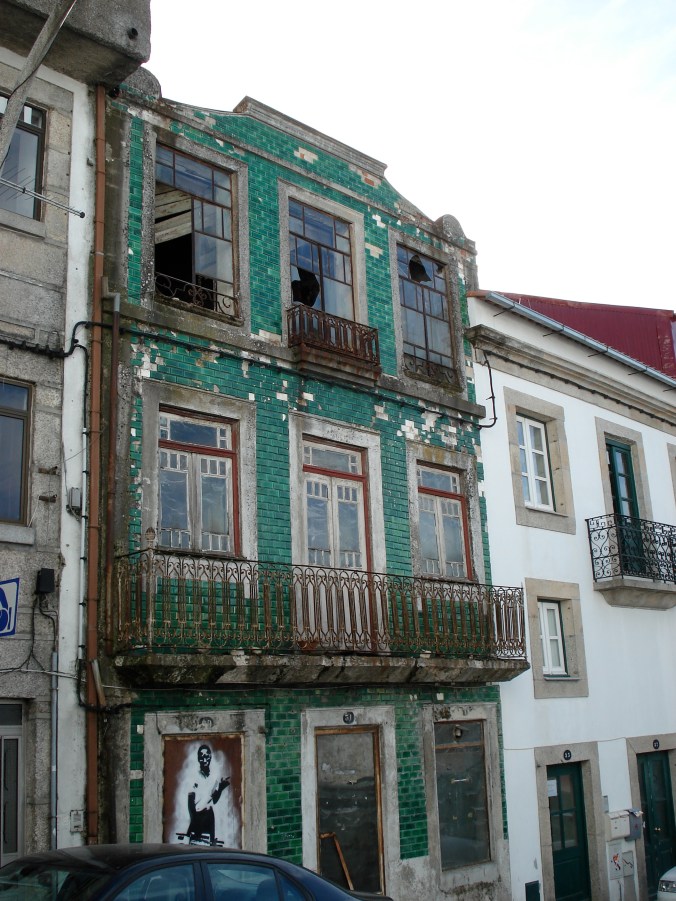
Porto, Portugal

Howdy Travel Fans! NiftyNotCool here, back in Canada and feeling fine. I survived a month of hostel living, train riding, and living out of a backpack, and I managed to tear myself away from the charms of Portugal and Spain and return to you all to give you my recommendations for European travel Nifty-style (lucky you!).

I. Preparations

Guidebooks: I bought a Lonely Planet for Portugal and also one for Spain. At first they felt a little pricey (about $30 a pop) but they were absolutely invaluable. A lot of train and bus stations don’t actually have a tourism office or provide free maps of the city you just arrived in. Even though the maps in the books are rather small, without my Lonely Planet there are a few times I would not have found my hostel, the train station, the site I was looking for, etc.

I also stayed in Lonely Planet recommended hostels and hotels through most of my trip and I was not disappointed in them. They were clean, safe, usually centrally located, and, because they were recommended in the Lonely Planet, they helpfully appeared on the Lonely Planet maps.

Because I didn’t know all that much about that places I was going, my guidebooks were also invaluable in helping me plan my trip and decide where I wanted to go and what I wanted to see. They give an overview of regions, history, language, transportation, accommodation, safety, and just about anything else I would wonder to myself about the country I’m visiting. Even if you get to a place and decide to just wing it, get a guidebook. I consider mine practically life saving.

Travel insurance/travel medical: I got mine through World Nomads (recommended by Lonely Planet of course) and it only set me back around $150 for four weeks. Whichever company you decide to become insured with, do become insured. I think lots of people like to think nothing will ever happen to them, and usually nothing does, but when I was sick in Madrid I remember thinking that if I got much sicker I would need a hospital (because I simply couldn’t take care of myself in a hostel) and I was so glad that I had insurance and therefore had that option.

Passports: I usually renew mine as soon as it expires. It’s a good idea because they can sometimes take a long time to obtain/renew and you don’t want to have a whole trip planned and be worrying you won’t receive your passport/visas in time. As a Canadian and British citizen, I did not need a visa for EU countries.

Itinerary: I didn’t completely plan out everything I did, but I do think it’s a good idea to at least narrow your travels down a bit. For me, having an abundance of choice is paralyzing. Once I decided I wanted to work Portugal north to south, and then focus half of my Spanish adventure on the Andalucia region, it was far easier to choose the specific cities I wanted to stay in and the things I wanted to see. Which makes it easier to pin down accommodation, transportation, etc. down the road.

If you do want to try to get off the beaten path and out of the cities, make sure you do your research ahead of time, and make sure you won’t need a car, a certain time of year, etc. to access the nature you’re trying to see. This will save you a bit of heartache and quite a big headache.

Documents: I made sure I brought my flight itineraries and my statement of insurance with me. I also brought photocopies of my passports and credit card, along with the number to call if my credit card was stolen. I left a copy of all of these documents with my TC as well, just in case the bag these documents were in was stolen. I have also heard of people keeping a photocopy of their passport in their shoe, but I did not do this.
Guarda, Portugal

II. Packing

The pack: First things first– If you’re going to be living out of a backpack for a few weeks like I was, you should have a good backpack. Schlepping 40 lbs. around the Iberian Peninsula sort of took it out of me and I was incredibly happy I’d shelled out the money not only for a swanky Osprey backpack with a zip-off day-pack, but one that was a women’s size small (because I am a small woman). The fact that the bag was well-balanced and fit me properly made a huge difference in how easy it was to lug around.

The stuff in the pack: It’s a family joke that I am a terrible packer (like the time I brought only one t-shirt on a trip to the Rockies in the heat of July because “the mountains are cold”). Thanks to some consultations with them pre-trip I was actually able to do a pretty decent job packing this time round. I checked the weather in Portugal and Spain beforehand and saw it was going to be unseasonably warm, but it’s good to be prepared for anything. I brought one pair of long pants, two pairs of capri pants, and one pair of shorts. I also brought two sweaters, two long-sleeved shirts, four t-shirts, and four tank tops (given how hot it was for parts of my trip I’m glad I had the option to change my shirt often). I brought a pair of hiking shoes, a pair of walking sandals, and (at my sister’s insistence) a pair of flats to wear to nicer places, like the flamenco restaurant I went to in Madrid. I brought pajamas, one dress, a bathing suit, my Hat With A Brim, and a windbreaker jacket. AND underwear and socks of course. I must have done a good job packing this time because I wore everything I brought except one exceptionally fluffy pair of socks, and there was no article of clothing I regretted leaving at home. And all of this fit into my pack, which I managed to carry around with me for four weeks. So congratulations me.

My major packing regret is that I did NOT take my student card, which would have saved me almost 50% at some tourist sites. Sigh.

III. Transportation

Air travel: I can’t really say much about the actual booking of flights because I am a little sucky-poo and I have a mother who is really good at finding cheap flights and she booked my flights for me. I flew cheaper airlines because I’m not made of money but I do have this to say:

Thomas Cook Airlines (the airline you get when you book with Air Transat to London) is terrible. The seats are tiny and incredibly close together (I pretty much felt like a chicken in a crate for 10 hours). Every seat had a black electrical box mounted underneath it, leaving no room for your carry-on (or your legs). The seats did not recline, not because they were broken, just because they didn’t. Words cannot describe how disgusting the food was. Terrible airline food is a cliche but this really hit new lows. Not only was it all, without exception, revolting, the portions were tiny. Basically, they give you enough food-like substance to legally claim they didn’t starve you. And that’s all I’ll say about that.
Greenland (I think)

Condor airlines (the cheap airline I flew back from Frankfurt with following my connection from Barcelona) is, by comparison, fantastic. I didn’t get my own TV, but that does mean my feet actually got room. The seats were a little larger, and reclined. For our “hot meal” we received a cole slaw, a large vegetarian lasagna, a roll with a triangle of real Camembert, and a lemon square. Oh yeah, and a complementary alcoholic beverage (I declined) and all the fruit juices were REAL juice. Then we got a snack and more juice. Then for our “cold meal” a breaded chicken cutlet, potato salad, and rye bread. I know I’m gushing a bit much for a charter airline but compared to Thomas Cook it was absolute heaven. Flying over Greenland and seeing a landscape that was simply pure untouched snow as far as they eye could see was pretty great too.

Train travel: The train is a very civilized and pleasant way to see Europe. My train days allowed me time to relax (i.e. have a nap), slow down, and think grand thoughts while watching beautiful countryside fly by. It’s more expensive than busing though (in some cases a LOT more expensive) which is why I bought a Eurail Pass.

The pass was rather convenient, but in the end I don’t really think the Eurail Pass saved me much money. I bought three travel days in Portugal and six in Spain, but only used four of my Spanish travel days. To use a Eurail Pass properly, you really have to make sure you are going to be covering a lot of ground, and plan your trips carefully. I overestimated the amount of travel I’d be doing and ended up making day trips just to use my pass. Since you have to pay in Spain and Portugal to reserve seats on trains anyways, even with your pass, if you aren’t making many trips you may as well just buy individual tickets for the journeys you want.

Bus travel: Bus travel is MUCH cheaper than taking the train and the bus usually reaches more locations. Being a romantic, I definitely preferred the train but I enjoyed the three bus journeys I did take during my travels and both Spain and Portugal seem to have rather good long-distance bus services.
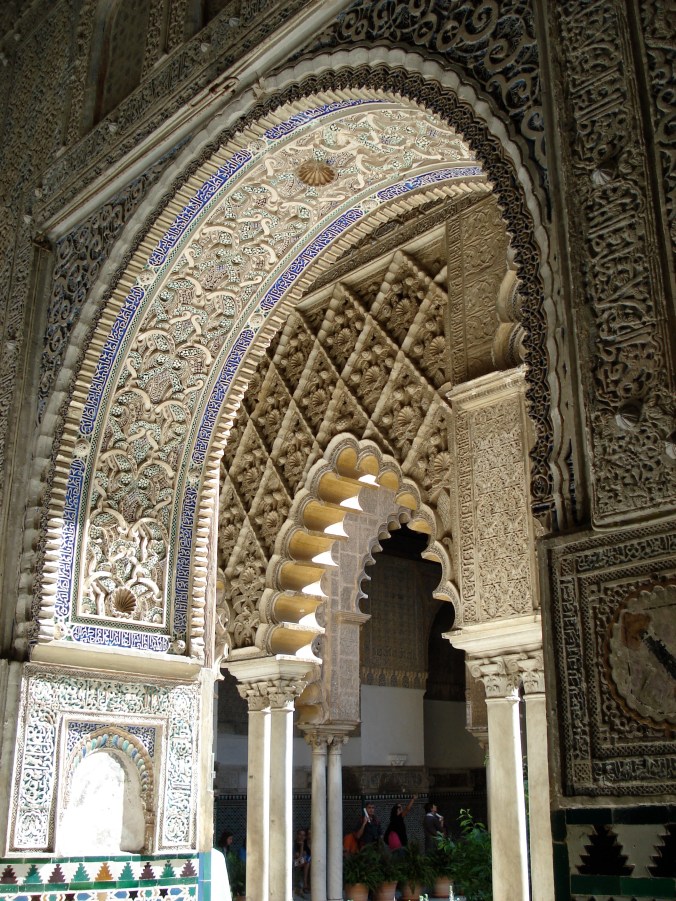
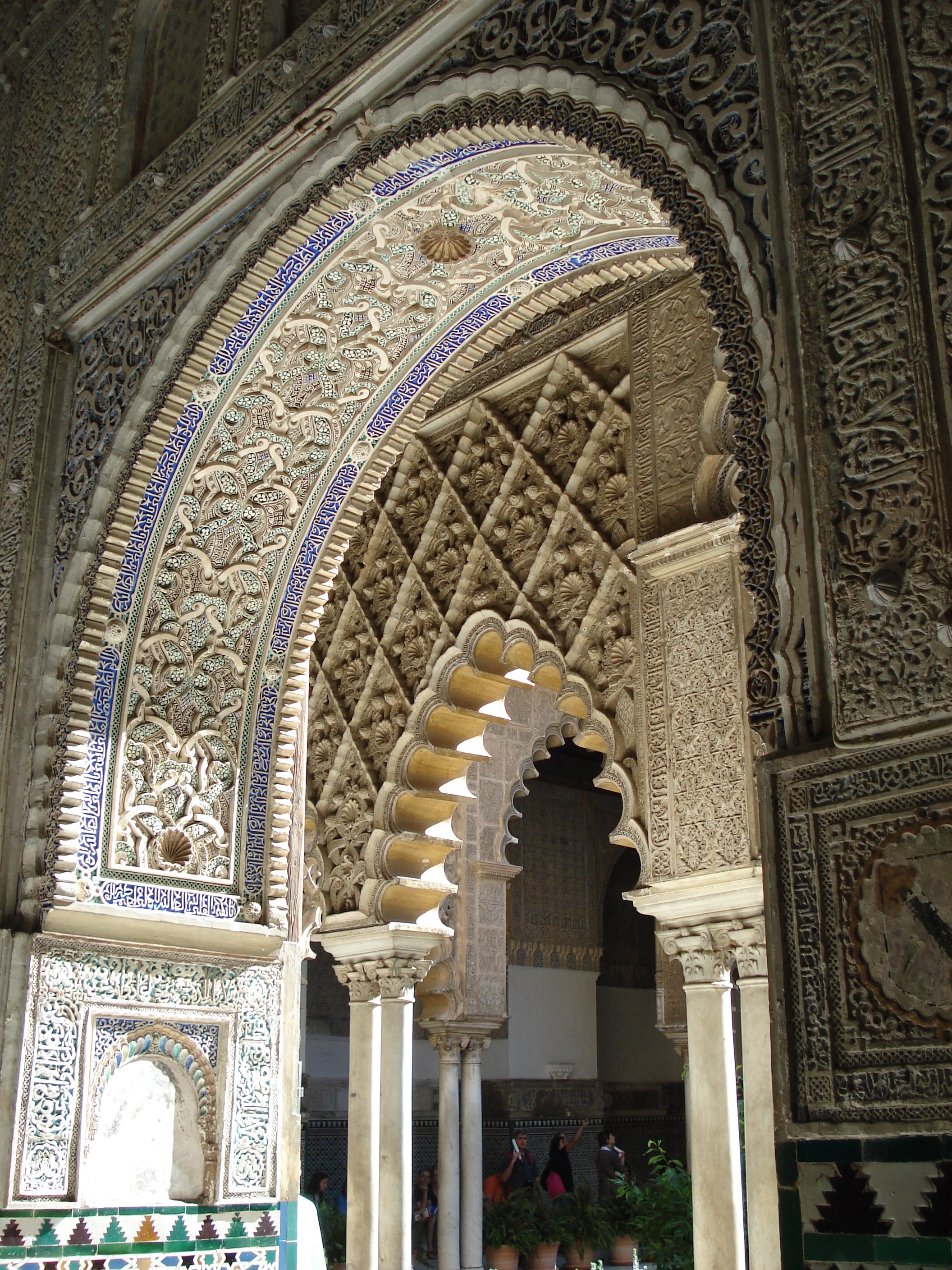
Real Alcazar, Seville, Spain

IV. Accommodation

Hostels: Most of the time, I looked to my Lonely Planet for accommodation recommendations (the Madrid hostel where I saw bedbugs was NOT a Lonely Planet suggestion). One hostel group I can certainly add my thumbs up to is Oasis. (I stayed in the Oasis Lisboa, Oasis Sevilla, and Oasis Granada.) These hostels were slightly pricier but they all included breakfast, free access to wi-fi and computers with internet, and safe storage (the first two had electronic safes and Granada had a locking cupboard). They had cheap food in the evenings, cheap booze, kitchens, and information about all sorts of tours, activities, and sites. The friendly atmosphere helped me meet a lot of cool people and I was probably more social and had more fun in these hostels than anywhere else.

Because I was travelling solo, I really appreciated hostels not only for their affordability (they’re SO much cheaper than staying in hotels I’m really not sure how anyone my age could afford to travel without hostelling). but also so that I didn’t have to spend my entire trip eating alone and talking to myself. That would have been quite lonely. I also appreciated the informative and helpful staff I encountered in most places I visited who could provide me with maps, tours, admission booking, and transit info.

What to bring if you are staying in a hostel: I am glad I brought a luggage lock (my combination lock was too big for all of the lockers I encountered), a flashlight (there’s ALWAYS someone asleep in the hostel room, at all times it seems), a travel alarm clock (no wake up calls in hostels!), and a facecloth (works as a towel when you don’t have one). I’m also glad I brought camp laundry detergent so I could wash things by hand. I wish I had brought a travel towel, a better luggage lock to use on the lockers, and a pair of flip flops to wear in the hostel showers.

Granada, Spain

V. Food

I believe that eating is a very personal experience, so my recommendation for food is simple but mighty: go to a grocer or a supermarket, buy food (esp. fresh fruit which I found an abundance of in both Spain and Portugal) and have some food and water with you at all times. There’s nothing as tiring and frustrating as trying to look for a good restaurant or cafe when you’re already so starving you’d eat at McDonald’s even though you’re in an exciting new city. So take food and water with you so you can hold out for an eating experience you really do want (P.S. I never did eat at McDonald’s thank the gods).

VI. And one last recommendation…

Travel itself: I recommend it. If you want to go, I recommend that you go. If you are scared to go, I recommend that you go. For some (like me), the idea of four weeks of solo travelling in Europe would be daunting. For some it would be no big deal. And that’s fine. The journey is personal, it’s what you make of it, and for me it was exactly the balance of challenge and security I needed.

This was the right trip at the right time. The reasons I had for going changed as I planned, but the good I knew it would do me stayed the same. I returned to Vancouver not disappointed with the city and the cold as I expected I might be , but rejuvenated and able to see the beauty of my West Coast life afresh. The thing I had hoped to find on my journey was right here where I left it, right where I hoped it would be. And that’s worth searching for.

Beautiful Barcelona, Figueres, Good-bye

“Beautiful Barcelona!”

It’s a cliche phrase I know I’ve heard somewhere before and I was hesitant to use it. And then I thought, what the hell, it’s cliche because it’s true. Barcelona is beautiful. This is what struck me about the city. It’s actually a bit small, a bit crowded, a bit touristy, but my god, it is beautiful. Emerge from the Metro–beauty. Duck into an alley–beauty. Turn a corner–beauty. And that’s when you’re not even looking for it, so imagine the gob-smacking beauty you encounter when you actually make the effort to go to a park or a touristy site.

My relationship with Barcelona began as anything but beautiful. When I climbed out of the Liceu metro station onto La Rambla it was pouring rain. This rain became even harder once I checked into my hostel (located most conveniently right in Placa Reial, though I was too dejected at the time to notice). I knew it would be a bit hard to return to a hostel after my two nights at the Holiday Inn in Madrid, but I was unprepared for how hard I’d actually take it. The internet in the hostel was expensive. The hostel was a party hostel and all I could hear when I checked in, tired and hungry, was noise noise noise. The hostel didn’t rent towels, just sold them for 10 euros. My trip almost over, there was no way I was going to spend 10 euros for a giant towel I didn’t have the room to bring home again, so I was forced for four days to dry myself with the Doctor Who facecloth I had bought as a souvenir in London (it has a picture of a Tardis on it, and, Tardis-like, there was more to this tiny flannel than met the eye because it actually did not half badly). And to top it all off, I couldn’t even escape the noisy stupid no-towel hostel, because outside it was raining and thundering and being as miserable as I felt.

Basically, at that moment, I was emotionally done with my trip. I didn’t want to spend five more nights in Barcelona, I wanted to go home. To hell with the Sagrada Familia and the pretty streets. I wanted my kitchen and my bed and my glorious bathroom filled with glorious towels.

Luckily for me, all storms pass over and my emotional one subsided as soon as I met some people from my room, ate a decent dinner, and spent the better part of the evening discussing the finer points of Harry Potter with an Australian and a Brit (note: Dobby would win in a cage fight against Dumbledore). Fun fact: the Brit is a boom operator on Coronation Street! Wow!

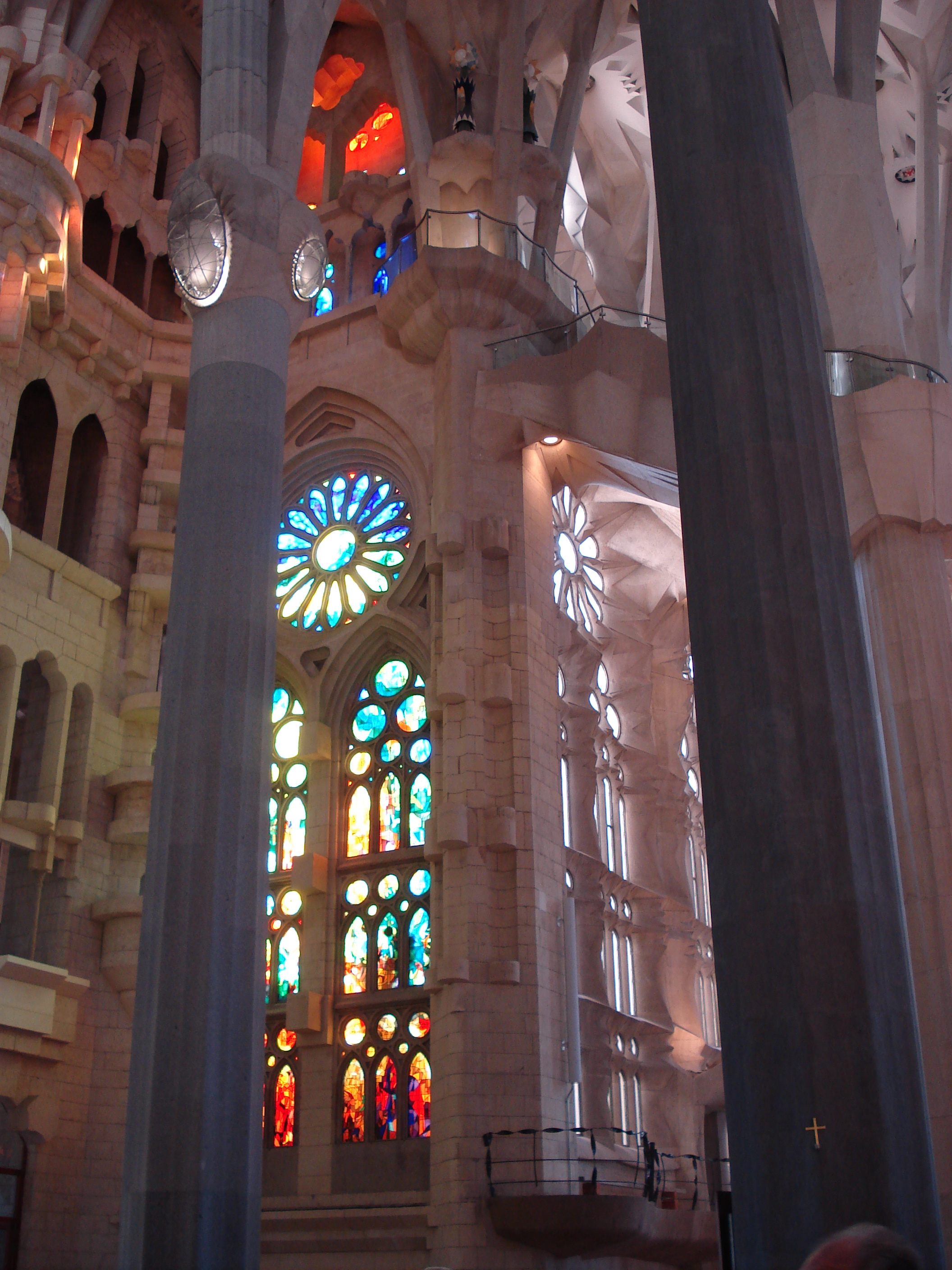
On Tuesday morning the sun came out and I am sure glad I didn’t say to hell with the Sagrada Familia because it is the most beautiful building I have ever seen. From the outside it looked pretty cool, I mean, I’d certainly never seen a church before that replaced gargoyles with giant lizards, but it is also still under construction and cranes and scaffolding sort of take away from the general splendor. Waiting in line, I was impressed but wasn’t really sure what the church’s insides would hold.

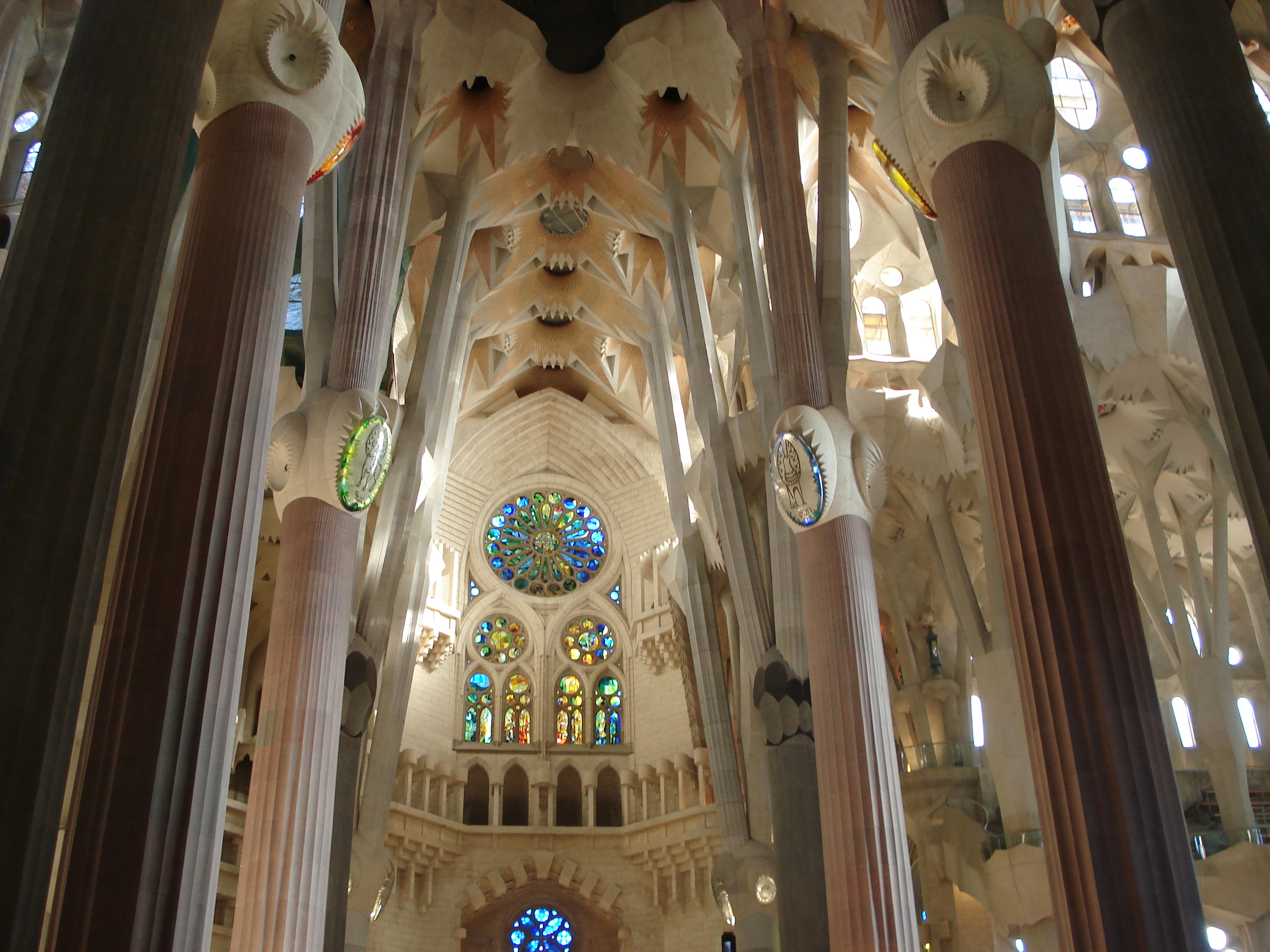
Sagrada Famila, Barcelona

Beauty. Exquisite, unconventional, organic beauty. The Alhambra was beautiful, but the Alhambra is heavy and saturated with luxury and tradition. The inside of the Sagrada Familia is a surprising forest of pillars and light. It is open, it is airy, and it is incredibly incredibly joyful. Even the crucified Christ is suspended beneath a circus-like tent hung with grapes made of glass, and bathed in so much natural sunlight that it makes his predicament seem, again, joyful. Each angle inside the church reveals a whole new sense of wonder. The architect, Antoni Gaudi, carefully studied natural supportive structures formed by mineral crystals and plant growth in order to create his designs, and it shows. The Sagrada Familia does not feel built, or human-made. It feels like it grew. I met people in my travels who saw the Alhambra and were unaffected, but I have not met one person who has seen the inside of the Sagrada Familia whose eyes do not light up when retelling the experience.

I soaked up every bit of the church that I could, visiting all of the museum areas (highly recommended, especially the exhibit relating to Gaudi and nature) and taking the lift into the towers. I decided that after my Gaudi morning I wouldn’t mind a Gaudi afternoon so I made a point of visiting Barcelona’s Park Guell, a park designed by Gaudi whose gates are flanked by two Hansel-and-Gretel style houses. It is an interesting and very pretty park (and free!), and I was pretty much obsessed with everything Gaudi at this point, but the place was crawling with tourists and illegal souvenir vendors and after the devout and tranquil beauty of the Sagrada Familia it was a bit anti-climactic.

Candy stall in La Boqueria

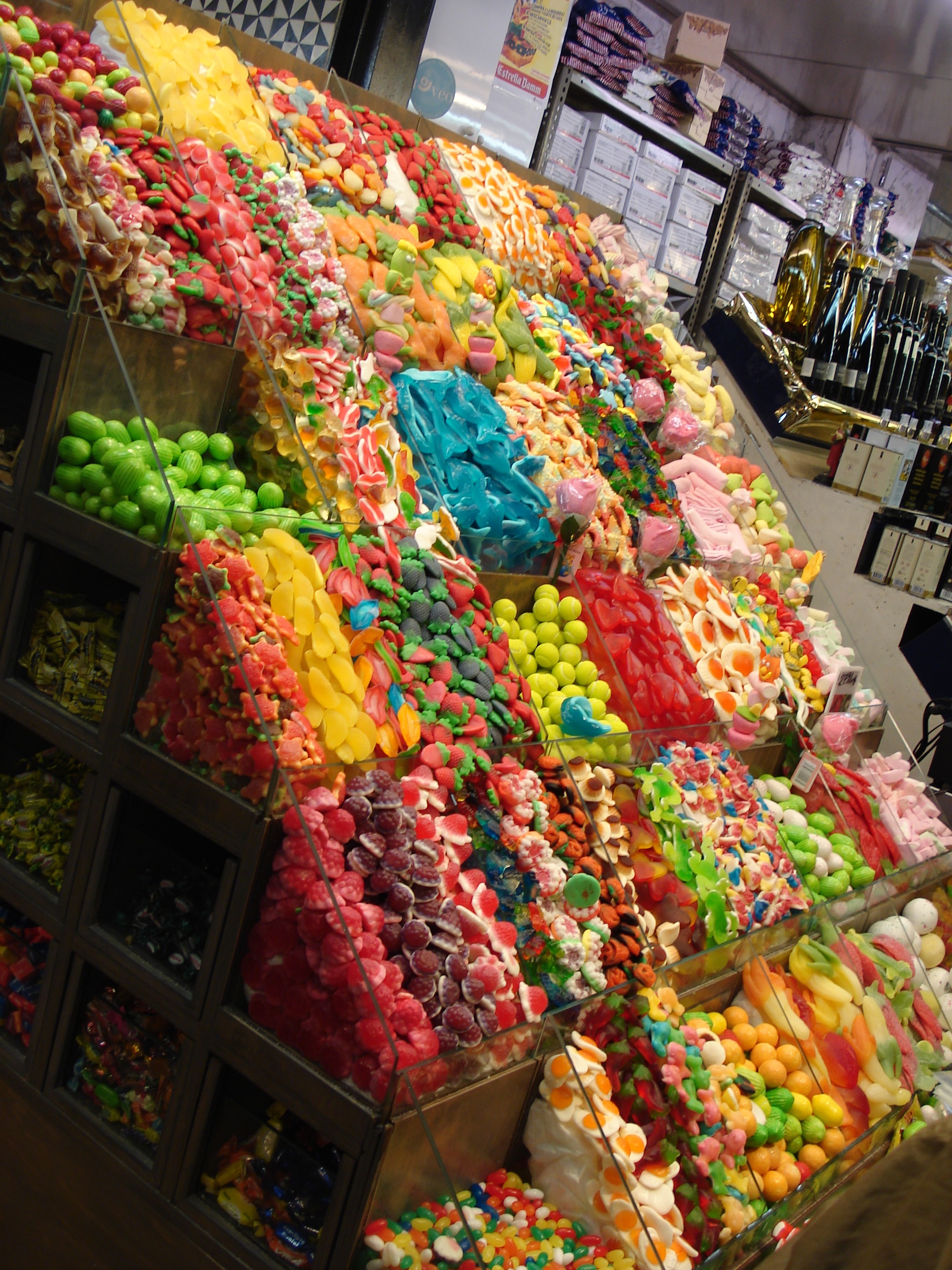
The Sagrada Familia and the Park Guell were my only real goals for Barcelona, so on Wednesday I made loose plans for myself (the best kind of plans when travelling) and basically wandered around all day loosely achieving them. I wanted to check out the beaches of La Barceloneta so I wandered down there and did that. Kneeling on the shore to touch the Atlantic a giant wave came and soaked my sandals so I was forced to sit on a beach chair and read in the sun for half an hour while they dried off (poor me!). Got lost and wandered around some more, ate a doughnut, bought some fruits and vegetables at La Boqueria (St. Joseph’s Market) just off La Rambla. Ate a muffin and read a TIME magazine.

Parc de la Ciutadella

Wednesday afternoon: visit the Parc de la Ciutadella. Lovely fountain. Inexplicable giant statue of a woolly mammoth. Another pond with rowboats. Ducks. And then, music. Two guitarists sitting under a tree playing extremely well. Someone on the grass saw me watching and waved me over. When they found out I could sing I was brought to the guitarists and we had a magical musical hour or so. We sang the Beatles. We sang Bob Dylan. We jammed (vocal improvisations on my part…not my finest moment probably but I did my best). I think our best numbers were “I Will Survive” and “Eye of the Tiger” with amazing guitar solos courtesy of Pedro, a Venezuelan who moved to Barcelona ten years ago and was, the day I met him, on day four of being sober and delighted to discover he could play the guitar without alcohol. While I couldn’t quite shake my self-conscious caution throughout our jam session (I never took off my backpack) and insisted on excusing myself as soon as it began to get dark, jamming with these open-hearted musicians, total strangers to me, was a new and wonderful experience. If you know me you’ll know that while I am loud and talkative with those I know, I’m actually a little frightened of those I don’t. Opening myself up and being brave is actually something I’m a little bit proud of.

I knew that Thursday would be rainy so instead of spending it in the hostel or tramping around Barcelona pretending not to mind being wet and cold, I took the train to nearby Figures to see the Teatre-Museu Dali, the museum Salvador Dali built in his home town. My two-hour train ride also gave me lovely views of the interesting (and old-looking) city of Girona, which I would love to explore sometime.

Painted ceiling, Teatre-Museu Dali

I am a fan of Salvador Dali’s paintings and jewellery and I enjoyed those displayed in the museum (for example, I was surprised, though I shouldn’t have been, to realize that “Atomic Leda” is obviously a painting of Dali’s wife, Gala, with whom he was artistically obsessed). I am not sure I like the museum itself. Housed in Figueres’ old theatre, the passages between the rooms were narrow and crowded and many of the spaces seemed cluttered and full of installation-type art that felt….junky. As if you hung Dali’s paintings in a gallery space and then you had your tacky “artsy” grandmother fill the rest of the space with old brocade, velour, and stuff she found in her garage.

Mae West Room, Teatre-Museu Dali

Do I think my trip to Figueres was a waste? Nope. If I hadn’t gone I would have wished that I had. Besides, captivating art is captivating art no matter how you feel about its surroundings. (By the by, Figueres also has a Toy Museum, which, if you’re looking for something to tack onto your day in the city, is a cute, and kind of creepy, attraction.)

Friday was my last full day in Barcelona and I decided to check out of my loud crowded party hostel and check into the super pricey Hotel B, just off the Placa Espanya (right near a stop for the airport bus) for my last night. Before I did that, though, I visited the beautiful Santa Maria del Mar church. I sat in a pew and stared at the stained glass oriel window above the altar for a long time and thought many thoughts. I thought about the past year and those I have lost. I hoped that wherever they are, if they are anywhere, that they have peace. I thought about the people I know who are struggling with difficult circumstances and I hoped that those things would get better. I thought about the trip I had taken, and how lucky I was that I had the opportunity to travel for a month on my own, how lucky I was that I had been safe and, for the most part, my plans had worked, and how lucky I was that I was going to return the next day to the people who loved me.

I do not practice any faith. But I do like a nice, quiet place to reflect once in a while and an old Barcelona church did the job nicely. After four weeks of constant movement to return to a point of internal stillness and contemplation helped prepare me to say good-bye to my adventure, good-bye to the beautiful city that had been so good to me, and say hello to my old life as the new person I have become, a person who is older now, more independent, less anxious, and has more beguiling images stuffed in her memories than anyone should be allowed to have.

So until we meet again, my beautiful bewitching Barcelona, gracias. Thank you so very much.

View from my hostel room, Placa Reial