The Troika Collective Presents Belarusian Dream Theater Vancouver

Poster design by Liam Griffin

Poster design by Liam Griffin

On Tuesday, March 25, The Troika Collective, in association with Ensemble Free Theater Norway (EFTN), will present the Vancouver iteration of the Belarusian Dream Theater project in Studio 4270 at SFU Woodwards.

From the announcement of the project in the Belarusian Review:

Belarusian Dream Theater [is] an international performing arts event supporting freedom of expression in Belarus, conceived by Brendan McCall, Artistic Director of EFTN.

On 25 March 2014, Belarus’ Freedom Day, partner theaters will present readings and/or performances of new short plays about Belarus simultaneously in Australia, Belarus, Denmark, Canada, Georgia, Germany, Greece, Hungary, Italy, Norway, Poland, Ukraine, and the United States.

[…] The hope is that this coordinated cultural event will stimulate a greater knowledge and interest in Belarus by international audiences, journalists, and artists.

So why is it important to know about what is happening in Belarus? Before becoming involved with this project, I must admit that I had not thought about Belarus in a long time (perhaps not since passing through it on a train when I was ten years old). I have, like many people, been keeping an eye on the political situation in Ukraine. Meanwhile, news from Belarus has been comparatively quiet.

As it turns out, that is because the Belarusian government has, for many years, severely restricted independent expression through a combination of legislation, intimidation, and force. Based on information from Amnesty International, the protests that have rocked Ukraine in recent months would likely not be possible in the political climate of Belarus today, especially given the country’s “Law on Mass Actions”:

In 2011 weekly “silent protests”, where groups of people throughout the country would stroll wordlessly, applaud or use their mobile phone alarms simultaneously, saw participants beaten, sentenced to administrative detention or fined.

The largest demonstration in the country’s recent history, following the presidential elections in December 2010, was suppressed with unprecedented violence. When police moved in to disperse it in the centre of the capital Minsk over 700 people were detained and many, including by-standers, were beaten and wounded. Four prisoners of conscience Mykalau Statkevich, Pavel Sevyarynets, Eduard Lobau and Zmitser Dashkevich remain in prison in connection to the demonstration to this day.

[…] Peaceful protesters are frequently sentenced to fines or short periods of detention for violating the Law on Mass Actions or for minor offenses such as swearing in public. Pavel Vinahradau, a member of the youth political movement Zmena (Change), spent a total of 66 days in detention between 30 December 2011 and 12 December 2012 on eight separate administrative convictions, all for minor offenses such as swearing or violations of the regulations for public meetings and pickets.

And it isn’t only protesters who are finding their freedoms of expression curtailed. Citizens wishing to join or create an independent organization (for support, to express an identity or opinion, etc.) must be sure the organization is registered with the government and meets the government’s strict registration requirements. Activists who have been deemed to be acting on behalf or as part of an unregistered organization face prosecution.

So where does Ensemble Free Theater Norway, the Belarusian Dream Theater playwrights, The Troika Collective, and the rest of the companies participating around the world come in? Well, though many of these plays could not be performed in Belarus (or at least not without considerable risk), they can be performed here in Canada, our actors and directors can speak without fear of reprisal, and we can listen. We invite you to join us for an evening of theatre, music, and hopefully, social good.

The Vancouver performance of the Belarusian Dream Theater project will take place on Belarus’ Freedom Day, March 25, at 8:00 p.m. in Studio 4270, SFU Woodwards. Admission is by donation (though no one will be turned away for lack of funds), with proceeds benefiting the Troika Collective’s operations. If you wish to support free expression in Belarus, proceeds from the sales of the plays being read/performed around the world as part of this project will go to Amnesty International. You can also make a direct donation to Amnesty International online at Amnesty.ca.

Disclosure: I am the co-artistic director of The Troika Collective, along with founding co-artistic director Aliya Griffin. The Troika Collective is a registered non-profit.
My Rights to Write (and What)

Broadly speaking, at least here in fairly progressive, egalitarian-ish, freedom-of-speech-y Canada, my right to write just about whatever I want, however I want, is not in dispute. Which is great for me, because when I cannot communicate or am not being listened to, I shrivel up inside and a little part of me begins to die.

Which is why it is important to consider both what I legally have the right to write and/or publish, and what I should MORALLY have the right to write and share.

Legally, I have the right to publish just about anything except hate speech, another person’s work, recommendations that people cause harm to themselves or others, or slander. Fair enough. I don’t want to write any of those things anyways.

Morally, the waters of artistic freedom become quite a bit muddier. Do I, for example, have the moral right to incorporate recognizable traits of real people in fiction, in doing so assuming or inventing their motives and private thoughts? What parts of a person truly belong to them? Their life story? Their thoughts/feelings? Their physical appearance and behavioural ticks? What parts of a real person, place, or experience am I allowed to use? Assuming that some of my work will always adapt or be influenced by people, places, and experiences that I encounter either in my own life or through the media, what would be the more moral course? Representing people, places, and experiences exactly as I perceive them (or exactly as they perceive themselves), or using artistic license to transform these things, creating something that I can bend to my narrative? What are the responsibilities that come with my rights to write, and to seek publication of this writing?

I think any conversation surrounding what I, as an artist, have an ethical green light to incorporate into my work needs to begin with a recognition that I am writing from a place of comparative privilege. Though I am a woman, and young (two strikes against me in a western literary canon still dominated by old males), there are many cultural privileges that go along with being white, heterosexual, cisgendered, middle class, and dare I say, reasonably photogenic. Because of this, there are also some limitations as to what I can ethically and skillfully represent in my work.

For example, can I ethically or skilfully represent (in fiction) the experience of a culture or race different from my own? Maybe, but doing so would require not only careful and comprehensive research, but also an examination of my own motives for telling a story that is not mine. Do I want to tell this story because I feel a kind of personal connection to it, and feel that this is the story that is burning inside me to be told? Or do I want to tell this story because I want praise for writing about a “difficult” subject, or because I just want to expose the “beauty” of the Other, or because I believe that the true owners of the story are not equipped to tell it themselves? If my motives fall into any of the latter categories, I am not “engaging” with material or “exploring” it–I’m exploiting it. And that’s not okay with me. As I mentioned, when I cannot communicate or am not listened to, part of me shrivels and dies. Many cultures and marginalized groups have for centuries had the stories ripped from their mouths, and I don’t want to be part of the machine that consumes others’ stories, but never listens.

In some ways this is very freeing. It liberates me from the paralyzing idea that good or provocative writing cannot come from inside me, that it must be centered in a world (real or imagined) that is more “exotic”, more action-packed, or more thrilling than the one I inhabit. It also liberates me from the idea that my writing must contribute to some kind of social good by deliberately telling the story of a marginalized group. Don’t get me wrong–stories that have been relegated to the fringes need to be told, however, as my old theatre school chum (and literature PhD candidate) Lucia Lorenzi pointed out recently, what makes us think these marginalized groups aren’t capable of telling their stories themselves? If I want to do social good through my engagement with literature, it may, in fact, be a great idea for me to get out of the way and let people tell their own stories, and then, to make sure I read them. It is not necessarily for me to be the privileged mouthpiece of an unprivileged group. Maybe I just need to listen.

That said, I still want to write about that which intrigues and moves me. And even if I take some obvious topics out of the equation (at this time, for example, I do not feel even remotely equipped to tell a story about Indigenous people and the legacy of colonialism, or about the slave trade, or the effects of racism in the southern United States), I still find there is so much to explore that I haven’t personally experienced. I don’t personally know what it is to be physically or mentally ill. I don’t know what it is to be pregnant. I don’t know what it is to experience physical violence. I don’t know what it is to grow up without a parent. I don’t know what it is to be a parent. I don’t know what it is to be a man (or a boy). I don’t know what it is to be elderly, or to look a different way, or to be illiterate, or to be homeless. Does this mean I cannot tell stories that feature characters that have had these experiences? Am I relegated only to stories of white middle-class navel-gazing?

I hope not. I hope that when I write the empathy that I feel for my characters will allow me to tell their stories with fairness and grace, neither sanctifying nor condemning them, never relegating them to the role of the “mystical African American/Indigenous person/elderly Asian person/prostitute with a heart of gold/homeless person” who swoops in and solves the whiny protagonist’s personal crisis with some grand/folksy/poetic pronouncements on life. I hope that my ability to feel pain, fear, doubt, shame, anger, disappointment, love, joy, and grief will guide me through, even through those stories I’ve never experienced myself. If they can’t, I can’t see how I will grow as an artist.

I must remember that no one (not even a biographer) writes real people. They write a representation of them. There is art there. And art, at least in my practice, comes with both aesthetic and ethical responsibilities that I have no desire to eschew.

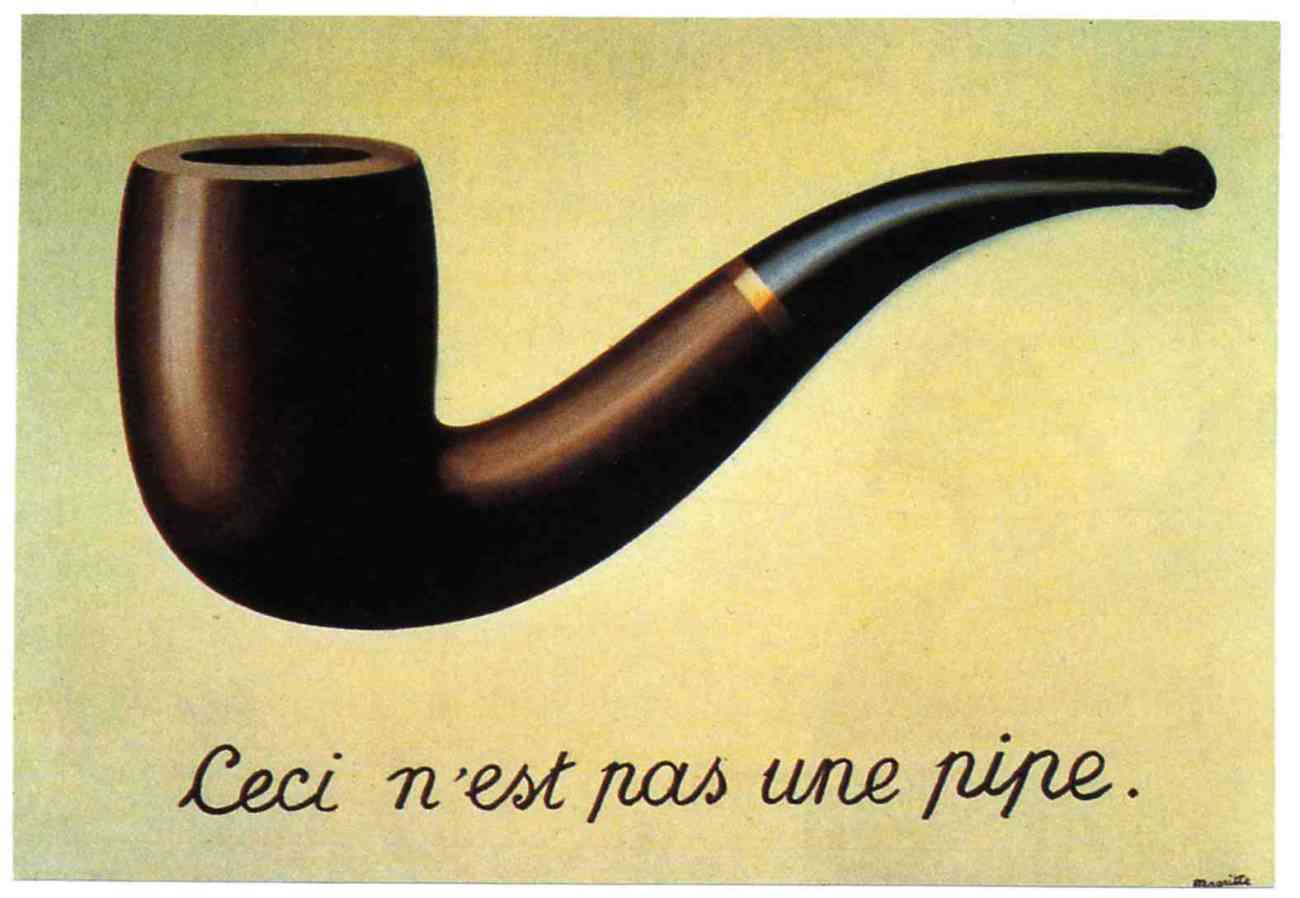
Nope. Not a pipe. Just an image of one.

Nope. Not a pipe. Just an image of one. Magritte is the bomb.

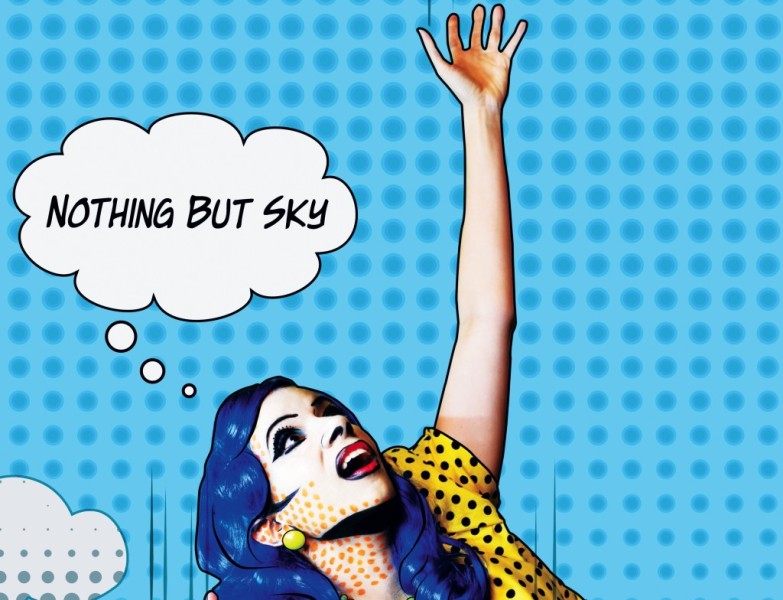
“Nothing But Sky” Delivers Nothing But Promise

nothingbutsky-783x600

From now until March 2, The Only Animal invites you to step into the world of their latest production, Nothing But Skya comic-book world of heroes and villains, lovers and underdogs, flesh and ink. Written and directed by Kendra Fanconi, Nothing But Sky explores the true story of Joe Shuster and Jerry Siegel, the artist and writer behind the legendary Superman, and Joanne Kovacs, the original model for Lois Lane.

Feeling small and powerless in a big and uncaring world, Joe and Jerry dream up Superman–the ultimate champion of the underdog and protector of the weak, a man who can catch bullets in his bare hands and who disguises himself as a regular schmuck (i.e. bespectacled Clark Kent) to avoid discovery. Together, the pair create a hero stronger, better, and braver than they are, and dream of blue skies and smooth sailing for themselves and for their creation. Unfortunately for the friends and artistic partners, nothing is as black and white as their comic-book fantasy: DC Comics (to whom Joe and Jerry sell the rights) wants to control Superman (and his profits), and both men find themselves in love with their Lois Lane, a model named Joanne Kovacs. For Joanne’s part, she wants to be loved for who she is; a person in her own right and not just a stand-in for a paper and ink character.

The most breathtaking aspect of Nothing But Sky is most certainly the blending of comic-book animation with live staging. Projections create both the “real world” of the characters and the world of their creation. Eventually, for artist Joe especially, the lines between the world he has drawn and the world as it is begin to blur until we are not sure where he truly lives. The execution of this unique and challenging staging by the actors, artists, and technical crew is a laudable accomplishment. Nothing But Sky certainly does deliver promise–the promise of new horizons in theatre and new worlds to explore.

Unfortunately, not all of the play’s promises are realized. Though the performances are sharp (the comic-book action sequences especially), the story of Nothing But Sky seemed bigger than the four-person cast’s ability to carry it. Huge amounts of time (i.e. years) pass in a moment, with very little to anchor the audience or prepare it for this leap forward. Most notably, the character of Jerry Siegel comes off as sexually aggressive, socially selfish, and possessed by a delusional perception of his own artistic abilities. With so little to like about this character (despite actor Robert Salvador’s best efforts) I found that I cared very little about the betrayals and injustices he experienced, which is, I think, contrary to Fanconi’s intentions.

That said, Nothing But Sky is still absolutely an experience worth having. The production is a fantastic achievement by everyone involved, by turns magical, humourous, and sad. The technical wizardry alone is worth a look, but the way it is used to support the play is what makes it matter. With such an interesting story, such a beautiful set, and such solid performances, I really really wanted to feel my heart leave my chest. Though it didn’t happen as often as I would have liked, there are moments that truly drew my heart from my body, and those moments are definitely worth watching.

Nothing But Sky is playing in the Faris Family Studio at the Scotiabank Dance Centre until Sunday, March 2. Tickets are $25 ($15 for students on February 26 only) and can be purchased online.

Disclosure: My guest and I attended the opening night performance courtesy of The Only Animal. I was not asked for a review and of course all content remains my own.

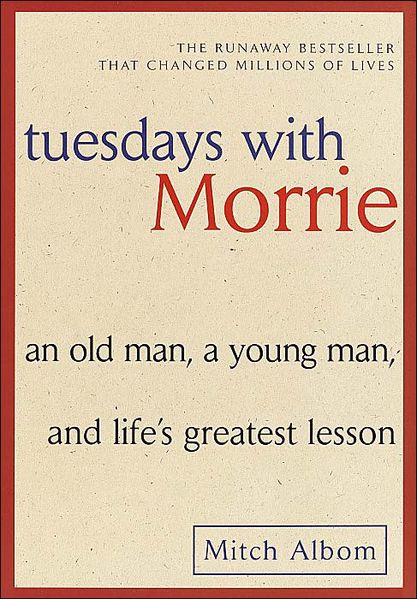
Nifty Reads: “Tuesdays with Morrie”

417px-Tuesdays_with_Morrie_book_coverThere is a small stack of books in the lunchroom at my office topped by a paper sign that says “Free” (it used to be a larger stack but it seems people, myself included, have been taking advantage of this anonymous book donor’s offer). One of the books was a small, unassuming paperback of Mitch Albom’s bestseller Tuesdays with Morrie. I knew the book was famous, I knew its size was perfect for easy carriage in my work bag, and I liked the look of it. So I took it, and I read it, and I guess I’m glad I did.

The book is both a memoir of the author’s relationship with his subject, and a series of life lessons imparted by the author’s late professor (and beloved friend) Morris “Morrie” Schwartz, collected on weekly (Tuesday) visits as Morrie’s body succumbed to ALS, a fatal and debilitating illness with no cure.

To be frank, a triumph of literature this ain’t. The language is so simple a fifth grader could read it. The book offers no literary surprises, no elegance, and only a very loose structure to keep it all together. As I began reading, I thought, how simplistic. How sentimental. How weird (this one was in reference to Morrie’s strange teaching methods in his sociology courses at Brandeis University). And yet….and yet.

This is a book the author approaches with no ego, only a tremendous love for his friend and respect for the ways in which he chose to live and chose to die. Yes, the book is simple. Yes, the book is emotional. But Albom is so earnest about this project, so sincere in his desire to share what his professor taught him, that Tuesdays with Morrie, the pair’s “final thesis” together, managed to win me over despite my snobbish cynicism.

I won’t bother sharing Morrie’s lessons here. To list them out as separate from the conversations that engendered them really would over-simplify them, and make them appear to be nothing more than the usual “love thy neighbour, love thyself” philosophies we encounter on motivational posters and internet memes and in self-help books every day.  The fact of the matter is that nothing Morrie had to say about life was anything I had not already heard or read before. The important thing is that he said them while he was dying, while his body was literally decaying from the legs up. Facing imminent death preceded by incredible pain and complete helplessness, Morrie still believed in the importance of love, gratitude, and forgiveness, and believed that he was a lucky man.

For me the significant and profound parts of the book are not to be found in what Morrie said, but in the ways in which Albom’s interactions with him in his dying months demonstrate the principles he wished to share. During his first Tuesday with Morrie, Albom is sheepish, not having seen his old professor in more than a decade (despite promising, after graduation, to keep in touch). By the final weeks of Morrie’s life Albom is massaging cream into Morrie’s feet (paralyzed by ALS but still, cruelly, perfectly able to feel pain and discomfort). He is helping his friend get comfortable in his chair (no small feat once Morrie is unable to move his body on his own), learning to hit his professor’s frail back to help dislodge the phlegm that threatens to choke him. Albom learns not to be disgusted by the smell of his friend’s dying body, or by the colostomy bag that sits on the floor beneath his chair. He hugs his friend, holds his hands. He kisses his old prof’s cheeks, without embarrassment or awkwardness. No money, status symbol, or prestigious career could have given Morrie the love he received at the end of this life. It was there for him because he was loving.

As I look forward to my wedding in August and the marriage that will follow it, I think about what it truly means to love and support another person, as if their joys were my joys and their pain were mine. I think about the fact that there is no way of knowing what the future will bring and although I hope for a bright one, there will almost certainly be dark times (not too dark if I’m lucky). Throughout the book, Morrie continuously, almost feverishly, quotes the poet W. H. Auden: “Love each other or perish,” Morrie says, and I’m beginning to understand it now. We enter life completely dependent upon the care of others, and many of us will exit in the same condition. Without love, how could any of us survive?

Now that I’m finished reading the book I understand why its language is so simple. Tuesdays with Morrie is an accessible book, and it should be. I don’t know if I will ever read it again (it was quite sad) but I’ve decided to keep it around. One day, maybe I’ll have a teenager I can give it to. I can say, “Here, read this book. It’s not long and it’s not hard. When you’re done, you tell me if your allowance is so important.” I look forward to it.

An Olympic Tongue-Lashing

medals1

Back in August, I wrote a blog post entitled Canada Must Boycott the 2014 Sochi Olympics. At the time, there seemed to be a general consensus amongst my virtual circles (i.e. the ones I interact with via Facebook and Twitter) that Russia’s anti-gay laws were morally repugnant and downright dangerous to Russia’s LGBT community and its allies, and that Russia in no way deserved to be given the Olympic Games and the prestige and economic benefits that went with it. There was even a petition, which I think I signed, to hold the Games in Vancouver once again, since we are already set up for it and clearly are a little more queer-friendly.

Oh those carefree summer days, when methinks we dost protest too much, and talked a pretty big talk in terms of “human rights” etc. etc. without really walking the walk. When it came down to it, we didn’t want our athletes to miss the games, I mean, they’d worked so hard, right? And we didn’t want to miss the opening ceremonies, because we wanted to tune in to see what countries made some kind of protest, right? And we’ll sure show those gay-bashing Russians when we win medals in a sporting event that has cost the country and its people more than 50 billion dollars, right?

Sigh. Okay. Obviously this post got off on a really bitchy foot. For those of you who never had any intention of boycotting the Olympics or any desire to see Canada pull its athletes, please disregard this entire post. This is not for you. I clearly feel differently from you, but at least you are being honest with yourself about which causes are important to you and which tactics you wish to use to defend these causes. Okay.

But there were a lot of us, back in the summer, who paid a LOT of lip service to standing in solidarity with Russia’s LGBT community (who are quite literally fighting for their lives, livelihood, families, and personal safety). There were a lot of us who said Russia was a disgrace, who said the IOC was a disgrace for allowing the Olympics to take place in a country whose laws appear to be in clear violation of the Olympic Charter, who said the Olympic sponsors were a disgrace for giving money to an event that, by its indifference to the prejudiced laws of the country hosting it, seems to tacitly endorse homophobia.

My ideas and anxieties seldom come from within myself, so I know I was inspired by the words of others when I wrote that impassioned post last August. My question is–where’d we all go? To sit in front of our TV screens to watch the Olympics, let the corporate sponsors pay the IOC to glorify Russia as it strips vulnerable citizens of their rights? I’m not sure, but I’m seeing a hell of a lot about gold medals in my news feeds nowadays, and a lot less about human rights. And that’s exactly what the IOC, and its sponsors, hoped would happen.

Cracked.com (an American website), has even gone so far as to post a self-congratulatory (but kind of sheepish) list of 4 Reasons We [the U.S.] Were Right Not to Boycott the Olympics (I found this link when one of my Canadian friends posted it on Facebook, so clearly the sentiment is shared north of the 49th parallel as well). By now I should know better than to be bothered by most of the things I read on the internet, but this particular post did tell me two things. Thing One: some of us are tired of feeling guilty (or being made to feel guilty) about enjoying the Olympics, and we wanted some internet-grade evidence to back up our position. Thing Two: the author of the post is obviously feeling the same pressures, or this post wouldn’t exist in the first place. As for these “reasons”:

  1. “It Gives Us a Chance to Beat the Bad Guys”   Maybe you have to be American to get this one, or maybe I just don’t equate winning medals in a corrupt and expensive show of TV patriotism with, you know, doing anything to actually help LGBT people whose lives are being destroyed by homophobic legislation. I’m not sure how we’re actually “beating the bad guys” unless you truly feel that a gold medal for Canada somehow makes Russia think twice about their position on LGBT people. Let’s be honest with ourselves: we like winning medals because we like to win medals. Even if Russia was the nicest most democratic human-rights-loving nation ever, we’d STILL want to beat their ass and win gold medals at the Olympics. We love watching our flag being raised to the rafters, and that has nothing to do with Russia’s laws.
  2. “It’s Not a Badass Statement; It’s a Boring Tradition”   Oh, I see. Standing up for what’s right and honourable is only something worth doing if it makes us look cool and “badass”, right? You mean this isn’t the first time people have wanted to boycott the Olympics? Oh no! I thought I was being really cutting edge here but obviously registering your displeasure with a corrupt institution and a homophobic government is passé, so I guess I’ll just shut up and wave my flag now with the rest of the cool kids.
  3. “There is Absolutely No Point”   This is actually a point the Russian LGBT Network agrees with, so I’ll let it stand in this particular case, though boycotts do have the potential to be useful in other ways (i.e., if they were directed at the IOC and its behaviour, rather than at the host nation). No, boycotting the Olympics never did make a country throw up their hands and go, “You know what? You’re right about that thing we’re doing that’s wrong, we’re not going to do it anymore,” but it might make corporate sponsors think twice about putting money into the Olympic machine if they know large swaths of consumers from the boycotting nations won’t be tuning in. With each successive boycott (or discussion about boycotting), the IOC is exposed more and more as the bloated, politicking, money hog it is. Maybe someday we will stop equating the Olympic Games with national pride and love of sport, and instead start simply tuning in the world championship events of the sports we’re interested in.
  4. “It’s Much More Effective to Be Passive-Aggressive”   Sadly, this is also true. When it comes to the Olympics passive-aggression is really the only option apart from boycotting, because any declared stance against Russia’s laws would be a “political message” (which the IOC doesn’t allow) and could get you penalized or barred from the Games. However, that doesn’t make this situation right. We shouldn’t have to play along and kowtow to de facto dictators like Putin just so our athletes can bobsled. If the Olympic Games truly were free of politics, any athlete who qualifies would be able to compete, regardless of their stated political beliefs, and regardless of whether or not they chose to make these beliefs known during the Games.

When it comes down to it, there is really only ONE reason why we, the countries of the world who believe homophobia is wrong, were right not to boycott the Olympics: the LGBT community of Russia didn’t want us to. They wanted us to come to Russia and see what’s going on. They wanted Vladimir Putin to have to make promises that gay athletes and fans would be safe during the Games. They wanted the world to speak up for them when they were there (though apart from some rainbow-y apparel that really hasn’t happened yet). They know that it’s going to get worse for them after the world leaves.

So it turns out I was wrong to want to boycott, and you’re not a horrible person for tuning in after all. We still, however, have a responsibility to put our money where our mouth is. According to the Russian LGBT Network:

Participation and attendance of the Games in Sochi will not indicate endorsement of injustice and discrimination; they will only if they are silent. We hope to join forces and succeed in raising everyone’s voices for LGBT equality in Russia and elsewhere. We hope that together with those who share this vision, we will succeed in sending the strongest message possible by involving athletes, diplomats, sponsors, and spectators to show up and speak up, proclaiming equality in most compelling ways.

I think it’s important to emphasize a couple of key points:

Participation and attendance of the Games in Sochi will not indicate endorsement of injustice and discrimination; they will only if they are silent.

we will succeed in sending the strongest message possible by involving athletes, diplomats, sponsors, and spectators to show up and speak up

Unfortunately, there hasn’t been a lot of speaking up, at least not anything that has managed to reach me. It’s all gold medals and heart warming and/or tragic sports stories and the kind of stuff that makes the Olympics fun every time they come around, but the most negative press I’ve seen coming out of Russia are tweets from a bunch of whiny journalists who aren’t okay with hotel rooms that resemble the way most people in Russia probably actually live (okay, so the improperly installed toilet seat is a bit hilarious, but whenever I’ve travelled Europe I was lucky to find washrooms with any toilet seats at all).

Even if some people in Sochi are speaking up, it’s likely I wouldn’t know about it, since it seems the IOC is pretty good at controlling its message and getting the media who want to hold on to their Olympic broadcasting rights to play along (see the Globe and Mail’s piece about the CBC).

Basically, what I’m saying now that I’ve ranted and raved and flip flopped and bitched is that if you want to watch the Olympics, you should watch the Olympics. If you want to talk about gold medals, you should talk about gold medals. But don’t confuse success in a sporting event with success in the fight for a better world. Every sporting event does have its acts of human kindness and decency, every win is a triumph of someone’s hard work and determination, but at the end of it all I want Canada to take home more than just medals. I want Canada to take home the knowledge that they did the right thing and spoke up for people who were not able to speak up for themselves. And if we fail to do that, our medals just don’t mean a lot to me.

The Cruelest Song I’ve Never Heard

When I was in grade seven, my English class undertook a formidable Poetry Unit. Our anthology for this particular unit was filled with what I now understand were very good poems, by William Carlos Williams, e.e. cummings, and the like.

It also, inexplicably, contained the lyrics to this folksong, which is the cruelest song I’ve ever come across:

Housewife’s Lament

One day I was walking, I heard a complaining
And saw an old woman the picture of gloom
She gazed at the mud on her doorstep (’twas raining)
And this was her song as she wielded her broom

Oh, life is a toil and love is a trouble
Beauty will fade and riches will flee
Pleasures they dwindle and prices they double
And nothing is as I would wish it to be.

There’s too much of worriment goes to a bonnet
There’s too much of ironing goes to a shirt
There’s nothing that pays for the time you waste on it
There’s nothing that lasts us but trouble and dirt.

Oh, life is a toil and love is a trouble
Beauty will fade and riches will flee
Pleasures they dwindle and prices they double
And nothing is as I would wish it to be.

In March it is mud, it is slush in December
The midsummer breezes are loaded with dust
In fall the leaves litter, in muddy September
The wallpaper rots and the candlesticks rust

There are worms on the cherries and slugs on the roses
And ants in the sugar and mice in the pies
The rubbish of spiders no mortal supposes
And ravaging roaches and damaging flies

Oh, life is a toil and love is a trouble
Beauty will fade and riches will flee
Pleasures they dwindle and prices they double
And nothing is as I would wish it to be.

Last night in my dreams I was stationed forever
On a far little rock in the midst of the sea
My one chance of life was a ceaseless endeavor
To sweep off the waves as they swept over me

Alas! ‘Twas no dream; ahead I behold it
I see I am helpless my fate to avert
She lay down her broom, her apron she folded
She lay down and died and was buried in dirt.

Oh, life is a toil and love is a trouble
Beauty will fade and riches will flee
Pleasures they dwindle and prices they double
And nothing is as I would wish it to be

It’s a pretty gloomy song without reading much into it, and you could take it at face value as a “Housewife’s Lament” (i.e. a complaint about the futility of housework) and no more, but for me the clincher, the part that makes this poem/song SO DAMN CRUEL, is this verse:

Last night in my dreams I was stationed forever
On a far little rock in the midst of the sea
My one chance of life was a ceaseless endeavor
To sweep off the waves as they swept over me

This part is cruel because its truth is inescapable. All of us, from the moment we are born, are stationed on a little rock , a tiny island of life surrounded by the ocean that is our non-existence, stretching out endlessly before and after us. The only way to stay alive is to struggle, without stopping, against death. The only escape from this struggle is death. Cheery stuff, huh?

In his essay “KING LEAR or ENDGAME” (in his fabulous book Shakespeare our Contemporary), Jan Kott differentiates tragic drama from that which is simply grotesque. In tragic drama, we find “the necessity of making a choice between opposing values”. Kott uses the example of the Greek heroine Antigone, who must choose between her uncle and her brother’s memory, between obeying the king’s law but breaking divine law, or obeying divine law but bringing about her own death. Unfair, cruel even, but morally compelling and in some ways, redeeming.

In grotesque drama, “both alternatives of the choice imposed are absurd, irrelevant, or compromising. The hero has to play, even if there is no game. Every move is bad, but he cannot throw down his cards. To throw down his cards would also be a bad move.” (135).

Like the hero in a grotesque play, the lamenting housewife in the folksong is trapped in an absurd game. Her options are to spend a hateful life in hateful avoidance of hateful dirt and hateful decay, or to die, submitting to the dirt and decay she hates and fears. There is no redemption in either her struggle or her death. There is no “winning”.
It reminds me of playing tag as a kid. My fear of being caught was always so great that spending time NOT being caught was a torture. My only escape from this fear was to allow the thing I was afraid of, to allow myself to be caught. Despite being a decently fast runner, no matter what I did, I lost.

At least I had the choice not to play this particular game. I could play on the swings if I wanted to, or read a book. We, these little souls stationed on the rock that is our living bodies, do not have this choice. We must eat and sleep and clothe and shelter ourselves to stave off death. We must search for love and meaning because death makes our existence too painful without it. And at some point we must die anyways. Yes, we technically do have the choice to stop playing this losing game, but the only way to stop playing is to lose. Are you miserable yet?

Kott writes of Gloucester’s attempted suicide in King Lear:

Gloucester’s suicide has a meaning only if the gods exist. It is a protest against undeserved suffering and the world’s injustice… Even if the gods are cruel, they must take this suicide into consideration. It will count in the final reckoning between gods and man. Its sole value lies in its reference to the absolute.

But if the gods, and their moral order in the world, do not exist, Gloucester’s suicide does not solve or alter anything. It is only a somersault on an empty stage. (149)

[…] If there are no gods, suicide makes no sense. Death exists in any case. (151)

Unlike the character of Gloucester, the housewife in the folksong really does die, but as with the characters in King Lear, there is no redemption for her, and no dignity. She dies defeated, an old woman in the dirt, ridiculous. In death she ends her struggle but also makes pointless her every effort prior to dying. She cannot win. If she was a teenager, she would probably cry, “I wish I’d never been born!”

(The playwright Samuel Beckett understood this grotesque concept in cold, terrible clarity. Plays like Act Without Words and Waiting for Godot are enough to make you want to bang your head against a wall. Forever. Which is why I read those plays once and never read them again.)

Of course, if there IS a divine presence in the universe, then there truly is an audience for the housewife’s lament, and there may be some meaning for her when her life’s deeds are totted up. But that, as even the quite religious must occasionally feel in their darkest moments, is sometimes a very big if. And it is one of the reasons that I could never be atheist. The spectre of existence with no meaning for my eventual non-existence is too horrifying for me to cope with. So I believe what I like to believe. I believe what feels right and comforting to me. And I hope that it is a pattern that will allow for whatever events will occur in my life. And I hope that nothing bad will happen that will test this pattern. And I hope and hope every day.

And I am on my rock. And I am sweeping at the waves with all my might. And I have no idea, no REAL way of knowing, what is in that ocean of non-existence that surrounds me. And that is frightening and paralyzing and is enough to make a person crazy.

But you know what? Sometimes I don’t mind. Sometimes, most of the time generally, the work is a gift. The load is lightened by the songs in my heart, and the people who are holding my hands. I forget what I am doing. I forget to see the struggle as a procrastination of death and instead as a miracle, some kind of accident maybe, a spark in the darkness that is small and weak, but holds down its tiny island of light for as long as it can just the same. The world is full of people (children, for example) who don’t resent the ocean because they don’t perceive it as a threat. They are too busy exploring their rock, however big or small it is. Those same things that stave off death and fear (food, shelter, love, art) are also immensely pleasurable, comforting, and meaningful in themselves.

And you know something else? I like sweeping. I always have. And someday (hopefully a looooong way off) when I finally throw down my broom, or have it dashed from my hands by a fateful wave, I won’t need any truth but the ones I carry with me: I am fortunate. There’s been so much love. This is a gift. Thanks so much.

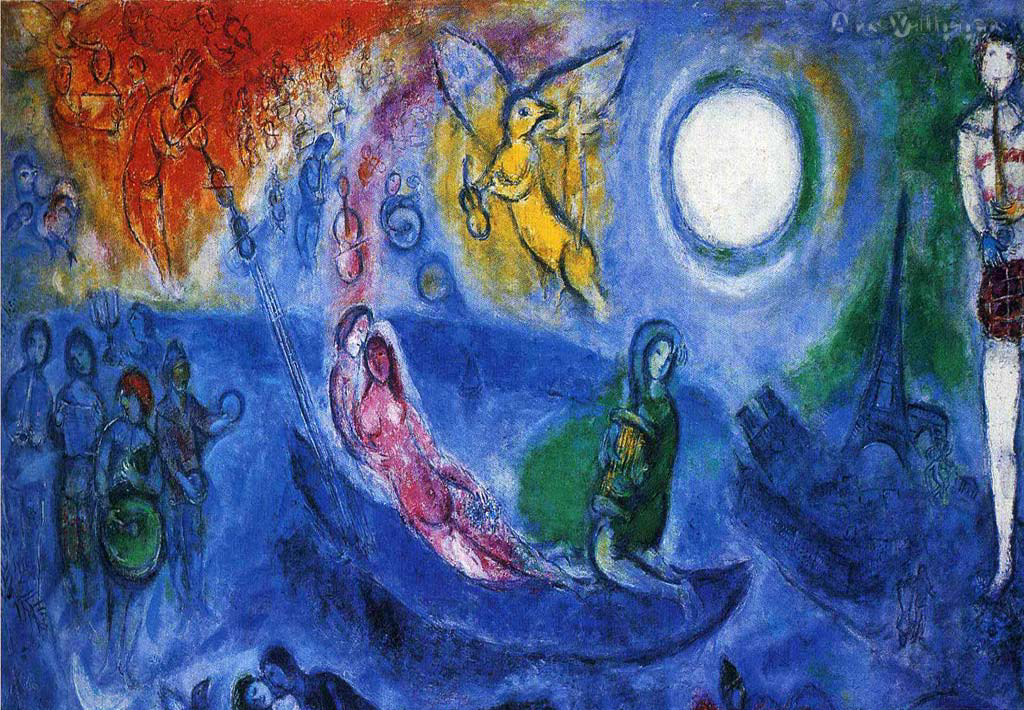
marc_chagall-painting

Here’s some beautiful Chagall so you don’t get too sad.

P.S. To any friends or family members who may be concerned by my choice of topic this week, I am very well and having a pretty good time. I have more time to read nowadays and think about literature and I just really got into remembering this poem, and also remembering that Jan Kott is the shit.

The Wisest Cat I Ever Knew

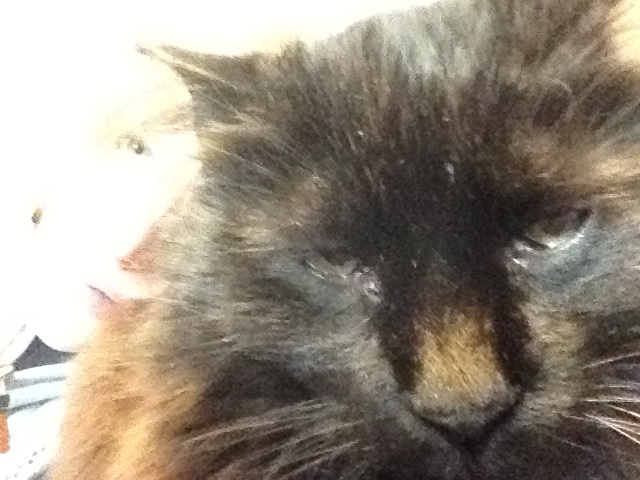
Selfie with the cat. Like a boss. Christmas 2011.

Selfie with the cat. Like a boss. Christmas 2011.

Last week I overhead one of my coworkers mention how great it is for families to have pets because they teach children about death. It makes a lot of sense. Inevitably the family pet will die and the kiddies will understand that sometimes things they love are gone forever. It’s an important lesson to learn before you are an adult, and life in a rural area certainly didn’t waste any time educating me (there was Ashes the cat, and Duke the dog, and who knows how many roosters and rabbits that came and went during the first decade of my life).

Then, of course, I grew  up. And instead of losing pets I began losing people. It is shocking and sad every time. I dream about it, and dread it, and do my best to understand it, and understand too that the older I get, the more familiar I will become with loss and the closer to home some of these losses will be.

At this point you’d think perhaps that going back to square one wouldn’t be so hard. You’d think perhaps I wouldn’t need to relearn the lesson that those things which are very very dear can be lost. You’d think perhaps that an elderly black cat, fat and lazy and more than 17 and a half years old, would not be so hard to let go of. But if you’ve ever had a family pet (I mean REALLY had a family pet) you will know why a grown woman who is just a few months shy of her 28th birthday and who doesn’t even live in her parents’ home anymore is having quite a lot of difficulty coming to terms with this loss.

Minuit the cat was born the spring I turned ten. In a litter of orange and brown tabby cats his plain black fur made him stand out. Maybe that’s why I picked him as “mine” (when our lady cat had kittens we always picked out one that was “ours”, one we’d name and take special pride in until the kittens were all given away). Maybe that’s why my mom picked him too. At any rate, I’m glad she did because even though we already had two cats (which really should be the maximum in any household) we got to keep him.

Despite his later girth and appreciation for relaxation and attention above all else, as a kitten Minuit was anything but cuddly. He’d been born outside, and once his future as a permanent resident in our household was secure, it was up to my sisters and me to train him up and settle him down. This involved long nights during which Minuit raced up and down my bedroom like a hellion, attacking not only his scratch post but also the carpet, the furniture, my stuffed animals, etc.  (I mostly remember that I had to endure this but my little sister insists she did as well so I’ll just say we all did and leave it at that). These were probably the most virtuosic displays of pure wildcat instinct Minuit ever exhibited in his entire life.

Once his career as a wild thing was over, Minuit settled rather comfortably into an early and prolonged retirement during which he garnered affection from family members and guests alike, ate a lot (including taco chips), and spent the majority of his time in various states of repose around the house. He continued to relax, receive attention, and generally enjoy being a cat until a medical incident last weekend left him unable to stand, use his litter box, or eat. Kira the dog came in to lick his face and sit by him for a while, and my parents gave him as much care, comfort, and companionship over the weekend as they could, but at the veterinary clinic on Monday my mother was told that attempting to prolong the life of such an old cat was not a good idea and so, under the care of a veterinarian, Minuit died as he had spent the better part of his life–asleep.

Though his lifestyle could perhaps be described as “unambitious” at best, I believe Minuit’s snoozy demeanor concealed a razor sharp intellect (and a sharp set of claws) which he used to conceive and execute a wise and effective plan for living the Good Life.

These are the lessons I have learned from Minuit, the wisest cat I ever knew:

Be cool.

I think it’s safe to say that a well fed house cat who likes people really didn’t have much to worry about in our house to begin with, and Minuit didn’t worry about anything. What did he care that the other cats were better hunters than him? He still received more attention. What did he care that he was so heavy that having him jump into your lap was like being tossed a furry medicine ball? Everyone still let him sit there anyways and always wanted him to be comfortable (in my house having a cat on your lap is considered a legitimate reason for not getting up from the couch). Unlike some of our other cats, Minuit never got out of joint about new additions to the animal family (like the most recent kitten who spent most of her time following him around and trying to catch his tail). He always knew he’d be king, because he knew how to play it cool.

Pick your battles.

This isn’t a lesson Minuit learned right away. We used to laugh watching this fluffly black shape trying to hunt birds in the snow (he didn’t seem to understand why they could see him no matter how still he was). Soon, however, he realized that irritating birds come and go but that being comfortable and warm all the time was truly the food of life. Despite his size and languor, Minuit sure knew how to make a quick exit when he realized he was going to be thrown outside. He also managed not to be eaten by coyotes, which is a pretty amazing feat in our neighbourhood. This was likely due to the fact that Minuit passed most of his “outdoor” time sitting on the porch and looking annoyed, but I’d like to say his cunning and secret reserve of energy helped too.

Patience is a virtue.

There’s nothing more hilariously tragic than watching a big lazy cat wait hopefully beside his dish on the kitchen floor, just in case, you know, someone decides to maybe put a little milk in there or something. Minuit could, and did, wait all morning. We laughed at him, but the joke was on us: even during those times when we decided that Minuit was “on a diet”, sooner or later one of us would slip him a little something. Worked every time.

Always look on the bright side of life.

This is a lesson Minuit taught more by way of metaphor than by attitude. He demonstrated this wisdom by periodically changing his position in the living room to ensure he was always lying in the warm sun. He seemed content and totally at peace with himself, and watching him, we felt peaceful too.

Sometimes, it’s time to go.

I really thought Minuit would live forever. He lived longer than any of our other pets (even the survivalist cat Tache, who would go on three week excursions in the woods and bring back dead shrews and things to lay on the porch). Every time Minuit got really sick, or stopped cleaning himself, or started pooping on the carpet in my room (for no reason but laziness, it turned out), we thought that maybe he was on the way out. Despite our dire predictions, he would bounce back every time and be the same as ever. It’s not that hard to get “back to normal” when your regular routine primarily involves resting.

But 17 and a half is pretty old for a cat, and when we were all home this Christmas my sisters and I noticed Minuit’s fur getting a bit mangy and his back a bit stooped. His fluffy fur made him seem just as fat but we could feel his bones a little under our hands. Maybe when we gave the pets our last little pats before heading out to the airport we wondered if this might be the last we’d see of Minuit, but in my heart of hearts I secretly believed he’d be one of those creatures that just lived and lived, growing as sage and ancient and unceasing as a river.

But an animal can last only as long as its body, and Minuit, who’d been resting most of his life, was finally too tired. And so my parents let him go.

I don’t mean to anthropomorphize the family cat. Minuit was not a person. My parents were his owners, not his “mom” and “dad”. But that doesn’t mean he was not very very dear to us. Minuit was our cat, and we were his people. I will never have another cat (TC is terribly allergic so owning a cat myself is out of the question) and he can never be replaced.

And I know I’m a grown woman and I know that life is full of much larger wounds than this but as I write this I am crying like child. I don’t care that there are worse things than this. I don’t care that he was old and and it was probably his time to go. Minuit was my cat and I just want him back.

MinuitSunshine

My “gendered job” and me

To preface, the following is not in any way a complaint about my job. It is simply the beginnings of a personal examination of a gender role I have chosen to play in my professional life.

secretary (1)When people ask me what I do, I say I am a secretary.

I say I am a secretary because when people ask what I do, I know they’re asking what I do for money. And I also say I’m a secretary because I think it sounds more glamourous than saying I’m an administrative assistant, even though the two terms are more or less interchangeable. The point being, I am a secretary.

I am a secretary in a small office in a large department in a much larger institution. And it’s a pretty great job, as far as jobs go–the pay is decent, the benefits are too, and my coworkers and managers are fantastic. In a world where I can’t sleep in until 10:00 every morning and collect a paycheque just for being lil’ ol’ me (a post-recession world where Canada continues to shed jobs like it’s going out of style and most job growth is in the part-time, temporary sector), a job like mine is highly prized.

To make a long story short, I like my job.

I like my job, but…

I’m beginning to wonder if being a secretary is just a teensy weensy bit gendered. I’m also wondering whether or not this matters at all.

To start with, of course being a secretary is gendered. Even if I didn’t know that administrative assistance is still a primarily female occupation, like nursing and childcare, I only need to look around the offices in my department to see that there are a LOT of women here. I currently work in a building that houses five administrative offices. Every single staff member here is a woman (including the managers, which makes sense considering they probably started as clerks or secretaries themselves). My office is fairly typical for my department and for most of the other departments that make up the institution. A trip to HR would reveal, as Mitt Romney infamously gaffed, “binders full of women.” So yes, in that this particular role is typically filled by women (whether intentionally or no), my occupation as a secretary is a gendered one.

Which is totally okay. I am comfortable enough with my feminism to know that staying in a good job with decent pay and a respectful and friendly work environment is a smart choice at this point in my life, even if I’m not exactly tearing down the glass ceiling every day (and even if my undergraduate degree is completely unrelated to my work; I know many other degree holders who are faring much worse). I know that the various roles played by secretaries are stereotypically female ones (receptionist, event planner, filer, typist, note-taker, organizer, pacifier, assistant, etc.), but these roles are necessary to fulfilling the duties outlined in my job description and I feel the roles are valued by my supervisors and manager.

Still, at some point in every term of employment, it becomes clear what those “other additional tasks and duties consistent with the position” line in your job description is all about. It means that certain tasks will fall on your shoulders because there simply isn’t a different place to put them, and you’re there, and your job is to be helpful.

I am particularly thinking about the times when I have been involved in food prep, food disposal, clearing tables, washing dishes, cleaning fridges, decorating, etc. while at work (and dressed in office attire, of course). None of these duties are spelled out in my job description, however, as an administrative assistant the umbrella  covering everything one might do to “assist” their office or department is pretty large (of course, my coworkers and often managers do their fair share of this kind of work and more, wrapping gifts, stopping by the grocery store to pick up a cake for someone’s birthday, etc.). The assumption inherent in the very definition of being an administrative assistant is that your job is to make life smoother for your superiors, clients, and coworkers. In other words, an administrative assistant’s job is to assist the administration, regardless of what the job description for that particular position actually says.  I am compensated quite fairly for this. And I really don’t mind.

BUT (and there really is a but, small as it may seem):

Because the employees in secretarial roles are overwhelmingly female, I worry that these “additional tasks and duties” are seen by many not as a natural extension of the role of assisting the administration a female employee works for, but as a natural extension of being female. Of COURSE we’re cleaning and decorating and preparing food and planning baby showers for coworkers, one might think, we’re WOMEN and we’re “good at that stuff”!

Well, yes and no. We’re “good at that stuff” because we do it all the time, and for many of us, we do it all the time because we were raised that way, but it really has nothing to do with being male or female. I’ve met guys who can barely hold a broom, and I’ve also met guys who can clean a bathroom better than I can (and I’m pretty damn thorough so that’s saying something). It really comes down to what you’ve been taught.

Western society is full of women who were taught to be acquiescent and obliging, self-sacrificing and silent. Western society is full of women who learned to anticipate the needs of others and to take care of those needs while ignoring their own. Western society is full of women who learned to make themselves invisible, as if the gleaming home and the well-fed children and the glass of scotch on the end table occurred by magic. This was fortunately not my experience growing up, but it is still the legacy I have inherited. As much as I enjoy my workplace and the security and comfort my secretarial job brings me, I worry that I might be contributing to this legacy in ways I did not intend. I mean, I don’t agree with the idea that a woman’s worth relies solely on her ability to facilitate the grander and more recognized work of others, but this is the only thing for which I have allowed myself to be paid in my professional life.

In other words, I have let society, in the form of my employment, gauge my worth using exactly the kind of yardstick I have always claimed to despise. What’s more, I’m good at it, and I like being good at it. I take pride in my ability to talk down an upset client, or to anticipate a manager’s needs, or to maintain a cabinet of files just so. I love my “telephone voice” too. I have put on the role of secretary as if it were a costume in a play, and let me tell you, I wear the hell out of it.

Am I wrong to do this? I honestly don’t know. It’s something I’ve started thinking about and something I will probably continue to think about as my life changes and I become a wife and eventually (hopefully) a mother. What roles do I want to play? How do I want to play them? And is what I am doing now negatively impacting my future ability to escape roles I don’t want? TC is no Don Draper, but the roles I take on within my family shouldn’t have to hinge on the fact that I picked a good man; they should be something I can come to with both eyes open. Fulfilling a traditionally female role is not a bad thing (this kind of work is tremendously important and has a lot more worth than society usually assigns it), but I don’t want to be expected to fulfill certain roles just because of my biology.

At any rate, I’d be interested to hear if other women working as administrative assistants have had similar experiences or concerns, or if they have found their roles to be gendered in more ways than just the fact that they are in a traditional female role (I hardly ever get comments on this blog but if you’d like to leave one, go for it!).

Cypress Mountain – Nifty Hits the Slopes

Photo by my TC

At the top of the Collins run – photo by my TC

Growing up in Saskatchewan, mountains are in short supply. It may therefore be surprising that I learned to downhill ski a mere hour’s drive from home. The “ski hill” was called Riverside, and was basically a few shortish runs cut into the side of a deep river valley, just off Highway 3. There was no chairlift but there were a couple rope tows of the variety that propel you uphill by pushing your bum (complicated for a child of six; I lost my balance and fell and of course the next one came along and hit me in the head). Riverside closed while I was six or seven, and the next closest ski hill, Table Mountain, sucked (at least, I thought so, but that may have been because the first time I went there with my class they made us stay on level ground in ski school the entire time and didn’t even let us go down the bunny hill ONCE during our whole trip, so it was a total waste of time and my parents’ money). Once I was in junior high, I decided the cool thing to do was to try snowboarding, so that’s what I did (poorly). My downhill career was over.

Until two years ago, that is. I picked skiing up again pretty damn quickly (if I do say so myself) and have been spending a few days each winter on Cypress Mountain since. I’d like to toot my own horn and claim I’m a natural, but since I used to cross-country ski competitively (Saskatchewan having more rolling hills and open plains than mountains), I’ve always been pretty comfortable on skis, whether I’m being propelled by the force of my “excellent” Nordic technique, or by gravity, pulling me headlong down a mountain side.

This year my TC and I decided to get season’s passes to Cypress Mountain and it has been GREAT (having a car also helps). Not only have I done as much skiing this winter as the past two winters combined, season’s passes take the pressure off needing to have a “good” ski day every time in order to get your money’s worth. It also makes a couple hours of night skiing an easier and more worthwhile proposition.

Like Monday night, for example. Water repairs that were supposed to be finished in my building at 4:00 p.m. were still ongoing when I got home from work that evening. We were thirsty and had no way to prepare dinner without water, so we said screw it, and went skiing. Passes let you do that. While we were eating dinner in the Cypress Creek Lodge (at the Crazy Raven Bar & Grill, fancy schmancy), I joked to TC that our situation would make us sound like rich d-bags: We’ve had the WORST day! The workmen STILL weren’t finished in our CONDO, so we just HAD to hit the SLOPES!

For those of you that haven’t tried it, night skiing at Cypress is amazing. The open runs are lit like a football field so you can see just fine, and as you’re coming down the hill the windows of the Lodge are lit up like Santa’s workshop. There are hardly any people (so you can go super fast!) and the lifts are pretty quiet (it’s VERY romantic). We spent just under a couple hours on the mountain but got in as much skiing as we sometimes do when we come for a day. SO MUCH FUN!

Being a bit of a novice myself, you’d think I wouldn’t already have pet peeves about other mountain users, but I do. The snowboarders! The SNOWBOARDERS! Fun to watch but hard to share a hill with! I guess because I’m not riding myself I’m not as good at sensing what the snowboarders around me are doing and anticipating where I need to go, so when I’m near one I’m always wary. They also seem to like to descend in large groups, and when a swarm of snowboarders pass you on a mountainside it feels like you’ve been surrounded by a motorcycle gang. I also don’t understand people who plop themselves down in the middle of narrow parts of the run. What the heck? It’s a ski hill, not a campground! Move to the side, bucko! Jeez. Kids these days.

I am also terrified most of the time when I ski. I love it, but it is terrifying. Optically, anything more difficult than a green run appears to be a vertical cliff face when I’m at the top of it, and my perception doesn’t change much until I’m safely on level ground again. A gorgeous run like Cypress’ “Horizon” is enough to give me a panic attack.

Very minor complaints (and the terror I feel when on anything but the greenest of green runs) aside, I am loving my season on the slopes. The facilities are great. The views are gorgeous. And the skiing is good. Even when it’s bad, it’s pretty damn good.

[P.S. In case you’re wondering about my competitive Nordic career, rest assured I was a solid third place in the provincial standings for my age category. A solid third out of three registered racers (one of whom was my second cousin). Solid.]

Meanwhile in Australia, Sh*t is Going Down

GA1073

A few years ago, my close friend (the lion-hearted theatre artist and burlesque darling Frankie Vandellous) decided to move to Australia. This has generally sucked for me, because she’s great and I miss her. There are, however, two ways in which Frankie’s move has been beneficial:

  1. Frankie has done some really cool things down under, and that’s awesome.
  2. Through the power of Facebook, and Frankie’s involvement and activism, I have become more aware of the political situation in Australia (and Queensland) and though it’s not altogether pleasant, I suppose I’m glad I no longer cling to an old romantic illusion that Australia is some laid-back, kangaroo-filled utopia where the biggest problems are hot weather, too many rabbits, and massive spiders. The more you know.

So what is going down in Australia? A lot of things.

Most worrying to me, the human rights of various groups are currently being ignored or otherwise abused at various levels of Australian government. If you are an immigrant to Australia currently being held in one of Australia’s (or “third country processing”) immigration detention centres, for example, you can expect the following:

It’s hard to find concrete information on the conditions in the detention centres (so it’s hard to know for sure what’s going on), but there are certainly a lot of unsavoury reports circulating: children playing in the heat and dirt with little access to toys, books, or education; inmates spending the majority of their days crowding together under awnings because it’s too hot to be indoors (no A/C presumably) and there’s barely any shade elsewhere; menstruating women being forced to ask guards for tampons and pads and receiving only one or two at a time (the Australian Government denies this one but the Asylum Seeker Resource Centre says it has been receiving “reports of this nature for some time” so I’m not really sure what is true); asylum seekers becoming addicted to painkillers and sleeping pills while in detention, etc. All in all it doesn’t paint a pretty picture.

And it’s not just immigrants and asylum seekers finding their rights trampled these days. If you’re an Australian citizen who also happens to be gay, you were probably pretty disappointed when Australia’s High Court overturned recent legislation passed by the Australian Capital Territory (ACT) allowing same sex couples to marry after an appeal by the Australian federal government (for their part, the court passes no moral judgement on whether or not same sex couples should be allowed to marry but says that marriage law in Australia can only be changed by the federal government, and the feds don’t seem too keen on making any changes).

In some parts of Australia, lack of marriage equality may only be the tip of the homophobic iceberg–if you’re a gay person in South Australia, New South Wales, or Queensland, you’ll need to be careful who you hit on. “Gay panic” defense laws in these Australian states allow the receiver of your flirtations to murder you in “self-defense” (apparently because the terror caused by being hit on by a gay person could send your murderer into such a panic he/she forgets that murdering people is an extremely inappropriate response).

Immigrants and the queer community aside, Australia is still a good place for the average hetero-normative citizen to hang out and kick back with their buds, right? Well….not if you live in Queensland, like riding motorcycles, and like hanging out with other people who like riding motorcycles. The state’s new “anti-bikie” laws can now prosecute citizens for “association” with groups considered to be criminal (whether you personally have done anything illegal or not). Suspected “associates” arrested under these new laws will be held in solitary confinement in a specially-built prison (so they can’t “associate” I guess). You can read about the laws on the Queensland Government website if you like (particularly bewildering is the new act banning gang members and “associates” from owning or working in tattoo parlours). On the surface, trying to target biker gangs might seem like a good idea, but the laws are far too broad. How would you feel if your Elks Club was disbanded because a few top-ranking members were involved in criminal activity? Or if you were arrested for being an “associate” on the basis of your membership in the aforementioned criminal Elks Club?

I’m not trying to hate on Australia. I’ve always loved the idea of Australia and I’ve always wanted to go there. Nearly every Australian I’ve met has been friendly and lovely. Which makes these kinds of news stories incredibly disappointing, and makes me wonder if my tourism dollars might be better spent elsewhere (now I know how people in other countries must be feeling about Canada nowadays).

All this is to say that we should never rest on our laurels and assume we in the English-speaking world have our shit together when it comes to human rights. We don’t. And we shouldn’t assume the United States is the only “western” country where homophobic or xenophobic laws trample on rights. It isn’t. And we shouldn’t assume that we in Canada could never stoop to these lows. Unfortunately, we can, and will, if we don’t stay informed and stay active in our democracy.

On that note, I should give Australia its due and mention that the only reason I even know about these issues is because in addition to bigoted governments, Australia also seems to have a lot of citizens willing to stand against these unjust laws and policies through social media, petitions, and other traditional and/or creative protests. So there’s a lot of bad shit going down in Australia, it’s true, but there’s a lot of good shit too.