“AFTER” – Hilarious, Awkward, and Close to Home

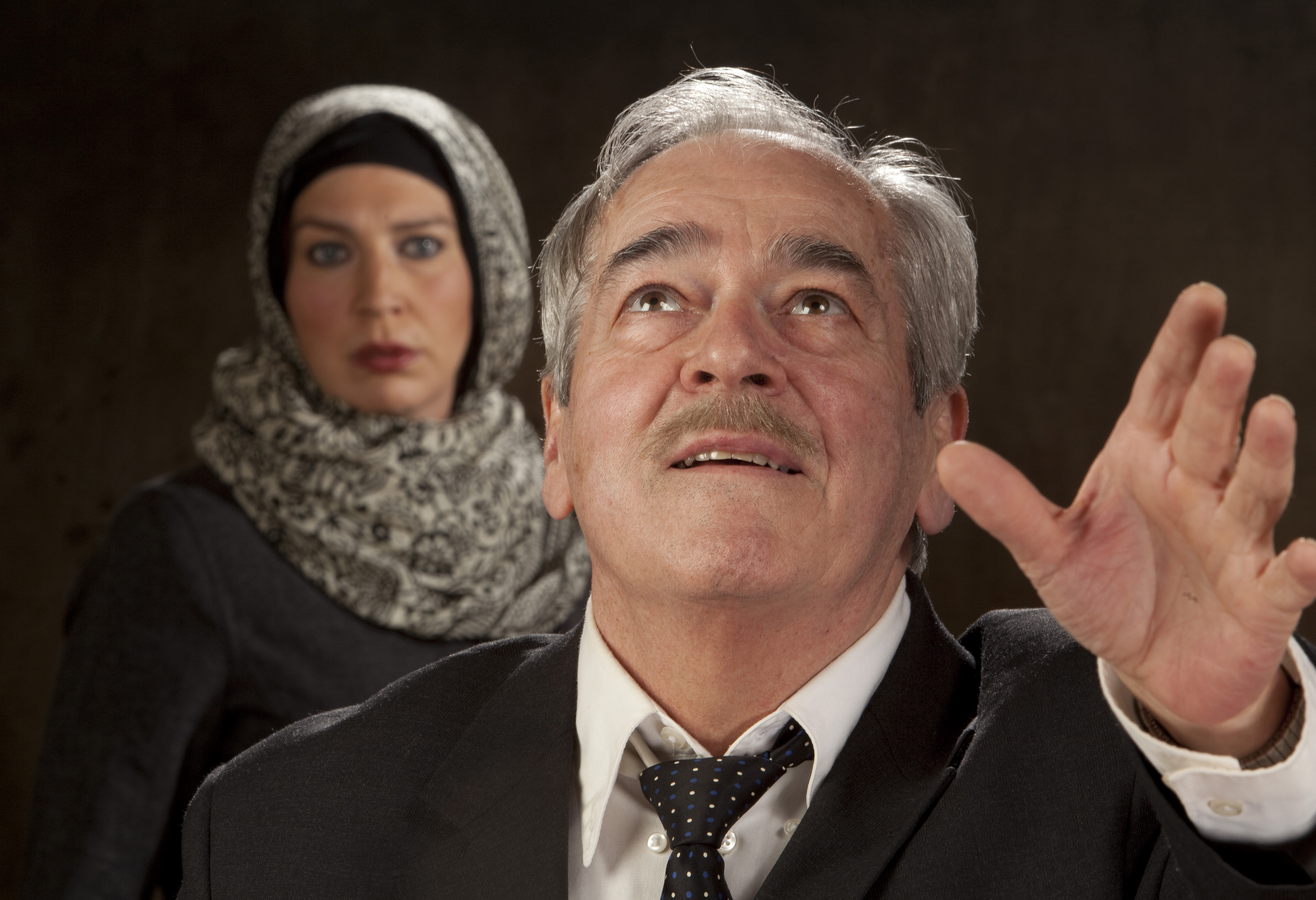
AFTER-Poster-FinalThe premise of Martha Herrera-Lasso’s new play, After, is fairly simple: four young people navigate the murky waters of love and lust, all through conversations that take place after sex. While the premise may be simple, the emotional situations explored are anything but, rife with humour, heartbreak, and devastating shades of grey.

If you like sharp, fast-paced dialogue, nuanced performances with rapid-fire timing, and recognizing the awkwardness of your own life onstage, you will not want to miss dream of passion productions and Excavation Theatre‘s co-production of After, running at the Havana Theatre until April 5.

When it comes to intimacy and matters of the heart, once the moment of passion has ended few of us are secure enough with vulnerability to simply be. Instead, we protect ourselves: we make jokes, justify, feign nonchalance, contradict ourselves or lay blame. Many relationships are not what they seem, and the biggest fools are usually the ones with the front-row seats.  Herrera-Lasso’s intelligent, funny, and honest script requires performers who identify with their characters, even as they hurt others, hold tight to things they don’t want, hide from their partners and hide from themselves. Luckily for us, under the direction of Excavation Theatre’s Jessica Anne Nelson, the ensemble of four actors (dream of passion’s Stefania Indelicato, Al Miro, Jane Hancock, and Matthew McLellan) deliver tight performances that never miss a beat. Both perfectly natural and perfectly rehearsed, no gesture, line, or inflection is wasted as the performers feed off one another and carry the audience through an incredibly quick (but incredibly satisfying) 80 minutes.

What strikes me most about  After is the characters’ extreme lack of self-awareness, even as they are acutely self-conscious (whether due to insecurity, like the verbally incontinent Jackie, or narcissism, like the incorrigible James). Unhinged by their moments of vulnerability, these four young people fumble towards and away from one another, wanting both the satisfaction of intimacy and the safety of independence. After the Friday-night show, we overheard another audience member saying he had been all four of the characters at one time or another, and I think this is the play’s real strength. For my part, I certainly recognized myself in two or three of the characters (I won’t give myself away by saying which characters or why) and it is this familiarity and recognition that elevates a simple (rather comedic) premise into something much more impressive and special.

After plays at the Havana Theatre (1212 Commercial Drive) until Saturday, April 5. Tickets are $20 and can be purchased online at Brown Paper Tickets. Shows are at 8:00 p.m.

Disclosure: My TC and I attended Friday night’s performance courtesy of Excavation Theatre and dream of passion productions. My content is my own.

“Ghosts in Baghdad” and the Vulnerabilities of Heritage

Sarah May Redmond (Malika) and Alec Willows (Khalil). Photo: Tim Matheson

Sarah May Redmond (Malika) and Alec Willows (Khalil). Photo: Tim Matheson

What would you do to protect your life’s work? Your country’s heritage? When does an object stop being a “thing” and become a treasure worth risking your life for? How far will you go to protect the treasures you hold dear?

These are the questions posed by Ghosts in Baghdad, a new script by playwright and Working Spark Theatre founder Michelle Deines. Inspired by a New York Times article by Roger Cohen, Deines’ script centres around the complex decisions faced by Khalil and Malika, two fictional museum directors who continue their work in fear and isolation ten years after the 2003 American invasion and the looting, destruction, and subsequent closure to the public of the Iraq Museum. With thousands of ancient historical and cultural objects still missing and the Museum open only to government officials and foreign diplomats, Khalil walks the empty halls alone, dreaming of the day he can throw open the doors and share his country’s history with its people. Malika, meanwhile, hides away in her office, hunching over a piece of stone tablet she has been translating for over a decade, and while she tries to decide if her affection for country and colleague are enough to keep her in a city still so dangerous and full of sorrow. When a desperate young boy appears claiming to have found the missing Mask of Warka, his arrival threatens to unravel the delicate webs of secrecy and betrayal that have sustained what is left of the damaged Museum.

The Little Mountain Gallery, which houses this production, is a spartan venue that certainly has its difficulties (I’ve performed there myself so I know first hand). Working Spark has done an exceptional job of transforming this space, building a new and larger platform for the actors and bringing in more comfortable multi-level seating for the house. That said, the space has its challenges. The performance I attended was the Thursday-night preview and it was clear, both from director John Murphy’s comments before the show and the slightly tentative energy of the performers onstage, that there were still a couple of kinks to be worked out in the space. Without a conventional “backstage” in the Little Mountain, the transitions between scenes seemed to be a particular challenge for this particular performance. However, I trust these transitions are going more smoothly during the actual run of the play, and also recommend simply choosing the seats in front of the shallow thrust stage (rather on the left or right side) where the “offstage” movements of the actors won’t be as visible.

Still, the actors fill their roles with natural ease and without pretension (Gili Roskies’ performance as the youth Dawood is particularly arresting) and Deines and Murphy made important choices in the writing and direction that support this ease. The actors’ voices are without put-on accents and their dialogue is as casual and full of expression as any other English dialogue. These choices (i.e. the choices NOT to have the actors use accents or speak using phrases or expressions that are different from those we would use in everyday English) are tremendously important in that Working Spark has managed to set a play in Baghdad without casting the characters as “the Other”. Of course there are no special accents–Iraqi people are not “foreign” in their own country. Of course there are no unfamiliar expressions–the expressions used by native Arabic speakers would not sound unfamiliar to other Arabic speakers. The point is not to exoticize Baghdad or to pass any kind of judgement on its culture, before or after the American invasion. The point is that culture is important in itself.

What Ghosts in Baghdad shows us is the way in which society’s treatment of historical, natural, and cultural artifacts is a measure for the condition of its people. When looters storm a national museum and force its closure to the public, they steal not from an enemy force but from themselves. Only extreme circumstances would create that kind of selfishness in most people–circumstances whose immediacy renders centuries and millennia of artistry miniscule. You can’t eat a statue, or live in an ancient vase. An artifact in a display case can’t protect you from bullets and heritage can’t buy your ticket to a safer place. But if money could do these things–and you could find the right buyer–could anyone blame you? Sadly, these treasures once lost are usually lost forever, and a people whose history has been stolen and who are unable to take pride in their collective culture will find it that much more difficult to heal–but what can they do?

In Ghosts in Baghdad these questions are turned back on themselves, as those champions who have sworn to preserve their cultural artifacts struggle to protect them from the desperation of poverty and fear–and also from themselves.

Ghosts in Baghdad plays at the Little Mountain Gallery (Main at 26th Ave.) until Sunday, April 6 (no show Monday, March 31). Tickets can be purchased online through Brown Paper Tickets.

Disclosure: TC and I attended the Thursday-night preview courtesy of Working Spark Theatre. My content is my own.

Grey Days and Gratitude

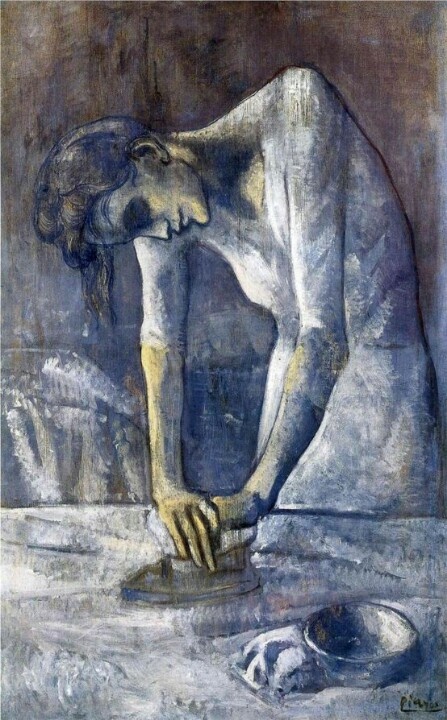
Picasso's "Woman Ironing"

Picasso’s “Woman Ironing”

Maybe it’s because it’s March, and I don’t like March. Maybe it’s because I’m in the thick of a busy busy week. Maybe it’s because I’m trying to plan a wedding for the summer and do not always feel very good at that kind of thing. Maybe it’s because the collapse of human civilization will be “difficult to avoid”, according to a recent NASA-funded study, and it’s all our fault. Maybe it’s because I’m getting older and I don’t yet feel confident, wealthy, or wise enough for the journey. Maybe it’s because there’s rabbit hair all over my couch despite my best efforts, or maybe it’s because that aforementioned “civilization is ending” report makes me feel like an asshole for being sad about anything else. Maybe it’s because I’m overwhelmed by everything I see, hear, read, and feel responsible for (it would be hard not be overwhelmed in the face of either wedding planning or our impending self-imposed destruction).

Whatever the reason, there have been some grey days lately. Days where doubt slowly drip-drips like icy water through your heart and you wonder what the hell you’re doing, who the hell ever made you think you could have everything you want, and how the hell you’re going to pay for all your dreams, because like it or not, most dreams have their price. Days where you worry–about your future, about your choices, about your ability to live in the future you made with your choices. About the situations in which you have no choice. Days when you feel that you’re running full speed just to stay in the same place. Days when the destination is far far away.

You don’t want to feel grey. You want the sun to break through those clouds to light up your path, with angel choirs fluttering past carrying banners that say “You’re on the right track, baby!”. You want to see Results, you want to make Progress, you want the future bright and your heart as light as air.

But that’s not today. Grey is what you have today. Maybe grey is what you have all week, or all month. Maybe that grey is so heavy right now, so persistent, that it deepens and settles in your stomach and then you have the Blues. This week, that’s my lot. I dealt with the usual culprits–I’ve been resting, I’ve been reading, and I’ve been out in the sun–but still I feel a little cloudy on the inside, whether I want to or not.

Back in August 2011, I wrote a blog post entitled And Now the Case for Being Happy. In the post I discussed happiness and the fears and struggles that came with it at that particular time. Of gratitude, I wrote, “To spend your life being merely grateful that things aren’t worse is not joyous living.”

But sometimes gratitude is all you’ve got. For most of us, it simply isn’t possible to be living joyously All The Time. Every day will bring its challenges; every sky will have its clouds. Perhaps I needed to be easier on myself. Perhaps I didn’t anticipate then some of the challenges I would have now. Perhaps there’s no one-size-fits-all, “Ten Habits of Happy People” Buzzfeed-list solution to how an individual human being might feel at any given time, when faced with any number or combination of obstacles. Perhaps feeling gratitude is the best I can do for myself right now.

Am I happy today? Not especially. Was I happy yesterday? No. But was the world beautiful? Was I loved? Am I grateful for it? Yes and yes and yes. Am I still worried? Yes. Do I have any solutions? Not today. But even when I crawl into bed at night with worry gnawing at my chest, I am crawling and worrying next to somebody I love, and I know I wouldn’t trade my problems for anyone else’s.


Dancing Monkey Presents: “Someone Who’ll Watch Over Me”

Stop me if you’ve heard this one: an Irishman, an Englishman, and an American are chained to a wall–

swwomlogoNo, this is not the set-up for some lame stereotypical joke, but the premise for Frank McGuinness’ searing play Someone Who’ll Watch Over Me, a story set not against the backdrop of the Lebanon Hostage Crisis, but chained deep within its dark belly. Under the direction of the luminous Julie McIsaac, the players of Dancing Monkey Presents wade neck deep into the waters of fear, despair, madness, and hope that threaten to overwhelm us when we are, quite literally, hostage to forces beyond our control.

Though the play runs over two hours (with a short intermission), McGuinness’ script is witty, biting, and fast-paced, taking its characters careening between the polemic and the playful, the religious and the ridiculous, between anger, insanity, honesty, and love. Though the Lebanon Hostage Crisis and its casualties are, of course, deeply rooted in the political realm, McGuinness’ story does not dwell on this, choosing to focus on the human beings beneath the hostages, in all their fear, self-righteousness, and unexpected kindnesses, rather than on condemning or excusing either the hostage-takers or the governments who may or may not have done all within their power to secure their citizens’ safe release.

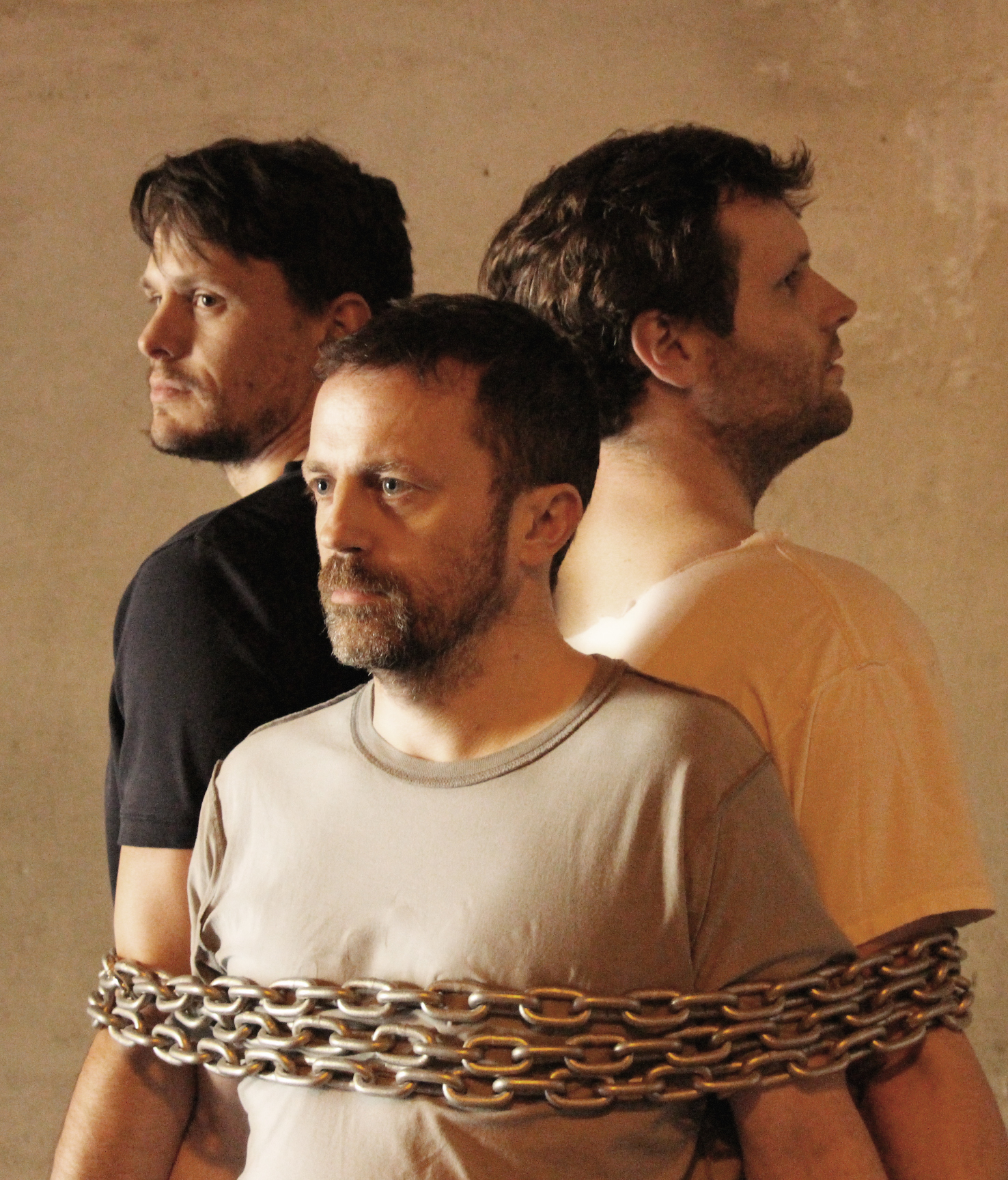
McIsaac’s staging of Someone Who’ll Watch Over Me is simple yet effective. Three men are chained in a small bare room, lit by a single dangling bulb. We do not know what time of day it is, or where they are, and neither do they. Against such a sparse backdrop, the performances of Jay Clift (Adam), Ashley O’Connell (Edward), and Kirk Smith (Michael) truly shine as McGuiness’ script races them, and us, through an emotional labyrinth at break-neck speed. Each character is a pressure cooker, roiling with physical energy they cannot expend, anger they cannot unleash, and fear they cannot relieve. The script, which is actually quite funny at times, swings each man from tears to laughter and back again, relentless and unflinching.  The skill that lies beneath the delicately controlled performances delivered by Clift, O’Connell, and Smith is not to be understated.

Though 1980s Lebanon is worlds away for most of us, McGuiness and his characters strip away the layers of distance and time that separate us, the comfortable audience, from them, the men waiting to find out if they will live or die, if will they ever see their families again, or if anyone even knows what has happened to them. In the isolation of a cell, with the possibility of madness an ever-present companion, three men encounter the same fears that gnaw at most of us–that it does not matter where we are from, how educated we are, whether we are good or bad people. Things will happen to us that we do not understand and cannot control. We will not know why. We will not know if there is even a why. What we will know is what our reality is, in the here and now. We will know what the darkness is and we will have to decide how to live with it, no matter how short or long our captivity. In the darkness there is loneliness and helplessness but also humanity.

If I were to have a complaint about the evening it would be that the intimate seating still contained several empty chairs and Someone Who’ll Watch Over Me deserves to play to packed houses. With a ticket price of $16 (affordability being part of Dancing Monkey Presents’ mandate) a script this good, and performances this strong, there is really no excuse not to see it if you can.

Someone Who’ll Watch Over Me plays at Renegade Studios (125 E. 2nd Ave., Vancouver) for one more week, March 18 – 23, at 8:00 p.m. each night. Tickets can be purchased online or at the door (though the house is small so booking early is advised). NB: The vents are turned off during the performance and the space does get a little cold during that time so dress appropriately!

Clockwise from top left: Jay Clift, Kirk Smith, Ashley O'Connell

Clockwise from top left: Jay Clift, Kirk Smith, Ashley O’Connell

Disclosure: My guest and I were provided tickets courtesy of Dancing Monkey Presents. My content is my own.

The Troika Collective Presents Belarusian Dream Theater Vancouver

Poster design by Liam Griffin

Poster design by Liam Griffin

On Tuesday, March 25, The Troika Collective, in association with Ensemble Free Theater Norway (EFTN), will present the Vancouver iteration of the Belarusian Dream Theater project in Studio 4270 at SFU Woodwards.

From the announcement of the project in the Belarusian Review:

Belarusian Dream Theater [is] an international performing arts event supporting freedom of expression in Belarus, conceived by Brendan McCall, Artistic Director of EFTN.

On 25 March 2014, Belarus’ Freedom Day, partner theaters will present readings and/or performances of new short plays about Belarus simultaneously in Australia, Belarus, Denmark, Canada, Georgia, Germany, Greece, Hungary, Italy, Norway, Poland, Ukraine, and the United States.

[…] The hope is that this coordinated cultural event will stimulate a greater knowledge and interest in Belarus by international audiences, journalists, and artists.

So why is it important to know about what is happening in Belarus? Before becoming involved with this project, I must admit that I had not thought about Belarus in a long time (perhaps not since passing through it on a train when I was ten years old). I have, like many people, been keeping an eye on the political situation in Ukraine. Meanwhile, news from Belarus has been comparatively quiet.

As it turns out, that is because the Belarusian government has, for many years, severely restricted independent expression through a combination of legislation, intimidation, and force. Based on information from Amnesty International, the protests that have rocked Ukraine in recent months would likely not be possible in the political climate of Belarus today, especially given the country’s “Law on Mass Actions”:

In 2011 weekly “silent protests”, where groups of people throughout the country would stroll wordlessly, applaud or use their mobile phone alarms simultaneously, saw participants beaten, sentenced to administrative detention or fined.

The largest demonstration in the country’s recent history, following the presidential elections in December 2010, was suppressed with unprecedented violence. When police moved in to disperse it in the centre of the capital Minsk over 700 people were detained and many, including by-standers, were beaten and wounded. Four prisoners of conscience Mykalau Statkevich, Pavel Sevyarynets, Eduard Lobau and Zmitser Dashkevich remain in prison in connection to the demonstration to this day.

[…] Peaceful protesters are frequently sentenced to fines or short periods of detention for violating the Law on Mass Actions or for minor offenses such as swearing in public. Pavel Vinahradau, a member of the youth political movement Zmena (Change), spent a total of 66 days in detention between 30 December 2011 and 12 December 2012 on eight separate administrative convictions, all for minor offenses such as swearing or violations of the regulations for public meetings and pickets.

And it isn’t only protesters who are finding their freedoms of expression curtailed. Citizens wishing to join or create an independent organization (for support, to express an identity or opinion, etc.) must be sure the organization is registered with the government and meets the government’s strict registration requirements. Activists who have been deemed to be acting on behalf or as part of an unregistered organization face prosecution.

So where does Ensemble Free Theater Norway, the Belarusian Dream Theater playwrights, The Troika Collective, and the rest of the companies participating around the world come in? Well, though many of these plays could not be performed in Belarus (or at least not without considerable risk), they can be performed here in Canada, our actors and directors can speak without fear of reprisal, and we can listen. We invite you to join us for an evening of theatre, music, and hopefully, social good.

The Vancouver performance of the Belarusian Dream Theater project will take place on Belarus’ Freedom Day, March 25, at 8:00 p.m. in Studio 4270, SFU Woodwards. Admission is by donation (though no one will be turned away for lack of funds), with proceeds benefiting the Troika Collective’s operations. If you wish to support free expression in Belarus, proceeds from the sales of the plays being read/performed around the world as part of this project will go to Amnesty International. You can also make a direct donation to Amnesty International online at Amnesty.ca.

Disclosure: I am the co-artistic director of The Troika Collective, along with founding co-artistic director Aliya Griffin. The Troika Collective is a registered non-profit.

My Rights to Write (and What)

Broadly speaking, at least here in fairly progressive, egalitarian-ish, freedom-of-speech-y Canada, my right to write just about whatever I want, however I want, is not in dispute. Which is great for me, because when I cannot communicate or am not being listened to, I shrivel up inside and a little part of me begins to die.

Which is why it is important to consider both what I legally have the right to write and/or publish, and what I should MORALLY have the right to write and share.

Legally, I have the right to publish just about anything except hate speech, another person’s work, recommendations that people cause harm to themselves or others, or slander. Fair enough. I don’t want to write any of those things anyways.

Morally, the waters of artistic freedom become quite a bit muddier. Do I, for example, have the moral right to incorporate recognizable traits of real people in fiction, in doing so assuming or inventing their motives and private thoughts? What parts of a person truly belong to them? Their life story? Their thoughts/feelings? Their physical appearance and behavioural ticks? What parts of a real person, place, or experience am I allowed to use? Assuming that some of my work will always adapt or be influenced by people, places, and experiences that I encounter either in my own life or through the media, what would be the more moral course? Representing people, places, and experiences exactly as I perceive them (or exactly as they perceive themselves), or using artistic license to transform these things, creating something that I can bend to my narrative? What are the responsibilities that come with my rights to write, and to seek publication of this writing?

I think any conversation surrounding what I, as an artist, have an ethical green light to incorporate into my work needs to begin with a recognition that I am writing from a place of comparative privilege. Though I am a woman, and young (two strikes against me in a western literary canon still dominated by old males), there are many cultural privileges that go along with being white, heterosexual, cisgendered, middle class, and dare I say, reasonably photogenic. Because of this, there are also some limitations as to what I can ethically and skillfully represent in my work.

For example, can I ethically or skilfully represent (in fiction) the experience of a culture or race different from my own? Maybe, but doing so would require not only careful and comprehensive research, but also an examination of my own motives for telling a story that is not mine. Do I want to tell this story because I feel a kind of personal connection to it, and feel that this is the story that is burning inside me to be told? Or do I want to tell this story because I want praise for writing about a “difficult” subject, or because I just want to expose the “beauty” of the Other, or because I believe that the true owners of the story are not equipped to tell it themselves? If my motives fall into any of the latter categories, I am not “engaging” with material or “exploring” it–I’m exploiting it. And that’s not okay with me. As I mentioned, when I cannot communicate or am not listened to, part of me shrivels and dies. Many cultures and marginalized groups have for centuries had the stories ripped from their mouths, and I don’t want to be part of the machine that consumes others’ stories, but never listens.

In some ways this is very freeing. It liberates me from the paralyzing idea that good or provocative writing cannot come from inside me, that it must be centered in a world (real or imagined) that is more “exotic”, more action-packed, or more thrilling than the one I inhabit. It also liberates me from the idea that my writing must contribute to some kind of social good by deliberately telling the story of a marginalized group. Don’t get me wrong–stories that have been relegated to the fringes need to be told, however, as my old theatre school chum (and literature PhD candidate) Lucia Lorenzi pointed out recently, what makes us think these marginalized groups aren’t capable of telling their stories themselves? If I want to do social good through my engagement with literature, it may, in fact, be a great idea for me to get out of the way and let people tell their own stories, and then, to make sure I read them. It is not necessarily for me to be the privileged mouthpiece of an unprivileged group. Maybe I just need to listen.

That said, I still want to write about that which intrigues and moves me. And even if I take some obvious topics out of the equation (at this time, for example, I do not feel even remotely equipped to tell a story about Indigenous people and the legacy of colonialism, or about the slave trade, or the effects of racism in the southern United States), I still find there is so much to explore that I haven’t personally experienced. I don’t personally know what it is to be physically or mentally ill. I don’t know what it is to be pregnant. I don’t know what it is to experience physical violence. I don’t know what it is to grow up without a parent. I don’t know what it is to be a parent. I don’t know what it is to be a man (or a boy). I don’t know what it is to be elderly, or to look a different way, or to be illiterate, or to be homeless. Does this mean I cannot tell stories that feature characters that have had these experiences? Am I relegated only to stories of white middle-class navel-gazing?

I hope not. I hope that when I write the empathy that I feel for my characters will allow me to tell their stories with fairness and grace, neither sanctifying nor condemning them, never relegating them to the role of the “mystical African American/Indigenous person/elderly Asian person/prostitute with a heart of gold/homeless person” who swoops in and solves the whiny protagonist’s personal crisis with some grand/folksy/poetic pronouncements on life. I hope that my ability to feel pain, fear, doubt, shame, anger, disappointment, love, joy, and grief will guide me through, even through those stories I’ve never experienced myself. If they can’t, I can’t see how I will grow as an artist.

I must remember that no one (not even a biographer) writes real people. They write a representation of them. There is art there. And art, at least in my practice, comes with both aesthetic and ethical responsibilities that I have no desire to eschew.

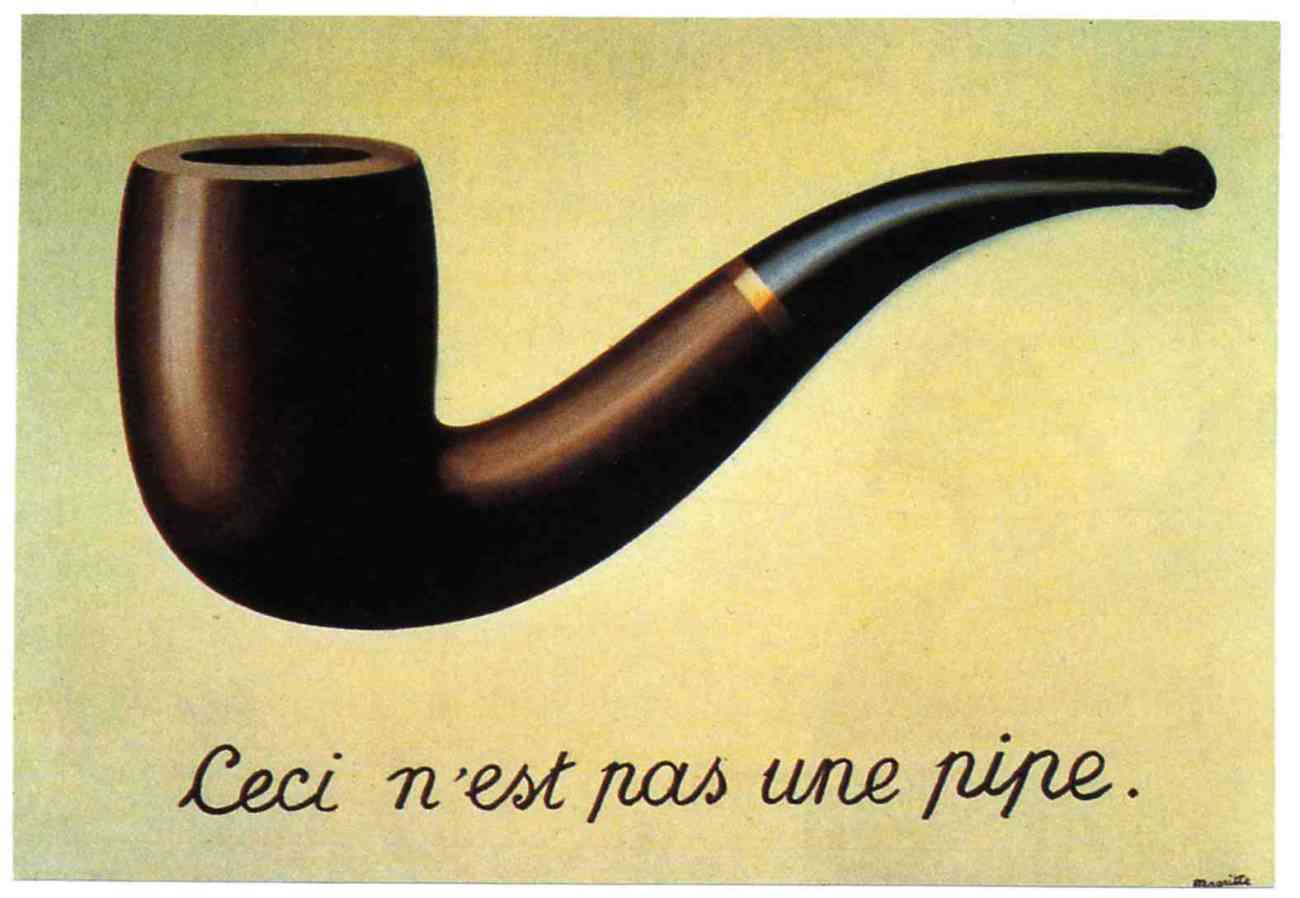
Nope. Not a pipe. Just an image of one.

Nope. Not a pipe. Just an image of one. Magritte is the bomb.