The Troika Collective Presents Belarusian Dream Theater Vancouver

Poster design by Liam Griffin

Poster design by Liam Griffin

On Tuesday, March 25, The Troika Collective, in association with Ensemble Free Theater Norway (EFTN), will present the Vancouver iteration of the Belarusian Dream Theater project in Studio 4270 at SFU Woodwards.

From the announcement of the project in the Belarusian Review:

Belarusian Dream Theater [is] an international performing arts event supporting freedom of expression in Belarus, conceived by Brendan McCall, Artistic Director of EFTN.

On 25 March 2014, Belarus’ Freedom Day, partner theaters will present readings and/or performances of new short plays about Belarus simultaneously in Australia, Belarus, Denmark, Canada, Georgia, Germany, Greece, Hungary, Italy, Norway, Poland, Ukraine, and the United States.

[…] The hope is that this coordinated cultural event will stimulate a greater knowledge and interest in Belarus by international audiences, journalists, and artists.

So why is it important to know about what is happening in Belarus? Before becoming involved with this project, I must admit that I had not thought about Belarus in a long time (perhaps not since passing through it on a train when I was ten years old). I have, like many people, been keeping an eye on the political situation in Ukraine. Meanwhile, news from Belarus has been comparatively quiet.

As it turns out, that is because the Belarusian government has, for many years, severely restricted independent expression through a combination of legislation, intimidation, and force. Based on information from Amnesty International, the protests that have rocked Ukraine in recent months would likely not be possible in the political climate of Belarus today, especially given the country’s “Law on Mass Actions”:

In 2011 weekly “silent protests”, where groups of people throughout the country would stroll wordlessly, applaud or use their mobile phone alarms simultaneously, saw participants beaten, sentenced to administrative detention or fined.

The largest demonstration in the country’s recent history, following the presidential elections in December 2010, was suppressed with unprecedented violence. When police moved in to disperse it in the centre of the capital Minsk over 700 people were detained and many, including by-standers, were beaten and wounded. Four prisoners of conscience Mykalau Statkevich, Pavel Sevyarynets, Eduard Lobau and Zmitser Dashkevich remain in prison in connection to the demonstration to this day.

[…] Peaceful protesters are frequently sentenced to fines or short periods of detention for violating the Law on Mass Actions or for minor offenses such as swearing in public. Pavel Vinahradau, a member of the youth political movement Zmena (Change), spent a total of 66 days in detention between 30 December 2011 and 12 December 2012 on eight separate administrative convictions, all for minor offenses such as swearing or violations of the regulations for public meetings and pickets.

And it isn’t only protesters who are finding their freedoms of expression curtailed. Citizens wishing to join or create an independent organization (for support, to express an identity or opinion, etc.) must be sure the organization is registered with the government and meets the government’s strict registration requirements. Activists who have been deemed to be acting on behalf or as part of an unregistered organization face prosecution.

So where does Ensemble Free Theater Norway, the Belarusian Dream Theater playwrights, The Troika Collective, and the rest of the companies participating around the world come in? Well, though many of these plays could not be performed in Belarus (or at least not without considerable risk), they can be performed here in Canada, our actors and directors can speak without fear of reprisal, and we can listen. We invite you to join us for an evening of theatre, music, and hopefully, social good.

The Vancouver performance of the Belarusian Dream Theater project will take place on Belarus’ Freedom Day, March 25, at 8:00 p.m. in Studio 4270, SFU Woodwards. Admission is by donation (though no one will be turned away for lack of funds), with proceeds benefiting the Troika Collective’s operations. If you wish to support free expression in Belarus, proceeds from the sales of the plays being read/performed around the world as part of this project will go to Amnesty International. You can also make a direct donation to Amnesty International online at Amnesty.ca.

Disclosure: I am the co-artistic director of The Troika Collective, along with founding co-artistic director Aliya Griffin. The Troika Collective is a registered non-profit.
My Rights to Write (and What)

Broadly speaking, at least here in fairly progressive, egalitarian-ish, freedom-of-speech-y Canada, my right to write just about whatever I want, however I want, is not in dispute. Which is great for me, because when I cannot communicate or am not being listened to, I shrivel up inside and a little part of me begins to die.

Which is why it is important to consider both what I legally have the right to write and/or publish, and what I should MORALLY have the right to write and share.

Legally, I have the right to publish just about anything except hate speech, another person’s work, recommendations that people cause harm to themselves or others, or slander. Fair enough. I don’t want to write any of those things anyways.

Morally, the waters of artistic freedom become quite a bit muddier. Do I, for example, have the moral right to incorporate recognizable traits of real people in fiction, in doing so assuming or inventing their motives and private thoughts? What parts of a person truly belong to them? Their life story? Their thoughts/feelings? Their physical appearance and behavioural ticks? What parts of a real person, place, or experience am I allowed to use? Assuming that some of my work will always adapt or be influenced by people, places, and experiences that I encounter either in my own life or through the media, what would be the more moral course? Representing people, places, and experiences exactly as I perceive them (or exactly as they perceive themselves), or using artistic license to transform these things, creating something that I can bend to my narrative? What are the responsibilities that come with my rights to write, and to seek publication of this writing?

I think any conversation surrounding what I, as an artist, have an ethical green light to incorporate into my work needs to begin with a recognition that I am writing from a place of comparative privilege. Though I am a woman, and young (two strikes against me in a western literary canon still dominated by old males), there are many cultural privileges that go along with being white, heterosexual, cisgendered, middle class, and dare I say, reasonably photogenic. Because of this, there are also some limitations as to what I can ethically and skillfully represent in my work.

For example, can I ethically or skilfully represent (in fiction) the experience of a culture or race different from my own? Maybe, but doing so would require not only careful and comprehensive research, but also an examination of my own motives for telling a story that is not mine. Do I want to tell this story because I feel a kind of personal connection to it, and feel that this is the story that is burning inside me to be told? Or do I want to tell this story because I want praise for writing about a “difficult” subject, or because I just want to expose the “beauty” of the Other, or because I believe that the true owners of the story are not equipped to tell it themselves? If my motives fall into any of the latter categories, I am not “engaging” with material or “exploring” it–I’m exploiting it. And that’s not okay with me. As I mentioned, when I cannot communicate or am not listened to, part of me shrivels and dies. Many cultures and marginalized groups have for centuries had the stories ripped from their mouths, and I don’t want to be part of the machine that consumes others’ stories, but never listens.

In some ways this is very freeing. It liberates me from the paralyzing idea that good or provocative writing cannot come from inside me, that it must be centered in a world (real or imagined) that is more “exotic”, more action-packed, or more thrilling than the one I inhabit. It also liberates me from the idea that my writing must contribute to some kind of social good by deliberately telling the story of a marginalized group. Don’t get me wrong–stories that have been relegated to the fringes need to be told, however, as my old theatre school chum (and literature PhD candidate) Lucia Lorenzi pointed out recently, what makes us think these marginalized groups aren’t capable of telling their stories themselves? If I want to do social good through my engagement with literature, it may, in fact, be a great idea for me to get out of the way and let people tell their own stories, and then, to make sure I read them. It is not necessarily for me to be the privileged mouthpiece of an unprivileged group. Maybe I just need to listen.

That said, I still want to write about that which intrigues and moves me. And even if I take some obvious topics out of the equation (at this time, for example, I do not feel even remotely equipped to tell a story about Indigenous people and the legacy of colonialism, or about the slave trade, or the effects of racism in the southern United States), I still find there is so much to explore that I haven’t personally experienced. I don’t personally know what it is to be physically or mentally ill. I don’t know what it is to be pregnant. I don’t know what it is to experience physical violence. I don’t know what it is to grow up without a parent. I don’t know what it is to be a parent. I don’t know what it is to be a man (or a boy). I don’t know what it is to be elderly, or to look a different way, or to be illiterate, or to be homeless. Does this mean I cannot tell stories that feature characters that have had these experiences? Am I relegated only to stories of white middle-class navel-gazing?

I hope not. I hope that when I write the empathy that I feel for my characters will allow me to tell their stories with fairness and grace, neither sanctifying nor condemning them, never relegating them to the role of the “mystical African American/Indigenous person/elderly Asian person/prostitute with a heart of gold/homeless person” who swoops in and solves the whiny protagonist’s personal crisis with some grand/folksy/poetic pronouncements on life. I hope that my ability to feel pain, fear, doubt, shame, anger, disappointment, love, joy, and grief will guide me through, even through those stories I’ve never experienced myself. If they can’t, I can’t see how I will grow as an artist.

I must remember that no one (not even a biographer) writes real people. They write a representation of them. There is art there. And art, at least in my practice, comes with both aesthetic and ethical responsibilities that I have no desire to eschew.

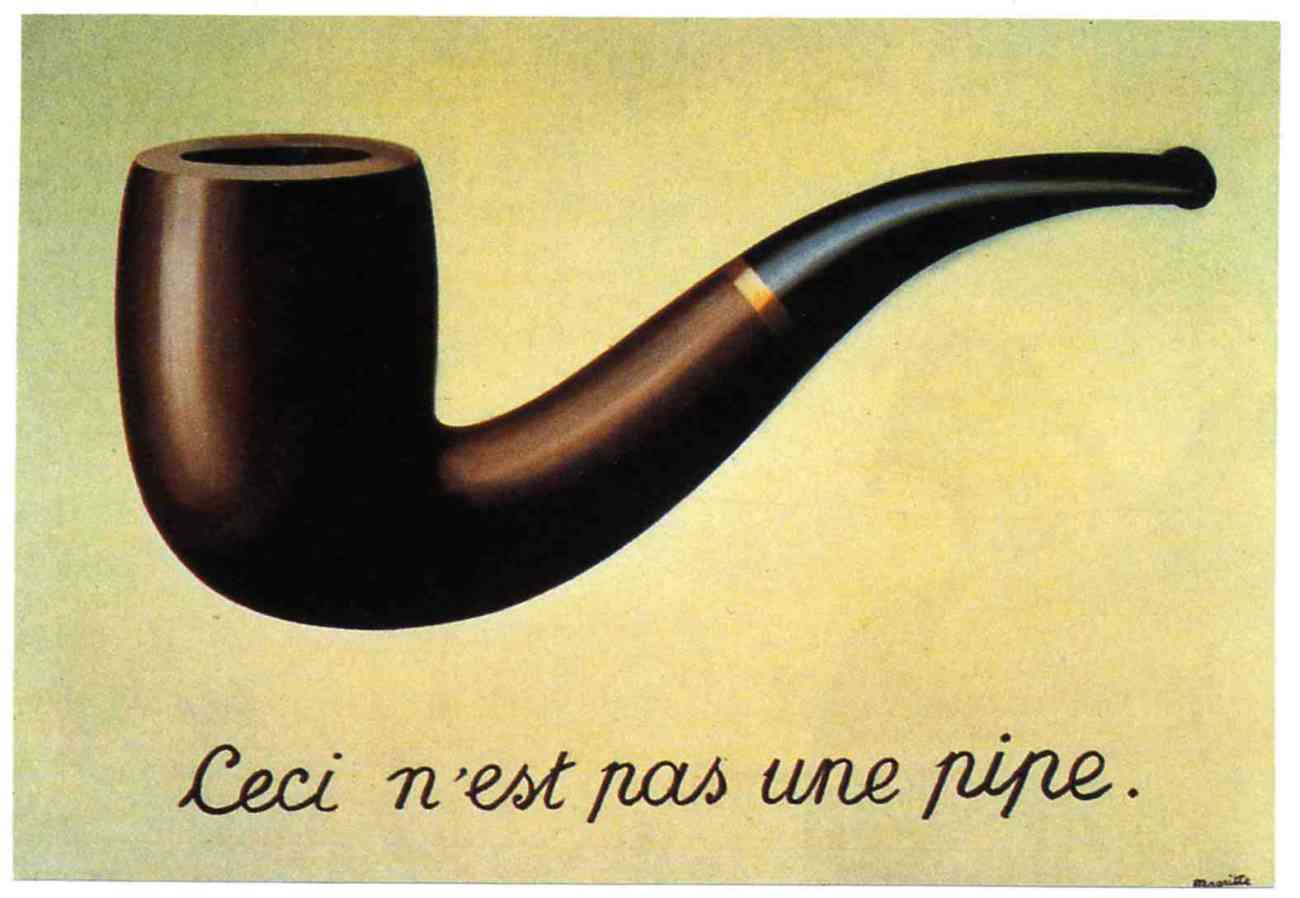
Nope. Not a pipe. Just an image of one.

Nope. Not a pipe. Just an image of one. Magritte is the bomb.

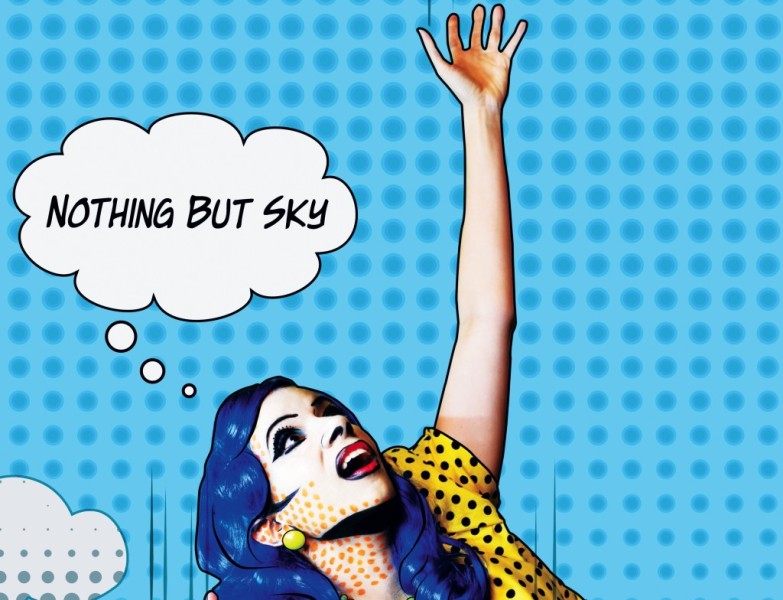
“Nothing But Sky” Delivers Nothing But Promise

nothingbutsky-783x600

From now until March 2, The Only Animal invites you to step into the world of their latest production, Nothing But Skya comic-book world of heroes and villains, lovers and underdogs, flesh and ink. Written and directed by Kendra Fanconi, Nothing But Sky explores the true story of Joe Shuster and Jerry Siegel, the artist and writer behind the legendary Superman, and Joanne Kovacs, the original model for Lois Lane.

Feeling small and powerless in a big and uncaring world, Joe and Jerry dream up Superman–the ultimate champion of the underdog and protector of the weak, a man who can catch bullets in his bare hands and who disguises himself as a regular schmuck (i.e. bespectacled Clark Kent) to avoid discovery. Together, the pair create a hero stronger, better, and braver than they are, and dream of blue skies and smooth sailing for themselves and for their creation. Unfortunately for the friends and artistic partners, nothing is as black and white as their comic-book fantasy: DC Comics (to whom Joe and Jerry sell the rights) wants to control Superman (and his profits), and both men find themselves in love with their Lois Lane, a model named Joanne Kovacs. For Joanne’s part, she wants to be loved for who she is; a person in her own right and not just a stand-in for a paper and ink character.

The most breathtaking aspect of Nothing But Sky is most certainly the blending of comic-book animation with live staging. Projections create both the “real world” of the characters and the world of their creation. Eventually, for artist Joe especially, the lines between the world he has drawn and the world as it is begin to blur until we are not sure where he truly lives. The execution of this unique and challenging staging by the actors, artists, and technical crew is a laudable accomplishment. Nothing But Sky certainly does deliver promise–the promise of new horizons in theatre and new worlds to explore.

Unfortunately, not all of the play’s promises are realized. Though the performances are sharp (the comic-book action sequences especially), the story of Nothing But Sky seemed bigger than the four-person cast’s ability to carry it. Huge amounts of time (i.e. years) pass in a moment, with very little to anchor the audience or prepare it for this leap forward. Most notably, the character of Jerry Siegel comes off as sexually aggressive, socially selfish, and possessed by a delusional perception of his own artistic abilities. With so little to like about this character (despite actor Robert Salvador’s best efforts) I found that I cared very little about the betrayals and injustices he experienced, which is, I think, contrary to Fanconi’s intentions.

That said, Nothing But Sky is still absolutely an experience worth having. The production is a fantastic achievement by everyone involved, by turns magical, humourous, and sad. The technical wizardry alone is worth a look, but the way it is used to support the play is what makes it matter. With such an interesting story, such a beautiful set, and such solid performances, I really really wanted to feel my heart leave my chest. Though it didn’t happen as often as I would have liked, there are moments that truly drew my heart from my body, and those moments are definitely worth watching.

Nothing But Sky is playing in the Faris Family Studio at the Scotiabank Dance Centre until Sunday, March 2. Tickets are $25 ($15 for students on February 26 only) and can be purchased online.

Disclosure: My guest and I attended the opening night performance courtesy of The Only Animal. I was not asked for a review and of course all content remains my own.

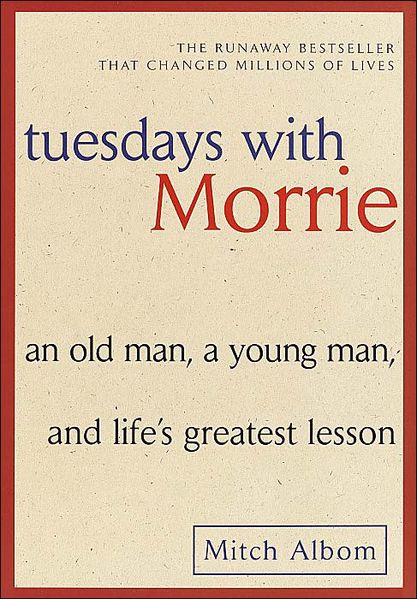
Nifty Reads: “Tuesdays with Morrie”

417px-Tuesdays_with_Morrie_book_coverThere is a small stack of books in the lunchroom at my office topped by a paper sign that says “Free” (it used to be a larger stack but it seems people, myself included, have been taking advantage of this anonymous book donor’s offer). One of the books was a small, unassuming paperback of Mitch Albom’s bestseller Tuesdays with Morrie. I knew the book was famous, I knew its size was perfect for easy carriage in my work bag, and I liked the look of it. So I took it, and I read it, and I guess I’m glad I did.

The book is both a memoir of the author’s relationship with his subject, and a series of life lessons imparted by the author’s late professor (and beloved friend) Morris “Morrie” Schwartz, collected on weekly (Tuesday) visits as Morrie’s body succumbed to ALS, a fatal and debilitating illness with no cure.

To be frank, a triumph of literature this ain’t. The language is so simple a fifth grader could read it. The book offers no literary surprises, no elegance, and only a very loose structure to keep it all together. As I began reading, I thought, how simplistic. How sentimental. How weird (this one was in reference to Morrie’s strange teaching methods in his sociology courses at Brandeis University). And yet….and yet.

This is a book the author approaches with no ego, only a tremendous love for his friend and respect for the ways in which he chose to live and chose to die. Yes, the book is simple. Yes, the book is emotional. But Albom is so earnest about this project, so sincere in his desire to share what his professor taught him, that Tuesdays with Morrie, the pair’s “final thesis” together, managed to win me over despite my snobbish cynicism.

I won’t bother sharing Morrie’s lessons here. To list them out as separate from the conversations that engendered them really would over-simplify them, and make them appear to be nothing more than the usual “love thy neighbour, love thyself” philosophies we encounter on motivational posters and internet memes and in self-help books every day.  The fact of the matter is that nothing Morrie had to say about life was anything I had not already heard or read before. The important thing is that he said them while he was dying, while his body was literally decaying from the legs up. Facing imminent death preceded by incredible pain and complete helplessness, Morrie still believed in the importance of love, gratitude, and forgiveness, and believed that he was a lucky man.

For me the significant and profound parts of the book are not to be found in what Morrie said, but in the ways in which Albom’s interactions with him in his dying months demonstrate the principles he wished to share. During his first Tuesday with Morrie, Albom is sheepish, not having seen his old professor in more than a decade (despite promising, after graduation, to keep in touch). By the final weeks of Morrie’s life Albom is massaging cream into Morrie’s feet (paralyzed by ALS but still, cruelly, perfectly able to feel pain and discomfort). He is helping his friend get comfortable in his chair (no small feat once Morrie is unable to move his body on his own), learning to hit his professor’s frail back to help dislodge the phlegm that threatens to choke him. Albom learns not to be disgusted by the smell of his friend’s dying body, or by the colostomy bag that sits on the floor beneath his chair. He hugs his friend, holds his hands. He kisses his old prof’s cheeks, without embarrassment or awkwardness. No money, status symbol, or prestigious career could have given Morrie the love he received at the end of this life. It was there for him because he was loving.

As I look forward to my wedding in August and the marriage that will follow it, I think about what it truly means to love and support another person, as if their joys were my joys and their pain were mine. I think about the fact that there is no way of knowing what the future will bring and although I hope for a bright one, there will almost certainly be dark times (not too dark if I’m lucky). Throughout the book, Morrie continuously, almost feverishly, quotes the poet W. H. Auden: “Love each other or perish,” Morrie says, and I’m beginning to understand it now. We enter life completely dependent upon the care of others, and many of us will exit in the same condition. Without love, how could any of us survive?

Now that I’m finished reading the book I understand why its language is so simple. Tuesdays with Morrie is an accessible book, and it should be. I don’t know if I will ever read it again (it was quite sad) but I’ve decided to keep it around. One day, maybe I’ll have a teenager I can give it to. I can say, “Here, read this book. It’s not long and it’s not hard. When you’re done, you tell me if your allowance is so important.” I look forward to it.

The Cruelest Song I’ve Never Heard

When I was in grade seven, my English class undertook a formidable Poetry Unit. Our anthology for this particular unit was filled with what I now understand were very good poems, by William Carlos Williams, e.e. cummings, and the like.

It also, inexplicably, contained the lyrics to this folksong, which is the cruelest song I’ve ever come across:

Housewife’s Lament

One day I was walking, I heard a complaining
And saw an old woman the picture of gloom
She gazed at the mud on her doorstep (’twas raining)
And this was her song as she wielded her broom

Oh, life is a toil and love is a trouble
Beauty will fade and riches will flee
Pleasures they dwindle and prices they double
And nothing is as I would wish it to be.

There’s too much of worriment goes to a bonnet
There’s too much of ironing goes to a shirt
There’s nothing that pays for the time you waste on it
There’s nothing that lasts us but trouble and dirt.

Oh, life is a toil and love is a trouble
Beauty will fade and riches will flee
Pleasures they dwindle and prices they double
And nothing is as I would wish it to be.

In March it is mud, it is slush in December
The midsummer breezes are loaded with dust
In fall the leaves litter, in muddy September
The wallpaper rots and the candlesticks rust

There are worms on the cherries and slugs on the roses
And ants in the sugar and mice in the pies
The rubbish of spiders no mortal supposes
And ravaging roaches and damaging flies

Oh, life is a toil and love is a trouble
Beauty will fade and riches will flee
Pleasures they dwindle and prices they double
And nothing is as I would wish it to be.

Last night in my dreams I was stationed forever
On a far little rock in the midst of the sea
My one chance of life was a ceaseless endeavor
To sweep off the waves as they swept over me

Alas! ‘Twas no dream; ahead I behold it
I see I am helpless my fate to avert
She lay down her broom, her apron she folded
She lay down and died and was buried in dirt.

Oh, life is a toil and love is a trouble
Beauty will fade and riches will flee
Pleasures they dwindle and prices they double
And nothing is as I would wish it to be

It’s a pretty gloomy song without reading much into it, and you could take it at face value as a “Housewife’s Lament” (i.e. a complaint about the futility of housework) and no more, but for me the clincher, the part that makes this poem/song SO DAMN CRUEL, is this verse:

Last night in my dreams I was stationed forever
On a far little rock in the midst of the sea
My one chance of life was a ceaseless endeavor
To sweep off the waves as they swept over me

This part is cruel because its truth is inescapable. All of us, from the moment we are born, are stationed on a little rock , a tiny island of life surrounded by the ocean that is our non-existence, stretching out endlessly before and after us. The only way to stay alive is to struggle, without stopping, against death. The only escape from this struggle is death. Cheery stuff, huh?

In his essay “KING LEAR or ENDGAME” (in his fabulous book Shakespeare our Contemporary), Jan Kott differentiates tragic drama from that which is simply grotesque. In tragic drama, we find “the necessity of making a choice between opposing values”. Kott uses the example of the Greek heroine Antigone, who must choose between her uncle and her brother’s memory, between obeying the king’s law but breaking divine law, or obeying divine law but bringing about her own death. Unfair, cruel even, but morally compelling and in some ways, redeeming.

In grotesque drama, “both alternatives of the choice imposed are absurd, irrelevant, or compromising. The hero has to play, even if there is no game. Every move is bad, but he cannot throw down his cards. To throw down his cards would also be a bad move.” (135).

Like the hero in a grotesque play, the lamenting housewife in the folksong is trapped in an absurd game. Her options are to spend a hateful life in hateful avoidance of hateful dirt and hateful decay, or to die, submitting to the dirt and decay she hates and fears. There is no redemption in either her struggle or her death. There is no “winning”.
It reminds me of playing tag as a kid. My fear of being caught was always so great that spending time NOT being caught was a torture. My only escape from this fear was to allow the thing I was afraid of, to allow myself to be caught. Despite being a decently fast runner, no matter what I did, I lost.

At least I had the choice not to play this particular game. I could play on the swings if I wanted to, or read a book. We, these little souls stationed on the rock that is our living bodies, do not have this choice. We must eat and sleep and clothe and shelter ourselves to stave off death. We must search for love and meaning because death makes our existence too painful without it. And at some point we must die anyways. Yes, we technically do have the choice to stop playing this losing game, but the only way to stop playing is to lose. Are you miserable yet?

Kott writes of Gloucester’s attempted suicide in King Lear:

Gloucester’s suicide has a meaning only if the gods exist. It is a protest against undeserved suffering and the world’s injustice… Even if the gods are cruel, they must take this suicide into consideration. It will count in the final reckoning between gods and man. Its sole value lies in its reference to the absolute.

But if the gods, and their moral order in the world, do not exist, Gloucester’s suicide does not solve or alter anything. It is only a somersault on an empty stage. (149)

[…] If there are no gods, suicide makes no sense. Death exists in any case. (151)

Unlike the character of Gloucester, the housewife in the folksong really does die, but as with the characters in King Lear, there is no redemption for her, and no dignity. She dies defeated, an old woman in the dirt, ridiculous. In death she ends her struggle but also makes pointless her every effort prior to dying. She cannot win. If she was a teenager, she would probably cry, “I wish I’d never been born!”

(The playwright Samuel Beckett understood this grotesque concept in cold, terrible clarity. Plays like Act Without Words and Waiting for Godot are enough to make you want to bang your head against a wall. Forever. Which is why I read those plays once and never read them again.)

Of course, if there IS a divine presence in the universe, then there truly is an audience for the housewife’s lament, and there may be some meaning for her when her life’s deeds are totted up. But that, as even the quite religious must occasionally feel in their darkest moments, is sometimes a very big if. And it is one of the reasons that I could never be atheist. The spectre of existence with no meaning for my eventual non-existence is too horrifying for me to cope with. So I believe what I like to believe. I believe what feels right and comforting to me. And I hope that it is a pattern that will allow for whatever events will occur in my life. And I hope that nothing bad will happen that will test this pattern. And I hope and hope every day.

And I am on my rock. And I am sweeping at the waves with all my might. And I have no idea, no REAL way of knowing, what is in that ocean of non-existence that surrounds me. And that is frightening and paralyzing and is enough to make a person crazy.

But you know what? Sometimes I don’t mind. Sometimes, most of the time generally, the work is a gift. The load is lightened by the songs in my heart, and the people who are holding my hands. I forget what I am doing. I forget to see the struggle as a procrastination of death and instead as a miracle, some kind of accident maybe, a spark in the darkness that is small and weak, but holds down its tiny island of light for as long as it can just the same. The world is full of people (children, for example) who don’t resent the ocean because they don’t perceive it as a threat. They are too busy exploring their rock, however big or small it is. Those same things that stave off death and fear (food, shelter, love, art) are also immensely pleasurable, comforting, and meaningful in themselves.

And you know something else? I like sweeping. I always have. And someday (hopefully a looooong way off) when I finally throw down my broom, or have it dashed from my hands by a fateful wave, I won’t need any truth but the ones I carry with me: I am fortunate. There’s been so much love. This is a gift. Thanks so much.

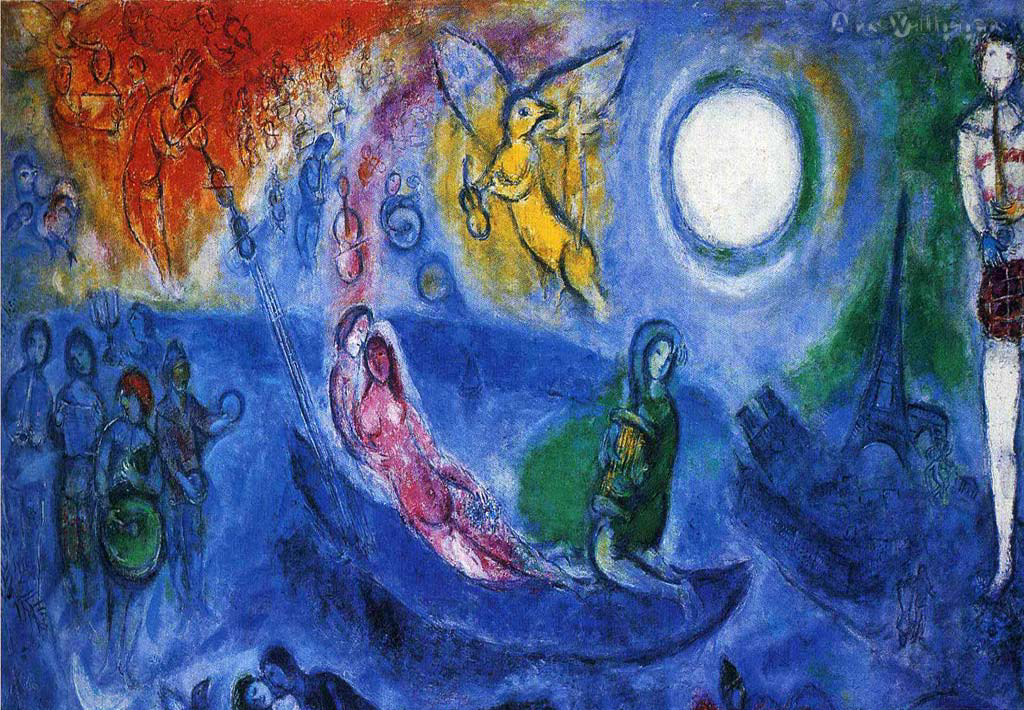
marc_chagall-painting

Here’s some beautiful Chagall so you don’t get too sad.

P.S. To any friends or family members who may be concerned by my choice of topic this week, I am very well and having a pretty good time. I have more time to read nowadays and think about literature and I just really got into remembering this poem, and also remembering that Jan Kott is the shit.

OMG, I <3 LOTR!!!

The-Lord-of-the-Rings-Trilogy-posterThis post is late in coming, and the reason for this is that I have spent the majority of the past week watching the film series of J.R.R. Tolkien’s The Lord of the Rings (and related material) instead of doing anything else.

It went something like this: TC and I watched The Hobbit: An Unexpected Journey on DVR before I went home to Saskatchewan for the holidays (actually, we watched it once when I was really hungover, and then I wanted to watch it again when I didn’t have a headache, so we did, and then I wanted to watch the dwarves singing again, so we did, and then we just kept it playing on a loop while we cleaned our apartment, so we basically watched The Hobbit: An Unexpected Journey for about a week, on and off). When I got home for the holidays, my little sister mentioned she had just seen The Hobbit: The Desolation of Smaug in theatres. This in turn inspired her to decide to watch the entire Lord of the Rings film trilogy (the regular-length one, that we had bought for my dad years ago) over the rest of our holiday, and I was only too happy to join her.

My sister popped The Fellowship of the Ring into the VCR (yes, that one was on VHS) last Thursday and I watched half of it before I managed to peel myself away to go “ice fishing” with my friends (“ice fishing”, as it applied to us, meant bundling up and sitting in lawn chairs on the ice and just shooting the shit while other people fished; alcohol was also involved). When I got home to my parents’ place that evening my sister and my dad and I watched The Two Towers and then The Return of the King two days later (which I only half-watched because I was also playing a game of Settlers of Catan at the same time).

When I got back to Vancouver on Sunday night TC was jealous of all of my LOTR watching and then he wanted to watch the trilogy but I said no, because I’m busy (and I actually am, I swear). When our New Year’s Eve plans fell through on Tuesday we booked seats at the Scotiabank Theatre to see The Hobbit: The Desolation of Smaug in 3D UltraAVX with Dolby Atmos surround sound and popcorn and Skittles.

And then when we got home that night TC put on his extended version of The Fellowship of the Ring (2 DVDs! No wonder I fell asleep!) and we rang in the New Year somewhere around the time that Bilbo was thanking people for coming to his birthday party.

And we have been watching the extended version’s extensive bonus features ever since. And they’re great.

We’ve also been looking up the lore on Wikipedia because I had a few questions the movies weren’t answering for me, including:

  • What is Sauron? Like, what kind of being? (He’s the same kind of magical being as Gandalf and Saruman, just very powerful and fairly evil and in the three LOTR books, as far as I can gather, he does not have an actual body).
  • What is the Land of the Undying where all the elves go? When Bilbo and Frodo go there at the end of Return of the King, are they actually dying? Is the Blessed Realm the same thing as “heaven”? (No. It is not the “heaven” that humans and hobbits might go to when they die. Gandalf and the elves who sail there will not die and will stay there forever, but the hobbits are only there temporarily for restorative purposes and will someday die).
  • Why is Sauron such a jerk? What’s his deal? Why does he want to control everything and make it all shitty and grey and on fire? (In the beginning, Sauron wasn’t a bad ol’ magical being, but he really liked order and really liked getting things done quickly. This meant he wanted to do things his way. Eventually, having the ability to do whatever he wanted they way he wanted, i.e. the ability to exercise his will, became an end in itself. Which makes people/magic beings pretty damn awful).
  • What the hell are orcs and where do they come from? Do they actually BREED? If so, where are the lady orcs? (I still don’t know the answer to this one so tell me if you know).

The funny thing is, if you asked me to make a list of things I love, or even things I really really like (the kind of things I could imagine myself devoting a week’s worth of free time to), I would never dream of putting The Lord of the Rings on that list. I’ve never even read the books (I tried, in my youth, but Tom Bombadil sang his song for PAGES and that was enough for me). I’ve read The Hobbit and from what I recall I liked it. It was a fairly straightforward tale of adventure (which means it definitely didn’t need three whole films devoted to it, greedy money-grubbing Hollywood execs and rabid Tolkien devotees notwithstanding) but I didn’t like it as much as other childhood stories. I honestly never thought I was that into Tolkien having read more fanciful pieces like Roverandom as well and thinking, “M’h”.

But there’s something different about the world of LOTR that makes it so much more than a work of fantasy. The history of Middle Earth (and surrounding vicinity) is so detailed and so complex, with languages having different dialects as well as changing with time the way real languages do, so much so that even characters like Sauron, who in the entire LOTR is called no other proper name but Sauron, as far as I can gather, has had five or six other names in the history of “creation” in this universe. The epic LOTR, with The Hobbit included, is just a tiny fraction of the history of Tolkien’s world, just as the entire 20th century is just a tiny fraction of the history of our own. It boggles the mind. It makes me feel like Tolkien didn’t invent this lore, he recorded it. As if Middle Earth already existed somewhere and Tolkien’s the scholar and explorer who discovered it and as he explored more of the kingdoms and became more familiar with its legends he recorded them and passed them on to us. In order to create what he did, Tolkien was clearly a genius, and was clearly involved in this world of his own making. Which is probably why it’s so involving.

And then Peter Jackson made some movies, and the elf cities are so beautiful, and Merry and Pippin and the adorable Gollum/Smeagol are my favourite characters (I don’t even like Frodo, what a drag). And the music is so dramatic, and the battles are so exciting, and the rest is history. The History of Lauren, in her Pajamas, Watching Her TV, that is. An epic tale of addiction and occasional self-loathing. Or maybe the power of the One Ring has got me too, and I’m just consumed by it, and in a hundred years I’ll be grey-skinned and big-eyed and singing adorable songs about eating raw fish, “so juicy sweeeet!”

Which would maybe be worth it?

I need to stop looking at things on the internet

Internet wallpaper from fecoo.com

Internet wallpaper from fecoo.com

This is probably a hypocritical statement for a blogger, but it’s true: I need to stop looking at things posted on the internet.

If you, like me, have a smartphone and/or a Twitter account and/or a Facebook account, you have probably become aware that you are spending too much time reading or viewing things on a screen and less time doing…anything else. You have probably also become aware that most of what you read/view is neither productive nor enlightening and may in fact be making you stupider (this is speculation, as I am not a psychologist I really can’t definitively determine whether or not anyone is becoming “stupider”).

I have a lot of reasons for feeling this way (and the more I think about it the more reasons I come up with), but generally speaking it comes down to this:

  1. I believe too many things I read/see on the internet, even though anybody with a computer and a high-speed connection can post an article or video on the internet. I mean, I’m doing it right now, and I’m not an expert in anything.
  2. At the same time, because it’s on the internet, I am cynical and skeptical of everything I read/see (especially if it makes me uncomfortable, would require action on my part, or is something I don’t agree with). It doesn’t help, of course, when there is little to no fact-checking or framing of what friends/Twitter peeps post and share. An eye-catching headline about corruption in the TEDx Talks organization, for example, will reel me in, and then halfway through the article the writer will start claiming that vaccines cause autism (they don’t!) and I will realize that instead of cruising the Information Highway for the last ten minutes I’ve actually been riding the New Age Paranoia Crazy Train the whole time.
  3. I have caught myself experiencing FOMO (Fear Of Missing Out) if I am behind on reading/viewing the latest internet meme. As if there’s going to be a quiz on this crap later. Or as if any of my real-life friends and colleagues would think less of me if I hadn’t listened to the digitally-altered audio recording of the crickets that sound like creepy angels (except I have, of course).
  4. I have increasingly caught myself reading comments sections (!), which just leaves me feeling sad and angry that so many people, even in Canada, are so racist, misogynistic, homophobic, inconsiderate (of their fellow humans and their environment), uninformed, and greedy. And annoyed and mystified that so many people, even after at least 12 years of school, are unable to spell or use anything resembling proper grammar.
  5. The vast majority of the posts I encounter are meaningless and their sole purpose is the wasting of time (I’m looking at you, random Buzzfeed lists). This means that something very significant and very detrimental happens: boredom is no longer inspiring. Internet memes/posts/videos, etc. are so easy to access and so facile that I simply maintain my current level of boredom instead of actually becoming bored enough that I want to do something active or creative.

I think the loss of traditional boredom is what troubles me the most because, unlike my other concerns, it can’t be mitigated with critical thinking. Time-wasting posts and memes aren’t deep, and they generally don’t require any critical thinking at all. Or any thinking. Which means I’m just…breathing…in front of a screen…and moving my fingers to click or scroll sometimes. It’s kind of a disgusting state to be in. If I’m that bored, why can’t I read a book or play an instrument or maybe WRITE something for goodness sakes? Why can’t I use my boredom as an impetus for creation or action or even just exposure to good literature or good art?

I’m lazy, and I know this. I love to procrastinate and I tend to avoid doing the creative things I love for fear I’ll start a project and realize it’s not any good (this is why I blog, to keep myself writing even when I don’t feel very talented). The thing is, in the past, extreme boredom would at least lead to notes and scribbles and BEGINNINGS of something creative. Now I just have a data plan and very little to show for it. How sad.

It is for this reason that I am going to try, for the entirety of my Yuletide holiday, to not read a single article or click on a single meme on the internet (I will still be on Facebook because I’m not some kind of holy wizard, but I won’t click away to anything posted). This means no reading blog posts in the airport, or watching Upworthy videos in bed (they seem to be primarily slam poetry anyways, which is not my thing so I really don’t know why I watch them). This means no getting all huffy and incensed over the latest political outrage in Canada or Australia or the U.S. or the Middle East or England or Russia (there is more than enough to get huffy about in my Maclean’s, which I still read on paper). This means no being worried that the fall-out from Fukushima is going to kill us all, or that every single product I put in or on my body is giving me cancer. This means no reading up on this or that misogynistic pop artist, this or that quack celebrity doctor, or this or that train wreck of a film/music video/appearance on Saturday Night Live. I need a break from all of this self-inflicted noise.

I need some quiet. For my brain. We’ll see how it goes.

[P.S. I am aware that I may be contributing to the noise by blogging, but at least my goal here is the sharing of my opinions, ideas, and experiences, and the improvement of my writing, rather than going viral and making a million dollars or some such nonsense.]

“Corporations in our Heads”: the human event of the season

Artistic Director David Diamond. Photo credit: Tim Matheson

Artistic Director David Diamond. Photo credit: Tim Matheson

Technically, Theatre for Living (formerly Headlines Theatre) is a “theatre” company and therefore ostensibly makes “art”, but if you are lucky enough to attend one of their four remaining showings of Corporations in our Heads, you will see what I mean when I say it is a primarily “human” event, rather than a traditionally “artistic” one.

What I mean is that the “art” of it (virtuosity, technical wizardry, etc.) is not the point–we are. The event doesn’t happen without the audience because there aren’t any actors, and there isn’t any script. What the show does have is artistic and managing director David Diamond, who facilitates and bookends the various moments in the event as the audience creates it through their reactions and their questions and their stories. (The theatrical techniques used to make this happen are explained very thoroughly on the Corporations in our Heads website and it’s important to know that although participation by the audience is absolutely essential to the event and the evening is the richer for it, absolutely NO ONE will be forced to participate if they don’t want to).

So Corporations in our Head is a human event. And it’s a great one. Because every night will be different, I can really only describe what it’s like by explaining what happened to me, and what I took away from the experience.

The show (which is just finishing a tour through communities in Alberta and BC), is based on the premise that the corporations that produce and control the food we eat, the drugs we take, the clothes we wear, the phones we buy, etc.  have expanded out of the realm occupied by the products they sell and have taken up residence in our heads. As a starting point, the show identifies and explores the ways that, consciously or not, our decisions are affected (often unhealthily) by the corporate messages in our heads. As the show begins to unpack the messages recognized and shared by the audience (they always come from the audience, not the show facilitators) it is startling to see how easy it is to identify certain brands based on the corporate messages being shared, and the ways in which we, as human beings in a western society, relate to these messages and brands as we would relate to a real person who had a real relationship with us (examples uncovered last night include the “Lululemon best friend” who wants you to have the same sexy yoga-tastic booty-short fun she is having, or the “No Name Brand grandma” who can’t understand why you would spend more money on something of higher quality when you can just buy larger quantities of a poor quality product).

I have a feeling that the experience I had is going to continue to unfold and reveal and provide insights and eureka moments in the days and weeks to come, but at this time the idea that really struck a chord with me is the idea that we relate to corporations and corporate messages the way we relate to real people. As an example, many people in attendance last night, David Diamond and myself included, cited their deeply loyal relationship to Apple products, despite knowing what they know about labour conditions in the factories that make the products, and about what their relationship to technology is doing to their own lives (I have similar feelings of loyalty to products like Gmail and Microsoft Word, and WordPress, the platform that hosts my blog).

But relationships with corporations go beyond loyalty to a brand we like. Even those corporations and brands we don’t like have relationships with us, whether we want these relationships or not. At a moment during the show, I decided to “intervene” in a scene between an audience member playing herself in a grocery store, and another audience member playing a “Dove soap therapist”, a slippery character who refused to identify their true message and position and instead kept trying to convince the poor girl to trust that the corporation knew better. After I took the place of the girl in the grocery store, I quickly became frustrated and realized that for me, this slippery corporation was not Dove soap, it was Enbridge and the federal government, refusing to acknowledge the significant damage their pipeline will cause and instead insisting that they know better what I, as a Canadian, need and want. After Diamond told us we couldn’t speak anymore but instead had to move in slow motion, the scene became one in which I (in slow motion) began kicking and punching the corporate message as it continued to move calmly around me, holding and caressing and glomming onto my leg or my fist or my shoulder but not responding to the passion or clarity of my actions in kind.

It was embarrassing and frustrating and all too familiar. Because this is what frustrates me about the way the government and Enbridge are operating: they can’t say that a spill won’t happen, because that isn’t true, but they refuse to say, “Yes, a spill will happen, and we acknowledge the devastation this will cause, and we simply don’t care.” Instead they plan to commit extreme acts of violence against communities and ecosystems while refusing to acknowledge that this violence is occurring.

After I sat back down I suddenly realized that I also have had this kind of relationship with ex-partners, people with whom I was engaged in a toxic relationship of some kind, and who refused to acknowledge that their actions were hurtful or inappropriate and instead left me railing against the air, powerless and hurt and humiliated. This realization was a punch in the gut. Do corporations really treat me the way bad boyfriends did? I never consented to a relationship with the Harper government or Enbridge, what gives them the right? And how can I fight something that refuses to acknowledge that there is a conflict?

Based on facial expressions, gasps of recognition, and comments from people around me, I don’t think I was the only one having these uncomfortable realizations throughout the night. It was very profound to watch a middle-aged man in a sports t-shirt drop his head into his hands because he saw something in this dialogue that resonated with him. Or to watch audience member MLA Spencer Chandra Herbert, a man with extensive experience dealing with uncooperative politicians and situations in conflict, becoming flustered at his inability to turn off the unwanted bubbly messages of the Lululemon best friend (fun fact: Chandra Herbert studied in the same theatre program I did in my undergrad, though he graduated before I enrolled and I did not know him).

Throughout the evening, Diamond shared anecdotes from his experiences touring the show in other communities, anecdotes which informed the conversation we were having. Like the community where Lululemon products are only available at Christmas, increasing their cache as a desirable gift. Or the community where a mining company insists the town has to approve the mine it wants to operate, or the town will never be able to “compete” (with what? with whom? in what league, the Tournament of Towns?).

What I like about Theatre for Living is that their work doesn’t simply point a finger at the problem and leave us to feel shitty about it. That said, their work also doesn’t provide unrealistic, overly simplistic, or “one-size-fits-all” solutions to the problems being examined. Potential solutions are suggested or enacted by audience members, with varying degrees of success, the point being that we can begin to think about our relationships to these problems differently, not that we will necessarily happen upon solutions during the show. This is an attitude I admired during Theatre for Living’s previous show, maladjusted, which examined the mental healthcare system, and an attitude I appreciate even more when watching a show about an issue more intimately and insidiously familiar to me.

Corporate messages affecting our decision-making is a problem that can’t easily be solved by enacting a piece of legislation or by installing ad-blocking software. Diamond makes it clear that, “The impulse for Corporations in our Heads is not one that assumes we can end corporate messaging. [Corporations] are going to communicate with us…We cannot just turn it all off. We can, however, change our relationship to the messaging.”

What does changing this relationship means to you? You’ll have to discover this for yourself, though if you can make it to an evening of Corporations in our Heads I believe you will be in a good place to start figuring it out. This show will not do it for youwe are the ones who are in relationships with the corporations in our heads. Us. And we are the only ones who can change it.

Corporations in our Heads has only four nights remaining in its run:

  • Thursday, December 5 – Gallery Gachet, 88 E. Cordova St.
  • Friday, December 6 – Vancouver Aboriginal Friendship Centre (VAFCS), 1607 E. Hastings St.
  • Saturday, December 7 – SFU Harbour Centre, Terasen Cinema, 515 W. Hastings St.
  • Sunday, December 8 – Café Deux Soleils, 2096 Commercial Drive

All shows begin at 7:00 p.m. Please call 604-871-0508 for information or to reserve a seat.

If you want to read more about Corporations in our Heads, you may want to check out Theatre for Living’s website or this article on rabble.ca.

Artwork design: Daphne Blanco

Barcode butterfly: Daphne Blanco

Disclosure: I was invited to review Corporations in our Heads by Theatre for Living and provided two seats for the show. I was compelled to participate in one of the scenes by my recognition that something in the relationships I was seeing disturbed me (I was not personally asked to participate), and I think this was an enriching part of my overall experience. The content of this review is, as always, my own, and I give it gladly. I really, really, want people to participate in this important conversation.

Dear English Paper: Go Write Yourself

Dear English Paper,

I’ve been avoiding you, and I’m sorry.

In a way, this is all my fault. I took my first undergraduate English literature course when I was 18 years old and now, nine years later, I still don’t seem to have learned my lesson. I admit that it was arrogance on my part to register in a first-year fiction course with the assumption that I (who have been taking upper level English classes for the past few years) would find it easy. In my defense, I thought it might be interesting to get back to fiction basics, and also, the student bus pass I get when I take courses is SUPER cheap. All excuses aside, we’re here now, and I know it’s childish of me to hide from you.

But does this really have to be so hard? It’s not that I don’t want to write you, I do! In fact, I absolutely love having written an English paper, it’s just that I don’t want to go through the act of writing you, rehashing the same old MLA guidelines over and over, dealing with word counts and pretentious-sounding titles. We’ve been through it all before and every time it exhausts me.

We have some history, you and I. It’s not as though you’ve always been kind to me–I recall several occasions during which I was slumped on the rug between the shelves of the library’s journal collections crying because I couldn’t find the article I was looking for (and when I did find it, it wasn’t useful anyways). There’s been a lot of wasted printer ink. A lot of late nights. I give and I give and I give, English Paper, and it’s never enough for you, is it?

But I don’t want to blame you. You want me to be better. You want me to read more critically, think more deeply, and write more persuasively. I understand this, but it still hurts. In the dead of night when I’m hunched over my laptop and I want nothing more than to close my eyes and sleep or maybe, just maybe, read a damn book for pleasure now and again, it hurts.

I want you to know that the relief I feel every time I hand you off and stop thinking about you is immense. But something keeps drawing me back to you, English Paper, and I just can’t keep myself away–soon we are entwined in the same familiar dance: introductory paragraph, argument, textual support, properly cited references, conclusion… I spice it up with a few clever turns of phrase, something daring, something a bit flashy even, but soon that spark disappears and we go through the motions, plodding along, torturing one another until I’m so sick of you I stop caring whether I’ve done right by you, whether I’ve done the best I could.

Tell me, English Paper, how does the family dynamic affect the characters’ emotional growth in D.H. Lawrence’s Sons and Lovers? And would you say any of them find fulfillment? Why or why not?

But you won’t tell me. You’ll simply blink at me, your blank face transmitting nothing but my own words, words which seem foolish upon reevaluation. You will take my words, and give me nothing.

And yet, here we are. All paths lead to you. It is time for me to conclude this epistle and meet you face to face once more, on the barren white battlefield of our difficult and pedantic love.

Adieu, adieu

NiftyNotCool

DearEnglishPaper

Ridiculously Fun: Fighting Chance Productions’ Rocky Horror Show

rocky-posterIf you’re still a “Rocky Virgin”, it might be time to pop your theatrical cherry with Fighting Chance Productions‘ season opener, the cult classic Rocky Horror Show, playing at the Jericho Arts Centre until October 26 (with “11:59 Midnight” showings October 12th, 19th, and 25th).

Fans of the 1975 film The Rocky Horror Picture Show starring Tim Curry will know what to expect, but those who have never experienced the castle of Dr. Frank-N-Furter on either stage or screen are in for a bit of a shock. This show is NUTS, and it doesn’t make a lick of sense, plot-wise. That doesn’t mean it isn’t a great time. Though the film was originally considered a flop, a devoted group of fans soon made The Rocky Horror Picture Show an engaging and interactive experience through the development of “official” heckles and the use of audience props.

Fighting Chance’s Rocky Horror Show embraces (and often relies) on these traditions to make the performance the fun that it is. The cast members expect to be heckled and are not surprised when the audience showers the stage in rice or playing cards (for the safety of the performers, audience members are asked NOT to bring their own props, and to instead purchase actor-friendly prop bags available at the venue for $5 if they want to throw things during the show). Not knowing any of the traditional heckles, I felt a bit left out, but after doing some internet research it seems that part of the mystique is having to attend a showing or performance of Rocky enough times in order to catch on, and since the heckling is sort of ever-evolving, it’s hard to find a definitive source anyways (the Official Fan Site for The Rocky Horror Picture Show does NOT publish a list, though it does help clarify the Rocky phenomenon). In the spirit of good fun, I do have a few tips to get you Rocky Virgins started:

  • Whenever a character says the name “Brad Major”, yell “ASSHOLE!”.
  • Whenever a character says the name “Janet Weiss”, yell “SLUT!”.
  • Whenever Brad asks a castle resident for a telephone, yell “CASTLES DON’T HAVE TELEPHONES!”
  • When Dr. Frank-N-Furter sighs, “Whatever happened to Fay Ray?”, yell “SHE WENT APESHIT!”
Erika Thompson  and Will Hopkins play a nice young couple who don't know what they're getting into. Photo credit: Devin Kerringten

Erika Thompson and Will Hopkins play a nice young couple who don’t know what they’re getting into. Photo credit: Devin Kerringten

By and large, the performances (by both the leads and the chorus members) are pretty solid. Good singing, good dancing, lots of camp and naughtiness, but one performance truly stands out: Seth Little simply dominates as Dr. Frank-N-Furter, with a voice to match his physical prowess. Every purse of his painted lips or cock of his pencilled eyebrows is both perfectly natural and right on cue. Little speaks, moves, and sings with the ease of a seasoned drag veteran (one would think he wears a corset and heels every day of his life, and who knows, maybe he does…).  I love when a performer takes a difficult role (especially such an iconic one) and makes it seem effortless; Little is a pleasure to watch. A special nod should also go to Erika Thompson for her performance as the ingenue-turned-“slut” Janet Weiss, and Steffanie Davis for her delicious portrayal of Dr. Scott.

Few opening nights are without their technical hiccups and unfortunately during Tuesday’s performance serious microphone issues left some main characters without a mic for several musical numbers (thankfully never Dr. Frank-N-Furter), and overall, I felt the musicians needed to be turned down just a bit so as not to overpower the singing. The draped walls and cavernous ceilings of the Jericho make it a difficult singing space to begin with, so even with a talented cast doing their valiant best, a lot of lyrics were lost over the course of the night. Having worked with (and attended many productions by) smaller theatre companies, I am usually pretty forgiving of technical snafus (especially on opening), however, given that tickets to the Rocky Horror Show sell for $39.25 each ($34.25 for students/seniors), the audience really should be able to expect a fairly high level of technical mastery. I sincerely hope these technical issues are just a case of “Opening Night Murphy’s Law” and will be worked out for the remainder of the run–it would be a shame if they prevented anyone from enjoying what is an otherwise outrageously pleasurable show.

Luckily for Fighting Chance (and for the audience), if any show can handle a few technical disasters it’s the Rocky Horror Show. It’s raunchy, campy, and incredibly interactive. The characters know they’re putting on a show and they can react to technical mishaps with humour and cheek. The audience is never meant to forget that they’re watching a performance so it’s not a big deal if we can see some of the strings being pulled. Technical issues aside, the Rocky Horror Show is absolutely ridiculous and is ridiculously fun to watch.

The Rocky Horror Show runs until October 26 at the Jericho Arts Centre. Tickets can be purchased online or by telephone at 604.684.2787.

Disclosure: My tickets to the Rocky Horror Show were provided by Fighting Chance Productions. The content of the review is my own.