Grey Days and Gratitude

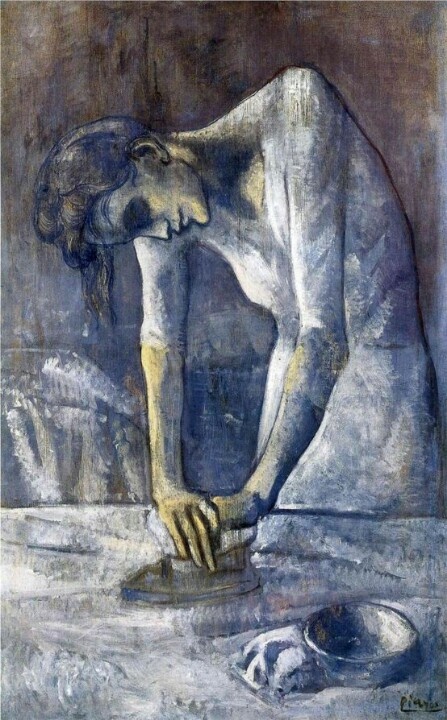
Picasso's "Woman Ironing"

Picasso’s “Woman Ironing”

Maybe it’s because it’s March, and I don’t like March. Maybe it’s because I’m in the thick of a busy busy week. Maybe it’s because I’m trying to plan a wedding for the summer and do not always feel very good at that kind of thing. Maybe it’s because the collapse of human civilization will be “difficult to avoid”, according to a recent NASA-funded study, and it’s all our fault. Maybe it’s because I’m getting older and I don’t yet feel confident, wealthy, or wise enough for the journey. Maybe it’s because there’s rabbit hair all over my couch despite my best efforts, or maybe it’s because that aforementioned “civilization is ending” report makes me feel like an asshole for being sad about anything else. Maybe it’s because I’m overwhelmed by everything I see, hear, read, and feel responsible for (it would be hard not be overwhelmed in the face of either wedding planning or our impending self-imposed destruction).

Whatever the reason, there have been some grey days lately. Days where doubt slowly drip-drips like icy water through your heart and you wonder what the hell you’re doing, who the hell ever made you think you could have everything you want, and how the hell you’re going to pay for all your dreams, because like it or not, most dreams have their price. Days where you worry–about your future, about your choices, about your ability to live in the future you made with your choices. About the situations in which you have no choice. Days when you feel that you’re running full speed just to stay in the same place. Days when the destination is far far away.

You don’t want to feel grey. You want the sun to break through those clouds to light up your path, with angel choirs fluttering past carrying banners that say “You’re on the right track, baby!”. You want to see Results, you want to make Progress, you want the future bright and your heart as light as air.

But that’s not today. Grey is what you have today. Maybe grey is what you have all week, or all month. Maybe that grey is so heavy right now, so persistent, that it deepens and settles in your stomach and then you have the Blues. This week, that’s my lot. I dealt with the usual culprits–I’ve been resting, I’ve been reading, and I’ve been out in the sun–but still I feel a little cloudy on the inside, whether I want to or not.

Back in August 2011, I wrote a blog post entitled And Now the Case for Being Happy. In the post I discussed happiness and the fears and struggles that came with it at that particular time. Of gratitude, I wrote, “To spend your life being merely grateful that things aren’t worse is not joyous living.”

But sometimes gratitude is all you’ve got. For most of us, it simply isn’t possible to be living joyously All The Time. Every day will bring its challenges; every sky will have its clouds. Perhaps I needed to be easier on myself. Perhaps I didn’t anticipate then some of the challenges I would have now. Perhaps there’s no one-size-fits-all, “Ten Habits of Happy People” Buzzfeed-list solution to how an individual human being might feel at any given time, when faced with any number or combination of obstacles. Perhaps feeling gratitude is the best I can do for myself right now.

Am I happy today? Not especially. Was I happy yesterday? No. But was the world beautiful? Was I loved? Am I grateful for it? Yes and yes and yes. Am I still worried? Yes. Do I have any solutions? Not today. But even when I crawl into bed at night with worry gnawing at my chest, I am crawling and worrying next to somebody I love, and I know I wouldn’t trade my problems for anyone else’s.


The Wisest Cat I Ever Knew

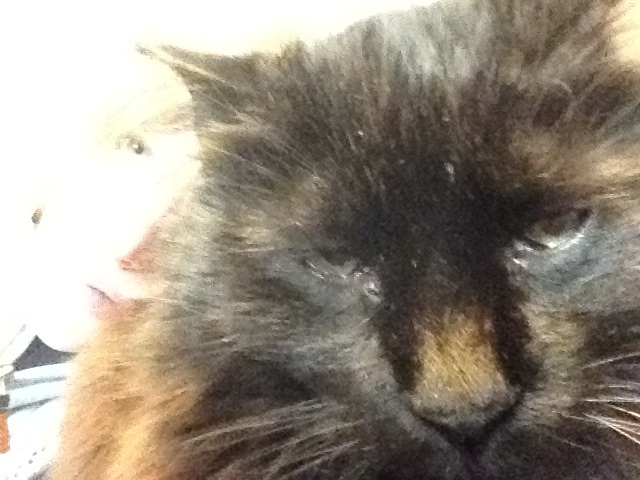
Selfie with the cat. Like a boss. Christmas 2011.

Selfie with the cat. Like a boss. Christmas 2011.

Last week I overhead one of my coworkers mention how great it is for families to have pets because they teach children about death. It makes a lot of sense. Inevitably the family pet will die and the kiddies will understand that sometimes things they love are gone forever. It’s an important lesson to learn before you are an adult, and life in a rural area certainly didn’t waste any time educating me (there was Ashes the cat, and Duke the dog, and who knows how many roosters and rabbits that came and went during the first decade of my life).

Then, of course, I grew  up. And instead of losing pets I began losing people. It is shocking and sad every time. I dream about it, and dread it, and do my best to understand it, and understand too that the older I get, the more familiar I will become with loss and the closer to home some of these losses will be.

At this point you’d think perhaps that going back to square one wouldn’t be so hard. You’d think perhaps I wouldn’t need to relearn the lesson that those things which are very very dear can be lost. You’d think perhaps that an elderly black cat, fat and lazy and more than 17 and a half years old, would not be so hard to let go of. But if you’ve ever had a family pet (I mean REALLY had a family pet) you will know why a grown woman who is just a few months shy of her 28th birthday and who doesn’t even live in her parents’ home anymore is having quite a lot of difficulty coming to terms with this loss.

Minuit the cat was born the spring I turned ten. In a litter of orange and brown tabby cats his plain black fur made him stand out. Maybe that’s why I picked him as “mine” (when our lady cat had kittens we always picked out one that was “ours”, one we’d name and take special pride in until the kittens were all given away). Maybe that’s why my mom picked him too. At any rate, I’m glad she did because even though we already had two cats (which really should be the maximum in any household) we got to keep him.

Despite his later girth and appreciation for relaxation and attention above all else, as a kitten Minuit was anything but cuddly. He’d been born outside, and once his future as a permanent resident in our household was secure, it was up to my sisters and me to train him up and settle him down. This involved long nights during which Minuit raced up and down my bedroom like a hellion, attacking not only his scratch post but also the carpet, the furniture, my stuffed animals, etc.  (I mostly remember that I had to endure this but my little sister insists she did as well so I’ll just say we all did and leave it at that). These were probably the most virtuosic displays of pure wildcat instinct Minuit ever exhibited in his entire life.

Once his career as a wild thing was over, Minuit settled rather comfortably into an early and prolonged retirement during which he garnered affection from family members and guests alike, ate a lot (including taco chips), and spent the majority of his time in various states of repose around the house. He continued to relax, receive attention, and generally enjoy being a cat until a medical incident last weekend left him unable to stand, use his litter box, or eat. Kira the dog came in to lick his face and sit by him for a while, and my parents gave him as much care, comfort, and companionship over the weekend as they could, but at the veterinary clinic on Monday my mother was told that attempting to prolong the life of such an old cat was not a good idea and so, under the care of a veterinarian, Minuit died as he had spent the better part of his life–asleep.

Though his lifestyle could perhaps be described as “unambitious” at best, I believe Minuit’s snoozy demeanor concealed a razor sharp intellect (and a sharp set of claws) which he used to conceive and execute a wise and effective plan for living the Good Life.

These are the lessons I have learned from Minuit, the wisest cat I ever knew:

Be cool.

I think it’s safe to say that a well fed house cat who likes people really didn’t have much to worry about in our house to begin with, and Minuit didn’t worry about anything. What did he care that the other cats were better hunters than him? He still received more attention. What did he care that he was so heavy that having him jump into your lap was like being tossed a furry medicine ball? Everyone still let him sit there anyways and always wanted him to be comfortable (in my house having a cat on your lap is considered a legitimate reason for not getting up from the couch). Unlike some of our other cats, Minuit never got out of joint about new additions to the animal family (like the most recent kitten who spent most of her time following him around and trying to catch his tail). He always knew he’d be king, because he knew how to play it cool.

Pick your battles.

This isn’t a lesson Minuit learned right away. We used to laugh watching this fluffly black shape trying to hunt birds in the snow (he didn’t seem to understand why they could see him no matter how still he was). Soon, however, he realized that irritating birds come and go but that being comfortable and warm all the time was truly the food of life. Despite his size and languor, Minuit sure knew how to make a quick exit when he realized he was going to be thrown outside. He also managed not to be eaten by coyotes, which is a pretty amazing feat in our neighbourhood. This was likely due to the fact that Minuit passed most of his “outdoor” time sitting on the porch and looking annoyed, but I’d like to say his cunning and secret reserve of energy helped too.

Patience is a virtue.

There’s nothing more hilariously tragic than watching a big lazy cat wait hopefully beside his dish on the kitchen floor, just in case, you know, someone decides to maybe put a little milk in there or something. Minuit could, and did, wait all morning. We laughed at him, but the joke was on us: even during those times when we decided that Minuit was “on a diet”, sooner or later one of us would slip him a little something. Worked every time.

Always look on the bright side of life.

This is a lesson Minuit taught more by way of metaphor than by attitude. He demonstrated this wisdom by periodically changing his position in the living room to ensure he was always lying in the warm sun. He seemed content and totally at peace with himself, and watching him, we felt peaceful too.

Sometimes, it’s time to go.

I really thought Minuit would live forever. He lived longer than any of our other pets (even the survivalist cat Tache, who would go on three week excursions in the woods and bring back dead shrews and things to lay on the porch). Every time Minuit got really sick, or stopped cleaning himself, or started pooping on the carpet in my room (for no reason but laziness, it turned out), we thought that maybe he was on the way out. Despite our dire predictions, he would bounce back every time and be the same as ever. It’s not that hard to get “back to normal” when your regular routine primarily involves resting.

But 17 and a half is pretty old for a cat, and when we were all home this Christmas my sisters and I noticed Minuit’s fur getting a bit mangy and his back a bit stooped. His fluffy fur made him seem just as fat but we could feel his bones a little under our hands. Maybe when we gave the pets our last little pats before heading out to the airport we wondered if this might be the last we’d see of Minuit, but in my heart of hearts I secretly believed he’d be one of those creatures that just lived and lived, growing as sage and ancient and unceasing as a river.

But an animal can last only as long as its body, and Minuit, who’d been resting most of his life, was finally too tired. And so my parents let him go.

I don’t mean to anthropomorphize the family cat. Minuit was not a person. My parents were his owners, not his “mom” and “dad”. But that doesn’t mean he was not very very dear to us. Minuit was our cat, and we were his people. I will never have another cat (TC is terribly allergic so owning a cat myself is out of the question) and he can never be replaced.

And I know I’m a grown woman and I know that life is full of much larger wounds than this but as I write this I am crying like child. I don’t care that there are worse things than this. I don’t care that he was old and and it was probably his time to go. Minuit was my cat and I just want him back.

MinuitSunshine

It’s Fun to Believe in Santa Claus

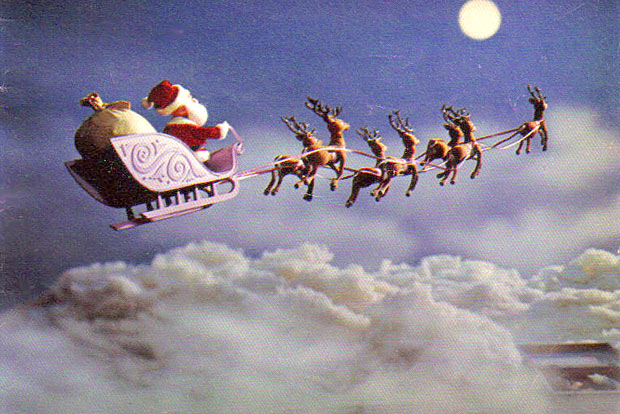
Rudolph the Red Nosed Reindeer sleigh flying through night

As I type this it is Christmas Eve and I am in Saskatchewan with my family. A thick blanket of snow surrounds the house and the temperature outside is -4 degrees Celsius (“So warm!” my mom says). The tree is lit up, that cats are confused, and the rest of my family is playing Settlers of Catan. A peaceful Christmas scene.

Beneath this peaceful façade runs a current of excitement that has been known to me since childhood. As per family tradition, most of the presents were opened on Christmas Eve, but even in a household of adult children, we know that tomorrow morning means full stockings. And full stockings mean Santa Claus.

Perhaps the tone with which we “thank Santa” for our presents is a little more laughing now and a little less earnest, but Christmas Day still involves some surprises that weren’t there the night before and it’s still fun.

I know some parents don’t “do” Santa Claus with their children because they don’t wish to lie to them. Which is their right, I guess, especially when “doing” Santa Claus means trying to explain why Santa gives better presents to rich children than to poor ones. Or trying to explain how Santa is going to get into the house if there’s no fireplace. Or trying to explain why your kid’s new toy says “Made in China” on the bottom even though Santa’s Workshop is in the North Pole. Etc.

In spite of this, I believe in the idea of Santa Claus, of infusing the dead of winter with a bit of magic and whimsy. I believe children have this right to Santa’s gifts by virtue of their being children. Being a kid is tough–their lives are so often bound by adult rules and restraints they neither caused nor understand.  Despite the books and stories and interesting play spaces that surrounded me growing up, being a kid meant that my imagination was curtailed by adults all the time. No, sticking a bunch of feathers to your clothes won’t make you fly; please don’t jump off anything. No, no one else in your grade one class wishes to hear you sing during Math; please sit quietly. No, there’s no treasure buried in our yard; please don’t dig holes in the lawn. Obviously the adults in my life had to keep me safe, but it was still kind of a downer.

Happily, when it came to Santa Claus my imagination was given free rein. When I discussed my different theories regarding how Santa was going to get in the house (we had a chimney but it led straight to a hot furnace in the basement, which was not ideal), or how he was going to find us at my Grandpa Fred’s that year, no adult dared to contradict me. They may not have believed themselves, but they believed there was something worth preserving in my belief. And that was good enough.

Complaints about rampant consumerism aside (especially if kids have an unrealistic expectation of receiving “things”), why shouldn’t a magic old elf want to bring joy to children once a year? If I was a magical elf I would.

Unfortunately, I am not a magical elf, but I do hope someday to be a parent. And when TC and I are parents I hope that Santa Claus will visit our home and bring to our children the same spirit of wonder and excitement that Santa brought me when I was small. Santa Claus still symbolizes generosity, and the right of children to believe in something good, if they want to. I guess the difference between my own childhood and now is that I now understand the extent to which my participation as a parent will be required. I don’t mind. It will only be for a few years, and when those years are over perhaps I will be wishing that I could still believe in the magic, and not just the symbol.

In any case, have a very Merry Christmas, however you celebrate. xoxo

NiftyNotCool Celebrates Three Years

389-3rd-birthday-cake2Being committed to something for one year is a feat. Continuing to commit for a second year is a doubling of that feat. But when you’ve been keeping on for three years you’re kinda just…keeping on. And once you reach this milestone which isn’t a milestone (given that three-year anniversaries of anything are largely unrecognized), you may wish to take stock of what continuing this commitment has meant to you, and what it may mean going forward.

I am doing this now.

In preparation for writing this “three-year bloggerversary” post, I decided to look back at my very first post, published on this site on November 29, 2010. It is called, rather embarrassingly, NiftyNotCool: A Whine and Cheese Introduction (I assume because it’s whiny and cheesy?), and I read it in the hopes of discovering what had changed for the blog between then and now. I expected to laugh at the silliness of me, the way I do at my diaries from junior high or the letter I wrote at 12 to myself at 16.

Instead, I realized with a shock of disappointment that I had lied. Or rather clumsily skirted around the truth with regards to my reasons for starting a blog:

I have recently had to pull myself out of a pit of gloom and crankypants behaviour.

Ah yes. The “pit of gloom and crankypants behaviour.” In other words, I had a broken heart (I was not willing to admit this on the blog at the time because I wanted, and still want, a blog that is not about my love life). Even prior to the breaking of my heart, I was completely and utterly intellectually bored in a way I have never been bored before, and consequently angry most of the time (this was the crankypants behaviour part; the gloom was the sadness that rode on my shoulders for months and months).

In the inevitable period of self-reflection that has followed, I have realized three things. Thing One, I need something to occupy my mind, and make use of the brains that have been growing lazier and lazier since I finished my undergrad.

This part is true. My world had gotten a lot smaller since completing my BFA, and, as I said, I was bored.

Thing Two, spending the day in my pajamas and refusing to leave my bed because the world makes me sad is not helpful to anyone, and the only way my whining could be construed as slightly beneficial to the world is if it is presented in a structured and (hopefully) well-thought-out manner.

This part is also true. As much as I definitely possess a left-leaning bias, and as much as I don’t have the time to research all of the issues I write about as much as I’d like, I have generally tried to be thoughtful in expressing my opinions. I’m not sure if my “whining” is beneficial to civilization at large but since I am blogging about the things that upset me instead of leaving vitriolic comments all over the internet like other angry bored people I believe it has been, at the very least, less harmful than the alternatives.

To address Thing One and Thing Two, I decided that I might like to take a crack at blogging.

This is a total lie. I’d been thinking about starting a blog long before my heart broke and I fell into a pit of gloom, though funnily enough, I had never imagined blogging under my real name until it happened. I guess at that point I felt I had very little to lose and wanted to put myself out in the world and prove that I could be impressive, at least a little bit. At the time, writing the blog and being active on Twitter went hand in hand so I used tweet-ups and blogger meet-ups as excuses to get off my couch and stop re-watching Pride and Prejudice. Even though I am no longer active in this “scene” (I don’t think I’m the kind of person who should have a “scene” anyhow), I am grateful for the distraction and occasional genuine good times Twitter provided. But I digress:

For a 24-year-old I am ridiculously technologically inept, and if I don’t hop on a computer now and use it to do more then check my e-mail and watch the Rick Mercer Report, I might never know how to use one again.

Again, this is untrue. I am not technologically inept. I like technology and use it all the time at work and am generally good with it. Rather than being technologically inept, what I really am is skeptical, especially when it comes to social media. It’s not that I don’t or can’t understand the technology. It’s that I don’t care to be on the cutting edge of its implications–I don’t need it to change my world. I’m happy to let the first users work out the bugs and join the party when it’s in full swing and there’s no getting around it. For example, though I love my iPhone, I’m still not 100% sure that having one has been good for me.

My decision to try writing a blog…brought me around to realizing Thing Three: I am not cool.

The second half of this sentence is true. I’m not cool. But this wasn’t something I first realized when I decided to write a blog, I’d known this for a long time. I decided to write a blog because I am not cool and I felt this uncoolness in a very deep and personal way. The blog is called “NiftyNotCool” in an attempt to own my lack of cool (and because the websites “When this Blog Rolls Over” and “I Am a Dinosaur” were already taken). My social-media moniker has had the unintended consequence of leading people to believe I am more self-deprecating than I actually am, and even Raffi, bless his heart, has taken the time on Twitter to tell me he thinks I’m cool so I won’t feel sad for myself (thanks Raffi!).

Now that I am no longer broken-hearted, and now that I am no longer bored (working full time and studying English on the side have pretty much made boredom a luxury), my original reasons for starting a blog (i.e. “Thing One” and “Thing Two”) are no longer applicable to me. I also have no plans to monetize the blog or use it in any direct way to further a career. So why do I keep on? Make no mistake: blogging is work, and it must be admitted that in a middle of a busy week the last thing I want to do is blog and even now I just wish I was going to sleep instead of sitting on my bed with my laptop heating up my thighs and my restless toes wiggling in my peripheral vision. There have been many times when I have thought to myself, why am I doing this? Why don’t I just stop?

I wondered if my three-year bloggerversary would be a good time to call it quits. Even now, as the clock nears 1:00 a.m., I am wondering if quitting after this post would be a good idea. But I don’t think I will. I have posted at least once a week EVERY week for THREE YEARS and I’m not sure I want to break this streak just yet. Though I don’t always have much time to write (and occasionally not much to write about), when I do have something I really want to say I want my platform to be there for me, and I want the precedent I have set to motivate me. If I decided I would just post whenever the heck I felt like it, I would never post anything. I would keep putting it off and putting it off until the issue was no longer relevant and then feel bad about myself for not saying something I wanted to say. Though my readership is small, I feel a responsibility to them as well. When I read a thoughtful comment or hear from a friend or acquaintance that something I wrote touched them, I feel great, and humbled, and glad that I have this blog.

I recently read a blog post by author Kim Thompson, the gist of which is that if you don’t have anything to blog about, don’t blog. While I am fairly suspicious of the merits of “content generation” for its own sake (especially as part of a business model), I think there is a difference between simply “generating content” as a product, and writing as a process.

My blog is a process. I might not begin the week knowing what I’m going to write about, but I know I’m going to write. The wheels keep turning and as I write I get better at it. Though I’m not happy with everything I post, the fact that it must go up means that I can’t give in to the paralyzing fear of mediocrity, and as an artist, this is one of the most important tools I can have. If I twiddled my thumbs and waited for my masterpiece to come along, it never would–there would be no foundation for it, no process through which to manifest it.

NiftyNotCool is a process. This virtual person who tweets and blogs and tries to be good and oh-so-clever. Her virtual heart isn’t broken anymore and she no longer needs her self-deprecating virtual armor but I’ve become fond of her. We’ve come this far and there’s still no end goal in sight.

Which is fine, I guess. Life is a process and the blog is part of it. It may change someday; it may get a new look or a new name or a new medium. I may not always be able to post as often as I do now. But it’s not really the blog itself that matters, it’s the process.

Three years from the first step, and I think I finally figured out why I keep going.

I’m (Getting) Old(er than I used to be)

You get off my lawn.

You get off my lawn.

A few months ago, I found my first wrinkle. It had stealthily cozied up along the left side of my mouth pretending to be a smile line, but I eventually noticed that it is present whether I am smiling or not. Being a wrinkle. Breaking my heart a little bit.

People who know me may be surprised to learn how vain I am, especially since I’m incredibly lazy when it comes to my looks (I own a blow dryer but I use it maybe once a year, and I usually can’t be bothered to do simple things like throw on a pair of earrings for a night out). Despite not being very fashionable, the fact of the matter is that I am vain. Because I like the way I look, I can afford to be lazy, which is nice I guess (yay self-esteem!). And I don’t want the way I feel about myself to change just because I have a wrinkle. Or two.

I knew it would happen eventually, and I always imagined myself aging quite gracefully when the time came. I assumed that when I realized I had grown older I’d be in such a self-actualized place in my life I wouldn’t try to resist–I’d just throw my grey old hair in a bun and go with it. Wide brimmed sun hats! Glasses on a chain! Whooo! But maybe I’m not ready yet.

I am aware that 27 (and a half) is still young, but as 29-year-old “spinster” Valancy Stirling points out in L.M. Montgomery’s The Blue Castle, “Yes, I’m ‘still young’–but that’s so different from young.” And she’s right. To be young is to be unaware and unappreciative of your youth, to be in the process of blossoming with the promise of the best yet to come. To be still young implies that the sand in the hourglass is slipping swiftly through your fingers–to be still young is to be old soon. And it’s just not fair!

I didn’t have great skin in high-school, and I had not yet grown into my long limbs. The Teen and YM magazines I read all promised me that confidence and poise would come from being myself, and that my skin would be blemish-free once I was an adult. I clung to the idea that even if I wasn’t beautiful yet I would be someday. And my skin would be perfect. And I’d be a femme fatale. Or something. Even as I realized that the magazines had lied to me (sleep-deprived semi-impoverished stressed-out university students still get pimples, I’ll have you know), I held on to the dream. Eventually, my skin did clear up (mostly), and I did get better posture and self-awareness, and I did learn to comport myself with a little bit of grace, but even then I still believed, deep down inside, that a greater beauty awaited me. And I’m not talking about some kind of greater inner beauty that comes with wisdom and selflessness and spending one’s life in the service of others and blah blah blah. I’m talking a purely superficial, it’s-all-about-the-wrapping-paper kind of beauty. And now I’m realizing that whatever my greatest moment of superficial beauty was, it’s already happened. I may still be a big bloomy blossom, but my petals are starting to droop. Sigh.

Which I know is okay. Adults who are older than me will think I’m being awfully stupid and I am. But I don’t think I really realized how much “being young” has been part of my identity until I found this little wrinkle, and understood that youth really is fleeting. “Gather your rosebuds while ye may” goes the old refrain, and it looks like I’m just about out of rosebuds. At some point, I won’t be a “young woman” anymore, I’ll be a “woman”. And then a “middle-aged woman” and then an “old woman”.  And then dead, I guess, though at that point wrinkles will no longer be a problem.

My little tempest in a teapot has demonstrated to me that my own ideas of both age and beauty could use some reevaluation. As much as I like to think I am impervious to the dreaded “media” and their “ideals” of beauty (especially since I no longer subscribe to Teen), on some level it has registered that today’s young starlets are younger than me, not older, and on some level I think that bothers me. There goes my chance to be on the Disney channel.

I am also getting the strong feeling that ours is a culture that places extraordinary value on the achievements of the young, and on achieving while you’re young. Of course young people should be encouraged, but I don’t want to feel that my time to make a mark for myself is over just because I can no longer be a child prodigy. I’m tired of seeing internet bucket lists of things I must do and places I must travel before I’m 30 (btw, internet lists are usually written by people like me, who are not necessarily any more qualified or wise than anyone else but who have a  laptop and an internet connection and some time on their hands, so I wouldn’t take them too seriously). I’m tired of being told there are things I must do before I have children (bullshit–my parents did tons of cool stuff while they had us, though not without more effort I presume). The fact of the matter is that people are living longer than ever, which means the percentage of our lives that will be spent being “young” is going to be smaller and smaller. If we believe that we are done learning, done exploring, done being physical (in every sense of the word) and done being beautiful just because we are not “young” anymore, we’re going to spend most of our long lives jealous and miserable and buying shit we don’t need.

Cheers to new adventures!

Cheers to new adventures!

Which is stupid. Alice Munro just won the Nobel Prize for Literature, and she’s in her 80s. Assuming my good luck holds, I have decades of life in which to grow and have adventures and become good at whatever it is I do (which is not to say I can spend my remaining “youth” doing nothing, but just that I don’t need all my life to happen now now now).

As for my wrinkle, I’ll try to remember to wear more sunscreen and otherwise not worry about it. The only person I really feel I need to be attractive to (besides myself) is my fiance, and TC’s not a superficial person. Besides, we’ve spent so much time in the sun that eventually, we’ll both look like a couple of old leather bags anyways. Which is fine by me, as long as we’re together (and as long as we’re sun smart!).

Sometimes, it takes an early wrinkle to remind you that you’re still growing up. All the time. Every day. Which is fantastic. Now where are my glasses on a chain?

In Body and Soul, I’m Always Going Home

Our House (2011 - neither of those cars exist now)

Our House (2011 – neither of those cars exist now)

I am a lucky one. After a recent trip to visit my family in Saskatchewan, I have realized that whether going or coming, whether travelling from Vancouver to the prairie or from the prairie to Vancouver, I am always returning home.

It works like this: I leave the apartment I share with TC, which is home, and get on a plane. My parents pick me up from the airport and take me to the house I grew up in, also known as home. I sleep in my tiny bed in my tiny bedroom and revel in the delicious feeling of being home. At the end of my visit, I wistfully bid my home good-bye and get back on a plane. Several hours later, I reach the door of my home. I sleep in our modest bed in our modest loft and revel in the delicious feeling of being home.

Pretty great, huh?

If they wanted to, I suppose a pedant or a killjoy could point out that I can’t possibly always be going home, especially since one home requires me to have brought a suitcase and one has all my clothes and toiletries in it already. Or, to look at it another way, since one home saw more than 20 years of my life, and the other has been occupied by me for less than two. Perhaps in practice (rather than poetic fancy), my only actual home is in Vancouver, by virtue of my clothes being there, or maybe my only real home is in Saskatchewan, by virtue of the many years I spent there. These observations are valid, but contradictory, and forcing my homes to compete against one another for legitimacy fails to recognize the unique value each home has for me.

Sure, my Vancouver home contains all my stuff (or all the stuff I currently use, at least), but my Saskatchewan home contains all my memories. Sure, my Saskatchewan home sheltered me for more than twenty years, but it is my home with TC (wherever that may be) that will shelter me in my future. If home is where the heart is, and I love both the family I have with my parents and sisters and also my TC (and the potential for a new family that he represents), it is clear my heart is required to be in two places. And it must therefore have two homes.

I realized after completing my BFA that I would likely not be moving back to Saskatchewan. My university friends and colleagues were here in BC, my (mostly imagined) future in the theatre was here, and having never lived or worked in an urban centre in Saskatchewan (where I would likely need to live/work were I to ever return), there were many day-to-day realities of life in a prairie city I would neither recognize nor enjoy. A future in Saskatchewan was, for me, impractical. My future was in BC, and my future home was here also.

But if you want to know where the home of my soul is, where I go to recharge and re-ground myself, I will tell you that it is a brown house in a big yard on the prairie, surrounded by forests and fields and neighbours who’ve known me all my life. I’m an admittedly nostalgic person, but this isn’t just nostalgia, per se, it’s a knowing, deep in my bones, that a certain place belongs to me and I belong to it.

I suspect my sisters feel the same way, which is why we are so aghast whenever my parents renovate the house (designed and built by my dad in the mid-80s). Logically, I understand that 25-year-old carpet should probably be replaced, and I suppose I can’t mind too much when my unused bedroom is re-purposed by my parents for storage and by a particular lazy cat as his favourite place to sleep. I can’t expect my childhood home to remain suspended in time; the house is, after all, a currently occupied (and therefore ever-changing)  place of life and work for my parents, not a museum dedicated to indulging the wistful nostalgia of their children. Sometimes I wonder if my fierce attachments to my recollections of home are somewhat unfair to the actual physical structure, which must bend to reality rather than exist in memory. It’s a lot to ask of a house that it remain the same in every aspect, even as time and weather (and pets) leave their mark on the place, necessitating shocking changes every once in a while, like new shingles and (gasp!) new carpet. I suppose it’s unfair to my parents as well, who have to listen to my griping every time they dare to change their house to suit their needs–the house, after all, that they built and paid for and still live in as their daughters pursue their dreams across the world.

I think my parents should take our attachment to the house and our desire not to see anything changed as a compliment–I imagine when the house was built my parents were hoping to create a home for their family and they succeeded. The truth is, if we had not been so happy we probably wouldn’t care so much. Our home is the stage for our family mythology, a mythology preserved in photographs, Lego sets, favourite old VHS tapes, anecdotes and stories, and yes, in the house itself. Sad as I am to see one home change, I am thrilled by the idea of trying to create such a home and such a happy mythology for my future kids. Isn’t that a wonderful challenge?

University is not for everyone (and that’s perfectly okay)

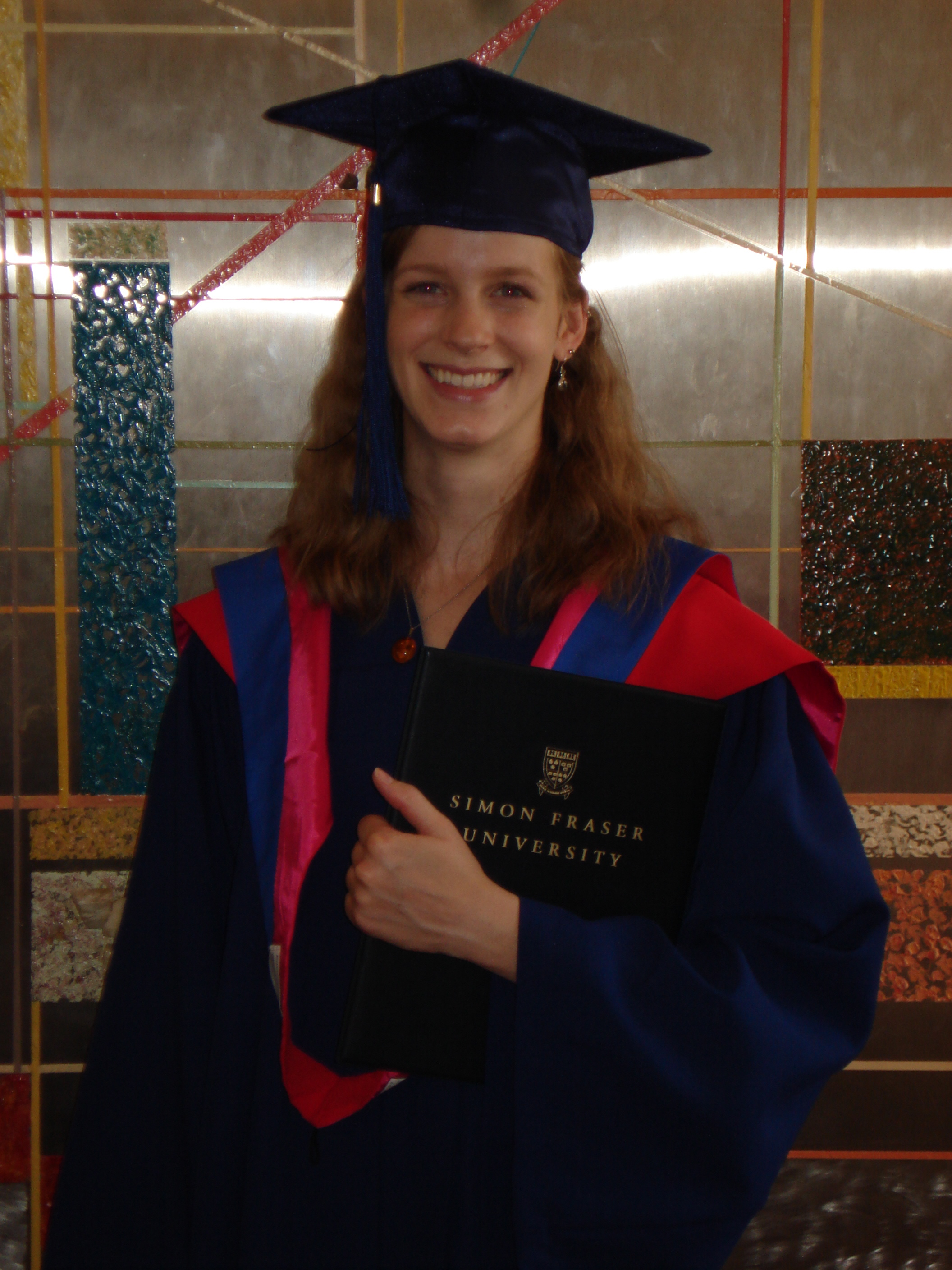
Oh, my bright shiny graduating face.

June 2009 – oh, my bright shiny graduating face.

I realized this week that come September, I will have been involved in higher education for nine years. As in, I have been going to a university nearly every weekday for nine years, sometimes to study, sometimes to work. Nine years of higher education is enough to put most people well into a PhD, but all I have to show for it is one BFA degree (achieved four years ago), a whole lot of books, and an amazingly generous student bus pass. My job is pretty good, as desk jobs go, but the job I have has nothing to do with the bachelors degree I completed in 2009, or the one I’m haphazardly declared in now.

And you know what? I’m okay with that. I have long known what many unfortunate undergrads and their parents are still not not grasping: a university education ≠ a job. And we need to be okay with this.

Over the course of my nine years immersed in post-secondary education, I have encountered many angry students and parents who feel cheated because their (or their child’s) university degree is not yielding the immediate economic benefits they had hoped for (I’m not sure why everyone is so surprised; a university, after all, is not a vocational college). Despite this, many students and parents erroneously believe future success and happiness depends solely on university performance, placing absurd amounts of pressure on themselves and/or their children for high grades, a pressure that borders on hysteria even at the high school level (i.e. “You have to get an A in English 12 because if you don’t get an A you won’t get into a good university and if you don’t get into a good university you won’t get a good job and if you don’t get a good job you’ll end up homeless and a prostitute and addicted to crack cocaine!”, etc.) To cite a personal example of this kind of pressure in action, in first year, a student I lived with in residence who flunked out of his second semester had to be put on suicide watch because he was so afraid of his parents’ disappointment and anger–it’s obvious to me this young man wasn’t ready for university and was only there to please his parents, so why had he been pushed into it in the first place?

The harmful effects of this misguided emphasis on university performance include, but are not limited to: an explosion in incidences of student cheating and plagiarism (they’d rather cheat to get the grade than learn anything from the course they’re paying for), students pursuing degrees they hate because their parents insist (usually incorrectly) that this particular degree will lead to job success, parents of high school children paying independent “credit mills” to boost grades in core subjects and improve university applications (which of course leads to incredible anxiety down the road when the student can’t be successful in university courses because they weren’t academically prepared for them in the first place), students “negotiating” their grades with their professors (as in “I know I don’t understand any of the required concepts but I worked really hard!“), and countless lecture halls and tutorial rooms stuffed with students who aren’t interested and couldn’t care less and whose contribution to the learning environment is the bare minimum required to obtain their “participation grade”. I keep encountering university students who are miserable being here, and their shitty attitude is making learning miserable for poor souls like me who actually consider three-hour seminars with an expert in their field a privilege.

When I went back to school a few summers ago to study writing and English literature, it was with the understanding that I would be older (and dare I say more mature?) than many of my classmates, and I expected to encounter the issues listed above at the 100 and 200-level. When you’re in your first couple of years of university, you’re still feeling your way through academia, taking your breadth requirements, figuring out what your strengths and interests are, etc., so I can’t hold it against you if you’re not on your A-game in Introduction to Early Modern Literature. What I had not expected was to be participating in seminars or online discussions for upper division courses where nearly a third of the students were admitting they hadn’t actually read the book we were studying (with one student bragging he hadn’t read a single book we’d been assigned all term), or reading online discussion posts for a 400-level course written at a high school level of literacy and comprehension and an even lower level of interest.

You know what? If you’re going to be routinely hungover or stoned in lecture, and you aren’t going to do the readings, and you aren’t going to attempt to think and communicate at a university level, and you aren’t interested in the material, and you don’t like scholarship, and you consider every class you take to be just another hoop you have to jump through on your way to a job that doesn’t suck, you shouldn’t be in university.

Let’s be honest: university is not for everyone. This isn’t an elitist statement–this has nothing to do with intellect or class. This is simply an acknowledgement that not everyone has the temperament or the drive or the interest to make good use of a university education. So there’s no need for people to be pushed or pressured into getting one, okay?

I have very intelligent peers who did not go to university–some of them took apprenticeships or completed vocational training, and some went right into the workplace. Virtually all of them now have jobs that allow them to live enjoyable lives. Unburdened by the bitterness and gargantuan student debt that usually follow the completion of a “useless” university degree, these peers of mine have been free to move ahead with their lives: advancing their careers, buying their first homes, and starting families. I also have very intelligent peers who went back to complete vocational training after completing a university degree. They are less debt-free and less far ahead, but hey, at least one of their qualifications got them a job. :S

This is not to say that people shouldn’t give university a try. My (nearly nine) years in university education broadened my horizons, honed my writing and critical thinking skills, and fostered rewarding friendships. Universities are places of ideas and possibilities (though nothing kills this potential faster than an emphasis on results), and some people love academia so much they stick around for masters and doctoral degrees (though some people stick around because they, again mistakenly, think it will get them a job…sigh). If you aren’t sure what you want to do with yourself in life I absolutely recommend signing up for a variety of university courses and seeing if something sticks. Just don’t expect what you learn in university to be a direct link to the job market, and be prepared to have lost out on some money if you don’t like it.

There are a few careers for which it is absolutely vital to have a university degree (teaching, law, scientific research, and medicine for example), but for the rest of us, university studies are just that–study. Study for the sake of learning. Scholarship is a wonderful thing and I feel I’ve benefited immensely from it, but spending that kind of money and time just to rub shoulders with great thinkers and new ideas isn’t everybody’s cup of tea. And that’s just fine.

So if you hate what you’re studying–switch majors or take a break to figure out what you really want. If your kid doesn’t appear to be university-bound, let them be (if they really want a university education they can always go back to school when they’re ready). Stop cheating and half-assing your way through your courses (ever wonder if you’re the reason bachelors degrees don’t mean anything nowadays?) and free up your seat for someone who really wants to learn. There’s a whole wide world just waiting for you to encounter it, and university is only a part of it. Before you sign up for a university education, make sure it’s a part you’re actually interested in.

Eazy-E, My TC, and Me

[I should probably mention that in this post Eazy-E is a rabbit, not the deceased N.W.A. Godfather of Gangsta Rap.]

Once upon a time, Eazy-E the rabbit lived in a children’s summer camp in Kincardine, Ontario with a bunch of other rabbits who were all named after rappers. At the end of the summer, my TC (who used to work at the summer camp) took Eazy-E home with him because he is the Best Bunny.

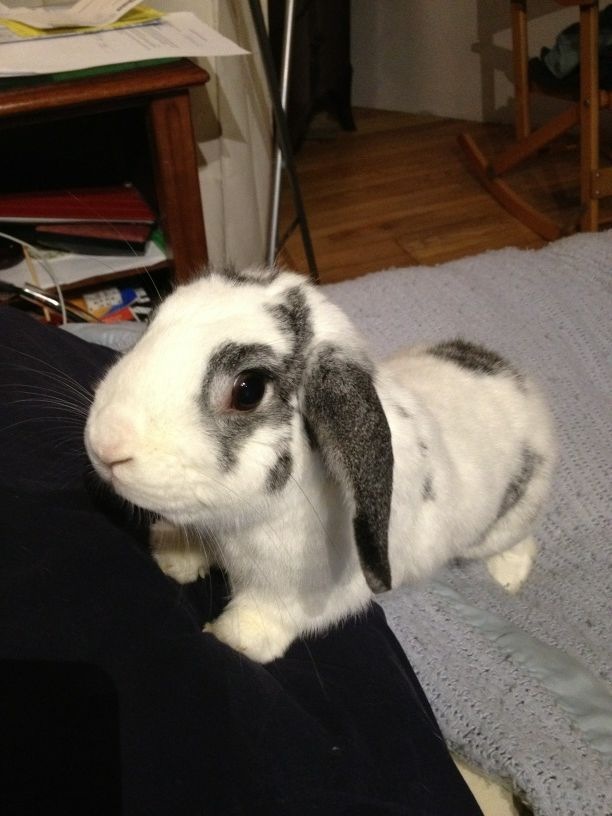
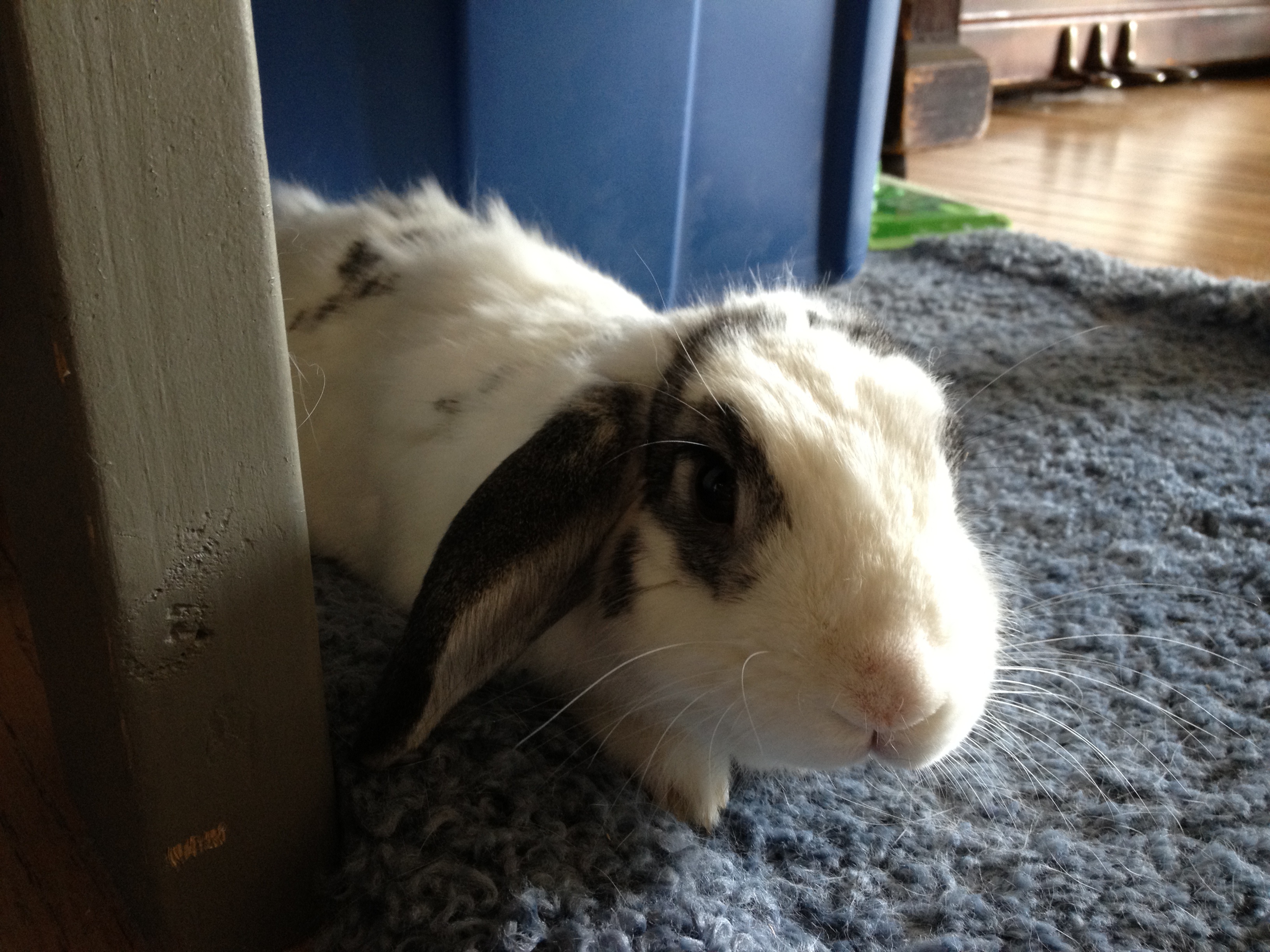
Just look at him.

Bunny1

My TC had Eazy-E for a few years before I met him, but when I moved into the household, he became known simply as Bunny (the rabbit, not TC). Bunny needs no other name. As TC says, “He’s good at being a bunny.”

And he is. I say again, just LOOK at him!

Bunny3Could anything be more adorable than a rabbit hopping around the apartment, eating our apple cores, yawning, and cleaning his little face with his little paws? No. Nothing is cuter.

In addition to his aforementioned cuteness, Bunny is also a good bunny because he is litter trained. Did you know you can litter train a rabbit? I sure didn’t. This means that Bunny gets to live a “free range” lifestyle. Apart from the fact that he tries to eat electrical cords (which is dangerous for him), I think the life of a free range rabbit is far superior to that of his hutch-dwelling comrades. For one thing, Bunny can have adventures under the couch eating my Maclean’s magazines, and also, he can hop onto our bed and headbutt us in the morning so that we’ll give him treats. If you’ve never been headbutted by a rabbit you should be. It’s magical.

When you read about Bunny eating my magazines and chewing on our electrical cords and headbutting us, you may think that perhaps the bunny is a bit of an asshole. And you would be exactly right. Our bunny is an asshole and it’s all part of his charm. What use is a pet that gives you unconditional love and doesn’t occasionally make weird growly noises at you from under the coffee table? What use is a pet that DIDN’T eat your degree transcript and the cover of several books and part of the new waterproof bag you just bought (rendering it completely not waterproof at all)? Very little use in our household, partner.

The thing is–our bunny is the essential Bad Boy. He’s aloof. He’s elusive. He takes your love (and your yoghurt treats and your carrot ends and the assignment you’re working on) and runs away with it leaving you with nothing but rabbit hair on your clothes. He chews on your drywall and one time he bit you on the hand because you wouldn’t pet him (because you were asleep). But he is just so damn small and soft, and he does such a sweet “electric bunny dance” that you can’t help adoring him. “Bunny,” you say, “I love you.” And he replies, “Yeah baby, I know it.” Cheeky bastard. You deserve a pet that’s more appreciative.

And yet–and yet–you can’t help hoping that one day, one day if you give him treats and bits of spinach and don’t startle him too often, One Day maybe the Bunny will love you as much you love him. He won’t, but I keep trying. Because that’s just how love is sometimes.

[In case you couldn’t tell, this is my “Easter” post. Have a great holiday everybody!]

My Student Loan is “Paid in Full”

StudentLoanPaidYep. You read me right. My  ~$23 000 student debt has been paid off. In full. The Canada Student Loan Service Centre says so, and they must be right (except when they aren’t, and they have to make an “adjustment”, or when they lose a hard drive containing my personal information, etc). Anyways, I’m going to believe the fancy letter they sent me and celebrate (TC said he would take me to dinner at Hawksworth, makers of my favourite gin cocktail, the “Hotel Georgia”).

Now that I’ve finished paying for my BFA degree (nearly four years after convocation), I’m reflecting what it is I actually got out of my four years studying theatre. I know what I didn’t get–a job (I mean, I have one, which is great, but it is not a direct result of a BFA in Theatre Performance). Am I working in theatre now? Nope. You may think that this means my undergraduate degree was a waste of time and money, or a disappointment in some way. But I disagree. I’m not a professional actress, or a professional anything really. But I fully believe that moving to BC to complete a BFA at Simon Fraser University was one of the best decisions I’ve ever made.

So what did I get for my $23 000 you ask? Well, enough to be grateful for:

  • My BFA degree gave me good posture. Good posture is a gift that just keeps on giving (to my confidence, my vanity, and my back). I’d always wanted to have good posture, theatre school certainly makes it happen (though it’s a bit of a fight to keep it when I work in an office).
  • My BFA degree fixed my lisp. It was never incredibly pronounced, but I spent most of my life saying my “S” all wrong. Totally wrong. Enter my voice teacher Lisa Beley and Edith Skinner’s diction bible, Speak With Distinction and I am happy to report that my S, while still slightly sibilant, is sounded with my tongue hovering near my TOP teeth like it’s supposed to, not my bottom, and definitely not between.
  • My BFA degree gave me self-awareness. Most people surround themselves with a lot of bullshit. It’s the layer of attitude and bad habits and insecurity we use to cover up our vulnerabilities. The theatre does not have time for your bullshit. We were all subjected to a process known as the “strip-down”, which can be as small as taking out your piercings and as big as acknowledging the traits you hate the most about yourself. I learned how to take myself seriously, and my work seriously, and I realized that I’ll never be able to “coast” again–sure, Cs get degrees but if I’m not going to do my best why bother doing it at all? And I realized that I’ll always have some bullshit to deal with. But at least I know it’s there.
  • My BFA degree gave, and took away, relationships. Two and a half months into my first year of the BFA (second year of university), my relationship with my high school boyfriend ended. A lot of people lost their high school or early-university relationships in that first year. And I won’t say the theatre program is directly responsible, but I will say that when you have no time to eat or sleep, and you’re being forced to confront your own bullshit in class everyday, you really stop having time for anyone else’s. To put it another way, if it’s meant to end–theatre school will end it (which I guess just saved us both some time by hurrying the inevitable). But my BFA degree wasn’t all take; it also brought me two relationships. One was a whirlwind two month affair. One was a slow off the blocks two year relationship. But they were both important and fun. While they lasted I was a sponge, soaking up all the things I liked about the other person’s world and would find useful later (like circus school and the wonders of the internet). And when they ended, like most relationships do, the periods of growth that followed continued the trajectory of self-awareness that theatre school had already started. I could never wish away experiences that made me happy, and I could never wish away sad experiences that took me to more marvelous happy experiences down the road.
  • My BFA degree gave me amazing friends, and taught me that making art does not have to be a competition. The same is not true of every theatre school, or every theatre program. I’ve heard horror stories of programs that pit students against one another on the assumption that they’ll work harder. But my program didn’t work that way. The most sacred part of our work was the ensemble (i.e., the members of our class or our cast). My late teacher Marc Diamond used to say, “If you trash the ensemble, you go out with the trash” and he meant it. That meant that we never tore each other’s work apart when offering critiques or comments. That meant that we never came to class/rehearsal late or unprepared, because to do that would disrespect the work of our ensemble-mates. And that meant we left our bullshit at the door. I became very close to my ensemble mates, both in classes and in shows, and though I haven’t kept in touch with all of them, many of my past ensemble mates are still my rocks–I’ve crashed on their couches and cried in public with them and drank way too much with them. And we aren’t in competition–I’m happy for their successes and they’re happy for mine. I’ve always hated the competitiveness of the art world (the kind of back stabbing ladder climbing you see on TV), but my degree taught me another way to work, and it’s a lot friendlier this way.
  • My BFA forced me to go to class without make up every day for four years. I also had to take out all my earrings and pin my hair back. For most of my degree I looked like a thirteen year old. But I had to suck it up and just look like myself. And you know what? It was kinda great. All of my friends (and both of my two aforementioned paramours) first knew me with no make up, a ponytail, sweatpants and a sports bra. And everyone liked me anyways. So take that, vanity.
  • My BFA degree taught me to work my ass off. Heck yes. I think I’ve mentioned this one before, but that’s only because it’s so incredibly important. My ability to work hard and work well with others is probably the most bankable product of my degree, and to be honest, I think it’s the only one that current and future employers of mine would care about anyways.

So was it worth $23 000? Well, I won’t say there’s nothing at all I’d change–but you can’t buy happiness or maturity. What you can buy is the opportunity to have experiences and to meet people and to learn things that make you happy and help you grow. And I did. So thank you, National Student Loan Services Centre, pleasure doing business with you. I daresay I’ll be seeing you again if I ever decide to pursue a graduate degree.

Tales of a 20-something Twinkle Teeth

The Braces. Aged 21. Photo: Pedro Chamale

The Braces. Aged 21. Photo: Pedro Chamale

When I was 20 and in theatre school, I made the big decision to Get Braces. My teeth were okay but they weren’t exactly straight, and a particular molar, leaning sideways and rotated almost 90 degrees, was giving my dentist pause. I was also beginning to realize that if I wanted any chance as an actor outside of theatre, looking the way I did (thin, blonde, blue eyes, terribly naive), there was a particular pigeonhole I was going to have to fit in (Noxema commercial) and that pigeonhole required straight teeth. I wanted to be hire-able, my dentist was recommending braces, and yes, I wanted a prettier smile.

Considering I never DID go on to become a Noxema girl or even pursue theatre performance as a career (though I may still, who knows), were my braces just an expensive exercise in vanity? My parents (who paid for most of it) will be happy to hear that the answer is no. Orthodontics involve a lot more than vanity–patience, humility, a high pain threshold, and an incredible commitment to good dental hygiene. Besides, if I’d only been interested in looking good, I could have used Invisalign retainers instead–they would have straightened the front teeth for that pretty “facewash commercial” smile, but would not have been strong enough to fix that errant molar. I didn’t just want teeth that looked good, I wanted teeth that were good.

So I went with the metal braces. FULL metal braces. Traditional braces are small metal brackets glued to the teeth. The wire that runs through them is held in place by tiny elastics (sometimes coloured) on each bracket. These are not the braces I chose. My orthodontist had a relatively new kind of braces, large metal brackets with hinges on them that hold the wire themselves. Because there are no elastics creating friction on the wire, it is able to move more freely and my braces would, theoretically, work faster (I think this was the case). Full metal braces, while larger, sharper, and less cute, are also easier to keep clean. So I thought, what the hell. I’m getting braces at the age of 20. I don’t need cute coloured elastics. Let’s get this over with–I’m going with the full metal braces.

Bring it on.

And “bring it on” my braces certainly did. If you had braces as a child, maybe your teeth were more susceptible to movement, or maybe you just don’t remember, but I cannot fathom that children could endure such a barbaric ordeal. There’s no magic trick involved in braces. Basically, you’ve put something into your mouth whose job is to actually physically push and pull your teeth into place. ALL THE TIME. They’re pushing and pulling while you sleep, while you eat, while you study, while you kiss. They’re also stabbing you. They’re stabbing your lips, the insides of your cheeks, and they are slicing your tongue to shreds.

My first few weeks with braces, my diet consisted mainly of cream of wheat, pancakes, rice and beans, and fruit juice. Eating a hard cracker like a Stoned Wheat Thin (my favourite) was excruciating. I basically said good-bye to apples for a year and a half, and had to eat almost everything with a fork and knife (pizza, burgers, you name it) to avoid simply grating it all into a mush on my braces.

When I went home from the orthodontist and saw my teeth for the first time, I cried. It was only within the past year or so that I had finally begun to feel truly confident with my looks, and for some crazy reason I’d decided to just throw all that down the shitter and fill my mouth with sharp foreboding pieces of metal and wire. Nice one. The sting of feeling ugly stayed for a long time, and ultimately, I think having the braces were a good exercise for me: learning to smile with my teeth despite the braces, flirting despite the braces, and understanding that I was a young woman of dignity and intelligence, despite the fact that I looked like a teenager.

Another shitty thing about braces is that it’s not as though you pop them on, they do all the work, and then one day, hey presto! Straight teeth! If you don’t want your teeth to stain under and around the brackets (or have food in your teeth 24/7), you have to brush your teeth Every Time You Eat Anything. You have to floss with a little thing called a floss threader, which takes ten times longer than flossing without braces. You have to clean between each bracket and the wire with a little triangular brush (that my orthodontist’s assistant called a Christmas tree). And you have to rinse daily with a special antibacterial mouth wash. You also have to visit your orthodontist every month or so for adjustments (i.e. once you’re finally used to your wire they give you a stronger one and it hurts like hell all over again), put in elastics to move your jaw, take them out to eat, put in tighter elastics to move your jaw, take them out to eat, have to wear your tighter elastics for an extra month because your jaw hasn’t strengthened properly, etc. Basically, you become obsessed with your teeth. Sometimes, I would dream that they were falling apart (sometimes I still have nightmares that my teeth are breaking).

It’s a real good time.

But I must say that the worst, the worst thing about the braces is that I felt embarrassed to talk. Me! Little Miss Chatterbox! And it hurt me. Cracks about my talkative nature aside, for me to feel that I can’t communicate is psychological torture. At first, of course, I was just embarrassed about my newly-acquired lisp and the difficulty I was having enunciating (in theatre school, this is a big problem). And then I was embarrassed about the awkward way my lips closed over my braces. And then I was embarrassed about the fact that when I talked, my teeth would show, and people would see my braces. When I had elastics in to move my jaw, I was embarrassed about those. That anything should prevent or reduce my talking was new for me. I didn’t like it.

It’s fairly obvious I had a lot of hang-ups about my braces. The ages of 20 and 21 bring with them enough insecurities as it is, so in some ways maybe it was good to be able to bestow my insecurities on a temporary physical feature, outside of my actual abilities and my personhood. And it’s not as though my braces actually held me back at all–I performed in a lead role in an SFU mainstage production, I mini-toured to the University of the Fraser Valley as a performer in an MFA thesis production, I acheived a 4.0 semester, I assistant-taught the second-year theatre voice and speech class–all with braces.

I should also point out that during my year and a half with braces I kissed three young men, all of whom, if I do say so, were quite dashing. One of them even called me “twinkle teeth”. So perhaps there’s something to be said for these fiendish contraptions.

Of course there is. The day I had my braces taken off was a beautiful day. It was shocking to see my smooth white teeth (white from all the obsessive brushing), and be able to run my tongue over them. After so long, my braces had become a part of me, and I felt a sense of loss at letting them go. But not for long. Caramel apples were in my horizon, and big toothy smiles awaited the praise of friends and dental hygienists alike.

NiftyTeeth

Look ma! Straight smiley teeth!

P.S. This post is, in part, for my friend Raul, a university professor who recently took the plunge. Hang in there buddy!