“Making art for free” – I’m opening that can of worms

An interesting gentleman I recently met at a party leaned over a kitchen counter at me and slurred something to the effect of, “Every artist is exploited for their passions.” He continued on after this point but as he was drunk and getting a little incoherent I don’t recall the rest. The gist of his argument seemed to be that because everyone knows that artists love to do what we do (be that music, theatre, dance, visual art, photography, etc.), we are expected to do this for little or nothing.

I couldn’t agree with him more. All of the theatre I have been involved in since finishing my BFA has involved little, but more often non-existent, compensation.  I entered into the work fully aware that nobody was being paid. I did it because I respect and enjoy the people I work with, and because if I didn’t take the time to be an artist sometimes, my soul would start to die.

There is a very prevalent though very misguided attitude surrounding the idea of payment in the arts community. People seem to believe that because artists enjoy their craft, they don’t require the same kind of compensation they would if they were doing a job they hated. I would like to make something very clear:

Enjoyment DOES NOT EQUAL easy. Enjoyment DOES NOT EQUAL lack of time or skill. Any good piece of art involves time (during a theatre production, for example, usually 20-50 hours a week on top of a full or part time job) and skill (most of the artists I know have either a university degree and/or extensive studio training, which they supplement with workshops). In a regular working environment, this time, training, and skill would be compensated.

Making art also requires an emotional and often physical investment not found in other jobs. Making art is not an activity in which you can “coast” (i.e. writing that report for your boss while you flick through photos of last weekend on Facebook or watch a funny cat video). Coasting results in shallow, if not plain old shitty, art. An artist is required to be emotionally, mentally, and physically present in their work. I enjoy everything I do involving the theatre but maintaining this focus isn’t easy. Sometimes I’m ill but I have to be on my feet for a two-hour run before I can sit down again. I’m exhausted sometimes but I’m staying at rehearsal late into the night, knowing I am going to be waking up at 6:30 to go to work and THEN I’ll be going to rehearsal all over again. Sometimes the work scares me or makes me so angry that I hate it and hate everyone involved and hate myself but we get through it and we make some art.

And then I am told by the prevalent public opinion that I don’t need to be paid because I’m having so much fun!

What can be done? I’m not sure. The other night I met some (relatively) new theatre friends for drinks in the Backstage Lounge (the lovely bar behind the Arts Club’s Granville Island Stage). The conversation, while passionate and animated, was rather disheartening at times. No, we (and I mean “we” in a broader sense than just those present) shouldn’t all be doing what we’re doing for little or no money. Yes, anyone working this hard should be appropriately compensated.

But I’m going to let you in on the not-so-secret dirty little secret of the art world. There’s. No. Money. Not for me, not for you, not for the many and varied brilliant performers, musicians, visual artists, writers, dancers, stage managers, designers, composers, producers, dramaturgs, and wandering minstrels in this city, this province, or this country. Working in the arts is a Catch-22 of survival:

1. I cannot survive without money. I need to eat, I need a home, I need to be able to clothe myself and have a telephone. Without money I am starving and I am cold.

2. I cannot survive without creating art. I need passion, I need ambition, I need goals to work towards, I need my inner fires to be fueled and my inner children to be nurtured. Without creating art my spirit is starving and my heart is cold.

If I use my time to work at a job that pays I have money, but no art. If I use my time to create art, I have art, but no money. I get by by straddling these two worlds. Monday to Friday, I work a job I like that pays me well. When I’m involved in a project, I spend my evenings and weekends on it. My system is working for me right now and I feel fortunate to be able to do this.

This is not sustainable, however. The older I get the more demands there will be on my time. This is not a system that can work for me if I ever have a family, if I am ever less healthy than I am now, or if a loved one is ever in need of my care. I also might simply burn out.

In fact, most of us are in danger of burning out, simply because there just isn’t enough money out there for all of us to get work in the arts that pays, and there’s only so long many of us can keep going without any hope of eventually being paid to do this.

I am aware that by agreeing to work for free, I add to the problem. As long as there are artists willing to work for free, there will be artists working for free. There will also be people who expect artists to work for free.

I hope that this situation will not last forever. I hope that the time and hard work put in by artists everywhere will eventually receive respect and provide them with the means to earn a living. Achieving this utopia would be complicated and take time. Government, artists, and audiences would need to be involved in supporting arts and culture and those who sacrifice so much for them.

In the meantime, I think it is up to every artist to decide what they can and cannot do. My system works for me. Other artists have theirs. I am engaged in an ongoing struggle with myself and I am always reassessing my relationship with work, money, and art and hoping I will find a way to reconcile them.

Confessions of a Chatterbox

Hi. I’m a chatterbox. How are you? I’m great. You know what else is great? Cats. Cats are so great. My little sister has a cat. Her name is Veronica. The cat, I mean. My older sister has a cat too named Penny. I wish I had a cat. Speaking of great things, the other day I saw this really great…..

Accurate depiction of me by Sonja Kresowaty

Sorry.

Hi. I’m a chatterbox. That is to say, I really like to talk. A lot.

This is something I’ve known about myself for a long time. My big mouth definitely got me into trouble when I was a kid (I recall several talks with my parents about things you DO and DON’T say) and although I’m fairly good now at keeping harmful or embarrassing things from being said, the actual volume of idle conversation leaving my lips daily has likely remained fairly constant over my lifetime.

My parents have told me I’m chatty. My sisters have told me. My boyfriends all told me. My friends have told me. And I cheerfully ignored all of these lovely people while I chat chat chatted away. As long as I’m not so loose-lipped that I become a bad daughter, or sister, or partner, or friend, I generally accept that this is part of who I am and so do they.

However, I can definitely take things too far and as part of growing up and becoming an adult I am learning that the kind of mindless prattle I excel at has a time and a place. One of the places where it is best to try to keep my chattiness well in hand is, of course, at work.

This is hard for me. For one thing, I work with lovely people I enjoy talking to. For another, several of the tasks I perform at work don’t require my full attention (like stuffing envelopes) and a nice bit of conversation helps to pass the time. I have come to appreciate, however, that as lovely as my coworkers are they are also hardworking and busy people and they’d probably appreciate a little less distraction from me, especially since sometimes I can even get on my own nerves.

As an exercise, and to keep myself from saying every silly thing that came into my head, I decided to write down everything I was thinking about saying before I actually said it. This way, not only were these thoughts expressed silently, but I could also examine the totally irrelevant statements I was casually throwing into the ether.

Ahem. The List of the almost-said statements I recorded in the month of February:

“I got soap in my eye and my eye is still itchy.”

“This stapler is so ineffective.”

“My hair is getting so long.”

“Boy, I’m sure lucky we don’t have the draft. I would hate to be drafted.”

“Have you ever seen the movie, ‘Across the Universe'”?

“I wonder what it would be like to have a photographic memory?”

“I have cramps.”

“Ever notice how weird eating grapes makes your hands smell?”

“Did you know there’s a bar in Gastown that if you stay till they close they give you a cookie?”

“I’ve been getting flakes of paper all over me.”

“According to the Chinese Horoscope, the Year of the Rabbit is supposed to be a bad year for everyone unless you put your head down and try to be patient.”

“People don’t appreciate good stamps like they used to.”

“I’m not so into romance right now.”

“One of my friends has a rabbit that hops around his apartment. It’s litter trained and everything.”

My heavens. The horror. I would like to make very clear that I wasn’t actually going to say EVERYTHING on the list, but the fact that I was considering saying it is bad enough. I also know that for every stupid thing I didn’t say, I’m sure there’s at least half a stupid thing I did say. Some things are clearly office-related, like staplers or paper flakes, and some I have no idea what I was thinking or what I was referring to. “Not so into romance”? Was I referring to romantic films? Books? Moonlit gondola rides? I actually don’t know. Haven’t a clue. And why would I want to say such a thing at work? Again, haven’t the foggiest.

A lesson I am going to take away from this exercise is that if I don’t know why I’m saying something, it might be best to just write it on The List and not pester those around me. As I mature into the well-brought up young lady I know I am inside I have been stockpiling such helpful reminders for myself. One of the tricks I have used to get by when I have the urge to chat is to ask other people questions. This way I can be attentive to the people I’m with AND if I really need to talk I can ask MORE questions or talk about what they just said. Thrilling. I’m sure Emily Post would approve.

I hope you have all enjoyed The List. To those of you that know me, I’m sure this reads like just another day with Lauren. To those of you that don’t, while I am certainly scatterbrained and far too talkative I am also reasonably clever and am always open to a conversation about Something Smart, should you prefer that to a conversation about smelly grapes or the length of my hair.

To my friends, coworkers, and loved ones: I’m sorry. From the fact that you all still talk to me I can only conclude that you possess infinite patience and must care for me very much. For this I am eternally grateful.

Some might call me an incorrigible chatterbox. Some might call me less delicate things like “obnoxious”. This likely wouldn’t be inaccurate, though I prefer to think I’m simply “generous with my thoughts.” No wonder I decided to blog. Thank you for listening.

Federal Greenhouse: Let’s Make Good Use of Hot Air

For the past few weeks, I’ve been trying to take a little break from being angry at Canadian politicians for being uninspiring to the citizenry at best and downright insulting to us at worst. This doesn’t mean I haven’t been stewing in my juices the whole time. It’s been hard to ignore the signs that a blog post on the subject was looming.

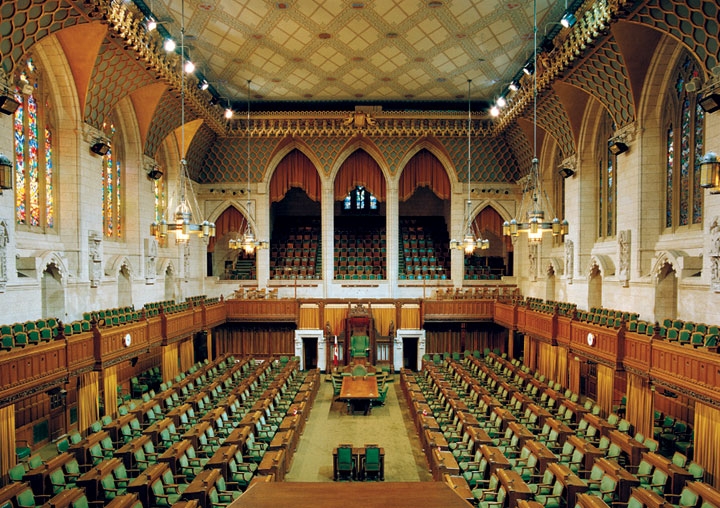
First, I read this. “This” refers to an article on the CBC website, outlining plans to build a $42 million dollar glass dome as a temporary home for the House of Commons while it undergoes much needed repairs. Huh.

Then, I read THIS. “THIS” refers to an excellent special feature in the February 28, 2011 issue of Maclean’s by Aaron Wherry. The article details Wherry’s visit to the House of Commons on February 3 to see, well, what was going on in Parliament. Not much. There are 305 Members of Parliament (including the Speaker). On February 3 at 1:05 p.m.,  only 19 MPs were present for debate in the House. At 2:30 p.m., during question period (when the photographers and video cameras are usually present), the numbers swelled to 231 MPs present. By 6:45 p.m., as the House finished opposition questions, only 5 of 305 MPs remained. Huh.

It’s kind of funny, isn’t it? Some people slave away at their jobs for years to scrape together enough income to support their families and maybe, SOMEDAY, upgrade to an office with a window, and we’re going to build a fantastical glass dome for a bunch of people who can’t be bothered to show up and do the thing taxpayers pay them to do? Huh.

And then I read, in a variety of places, that there’s going to be another Federal election. In fact, I just heard my first attack ad on the radio today. (Thank you, Conservative Party of Canada! I was not aware Ignatieff was only in it for himself but you sure taught me a thing or two!). So not only will I get to pay for a bunch of no-shows to hang out in a glass palace (when they can be bothered to be there), but now I get to listen to personal attacks and false promises for the next month and a half? Huh.

It was all getting a bit much and I was thinking about going to bed for a few months until the attack ads were over and the “Will they? Won’t they?” coalition questions had disappeared.

But then, I had a better idea.

Glass-domed Parliament + No-show MPs + Federal election (i.e. a chance to get rid of everybody in one fell swoop) = FEDERAL GREENHOUSE.

What I am proposing, ladies and gentlemen, is that come election time we bid adieu to the MPs who have failed to change our country for the better and replace them with hothouse vegetables, which would be grown in the House of Commons and donated to needy families. As soon as that glass dome gets built the House would be the perfect environment for an indoor garden.

Harper: "Deceit. Abuse. Contempt." Starchy.

Just think of it: the seats belonging to the Liberal Party of Canada would be replaced with rows of juicy red tomatoes. The NDP, carrots (’cause they’re orange, do you see where I’m going with this?). The Bloc, some kind of legume (just to keep things en français), and the Conservatives? Well, I couldn’t think of any blue vegetable so I settled on potatoes. Sometimes, Stephen Harper looks a bit like a potato. Come to think of it, so does Jason Kenney. AND John Baird. Potatoes it is.

Should the Green Party ever win any seats, those will be planted with zucchini. (Because let’s face it, as much as we all enjoy zucchini from time to time, if we don’t have it, it doesn’t really seem to make a difference, does it?)

Ignatieff: "He didn't come back for you." But he sure is delicious.

I believe a Federal Greenhouse is a much more cost-effective way to run a Parliament than paying salaries to 305 eating, breathing, expense-claim-submitting human beings. It would also serve to restore some civility to question period. I highly doubt that any back benching legumes will be on their smartphones instead of paying attention to the issues being discussed. And if a potato managed to make personal attacks in QP aimed at a tomato or carrot across the floor, I’d actually be impressed instead of disgusted. Sure, big issues like health care and the Canada Pension Plan and Canada’s role in overseas conflicts probably wouldn’t be dealt with very effectively by a room full of vegetables, but I would like to posit that they aren’t really being dealt with very effectively now by a room that’s only occasionally full of MPs. At least the vegetables would go to hungry families. And giving nutritious food to children is something I’m sure all Canadians of any party stripe can get behind.

(For all you pedants out there, yes, I am aware that tomatoes aren’t actually vegetables. But they’re very good for you.)

Still not convinced this is a fantastic idea that should be implemented as soon as humanly possible? Fine. I have another solution for you. An election is coming. Go get informed. Find out who the candidates in your riding are. Ask them questions about the issues that matter to you most. Ask your MPs what they are doing for your constituency, both within and outside of the House of Commons. On election day, go vote.

The Elections Canada website provides a very helpful webpage where you can search for your Federal riding by entering your postal code. Once your riding comes up, the page shows you when the next Federal election takes place (May 2, 2011) and also has lists of helpful links along the side, answering FAQ’s such as “Where do I vote?” and “Who are the candidates in my electoral district?”. I just gave you the link to the aforementioned helpful website so you’ve really got no excuse not to check it out.

Young voters, I’ve already berated you in an earlier blog post. Now’s your time to shine. Get out there and give your MPs a kick in the ass. Or, if you dig greenhouses, find your gardening gloves. One way or another, it’s time to get your hands dirty for your country.

SFU Woodwards presents “The Alice” and “Black Box 2011”

Let me begin by saying that I will not be reviewing shows at my alma mater, the School for Contemporary Arts at SFU. I will, however, shamelessly plug them on the internet before I watch them.

A lot of changes have occurred since I began at SFU in 2005. My first SFU acting instructor, Marc Diamond, sadly passed away that fall while writing his Alice play. I’ve graduated with my BFA (and lost some of my enthusiasm to the need to not be poor, sadly) and SFU Contemporary Arts has moved from the leaky-roofed old facilities on Burnaby Mountain and into the shiny new Woodwards complex on Hastings Street. Cosmetically, the new SFU theatre spaces are unrecognizable compared to the old SFU Mainstage and its hillbilly little cousin, Studio II.

In spite of the new facilities and the new faces gracing SFU’s stages today, Marc’s Alice play, and his beloved partner Penelope Stella’s commitment to realizing it onstage, has remained. Until March 5, “The Alice: A play by Marc Diamond” is being presented in the Fei and Milton Wong Experimental Theatre as SFU’s Spring 2011 Theatre Mainstage production.

(Sources from the inside have reported that during rehearsals the running time for “The Alice” was approximately four hours so be prepared to lengthen your attention span.)

Tickets to “The Alice” are very affordable at $10 for Students/Seniors and $15 General Admission. Please note that there are no performances on February 27 or 28.

In addition to its Mainstage production, SFU Theatre is also presenting its 2011 Black Box season this spring. Blackbox is an SFU theatre course in which an ensemble of students create, rehearse, and produce a new show every few weeks of the spring semester. It is an exercise in creativity, experimentation, and sheer endurance. Generally, when I see a season of SFU’s Black Box, I see things that disturb me, make me laugh, inspire me, and sometimes just make me go, “Huh.”

SFU’s Black Box season is the perfect taster for those new to SFU Theatre. The performances are short, free, and go well with whatever else you’ve got planned that evening (drinks afterwords at one of several nearby Gastown pubs, for example). Show 2 of Black Box 2011 is based on the theme of “Community” and runs Friday, February 25 at 7:00 and 9:00, and Saturday, February 26 at 7:00 and 9:00 in SFU Woodward’s Studio T.

If you can’t make it this time round, don’t worry, there will be more shows this season.

SFU’s School for the Contemporary Arts has been hidden for far too long atop Burnaby Mountain. They have made the effort to move downtown and join the Vancouver artistic community. If you are curious about the innovative work being created and performed by tomorrow’s contemporary artists, may I humbly suggest that you visit their brand spanking new campus and see what all the fuss is about.

East Van: please be my Valentine

Last year my Valentine’s Day present was Alexandre Bilodeau’s Olympic gold medal. I was watching on a big screen in Robson Square, jumping up and down and screaming like crazy. Hugging the man next to me. Being interviewed by CTV but never actually being on TV. That sort of magic.

This year my Valentine’s Day gift is a little more quotidian and a little closer to home (and my heart). I’m in love with my neighbourhood. I’m in love with East Vancouver. And it constantly, consistently, gives. No matter the weather, no matter my mood, my neighbourhood is friendly, beautiful, and vibrant.

My inspiration to write this post and make East Van my Valentine is the “I Love You” graffiti that covers neglected surfaces in East Van (sources in Toronto report several “I Love You’s” spotted in that Canadian city as well). Every time someone paints over an “I Love You” it comes back. It’s vandalism, sure, but I do feel loved every time I see it.

So thank you, East Van. Please be my Valentine and accept some possibly very bad poetry as a token of my love and esteem.

Photograph by Steffani Cameron

On opposite sides of East Vancouver
Two outlaw artists spray paint the words “I Love You” on walls, fences, dumpsters.
Each time their work is whitewashed over,
It is quickly, carefully, replaced.

I like to imagine that over the days, weeks, months
These two Painters circle one another unknowingly,
spiraling inwards, irrevocably inwards,
until one day—

Outside a warehouse on Powell St.
Two sharp pings! as two cans of spray paint
Fall to the pavement on opposite sides of an empty parking lot.
Traffic stops.
Nobody makes a sound.
(Except of course for the stupid gulls,
Who are, as always, completely unaware of the moment.)

The Painters move slowly towards each other.
Inside they are running full speed, full tilt
Into something as solid and scary and gritty as a warehouse wall.
Painter 1 and Painter 2:
They meet at last.

–I’ve been leaving messages. Did you get them?
–Yes. I answered. Did you see?
–Yes.

The thumb of Painter 1 leaves a smudge on the cheek of Painter 2
Painter 2 does not move, only breathes.
They stand this way in the parking lot,
The hand of one on the face of the other,
A touch that satisfies both.

The gulls, with no sense of occasion, scream again.
–Well then.
Says Painter 2.

The arm falls.
The shadows lengthen.
Two cans rust on opposite sides of an empty lot on Powell St.

I pass them on the bus and close my eyes.

PuSh 2011: “Peter Panties” at the Cultch

I’ve been a Peter Pan devotee all my life. I’ve seen the musical, own the Disney film as well as a live-action one, I cry every time I read the book. It makes sense, therefore, that I was very jazzed to be wrapping up my 2011 PuSh Festival experience with “Peter Panties” at the Cultch on Saturday. “Peter Panties”, written by Niall McNeil with Marcus Youssef, is a Neworld Theatre and Leaky Heaven Circus co-production, directed by Steven Hill and Lois Anderson, with original music by the fabulous Veda Hille. It will be performed on the Cultch’s Historic Theatre stage until February 13.

Before the show I ran into Marcus Youssef in the lobby. I’d met him very briefly last spring after “Ali & Ali 7” so I reintroduced myself and expressed my enthusiasm for attending a Peter Pan-based play. Youssef was glad I was excited but warned me that “Peter Panties” would be an almost unrecognizable version of the story.

I appreciate the warning but I think Youssef is wrong. No, J.M. Barrie’s classic tale of the boy who refuses to grow up does not traditionally include rock ballads, CSI investigations, or Macbeth. But any die-hard Peter Pan fans in the audience would immediately recognize all the important landmarks of the story: the nursery window, Mr. Darling’s job at the bank, Skull rock, Tinkerbell’s jealousy, Hook’s abduction of Wendy, the crushingly sweet moment before innocence is lost. These landmarks may not be “in order”, they may be expanded and exploded, but they are all there. Like the Never Land, anyone who truly understands and loves the story of Peter Pan can find it in McNeil’s version.

The playwright, Niall McNeil, has Down’s Syndrome. This fact is not hidden nor overly advertised. Video footage of McNeil and Youssef’s writing process (shown at various moments in the piece) reveals a deep commitment to expressing McNeil’s version of the play. Nothing I saw or heard that evening seemed cleaned up  or doctored in any way. And the result is totally unpredictable but very funny and always beautiful.

Watching the piece feels like watching children at play. Certain scenes seem distracted. Certain scenes are confusing. Characters move from snippets of this and that, certain lines sound like something a child overheard at the table or on TV. Like a children’s game, the characters are moved by their own strange logic, unfathomable to observers but incredibly important to those in the game. It’s funny for us but deadly deadly serious for them.

The piece puts the “panties” in “Peter Panties” by  moving beyond the simple idea of the boy who won’t grow up to the notion of the way children think about sexuality. They are curious about it, and Peter and Wendy (played by James Long and Sasa Brown) demonstrate a very clean but inventive way to make a family, but sex is not understood in this play, or seen. To understand sex Peter would have to grow up. And in “Peter Panties” it’s not simply that he won’t, it seems he can’t.

Given the constant exploration of the tension that exists in the middle ground between childhood and being an adult,  “Peter Panties” is more true to the original and beloved tale than people realize, or perhaps more than they’re willing to admit. As a worshiper of the J.M. Barrie text, I have no problem adding “Peter Panties” to the shrine.

Props also go to the Bank Dogs and Veda Hille. If there are copies of the “Peter Panties” soundtrack out there I’d love to get my hands on one…any song that dismisses the idea of growing up with the line “F— that, NO MUSTACHE” is my kind of music.

To read more about “Peter Panties”, I recommend checking out Plank Magazine‘s review by Maryse Zeidler as well as Colin Thomas’s review in the Georgia Straight.

If my stellar blogging has managed to convince you to see the show, “Peter Panties” runs at the Cultch until February 13. Tickets can be purchased online from the Cultch or by telephone through the Cultch’s box office at 604-251-1363.

PuSh 2011 – “Floating” at the Arts Club Revue Stage

On Thursday I decided to put the “international” in the PuSh International Performing Art Festival and take in Welshman Hugh Hughes‘ fantastical theatrical event, “Floating“. “Floating” is produced by Hoipolloi, created and performed by Hugh Hughes and Sioned Rowlands, and presented at the Arts Club New Revue Stage January 20 – February 5.

Using slides, flashcards, flip charts, video, magazines, and other helpful props and pieces of furniture, Hughes and Rowlands tell the not-so-true story of Hughes’s homeland, the Isle of Anglesey, breaking away from the Welsh mainland and going adrift in the Atlantic. The set itself consists mainly of the aforementioned props and visual aides, creating an effect not unlike the way a very large supply closet in a community centre might look.

I believe a hoity-toity description of the night I had would be “meta-theatrical”, in that I never once forgot myself. I did not transcend. I was not “swept away in the magic”. Hughes stressed time and again (using a laminated sign he kept in his pocket) the importance of making a connection with us, and the importance of our decision to come to his show. I suppose it would be hard to truly connect to an audience, as individual people, as members of a group, if our emotions were usurped, if we were stolen away to other lands the way I often am at the cinema or at a different kind of show. Hughes and Rowlands talked to us, gave us props to hold and to pass around, noticed what was happening in the audience (and remarked upon it) and never once forgot we were there, or resided in a stage world that did not include us.

We were included to such an extent that after I was not chosen as the lucky audience member to get to use the “clicker box” to keep track of the story’s episodes, I was invited, in the middle of the show, to help Rowlands clean up the water that had been splashed onstage. I thought I was just being humoured because I’d missed out on holding the clicker box so I said (stupidly), “For real?” and Rowlands replied, “Well, if you come up here it will be real.” So I did. The opportunity to be that much more involved with the show was too good to pass up. I took a towel and helped mop up the stage. When I was done I gave a self-conscious little bow, hopped back down to my seat, and the story continued. It pretty much made my night.

The show is clunky, inviting, funny, generous and enchanting (in a very unmagical, “I can see the strings you’re pulling” sort of way). Yes, the story is a fantasy. Yes, the open structure and the acknowledgment of the audience is good-humoured and gracious and made us all feel warm and fuzzy. I got the sense however that lurking underneath this mythologized episode of Hughes’ life is something very true, and incredibly sad, if only we could stop laughing long enough to realize it.

The "harness of oranges"

While I enjoyed the show, and I enjoy the Arts Club as a venue, I do not feel that “Floating” was best served by being presented at the Arts Club Revue Stage. “Floating” is an incredibly intimate and incredibly open piece. The friendly and flexible nature of Hughes and Rowlands is what makes it work. It is not glossy. There are no thousand dollar set pieces or period costuming. I would have loved to see this show in an elementary school basement, or somebody’s garage, or in my living room. I feel this would have been more appropriate to the spirit of the piece, and actually would have enabled me to reach an even higher level of engagement.

There are certain things one expects when they pay $40 to see a show, and certain things one expects when they see a show at the Arts Club. One expects that money has been spent on high-tech effects (like in the Electric Company’s “Tear the Curtain!”), or on a celebrity appearance (like Eric McCormack’s role in “Glengarry Glen Ross”). These productions are impressive and worth every penny but they are distanced from the audience. Another world is being created “onstage” and we are “in our seats” and that is that.

“Floating” asks us to break down that fourth wall and be with Hughes and Rowlands, at heart if not physically, and it is hard to do that when you’re sitting in a structured audience space, feeling a little miffed that you paid $40 for a seat with sight-line issues. On Thursday I also found myself in an audience who did not seem to be, based on the lobby conversation I overheard, “kindred spirits” in terms of the art they enjoy (compared to what I find engaging) and I felt that some of the laughter during “Floating” was patronizing amusement (“Tee hee, what a funny Welshman. What IS he doing?”) rather than actual pleasure. This barred me from the sad truth that I felt was in the piece somewhere, that I wanted so desperately to find, and I believe this kept the audience from being able to make the true connection Hughes tries to emphasize with his work.

I also think that the audience that would be most appreciative of a special piece like “Floating” are those who are turned off by “fancy” theatre and special effects and just want to be in a room with a performance. This type of audience is the least likely to realize that there is a show they should see at the Arts Club, and probably less likely to be able to afford a $40 ticket.

I am not trying to denigrate the Arts Club (or its subscribing audience) in any way. I have seen very good work on the Arts Club stages (“The Black Rider”, “Tear the Curtain!”, “The 39 Steps” to name a few). But these are special treats for me. I choose each show carefully and have always been rewarded by high-tech wizardry, elaborate sets, great music and/or almost impossible physicality. I understand where the extra money goes (to put it in perspective I seldom pay more than $20 for a ticket to anything at any other venue–there were meant to be $25 tickets for this show but those were no longer available when I bought mine). I attend Arts Club productions I am very interested in when I can afford it and I have never been sorry. I am afraid, however, that the choice of venue (and the ticket price that goes with it) for this particular show will keep away the audience that would have appreciated it most of all.

Which is one of the reasons I felt it was important to write this review. For those of you who don’t frequent Arts Club productions, now is the time. Do not be put off by the fancy lobby or the ticket price. Go see “Floating”. It’s the type of art I’ve always wanted to make. It’s the type of art you should see at least once. You have until February 5.

“Skin” at the Vancouver South African Film Festival

On Saturday, my friend (and social media spirit guide) Raul Pacheco-Vega invited me to be his “+1” at the opening gala of the first-ever Vancouver South African Film Festival (VSAFF), and Vancouver’s first screening of the South African film “Skin“, directed by Anthony Fabian.

Obviously, I said yes (Thank you Raul!). When I arrived it seemed I would require a media pass to get in without a ticket (Raul had his own media pass) so the helpful VSAFF staff gave me one to use. The first one said “Colin” which I thought was great but it was nevertheless changed for the more gender appropriate “Basya”. Basya is a nifty name.

Attending the opening night of anything is always very exciting because it usually gives you the opportunity to learn more about the event. The more I learned about the VSAFF the more inspired I was. The VSAFF is a completely volunteer-driven event. All proceeds of the VSAFF went to the Canadian non-profit organization, Education Without Borders. EwB is an organization dedicated to providing educational opportunities, resources, and facilities in poorer communities of the world, primarily in South Africa. Not one VSAFF organizer or volunteer received a salary or stipend of any kind for the tremendous work they put into this two-day festival.

I enjoyed the film “Skin” in that it moved me, never bored me, and had unexpected moments of humour. For the most part the film is a struggle. “Skin” tells the true story of Sandra Laing, a daughter of white Afrikaners, who distinctly appears to be black. Her parents’ fight to have her classified as a white person (so that she will have access to the education, facilities, and rights the rest of her family enjoys), and Sandra’s own fight to be reclassified as black after having children with a black man (an illegal act for a white woman) is both tragic and riveting.

Aside from the beautiful cinematography and an amazing performance by the award-winning (and Oscar nominated) Sophie Okonedo (who plays Sandra), what struck me most about the film was how arbitrary apartheid society appeared. I knew about apartheid of course, the way I know about genocide in Rwanda and the war in former Yugoslavia but other than condemning it in my mind as an unjust thing I never really thought about it. Certainly it never occurred to me to describe it as “arbitrary”. But it was.

Sandra Laing is one person. The same person, from the beginning of her life right through to the end of the film. And yet, the way she was treated, and the world she could inhabit, depended entirely on whether she was considered to be a black person because she looked black, or a white person because her parents were white. What she could learn, where she could live, who she could love, all of this was determined by skin. Okonedo portrayed Sandra Laing with an almost unbearable shyness, as a person acutely uncomfortable in her own body, which, of course, you might be if you belonged not to one world or another but lived in the dangerous and lonely ground between.

With such an arbitrary and unjust system governing the lives of South African people, it is no wonder that so many of the characters in “Skin” developed strains of hardness, ignorance, and violence. Sandra herself, while always a sympathetic character, was forced to become hard and strong under the weight of the sorrow in her life. No character in the film was wholly good or wholly bad. Instead of hating Sandra’s father for his increasing pigheadedness and cruelty, I felt sorry for him and hated instead a situation that would force a loving father to become a slave to his pride and an enemy to his daughter. I respect a film that, while all about the differences between “black” and “white”, chose to reside in shades of grey rather than pass judgment on its characters.

I am delighted to report that the VSAFF had a full house for its opening night, and that there was wine, food, and Amarula a-plenty in the lobby for its guests. I believe the organizers were pleasantly surprised by the support from their community (according to their website, the VSAFF raised $14 000 for EwB!). I sincerely hope this festival returns next year. Not only do I relish chances to be exposed to art and culture outside the North American mainstream, but the enthusiasm of the organizers and their selfless mission of awareness and education was inspiring to witness.

PuSh Fest 2011: Neworld Theatre’s “PodPlays”

The setting is Vancouver. The characters are the voices in your ear, and you, alone with your thoughts and your city. You and your fellow audience member(s) are made both identifiably together, and incredibly separate, by the headphones you’re wearing and the mp3 players in your hands.

You’re attending “PodPlays – The Quartet”, an aural theatrical experience offered by Neworld Theatre as part of this year’s PuSh International Performing Arts Festival. The 70-minute walking tour of Vancouver is accompanied by the voices and music you hear as you listen to the the PodPlay score on an mp3 player. The helpful Neworld representatives will give you a map before you head out but you’ll hardly need it since the PodPlay track will tell you where to go and when.

I was able to attend a preview of PodPlays on Sunday, January 16. It did not rain on me.

The show itself consists of four separate pieces, thematically bound together by Vancouver itself. I enjoyed some pieces more than others, though I think this had more to do with my subjective preference for certain themes and styles than any difference in the “goodness” of the pieces. One story in particular did arrest me, stop my breath for a moment, and make me fight back tears as it pulled me through Gastown, guided by those bodiless voices. The whole 70 min of walking really came down to a few exquisitely painful or beautiful moments like that one.

I have been living in the Lower Mainland since 2005, and in Vancouver proper since last spring. Podplays showed me parts of Vancouver I had never seen before, and even things I have seen hundreds of times over became new– illuminated and imbued with meaning by the stories in my ears. It helped that the sun was just breaking through after a rain: everything was wet and glistened like it had just been made (and all for me!) and the grey old world, just for 70 min, was unbearably bright. I fell in love with Vancouver all over again.

More than just being directed to passively listen to the pieces as presented and follow the PodPlay directions, I felt the show was an invitation to indulge in my own thoughts and memories of Vancouver. An invitation to remember, for the rest of the time that I live here (and any time I visit should I ever choose to leave), that every piece of Vancouver that I have ever walked in has its story: the people who’ve walked here before, the buildings that used to be here before the ones that are here now, the forest that stood before that, and my story, only five year’s worth but no less important to me than any other.

I’m sure not everyone will have the same experience I did, though rain or shine you’ll certainly have an experience. The best way to find out what it will be for you is to go.

Go to PodPlays!

PodPlays run Fridays, Saturdays, and Sundays, noon – 4 p.m., January 21 to February 6. To book tickets call 604-602-0007 or e-mail podplays@neworldtheatre.com.

Neworld’s website has a description of each of the four pieces and more information about the show. I invite you to click here.

Things to remember if you are going to see PodPlays:

Call ahead to book a departure time. You may use your own mp3 player and headphones but if you do you will need to be e-mailed the sound file. If you want to use Neworld’s mp3 players and headphones, make sure they are available for the departure time you want.

PodPlays involves 70-minutes of walking, including stairs. If you have any concerns regarding this, I recommend contacting Neworld. Most of this walking takes place outside so check the weather forecast and bring an umbrella (unless you’re one of those hard core Vancouverites who don’t believe in umbrellas).

Full disclosure: I was able to see a preview of PodPlays because I will be volunteering as a route monitor for this Sunday’s performances. I was not asked or paid to blog about PodPlays, and I’m pretty sure no one at Neworld even knows that I have a blog.

If you do see “PodPlays – The Quartet” I’d love to hear from you. Leave a comment about which pieces you enjoyed the most (and why) or drop me a line at twitter.com/niftynotcool.

PuSh Festival Opening Gala (Part 2)

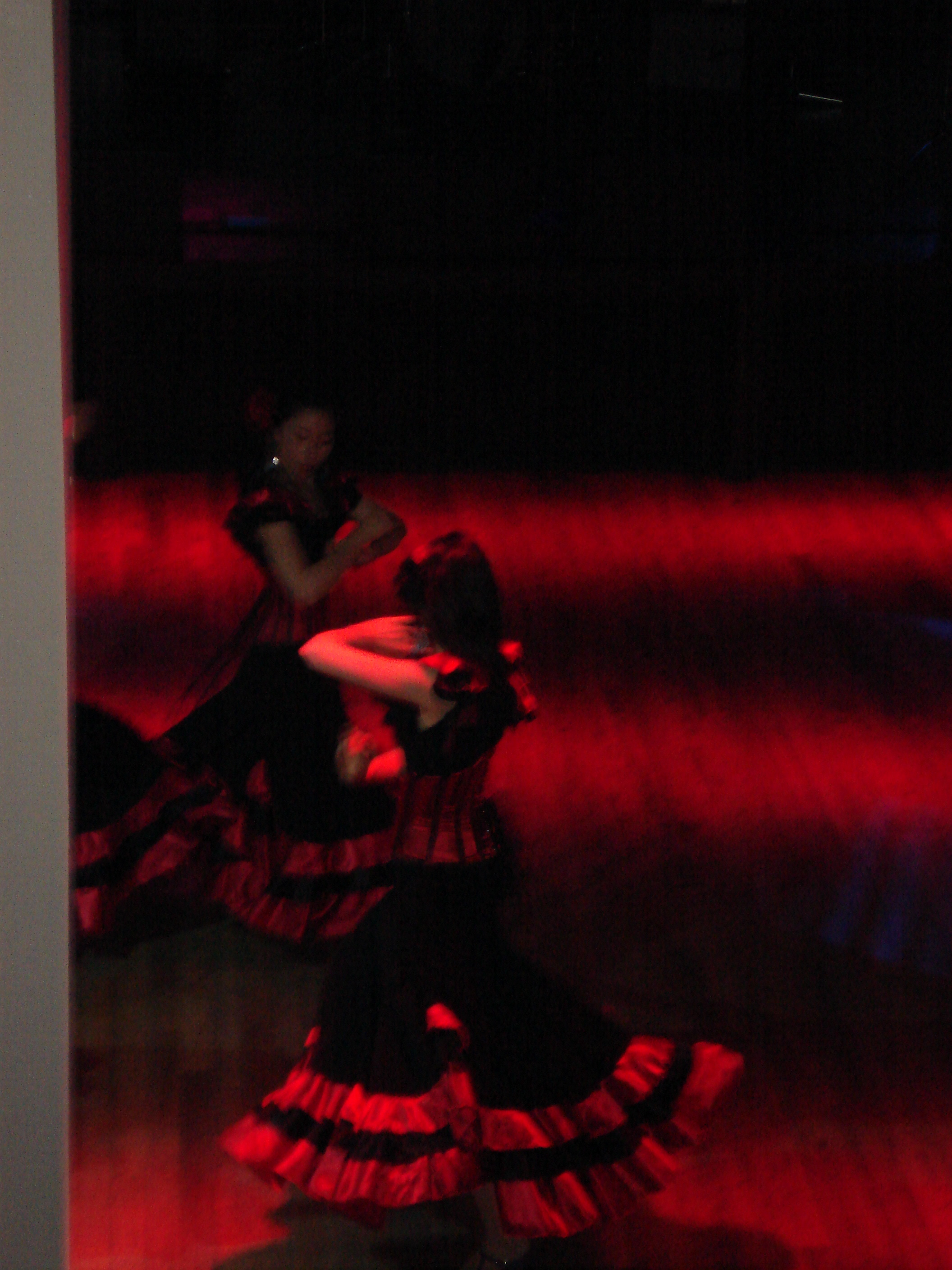
Unfortunately can't remember the name of this troupe!

Sorry PuSh fans, I am no longer live-blogging from the PuSh Gala. Unfortunately, the wireless in Club Five Sixty went out so, seeing as I am a little behind the times and sans smart phone, I could neither blog nor tweet.

I took some beautiful photos with Lois in the booths downstairs, took in Theatre Replacemcent’s “Weetube” which is always a Vancouver favourite, and lugged my laptop and tired little self home because I work early tomorrow.

As I left, I believe the band “The Zolas” were setting up, small theatre performances were under way in the lounge, and I’m sure the party hadn’t even peaked yet. I also saw Gregor Robertson near the photo booths tonight but I was too shy to say hello. Maybe next time.

If you want to follow the gala and other PuSh Festival events on Twitter, the hashtags that I believe were most commonly in use tonight were #PuSh2011 and #PuShFest. You can also follow the folks at the PuSh Festival itself at twitter.com/PuShFestival.