“Ghosts in Baghdad” and the Vulnerabilities of Heritage

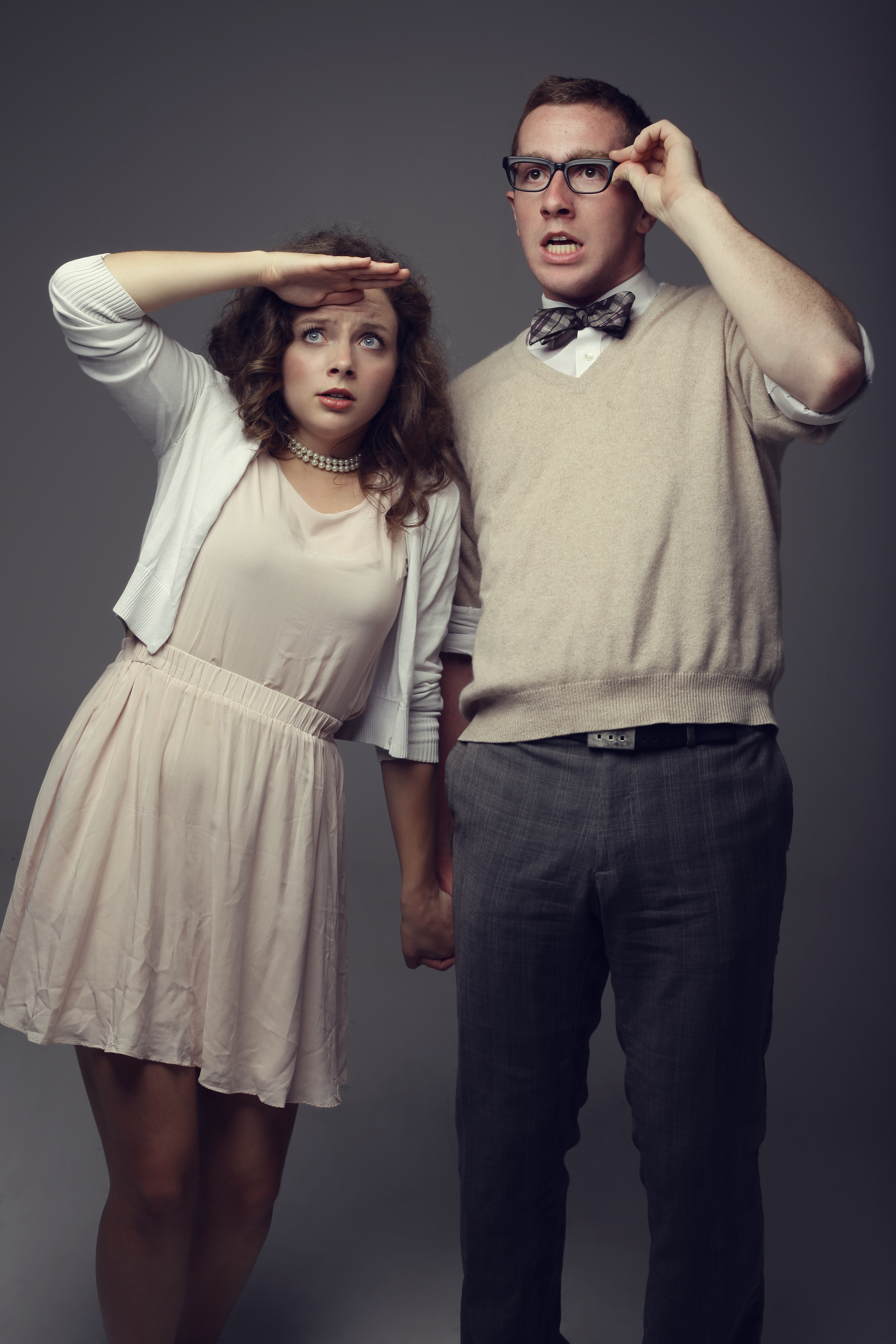
Sarah May Redmond (Malika) and Alec Willows (Khalil). Photo: Tim Matheson

Sarah May Redmond (Malika) and Alec Willows (Khalil). Photo: Tim Matheson

What would you do to protect your life’s work? Your country’s heritage? When does an object stop being a “thing” and become a treasure worth risking your life for? How far will you go to protect the treasures you hold dear?

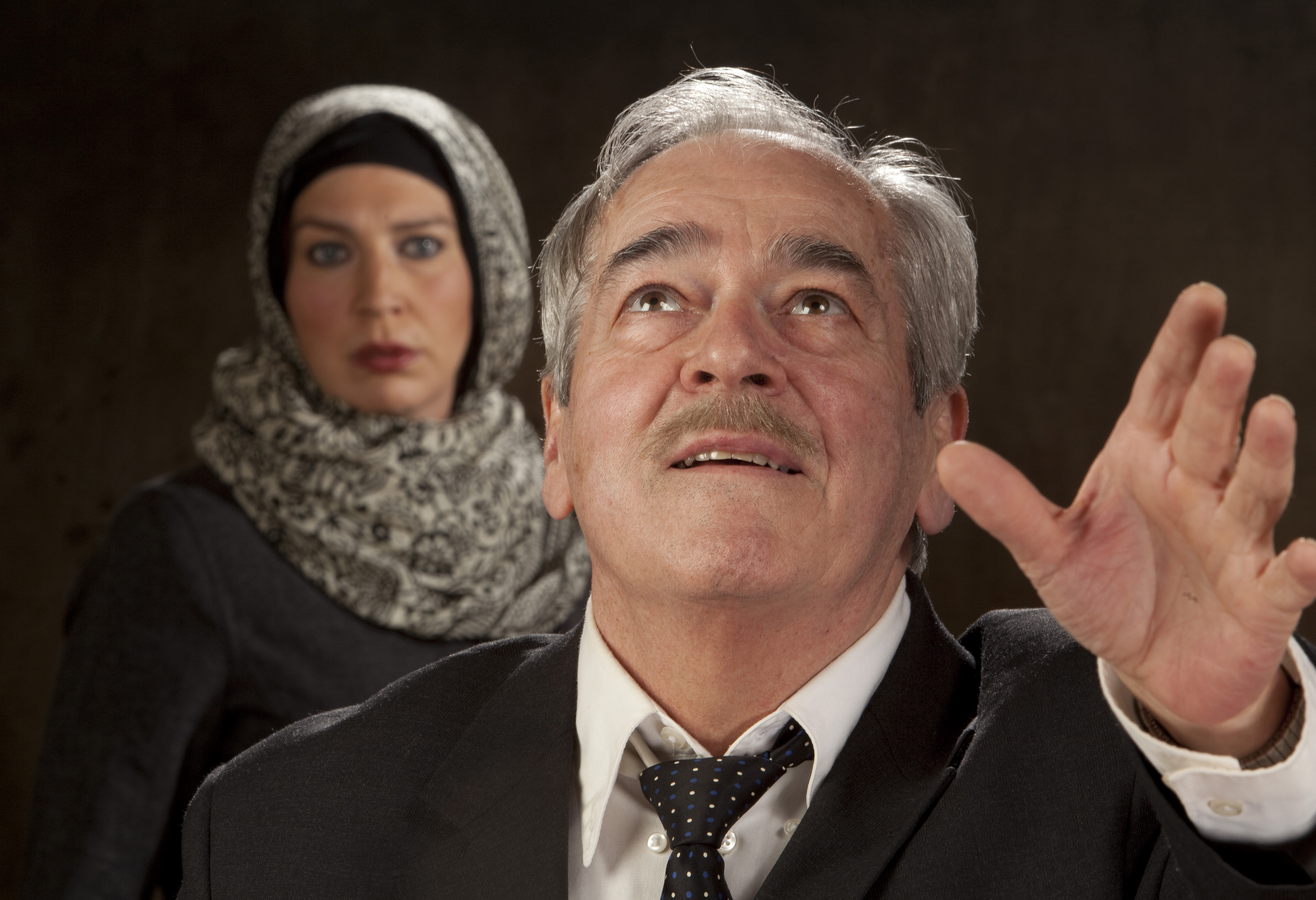
These are the questions posed by Ghosts in Baghdad, a new script by playwright and Working Spark Theatre founder Michelle Deines. Inspired by a New York Times article by Roger Cohen, Deines’ script centres around the complex decisions faced by Khalil and Malika, two fictional museum directors who continue their work in fear and isolation ten years after the 2003 American invasion and the looting, destruction, and subsequent closure to the public of the Iraq Museum. With thousands of ancient historical and cultural objects still missing and the Museum open only to government officials and foreign diplomats, Khalil walks the empty halls alone, dreaming of the day he can throw open the doors and share his country’s history with its people. Malika, meanwhile, hides away in her office, hunching over a piece of stone tablet she has been translating for over a decade, and while she tries to decide if her affection for country and colleague are enough to keep her in a city still so dangerous and full of sorrow. When a desperate young boy appears claiming to have found the missing Mask of Warka, his arrival threatens to unravel the delicate webs of secrecy and betrayal that have sustained what is left of the damaged Museum.

The Little Mountain Gallery, which houses this production, is a spartan venue that certainly has its difficulties (I’ve performed there myself so I know first hand). Working Spark has done an exceptional job of transforming this space, building a new and larger platform for the actors and bringing in more comfortable multi-level seating for the house. That said, the space has its challenges. The performance I attended was the Thursday-night preview and it was clear, both from director John Murphy’s comments before the show and the slightly tentative energy of the performers onstage, that there were still a couple of kinks to be worked out in the space. Without a conventional “backstage” in the Little Mountain, the transitions between scenes seemed to be a particular challenge for this particular performance. However, I trust these transitions are going more smoothly during the actual run of the play, and also recommend simply choosing the seats in front of the shallow thrust stage (rather on the left or right side) where the “offstage” movements of the actors won’t be as visible.

Still, the actors fill their roles with natural ease and without pretension (Gili Roskies’ performance as the youth Dawood is particularly arresting) and Deines and Murphy made important choices in the writing and direction that support this ease. The actors’ voices are without put-on accents and their dialogue is as casual and full of expression as any other English dialogue. These choices (i.e. the choices NOT to have the actors use accents or speak using phrases or expressions that are different from those we would use in everyday English) are tremendously important in that Working Spark has managed to set a play in Baghdad without casting the characters as “the Other”. Of course there are no special accents–Iraqi people are not “foreign” in their own country. Of course there are no unfamiliar expressions–the expressions used by native Arabic speakers would not sound unfamiliar to other Arabic speakers. The point is not to exoticize Baghdad or to pass any kind of judgement on its culture, before or after the American invasion. The point is that culture is important in itself.

What Ghosts in Baghdad shows us is the way in which society’s treatment of historical, natural, and cultural artifacts is a measure for the condition of its people. When looters storm a national museum and force its closure to the public, they steal not from an enemy force but from themselves. Only extreme circumstances would create that kind of selfishness in most people–circumstances whose immediacy renders centuries and millennia of artistry miniscule. You can’t eat a statue, or live in an ancient vase. An artifact in a display case can’t protect you from bullets and heritage can’t buy your ticket to a safer place. But if money could do these things–and you could find the right buyer–could anyone blame you? Sadly, these treasures once lost are usually lost forever, and a people whose history has been stolen and who are unable to take pride in their collective culture will find it that much more difficult to heal–but what can they do?

In Ghosts in Baghdad these questions are turned back on themselves, as those champions who have sworn to preserve their cultural artifacts struggle to protect them from the desperation of poverty and fear–and also from themselves.

Ghosts in Baghdad plays at the Little Mountain Gallery (Main at 26th Ave.) until Sunday, April 6 (no show Monday, March 31). Tickets can be purchased online through Brown Paper Tickets.

Disclosure: TC and I attended the Thursday-night preview courtesy of Working Spark Theatre. My content is my own.
Dancing Monkey Presents: “Someone Who’ll Watch Over Me”

Stop me if you’ve heard this one: an Irishman, an Englishman, and an American are chained to a wall–

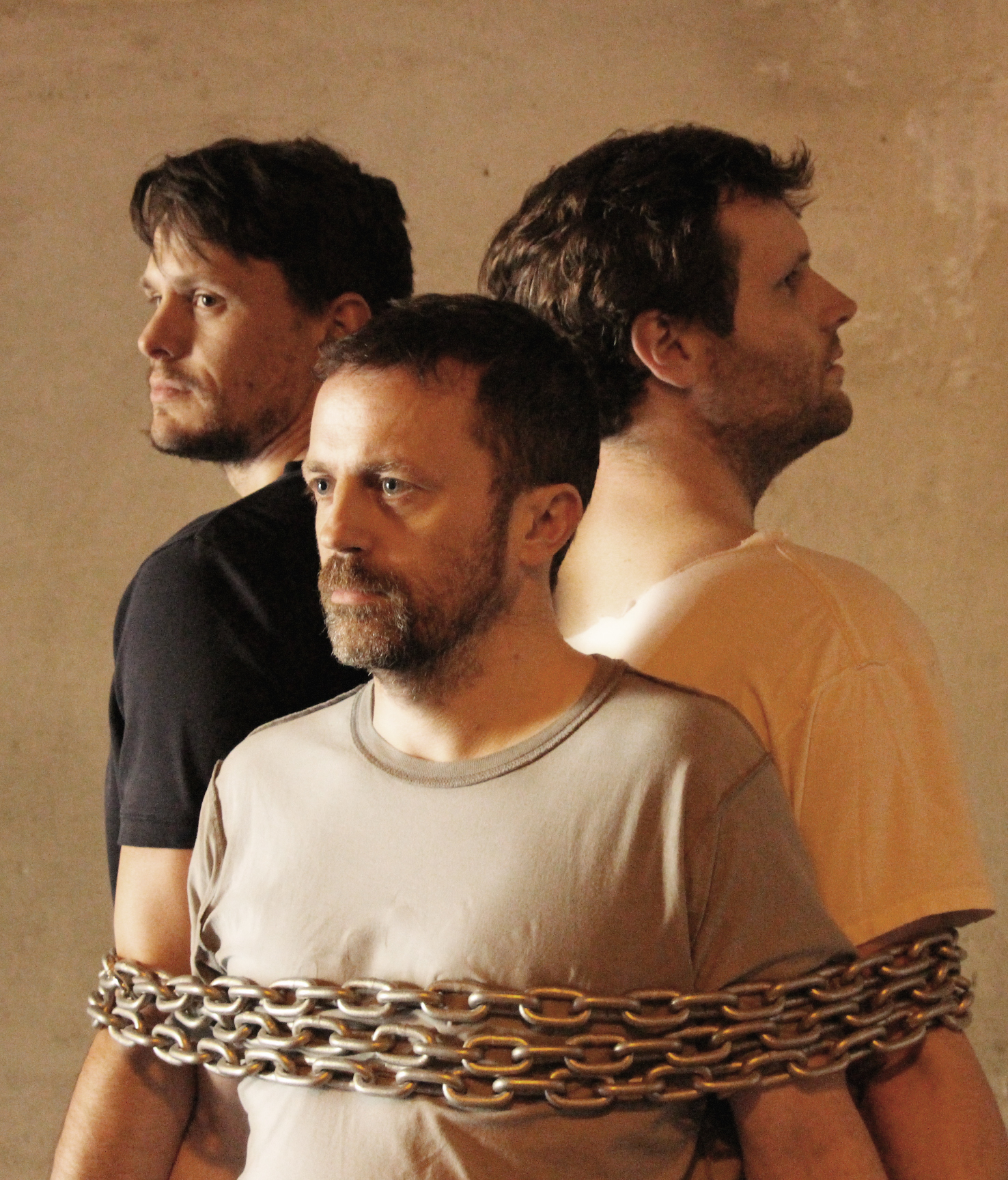
swwomlogoNo, this is not the set-up for some lame stereotypical joke, but the premise for Frank McGuinness’ searing play Someone Who’ll Watch Over Me, a story set not against the backdrop of the Lebanon Hostage Crisis, but chained deep within its dark belly. Under the direction of the luminous Julie McIsaac, the players of Dancing Monkey Presents wade neck deep into the waters of fear, despair, madness, and hope that threaten to overwhelm us when we are, quite literally, hostage to forces beyond our control.

Though the play runs over two hours (with a short intermission), McGuinness’ script is witty, biting, and fast-paced, taking its characters careening between the polemic and the playful, the religious and the ridiculous, between anger, insanity, honesty, and love. Though the Lebanon Hostage Crisis and its casualties are, of course, deeply rooted in the political realm, McGuinness’ story does not dwell on this, choosing to focus on the human beings beneath the hostages, in all their fear, self-righteousness, and unexpected kindnesses, rather than on condemning or excusing either the hostage-takers or the governments who may or may not have done all within their power to secure their citizens’ safe release.

McIsaac’s staging of Someone Who’ll Watch Over Me is simple yet effective. Three men are chained in a small bare room, lit by a single dangling bulb. We do not know what time of day it is, or where they are, and neither do they. Against such a sparse backdrop, the performances of Jay Clift (Adam), Ashley O’Connell (Edward), and Kirk Smith (Michael) truly shine as McGuiness’ script races them, and us, through an emotional labyrinth at break-neck speed. Each character is a pressure cooker, roiling with physical energy they cannot expend, anger they cannot unleash, and fear they cannot relieve. The script, which is actually quite funny at times, swings each man from tears to laughter and back again, relentless and unflinching.  The skill that lies beneath the delicately controlled performances delivered by Clift, O’Connell, and Smith is not to be understated.

Though 1980s Lebanon is worlds away for most of us, McGuiness and his characters strip away the layers of distance and time that separate us, the comfortable audience, from them, the men waiting to find out if they will live or die, if will they ever see their families again, or if anyone even knows what has happened to them. In the isolation of a cell, with the possibility of madness an ever-present companion, three men encounter the same fears that gnaw at most of us–that it does not matter where we are from, how educated we are, whether we are good or bad people. Things will happen to us that we do not understand and cannot control. We will not know why. We will not know if there is even a why. What we will know is what our reality is, in the here and now. We will know what the darkness is and we will have to decide how to live with it, no matter how short or long our captivity. In the darkness there is loneliness and helplessness but also humanity.

If I were to have a complaint about the evening it would be that the intimate seating still contained several empty chairs and Someone Who’ll Watch Over Me deserves to play to packed houses. With a ticket price of $16 (affordability being part of Dancing Monkey Presents’ mandate) a script this good, and performances this strong, there is really no excuse not to see it if you can.

Someone Who’ll Watch Over Me plays at Renegade Studios (125 E. 2nd Ave., Vancouver) for one more week, March 18 – 23, at 8:00 p.m. each night. Tickets can be purchased online or at the door (though the house is small so booking early is advised). NB: The vents are turned off during the performance and the space does get a little cold during that time so dress appropriately!

Clockwise from top left: Jay Clift, Kirk Smith, Ashley O'Connell

Clockwise from top left: Jay Clift, Kirk Smith, Ashley O’Connell

Disclosure: My guest and I were provided tickets courtesy of Dancing Monkey Presents. My content is my own.

The Troika Collective Presents Belarusian Dream Theater Vancouver

Poster design by Liam Griffin

Poster design by Liam Griffin

On Tuesday, March 25, The Troika Collective, in association with Ensemble Free Theater Norway (EFTN), will present the Vancouver iteration of the Belarusian Dream Theater project in Studio 4270 at SFU Woodwards.

From the announcement of the project in the Belarusian Review:

Belarusian Dream Theater [is] an international performing arts event supporting freedom of expression in Belarus, conceived by Brendan McCall, Artistic Director of EFTN.

On 25 March 2014, Belarus’ Freedom Day, partner theaters will present readings and/or performances of new short plays about Belarus simultaneously in Australia, Belarus, Denmark, Canada, Georgia, Germany, Greece, Hungary, Italy, Norway, Poland, Ukraine, and the United States.

[…] The hope is that this coordinated cultural event will stimulate a greater knowledge and interest in Belarus by international audiences, journalists, and artists.

So why is it important to know about what is happening in Belarus? Before becoming involved with this project, I must admit that I had not thought about Belarus in a long time (perhaps not since passing through it on a train when I was ten years old). I have, like many people, been keeping an eye on the political situation in Ukraine. Meanwhile, news from Belarus has been comparatively quiet.

As it turns out, that is because the Belarusian government has, for many years, severely restricted independent expression through a combination of legislation, intimidation, and force. Based on information from Amnesty International, the protests that have rocked Ukraine in recent months would likely not be possible in the political climate of Belarus today, especially given the country’s “Law on Mass Actions”:

In 2011 weekly “silent protests”, where groups of people throughout the country would stroll wordlessly, applaud or use their mobile phone alarms simultaneously, saw participants beaten, sentenced to administrative detention or fined.

The largest demonstration in the country’s recent history, following the presidential elections in December 2010, was suppressed with unprecedented violence. When police moved in to disperse it in the centre of the capital Minsk over 700 people were detained and many, including by-standers, were beaten and wounded. Four prisoners of conscience Mykalau Statkevich, Pavel Sevyarynets, Eduard Lobau and Zmitser Dashkevich remain in prison in connection to the demonstration to this day.

[…] Peaceful protesters are frequently sentenced to fines or short periods of detention for violating the Law on Mass Actions or for minor offenses such as swearing in public. Pavel Vinahradau, a member of the youth political movement Zmena (Change), spent a total of 66 days in detention between 30 December 2011 and 12 December 2012 on eight separate administrative convictions, all for minor offenses such as swearing or violations of the regulations for public meetings and pickets.

And it isn’t only protesters who are finding their freedoms of expression curtailed. Citizens wishing to join or create an independent organization (for support, to express an identity or opinion, etc.) must be sure the organization is registered with the government and meets the government’s strict registration requirements. Activists who have been deemed to be acting on behalf or as part of an unregistered organization face prosecution.

So where does Ensemble Free Theater Norway, the Belarusian Dream Theater playwrights, The Troika Collective, and the rest of the companies participating around the world come in? Well, though many of these plays could not be performed in Belarus (or at least not without considerable risk), they can be performed here in Canada, our actors and directors can speak without fear of reprisal, and we can listen. We invite you to join us for an evening of theatre, music, and hopefully, social good.

The Vancouver performance of the Belarusian Dream Theater project will take place on Belarus’ Freedom Day, March 25, at 8:00 p.m. in Studio 4270, SFU Woodwards. Admission is by donation (though no one will be turned away for lack of funds), with proceeds benefiting the Troika Collective’s operations. If you wish to support free expression in Belarus, proceeds from the sales of the plays being read/performed around the world as part of this project will go to Amnesty International. You can also make a direct donation to Amnesty International online at Amnesty.ca.

Disclosure: I am the co-artistic director of The Troika Collective, along with founding co-artistic director Aliya Griffin. The Troika Collective is a registered non-profit.

“Nothing But Sky” Delivers Nothing But Promise

nothingbutsky-783x600

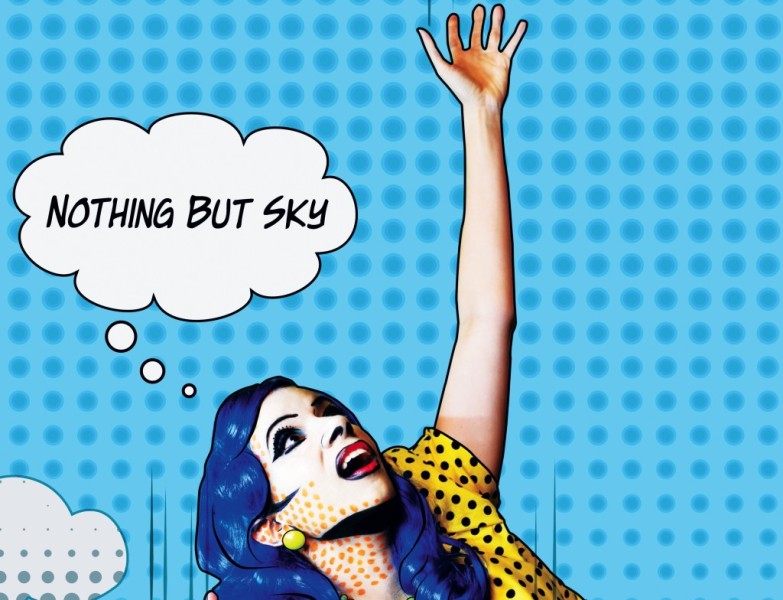
From now until March 2, The Only Animal invites you to step into the world of their latest production, Nothing But Skya comic-book world of heroes and villains, lovers and underdogs, flesh and ink. Written and directed by Kendra Fanconi, Nothing But Sky explores the true story of Joe Shuster and Jerry Siegel, the artist and writer behind the legendary Superman, and Joanne Kovacs, the original model for Lois Lane.

Feeling small and powerless in a big and uncaring world, Joe and Jerry dream up Superman–the ultimate champion of the underdog and protector of the weak, a man who can catch bullets in his bare hands and who disguises himself as a regular schmuck (i.e. bespectacled Clark Kent) to avoid discovery. Together, the pair create a hero stronger, better, and braver than they are, and dream of blue skies and smooth sailing for themselves and for their creation. Unfortunately for the friends and artistic partners, nothing is as black and white as their comic-book fantasy: DC Comics (to whom Joe and Jerry sell the rights) wants to control Superman (and his profits), and both men find themselves in love with their Lois Lane, a model named Joanne Kovacs. For Joanne’s part, she wants to be loved for who she is; a person in her own right and not just a stand-in for a paper and ink character.

The most breathtaking aspect of Nothing But Sky is most certainly the blending of comic-book animation with live staging. Projections create both the “real world” of the characters and the world of their creation. Eventually, for artist Joe especially, the lines between the world he has drawn and the world as it is begin to blur until we are not sure where he truly lives. The execution of this unique and challenging staging by the actors, artists, and technical crew is a laudable accomplishment. Nothing But Sky certainly does deliver promise–the promise of new horizons in theatre and new worlds to explore.

Unfortunately, not all of the play’s promises are realized. Though the performances are sharp (the comic-book action sequences especially), the story of Nothing But Sky seemed bigger than the four-person cast’s ability to carry it. Huge amounts of time (i.e. years) pass in a moment, with very little to anchor the audience or prepare it for this leap forward. Most notably, the character of Jerry Siegel comes off as sexually aggressive, socially selfish, and possessed by a delusional perception of his own artistic abilities. With so little to like about this character (despite actor Robert Salvador’s best efforts) I found that I cared very little about the betrayals and injustices he experienced, which is, I think, contrary to Fanconi’s intentions.

That said, Nothing But Sky is still absolutely an experience worth having. The production is a fantastic achievement by everyone involved, by turns magical, humourous, and sad. The technical wizardry alone is worth a look, but the way it is used to support the play is what makes it matter. With such an interesting story, such a beautiful set, and such solid performances, I really really wanted to feel my heart leave my chest. Though it didn’t happen as often as I would have liked, there are moments that truly drew my heart from my body, and those moments are definitely worth watching.

Nothing But Sky is playing in the Faris Family Studio at the Scotiabank Dance Centre until Sunday, March 2. Tickets are $25 ($15 for students on February 26 only) and can be purchased online.

Disclosure: My guest and I attended the opening night performance courtesy of The Only Animal. I was not asked for a review and of course all content remains my own.

“Corporations in our Heads”: the human event of the season

Artistic Director David Diamond. Photo credit: Tim Matheson

Artistic Director David Diamond. Photo credit: Tim Matheson

Technically, Theatre for Living (formerly Headlines Theatre) is a “theatre” company and therefore ostensibly makes “art”, but if you are lucky enough to attend one of their four remaining showings of Corporations in our Heads, you will see what I mean when I say it is a primarily “human” event, rather than a traditionally “artistic” one.

What I mean is that the “art” of it (virtuosity, technical wizardry, etc.) is not the point–we are. The event doesn’t happen without the audience because there aren’t any actors, and there isn’t any script. What the show does have is artistic and managing director David Diamond, who facilitates and bookends the various moments in the event as the audience creates it through their reactions and their questions and their stories. (The theatrical techniques used to make this happen are explained very thoroughly on the Corporations in our Heads website and it’s important to know that although participation by the audience is absolutely essential to the event and the evening is the richer for it, absolutely NO ONE will be forced to participate if they don’t want to).

So Corporations in our Head is a human event. And it’s a great one. Because every night will be different, I can really only describe what it’s like by explaining what happened to me, and what I took away from the experience.

The show (which is just finishing a tour through communities in Alberta and BC), is based on the premise that the corporations that produce and control the food we eat, the drugs we take, the clothes we wear, the phones we buy, etc.  have expanded out of the realm occupied by the products they sell and have taken up residence in our heads. As a starting point, the show identifies and explores the ways that, consciously or not, our decisions are affected (often unhealthily) by the corporate messages in our heads. As the show begins to unpack the messages recognized and shared by the audience (they always come from the audience, not the show facilitators) it is startling to see how easy it is to identify certain brands based on the corporate messages being shared, and the ways in which we, as human beings in a western society, relate to these messages and brands as we would relate to a real person who had a real relationship with us (examples uncovered last night include the “Lululemon best friend” who wants you to have the same sexy yoga-tastic booty-short fun she is having, or the “No Name Brand grandma” who can’t understand why you would spend more money on something of higher quality when you can just buy larger quantities of a poor quality product).

I have a feeling that the experience I had is going to continue to unfold and reveal and provide insights and eureka moments in the days and weeks to come, but at this time the idea that really struck a chord with me is the idea that we relate to corporations and corporate messages the way we relate to real people. As an example, many people in attendance last night, David Diamond and myself included, cited their deeply loyal relationship to Apple products, despite knowing what they know about labour conditions in the factories that make the products, and about what their relationship to technology is doing to their own lives (I have similar feelings of loyalty to products like Gmail and Microsoft Word, and WordPress, the platform that hosts my blog).

But relationships with corporations go beyond loyalty to a brand we like. Even those corporations and brands we don’t like have relationships with us, whether we want these relationships or not. At a moment during the show, I decided to “intervene” in a scene between an audience member playing herself in a grocery store, and another audience member playing a “Dove soap therapist”, a slippery character who refused to identify their true message and position and instead kept trying to convince the poor girl to trust that the corporation knew better. After I took the place of the girl in the grocery store, I quickly became frustrated and realized that for me, this slippery corporation was not Dove soap, it was Enbridge and the federal government, refusing to acknowledge the significant damage their pipeline will cause and instead insisting that they know better what I, as a Canadian, need and want. After Diamond told us we couldn’t speak anymore but instead had to move in slow motion, the scene became one in which I (in slow motion) began kicking and punching the corporate message as it continued to move calmly around me, holding and caressing and glomming onto my leg or my fist or my shoulder but not responding to the passion or clarity of my actions in kind.

It was embarrassing and frustrating and all too familiar. Because this is what frustrates me about the way the government and Enbridge are operating: they can’t say that a spill won’t happen, because that isn’t true, but they refuse to say, “Yes, a spill will happen, and we acknowledge the devastation this will cause, and we simply don’t care.” Instead they plan to commit extreme acts of violence against communities and ecosystems while refusing to acknowledge that this violence is occurring.

After I sat back down I suddenly realized that I also have had this kind of relationship with ex-partners, people with whom I was engaged in a toxic relationship of some kind, and who refused to acknowledge that their actions were hurtful or inappropriate and instead left me railing against the air, powerless and hurt and humiliated. This realization was a punch in the gut. Do corporations really treat me the way bad boyfriends did? I never consented to a relationship with the Harper government or Enbridge, what gives them the right? And how can I fight something that refuses to acknowledge that there is a conflict?

Based on facial expressions, gasps of recognition, and comments from people around me, I don’t think I was the only one having these uncomfortable realizations throughout the night. It was very profound to watch a middle-aged man in a sports t-shirt drop his head into his hands because he saw something in this dialogue that resonated with him. Or to watch audience member MLA Spencer Chandra Herbert, a man with extensive experience dealing with uncooperative politicians and situations in conflict, becoming flustered at his inability to turn off the unwanted bubbly messages of the Lululemon best friend (fun fact: Chandra Herbert studied in the same theatre program I did in my undergrad, though he graduated before I enrolled and I did not know him).

Throughout the evening, Diamond shared anecdotes from his experiences touring the show in other communities, anecdotes which informed the conversation we were having. Like the community where Lululemon products are only available at Christmas, increasing their cache as a desirable gift. Or the community where a mining company insists the town has to approve the mine it wants to operate, or the town will never be able to “compete” (with what? with whom? in what league, the Tournament of Towns?).

What I like about Theatre for Living is that their work doesn’t simply point a finger at the problem and leave us to feel shitty about it. That said, their work also doesn’t provide unrealistic, overly simplistic, or “one-size-fits-all” solutions to the problems being examined. Potential solutions are suggested or enacted by audience members, with varying degrees of success, the point being that we can begin to think about our relationships to these problems differently, not that we will necessarily happen upon solutions during the show. This is an attitude I admired during Theatre for Living’s previous show, maladjusted, which examined the mental healthcare system, and an attitude I appreciate even more when watching a show about an issue more intimately and insidiously familiar to me.

Corporate messages affecting our decision-making is a problem that can’t easily be solved by enacting a piece of legislation or by installing ad-blocking software. Diamond makes it clear that, “The impulse for Corporations in our Heads is not one that assumes we can end corporate messaging. [Corporations] are going to communicate with us…We cannot just turn it all off. We can, however, change our relationship to the messaging.”

What does changing this relationship means to you? You’ll have to discover this for yourself, though if you can make it to an evening of Corporations in our Heads I believe you will be in a good place to start figuring it out. This show will not do it for youwe are the ones who are in relationships with the corporations in our heads. Us. And we are the only ones who can change it.

Corporations in our Heads has only four nights remaining in its run:

  • Thursday, December 5 – Gallery Gachet, 88 E. Cordova St.
  • Friday, December 6 – Vancouver Aboriginal Friendship Centre (VAFCS), 1607 E. Hastings St.
  • Saturday, December 7 – SFU Harbour Centre, Terasen Cinema, 515 W. Hastings St.
  • Sunday, December 8 – Café Deux Soleils, 2096 Commercial Drive

All shows begin at 7:00 p.m. Please call 604-871-0508 for information or to reserve a seat.

If you want to read more about Corporations in our Heads, you may want to check out Theatre for Living’s website or this article on rabble.ca.

Artwork design: Daphne Blanco

Barcode butterfly: Daphne Blanco

Disclosure: I was invited to review Corporations in our Heads by Theatre for Living and provided two seats for the show. I was compelled to participate in one of the scenes by my recognition that something in the relationships I was seeing disturbed me (I was not personally asked to participate), and I think this was an enriching part of my overall experience. The content of this review is, as always, my own, and I give it gladly. I really, really, want people to participate in this important conversation.

Ridiculously Fun: Fighting Chance Productions’ Rocky Horror Show

rocky-posterIf you’re still a “Rocky Virgin”, it might be time to pop your theatrical cherry with Fighting Chance Productions‘ season opener, the cult classic Rocky Horror Show, playing at the Jericho Arts Centre until October 26 (with “11:59 Midnight” showings October 12th, 19th, and 25th).

Fans of the 1975 film The Rocky Horror Picture Show starring Tim Curry will know what to expect, but those who have never experienced the castle of Dr. Frank-N-Furter on either stage or screen are in for a bit of a shock. This show is NUTS, and it doesn’t make a lick of sense, plot-wise. That doesn’t mean it isn’t a great time. Though the film was originally considered a flop, a devoted group of fans soon made The Rocky Horror Picture Show an engaging and interactive experience through the development of “official” heckles and the use of audience props.

Fighting Chance’s Rocky Horror Show embraces (and often relies) on these traditions to make the performance the fun that it is. The cast members expect to be heckled and are not surprised when the audience showers the stage in rice or playing cards (for the safety of the performers, audience members are asked NOT to bring their own props, and to instead purchase actor-friendly prop bags available at the venue for $5 if they want to throw things during the show). Not knowing any of the traditional heckles, I felt a bit left out, but after doing some internet research it seems that part of the mystique is having to attend a showing or performance of Rocky enough times in order to catch on, and since the heckling is sort of ever-evolving, it’s hard to find a definitive source anyways (the Official Fan Site for The Rocky Horror Picture Show does NOT publish a list, though it does help clarify the Rocky phenomenon). In the spirit of good fun, I do have a few tips to get you Rocky Virgins started:

  • Whenever a character says the name “Brad Major”, yell “ASSHOLE!”.
  • Whenever a character says the name “Janet Weiss”, yell “SLUT!”.
  • Whenever Brad asks a castle resident for a telephone, yell “CASTLES DON’T HAVE TELEPHONES!”
  • When Dr. Frank-N-Furter sighs, “Whatever happened to Fay Ray?”, yell “SHE WENT APESHIT!”
Erika Thompson  and Will Hopkins play a nice young couple who don't know what they're getting into. Photo credit: Devin Kerringten

Erika Thompson and Will Hopkins play a nice young couple who don’t know what they’re getting into. Photo credit: Devin Kerringten

By and large, the performances (by both the leads and the chorus members) are pretty solid. Good singing, good dancing, lots of camp and naughtiness, but one performance truly stands out: Seth Little simply dominates as Dr. Frank-N-Furter, with a voice to match his physical prowess. Every purse of his painted lips or cock of his pencilled eyebrows is both perfectly natural and right on cue. Little speaks, moves, and sings with the ease of a seasoned drag veteran (one would think he wears a corset and heels every day of his life, and who knows, maybe he does…).  I love when a performer takes a difficult role (especially such an iconic one) and makes it seem effortless; Little is a pleasure to watch. A special nod should also go to Erika Thompson for her performance as the ingenue-turned-“slut” Janet Weiss, and Steffanie Davis for her delicious portrayal of Dr. Scott.

Few opening nights are without their technical hiccups and unfortunately during Tuesday’s performance serious microphone issues left some main characters without a mic for several musical numbers (thankfully never Dr. Frank-N-Furter), and overall, I felt the musicians needed to be turned down just a bit so as not to overpower the singing. The draped walls and cavernous ceilings of the Jericho make it a difficult singing space to begin with, so even with a talented cast doing their valiant best, a lot of lyrics were lost over the course of the night. Having worked with (and attended many productions by) smaller theatre companies, I am usually pretty forgiving of technical snafus (especially on opening), however, given that tickets to the Rocky Horror Show sell for $39.25 each ($34.25 for students/seniors), the audience really should be able to expect a fairly high level of technical mastery. I sincerely hope these technical issues are just a case of “Opening Night Murphy’s Law” and will be worked out for the remainder of the run–it would be a shame if they prevented anyone from enjoying what is an otherwise outrageously pleasurable show.

Luckily for Fighting Chance (and for the audience), if any show can handle a few technical disasters it’s the Rocky Horror Show. It’s raunchy, campy, and incredibly interactive. The characters know they’re putting on a show and they can react to technical mishaps with humour and cheek. The audience is never meant to forget that they’re watching a performance so it’s not a big deal if we can see some of the strings being pulled. Technical issues aside, the Rocky Horror Show is absolutely ridiculous and is ridiculously fun to watch.

The Rocky Horror Show runs until October 26 at the Jericho Arts Centre. Tickets can be purchased online or by telephone at 604.684.2787.

Disclosure: My tickets to the Rocky Horror Show were provided by Fighting Chance Productions. The content of the review is my own.

Hive: the New Bees 3 (Chapel Arts, June 11-14)

New Bees 3 BannerThe buzz is back! Following on the heels of the successful New Bees 2, Resounding Scream Theatre‘s Catherine Ballachey and Stephanie Henderson have once again corralled almost a dozen emerging theatre companies into the labyrinth that is the Chapel Arts gallery in East Vancouver. Together, this eclectic hive mind has conspired to bring you Hive: the New Bees 3, running Tuesday, June 11 to Friday, June 14, in nooks and crannies all over Chapel Arts.

Considering New Bees 3 is the sixth Vancouver Hive event (there have been three professional Hives facilitated by the Progress Lab and three events, including this one, produced under the “New Bees” banner), many of you may be veterans of the Hive scene already. In case you’re not, here’s the skinny on what you can expect:

  • The doors open at 7:30 p.m. and shows will run simultaneously, in various spaces, until approximately 10:45 p.m.
  • You can see as many (or as few) shows as you want, in any order you want.
  • Before, after, or between shows, you can drink at the bar and enjoy the ambiance of arts and culture.
  • Due to space restrictions in the different Chapel Arts performance areas (which includes coat rooms and bathrooms), each show has its own limits on the number of audience members it can hold at one time. You’ll need to scope the place out, and, if there’s a particular show or company you know you want to see, it’s a good idea to line up/sign up for that one early.
  • At approximately 11:00 p.m. on Friday (following the final performance), the after party will begin with the Gal Pal DJs. 90s dance hits will be playing. The bar will be open. Party party.

If you’re looking to test the waters of the emerging theatre scene in Vancouver or just test the waters of the Vancouver theatre scene in general, an event like Hive: the New Bees 3 will be a good place to start. Last year, the Georgia Straight’s Colin Thomas called New Bees 2 “an intimate adventure, which is exactly what theatre should be,” and I am sure the companies participating in this year’s theatrical caper will continue in this new tradition.

Hive: the New Bees 3 will feature 11 emerging theatre companies:

Many of these companies participate in New Bees 2 and some are brand new to the event. All of them will be bringing varied and interesting work to their little corner of Chapel Arts. Why don’t you join them?

Hive: the New Bees 3 will run from Tuesday, June 11 to Friday, June 14 at the Chapel Arts gallery (Dunlevy and Cordova). Doors open at 7:30 p.m. Tickets available online through Brown Paper Tickets.

[SHAMELESS PLUG ALERT: I wrote the text of the Troika Collective’s piece this year. Even if I hadn’t I would still be recommending this event. :)]

(I think) I know what a play is!

FairholmeHouse

This is not a play. This is a house.

Sound the trumpets! After five years spent completing a BFA in Theatre Performance and four more years performing in and writing plays, I think I have finally figured out what a play is!

(Kind of.)

A famous question theatre artists are told to ask themselves when they decide to produce, direct, or write a piece of theatre is “Why this play? Why now?”. When writing a play, that question can be extended to also ask, “Why is this story a play? Why is it not a work of fiction, or a poem, or a film script?”

For the most part, I can never quite articulate why this play, why now. I think the point of the question is the struggle to answer it–struggle that informs the work I’m doing and helps to imbue it with urgency and intention. Unless I work on a directly topical piece of theatre, I will never have a completely satisfactory answer to this question, and I am satisfied with that.

But when it came to the question of why any particular story was being written as a play, my answers used to be something along the lines of, “Because I’m writing it as a play” or “Because I have more experience with theatre than with any other genre” or “Because I was asked to write a play.” These are terrible answers. They are nowhere close to satisfactory and I should never have been satisfied with them.

But thank goodness, I’ve figured it out. Sort of. At least for theatre with text. Or at the very least, for the theatre I write. Which is, I suppose, all that matters when I’m writing a piece of theatre. The answer, my friends, is really very simple:

The play that I’m writing is a play because it can’t be anything else.

Mind blowing, isn’t it? Something is something because it could not be anything else. Perhaps you think it shouldn’t have taken a degree and four extra years of experience and part time study on top of that for me to figure this out, but some of us are slow learners. Besides, it’s not as though I haven’t heard other writers say this before, but a lot of writers say a lot of things about their work that are not at all applicable to mine. Until I figured it out myself, in my own work, it just wasn’t true yet.

My process was thus:

I wrote a very short play that was very narrative. In many places, it read like fiction.

I changed certain passages to make them sound more “play-y”. Then I didn’t like that so I changed them back. Then I got feedback from a respected source that I should change the verb tense of these passages to make them more “active” (a better word than “play-y”). I have yet to do this. As of now, the play has remained untouched for three months.

Instead, I made a digital copy of the script and began taking it apart. “There’s a lot of narrative here,” I thought. “Fiction?” I thought, “Why not?” I decided to give it a try; after all, I’m no less trained to write fiction than I am to write plays (which is to say, not trained at all). Since nearly two-thirds of the play read like fiction anyways, I thought turning the script into a short story would be both natural and simple.

Ho HO. Not so.

My strange little play, imperfect though it was, deflated like a wrinkly old balloon the moment I tried to “fiction-ize” it. It was clunky. It was heavy. The character’s lines, instead of resonating my ears, dragged themselves sullenly along the floor of…what?

Of a stage. When I tried to fiction-ize my play, break free of the confines of staging and truly inhabit the setting I’d placed my characters in, I realized the ground the characters walked on was a stage floor, and the air they breathed to speak was the rarefied air of a darkened theatre, and even though I can see my setting in my mind’s eye, clear as day, nothing will ever change this. The story itself is where I put it, in my mind. But the telling? The telling is on the stage.

There are narrative plays (lots of them, actually) and there are very theatrical works of fiction, and the way I was able to figure out which one I was writing was by asking myself this: Do these words need to be said aloud, not just quoted in quotation marks on the page but actually, physically, create sound waves and exist together with no “she said”, “she cried”, etc. to mediate them?

For my fiction-y little play, the answer is yes. The text is meant to be spoken aloud. And not just read aloud, the way poetry is read aloud. The text is meant to be performed, its skeleton fully fleshed out by the intelligence and craft of artists and its voice ringing in the ears of an audience. So what if my play’s not “active”? A good actor can make a whole room with just the sound of their voice.

That’s not to say I won’t be returning to this piece, dusting it off, and doing what I can to “activate” the language without damaging its soul. This play is a play because it can’t be anything else. But whether or not something of mine is a good play, well, that’s a whole other question for me to contend with and I’m afraid I’ll just have to get back to you. It could take years.

The Troika Collective Presents “Chernobyl: the Opera”

Poster design by Arthur Yee

Poster design by Arthur Yee

From May 14 – 19, the intimate Carousel Studio Space on Granville Island will play host to stories of the Chernobyl nuclear disaster. The Troika Collective‘s Chernobyl: the Opera, conceived and directed by Aliya Griffin and composed by Elliot Vaughan for accordion, cello, and seven voices, weaves physical precision and haunting melodies together with verbatim text taken from interviews with survivors of the disaster. The results are at once poignant and strangely beautiful.

If you’re wondering if you’ve heard of Chernobyl: the Opera before, it’s probably because you have. A shorter iteration of this piece was performed in last year’s Hive: the New Bees 2 to critical praise. The Georgia Straight’s Colin Thomas was impressed by composer Elliot Vaughan’s “sophisticated score” and called the piece’s execution “terrifically precise” (Georgia Straight theatre reviews, May 25, 2012). Following the success of New Bees 2, Griffin and Vaughan have added both to the cast and the music, filling out the sparseness of the New Bees version while maintaining its specificity and non-sentimental quality (I watched a short preview of Chernobyl: the Opera at a Troika Collective fundraiser two weeks ago and was very impressed with the changes I saw).

Troika Collective_BWChernobyl: the Opera will run from May 14 – May 19 in the Carousel Theatre Studio on Granville Island. Tickets for the May 15-19 performances are available online through Brown Paper Tickets.

The May 14 performance will be a pay-what-you-can preview, with all proceeds benefiting the Veronika Children Leukemia Foundation. Following the May 14 performance, Grigori Khaskin, Research Associate in the Biology Department at SFU and a former Chernobyl Liquidator, will be giving a talk.

All in all, Chernobyl: the Opera is an exciting new work from an exciting emerging theatre company. It is not to be missed.

Disclosure: I was a performer in the New Bees iteration of Chernobyl: the Opera. Though I am no longer involved in the project (and not because I was kicked out or anything scandalous, just boring time issues), many members of the Troika Collective are my friends. Friends or not, Chernobyl: the Opera is a damn good show by a company that has earned my respect and support.

Beyond “Raising Awareness”: Theatre for Living presents “maladjusted”

From now until March 24, a much-needed conversation will be taking place at the Firehall Arts Centre. maladjusted, created, workshopped and presented by Theatre for Living (formerly Headlines Theatre), explores the challenges facing our mental healthcare system through a “forum theatre” event.

Micheala Hiltergerke and Pierre Leichner. Photo credit: David Cooper

Micheala Hiltergerke and Pierre Leichner. Photo credit: David Cooper

In the wake of recent tragedies, much lip service has been paid to “removing the stigma” of mental illness and ensuring that people suffering from mental illness or emotional distress are able to access the help they need. Unfortunately, with many of us, our involvement stops there. What we don’t realize, and what maladjusted exposes so well, is that getting people into the mental healthcare system is not enough–what do we do with them once they’re there? Is our current system, increasingly mechanized in the name of “efficiency”, sufficient to ensure our most vulnerable citizens receive care that is compassionate, sensitive to their needs, and actually healthy for them?

The answer, according to the many generous patients and mental health caregivers that comprised the show’s workshop participants, is a resounding no. The failure of an overburdened and increasingly impersonal system to properly diagnose and treat people with mental health issues is contributing to the escalation of already urgent situations. The first half hour of maladjusted is a play (in the traditional sense) that provides logical examples of the ways in which these shortcomings play out for patients, families, and caregivers in a system like ours.

But this would be nothing new. We are used to theatre that exposes. We are used to theatre that points a finger and says, “This. This is a problem.” And we are all used to theatre, films, art, and events that “raise awareness”. Theatre for Living takes this process further, beyond the pointing of the finger and the raising of the awareness. They say, “This. This is a problem. Now what would YOU do about it?” And most importantly, they let us answer.

It’s hard for me to describe just how the forum theatre format allowed me to participate in a discussion about mental health and human-centred care (you’ll have to experience it for yourself), except to say that my own understanding of the issues was heightened, my ability to empathize was increased, and I felt that my role in the evening was empowered. Instead of passive audience members, we became actors in our own right (some on the stage, and some within the human transactions and interactions we’ll be having in our own lives).

Central to the empowerment provided by this important conversation is the creation of a Community Action Report. As different issues are addressed during the forum portion of the evening, the audience is asked to suggest specific policy changes that could help patients, caregivers, and families better navigate the mental health system in a way that works for them, rather than for efficiency or budget figures. Each night, the show’s Community Scribe takes down the ideas put forth. According to the company,

“Theatre for Living has written agreements from various mental health organizations including The Mental Health Commission of Canada and The Canadian Alliance on Mental Illness and Mental Health to use the  maladjusted project and the resulting Community Action Report to inform their policy development.”

By attending the show as an audience member, you contribute to this necessary conversation. I left the Firehall that night feeling, somehow, that I had done a good and necessary thing. I didn’t feel powerless against the huge issue I’d been presented, though I had a better appreciation of the challenges and the stakes.

maladjusted runs at the Firehall Arts Centre, Tuesday to Sunday at 8pm, from now until March 24. Tickets can be purchased online through the project webpage.

Disclosure: My ticket to maladjusted was provided by Theatre for Living. The content of my review remains my own.