Sorry Pop, I’m a Closet Monarchist

queen-1_2403579bWhen I was in grade 5, my father helped fill the gaps in my social studies curriculum by explaining to me how the “Governor General” part of our parliamentary system really worked. He explained that the Queen was our head of state (which is why her face is on the money), but that neither she nor the Governor General actually DID anything to govern the country, and that Canada’s membership in the Commonwealth was really just a leftover from days gone by. Though I can’t remember the exact words my father used, the gist was that the monarchy was stupid and Canada didn’t need it.

Being a very politically minded ten year old with strong notions of what was “fair” and what was “stupid”, I wholeheartedly agreed with my dad. I even made up a song in support of Canada severing its ties to the monarchy (to the tune of O Canada–I sang it to my sister but she wasn’t a huge fan so I never sought to record it). For the most part, I still agree that to pretend Canada is ruled by a British monarch when in actual fact we are governed by a Prime Minister (and an increasingly powerful PMO) is a bit stupid.

So why did I just catch myself googling articles about baby Prince George’s christening? Why did I bother finding a YouTube video of the Royal Wedding a couple of years ago so that I could watch the ceremony and cry a little as two complete strangers exchanged vows? Why am I so fascinated by the life of the young Elizabeth II, and her parents before her? Why do I agree that Canada’s parliamentary system doesn’t make much sense nowadays while secretly hoping it will never never change? (With regards to the monarchy, I mean, not the more pressing ills plaguing it).

I don’t think it’s just celeb-worship–while I flip through an InTouch or Life&Style in the staff lunch room every now and then, I don’t seek out celebrity news or celebrity photos (though I seem to absorb more than enough of it anyways). And it takes more than being rich and royal to interest me (I’m not interested in the royal cousins, Sarah Ferguson, or any other Windsor-family offshoots). And Prince William is NOT a handsome man (despite what Maclean’s politely prints about him, he’s just not. He’s tall, he’s neat, and he does not yet appear to have a beer gut, but that’s it). So what the hell is the appeal?

Maybe it’s just nice to see a nice young couple behave nicely in public. Most young famous people in the news these days do NOT act very nicely in public. That last sentence made me sound about seventy years older than I actually am, but it’s true–I mean, Justin Bieber wore OVERALLS to collect his completely undeserved Queen’s Jubilee Medal for goodness sakes. (Someone I work with also received a Queen’s Jubilee Medal. He is a wonderful educator who devoted years of his life to volunteerism and to helping young people enjoy and understand math, and though Stephen Harper did not personally give him his medal, you can bet your ass my colleague dressed for the occasion). But I digress. My point is that the Duke and Duchess of Cambridge seem like a nice young couple who comport themselves very decorously through an endless stream of public engagements that I would find mind-numbingly boring. I also have a lot of respect for the Queen, who’s been comporting herself decorously through mind-numbingly boring public engagements (on average more than once daily) for over 60 years.

Is it absolutely stupid that some people, by virtue of their birth alone, are supported in relative wealth by the public purse, are pursued relentlessly by media, and are required to christen boats, tour cracker factories, and publicly announce the birth of their children? Yes. It’s stupid. It’s absolutely stupid. But there’s something comforting about it just the same. It’s not just that everyone likes the idea of a fairytale (and royal weddings in which the heir to the throne marries a commoner are the closest we can get to Cinderella’s ball)–there’s something about watching people carry out a duty they did not ask for, politely and without complaint, that does us good. With the exception of Charles’ and Diana’s carryings-on, the British royal family uphold an image of propriety in an increasingly vulgar world (a world where just the other evening a drunk man peed in my stairwell, such fun!). And it’s not a life I’d want, riches or no riches.

Do you think the pregnant Duchess enjoyed a slew of news cameras all but up her uterus as she was giving birth? Do you think William enjoys having stories about his dead mother smeared across newspaper stands and screamed on the nightly news every time some quack has a new conspiracy theory about her death? Do you think either of the royal couple enjoyed having their engagement and marriage compared to that of Charles and Diana, a marriage that failed so disastrously and so publicly they can never be free of it? Do you think the Queen enjoys touring the aforementioned cracker factories or standing on a barge in the pouring rain as a flotilla goes down the Thames in her honour (if someone was going to do something in MY honour, I’d ask to not be standing around in the rain, please). Do you think the royal family enjoys having to ask the British government for money every time their home (Buckingham Palace, which also doubles as a tourist attraction) gets a leaky roof or a past-due carpet? Of course they don’t. But they do these things, all of them, and they never act as though they mind. They understand the ways in which they are privileged and accept the ways in which they have to pay the price. In other words, they’re the absolute best kind of rich people, and for that, I bear them no ill will.

My respect for the Windsors’ commitment to their duty aside, perhaps I, like many other closet monarchists, just like being able to watch a young couple live out their (relatively) normal life–dating in college, getting engaged on vacation, getting married, having a baby, etc. I wonder if everyone should be assigned a random young couple whose lives they can follow with interest and a sense of good will even though they have no personal connection to them. Isn’t it nice to want happiness for total strangers who can do nothing for you? I think so. Whether you agree with the monarchy as part of a governing structure or not, you can’t deny that if “Will and Kate Windsor” were just a new couple in your neighbourhood you’d probably think they were very nice and wish them the best as they started their family. The fact that they’re “royal” really shouldn’t change that. Like a win for our favourite sports team, a turn of good fortune for the royal couple (like the delivery of a healthy baby) is something that people seem to rally around and be happy about. And why not?

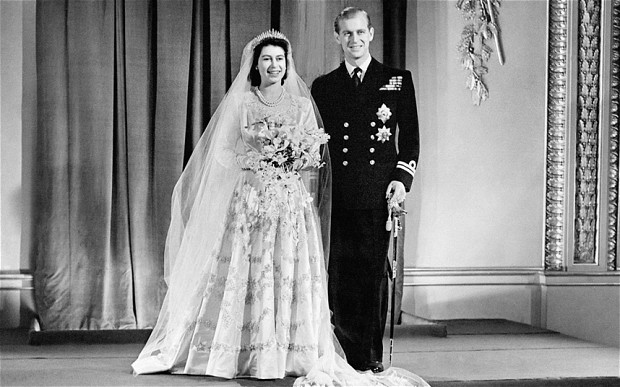
Maybe deep down the real reason I am interested in the monarchy is because somewhere in my mind I have confused the Queen with my grandmother. A much more soft-spoken, well-dressed, and British version of my grandmother. Actually, Queen Elizabeth II and my Latvian grandmother are nothing at all alike, but I don’t care. I once saw a photo of the Queen at her wedding (when she was still Princess Elizabeth)–her gown was relatively simple with long white sleeves and a long filmy veil. Though my grandmother’s wedding dress was not similar in grandeur, her style was similar in sentiment–same post-war simplicity and modesty, same white sleeves, same long filmy veil (same hairdo too I think, though my grandmother did not have a tiara). Same soft black and white photographs, same tall husband standing with military erectness, beside and a little behind his new wife. All of this is absolutely fascinating to me.

I also once heard an anecdote in which one of the Queen’s hunting dogs brought her a nearly dead pheasant (this happened in 2000, I believe). Her Majesty took the bird from the dog’s mouth and wrung its neck until it was dead (I assume to end its suffering, as it had already been shot). I like to think that my grandma, who was raised on a farm (until the Soviets took it away), would do the same. Some may shy away from the harsh realities of pastoral life, but not the Queen and my grandma, no siree. If a pheasant’s neck needs wringing, they wring the pheasant’s neck–no harm, no fowl.

[Sorry, I couldn’t resist. I’m trying to cheer my dad up now that his daughter’s a monarchist against both our better judgement. I guess I was smarter at ten than I am at 27.]

UPDATE: My mom says I forgot to mention that I have a British passport–very true, I am a dual citizen. So if one is a subject of Her Majesty by virtue of being British, or by virtue of being Canadian, then perhaps I’m such a monarchist by virtue of being DOUBLY a subject of the Crown. Such fun!
Canadian Democracy Round-Up Fall 2013

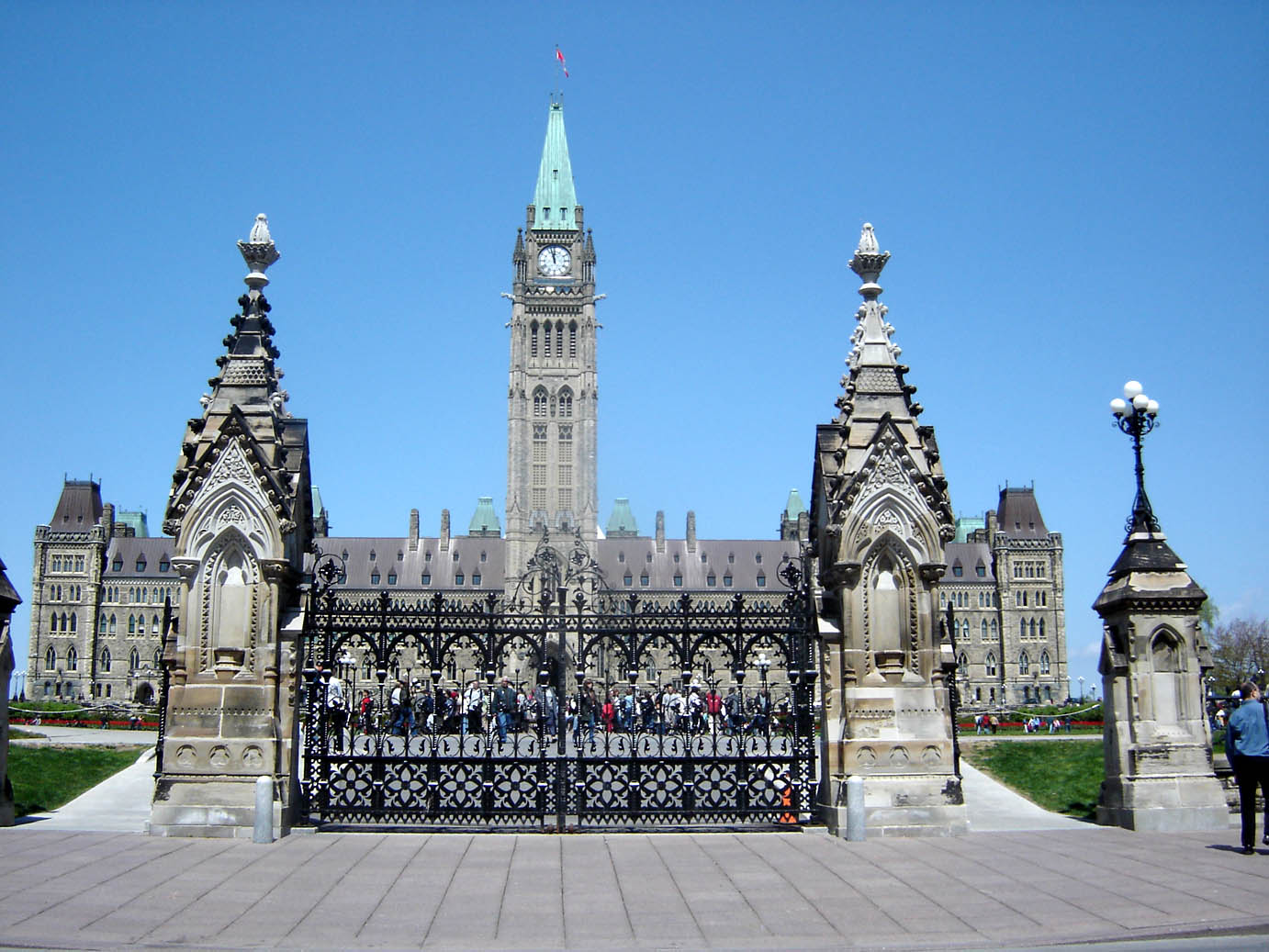
Parliament_Hill_Front_EntranceIt’s been a long year for this lil’ blog o’ mine, and a long year for democracy in Canada. Considering we’ve now passed the half-way mark between the 2011 federal election and the next one, I wanted to take stock, in a general sense, of what’s been going on around me while I was busy thinking (and writing) about other things.

So, in no particular order, I give you my Canadian Democracy Round-Up for Fall 2013:

IDLE NO MORE AND BC RECONCILIATION WEEK PUT FIRST NATIONS ISSUES FRONT AND CENTRE, AND THE OPPOSITION PARTIES, AT LEAST, ARE PAYING ATTENTION

I’ve learned so much more about the history of First Nations people in Canada and the disastrous legacy of Residential schools in the past year than I’d learned in the whole of the rest of my life (and I even grew up near a reserve, so I really don’t have much of an excuse except that the issues weren’t much taught in my school). And I truly believe that Canada as a whole can only benefit from the success of this movement–culturally, environmentally, and morally–and from real, concrete acts of reconciliation with First Nations people. I also believe the legal challenges several First Nations have filed against the Canadian government’s proposed pipeline projects are maybe the best chance we have of escaping a massive spill in this province.

[One of my favourite pieces written about this movement is called An open letter to all my relations: On Idle No More, Chief Spence and non-violence by Anishinaabe lawyer and excellent writer Aaron James Mills. Please read it if you haven’t already.]

STEPHEN HARPER REALLY REALLY WANTS TO KEEP POWER, BUT I’M NOT EXACTLY SURE WHY.

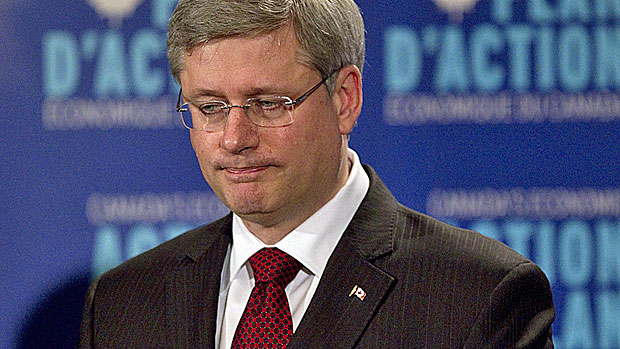
harper-620-9847209Stephen Harper wants you to think that a stable majority government for the Conservatives is necessary to steer Canada through dark economic times, but I honestly can’t see how Canada would be any worse off under any other government’s management than it is now. If Harper really wanted to improve Canada and make it a better place to live for Canadians (including First Nations people and new immigrants), he’d make policy decisions based on sound scientific and statistical evidence. Instead, he’s prorogued Parliament, again, so that he can focus on trying to coerce BC First Nations into agreeing to various oil pipeline projects that would destroy BC’s pristine landscape (and the tourism industry it supports, not to mention an entire way of life for First Nations people) and bring in very few permanent jobs. Oh, and Harper and his message are stompin’ around the BC countryside right about the same time as BC’s Reconciliation Week. Sound (or tactful) policy this ain’t.

Generally speaking, Harper’s been spending his time making sure he’ll be reelected. Most of his decisions do not benefit Canada, but they do benefit his party, the corporations that support it, and those who share his conservative ideology. The Canadian government’s muzzling of scientists, for example. Why would you want to keep scientists from making their research public? Surely the public, who pay for the research with their tax dollars, have a right to the information required to make sound decisions about the future of their country. The Canadian government, after all, is merely meant to represent the will of the Canadian people, not effectively decide what their will is by withholding information from them. But, of course, much of this research could jeopardize the Harper Government’s claims that they take the environment seriously (as they essentially copy-paste oil lobbyists’ requests into legislation), so it must be controlled. Ho hum. So much for science.

But surely the Parliamentary Budget Officer, whose mandate, according to the PBO’s published literature, “is to provide independent analysis to Parliament on the state of the nation’s finances, the government’s estimates and trends in the Canadian economy; and upon request from a committee or parliamentarian, to estimate the financial cost of any proposal for matters over which Parliament has jurisdiction”, would meet with no resistance to his requests for information? Well, no. Unfortunately, the PBO kept asking questions the government didn’t like, so they made it as difficult as possible to find the answers. Answers which, as it turned out, Canadians desperately needed to keep us from doing stupid things like paying for outlandishly expensive F-35 fighter jets. Thank you PBO!

As for you, Harper Government, what the hell do you want to keep running Canada for? You clearly don’t like our country all that much.

JUSTIN TRUDEAU WINS LIBERAL LEADERSHIP RACE. THE FIRST MAJOR THING HE DECIDES TO DO IS TELL US HE SMOKED POT A FEW TIMES (ONCE EVEN AFTER HE BECAME AN MP).

Gasp. Big deal. Trudeau used to work in Whistler, after all. The only thing newsworthy about this is the hoopla everyone, Trudeau included, is making about it. And that Trudeau was stupid enough keep talking about it when he should be trying to prove to people that he’s not too young or inexperienced (or stoned) to head up our economy.

OPPOSITION PARTIES REALLY SHOULDN’T EXPECT GOVERNMENT SCANDAL TO CARRY THEM TO VICTORY

This one should have been obvious after the federal Conservatives were found to be in contempt of Parliament in 2011 and Canadian voters still handed them a majority. But alas, the BC NDP seemed to have forgotten this entirely during our last provincial election. They chose a leader (Adrian Dix) who definitely had the best intentions but about as much charisma as a soggy umbrella, and expected that the BC Liberal’s various scandals and fumbles (HST, the ethnic vote scandal, their wishy-washiness over oil pipelines) would convince voters that he should be premier. BC Liberal leader (and current premier) Christy Clark is definitely not my favourite person in the province, but you gotta admit the lady knows a thing or two about public presentation. While Dix and his BC NDP seemed content to play the “aw shucks, I’m a nice guy” card and let the Lib’s past offenses speak for themselves, Christy Clark was doing her best to make sure that people who wanted jobs, security, and economic prosperity would choose her. Turns out, a lot of BCers really like jobs. As of yesterday, Adrian Dix has stepped down as BC NDP party leader, which is a decision I certainly respect, but I really wish that he’d decided to leave the job before the provincial election.

Federally, the Opposition parties need to understand that for better or worse, the Harper Government controls the message (did you enjoy those taxpayer funded attack ads this spring?) and they are going to define the terms of the debate. Want to get all huffy and puffy about Senate reform, Mulcair? That’s fine, but just so you know, Stephen Harper is doing everything he can to convince Canadians that their livelihood, financial security, and family’s future depends upon him. So, you know, you might want to spend some time on that (i.e. the economy), instead of whatever it is you’re doing. By all means, remind Canadians how shitty the Prime Minister is (and remind them again during the actual election), but don’t forget they can’t eat your self-righteousness for dinner.

We want solutions guys. Solutions not based in some kind of pie-in-the-sky socialist utopia where there’s enough money to pay for everything and cars run on happy thoughts. We want evidenced-backed solutions that demonstrate how implementing X, Y, or Z will be good for Canadians AND the economy. Obviously, it would help if the long-form census hadn’t been scrapped, but try to work with what you’ve got. Please? Okay.

THERE WILL BE NO FALL SITTING OF THE BC LEGISLATURE THIS YEAR.

This means the BC Legislature will have sat for only 36 days in all of 2013. Pretty damn pathetic, isn’t it? Guess Premier Clark is a lot like Prime Minister Harper that way–really love to have power, do anything they can to keep it, don’t seem interested in doing much good with it, or even, you know, going into the place where they work. Fantastic.

FAVOURITE FEDERAL MPs THIS YEAR: NATHAN CULLEN AND ELIZABETH MAY

Feb. 16 Cullen_0_0I really really wish Official Opposition House Leader Nathan Cullen had become the leader of the federal NDP. I followed the NDP leadership race and I thought he was fantastic–serious and well-versed in the issues while at the same time totally relaxed and personable. He seems to have that “Jack Layton” spark, unlike Mulcair, who is certainly a worthy opponent for Harper but sometimes reminds me of an angry uncle at a Thanksgiving dinner. I’m hoping Cullen will become a more visible presence as we move towards the next federal election–his personality and BC roots would certainly be an asset in scooping up some more western ridings.

ey336bahz9dtfsm9ungrAs for Elizabeth May, she just rocks. As the leader of the Green Party, she was so determined to become an MP she moved all over the country. Now that she’s an MP (the only one of her party), she refuses to behave as though her lone voice doesn’t matter and takes great care crafting proposals, questioning the government, and attending all votes. She is very very good at keeping the public up to speed about all this (I know this because I receive her e-newsletter and follow her on Twitter even though she is not my MP) and by all accounts, she is one of the most hardworking politicians in Ottawa (unlike certain dubious expense-claiming Senators, cough cough).

Basically, if I lived in May’s riding, there’s a pretty good chance I’d break from my usual commitment to voting NDP and vote for this woman. She’s the politician all politicians should try to be.

THE SENATE EXPENSE SCANDAL

This has been a big one, hasn’t it? Everything to do with the Senate has become so effed up I can see why people are calling for its abolition, which is a real shame because if the Senators actually did their job they could be really really good for Canadian democracy. They may even have prevented some of these horrible omnibus bills from being passed in the last couple of years. Instead, the Senators who were appointed by the ruling party just rubber-stamp whatever legislation the government sees fit to inflict upon the nation and then make us pay for their dubious travel and living expenses. Even when they quit in disgrace they still receive the kind of pensions most of us can only dream about. Democracy at work!

011sen-chamber2So…..that’s kinda what’s been happening in Canadian democracy. There’s more, of course, there’s always more, but this is what has struck me and this is what has stuck. Time to look forward to the next couple years, I guess, and hope things don’t have to get any worse before they start getting better.

[If there’s anything important you think I missed please mention it in the comments section, I’d be interested in knowing what’s important to people who AREN’T me.]

To speak up or shut up, that is the question

Jane Austen banknoteLast December, when I wrote a post about casual misogyny on the anniversary of the gender-based massacre at Montreal’s Ecole Polytechnique, I realized, I think for the first time, how much my blog has exposed me. I also got a small glimpse of the sheer, immeasurable, and baffling amount of hatred and anger that exists on the internet, and how much of that, for whatever reason, is directed at women.

I’m not saying that misandry does not also exist on the internet. I am certain that it does, and I do not agree with it, but that being said I have seen nothing to suggest that the amount of misandry on the net is anywhere close to the tsunami of misogynistic vitriol (including rape and death threats) being directed at female bloggers, media personalities, and public figures just for speaking out about an issue that affects them, while also being a woman.

A recent example of this is the case of academic and blogger (and my former school chum) Lucia Lorenzi. After reading reports that UBC frosh leaders from the Sauder School of Business led their students in the now infamous St. Mary’s University Y-O-U-N-G rape chant (and encouraged them to keep it a secret), Lorenzi spoke out. She wrote a passionate and well-researched post on her blog, which led to her being featured in the Vancouver Sun, on CBC’s the National (though much of her interview was cut from broadcast) and as a guest on the Bill Good Show on CKNW. While taking part in outrageous chants is a rite of passage during university frosh weeks Canada-wide, this particular chant is so obscene and so dismissive of the serious issue of rape (“Y is for your sister, O is for oh so tight, U is for underage, N is for no consent…”) I really can’t see what frosh leaders could possibly have been thinking, and you really can’t blame students like Lorenzi for having a major problem with a chant like this being encouraged at the institution where they work, study, and pay tuition (and where many survivors of rape and assault also attend).

But some people do blame her, and women like her. In the few days since her media appearances, Lorenzi has already been receiving nasty messages, and, more worryingly, has been trashed on a well-known and very creepy MRA website as part of a more targeted attack aimed at Denise Ryan, the Vancouver Sun columnist who wrote about the rape chants. To some, it seems, the problem is not the rape chant, which is “tradition” and “no big deal”, the problem is Lorenzi, for being a “bitch” and expressing her outrage (at something that might reasonably spark outrage among both women and men). Even for those who don’t agree with Lorenzi’s point of view, surely harassing her for speaking out only further proves her point that misogynistic attitudes (like those embodied by the rape chant) are present in society and have compromised her right to physical and emotional safety as she pursues her studies and career.

Here’s another example for you: across the pond, the Bank of England revealed plans to replace Elizabeth Fry with Winston Churchill on the new £5 note, meaning the only woman’s face on British currency would be the Queen’s. British journalist and activist Caroline Criado-Perez thought that was a bit crappy, so she spearheaded a successful campaign to have Jane Austen replace Charles Darwin on the new £10 note by 2017. Sounds good, right? Austen is arguably Britain’s most well-known female author, her work is still popular and well-loved (spawning countless film adaptations, mini-series, and literary spin-offs, including the inventive Pride and Prejudice and Zombies), and her popularity (and representation of a certain kind of quaint, genteel England) certainly helps bring tourist dollars (er, pounds) into the country. What’s not to like?

A lot, for some. Surprisingly, there are many people who did not like the campaign at all, and not because they’re just not Jane Austen fans. Within hours of the announcement that her bid to place Jane Austen on the banknote had been successful, Criado-Perez began receiving rape and death threats on her Twitter account. When Member of Parliament Stella Creasy spoke out in Criado-Perez’ defense, Creasy received rape and death threats too (some of them quite graphic). According to their online attackers, it’s not okay to want to see a woman on your currency (even though women form half the British population and make significant contributions to society). It’s also not okay to be a woman who takes issue with another woman receiving rape and death threats. The cause of this shit storm? Apparently, some online trolls are upset about the idea of Jane Austen’s face on the tenner and took the campaign as a form of misandry.

Which is ridiculous. I mean, this is a celebration of JANE AUSTEN, people, not Lorena Bobbitt. How full of hate must you be that you find it justifiable to threaten to kill someone over JANE AUSTEN? (This is not to say you have to like Jane Austen on your money, literary critic Frances Wilson certainly doesn’t, but you’ll notice she’s not planning to rape anyone about it.)

You don’t have to change your entire country’s currency to incur the wrath of internet trolls. Sometimes you just have to be a female gamer. Or a a female student who doesn’t like rape chants, like Ms. Lorenzi. Or a woman who happens to be caught on video protesting for women’s rights. Or a female blogger on a popular website like Jezebel. The fact is that when people notice you speaking up, some of them want to take you down. Even with my tiny readership, I’ve still been afraid to write about this issue because I don’t want to draw negative attention to myself.

I just want to speak. I just want to be able to speak about the things that bother me. And this is something that bothers me–this fear that I have felt whenever I have wanted to blog about certain things. And it’s inherently unfair:

If I speak out, I may draw negative attention to myself. Reading about the experiences of other women makes me hesitant to speak up, which is likely exactly what the trolls who indulge in this kind of heinous behaviour are going for.

If I stay silent because I am afraid, the trolls win.

If I speak up and say that I am afraid, the trolls know that they are successfully frightening women, and they still win.

In my first year of university, I took an introductory course in ethical and political philosophy. My brain just about exploded when I encountered Iris Marion Young’s “Five Faces of Oppression” in my readings–it had never occurred to me that I could be oppressed just because I was a woman. Sure, I knew women in other countries were oppressed (women who couldn’t vote or go to school or wear what they wanted for example), and I knew that women who were in physically abusive relationships were oppressed, and I knew that obviously the wage gap existed and the glass ceiling and all of that. But my mind was blown when I began to grapple with Young’s idea that women in general are oppressed, not necessarily because anyone is actively trying to hurt them or keep them down, but because they live with the constant fear of rape, a fear they are subject to simply for being a woman (whether or not you agree with Young, this idea is incredibly compelling and worth considering). A woman’s choices and behaviour, therefore, must be different from those of her male peers because she is constrained by a threat of violence they are not subject to.

This idea that the threat of rape is a form of oppression translates well to what I see happening on the internet: the threat of gender-based trolling is certainly giving some female bloggers (like myself) pause, and affects what we say and do online. If I say the wrong thing, if I make the wrong choice, I may put my physical and/or emotional safety on the line. And that’s really scary.

I really really like this blog, small as it is. I really like writing about things that are important to me, and sharing those things. Most of the time, I don’t write much that could be considered all that provocative (I think my views are fairly in line with most left-wing Canadian values, so they’re not all that radical, and even if they were, that’s no reason to send someone a death threat), and I don’t feel the need to be provocative. But there are a few blog posts (this one included) that I have wanted to write for a long time, but probably won’t (or not for a much longer time), because whenever I think about the idea of posting them I feel a tug of fear.

So I won’t be writing anything directly about the MRA movement anytime soon, though I think it’s a complicated and incredibly charged topic that deserves as much conversation from as many sides as possible. I won’t be writing about the emotional abuse I experienced at the hands of a romantic partner in my younger days, even though I think it might help people of both genders notice the red flags of emotional abuse earlier on. Unlike the trolls I am afraid of, I do not have the luxury of sending disgusting violent messages to people I don’t agree with, because I’ve attached my real name to my online identity (I think I once told former Heritage Minister James Moore on Twitter that he should be ashamed of himself and I felt bad about it all day–he’s the Industry Minister now; I doubt I hurt his feelings much).

So do I speak up or do I shut up? Do I let the trolls win by staying silent, or do I let the trolls win by letting them know that I’m scared, but in doing so perhaps join a growing chorus of women and make speaking up easier for someone else next time? I guess if I’m writing this post, I’m choosing the latter, though as of this moment I haven’t hit “Publish” yet.

If you’re reading this, I guess I chose “Publish”. I hope the internet’s okay with that. I’m not asking for a flame war here, just the right to safely speak my mind on the website I pay for.

Canada Must Boycott the 2014 Sochi Olympics

Gay_Canada_flag

I was pleased today to read that Star Trek actor George Takei has endorsed a petition to relocate the 2014 Winter Games to Vancouver, while lauded British actor Stephen Fry has written a heartfelt open letter to British Prime Minister David Cameron and the International Olympic Committee, urging them to boycott/ban the 2014 Winter Olympics in Sochi. I know there are much more intelligent, much more celebrated, and much more influential voices than mine already speaking out about this, but I feel an obligation, as a human being with the political and financial freedom to express herself, to use the small platform this blog has given me to add my voice now and say, unequivocally, that Canada must not participate in the 2014 Sochi Olympics as long as Russia’s horrific violations against its LGBT citizens (and LGBT tourists, or anyone who supports equal rights for non-heterosexual people) continue in law and in practice.

As Fry so eloquently pointed out, the IOC had a choice in 1936–and they chose to move ahead with the Berlin Olympics, even as Adolf Hitler stripped Jewish citizens of their rights, refused to protect them from violence and humiliation, and declared Jewish people to be a threat to decency and to the country. When the world turned up to compete in 1936, it was, in effect, saying that it did not care what Germany did to its Jews. By allowing Adolf Hitler and his government the honour of hosting the Olympic Games (and it should be an honour), the world was giving Nazi Germany its tacit approval to do whatever it liked to its Jewish citizens–after all, the Games are “about sports”, not politics, right?

Wrong. Before the IOC grants a city (and a country) the privilege of hosting the Olympic Games, the bidding process is a highly political one (involving campaigning, lobbyists, etc.), and the advantages won by the host country (prestige, global publicity, tourism, economic stimulus associated with venue construction) are political advantages, benefiting whichever world leader is lucky enough to preside over them. It is unconscionable for a body like the IOC, whose charter states that “Any form of discrimination with regard to a country or a person on grounds of race, religion, politics, gender, or otherwise is incompatible with belonging to the Olympic Movement”, to grant these political advantages to Vladimir Putin and his United Russia party.

And it is unconscionable for Canada to participate in an Olympic Games that grants these political advantages to Vladimir Putin and his United Russia party. Putin already has enough help from corruption, intimidation and political chicanery–he doesn’t need our endorsement. As Canadian athletes act as representatives for our country when they compete, I am making this plea to them:

Canadian Olympians–please, PLEASE do not represent me in Sochi. Do not let it be our hand patting Putin on the back.

When gay Russians can be brutally assaulted and tortured on video, with no steps taken by authorities to bring the attackers to justice, there is something wrong. When that videotape can be shared on the internet, and it is the victim that must fear for their job (because they’ve now been outed as gay), there is something wrong. How much more obvious does this need to be? When comparisons between Putin’s Russia and Hitler’s Germany are not hyperbole but are, in fact, completely apt, this is a big red flag telling you that something is wrong.

I can no longer ignore the brutality already occurring and say that things aren’t really that bad. I can no longer believe that participating in the Sochi Olympics (even by watching them on TV) wouldn’t be the equivalent of lending my support to the 1936 Berlin Games. I cannot excuse this by saying “Well, we went to China and weren’t they just as bad?” (two, or rather three, human rights wrongs don’t make a right). I cannot pretend that “sport” occurs in some airy-fairy magical world that exists outside of politics and apart from the suffering these politics are inflicting on innocent people.

So here’s my voice–if we value human rights, not just human dignity but the right of a human being to simply exist in their country without fear they will be beaten to death while their government does nothing to protect them, we must boycott the Sochi Olympics. If the world made the wrong choice in Berlin in 1936, we have the chance to try to atone for it now. Unlike our predecessors, we no longer have the excuse of not knowing what horrors are possible when a minority group is stripped of their rights and made a scapegoat for their country’s ills. We all studied this infamous period of European history in school. We know what will happen if we are complicit, if we give these atrocities our seal of approval. History has taught us that “appeasement” of hate-mongering power-crazed dictators doesn’t work–we will not stave off political conflict, we will only appear to lack conviction.

If Canada is truly the great nation we say it is, we must stand behind our convictions. We must stand behind our principles of equality and safety for all, regardless of sexual orientation. We must hold the International Olympic Committee to the principles set out in its charter, and in keeping with that we must boycott the 2014 Olympic Games in Sochi Russia. I honestly can’t see any other way.

Wreck Beach and the true meaning of “clothing optional”

Wreck Beach No GawkingWreck Beach is, according to official signage, a “clothing optional” beach. What “clothing optional” really means, however, is a subject for heated debate amongst frequenters of the beach, however they choose to clothe themselves.

Semantically, “clothing optional” means that while clothes are an option on the beach, they are not mandatory. Though many people use the phrase “clothing optional beach” synonymously with “nude beach”, the two are not the same thing. Therein lies the problem.

While most people who frequent Wreck Beach embrace the tacit nudity of the locale, an increasing number of visitors (called “textiles” by the regulars) are emphatically putting the “clothing” back in clothing optional. In a perfect world, this wouldn’t matter at all, with nudes and textiles coexisting side by side in perfect harmony. Unfortunately, it does matter, and it’s harshing my mellow.

As the debate rages both on the Wreck Beach Facebook forum and on the beach itself, there are a few factors to keep in mind that make coming to any kind of conclusion rather difficult:

  1. Wreck Beach is the only beach of its kind in Vancouver. Those who wish to clothe themselves while at the beach can do so at any number of beautiful lower mainland beaches. Those who embrace the nudist/naturist lifestyle have only Wreck Beach, and they are beginning to feel crowded out.
  2. That said, Wreck Beach is a public beach. At most public beaches in the city, at least a swim suit is required. For city council and the Parks Board, allowing nude bathing at Wreck is likely considered to be a concession to its vocal supporters (specifically the Wreck Beach Preservation Society). I have a feeling councillors and board members would balk at the idea of making nudity mandatory on public property–the designation “clothing optional” is a means of meeting nude beach supporters half way.
  3. Not everyone is comfortable being naked at the beach, and being forced to strip down on their first visit may ensure they never will be. I know it took me some time before I was used to the “naturist” atmosphere at Wreck, and I imagine for those with more modesty, more time would be needed. It’s important to keep in mind that there are many people who are not even comfortable being seen in a bathing suit, let alone naked, who may be drawn to Wreck because of its attitude of body acceptance. These people are the most likely to benefit from Wreck Beach, and the most likely to need some time and some understanding from others before they are ready to strip down.
  4. That said, not everyone who is naked at the beach is comfortable being seen by clothed people. I would feel pretty silly being naked in public if I were the only one. I do not feel uncomfortable at Wreck Beach because I am NOT the only one. The fact that everyone is naked means that nobody cares–there’s nothing special to see so nothing is sexualized. When you are naked yourself, you behave towards other naked people the way you want them to behave towards you–like a normal person, not a gawking creep. Unfortunately, adding textiles to the mix throws this social contract off-kilter. Because they are not revealing their own bodies, clothed bathers on Wreck Beach are in a position to objectify the bodies of the naked people around them. Most worryingly, many of these clothed beach users have begun pulling boats up to shore (which is illegal given the buoys clearly marking the swimming area), clothed jet-skiers have been trying to pick up topless (female) swimmers in the water, and some textiles have even been taking photographs of nude bathers without their permission. The best way for a textile not to get lumped in with this pervy faction in their ranks is to strip down and embrace the “natural” dress code.

In a lot of ways, arguing about something as superficial as clothing is silly. The concerns of the nude beachers could easily be dismissed in this way, however, I think there is a deeper cultural issue affecting the beach nowadays. The demographic of the beach is changing–during my first summer there, I luxuriated in the quiet of the beach; I could hear nothing but waves, eagles, and the occasional live group of (naked) musicians, playing fun and friendly summer tunes. There was no glass, no garbage, and hardly anyone was clothed. In the past couple of years, new groups of clothed bathers have frequented the beach, and have brought with them boats and engine noise, loud crappy pop music blasting from iPod docks, and glass (super dangerous on a beach my friends!). I am all for new groups of people learning to enjoy the beach, in fact I encourage it, but it is important to me that they learn to appreciate its atmosphere. Wreck Beach is a beach unlike any other, and I want to keep it that way.  I think the more militant nude beachers do too, and for them, it’s easiest to identify those who don’t “get” the beach by their clothing. Thing is, if you’re on Wreck Beach, maybe you shouldn’t have any.

Time to Chill the Eff Out

Warning: this is going to be a very selfish post, but I hope in the best possible way.

The clip above is from the 1999 film South Park: Bigger, Longer & Uncut. A character named Big Gay Al is emceeing a USO show before the United States goes to war with Canada over the foul language and toilet humour favoured by fictional Canadian stars “Terrance & Phillip”. Obviously, the entire film is pretty tongue in cheek (it’s actually one of my favourite “musical movies” because the music is AWESOME and hilarious), and this number is especially selfish, but I’ve found the lyrics running through my head these last few days.

I have been realizing that most people on the internet, myself included, need to chill the eff out right now. It’s not that bad things aren’t happening–they are–but not to most of us, and not things that can possibly be helped by having anyone mindlessly freak out about it on the internet. The sad fact of the matter is that madly retweeting, Facebooking, or posting rabid comments on news stories that piss you off generally does very little to help the situation. You may think that at the very least you are relieving your frustration, and showing your peers how much you care about Situation X (which I know feels good at the time), but the cumulative effect of all of this activity does little more than turn your social media activity into a major bummer.

Take a look at your Facebook timeline or your tweets. Taken all together, does your social media profile make you look like you’re angry all the damn time? Mine sure does. And that worries me. Because I’m not actually angry all the time, at least I don’t want to be, and these are not the vibes I want to be putting out into the world. It’s time for me to chill the eff out.

Obviously, there are times when linking and tweeting can be a useful political or social activity. Examples of this include:

  • Signing, then linking to, an online petition about something you care about. I know I have signed many an online petition, especially when they relate to Canadian or BC politics. Online petitions are a great way to show politicians and corporations what is important to you, and posting a link on Twitter or Facebook enables your friends to sign too. Petitions are especially useful when you are a resident of the province/country involved in the issue, or a target market for a particular company–sadly, I highly doubt the Florida justice system gives a good god damn about what someone in Vancouver thinks about their handling of the Trayvon Martin case, any more than the Texas legislature cares what a bunch of liberals up in Canada think about their anti-abortion laws. This is not to say you shouldn’t show your support, but unless you’re in the demographic that can vote for the particular politicians involved, or can buy the product you’re boycotting, those in power probably care very little.
  • Sharing breaking news, or news the mainstream media is not covering. Like many people, I was absolutely appalled by the lack of coverage of Texas senator Wendy Davis’ incredible (though ultimately unsuccessful) filibuster of anti-abortion legislation. Without social media, I never would have known what was happening.
  • Encouraging others to attend a protest/vigil/event and linking to event information.
  • Linking to donation or support information in the wake of a tragedy or natural disaster. It’s natural to want to help when something horrible happens, and we all appreciate being given a short cut to the donor page or to the information we need (for example, here’s a link to the donation page for the Canadian Red Cross Disaster Relief).

I’m sure you’d agree that the activities listed above are beneficial activities. Instead of being angry, concrete gestures like these allow me to be involved and promote further action and awareness. But not all politically-motivated social media activities are useful–most of them aren’t–and my constant and continuous participation in some of these activities does little more than keep me in a a perpetual state of anger, reactivity, and helplessness.

So I need to chill the eff out. And so do a lot of you. Lately, I’ve been doing the incredibly stupid thing of reading internet comments (mostly the ones which appear in my own online networks) and I gotta say, I’m seeing a lot of “issue creepage” going on. What I mean is that a lot of people, with issues and causes they care deeply about, are letting these issues creep in and colour every single thing they react to on the internet. A discussion on the Wreck Beach Facebook group about the age old question “to nude or not to nude” became somehow racially charged. A news story about young boys rescuing a missing girl was framed by the “reporter” in the terms of “isn’t it nice to see news stories like this for a change instead of ones about politicians rushing to defend abortion” (I’m paraphrasing). And whenever anything goes wrong in the U.S., whether unemployment is high, education is failing students, or a corporation stomps all over the little guy, hundreds (if not thousands) of commenters jump on the chance to sarcastically thank Obama (we do it too and it’s not very useful–I don’t like Stephen Harper one iota but it’s just not humanly possible for EVERYTHING to be his fault; he simply hasn’t been alive long enough to have created some of these systemic issues). While I recognize the inherent interconnectedness of our politics, economy, environment, and culture, indiscriminate issue creepage tends to muddy the waters and obscure the situation at hand. Not everyone who loves animals needs to be vegan. Not everyone who cares about the environment needs to be anti-capitalist (though there are a lot of convincing arguments to this effect). Not every issue is about EVERY issue, and sometimes your issue is not sensitive to the reality of what is happening.

As for the ongoing parade of bad news on my Twitter and Facebook newsfeeds (a good percentage of it put there by me)–does it really need to be posted, shared, and commented on every time? I’m beginning to think that maybe it doesn’t. I’m beginning to think that the constant anger and anxiety I am nurturing despite my many and various blessings is not a grateful or healthy way to live. I’m beginning to think that I need to give it a rest and chill the eff out.

Obviously, there are times when we need to fight the good fight, which is why I think we need to choose our battles and take a critical look at the various types of “action”, online and off, that we’re engaged in. General anger accomplishes nothing positive, though it does annoy people and may even scare people away who otherwise may have lent their support. It’s exhausting. When something comes along that I really need to act on, I don’t want to be too broken and bitter to deal with it. If I can’t find some balance I can’t be all that useful, and if I’m going to find balance I’m going to need to chill out once in a while.

Besides, and I know I’m being selfish here, but nothing really bad is happening to most of us (and by “us” I mean the people most likely to read this blog). As Big Gay Al says,

Bombs are flying, people are dying
Children are crying, politicians are lying too
Cancer is killing, Texaco’s spilling
The whole world’s gone to hell but how are you?

I’m…well, I’m actually super, if I think about it. I’m super. Thanks for asking. I hope you feel you’re super too.

DYSTOPIA NOW

DystopianFiguresI don’t mean to alarm you. But I do mean to tell you as gently as possible that the dystopia of the sci-fi future exists, right here and right now. Maybe you didn’t realize it because it’s not what we pictured; the world isn’t a post-nuclear wasteland (yet), an android didn’t steal my desk job (yet), and I haven’t had a computer chip permanently implanted in my brain (though I concede that my iPhone is a close second). Maybe our current dystopia slipped under the radar because sadly, it’s nothing we haven’t seen before.

For some reason when most of us think of dystopian worlds we think of another planet, another place, another time in the future where basic human actions, thoughts, and feelings are mechanized, profitized, monitored, and controlled by some kind of central and far-reaching system or dictator whose only real goal is power for power’s sake. They usually go by a creepy ambiguous name like Big Brother, “Father”, the Norsefire Party, the Alliance, the Harper Government, etc. (obviously that last one is me being cheeky).

What a lot of us tend to forget is that the the creators of well-known dystopian visions  weren’t just pulling these terrifying ideas out of thin air. The writing was on the wall then (just look at the dystopian surveillance, censorship, and human rights atrocities taking place under Hitler and Stalin in the same decade that George Orwell published Nineteen Eighty-Four) and the writing is on the wall now.

Don’t believe me? Read the news. I’ve compiled just a few contemporary examples of common “dystopian” tropes so you can see what I mean:

  • Surveillance (i.e. “Big Brother is watching”, as seen in Nineteen Eighty Four) – Remember CCTV in Britain? Remember the 2006 statistic that there is one camera in Britain for every 14 citizens? Remember how creepy that sounded, that citizens were (and still are) being watched at every moment, ostensibly for their own safety? Or how about PRISM, in the United States? Or the (thankfully) scrapped Bill C-30 in Canada?
  • Censorship/revision of fact – Here’s a close to home example for you: Harper’s muzzling of Canadian scientists (the list provided by the Georgia Straight at the above link is really quite extensive). There is, of course, also the Harper Government’s 2010 decision to scrap the mandatory long form census (pretty much invalidating the data the government should be using to shape policy). In fact, you’d probably be justified in suggesting that the Conservatives are actually trying to rewrite history too.
  • Systematic execution of citizens by the government – How about US drone strikes, which have killed foreign terrorist suspects overseas, plus four US citizens, all without trial? Mechanized, systematic, faceless and indifferent, yep, sounds dystopian to me.
  • Division of citizens into “Us” and “Them” –  The last time I checked, I wasn’t a “radical” person, but according to my government, since I oppose the proposed Northern Gateway pipeline, have signed petitions saying so, and have donated to organizations like the David Suzuki Foundation, I may just be a “radical” trying to “hijack our regulatory system”. Obviously you can’t take my radical word for it. But then again, maybe you can’t be trusted either. According to Safety Minister Vic Toews, if you were concerned last spring about the idea of your internet provider handing information to police without a warrant, remember, “you can either stand with us or with the child pornographers” (emphasis added). Bill C-30 was killed but the divisive attitude remains alive and well.
  • Moral purity as dictated by law – Thankfully, Canadian human rights policy in the last few decades has tended towards righting wrongs and extending full rights of inclusion and citizenship to people and groups previously denied them. But all over the world people are being fined, imprisoned, tortured, or killed for such “crimes” as being gay, committing blasphemy, having sex out of wedlock (including being raped), etc. Want examples? Unfortunately, there are lots. You can’t have a social media account without tripping over them.

VancouverDystopiaI suppose my point is that “dystopia” is not necessarily a fictional convention. Given the amount of money and power that governments and corporations have and how easy it is to stamp out or misdirect dissent and political awareness, rest assured that if some movie or book or graphic novel has imagined it, it is possible. Maybe not as dramatic as it is in the cinema, maybe not so obvious (at least not at first). But if we aren’t living in a dystopian society yet we’ve definitely got all the ingredients cooking for a dystopian future (likely spurred by environmental catastrophe). Pretty bleak, huh?

I truly didn’t mean to alarm you, I just wanted to write about dystopia. But isn’t it nice to know where you stand?

[On the bright side, if dystopian pop culture is to be believed, there will almost always be people to fight the good fight. They just might not have a space ship or amazing martial arts skills. And that’s okay.]

Goddamnit. (Our Big Sad Bittersweet BC Election)

SO…

We lost.

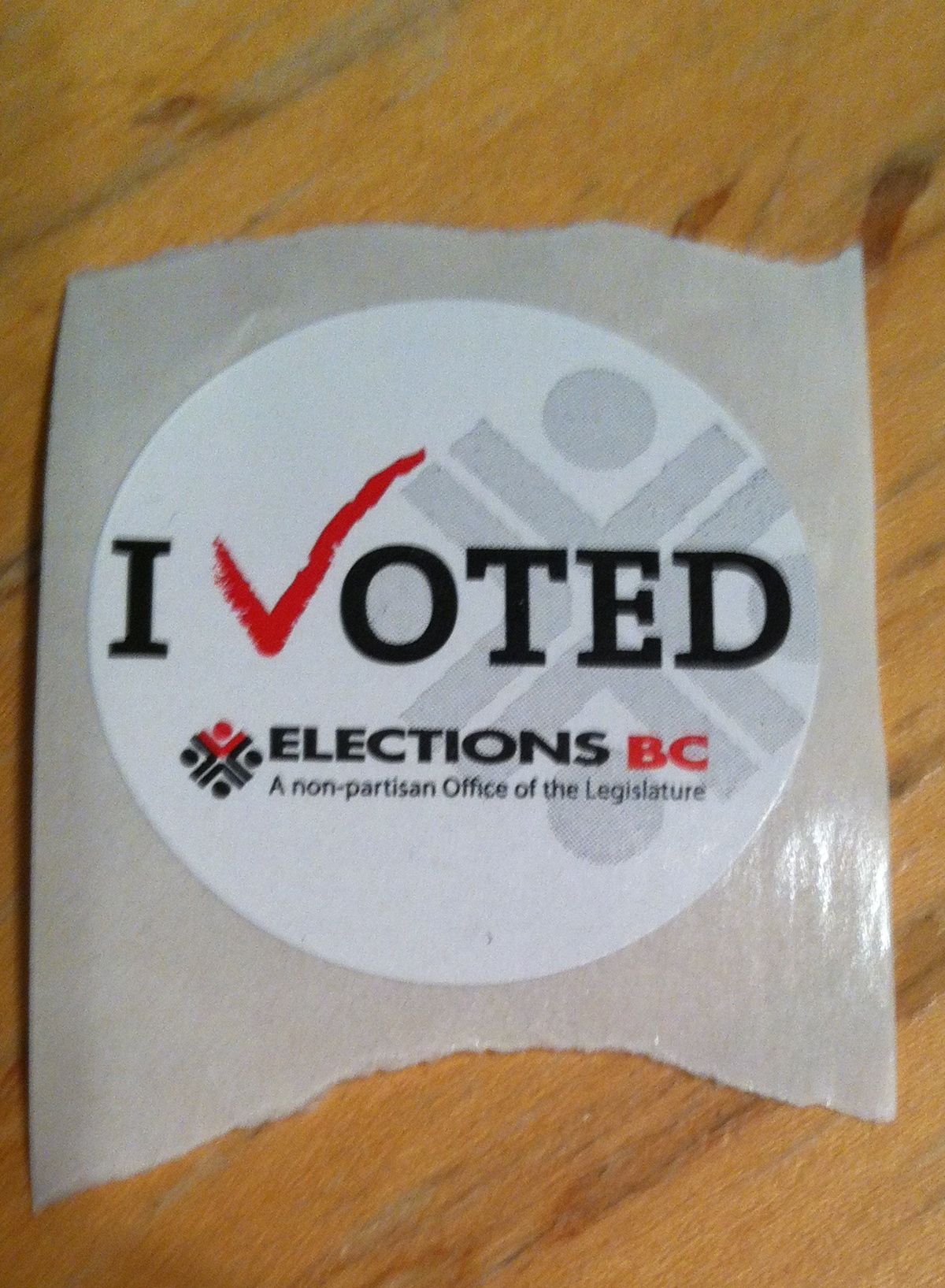
I votedBy “we” I mean anything or anybody that stood for something that wasn’t going to sell “Supernatural BC” to the highest bidder, that wasn’t going to fill our ports with oil tankers, that wasn’t going to antagonize teachers chafing under terrible classroom conditions of the province’s own making, and that wasn’t going to lie about well, just about anything they could lie about.

Our Premier, BC Liberal Christy Clark, also lost her own riding, but ultimately the loss will be another Liberal MLA’s (an MLA that actually won their seat, but will have to give it up and make way for their smiling-while-she-throws-you-under-the-bus leader). So the BC Liberals won (along with the Harper Government, oil companies, big corporations and a host of other fun and lovable characters), and the rest of us lost. Sigh.

Though I was just about as nauseous and heartbroken as everyone else madly tweeting their disappointment as the results came in (I fired off a couple of snarky tweets on Tuesday night that I’m not particularly proud of), I can’t say in all truthfulness that I was incredibly surprised.

Firstly, of COURSE the polls were wrong. There was always a good chance they would be. Nobody knows what the results of an election will be until the votes are counted. I must admit I was excited by the predictions of a BC NDP government, but as the election neared I knew that nothing was a sure thing. Which is why I voted.

Secondly, for whatever reason, the BC NDP had chosen Adrian Dix as their leader. Dix is courteous and non-threatening and at least he won his riding (unlike the Premier) but he was unfortunately touched by scandal many years ago (it doesn’t matter how minor the scandal, of COURSE your opponents won’t let it rest in a campaign) and he just couldn’t put it behind him. In debates, campaign advertising, and public appearances, his general bearing, at my most generous, could best be described as “awkward”. Paradoxically, Dix was both besmirched by scandal and still incredibly unexciting as a leader to rally behind.  I won’t say that he didn’t fight the good fight, but framing your policy initiatives by saying, essentially, “vote for me now, I’ll give you the details later” looks unprepared at best, shady at worst. His leadership may not have been our best bet. Or maybe it was, in which case, the BC NDP needs to do some serious talent hunting.

Thirdly, and most importantly (and what we always seem to forget on the west coast), BC is a big province, and a lot of the people in it do not agree with me. Living in Vancouver has spoiled me–I hardly ever spend time with people whose values differ drastically from mine–and I forget that what is obviously right to me is not obviously right to others. There’s a reason, for example, that communities in the Fraser Valley are not known for their thriving gay scenes. There are reasons that people in land-locked constituencies in the interior may not be as terrified by the spectre of oil spills as the coastal areas that voted NDP are. There are reasons that many people–hit hard by the recession, perhaps, or dependent on a specific industry for their livelihood–would place the economy above all other concerns when voting (whether or not I think the BC Liberals are actually good for the economy in a way that benefits regular BCers instead of powerful corporations notwithstanding). While I would be the first to say that a voter turn-out rate hovering around 50% is an embarrassment, I don’t join many of my fellow disappointed NDP-supporters in suggesting that this is what lost us the election. Basically, that’s the same as suggesting that all the people who DIDN’T vote would have voted NDP. It’s just not true. If these people were NDP voters, they would have voted, and they would have voted NDP. They didn’t vote at all, which means that while they obviously didn’t want to vote for Christy Clark, they didn’t want to vote for Adrian Dix either.

So what now?

Well, there are a couple of positives here, though they are incredibly bittersweet (with “bitter” being the operational half of this compound word). Firstly, if the BC NDP aren’t the government they can’t disappoint me the way governments usually do. I’m not just being bitter here. The issues that mattered the most to me during this election (the proposed Enbridge Pipeline and oil tanker traffic on the BC coast) are not issues over which the Government of BC truly has the control it claims to have. In fact, it seems that contrary to Clark’s claims that Alberta would have to meet certain conditions in order to run oil pipelines through BC, prior to the election, the Premier had already signed agreements with Alberta effectively blocking any level of BC government from trying to prevent the transport of oil through the province. The BC Government also appears to have signed an agreement waiving the province’s right to conduct its own environmental assessment of proposed pipeline projects, choosing instead to defer to the findings of the Harper Government’s oh-so-rigourous-and-definitely-fair review process (they don’t call our Prime Minster Stephen “I love science and evidence-based policy” Harper for nothing). Basically, a BC NDP government would have been bound to this backstabbing agreement with the rest of us, or face millions of dollars in fines. Given our hefty deficit (thanks again, Government of BC!), the province could not have afforded this. Which means that on the issues of dearest importance to me, we never had a chance.

At least not through provincial government channels. Which leads me to another bittersweet conclusion: I should never depend on someone else to be my voice; I can use my voice myself. Obviously, organization is key to getting anything done (which is why I’m not the Supreme Ruler of Everything Lauren but defer to others’ knowledge and abilities when it works for me), but I don’t have to depend on one MLA, or party, or group to be my hero. I can choose to vote for an MLA, I can choose to sign a petition, I can choose to protest, I can choose to share information, I can choose to donate money to causes that are fighting towards something I care about, I can, and do, choose to write this blog.

And it’s bitter, because it’s hard, and realizing that such a huge part of this province and this country does not see the world the way I do makes me incredibly lonely.  But it’s sweet, because it means I don’t have to spend the next four years being helpless and hoping that in 2017, for goodness sake’s, the BC NDP will have a strong leader who can convince non-NDP voters that they’re worth their vote, or hoping that by 2017 the BC Liberals will finally have done something so obviously horrible that no one could ever vote for them again, or that by 2017 BC voters, fatigued by both the Liberals and the NDP, will finally vote in a Green Government (which I think would be cool). Waiting for 2017 is depressing, and it won’t work.

Do I want a different election result in 2017? You bet.

But will I save up all my frustration and my worry until then, using a little pencil “X” as my only tool for meaningful action?

No. It’s going to be an uncomfortable and frustrating next four years. But not all of that discomfort and frustration will be on my part. The Premier’s Office will have their share. Buckle up, BC. This is going to be a crazy ride and I have no idea where we’re going.

Kicking the Oil Habit: So crazy it just might work

Yesterday at a staff lunch, my office mates (who are, on average, a few years older than my parents) were reminiscing about the days when smoking was widespread and legal in public spaces:

Remember when everyone could smoke on the plane? Your eyes would just water by the end of the flight! Nowadays the gas masks would probably come down if the air quality got that bad.

Remember when you could smoke in the grocery store? You’d just push your cart along and smoke your cigarette and have to brush bits of ash off the produce sometimes.

Remember when you could smoke in the office? I must have accidentally burnt a hundred forms when I could smoke at my desk.

And just think, [said my boss] how far we’ve come!

No_smoking_symbol.svgIt’s true. We have come far. Once smoking (and second hand smoke) became a public health concern, Canadians began to push back against public smoking, and public access to cigarettes. And it wasn’t easy at first. People said it was their right to smoke. People said tobacco companies were too powerful–the government would never have the guts to pass laws restricting smoking or access to cigarettes. Convenience stores said putting their cigarettes under lock and key (rather than on display) was an inconvenience to them. Diners, restaurants, clubs and bars all said they’d lose business if their patrons weren’t allowed to smoke. Sure, smoking is bad for you, but thinking you can get rid of smoking? That’s just crazy.

But the science was there. It was obvious that cigarette smoke was killing people–both smokers and non. Sure, smokers have a right to slowly kill themselves if they want to, but soon the public agreed that they didn’t have the right to kill others with second hand smoke, and they didn’t have the right to easy visible access to cigarettes in places where children might see them. Eventually, the government listened, and smoking bans were put in place on transportation, in most buildings, and on the street by doorways and air vents. Stores that sold cigarettes had to keep them covered, and the archetypal “smokey bar” became a thing of the past (by the by, bars and clubs are still packed on a Saturday night, so clearly banning smoking hasn’t hurt business all that much).

And you know what? It’s been great. By the time I became an adult smoking cigarettes was not considered cool among people my age–it was something you had to excuse yourself to go do by yourself (like going to the bathroom or adjusting your underwear). I could come home from a night on the town without the smell of cigarettes in my hair. Though many people do still smoke cigarettes (it’s a proven addiction, after all), it seems almost nostalgic now, like an episode of Mad Men or some Salinger novel. When we look back on those earlier, smokier days we go, “What were we thinking? Smoking was killing us! It was expensive! It was dirty! It stunk! How could we keep doing something so obviously bad for us?”

Before we feel too smug, may I remind you that extracting and burning fossil fuel is killing the environment (and therefore us, since we are part of the environment). It’s expensive. It’s dirty. It stinks. And more and more Canadians want a change.

But the same old arguments persist: it’s people’s right to use drive their gas guzzlers if they want to. Companies will lose business. Finding alternatives to fossil fuels is a lot of work. Oil companies are too powerful–even if all Canadians agreed that oil extraction and use is killing our planet, the government would never be gutsy enough to pass environmental regulations (to which I say, how about we elect a government with a bit more respect for science and a lot more cajones?).

In this “information age”, there is really very little excuse for the willful ignorance that fuels these arguments. Once upon a time, people were dying of diseases caused by shitting in the same water they drank. We look at those people now and see the obviousness of their error. So why are we shitting in the water we drink, on the food we eat, and in the air we breathe by continuing our narrow minded reliance on fossil fuels (and only fossil fuels) for our energy? For no reason but sheer pigheadedness, and it’s not doing us any good.

It is NOT anyone’s right to destroy the planet that belongs to everyone. Unless your job is driving in the desert being shot at, you do NOT need a Hummer.

The economy is changing–the green-tech sector is employing more and more people as tar sands companies mechanize and “trim the fat” HR-wise. Demand is changing too–with more and more young people living in cities, driving a car is becoming less necessary and less desirable.

As for the power of the oil companies and the inability/unwillingness of governments to regulate their operations–well, someday we’ll be looking back at Stephen Harper the same way we look at the stupid king/nobleman/chieftain who let his people keep crapping in their drinking water. With contempt and disbelief. How could anyone be so short-sighted? How could anyone ignore the mounting evidence? How could a government systematically and deliberately put an entire country’s citizens, wildlife, and environment in harm’s way for the sake of ONE sector of the economy? Jack Layton could power his entire home on green energy (I saw it on the CBC, it was cool). All the dirty oil in Canada couldn’t warm old Harper’s heart.

Once upon a time, trying to curtail public smoking would have been political suicide. But medical science won out. People realized they had a lot to lose if nothing was done, and with their continued pressure governments eventually realized it too.

The ongoing decimation of our environment bothers me, and I realize that oil companies will always be a part of our economy (and hey, I like electricity and transportation as much as the next person). But there are better ways to power our homes and vehicles, there are new sectors out there to “fuel” our economy, and there is so so much to lose if we don’t make a change. Canadians made the right choice when it comes to smoking. I hope by the time my children are grown we will have made the right choice about fossil fuels.

ArbutusStarfish

Nothing like our beautiful oil-spill free BC coast!

Beyond “Raising Awareness”: Theatre for Living presents “maladjusted”

From now until March 24, a much-needed conversation will be taking place at the Firehall Arts Centre. maladjusted, created, workshopped and presented by Theatre for Living (formerly Headlines Theatre), explores the challenges facing our mental healthcare system through a “forum theatre” event.

Micheala Hiltergerke and Pierre Leichner. Photo credit: David Cooper

Micheala Hiltergerke and Pierre Leichner. Photo credit: David Cooper

In the wake of recent tragedies, much lip service has been paid to “removing the stigma” of mental illness and ensuring that people suffering from mental illness or emotional distress are able to access the help they need. Unfortunately, with many of us, our involvement stops there. What we don’t realize, and what maladjusted exposes so well, is that getting people into the mental healthcare system is not enough–what do we do with them once they’re there? Is our current system, increasingly mechanized in the name of “efficiency”, sufficient to ensure our most vulnerable citizens receive care that is compassionate, sensitive to their needs, and actually healthy for them?

The answer, according to the many generous patients and mental health caregivers that comprised the show’s workshop participants, is a resounding no. The failure of an overburdened and increasingly impersonal system to properly diagnose and treat people with mental health issues is contributing to the escalation of already urgent situations. The first half hour of maladjusted is a play (in the traditional sense) that provides logical examples of the ways in which these shortcomings play out for patients, families, and caregivers in a system like ours.

But this would be nothing new. We are used to theatre that exposes. We are used to theatre that points a finger and says, “This. This is a problem.” And we are all used to theatre, films, art, and events that “raise awareness”. Theatre for Living takes this process further, beyond the pointing of the finger and the raising of the awareness. They say, “This. This is a problem. Now what would YOU do about it?” And most importantly, they let us answer.

It’s hard for me to describe just how the forum theatre format allowed me to participate in a discussion about mental health and human-centred care (you’ll have to experience it for yourself), except to say that my own understanding of the issues was heightened, my ability to empathize was increased, and I felt that my role in the evening was empowered. Instead of passive audience members, we became actors in our own right (some on the stage, and some within the human transactions and interactions we’ll be having in our own lives).

Central to the empowerment provided by this important conversation is the creation of a Community Action Report. As different issues are addressed during the forum portion of the evening, the audience is asked to suggest specific policy changes that could help patients, caregivers, and families better navigate the mental health system in a way that works for them, rather than for efficiency or budget figures. Each night, the show’s Community Scribe takes down the ideas put forth. According to the company,

“Theatre for Living has written agreements from various mental health organizations including The Mental Health Commission of Canada and The Canadian Alliance on Mental Illness and Mental Health to use the  maladjusted project and the resulting Community Action Report to inform their policy development.”

By attending the show as an audience member, you contribute to this necessary conversation. I left the Firehall that night feeling, somehow, that I had done a good and necessary thing. I didn’t feel powerless against the huge issue I’d been presented, though I had a better appreciation of the challenges and the stakes.

maladjusted runs at the Firehall Arts Centre, Tuesday to Sunday at 8pm, from now until March 24. Tickets can be purchased online through the project webpage.

Disclosure: My ticket to maladjusted was provided by Theatre for Living. The content of my review remains my own.